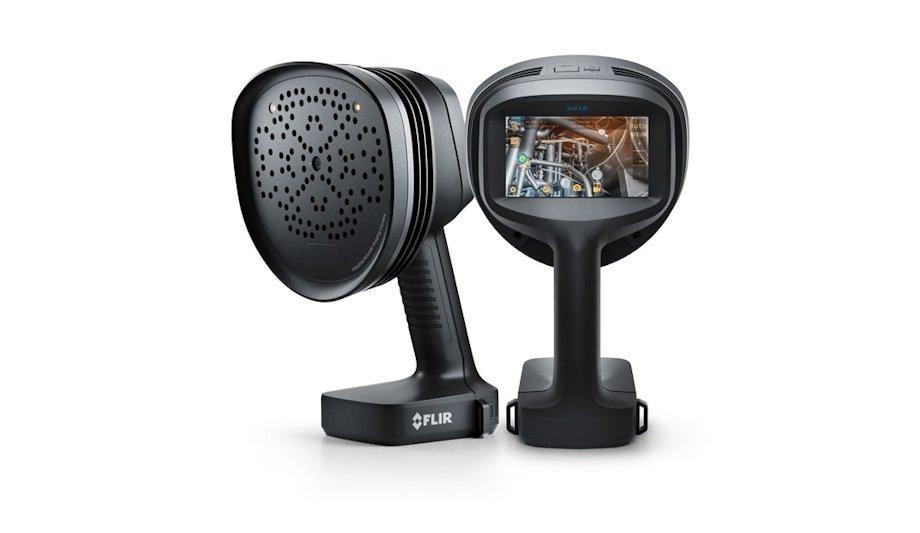
Flir's innovative acoustic imaging technology offers a transformative solution for the glass manufacturing industry by enabling rapid detection and repair of leaks.
This technology plays a crucial role in turning invisible energy losses into tangible savings, enhancing safety and efficiency throughout the production process.
Decades of Innovation in Glass Manufacturing
Transitioning from classic plans to the adoption of float glass processes in Europe, North America, and Japan
The global glass industry, valued at over $120 billion annually, comprises segments such as flat glass, container glass, and specialty products. Since the early 1970s, the industry has evolved significantly.
Transitioning from traditional methods to the adoption of float glass processes in Europe, North America, and Japan by the mid-1970s, the industry achieved improved surface quality, reduced costs, and the capability to produce larger glass sheets, paving the way for modern architectural applications.
Advancements in Energy Efficiency
During the 1980s and 1990s, the industry diversified, introducing energy-efficient products such as coated and insulated glass units.
The introduction of low-emissivity coatings, comprising thin layers of metal oxide, enabled the control of solar heat gain while maintaining transparency, marking a pivotal step towards energy-saving glass solutions prevalent in today's market.
Technological Revolution in Production
The early 21st century witnessed a shift towards automation, robotics, and digital controls
Over the past 50 years, glass manufacturing has undergone remarkable changes, driven largely by environmental concerns.
The early 21st century witnessed a shift towards automation, robotics, and digital controls, revolutionizing production by enhancing efficiency and reducing waste through computer-controlled furnaces and automated systems.
The Hidden Costs of Compressed Air Leaks
Despite advancements, compressed air remains a critical yet often overlooked resource in glass production. Responsible for powering various operational tools, air leaks can lead to significant energy loss and compromised product quality.
A small leak can culminate in costly expenses, underscoring the need for effective leak detection methods.
Acoustic Imaging: A Game Changer
Flir, renowned for its thermal and acoustic imaging technology, offers the Si2-LD acoustic camera
Flir, renowned for its thermal and acoustic imaging technology, offers the Si2-LD acoustic camera. Designed to simplify leak detection, this lightweight, handheld device allows engineers to pinpoint leaks by directing it towards suspected gas or air discharges.
With ultra-sensitive microphones covering frequencies from 2–130 kHz, the device ensures accurate detection without interrupting operations.
Enhancing Safety and Efficiency
The Si2-LD also features two LED lights for easy component identification in dimly lit production areas. Beyond compressed air, the camera's integrated software can identify and quantify leaks in other pressurized gases like oxygen, nitrogen, and ammonia—all of which present safety concerns if not properly managed.
By leveraging Flir's latest technology, manufacturers can effectively reduce gas usage, minimize safety risks, and enhance overall safety measures in their facilities.
Flir’s acoustic imaging technology helps manufacturers find and fix leaks fast, turning invisible losses into measurable energy savings and improved safety across every stage of production.
conventional manufacturing methods
The global glass industry is worth over 120 billion dollars a year. The market is generally split into different segments such as flat glass, container glass and specialty products. The industry has changed significantly in the past few decades.
In the early 1970s, the global glass industry was dominated by conventional manufacturing methods, such as the sheet glass and plate glass processes. However, by the mid-1970s, float glass plants were being built across Europe, North America, and Japan.
The process significantly improved surface quality, reduced production costs, and allowed glass to be produced in much larger sheets, laying the groundwork for the modern architectural glass they know now.
Low-emissivity coatings
During the 1980s and 1990s, the glass industry began diversifying its applications and introducing higher-performance products. In addition, coated and insulated glass units emerged in response to the growing demand for energy-efficient buildings.
Low-emissivity coatings in the form of thin layers of metal oxide applied to the surface, helped control solar heat gain while maintaining transparency. This development was a key step toward the energy-saving glass that dominates the market now.
Digital controls revolutionize production
Simply put, the glass industry has undergone a remarkable transformation over the past 50 years. Many of these changes have been driven by environmental and ecological concerns. This statement applies not only to the end product but also the production process itself.
The heavy reliance on fossil fuels has also changed over the years. The early 21st century saw advances in automation, robotics, and digital controls revolutionize production. Glass manufacturing became more efficient, consistent, and data-driven. Computer-controlled furnaces, real-time quality monitoring, and automated cutting systems improved output while reducing waste.
Losing energy to invisible compressed air leaks
However, one raw material that is often overlooked in the production process is simply air. Compressed air is the invisible workhorse in glass production: actuating valves, driving pneumatic conveyors, powering tooling and purging molds. It can also be a very expensive utility, and leaks are the stealth tax! In glass plants, where production runs are long and compressed-air demand is high, even a small hole can mean large energy losses, lower line pressure and compromised product quality. A 3 mm diameter leak in a system operating at 6 bar for 8,000 hours per year can cost in the order of 2,800 Euros.
It could be considered somewhat of an irony that an industry that has made such advancements in energy conservation is still using fossil fuels to drive compressors simply to have the air leak out into the environment.
Many of the leaks encountered in a large production unit are difficult to find. In fact, the real challenge is not performing the remedial action, it’s locating the leaks in the first instance.
Detect, quantify, and prioritize leaks with acoustic imaging
Flir is a global leader in the design and manufacture of portable thermal and acoustic imaging cameras. The handheld, lightweight Si2-LD acoustic camera makes leak detection simple: just point the device toward a potential gas or air leak, and its ultra-sensitive microphones detect even the smallest discharges.
This allows engineers to inspect reliably from a safe distance, and without halting operations. The powerful microphones cover a wide frequency range of 2–130 kHz, ensuring precise detection across diverse environments.
As many production areas are dimly lit, the Si2-LD aso includes two powerful LED lights that make component identification quick and easy, even in the darkest corners of a facility.
Latest technology from Flir
Compressed air isn’t the only pressurized gas the Flir Si2-LD can detect. With its integrated software, the camera can also identify and quantify leaks of oxygen, nitrogen, ammonia, and other gases commonly used across industrial environments.
Of course, the cost of lost gas is only part of the problem. Many of these gases pose serious safety risks if allowed to accumulate, increasing the potential for fire hazards or toxic conditions with potentially severe consequences.
See how the latest technology from Flir can help in identifying leaks, lower compressed air and gas usage and improve safety in the organization.