
SecurityInformed.com
  • Products
    Video Surveillance
    • Surveillance cameras
    • Video Surveillance software
    • IP cameras
    • Digital video recorders (DVRs)
    • Dome cameras
    • Network Video Recorders (NVRs)
    • IP Dome cameras
    • Security camera lenses
    Access Control
    • Access control readers
    • Access control software
    • Access control controllers
    • Access control systems & kits
    • Intercom Systems
    • Electronic lock systems
    • Access control cards/ tags/ fobs
    • Access control accessories
    Intruder Alarms
    • Intruder alarm system control panels & accessories
    • Intruder detectors
    • Intruder alarm warning devices
    • Intruder alarm communicators
    • Intruder alarm accessories
    • Intruder alarm lighting systems
    Technology's Role In Securing Banks And Financial Institutions
    Technology's Role In Securing Banks And Financial Institutions
    Delta Scientific Rapid Deployment Portable Barrier

    Delta Scientific Rapid Deployment Portable Barrier

    IDIS 12.5MP AI Fisheye Camera with Panoramic Auto-Tracking

    IDIS 12.5MP AI Fisheye Camera with Panoramic Auto-Tracking

    Dahua 4G Solar Security System with Dual-Lens AI Detection

    Dahua 4G Solar Security System with Dual-Lens AI Detection

    ASSA ABLOY eCLIQ Programmable Key Access System

    ASSA ABLOY eCLIQ Programmable Key Access System

  • Companies
    Companies
    • Manufacturers
    • Distributors
    • Resellers / Dealers / Reps
    • Installers
    • Consultants
    • Systems integrators
    • Events / Training / Services
    • Manned guarding
    Companies by Product area
    • CCTV
    • Access control
    • Intruder alarm
    • IP networking products
    • Biometrics
    • Software
    • Digital video recording
    • Intercom systems
    Technology's Role In Securing Banks And Financial Institutions
    Technology's Role In Securing Banks And Financial Institutions
  • News
    News
    • Product news
    • Corporate news
    • Case studies
    • Events news
    Latest
    • AI-Driven SOC: Transforming Cybersecurity Operations
    • Role Of AI In Cybersecurity: Modern SOC Challenges
    • Compliance Standards for AI-Powered Security
    • Godel's AI Engineering Achieves Microsoft Specialisation
    Technology's Role In Securing Banks And Financial Institutions
    Technology's Role In Securing Banks And Financial Institutions
  • Insights
    Insights
    • Expert commentary
    • Security beat
    • Round table discussions
    • Round Table Expert Panel
    • eMagazines
    • Year in Review 2023
    • Year in Review 2022
    Featured
    • How Are New Technologies Reshaping Casino Surveillance And Security?
    • How Can Physical Security Technology Promote Better Executive Protection?
    • Responsible AI Adoption Starts With Governance
    • Solink's AI Agents Boost Efficiency Of Existing Infrastructure With Automation
    Technology's Role In Securing Banks And Financial Institutions
    Technology's Role In Securing Banks And Financial Institutions
  • Markets
    Markets
    • Airports & Ports
    • Banking & Finance
    • Education
    • Hotels, Leisure & Entertainment
    • Government & Public Services
    • Healthcare
    • Remote Monitoring
    • Retail
    • Transportation
    • Industrial & Commercial
    Technology's Role In Securing Banks And Financial Institutions
    Technology's Role In Securing Banks And Financial Institutions
    Enhance Hospitality Security With Key Control Systems

    Enhance Hospitality Security With Key Control Systems

    eCLIQ Enhances Security At Marin Hospital Of Hendaye

    eCLIQ Enhances Security At Marin Hospital Of Hendaye

    Alamo Colleges Boosts Safety With Alcatel-Lucent OmniSwitch Platform

    Alamo Colleges Boosts Safety With Alcatel-Lucent OmniSwitch Platform

    HID Mobile Access Enhances University Of Dundee Campus

    HID Mobile Access Enhances University Of Dundee Campus

  • Events
    Events
    • International security
    • Regional security
    • Vertical market
    • Technology areas
    • Conferences / seminars
    • Company sponsored
    Virtual events
    • Video Surveillance
    • Access Control
    • Video Analytics
    • Security Storage
    • Video Management Systems
    • Integrated Systems
    Technology's Role In Securing Banks And Financial Institutions
    Technology's Role In Securing Banks And Financial Institutions
    Securex Caspian 2026

    Securex Caspian 2026

    PACK EXPO Chicago 2026

    PACK EXPO Chicago 2026

    OFSEC - Oman Fire, Safety & Security Expo 2026

    OFSEC - Oman Fire, Safety & Security Expo 2026

    Milipol Qatar 2026

    Milipol Qatar 2026

  • White papers
    White papers
    • Video Surveillance
    • Access Control
    • Video Analytics
    • Video Compression
    • Security Storage
    White papers by company
    • HID
    • ASSA ABLOY Opening Solutions
    • Milestone Systems
    • Software House
    • ELATEC USA
    Other Resources
    • eMagazines
    • Videos
    Technology's Role In Securing Banks And Financial Institutions

    Technology's Role In Securing Banks And Financial Institutions

    Integrated Systems Enable Critical And Compliant Security For Transportation

    Integrated Systems Enable Critical And Compliant Security For Transportation

    Modernizing Physical Access Control

    Modernizing Physical Access Control

    Access. Intrusion. One Estate.

    Access. Intrusion. One Estate.

About us Advertise
  • Securing Financial Institutions
  • AI special report
  • Cybersecurity special report
  • 6
Smart home
  • Home
  • About
  • News
  • Expert commentary
  • Security beat
  • Case studies
  • Products
  • White papers
  • Videos

Transforming Workplace Safety With The Internet Of Things

Transforming Workplace Safety With The Internet Of Things
Andy Dyer
Andy Dyer
Contact company
Contact Baird Capital
icon Add as a preferred source Download PDF version
Quick Read
⌵
Summary is AI-generated, newsdesk-reviewed
  • IoT technology enhances workplace safety in hazardous industries through advanced monitoring and analytics.
  • Wearable IoT devices track physiological and environmental data to prevent workplace accidents.
  • Augmented and Virtual Reality provide immersive training and improve situational awareness in high-risk fields.

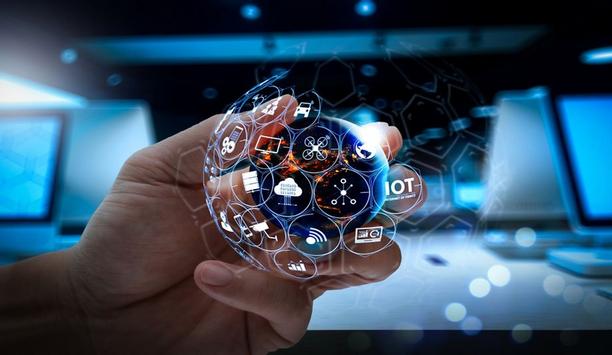
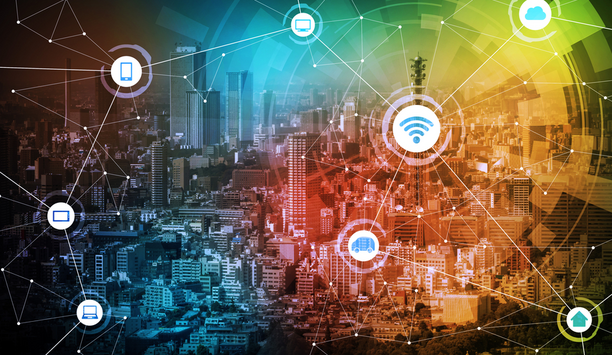
From drone fleets and autonomous transportation systems to smart homes with computer-controlled lighting, heating, media and security systems, a new group of highly-automated technologies is gripping the popular imagination. These technologies – made possible by the Internet of Things (IoT) – form advanced ecosystems of interrelated devices with the capacity to monitor, detect, communicate and act on the real world independently of human intervention. Promising to fulfil all of our wildest technological dreams and needs, the IoT age has arrived – and it looks like its here to stay.

While the consumer applications of IoT tend to receive the most attention, one area that is seeing strong growth in the uptake of IoT devices is workplace safety. Workplace safety costs businesses billions every year, and industries with especially hazardous working environments – Construction, Oil & Gas, Mining, Utilities, Rail, among others – are beginning to adopt IoT technology to help minimize risk and address preventable threats. In addition, as the COVID-19 pandemic surges around us, the phenomenon of ‘social distancing’ and remote working has emerged to help avoid risk of infection. For the many who work across the aforementioned industries however, working from home will not be logistically possible. In order to reduce the burden on hospitals and medical staff, it is now more important than ever to protect employees from having to be treated for preventable injuries.

Before exploring these IoT solutions, however, let us first consider some of the key threats faced by workers in these industries.

Workplace safety

1 in 5 worker deaths in the US and incurring tens of thousands of short and long-term injuries each year

Construction is one of the world’s most dangerous occupations, accounting for 1 in 5 worker deaths in the US and incurring tens of thousands of short and long-term injuries each year. In construction, the major risk is falling from a height, which accounts of 26 per cent of fatal injuries in the workplace. Additional risks come from being struck by vehicles and heavy moving objects, proximity to overhead/underground high voltage power lines, confined spaces, high noise environments, and exposure to dust and fumes.

Other industries are often faced with some combination of the above, or similar, threats. In the Rail sector, for instance, there is high risk from collisions with vehicles, objects and machinery and vulnerability to electric shock. In Utilities, the number one risk is slips, trips and falls, accounting for 30 per cent of Lost Workday Injuries (LWIs) in 2016. And in Oil & Gas extraction, exposure to flammable gas, chemical emissions and oxygen-deficient atmospheres creates vulnerability to explosions and chemical poisoning.

Tackling threats in a high-tech world

What, then, is being done to tackle these threats? In a high-tech world, many safety measures currently in use – hardhats, earplugs, gloves, gas masks, guardrails, harnesses, protective goggles and high visibility clothing – have been in use a long time. While these measures are still fundamental in minimizing risk, companies have now started to integrate IoT technologies to enhance their application. These technologies bring together real-time analytics, machine learning, advanced sensors and embedded systems to offer a number of key functionalities:

  • Physiological monitoring

Wearable technology is used to monitor a worker’s physiological state in real-time. Japanese wearable tech company Mitsufuji is active in this space, creating smart clothes woven from silver-metallised fibres that collect a range of data about its wearer, including heart rate and body temperature. Other examples include wristbands with bio-sensors to accurately measure stress levels and glasses that detect eye movements to identify fatigue and periods of micro-sleep.

  • Environmental monitoring

Sensors used to measure temperature, radiation, gas leaks, carbon monoxide and other harmful chemicals can automatically alert workers to unsafe external conditions. Additionally, visual imaging software can map 3D representations of a worker’s environment, facilitating effective two-way communication between supervisors and personnel in the field, allowing for remote guidance technologies to provide live assistance to endangered workers (e.g. guiding a trapped miner out of a tunnel).

  • Situational awareness, training and behavioural data

Augmented Reality (AR) technologies offer new ways to support decision making in the field by providing holographic representations of physical equipment, while Virtual Reality (VR) technologies offer immersive situational training without the risks associated with real-life procedures. These technologies also offer up valuable behavioral data, which can be used to gauge a worker’s risk tolerance level and alertness in response to incidents.

  • Proximity detection

Proximity detection systems utilize wearable sensors to monitor workers’ location, map their movements, and alert them to nearby hazards. One example of this are radio-frequency identification (RFIDs), which can measure a worker’s proximity to moving equipment and alert them to possible collisions and near misses. Another piece of kit is the ‘smart helmet’, which can immediately detect an accident, determine the worker’s location and send an alert containing coordinates to a safety control centre. The centre is able to make video and audio contact and communicate with the worker until help arrives.

  • Exoskeletons

Exoskeletons can assist with heavy lifting and the prevention of musculoskeletal disorders (MSDs) by analyzing worker movements and providing the necessary support. The Chairless Chair, for example, used by factory floor workers, fixes around the back and legs to provide support whenever the worker sits or crouches. Exoskeletons are also used to monitor worker movements, identifying repetitive movements and sustained periods of overexertion.

IoT technologies and innovations

IoT innovations are helping to improve workplace safety on multiple fronts

Taken together, these IoT innovations are helping to improve workplace safety on multiple fronts. Firstly, they are preventative. By closely monitoring one’s environment – both internal and external – IoT technologies can pre-empt and alert workers to potential dangers. Secondly, they are responsive. In the case of an accident, IoT technologies can alert supervisors and help coordinate a quick and effective response. Thirdly, they are informative. By accumulating and analyzing rich pools of data, IoT technologies can help optimize work in the field and find improved ways to limit risk.


Download PDF version Download PDF version
Google logo Add as a preferred source on Google
  • Physical security
  • Security monitoring system
  • Security communication
  • Cyber security
  • Internet of Things (IoT)
  • Drones
  • Smart home
  • COVID-19
  • Related links
  • Articles by Andy Dyer
Related white papers
Multi-Residential Access Management And Security

Multi-Residential Access Management And Security

Download
IoT Connectivity

IoT Connectivity

Download
Cloud Video and Smart Cities

Cloud Video and Smart Cities

Download
Related articles
DoorBird's Innovations Debut at CEDIA 2026 Expo

DoorBird's Innovations Debut at CEDIA 2026 Expo

Alarm.com Appoints Bert McGaughey For International Growth

Alarm.com Appoints Bert McGaughey For International Growth

Identiv Expands ID-Tiny For Compact Product Security

Identiv Expands ID-Tiny For Compact Product Security

Follow us

Sections Products Video Surveillance Access Control Intruder Alarms Companies News Insights Case studies Markets Events White papers Videos AI special report Cybersecurity special report RSS
Topics Artificial intelligence (AI) Mobile access Healthcare security Cyber security Counter terror Robotics Thermal imaging Intrusion detection Body worn video cameras
About us Advertise About us 10 guiding principles of editorial content FAQs eNewsletters Sitemap Terms & conditions Privacy policy and cookie policy Californian Residents (CCPA)
  1. Home
  2. Topics
  3. Smart home
  4. News
  5. Expert commentary
About this page

Discover the future of workplace safety; harness IoT, AI, and analytics to enhance security, streamline operations, and reduce accidents.

Subscribe to our Newsletter

Stay updated with the latest trends and technologies in the security industry
Sign Up

DMA

SecurityInformed.com - Making The World A Safer Place
Copyright © Notting Hill Media Inc. 2000 - 2026, all rights reserved

Our other sites:
SourceSecurity.com | TheBigRedGuide.com | HVACinformed.com | MaritimeInformed.com | ElectricalsInformed.com

Subscribe to our Newsletter


You might also like
Technology's Role In Securing Banks And Financial Institutions
Integrated Systems Enable Critical And Compliant Security For Transportation
Modernizing Physical Access Control
Minimizing Storage, Maximizing Focus
Sign up now for full access to SecurityInformed.com content
Download Datasheet
Download PDF Version
Download SecurityInformed.com product tech spec