VIVOTEK, recognized for its contributions to security solutions, is weaving corporate social responsibility into its core activities. This year, the company is marking its fifth “Safety Map” sustainability event, expanding its focus from urban areas to the Zhonggua River in Guoxing Township, Nantou, Taiwan.
VIVOTEK has partnered with National Chung Hsing University’s (NCHU) University Social Responsibility (USR) team and AI agriculture firm DATAYOO to launch the “Zhonggua River Ecological Restoration Safety Map” initiative.
Ecological Monitoring and Restoration Efforts
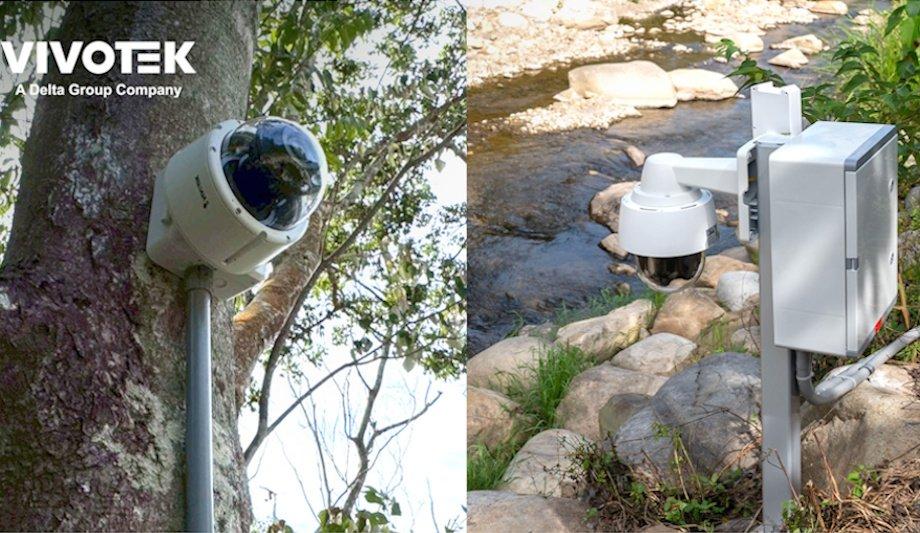
The project leverages VIVOTEK’s security technology to oversee the natural environment, capturing valuable footage of endangered species such as the crab-eating mongoose.
Additionally, employees engaged in activities like removing invasive plants, reinstating native vegetation, and constructing ecological ponds, thereby broadening the company’s commitment to sustainability by extending protection beyond human safety to ecosystems and biodiversity.
History of the Zhonggua River Restoration
The river's banks had been reinforced following a 2004 typhoon to control flooding, but this intervention damaged
The river's banks had been reinforced following a 2004 typhoon to control flooding, but this intervention damaged the local ecosystem. Professors Chiou-Rong Sheue and Peter Chesson initiated efforts to dismantle these reinforcements, advocating for a balanced approach between flood management and ecological conservation.
These efforts resulted in Taiwan’s inaugural community-initiated river restoration in 2023, with VIVOTEK providing significant technological support through the “Safety Map” project.
Technology in Service of Environmental Stewardship
VIVOTEK's ethos extends beyond technology to include community care, exemplified by past deployments of its cameras during a mining crisis in Chile and in Australian seal habitats.
Collaborating with the NCHU-USR team, VIVOTEK has redirected its social safety commitments towards preserving river ecosystems and fostering cooperation between humans and nature.
Rebuilding Natural Habitats
VIVOTEK employees read the aquatic setting, focusing on the repercussions of removing artificial structures
Guided by the NCHU’s USR team, VIVOTEK employees examined the aquatic environment, focusing on the repercussions of removing artificial structures on local flora and fauna.
Teams worked to accelerate ecological recovery, constructing habitats for native species like Ayers' tree frogs and removing invasive flora while reintegrating indigenous plant species to stabilize riverbank soil and support local biodiversity.
Advancing Conservation Through Data
Participation in the Safety Map event has broadened from local facilities to the Zhonggua River, involving numerous employees in site assessments and safety strategy proposals.
VIVOTEK plans to maintain its cross-industry collaborations to elevate its social influence and enhance security paradigms that include wildlife protection, as noted by Allen Hsieh, VIVOTEK’s Spokesperson.
Collaboration for Sustainable Impact
With DATAYOO's FarmiSpace PRO and AI crop monitoring, VIVOTEK is assisting the USR team in employing data-driven methods to explore and rejuvenate natural habitats around Zhonggua River. This collaboration between industry and academia is setting a new standard in ecological restoration.
Chiou-Rong Sheue highlighted the active involvement of VIVOTEK staff in restoration efforts, noting the rapid establishment of new wildlife habitats. VIVOTEK is underscoring that security embodies both protection and environmental guardianship, solidifying its role in sustaining a harmonious coexistence of humans and nature.
VIVOTEK, the pioneering security solution provider, actively integrates corporate social responsibility into its operations. This year marks the fifth “Safety Map” corporate sustainability event. For the first time, the team extended its efforts beyond urban communities to the natural environment of Zhonggua River in Guoxing Township, Nantou, Taiwan.
Collaborating with the National Chung Hsing University’s (NCHU) University Social Responsibility (USR) team on “Environmental Resilience and Sustainability” and the precision AI agriculture partner DATAYOO, the team launched the “Zhonggua River Ecological Restoration Safety Map” project.
VIVOTEK deployed its security solutions to monitor the ecosystem, successfully capturing rare footage of the endangered crab-eating mongoose in its natural habitat. Employees also helped remove invasive species, restore native plants, and construct ecological ponds, embedding sustainability into the company’s core security expertise – extending protection from human safety to habitats and biodiversity.
“Returning land to the river:” Reviving the ecosystem
After a typhoon in 2004, Zhonggua River’s banks were fortified with high walls and riverbed structures for flood control, which disrupted the ecosystem. Over time, cracks formed, foundations eroded, and exposed steel reinforced the risk. In 2018, Professors Chiou-Rong Sheue and Peter Chesson from NCHU’s Department of Life Sciences began living by the river and advocated a subtraction approach: dismantling walls to “return the land to the river,” balancing flood control with conservation.
This effort culminated in 2023 with Taiwan’s first community-initiated river restoration project. Today, the USR team led by Professor Hsu continues ecological monitoring and habitat maintenance, while VIVOTEK contributes technology and manpower through the “Safety Map” initiative, jointly safeguarding the reborn river.
Security technology supports restoration through action and care
“VIVOTEK uses ‘Concern for Others’ Cares’ as a brand catalyst. During the 2010 Chile mining disaster, our cameras were deployed deep inside the mine to monitor the vital signs of trapped miners, transmitting real-time footage to rescue teams and contributing to the miraculous rescue efforts. In Parks Victoria, Australia, we applied AI solutions to observe seal habitats in Port Phillip Bay, monitoring potential threats such as fishing lines and ropes."
"VIVOTEK partnered with the NCHU’s USR team to transform our original commitment to care and social safety into active conservation of the river ecosystem and wildlife, turning technology into a bridge for harmonious coexistence between humans and nature,” said Alex Liao, President of VIVOTEK.
Building safe habitats, restoring nature’s vitality
Under the guidance of the NCHU’s USR team, VIVOTEK employees observed aquatic insects, native plants, and changes in the river ecosystem, gaining insight into the impact of removing cement embankments on local wildlife. To accelerate ecological restoration, they split into teams to construct ecological ponds and build new homes for the Ayers’ tree frogs using bamboo tubes.
At the same time, invasive plant species such as Mimosa pudica, fragrant orchids, and elephant grass were removed, while native species including reed orchids, wild peonies, honeysuckles, purple bead trees, Taiwan mountain laurels, and orange osmanthus were replanted to stabilize the soil and restore riparian vegetation.
“Being able to personally contribute to ecological restoration and give back to nature is a source of pride as a VIVOTEKer,” shared Ben, an engineer who has participated in the Safety Map event for five consecutive years.
Leveraging big data monitoring to deepen corporate impact
“The Safety Map event has extended from neighborhoods, care facilities, schools, and historic settlements to Zhonggua River, engaging hundreds of employees in inspecting sites and proposing safety solutions. Through these efforts, we have expanded the definition of ‘safety’ from simply protecting people to also safeguarding wildlife and habitats, revealing the multidimensional nature of security."
"Moving forward, we will continue to promote cross-industry collaboration, using our security expertise as a foundation to amplify social impact and create more inclusive safety values and practices,” said Allen Hsieh, VIVOTEK’s Spokesperson and Director of the CorpComm & Sustainability Office.
This year, VIVOTEK further leveraged the expertise of DATAYOO, using its FarmiSpace PRO monitoring service and AI crop monitoring system to analyze various crop indices derived from satellite spectral data. These insights provide the NCHU’s USR team with a scientific basis for their ecological research at Zhonggua River, enabling a data-driven approach to natural habitat restoration and making technology a powerful tool for conservation.
Industry and academia join forces to set a benchmark
“VIVOTEK Proactively proposed initiatives and involving company employees in hands-on participation are the most powerful ways to implement ecological restoration. Through VIVOTEK’s security expertise, volunteer engagement, and AI-driven long-term ecological monitoring, we have accelerated the restoration of Zhonggua River’s ecosystem, allowing more people to witness the harmony between humans and nature,” said Chiou-Rong Sheue.
The habitat restoration efforts have already shown tangible results, with the ecological ponds built by VIVOTEK employees quickly attracting creatures such as pond frogs, dragonflies, water striders, and damselflies.
VIVOTEK has emerged as a key driver of environmental restoration through its security technology, demonstrating that safety is not only about protection but also stewardship and shared responsibility, and continues to foster a Safety Map where humans and nature coexist.