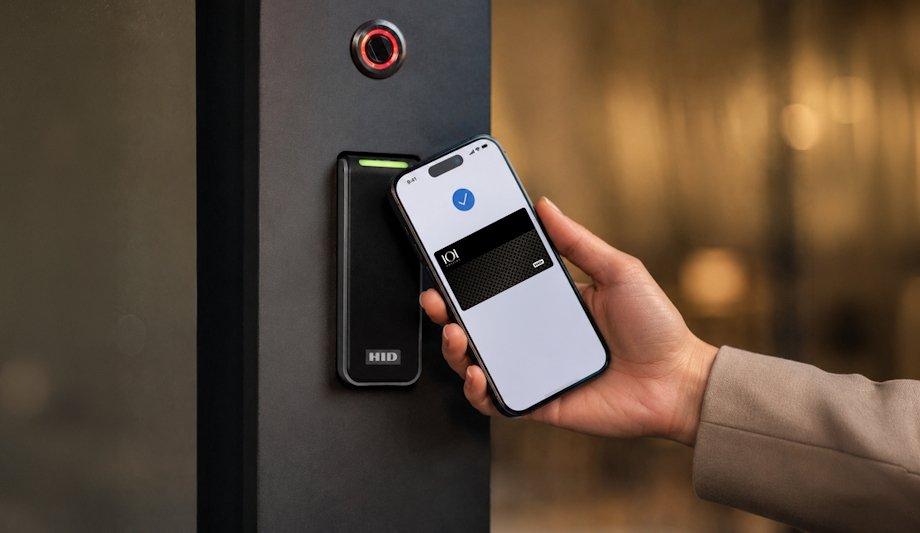
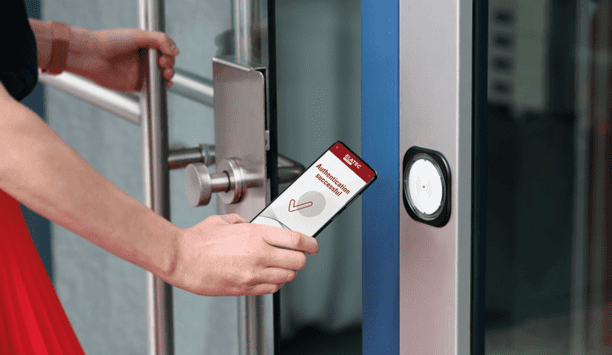
HID, a pioneer in trusted identity and access control solutions, alongside the Australian digital consultancy Kodaa, has successfully implemented mobile credential technology at Melbourne’s renowned 101 Collins Street tower. This project serves as a substantial example of mobile credentials transitioning from trial phases to everyday use, enabling thousands of tenants and visitors to access the prestigious commercial building using their mobile wallet, eliminating the need for physical cards.
The 101 Collins Street building has established a new standard for commercial properties through its extensive deployment of HID Mobile Access, covering entry points, elevators, lockers, and other facilities.
Secure mobile Credentials
Executed by Kodaa, the deployment of HID Mobile Access has been operational for nearly a year, enhancing access for thousands of active users across over 35 tenancies. The integrated solution avoids the necessity of new hardware by embedding access within the mobile wallet, relying on HID’s secure mobile credentials for a trusted identity foundation.
Steve Katanas, Head of ANZ for HID Physical Access Control Solutions, highlighted the profound shift from traditional plastic cards to mobile credentials, a change of great significance in the industry. “Through HID’s proven ecosystem of credentials and readers, we enable partners like Kodaa to deliver frictionless, mobile-first experiences at scale,” stated Katanas.
Combining Strong Identity
Executed by Kodaa, the deployment of HID Mobile Access has been operational for nearly a year
The technology combines robust identity and device-level security, eliminating the perceived trade-off between security and convenience.
Kodaa founder, Seth Khouri, commented on the increasing demand for mobile wallet access in secure buildings, noting the overwhelmingly positive feedback and smooth transition without the need for extensive infrastructure changes. According to Khouri, “The integrated solution is built to work with existing systems and HID ensures modernization without disruption, making the transition low risk and the results immediate.”
Modernize Access Control
This implementation at 101 Collins Street has overhauled access administration processes, with requests, approvals, updates, and revocations now managed digitally through a central portal. As hybrid work expectations evolve, Katanas noted that “What 101 Collins has shown is that digital credentials can be deployed at scale without disrupting existing infrastructure.”
Originally launched as a flagship initiative at one of Australia’s iconic towers, this project now exemplifies how HID and its partners can advance access control modernization for future workplaces.
HID, a pioneer in trusted identity and access control solutions and Kodaa, an Australian digital consultancy, announces that Melbourne’s iconic 101 Collins Street tower is emerging as a live example of how mobile credentials are moving from pilot projects to everyday building operations - with thousands of tenants and visitors now accessing one of the city’s most prestigious commercial towers through their mobile wallet, without the need for a physical card.
The Collins Street building is setting a new benchmark for commercial buildings after deploying HID Mobile Access at scale across entry points, elevators, lockers, and end-of-trip facilities.
Secure mobile credentials
The deployment, delivered by Melbourne-based digital consultancy Kodaa with HID Mobile Access, has been live for nearly a year and is supporting thousands of active users across more than 35 tenancies. Rather than introducing new hardware or layered systems, the integrated solution embeds access directly into the mobile wallet, with HID providing the trusted identity backbone through secure mobile credentials.
Steve Katanas, Head of ANZ for HID Physical Access Control Solutions said the shift from plastic cards to mobile credentials is one of the most significant changes the industry has seen in decades. “Through HID’s proven ecosystem of credentials and readers, we enable partners like Kodaa to deliver frictionless, mobile-first experiences at scale,” Katanas said.
Combining strong identity
“There’s often a perceived trade-off between security and convenience, but mobile access solutions remove that compromise entirely by combining strong identity and device-level security, which sets a new benchmark for workplace access control.”
Kodaa founder, Seth Khouri, said the results confirmed the growing demand for mobile wallet access to secure buildings. “A year on, we’re supporting thousands of active users, and the feedback is overwhelmingly positive. People don’t want to go back. Also, the project didn’t require a full infrastructure overhaul. The integrated solution is built to work with existing systems and HID ensures modernisation without disruption, making the transition low risk and the results immediate.”
Modernise access control
The 101 Collins Street deployment has reshaped the way teams manage access administration, with access requests, approvals, updates, and revocations now handled digitally through a central portal.
“As hybrid work continues to influence tenant expectations, office buildings are under increasing pressure to deliver smarter, more seamless experiences from the moment someone arrives. What 101 Collins has shown is that digital credentials can be deployed at scale without disrupting existing infrastructure,” Katanas said.
What began as a flagship deployment at one of Australia’s most iconic commercial towers is now being viewed as a model for how HID and its partners can help modernise access control for the next generation of workplaces.