With the rapid advancement in technology, organizations are facing an increased number of alerts and more complex cyber threats. Security teams need to detect and respond promptly, often with limited resources. An AI-native Security Operations Center (SOC) plays a crucial role in enhancing visibility, detection accuracy, and response speed. Contrary to popular belief, a SOC's efficacy depends not solely on algorithms but fundamentally on data.
This discussion delves into the types of data that empower AI-driven SOCs, such as telemetry, security signals, and contextual intelligence. The focus is on how these data streams are processed, enriched, and elevated by large language models (LLMs), which can determine if a SOC functions efficiently or falters. Insights are also offered on best practices for building robust data foundations and exploring subsequent steps organizations can take.
Importance of Diverse Data Streams
An AI SOC thrives not on isolated information streams but on a multi-layered data ecosystem. Telemetry captures the environmental pulse through logs, network flows, endpoint activities, cloud events, and user behavior. Despite its overwhelming volume, telemetry forms the raw input needed for comprehensive security analysis.
Telemtry, when analyzed, transforms into security signals. These signals encompass alerts from intrusion detection systems, endpoint detection tools, SIEM correlations, and more. They represent telemetry viewed through a security-focused lens.
Contextual Intelligence for Depth
They interpret multi-source data more effectively than traditional systems, identifying relationships
Adding depth to telemetry and signals is contextual data, which answers critical questions about user identity, asset value, and normalcy of system behavior. Context includes asset inventories, identity access information, threat intelligence, vulnerability data, and business risk profiles, collectively providing a narrative for AI to process and act upon.
In the orchestration of data, large language models act as conduits, turning complex data into actionable insights. They interpret multi-source data more effectively than traditional systems, identifying relationships, inferring intent, and providing human-readable narratives.
Data-Driven Threat Analysis
Machine learning models and LLMs are pivotal in analyzing data patterns, identifying anomalies, and correlating events across various systems. They refine and prioritize signals, driving decision-making processes and enabling automation of security responses.
Feedback and learning are integral to maintaining an effective SOC. Incident outcomes inform future detection efforts, ensuring the systematic refinement of threat response strategies. The cycle of data collection, enrichment, analysis, and learning underscores the necessity of high-quality data throughout the process.
Ensuring Data Quality
High-quality data assists AI systems in distinguishing true threats from benign anomalies
High-quality data assists AI systems in distinguishing true threats from benign anomalies, facilitating quicker investigations and more confident decision-making. Building an effective SOC involves continuous commitment to data quality management, including comprehensive visibility, data standardization, context enrichment, and governance.
An AI SOC signifies more than just a security function; it embodies a data-driven capability representing an organization’s digital ecosystem maturity. When data is leveraged as a strategic asset, security transcends from mere defense to intelligence. Organizations harnessing sophisticated AI and data pipelines stand to gain significant advantages, moving with agility, and responding with precision to cyber threats.
If transforming your SOC into a sophisticated defense system is the goal, the readiness of your data is paramount. For specialized assistance in integrating AI capabilities, organizations may consider partnerships with firms that offer expertise in building robust data infrastructures.
As the pace of progress quickens, organizations face a growing volume of alerts and increasingly sophisticated attacks. Security teams are expected to detect and respond to threats quickly, often with limited resources. This is where an AI-native Security Operations Centre (SOC) becomes essential to improve visibility, detection accuracy, and response times. Alerts rain down, attackers adapt in real time, and defenders are expected to see patterns in the chaos. A SOC is fueled not just by algorithms but by something far more fundamental: data.
In this article, users will learn what kinds of data power an AI-driven SOC, including telemetry, security signals, and contextual intelligence. They will explore how these data streams are processed and enriched, how large language models elevate detection and response, and why the quality of the data can determine whether the SOC hums like a precision engine or sputters under pressure. We will also walk through best practices for building strong data foundations and conclude with how organizations can take the next step.
Endpoint detection tools
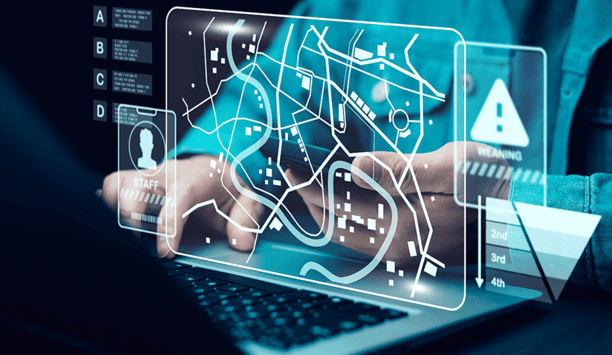
An AI SOC does not rely on a single stream of information. Instead, it thrives on a layered ecosystem of data that, when combined, creates clarity out of noise. Telemetry is the raw pulse of your environment. It includes logs, network flows, endpoint activity, cloud events, and user behavior data. Every login, file access, process execution, and API call leaves a trace. Telemetry is abundant, continuous, and often overwhelming in its volume.
Security signals are what emerge when telemetry is analyzed. These include alerts from intrusion detection systems, endpoint detection tools, SIEM correlations, and anomaly detections. Signals are essentially telemetry that has been interpreted through a security lens.
Human-readable explanations
Contextual data adds meaning to both telemetry and signals. It answers critical questions: Who is the user? What is the asset’s value? Is this behavior normal for this system? Context includes asset inventories, identity and access information, threat intelligence feeds, vulnerability data, and even business risk profiles. Individually, each layer tells a partial story. Together, they form a narrative that AI can understand, reason about, and act upon.
If telemetry is the raw orchestra and signals are the sheet music, large language models are the conductor bringing it all together. AI-driven SOCs increasingly use LLMs to interpret complex, multi-source data in ways that traditional rule-based systems cannot. Instead of relying solely on predefined signatures or rigid correlations, LLMs can understand relationships between events, infer intent, and even generate human-readable explanations.
Accessing sensitive data
For example, rather than flagging three separate alerts for unusual login activity, file access, and privilege escalation, an AI SOC can stitch these together into a single, coherent incident narrative. It can explain that a compromised account was used to move laterally and access sensitive data, reducing both noise and response time.
LLMs also enhance threat hunting by allowing analysts to query systems in natural language. A question like “Show me unusual login patterns for privileged users in the last 24 hours” becomes actionable without complex query syntax. This bridges the gap between human intuition and machine precision. Perhaps most importantly, LLMs enable adaptive learning. They continuously refine detection logic based on new data, emerging threats, and organizational context. This transforms the SOC from a reactive function into a proactive, learning system.
Isolated data points
The journey from raw data to actionable defense is not magic. It is a carefully orchestrated pipeline where each step adds clarity and value. It begins with data collection, where telemetry is ingested from across endpoints, networks, cloud platforms, and applications. Modern AI SOCs rely on scalable data lakes and streaming architectures to handle this volume without bottlenecks.
Next comes normalisation and enrichment. Data from different sources is standardized into a common format and enriched with contextual information such as user roles, asset criticality, and threat intelligence. This step transforms isolated data points into something meaningful. Then comes analysis and correlation. Machine learning models and LLMs analyze patterns, identify anomalies, and correlate events across time and systems. This is where signals are refined and prioritised.
Effectiveness of automation
Following this is decision-making and automation. AI systems assess the severity and likelihood of threats, triggering automated responses where appropriate. This could include isolating an endpoint, revoking access, or escalating to an analyst with a detailed incident summary.
Finally, there is feedback and learning. Every incident, whether a true positive or false alarm, feeds back into the system. This continuous loop improves detection accuracy over time. At every stage, the quality and completeness of data determine the effectiveness of the outcome. An AI SOC is only as intelligent as the data it consumes. Poor data is like feeding distorted notes into that orchestral performance. The result is confusion rather than clarity.
Incomplete telemetry can create blind spots where attackers move undetected. Noisy or unfiltered data can overwhelm models, leading to false positives and alert fatigue. Inconsistent data formats can break correlations and reduce the effectiveness of automation.
More accurate prioritisation
On the other hand, high-quality data enables precision. It allows AI systems to distinguish between benign anomalies and genuine threats. It supports faster investigations, more accurate prioritisation, and more confident decision-making.
Consider this question: if your SOC had perfect visibility but imperfect context, would it truly understand what it is seeing? Building strong data foundations is not a one-time task. It is an ongoing discipline that requires both technical and organizational commitment. Start by ensuring comprehensive visibility across the environment. This means integrating telemetry from endpoints, networks, cloud services, and identity systems. Gaps in visibility often become entry points for attackers.
Improving model performance
Focus on data normalisation and standardization. Use consistent schemas and formats so that data from different sources can be easily correlated. This reduces friction in analysis and improves model performance.
Invest in context enrichment. Maintain accurate asset inventories, classify data sensitivity, and integrate threat intelligence feeds. Context turns raw data into actionable insight. Prioritise data quality management. Regularly audit your data sources for accuracy, completeness, and relevance. Remove redundant or low-value data that adds noise without insight. Implement feedback loops between analysts and AI systems. Human expertise remains essential for refining models, validating detections, and improving outcomes over time. Finally, ensure governance and security of data itself. Sensitive telemetry and contextual information must be protected, with clear policies for access, retention, and compliance.
Large language models
An AI SOC is not just a security function. It is a data-driven capability that reflects the maturity of an organization’s digital ecosystem. When data is treated as a strategic asset, security becomes more than defense. It becomes intelligence. Organizations that invest in high-quality data pipelines, contextual enrichment, and AI-driven analysis gain a significant advantage. They move faster, see clearer, and respond smarter.
AI-native SOCs are reshaping how organizations defend against cyber threats, but their effectiveness depends on the data that powers them. Telemetry provides the raw inputs, security signals highlight potential issues, and contextual data adds meaning and direction. Together, they enable AI systems, particularly those powered by large language models, to detect, understand, and respond to threats with unprecedented speed and accuracy.
Modern security powerhouse
The journey from data to defense involves careful collection, enrichment, analysis, and continuous learning. Along the way, the importance of high-quality data cannot be overstated. Without it, even the most advanced AI will struggle to deliver value. If users are looking to transform their SOC into an intelligent, adaptive defense system, the question is not whether to adopt AI, but whether the data is ready.
To explore how expert-led, AI-driven approaches can elevate the security operations, consider partnering with Rewterz. Their specialists can help you build the data foundations, integrate advanced AI capabilities, and turn the SOC into a truly modern security powerhouse.