What Are The Security Challenges Of The Transportation Industry?
17 Jan 2022


- Transportation industry security impacts daily life and economic well-being.
- Transit stations face challenges due to high foot traffic and valuable shipments.
- Evolving industry requires advanced solutions for emerging transportation security issues.
Editor Introduction
The transportation industry is unique because it plays a role in both the minutiae of everyday life and the overall economy's well-being. Providing uninterrupted and efficient transportation services depends heavily on the safety and security of transportation entities. Due to the vast amount of people frequenting transit stations and the importance of the items on ships and ferries, the transportation sector faces multiple challenges that evolve as the industry advances. We asked this week’s Expert Panel Roundtable: What are the security challenges of the transportation industry?


The key challenges include protecting passengers and employees, reducing crime and vandalism along transportation routes, responding to emergencies rapidly, resolving liability claims quickly, and ensuring privacy and local laws are followed. Operators can overcome these challenges by investing in a scalable enterprise video management system that supports both mobile and fixed video surveillance under the same umbrella and within the same user interface. This allows operators to monitor all of their locations and assets. Furthermore, a management solution that integrates well-known data elements such as GPS information (speed, location, direction) and vehicle data alarms and parameters (e.g., bus number, operator ID, impact, hard brake, door open/closed) provides operators with a comprehensive view of onboard activity. As with all investments and partnerships, the future is as important as the now; therefore, ensuring solutions have adaptive and transformational AI, cloud and remote on-demand services has become a requirement.

Public Transport Operators (PTOs) were severely hit by the pandemic, which reduced sales volumes by making it difficult to distribute and sell physical tickets. The industry’s digital transformation will enable PTOs, post-pandemic, to reach customers with tailored offers through mobile ticketing sales channels that are always available using Apps and smart phones. These channels, however, must be secure and fraud-free. Widely adopted cryptographic mobile ticketing platforms make this possible, including MIFARE® and the Calypso open standard for using contactless cards with Near Field Communications (NFC) phones. These platforms provide the interoperability and flexibility to create technological infrastructures underlying new secure mobile ticketing solutions. For example, HID Global offers a software development kit (SDK) that is fully certified to Calypso Host Card Emulation (HCE) standards. It speeds the deployment of physical and virtual credential solutions that are compatible with the verification processes of modern electronic ticketing systems but use smartphones.

This is a bit of an extensive question and could have many different viewpoints on how to best answer. COVID-19 hit the transportation industry incredibly hard. As it attempts to recover, it faces issues affecting land, air, and sea travel. The office of Inspector General (OIG) and Department of Transportation (DOT) understand that the current most prominent challenges facing transportation security are information and data privacy, access control and identity management, and finances allocated to security. It appears that many in the industry and DOT have begun to adopt cloud-based solutions to protect data, verify credentials, and provide a scalable, remote option for the industry. Additionally, cloud solutions offer a cost-efficient alternative to an on-site solution. It’s essential to remember that transportation is a complex industry with various needs and requirements, and a combined access control and video solution, while necessary, is only part of a comprehensive security system.

Like other industries, the transportation market is on the brink of a sea change because of the digital revolution. Users are seeing how the cloud and connected devices support a more rapid and reliable transportation network through faster transit times, better loading and unloading methods, prompt product delivery, enhanced safety, and more operational efficiency. Without a doubt, this market has seen the benefits of using the cloud to improve processes and enhance security. Some have revolutionised how they track shipments with intelligent mobile applications, while others use cloud-based warehouse management systems to support higher supply chain performance and optimise order management and production planning across warehouse locations. Now cloud-based security platform solutions are changing how security leaders aggregate safety, security, and business data through video and artificial intelligence (AI). Using AI technology to identify actionable insights within previously untapped video monitoring and unstructured IoT data is a potential gold mine.

Transportation methods – like airplanes, trains, ferries, and buses – play a critical role in day-to-day activities that underpin economic and social stability. Therefore, these intricate and interconnected transit systems must leverage appropriate technology to protect citizens, passengers, data, and assets from preventing operational disruption. Individuals, equipment, and cargo must be secured and protected at every step of the way. Doing so depends on highly complex and often sprawling landscapes. The pathways used for travel, like seaports and airports, need to be monitored constantly to ensure they are clear, free from risk, and running smoothly. These transportation facilities need to have suitable systems to protect what matters most because they face an inherent risk of terrorism and other threats and vulnerabilities. IT system integrity, as well as environmental and structural factors, are always top of mind. While the exact requirements may vary, all these environments demand a comprehensive and intelligent security solution.

Transportation can mean a wide variety of things, but in the case of public transportation, using surveillance technology onboard buses and trains can prove to be a challenge. While in transit, buses and trains cover a lot of area and record a lot of video, making it difficult to have enough onboard storage space and good video resolution to store it all. It can also be challenging when video is only downloaded from these cameras at certain intervals, since incidents can occur at any point during travel. Security personnel can’t have live viewing or investigations if the video feed is still in transit. Dynamic resolution scaling and increased remote bandwidth capabilities have helped with this a lot, but it still proves to be difficult in rural locations.

The transportation market is heavily regulated to facilitate safe environments and to combat significant and complex threats that evolve as the industry advances. Video surveillance is a key component. A sophisticated, video-centric security software platform can be crucial in detecting and mitigating security concerns. Video management systems that integrate with other security platforms and devices can help operators identify potential risks, making an organization's security approach more proactive. The ability to provide comprehensive coverage to correlate events across different security and IT devices is crucial in providing rapid and effective event responses. With complex and multi-tiered environments, transportation providers also require video management to scale on-demand and enable flexible options for new integrations. Containerized VMS platforms meet both these requirements but at a lower cost than other solutions. The containerized approach means fewer servers, more minor updates, increased flexibility, higher IT security, and more significant ROI.

The transportation industry is like no other, it moves! Whether your transportation mechanism is a plane, train, bus, ship, or subway, a lot can happen between point A and B. And not only can a lot go wrong, but the teams responsible for operations safety are different, and it’s difficult to confirm who did, what and when. A malfunction at any point can have dire implications on safety and security. A malfunction can come in many different forms, from a technical issue in the operating systems, to physical mistakes or omission in ensuring a safe and secure environment. The challenge is, not the lack of data on the technical side, but the lack of accurate, real-time data on the physical side. On the physical side, we continue to rely on manual, paper based, antiquated methods, which is exposing the transportation industry to increased risk of a safety and security incident.

One of the significant challenges for the transportation industry is the prevalence of proprietary analog video systems, recording devices and software. Proprietary solutions, even if they have a path to IP, limit the flexibility, growth and potential to integrate with other systems. Bus and light rail are a typical example where proprietary systems require staff to manually swap hard drives from vehicles. If a camera or recorder is non-functioning, it’s only discovered when video evidence is missing. With the wealth of data available, it’s more important than ever to flag video to events generated by MIB and CAN bus systems. The best solution should enable more integration and automation where flagged events and data are automatically offloaded via 5G/4G and system and device status is available in real-time.
Editor Summary
Complexities of the transportation market include a need to protect passengers and employees while meeting the expectations of customers, system operators, and regulators. In addition, it is an industry that was hard-hit by the COVID-19 pandemic. Transportation is on the brink of a sea change driven by the digital revolution. A primary tool of that revolution is data, including unstructured video feeds. Managing data – and leveraging it across the various technology components of a transportation entity – will continue to challenge transportation operations, although the payoffs will be worth the effort.
Hanwha Vision America products


Hanwha Vision America news
At ISC East 2025, Hanwha Vision is showcasing a range of high-performance surveillance solutions designed to elevate the security experience and transform an organization’s total operations. Attendees can see the future of security technology at Booth 507, ranging from AI cameras equipped with the Wisenet 9 System on Chip (SoC); to the new OnCAFE access control platform; to DesignPro, an intuitive project design and management resource. Hanwha Vision’s exhibit at ISC East demonstra...
Hanwha Vision is showcasing the future of security technology at GSX 2025 (Booth 2326), featuring its new Wisenet 9 System on Chip (SoC) and a growing suite of cloud-based solutions, including the new OnCAFE access control platform. Hanwha Vision will demonstrate how its latest technology simplifies security management, while providing powerful, intelligent, and scalable protection for any organization. Attendees will experience a full line of AI-powered cameras and devices supported by an...
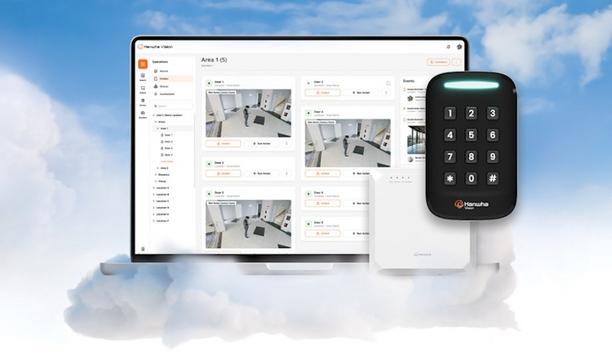
Hanwha Vision is opening new doors for security applications with the launch of OnCAFE (Cloud Access For Everyone), a cloud-hosted Access Control as a Service platform and the latest tool in the company’s expanding line of cloud-based solutions. Delivering a user-friendly, scalable, and cost-effective option for access control needs, OnCAFE reduces the deployment challenges traditionally associated with system initialization, device, user, and software management. Han...
Hanwha Vision America case studies
Wilson Bank & Trust, member FDIC, is an independent, community-based bank that began operating in Tennessee, USA in 1987. They have mortgage offices, operations centers, ATMs and branches located in and around Middle Tennessee that serve the city and surrounding rural areas. In total, they have operations and security at approximately 40 locations. One of the keys to their on-going success is their continuous search to improve their offerings. This drive extends to their physical security a...
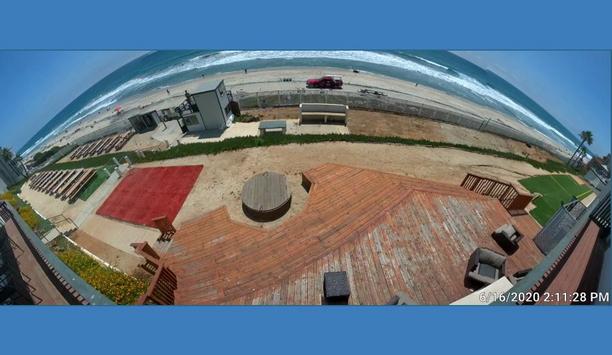
Hanwha Techwin America, a global supplier of IP and analog video surveillance solutions, has announced that Army and Navy Academy, a college preparatory military boarding school in California, has upgraded its security infrastructure with Hanwha security cameras. Located on a 23-acre beach-front property, the Army and Navy Academy is home to more than 300 students and employs more than 140 faculty and staff members. Two-fold surveillance upgrade According to Jeffrey Gibson, a system with anal...
Recently, Planet Fitness, with the help of their preferred system integrator Adirondack Direct, incorporated a video surveillance solution from Hanwha Techwin and Genetec that not only enhances security, but also improves operations. When leadership evaluated security at their 70-plus corporate run locations a few years ago, they chose to incorporate a video surveillance solution that would address security needs and would be advanced enough to help with management and operations. Each of...
Hanwha Vision America white papers







Hanwha Vision America virtual events

Hanwha Vision America videos

Hanwha Customer Stories: Buffalo And Erie County Naval And Military Park

COVID-19 Solutions: '5 Minutes With' Video Interview with Thomas Cook from Hanwha Techwin America
Hanwha Techwin’s Wisenet X series Plus
Introducing Hanwha Wisenet X Series Exclusive Wisenet 5 SoC Chipset
Expert commentary

Security beat