What is the Role of Higher Education to Create Next-Gen Security Leaders?
23 Sep 2020


- Higher education crucial for nurturing future leaders in the security industry.
- Demand for tech expertise highlights need for computer science and engineering graduates.
- Security leadership benefits from diverse educational disciplines and integrated learning.
Editor Introduction
Traditionally, security industry professionals have often come from backgrounds in law enforcement or the military. However, the industry is changing, and today’s security professionals can benefit from a variety of backgrounds and educational disciplines. The industry’s emphasis on technology solutions suggests a need for more students of computer science, engineering and other technology fields. The closer integration of security with related disciplines within the enterprise suggests a need to prepare through a broad array of educational pursuits. We asked this week’s Expert Panel Roundtable: What is the role of higher education to create the next generation of physical security leaders?


The most successful players in the next generation of physical security leadership will have deep expertise in technology and data science. Colleges and universities are ready to impart these skills, and enterprising young professionals who take advantage of these courses will find their way into physical security. The most impactful of the current generation have combined investigative capabilities with a grasp of emerging technologies and the ability to build solid use cases and ROI analyses. The next generation of physical security leaders will take data analysis to a new level. They will be required to evaluate structured and unstructured data sets (shrink, crime statistics, financials, social media, etc.), extract useful insights, and implement technology-based solutions that are impactful. That means course work in statistical modeling, visualization, and data mining. In the near future, it’ll be common to see security and asset protection leaders with data science degrees from top universities.

Higher education has a vital role to play in training the next generation of security professionals, ensuring the talent gets the technical and expert training needed to enable the security industry to thrive. When it comes to theory, research and cutting-edge development, academia is essential. It also works very well when combined with real-world experience. For example, the BSIA’s Skills for Security scheme in the United Kingdom appeals to graduates as well as those leaving compulsory education, introducing the reality of security business as well as theory. Equally, universities would do well to appeal directly to home-grown security students, especially with COVID-19 restrictions affecting the intake of international students. For example, at some UK Engineering faculties, 50% of the students are Chinese, which is difficult to maintain in the new normal. As healthcare safety restrictions and geopolitics evolve, appealing to a more local group of students will be essential.

The physical industry is no longer just focused on solving traditional security problems but finds itself at the cornerstone of an organization’s overall strategy from operations and business intelligence to cybersecurity. Now, more than ever, our industry is playing a major role in shaping new systems, policies and procedures for businesses that are trying to adapt to the challenges of a global health crisis. The old ways of thinking and working will be blockers to this transformation. The next generation of security leaders will need to be savvy businesspeople and informed technologists in addition to their traditional security responsibilities. They will be multifaceted individuals with varied backgrounds who realize that learning never stops; they will invest time and energy in continuing their education to develop the strategic acumen, technical knowledge, financial intelligence, and analytical skills that are required to lead our industry into the future.

Education in the physical security industry is becoming more prevalent. As such, having a background in the military or law enforcement are no longer prerequisites for a career in the security industry; instead, you’re more likely to need a four-year degree. One of the biggest catalysts for this shift has been the increased sophistication of security systems, as well as the threats. Crime is evolving and becoming more and more sophisticated, so the workforce needs to adapt towards the intellectual side as well. Security today requires a more specialized skill set and that requires a change in perception of what role security industry professionals play. However, the security industry has historically been conservative and slow-moving – emphasizing the need to shift its own workforce perception. With this in mind, companies can focus on outreach programs and other career pathways designed to introduce a younger, more diverse workforce into the industry.

Cybersecurity concerns will only grow as our industry evolves, so the next generation of physical security leaders will need to treat every aspect of the business holistically. We need to educate future leaders to think beyond products and profits and to concentrate on the entire supply chain. From designing hardware and software, to selling and installing systems, it’s important to see the bigger picture. With any professional IoT sensor or device, it’s going to be increasingly important to know where it is made, where the parts came from and whether it’s simply a rebadged OEM product. As security systems continue to evolve into comprehensive data collection ecosystems, they will become more interconnected with other business and operations processes. Educators need to focus on barriers to success by recognizing and removing silos among IT, operations and sales and marketing departments.

The role of higher education should be about creating operational understanding and combining it with a firm grasp of how technology can be applied. These two aspects need to work “hand in glove” to create modern physical security ecosystems. Emerging technologies are having a significant impact on the systems we create and are expanding the effectiveness of the security we deliver. The next generation of leaders will need a firm understanding of Artificial Intelligence, for example, how it can analyse a person’s behaviour in real-time, and how it can be applied. A fundamental role of a physical security leader is to develop protocols for incident response. The execution of such protocols relies on the effectiveness of the human brain to comprehend and execute, in a time-critical environment. Higher education helps future leaders explore where technology can direct human attention, interaction and ultimately speed-up real-world action.
Editor Summary
The physical security industry is changing, and personnel needs must adapt to those changes. In general, the next generation of security leaders can benefit from a broader and deeper level of knowledge about a variety of subjects, some of which can be achieved through higher education. It’s harder than ever for security professionals to learn “on the job.” Rather, the candidates best qualified to build the future of the physical security industry will need to study hard and step into the industry better prepared to excel.
Hanwha Vision America products



Hanwha Vision America news
At ISC East 2025, Hanwha Vision is showcasing a range of high-performance surveillance solutions designed to elevate the security experience and transform an organization’s total operations. Attendees can see the future of security technology at Booth 507, ranging from AI cameras equipped with the Wisenet 9 System on Chip (SoC); to the new OnCAFE access control platform; to DesignPro, an intuitive project design and management resource. Hanwha Vision’s exhibit at ISC East demonstra...
Hanwha Vision is showcasing the future of security technology at GSX 2025 (Booth 2326), featuring its new Wisenet 9 System on Chip (SoC) and a growing suite of cloud-based solutions, including the new OnCAFE access control platform. Hanwha Vision will demonstrate how its latest technology simplifies security management, while providing powerful, intelligent, and scalable protection for any organization. Attendees will experience a full line of AI-powered cameras and devices supported by an...
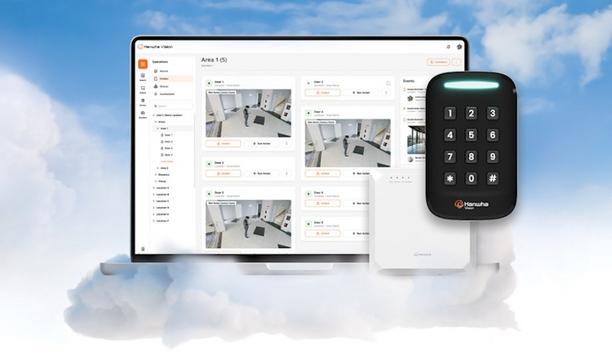
Hanwha Vision is opening new doors for security applications with the launch of OnCAFE (Cloud Access For Everyone), a cloud-hosted Access Control as a Service platform and the latest tool in the company’s expanding line of cloud-based solutions. Delivering a user-friendly, scalable, and cost-effective option for access control needs, OnCAFE reduces the deployment challenges traditionally associated with system initialization, device, user, and software management. Han...
Hanwha Vision America case studies

Wilson Bank & Trust, member FDIC, is an independent, community-based bank that began operating in Tennessee, USA in 1987. They have mortgage offices, operations centers, ATMs and branches located in and around Middle Tennessee that serve the city and surrounding rural areas. In total, they have operations and security at approximately 40 locations. One of the keys to their on-going success is their continuous search to improve their offerings. This drive extends to their physical security a...

Hanwha Techwin America, a global supplier of IP and analog video surveillance solutions, has announced that Army and Navy Academy, a college preparatory military boarding school in California, has upgraded its security infrastructure with Hanwha security cameras. Located on a 23-acre beach-front property, the Army and Navy Academy is home to more than 300 students and employs more than 140 faculty and staff members. Two-fold surveillance upgrade According to Jeffrey Gibson, a system with anal...

Recently, Planet Fitness, with the help of their preferred system integrator Adirondack Direct, incorporated a video surveillance solution from Hanwha Techwin and Genetec that not only enhances security, but also improves operations. When leadership evaluated security at their 70-plus corporate run locations a few years ago, they chose to incorporate a video surveillance solution that would address security needs and would be advanced enough to help with management and operations. Each of...
Hanwha Vision America white papers







Hanwha Vision America virtual events


Hanwha Vision America videos


Hanwha Customer Stories: Buffalo And Erie County Naval And Military Park
COVID-19 Solutions: '5 Minutes With' Video Interview with Thomas Cook from Hanwha Techwin America
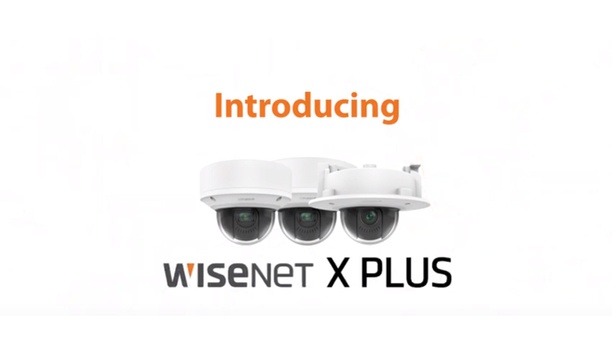
Hanwha Techwin’s Wisenet X series Plus
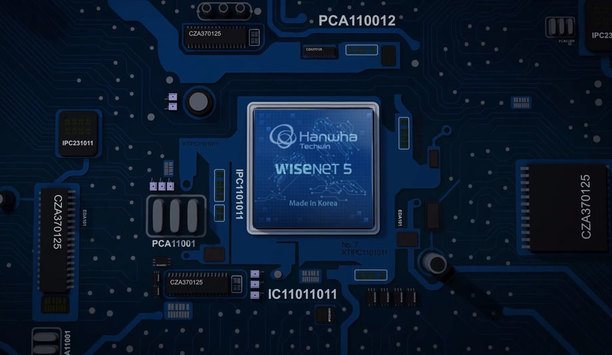
Introducing Hanwha Wisenet X Series Exclusive Wisenet 5 SoC Chipset
Expert commentary

Security beat