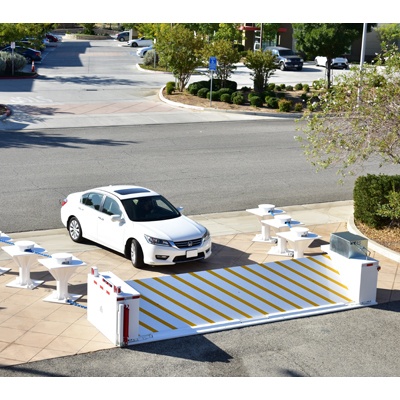
Bollards are essential security measures that effectively control vehicle access, safeguard buildings, define pedestrian zones, and minimize accidents.
When constructed to meet established industry standards, they become powerful tools in maintaining safety. Understanding standard bollard dimensions and their spacing is crucial in optimizing their effectiveness.
Bollard Dimensions and Their Importance
The dimensions of bollards, including their size, type, and installation method, must comply with safety regulations and the intended use. Generally, industry standards maintain bollard sizes within a specific range to ensure uniformity and effectiveness.
Optimal Bollard Height
Typically, bollard heights range from 30 to 44 inches, with most falling between 36 and 42 inches
Typically, bollard heights range from 30 to 44 inches, with most falling between 36 and 42 inches. A 42-inch bollard is widely regarded as offering adequate protection in various impact scenarios. Bollards shorter than 36 inches often direct foot traffic in public spaces, such as parks and crosswalk entrances. These are especially useful for low-impact risk situations and can also be seen at traffic islands, where 24-inch posts provide an economical solution.
Use of Taller Bollards
Bollards exceeding 42 inches are more suitable for high-risk environments as they are highly visible and can better withstand impacts from oversized vehicles and heavy equipment. Installing them at loading docks or areas with high-clearance vehicles increases their efficacy. Notably, standard bollard heights exclude any underground portions, and those with deep foundations offer superior protection by absorbing impact forces.
Considerations for Bollard Design
The standard dimensions for bollard diameters typically span from four to six inches. These dimensions apply to both regular and heavy-duty bollards, focusing on the core measurement, excluding decorative elements. Narrow bollards, just a few inches wide, effectively demarcate pedestrian pathways and manage light traffic. Larger bollards, with diameters of 12 inches or more, are engineered to control heavy traffic moving at higher speeds. Their crash test ratings provide detailed information about performance capabilities.
Spacing for Optimal Effectiveness
Their crash test ratings provide detailed information about performance capabilities
Proper bollard spacing is crucial to limiting specific traffic types. Usually, bollards are placed less than five feet apart, with recommendations from the American Society for Testing and Materials advocating no more than 48 inches for optimal effectiveness. However, well-designed bollard arrays can allow for more extensive spacing without compromising performance. Accessibility is another consideration; the Americans with Disabilities Act mandates a minimum of three feet between bollards to facilitate wheelchair access.
Ensuring ADA Compliance
For entrances that require a single bollard, adequate clearance on at least one side is necessary for accessibility. Alternatively, there must be an ADA-compliant entrance available. For instance, a bollard placed at the end of a path meant to restrict bicycles should allow for wheelchair access or offer alternative routes.
Guidelines for Selecting Bollards
The selection of bollards depends on several factors, including their intended purpose, potential underground obstructions, and the coverage required. Bollard diameter and construction method also influence their effectiveness. A 12-inch tall bollard is less effective at stopping a truck compared to a 42-inch one. Building codes may dictate specific size requirements, and these can vary by location, necessitating consultation with local authorities.
Factors Affecting Bollard Visibility
In high-traffic areas where bollards serve as the primary protection between pedestrians or workers and vehicles, visibility is of high importance. Larger bollards are more noticeable, serving as effective deterrents in such settings.
When selecting a vehicular access control solution like bollards, factors such as purpose, crash rating, and installation requirements should be thoroughly evaluated. Bollards ensure restricted access and direct pedestrian movement across various environments, including commercial, municipal, and residential settings.
Bollards are excellent security devices that limit vehicle access to protect buildings, establish pedestrian and work zones, and reduce accidents. To work effectively, they must be built to accepted industry standards. Learn about typical bollard dimensions and spacing and why they matter.
What are bollard dimensions? Safety regulations and your intended purpose will dictate the size, type, and installation method of bollards needed. However, industry standards keep most bollards within a limited range of sizes.
How Tall Should a Bollard Be? Bollard height is usually between 30 and 44 inches, with most falling between 36 and 42 inches. A 42-inch bollard provides sufficient protection against many different impact scenarios.
Cost-effective solution
Shorter bollards, below 36 inches, are frequently used to direct foot traffic. They are common in parks, at crosswalk entrances, and in other public spaces. For example, you might find 24-inch posts marking a traffic island. They are an excellent, cost-effective solution in situations with low impact risk.
Taller bollards, including those above 42 inches, are more visible and designed for high-risk areas. Consider adding tall bollards to loading docks and other areas with oversized vehicles and heavy equipment. In addition to being highly visible, they can more effectively stop vehicles with high ground clearance than shorter versions.
Standard bollard heights do not include any portions that are installed underground. While you can mount bollards to existing surfaces, those providing the highest level of protection have deep foundations that absorb impact.
Designating specific sections
Standard bollard dimensions are generally between four and six inches. This dimension is often the same for both standard and heavy-duty bollards. However, size is not the only factor that affects performance. The dimensions relate to the bollard core, exclusive of any decorative sleeves.
The thinnest bollards are only a few inches across. These are excellent for marking pedestrian areas and guiding light traffic. They can also be used to designate specific sections in entertainment and sports venues. The largest bollards can be 12 inches or wider. They are generally designed to restrict heavy traffic traveling at significant speeds. A crash test rating will provide more details about specific bollard capabilities.
Spacing considerations for standard bollards
The spacing of bollards should effectively limit the intended types of traffic. This is usually less than five feet apart. The American Society for Testing and Materials, which performs crash testing and establishes ratings, recommends a spacing of no more than 48 inches for maximum effectiveness.
Spacing can extend further in properly designed bollard arrays. However, they should not be so close that it discourages correct use. Another consideration behind standard bollard spacing is accessibility. The Americans with Disabilities Act requires at least three feet between bollards to allow wheelchair access.
ADA-accessible entrance
When a single bollard is used to obscure an entrance, it should allow enough clearance on at least one side for accessibility, or an alternate ADA-accessible entrance should be available. For example, if a bollard is at the end of a pedestrian-only path to keep bicycles out, you will naturally also exclude wheelchair users and need to make accommodations.
How large are bollards? There are several reasons behind common bollard dimensions. First, they must be of sufficient size, depth, and spacing to perform the intended task. This applies to the diameter and construction method of bollards as well. For example, a 12-inch tall bollard is not likely to stop a truck as easily as one that is 42 inches high.
Building codes may require bollards to be within a specific size range. These vary by location, so be sure to check with the local building department for bollard code requirements before choosing a design. Visibility is also a factor. Users can see a larger bollard more easily than a small one. This is important in high-traffic areas where bollards are the only things protecting pedestrians or workers from vehicles.
Providing effective protection
When selecting a vehicle access control solution like bollards, users should consider several factors that can affect effectiveness, installation, and placement. These include:
- Intended purpose of the bollards
- Presence of underground utilities or obstructions
- Size of area needing coverage
Crash rating is just as important as bollard size. A well-engineered design can provide effective protection in a small package. However, you may need to take extra steps for visibility.
Bollards reliably control vehicle access to restricted areas and direct pedestrian traffic. They are used in commercial, municipal, and residential areas. At Delta Scientific, we build bollards to meet rigorous performance and safety standards. Contact us to find bollard dimensions that meet your site’s unique safety needs.