Expert commentary
Integrators need to be well versed in Total Cost of Ownership (TCO), when discussing video surveillance options with their customers. Business leaders are looking for the best, most economical technology that will address their security needs, and they also want to avoid being blind-sided by unplanned technology operations and service costs. While most folks understand that the initial cost of a video surveillance system is not the same as the total cost of ownership, many might be surprised to...
Back in 1890, Samuel Warren and Louis Brandeis published a ground-breaking article in the Harvard Law review called ‘The Right to Privacy’. To this day, it is regarded as one of the most influential essays in the history of American law and is widely regarded as the first publication in the United States of America to advocate a right to privacy, articulating that right primarily as a ‘right to be let alone’. In this essay, the authors questioned whether the arrival of p...

Many people, quite correctly, point to Salesforce.com—which launched in February of 2000—as the first example of cloud computing. In the years following, the term ‘cloud’ became so popular and was applied to so many products and service offerings, that it became almost meaningless. The result was cloud confusion in the business world and in the media. In one stark example from 2008, Oracle CEO Larry Ellison described news stories about cloud as, ‘complete gibberis...

We must leverage existing technologies like social media monitoring, gunshot and weapons detection, and real-time watchlist alerting. We owe it to our children. The recent news of the Dallas elementary school shooting absolutely gutted me. It’s a tragic and incomprehensible loss of life. A question I hear being asked again and again – could technology have made a difference? From my experience, modern technologies can help schools mitigate some of the damage and provide an early w...
Currently and unfortunately, there is no such thing as Cloud Police. If there were, two-thirds or more of the companies using ‘cloud’ in their advertising and documentation would be in Cloud Jail for seriously misusing the word in their marketing. The term ‘Cloud’ is over-used and misused—sometimes intentionally and knowingly, but also often in ignorance. It’s just a word—but in the context of cloud computing technology, it does have a specific meaning...

The world around us is full of technological innovation. Smart locks are commonplace in our homes and control access to buildings, but when it comes to industrial locking and access control for equipment cabinetry, options can seem limited. Equally, there’s not enough accessible information to act as a guide. The development of new technologies and cabinet capabilities feels as though it is being held back. But that doesn’t have to be the case. Common problems are seen across the l...
Trevor Dearing, the EMEA Director of Critical Infrastructure Solutions at Illumio, said “It is encouraging to see NIST releasing updated guidance acknowledging the increase in cyber-attacks targeting the supply chain and the consequent necessity to bolster the supply chain’s cyber security. We can no longer turn a blind eye to the exponential increase in attacks on the IT systems of manufacturers, logistics companies and organizations, which ultimately target the operational part of...

One key aspect of hardware design is choosing an appropriate form factor for your product. In today's world, form factor not only defines your product's size and shape but also includes its aesthetic appeal. While size and shape are important, another aspect that is prominent when dealing with RFID card readers (including NFC and BLE mobile credential readers) is the reader's location within the end device and the size of the RF antenna. This article focuses on some key considerations relating...
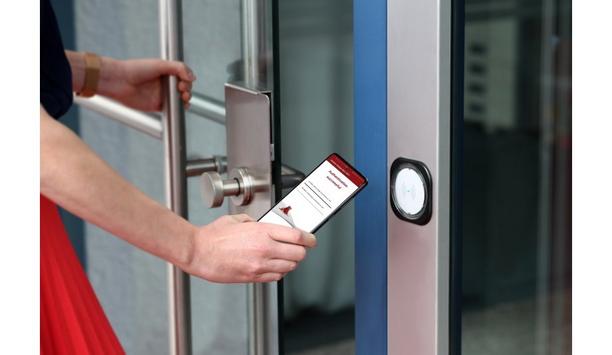
Today, RFID readers can be found in numerous devices requiring user authentication, authorization and access control, from doors to multi-function printers to point of sale terminals to computers and more. RFID is a simple, secure and convenient access control solution for end users and original equipment manufacturers. RFID readers/writers come with a broad range of form factors, capabilities and configurations. Choosing the right RFID reader When choosing a reader to embed into a system or d...
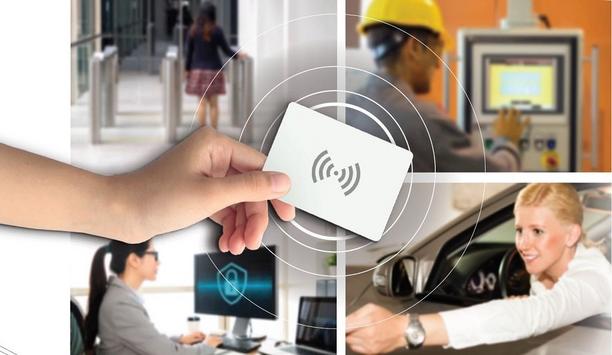
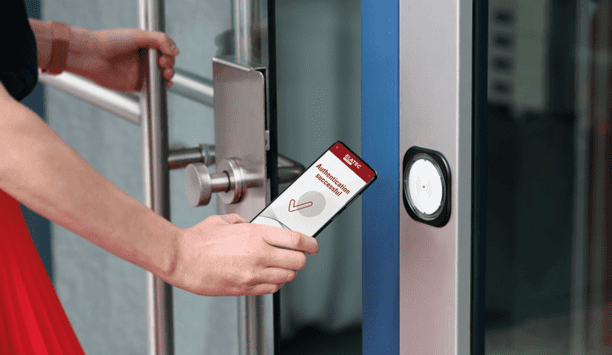
With increasing security and public health concerns, contactless credentials are gaining more and more importance. Contactless credentials can be divided into two main categories: soft credentials that include mobile phone applications that tap into their BLE/NFC hardware and transmit the data, and hard credentials that typically include low frequency (125 kHz) and high frequency (13.56MHz) based passive RFID transponders. With the help of these credentials, organizations can tackle safety conc...

In the era of the ‘Great Resignation’, it may seem counterintuitive to say that people will power business security in 2022. However, a convergence of challenges over the past few years has led to an undeniable trend in the security industry: With more technology comes the need for more people to monitor, analyze and leverage the data that technology produces. Always-on approach to security Since businesses were forced into lockdown two years ago, we’ve seen technology adopti...

Every day, millions of people worldwide use their personal credentials to prove their identity and access a range of services, from databases in their workplace to the banking app on their smartphone. But while this ensures only authorized people have access to certain systems, the use of this personal data opens users up to cyber risks, primarily in the form of identity theft. On Identity Management Day, Source Security spoke to seven IT and cybersecurity experts to discuss their experiences a...
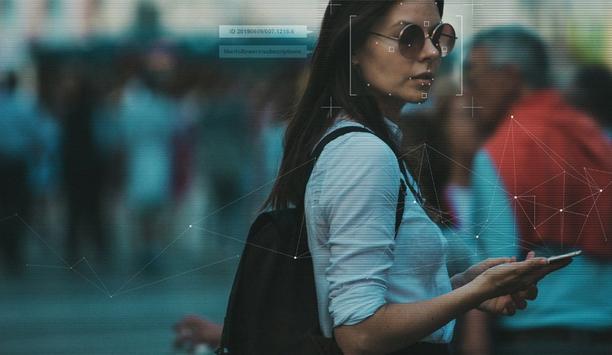
Most individuals have strong opinions about what is more essential to our civilization: personal privacy or security. After more than a decade of technology enabling greater and greater amounts of Personally Identifiable Information (PII) and data harvesting, now the pendulum is swinging towards a society that places more emphasis on individual rights and privacies. This shift is manifesting in a variety of ways, quickly changing the technology, security and cyber security landscapes, and requi...

Software as a Service (SaaS) provides computer equipment, OS, and software customized to the user’s purposes as a service. Access control can work in the same way. If you work in the physical security industry, especially concerning access control, you have probably heard about the term ‘ACaaS’ recently. ACaaS is a combination of ‘access control’ and ‘SaaS’ (Software as a Service). From a semantic point of view, ACaaS means providing cloud-based access c...

Technology continues to transform the physical security industry, helping companies become more aware of the full spectrum of risks their organization faces. Our new survey provides strong evidence that the use of these tools is solving some problems, but their implementation may create new challenges. In our 2022 State of Protective Intelligence Report, 93% of respondents said their company was actively adopting new threat intelligence, monitoring and alerting solutions for physical security,...

Most of the assumptions you’ve made about gunshot detection could be wrong. To those security professionals who stay on top of their homework, this is probably not true, but the ‘you’ in this context is directed to the collective security industry reader that, when looking into indoor gunshot detection products, sees terms like concussive force, percussion, or shockwave and wonders if these are important differentiators – or something the marketing department decided woul...
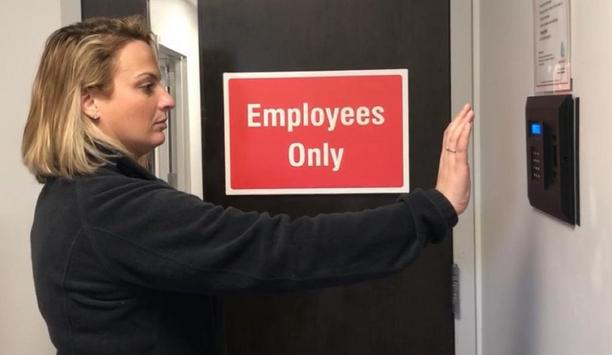
This is an era of digital revolution and with it comes dozens of new security dangers. Every gadget, from our smartphones to our security cameras, need some kind of protection from external hacking. However, how can we assure the safety of our devices, workplaces, etc.? Biometric security is one such security method that has emerged, since it is both efficient and perceived foolproof. It offers an additional layer of security for businesses and personal security systems. Biometric security syste...
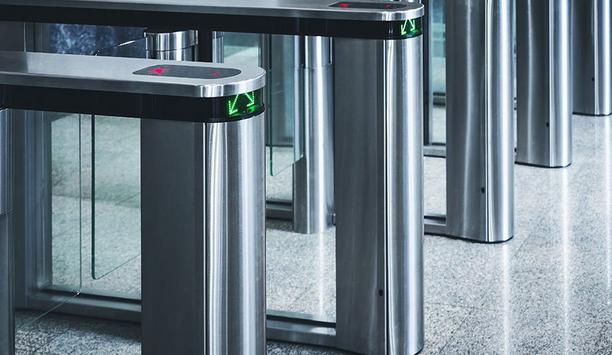
Access control for buildings is nothing new. Early forms of security access for business security systems were introduced in the 1960s, as business owners and managers looked for alternatives to keys, as a result of needing to frequently replace them, when there was a change in personnel. It’s only in recent years that the urgency to implement smarter, more efficient, and convenient forms of access control has increased, in the context of public and private sector digital transformation....
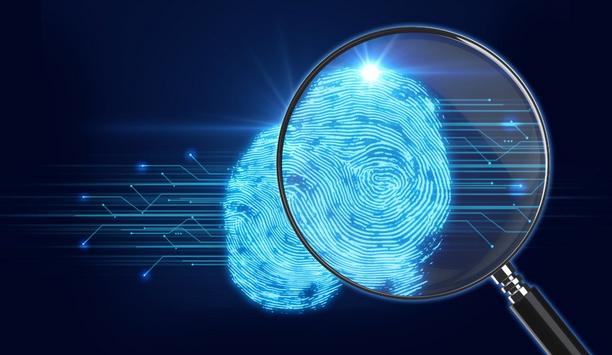
Fingerprint biometrics is hugely relevant in the current landscape. Even amidst other newer developments, fingerprint authentication provides convenience and affordability. There are talks rife about how the coronavirus pandemic has changed the outlook towards fingerprint biometrics. What is currently the most used authentication technology is being speculated to be unsafe, when compared to other touchless biometrics and that its usage in the future would decrease significantly. However, the adv...
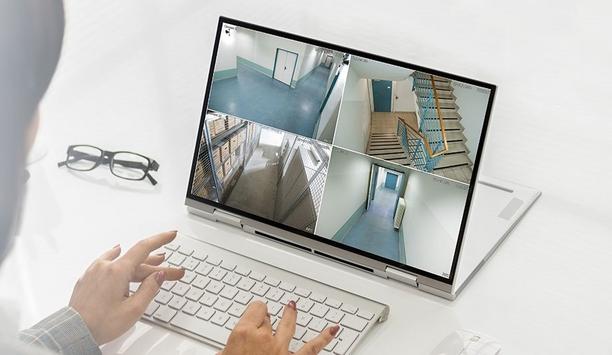
COVID-19 has undoubtedly impacted all industries, leaving its mark for years to come. Multiple lockdowns forced businesses across multiple sectors to reassess the way they worked, with many adapting to working from home due to the various stay-at-home orders. Data from a 2021 ONS survey revealed that 25.7 percent of the UK workforce, or 8.4 million people, worked from home during the pandemic, more than doubling the 2019 figure of 12.4 percent. A further nine million people were placed on furlo...

As a result of COVID-19, artificial intelligence (AI) has become table stakes for factories. Google’s 2021 Cloud Manufacturing Report found that 76% of manufacturing executives increased their adoption of disruptive technologies, including AI, during the pandemic. AI-based facial recognition technology AI has long been used in the sector to monitor the pace of work and anticipate machine failures, a trend that is expected to continue this year as factories look to optimize operations. Ho...
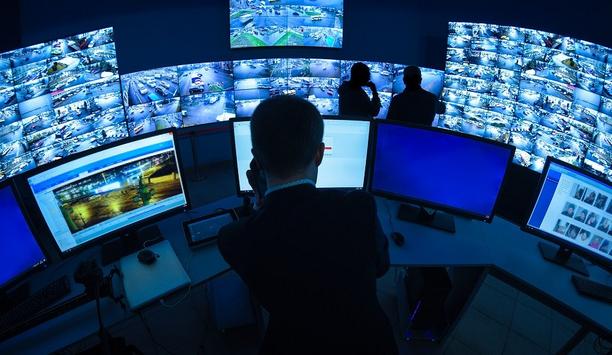
Corporate global security operations centers (GSOCs) bear the responsibility for protecting C-suite executives from physical and reputational harm amid social upheaval, extreme weather events, and escalating cyber threats. That mission, daunting as it is, becomes more difficult when GSOCs lack the data necessary for conducting a comprehensive threat assessment. Threat intelligence Unfortunately, many centers never move past basic threat intelligence which focuses on scenario-driven queries suc...

Business owners know the security of their properties is one of their most important daily concerns, and that leads many of them to work with professional security integrators who can design and deliver robust systems that provide protection and peace-of-mind through modern technologies and services. That’s why security integrators, by their very nature, have an invaluable tool that can be leveraged into bigger jobs: clients’ trust. As highly-trusted partners with extensive experien...

As we enter into 2022, there is still a level of uncertainty in place. It’s unclear what the future holds, as companies around the world still contend with the COVID-19 pandemic. Remote working has been encouraged by most organizations and the move to a hybrid working system has become ‘business as usual’, for the majority of businesses. Some have reduced their office space or done away with their locations altogether. Following best security practices With all this change in...

There is no denying that the COVID-19 pandemic has radically changed the way we work. In May 2021, 31% of the countries workforce was still working remotely, with 71% of businesses in professional, scientific, and technical industries remote-working. Work patterns shifting Although the conversation often focuses on office workers, the COVID-19 pandemic has impacted the way many other, non-office sectors operate. In the security industry, since the introduction of lockdowns and social distancin...

Cloud-based applications and platforms revolutionize supply chain management, helping stakeholders scale operations from small businesses to complex enterprises. Cloud supply chain solutions are showing significant increases in implementation – so much so the sheer number of organizations with a cloud solution outpace or far outnumbers the ones that don't. But there is one area that has still not made the switch to the cloud, most often the security department. But the advent of using vid...

They say nothing stays the same for long, and this has never been truer than in today’s world of technology and innovation. The 21st century has seen rapid changes and every day brings a new update in one of the many segments of technology. Technology is evolving at such a rapid rate, due to a phenomenon dubbed accelerating change. Each new improvement is now a stepping stone, enabling stronger and better generations of technology, at faster speeds. Accelerating change evolving across all...

Businesses large and small rely on their CCTV systems to deter intruders and provide recorded evidence of security incidents. Overtime, CCTV has evolved to offer real-time intrusion detection and monitoring, and businesses now expect easy, secure and anytime access to cameras, and data. For that, they need connected CCTV systems. These modern installations can benefit from cellular connectivity, helping businesses protect their sites, while also supporting enhanced capabilities for CCTV to deliv...

In the new era of work, our relationship with the workplace is defined by flexibility and mobility. Employees are working across the home, office, and blended spaces more than ever before, as well as working varied hours to suit the modern work schedule. This new hybrid workforce model holds the potential for more diverse talent and better productivity, but it also comes with its challenges – one being how to ensure security, health, and safety in the workplace. Strong a...
Technology has certainly become an intrinsic part of our day-to-day lives, from the retail industry, to food and beverage outlets, and even within the health and fitness industry. It’s all around us, in varying formats, making processes more efficient. It has refined some of our older approaches, and in the hospitality industry, this is certainly true. Technological advances are leading the way forward for the future of hotels, and with the sector now free from COVID-19 restrictions, venu...
Browse expert commentaries
Expert Section






Related videos


Find Lost Wallet with Dahua WizSeek

Dahua Traffic Signal Controller Highlight

Dahua DeepHub ST430 Highlight