What Security Applications Are Best Suited To Smartphone Apps?
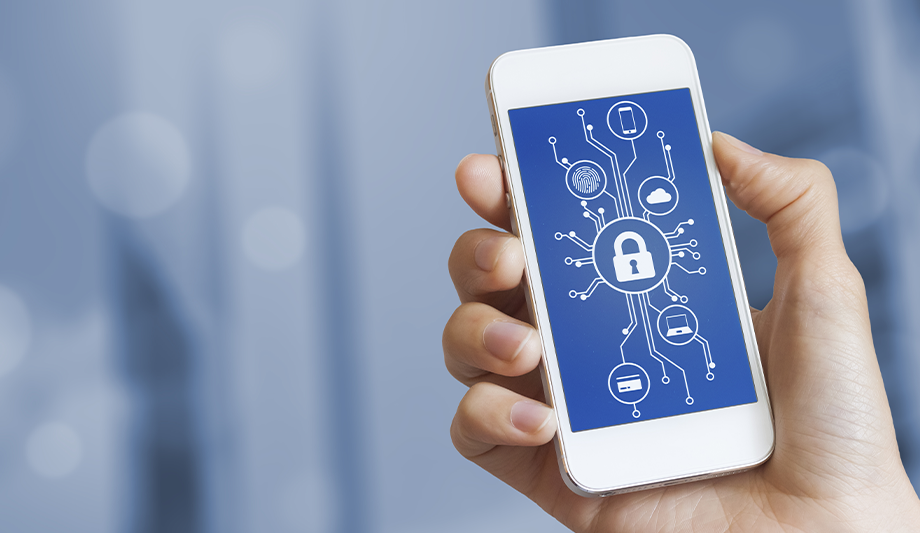
- Smartphones enhance security systems with advanced apps for monitoring and alerting.
- Mobile apps boost security device integration for real-time threat detection and response.
- Increased smartphone capabilities revolutionize physical security through versatile app functionalities.
Editor Introduction
How mobile telephones have transformed into “smartphones” is one of the great technology stories of our time. What once was a single-function device now can do almost anything – display video, pay for groceries, monitor our health. The smartphones we carry in our pockets today have more computing power than the “super computers” of yesteryear, and that power has found many uses in a seemingly endless array of “apps.” Some of them are directly related to our physical security systems. We asked this week’s Expert Panel Roundtable: What security applications are best suited to smartphone apps?


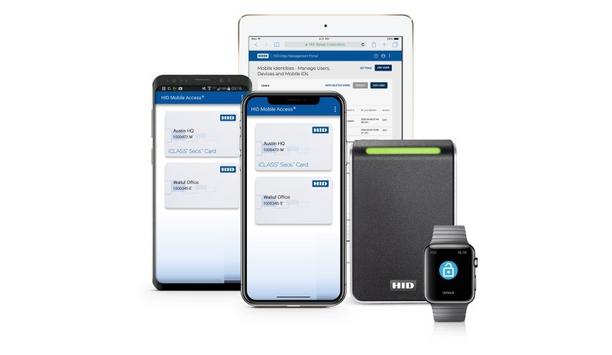
One of the most exciting emerging security applications is using smartphones to carry driver licenses and other citizen IDs, which can be issued to the devices over the air. Smartphones are already becoming a convenient alternative to smart cards for physical access control applications like opening doors and gates, and can also be used to authenticate access to IT networks, web services and cloud applications – users simply tap their smart card to a smartphone or other NFC-enabled device. Bank customers can protect their mobile accounts by having transactions pushed to their smartphone for approval before execution, eliminating the need for PINs, passwords and authentication challenge questions. Smartphones can also be used in new IoT applications, adding trust to NFC transactions so that, for instance, security guards and other “lone workers” can use their phones to verify they were where they were supposed to be on their rounds.

Access control, intrusion and CCTV are all prime for mobile applications. Linked together, they can create very powerful, easy-to-use tools. A typical small business owner can manage their life, home and business from their mobile device. For example, what if an alarm occurs at the office and the central monitoring station wants to verify the person should not be there before they dispatch on the alarm? The owner does not have to drive to the office, and the police are only dispatched for valid alarms. Mobile applications can easily allow the Administrator (or the owner) to remove a dismissed employee from the access control system and get a video clip on alarm if they try to get back in using their non-valid access card. If an employee going to the office on the weekend has forgotten his access card, he can call the owner to let him in.

A number of smartphone features create a world of new possibilities. These combine powerful processors and capacious memory, cameras, high-resolution screens, touch sensitivity (now including “3rd dimension” pressure), haptic feedback, pen input, biometric keys, microphones with noise-canceling, speakers, GPS location, accelerometers, magnetometers, wireless connections by cellular networks, WiFi, Bluetooth and Near-Field Communication (NFC). So, we can send and receive video such as CCTV and respond to visitor intercoms with audio. Interaction with intricate software interfaces give in-the-field reporting, web-based management for systems admin, and multimedia messaging. NFC makes it our access control “token” (adding biometric authentication). They log user location with maps and direction finding, facilitate guard tours and act as walkie-talkies over WiFi, while motion sensors give “man-down” alarms for lone workers. Asset management apps scan item barcodes linking to databases and operation and maintenance information. Simple app-building tools let you do R&D on new ideas.

Because mobile devices can provide information immediately to the right people, they are particularly well-suited to applications that depend strongly on timely information. For example, apps that help manage crises or emergency situations fall in this category – letting authorized personnel activate crisis modes, trigger lockdowns, provide information to responders, etc. Some non-emergency capabilities are also time-sensitive, including remotely locking or unlocking doors, and activating or de-activating access card holders. In these cases, timely actions are not only efficient, but can prevent subsequent security incidents from developing. The second type of suitable application are those that let managers do their work, supervise and support others from any location. In this way, key staff are freed from having to be on-site, at their desk, to be effective. Applications in this category include not only all the time-sensitive tasks mentioned above, but also remote VMS and surveillance, incident investigation, staff scheduling and supervision.

Almost any security application is suited to a smartphone app – and many (if not most) of them are moving in that direction. Increasingly, smartphones and other smart devices provide the graphical user interface (GUI) for all types of security systems. Smartphones are so ubiquitous among consumers that it makes perfect sense that they would eventually become part of almost every (broadly defined) physical security system. Smartphones are increasingly how we interact with everything – the Internet, our friends and connections, our lives. Protecting our businesses, assets and facilities are a logical extension of that. A smartphone can now be an access control credential. Video from smartphones can now be streamed to video management systems (VMS). Most types of security systems can be managed using smartphone interfaces. And smart devices are a vital component of the Internet of Things, including how it connects with home automation systems.
Editor Summary
Did we mention that smartphones can also be used to make telephone calls? It’s easy to overlook the “original” function of these pocket computers when listing the many other ways they can be useful. The technology innovations of smartphone apps are nothing short of incredible – but then again, so are the technology innovations of our physical security market. It will be interesting to follow the many ways the two intersect as both continue to evolve in the months and years ahead.
HID products


HID news

There are many new technologies at ISC West this year. There are also some tried-and-true solutions on display. More mature products have the benefit of being fully vetted and battle-tested, which may make them a more comfortable choice for security customers. I had a couple of discussions on Day 2 of the show about the advantages, and possible drawbacks, of new products. “To a security director, when you say ‘new,’ he translates that into ‘risk,’” says Bill...

HID, a pioneer in trusted identity solutions, has achieved Texas Risk and Authorization Management Program (TX-RAMP) certification for its Public Key Infrastructure as a Service (PKIaaS) solution. This certification demonstrates HID’s commitment to cybersecurity excellence and enables Texas state and local government to confidently engage with approved, trusted providers to procure secure, cloud-based certificate lifecycle management services with faster timelines and reduced administrati...

HID, a worldwide pioneer in trusted identity solutions, announced the appointment of Jos Beernink as Vice President Europe for its Physical Access Control (PACS) business. In this role, Beernink will lead HID’s strategy, sales and operations across the whole European region, helping organizations leverage trusted identity and access control technologies to create a secure, smarter and more efficient workplace and physical spaces. Prior roles of Beernink Beernink brings more than 2...
HID white papers







HID case studies
Enhancing enterprise security is high on the list of priorities for businesses across sectors. Within the retail industry, there is an additional focus on enabling new ways of working through management tools. Integrated solutions and applications help to create a robust security landscape and ensure a future-ready posture as organizations look to address emerging risks and create better experiences for next-gen employees. Physical access control (i.e., the readers on the door and the credentia...
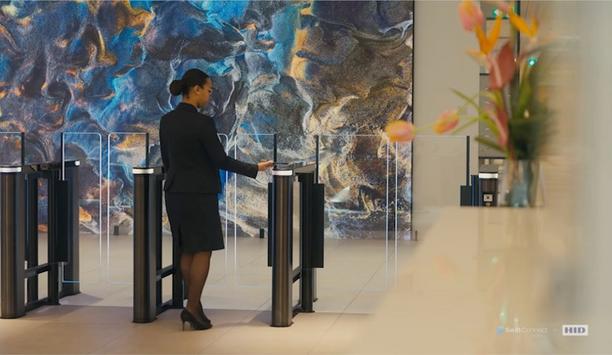
How do you rethink and transform building access for a 241-year-old company? BNY started by asking employees. The response was encouraging. The BNY team found that employees embraced the concept of mobile access solutions. The thought of implementing access solutions was already being considered by the company and the team was excited about the idea of providing a modern experience that allows employees worldwide to conveniently access their building spaces with a simple iPhone or Apple Watch....
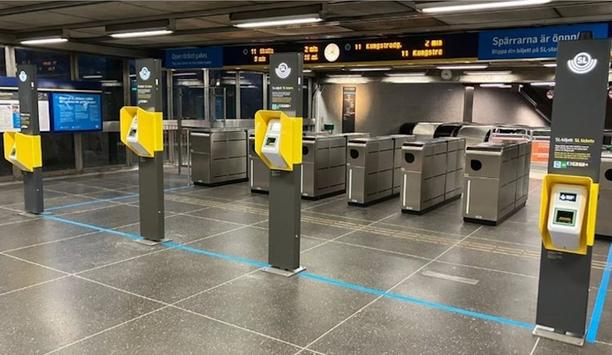
HID, the pioneer in trusted identity and authentication solutions, announced that it successfully supported Stockholm's public transit authority, Storstockholms Lokaltrafik (SL), in transforming the daily travel experience for hundreds of thousands of passengers in the capital through a comprehensive digital ticketing modernization program. The initiative has eliminated paper tickets and enabled seamless contactless payments across buses, ferries, trams and metro stations. The technology u...
HID virtual events



Expert commentary
Security beat

HID Global
611 Center Ridge Drive
Austin
Texas 78753
Telephone: (512) 776-9000