Is “Frictionless Access Control” A Reality Or An Empty Promise?
7 Nov 2023


- Frictionless access control enables seamless building entry without credentials or disruptions.
- True frictionless systems should recognize users automatically and block unauthorized access efficiently.
- Experts discuss whether frictionless access remains a future ambition or current reality.
Editor Introduction
Frictionless systems provide access to a building without interfering at all with a user’s entry experience. Frictionless access means you can automatically pass through a gate without showing a credential or otherwise engaging, and with the system recognizing who you are and allowing you to pass. In true frictionless access, everything works seamlessly, with unauthorized people obviously barred. But how close are we to realizing frictionless access control? We asked this week’s Expert Panel Roundtable: Is frictionless access control a reality or an empty promise?


Although already well on the way, the notion of frictionless access control was accelerated by the desire for “non-touch” solutions thanks to COVID-19 and is quickly transforming the way we, as users, interact with our access control systems. With the rapid development and integration of advanced technologies such as facial recognition and smart or mobile credentials, traditional access methods are evolving into seamless, touchless experiences. Although these advanced technologies are often more secure than the traditional card or fob-based credential, true frictionless access is only as good as the speed and accuracy with which the technology can function, which in the past has often been a limiting factor to its mass adoption.

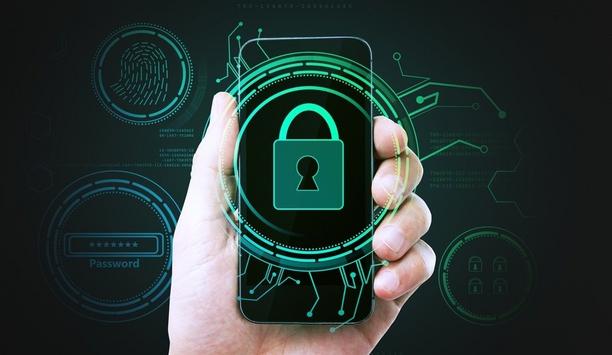
To answer the question directly, frictionless is not an empty promise. It’s where the access control industry is heading, including HID. And, to a degree, frictionless is available today with mobile access. You pull out your phone, touch or twist it in front of a Bluetooth or NFC reader, and gain entry. But you currently still must perform that step. Achieving total frictionless operation is a compromise, however, between security, privacy, and cost. While frictionless access control is possible now, there are security implications we don’t recommend. Take a simple example. If you’re using a smartphone for access, it can be set to trigger a door to open automatically. But what happens if that person is walking down a corridor? The device will open everything, which you might not want. The problem: How to detect the “intent” of the user as to who then gets access or not? Then there is the issue of privacy if biometric movement detection is used. We have shown a proof-of-concept using a smartphone equipped with ultra-wideband (UWB) technology and HID Mobile Access. But this kind of technology is still not standardized, some smartphones don’t support it, and there are different deployment methods, too.

The feasibility of frictionless access control depends on various factors, including its definition and specific use cases. Established technologies like mobile credentials and biometric authentication have made accessing areas more user-friendly. Biometric scanners and mobile credentials eliminate the need for physical credentials, enhancing convenience. However, completely frictionless access to restricted areas remains a distant goal, necessitating advancements in artificial intelligence, deep learning algorithms, and processing speed. These technologies must evolve to accurately handle multiple individuals within a single frame and recognize moving individuals from a distance while respecting their privacy. A well-designed access control system aims to balance convenience and security, ensuring authorized access while allowing individuals to go about their daily lives. In high-security or restricted settings, traditional access control methods may still be more suitable.

Though it seems far-fetched or futuristic, frictionless access control is already a reality – whether it’s being widely implemented or not. Previously, the facial recognition technology and QR reading cameras needed to make frictionless access control effective were either not easily deployable, couldn’t handle large crowds, or were too slow once in use. With the progress made recently in AI and the enhancements made to Bluetooth technology, however, the tech is now more effective than ever. The world has already made huge strides towards being contactless, and this is the logical next step. It’s up to organizations to decide if they’re ready to take hold of this reality and take the leap from merely contactless to frictionless.
Editor Summary
In theory, fully frictionless access control systems are feasible with the technology available today. However, such systems may require compromises surrounding privacy, the level of security, and/or cost. Newer technologies on the horizon can solve those issues but may not be widely available in the near future. The reality of frictionless access control is bound to happen, but the timeframe for its adoption is an open question.
HID products






HID news
There are many new technologies at ISC West this year. There are also some tried-and-true solutions on display. More mature products have the benefit of being fully vetted and battle-tested, which may make them a more comfortable choice for security customers. I had a couple of discussions on Day 2 of the show about the advantages, and possible drawbacks, of new products. “To a security director, when you say ‘new,’ he translates that into ‘risk,’” says Bill...

HID, a pioneer in trusted identity solutions, has achieved Texas Risk and Authorization Management Program (TX-RAMP) certification for its Public Key Infrastructure as a Service (PKIaaS) solution. This certification demonstrates HID’s commitment to cybersecurity excellence and enables Texas state and local government to confidently engage with approved, trusted providers to procure secure, cloud-based certificate lifecycle management services with faster timelines and reduced administrati...

HID, a worldwide pioneer in trusted identity solutions, announced the appointment of Jos Beernink as Vice President Europe for its Physical Access Control (PACS) business. In this role, Beernink will lead HID’s strategy, sales and operations across the whole European region, helping organizations leverage trusted identity and access control technologies to create a secure, smarter and more efficient workplace and physical spaces. Prior roles of Beernink Beernink brings more than 2...
HID white papers












HID case studies
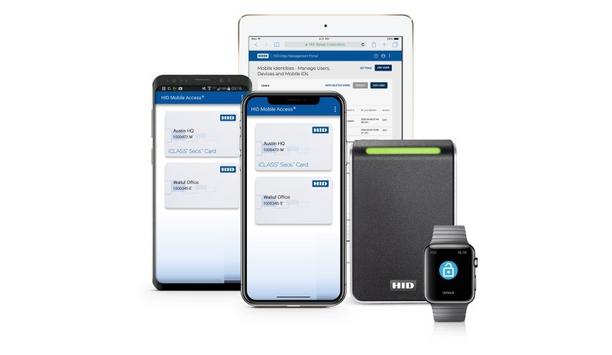
Enhancing enterprise security is high on the list of priorities for businesses across sectors. Within the retail industry, there is an additional focus on enabling new ways of working through management tools. Integrated solutions and applications help to create a robust security landscape and ensure a future-ready posture as organizations look to address emerging risks and create better experiences for next-gen employees. Physical access control (i.e., the readers on the door and the credentia...
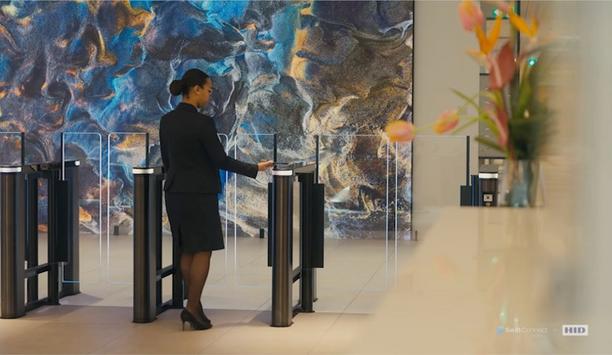
How do you rethink and transform building access for a 241-year-old company? BNY started by asking employees. The response was encouraging. The BNY team found that employees embraced the concept of mobile access solutions. The thought of implementing access solutions was already being considered by the company and the team was excited about the idea of providing a modern experience that allows employees worldwide to conveniently access their building spaces with a simple iPhone or Apple Watch....
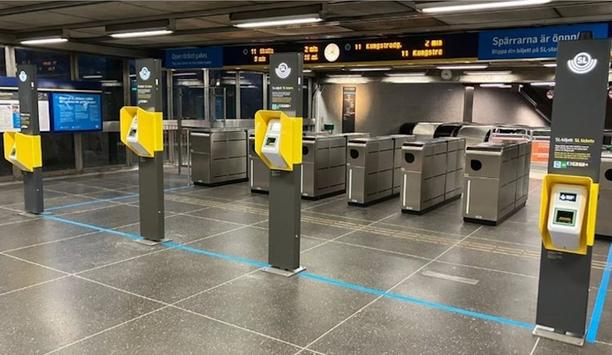
HID, the pioneer in trusted identity and authentication solutions, announced that it successfully supported Stockholm's public transit authority, Storstockholms Lokaltrafik (SL), in transforming the daily travel experience for hundreds of thousands of passengers in the capital through a comprehensive digital ticketing modernization program. The initiative has eliminated paper tickets and enabled seamless contactless payments across buses, ferries, trams and metro stations. The technology u...
HID virtual events




Expert commentary

Security beat

HID Global
611 Center Ridge Drive
Austin
Texas 78753
Telephone: (512) 776-9000