What’s New with Video Management Systems (VMS)?
12 May 2020


- VMS evolve with advanced data analysis, enhancing functionality beyond video recording and display.
- New VMS opportunities include AI integration, improving video data interpretation and user experience.
- User-friendly VMS now offer enhanced capabilities for video management and data analysis.
Editor Introduction
Video management systems (VMS) have been around almost since the advent of IP cameras. During those years, VMSs have evolved from software that provides basic functionality to more user-friendly systems offering a growing list of capabilities, many of them related to analyzing data as well as recording and displaying video. But the evolution is far from over. We asked this week’s Expert Panel Roundtable: What’s new with video management systems (VMS), and what are the new opportunities?


There are two main emerging trends around video management systems that have a direct effect on end users and provide more opportunity for manufacturers at the same time. First are the overlap between systems and the ability for VMS platforms to provide a single operating environment. Security and IT leaders want higher levels of usability and need data to make informed decisions. The opportunity here is creating a platform that integrates with multiple technologies, including video surveillance cameras, access control, analytics software, intrusion and fire alarms, and other ancillary sensors providing data for better decision-making. That leads me to the second trend: big data. All of these sensors are creating a huge amount of data. VMS solutions are becoming better able to leverage intelligence-driven data analysis to distinguish patterns and anomalies in video. From here, the VMS becomes less reactionary and more proactive, which points to emerging threats.

This question certainly isn’t new to the industry, but right now cloud is starting to appear more and more as an offering from Video Management Systems (VMS) manufacturers. Additionally, they are offering hybrid solutions with onsite and offsite capabilities. More services are being built up around this and are able to offer more enriched service offerings. These include remote monitoring services, which can determine whether damage has been done to a camera, or if there were errors, providing notifications long before an onsite manager would be notified. In the VMS world, not much changes, but the growing popularity of cloud and the demand for integration is increasing, bringing about a greater demand for open protocols as well.

The modern VMS is evolving beyond just security, into the operations of organizations. As we see more automation come into play, and the wider adoption of video analytics, customers now have access to better data. It’s not only raw data, but actual information they can act on to improve the services they provide, their daily operations and their bottom line. But it’s important to present that information in the clearest possible way. Live dashboards offer a brand-new perspective on everyday operations, and new ways of seeing your data and monitoring security. At Genetec, we recently introduced this capability as part of our unified platform. The latest developments in map-based surveillance also provide operators a better picture of what and where things are happening. Having access to all cameras and other sensors on a single, dynamic map provides a better, more logical way of using a VMS.

A trend in the VMS sphere is the cloud and VMS being offered as a service. However, many As-a-Service video management systems store raw video, which is one of the biggest costs for a cloud solution – the storage and transmission of data. This is where a hybrid solution comes in by offering the flexibility to access your VMS anywhere through remote access and saving some on storage costs by storing data on a local server. Due to this hybrid approach, opportunities may come from the power of modern Artificial Intelligence (AI) which can run both in the cloud as well as on the new class of powerful IP cameras. Therefore, we may see VMS adopting more analytic processing capabilities in the cloud as well as being used to store analytic events and insights that were produced directly on edge devices including cameras.

We now see a trend towards simplicity, systems that are installed and running in minutes, while still retaining powerful features sets such as redundancy and analytics integration. This simplicity extends from a scalable architecture to the client, providing a consistent and clean interface while still being easy to access via a secure cloud. Another trend is the integration of AI-based camera analytics for live event notifications or as data that can be stored and utilized for forensic search after the event. Being able to “search for red cars” for instance, requires that a VMS not only understands but also integrates this new metadata in a way that makes sense to end-users. This facilitates a deeper, richer drill-down into the data that goes far beyond the image and exposes a new level of intelligence in the video.

The latest enhancements we’re seeing to video management systems (VMS) are creating unprecedented opportunities for mission-critical organizations. Today’s VMS platforms can help organizations transform their security operations center (SOC) from a reactive approach to a more proactive, data-driven posture. In doing so, they are simplifying operations, accelerating response times, and improving outcomes of incidents. This approach also helps in reducing operational costs. By connecting the dots throughout an organization, you can break down silos to present a complete picture of what’s happening across the entire threat landscape. This then creates the opportunity for businesses to perform faster and more comprehensive investigations, increase operational efficiencies, easily share information with external agencies and third parties, and enhance the organization’s overall security performance.
Editor Summary
Among the new opportunities for video management systems is the availability of cloud-based systems and an as-a-service business model. In addition, VMSs are increasingly integrated with other systems and able to manage more data. The value of VMSs is being extended beyond the security department to provide benefits to other departments in a company. Perhaps most interesting, the trend among VMSs is away from operation as a forensic tool and toward use as a predictor of what’s to come – in short, a transformation from reactive to a proactive.
Hanwha Vision America products



Hanwha Vision America news
At ISC East 2025, Hanwha Vision is showcasing a range of high-performance surveillance solutions designed to elevate the security experience and transform an organization’s total operations. Attendees can see the future of security technology at Booth 507, ranging from AI cameras equipped with the Wisenet 9 System on Chip (SoC); to the new OnCAFE access control platform; to DesignPro, an intuitive project design and management resource. Hanwha Vision’s exhibit at ISC East demonstra...
Hanwha Vision is showcasing the future of security technology at GSX 2025 (Booth 2326), featuring its new Wisenet 9 System on Chip (SoC) and a growing suite of cloud-based solutions, including the new OnCAFE access control platform. Hanwha Vision will demonstrate how its latest technology simplifies security management, while providing powerful, intelligent, and scalable protection for any organization. Attendees will experience a full line of AI-powered cameras and devices supported by an...
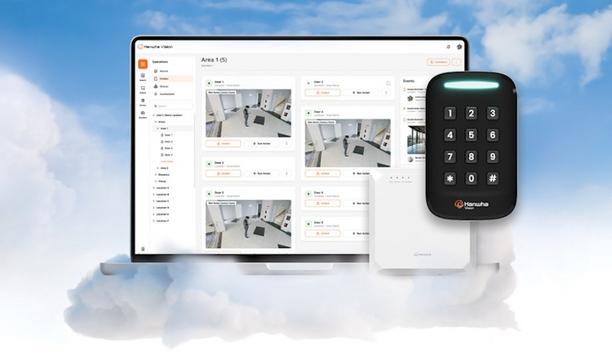
Hanwha Vision is opening new doors for security applications with the launch of OnCAFE (Cloud Access For Everyone), a cloud-hosted Access Control as a Service platform and the latest tool in the company’s expanding line of cloud-based solutions. Delivering a user-friendly, scalable, and cost-effective option for access control needs, OnCAFE reduces the deployment challenges traditionally associated with system initialization, device, user, and software management. Han...
Hanwha Vision America case studies

Wilson Bank & Trust, member FDIC, is an independent, community-based bank that began operating in Tennessee, USA in 1987. They have mortgage offices, operations centers, ATMs and branches located in and around Middle Tennessee that serve the city and surrounding rural areas. In total, they have operations and security at approximately 40 locations. One of the keys to their on-going success is their continuous search to improve their offerings. This drive extends to their physical security a...

Hanwha Techwin America, a global supplier of IP and analog video surveillance solutions, has announced that Army and Navy Academy, a college preparatory military boarding school in California, has upgraded its security infrastructure with Hanwha security cameras. Located on a 23-acre beach-front property, the Army and Navy Academy is home to more than 300 students and employs more than 140 faculty and staff members. Two-fold surveillance upgrade According to Jeffrey Gibson, a system with anal...

Recently, Planet Fitness, with the help of their preferred system integrator Adirondack Direct, incorporated a video surveillance solution from Hanwha Techwin and Genetec that not only enhances security, but also improves operations. When leadership evaluated security at their 70-plus corporate run locations a few years ago, they chose to incorporate a video surveillance solution that would address security needs and would be advanced enough to help with management and operations. Each of...
Hanwha Vision America white papers







Hanwha Vision America virtual events


Hanwha Vision America videos


Hanwha Customer Stories: Buffalo And Erie County Naval And Military Park

COVID-19 Solutions: '5 Minutes With' Video Interview with Thomas Cook from Hanwha Techwin America
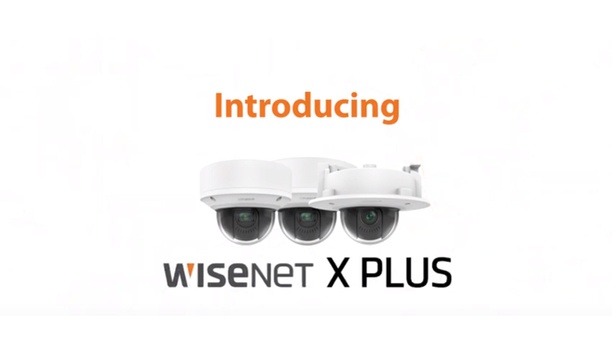
Hanwha Techwin’s Wisenet X series Plus
Introducing Hanwha Wisenet X Series Exclusive Wisenet 5 SoC Chipset
Expert commentary

Security beat