What Is The Changing Role Of Training In The Security Industry?
11 Oct 2018

- Advanced security systems rely heavily on effective training of integrators and users.
- Training's evolving role in security enhances system integration and user productivity.
- Focus on human factor in security emphasizes crucial training for optimal system use.
Editor Introduction
Even the most advanced and sophisticated security systems are limited in their effectiveness by a factor that is common to all systems – the human factor. How effectively integrators install systems and how productively users interface with their systems both depend largely on how well individual people are trained. We asked this week’s Expert Panel Roundtable: What is the changing role of training in the security and video surveillance market?


Training use to be required for video surveillance to convey difficult, complex subject matters. While designing and implementing very large systems may still require certification training, our industry has matured along with the technical savvy of everyday users and technicians, allowing us to shift our focus. Products have become more end-user-focused using efficient technologies to provide information. Tabbed interfaces, tooltips, and simple language and icons have moved us to the point that many systems do not need more than 5-10 minutes of training. Furthermore, we can move toward showing people where the correct resources are vs. the “Sage on the Stage.” We can show users how to access and search knowledge bases and training videos, allowing them to learn more as they become accustomed to the system and a more advanced user. When problems arise, these same knowledge base systems can assist them or direct them to support when needed.

Training in the security and video surveillance market is becoming an increasingly critical component of every technology deployment today, as systems and devices advance and the risk landscape continues to evolve. End users must feel confident in their ability to mitigate threats through the innovative solutions they chose, and this can be achieved through a comprehensive and straightforward training process. A structure that educates, answers questions and provides flexibility allows users to transition seamlessly to a new product and quickly adapt to any learning curve involved. And as technology updates for a system become available, ensuring proper training is crucial to elevate the service a manufacturer provides for a customer/end user. Manufacturers must prioritize the development of highly skilled trainers who are eager to share their knowledge and expertise, creating a thorough and robust training program presented in an easily comprehensible format for the ultimate mastery of a solution.

Learning Management Systems (LMS) are playing an integral part of training development these days, especially for manufacturers who have multiple product portfolios and a great deal of subject matter to deliver. From a trainee perspective, they have unlimited access to the information they need, and they can simply log-in via their smartphones and tablets at any time, so that they don’t have to wait until their next online training session to develop skills and perfect work-related tasks. From the manufacturer’s perspective, it provides the ability to keep track of customer learner progress; and if an online learner is not able to successfully complete an eLearning scenario, you can offer them supplemental resources to improve their performance or learning behaviors. In addition, it keeps organizations up-to-date with compliance regulations as an LMS gives you the ability to add new compliance standards to your online training course within a matter of minutes.

In a market of increasingly changing technologies, the role of training is as paramount as ever before. Invariably new technology arrives with a lot of promises that can take a while to become reality. Training the key to level set expectations with the market – helping system integrators and end users alike to be able to develop a sound and realistic idea of what capabilities the new technology can truly provide. Ultimately, the market must be aware of the connection between untrained employee, employee satisfaction and overall business performance. An end user and a system integrator will benefit from having a strong program that engages with their employees, one that enables them to become extremely efficient in getting the best out of the systems they are deploying or running.

The concept of risk management has gained enough traction in most organizations that a range of security and safety technologies has been put into place. Cameras have been positioned, access control deployed, and security turnstiles and doors as well. There may also be biometric solutions and multi-factor authentication on-site. Training of management and staff has become a necessity. It’s essential for all personnel, including management, to be trained to create a strong, security-driven culture. Proactive communication through email, meetings, and even hosting a security “fair” (inviting security vendors), can help educate staff on the importance of personally contributing to one’s own safety as well as the collective safety of others. And, it’s not a one-time deal: training is continuous and requires reminders and reinforcement, especially if turnover is high. Training enables management to support new security measures and help personnel take ownership of the effort to keep a safer environment.
Editor Summary
The nature of training is changing, and specific training needs are changing as systems evolve and incorporate newer technologies. What is not changing is the important role played by human beings in successful security system operation. Trends such as automation and better user interfaces are making operation of systems easier or more intuitive, or even reducing the extent of needed training. However, we are many years away from eliminating the human element from security and video surveillance systems altogether. As long as there are humans involved, there will be a need to train them.
Hanwha Vision America products


Hanwha Vision America news
At ISC East 2025, Hanwha Vision is showcasing a range of high-performance surveillance solutions designed to elevate the security experience and transform an organization’s total operations. Attendees can see the future of security technology at Booth 507, ranging from AI cameras equipped with the Wisenet 9 System on Chip (SoC); to the new OnCAFE access control platform; to DesignPro, an intuitive project design and management resource. Hanwha Vision’s exhibit at ISC East demonstra...
Hanwha Vision is showcasing the future of security technology at GSX 2025 (Booth 2326), featuring its new Wisenet 9 System on Chip (SoC) and a growing suite of cloud-based solutions, including the new OnCAFE access control platform. Hanwha Vision will demonstrate how its latest technology simplifies security management, while providing powerful, intelligent, and scalable protection for any organization. Attendees will experience a full line of AI-powered cameras and devices supported by an...
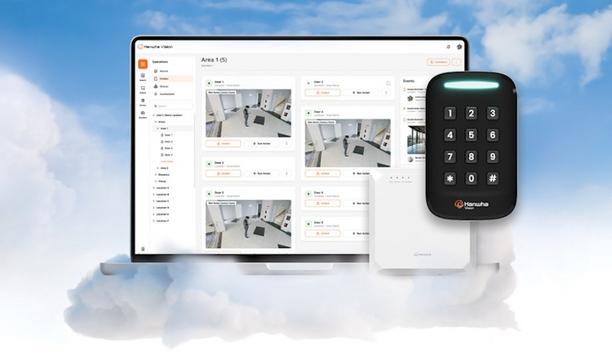
Hanwha Vision is opening new doors for security applications with the launch of OnCAFE (Cloud Access For Everyone), a cloud-hosted Access Control as a Service platform and the latest tool in the company’s expanding line of cloud-based solutions. Delivering a user-friendly, scalable, and cost-effective option for access control needs, OnCAFE reduces the deployment challenges traditionally associated with system initialization, device, user, and software management. Han...
Hanwha Vision America case studies

Wilson Bank & Trust, member FDIC, is an independent, community-based bank that began operating in Tennessee, USA in 1987. They have mortgage offices, operations centers, ATMs and branches located in and around Middle Tennessee that serve the city and surrounding rural areas. In total, they have operations and security at approximately 40 locations. One of the keys to their on-going success is their continuous search to improve their offerings. This drive extends to their physical security a...

Hanwha Techwin America, a global supplier of IP and analog video surveillance solutions, has announced that Army and Navy Academy, a college preparatory military boarding school in California, has upgraded its security infrastructure with Hanwha security cameras. Located on a 23-acre beach-front property, the Army and Navy Academy is home to more than 300 students and employs more than 140 faculty and staff members. Two-fold surveillance upgrade According to Jeffrey Gibson, a system with anal...
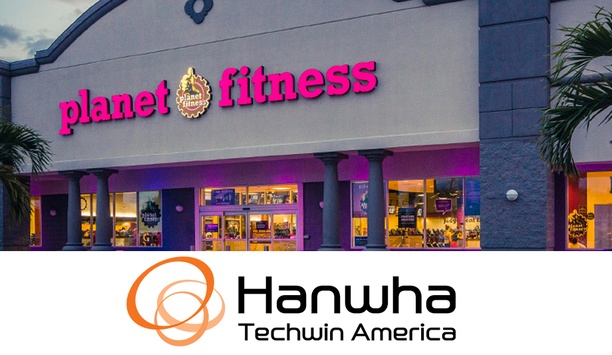
Recently, Planet Fitness, with the help of their preferred system integrator Adirondack Direct, incorporated a video surveillance solution from Hanwha Techwin and Genetec that not only enhances security, but also improves operations. When leadership evaluated security at their 70-plus corporate run locations a few years ago, they chose to incorporate a video surveillance solution that would address security needs and would be advanced enough to help with management and operations. Each of...
Hanwha Vision America white papers







Hanwha Vision America virtual events


Hanwha Vision America videos

Hanwha Customer Stories: Buffalo And Erie County Naval And Military Park

COVID-19 Solutions: '5 Minutes With' Video Interview with Thomas Cook from Hanwha Techwin America
Hanwha Techwin’s Wisenet X series Plus
Introducing Hanwha Wisenet X Series Exclusive Wisenet 5 SoC Chipset
Expert commentary

Security beat