Are Privacy Concerns Stifling Innovation in Security?
26 Oct 2020


- Facial recognition faces scrutiny due to increasing privacy concerns in technology markets.
- Public perception of privacy risks impacts innovation in security technologies significantly.
- Experts question if privacy concerns hinder technological advancements across security sectors.
Editor Introduction
Facial recognition is the latest technology to be targeted because of concerns about privacy. If such concerns cloud the public perception, they can be harmful to technology markets. Whether the concerns are genuine or based on misinformation is often beside the point; the practical damage has already been done. But beyond market demand, what is the impact of privacy concerns on technology innovation? We asked this week’s Expert Panel Roundtable: Are privacy concerns stifling innovation in security and related markets?


I do not believe privacy concerns are stifling innovation; people, dynamic organizations and market disruptors will always strive to develop new technologies and solutions – this is evolution. Privacy concerns and discussions regarding legislation usually follow the innovation and often arise out of lack of information. When deploying new technology, it is important to be clear about what it does, how it is used, and whether any personal information is retained, and if yes, why and for how long. New technologies such as facial recognition have re-ignited the privacy debate. However, this is the same debate that has continued since surveillance systems first started to be deployed decades ago and yet tremendous innovations have taken place during that time. In most parts of the world, clear signage advises you that you are in a surveillance zone and most people understand that also involves the recording and retention of video.

Rather than stifling innovation in security, I would argue that privacy concerns are driving it and inculcating a necessary awareness of ethical practices in our industry. There is a train of thought that if you have nothing to hide, you should not be concerned if your privacy is eroded. This makes sense on the surface (especially when you consider the basic CCTV systems of a few years ago), but with the advent of AI and facial detection. there are fresh and unsettling potential opportunities for misuse. For example, these systems could be (and have been) used for ethnicity detection as part of a suppression of ethnic minorities. Whilst the technology itself has no inherently sinister purpose, it could be corrupted by regimes that do not use it ethically and responsibly. As security providers we have a duty to ensure that the human right to privacy is respected and not ignored.

On the contrary, I believe that privacy concerns are helping to drive innovation. As sensors gather more data, privacy concerns are understandably increasing. To address this, manufacturers need to implement transparency and accountability features. For example, Hanwha Techwin’s Wave VMS supports audit trails that show when people log on to the system and what videos they view. This provides a way to “watch the watchers” and helps insure against breaches of privacy. Many innovations are a result of utilizing a privacy-by-design approach. This approach, along with numerous cybersecurity innovations, has made the devices more secure and transparent by default. The principle of least privilege (PoLP) is an innovative way to approach user access rights for operators. This principle states that each user should only have access to the information required for their role. It is crucial that manufacturers enable end-users and integrators to easily configure systems with privacy in mind.

It’s critical that any security installation addresses privacy as a core part of the design. As cameras become increasingly powerful and feature-rich, their ability to capture personal identifying information (PII) continues to grow. Every organization needs to ensure that PII is handled in accordance with local laws and that any security system deployed is flexible enough to adapt and evolve as laws and best practices will almost certainly change over time. Privacy-by-design is the approach any manufacturer or integrator must take, in which privacy features and functionality are built into the core design from inception and not simply an afterthought. These features should enable end-users to easily conform to best practices and mandates. Employees should be able to opt-in for touchless access, cameras should be able to mask out off-limit areas, and operator rights and privileges should ensure that only people who are authorized have access.
Editor Summary
Privacy concerns may impact public perception of a certain technology, but our Expert Roundtable Panelists agree that they do not negatively impact innovation in the security market. To the contrary, ensuring privacy can sometimes drive innovation as companies seek to design products that both perform the needed functionality and do so in a way that is acceptable to privacy advocates. In any case, consideration of privacy is a core concept for security and should be incorporated as part of a product’s design.
Hanwha Vision America products



Hanwha Vision America news

At ISC East 2025, Hanwha Vision is showcasing a range of high-performance surveillance solutions designed to elevate the security experience and transform an organization’s total operations. Attendees can see the future of security technology at Booth 507, ranging from AI cameras equipped with the Wisenet 9 System on Chip (SoC); to the new OnCAFE access control platform; to DesignPro, an intuitive project design and management resource. Hanwha Vision’s exhibit at ISC East demonstra...
Hanwha Vision is showcasing the future of security technology at GSX 2025 (Booth 2326), featuring its new Wisenet 9 System on Chip (SoC) and a growing suite of cloud-based solutions, including the new OnCAFE access control platform. Hanwha Vision will demonstrate how its latest technology simplifies security management, while providing powerful, intelligent, and scalable protection for any organization. Attendees will experience a full line of AI-powered cameras and devices supported by an...
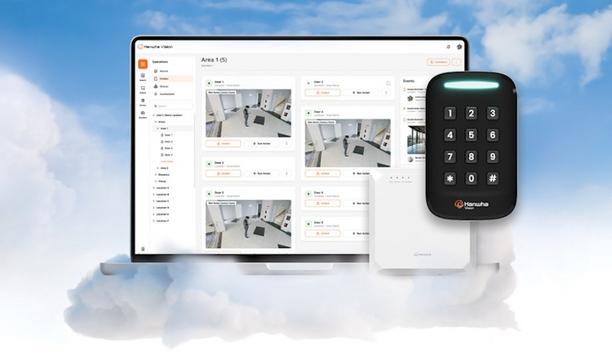
Hanwha Vision is opening new doors for security applications with the launch of OnCAFE (Cloud Access For Everyone), a cloud-hosted Access Control as a Service platform and the latest tool in the company’s expanding line of cloud-based solutions. Delivering a user-friendly, scalable, and cost-effective option for access control needs, OnCAFE reduces the deployment challenges traditionally associated with system initialization, device, user, and software management. Han...
Hanwha Vision America case studies

Wilson Bank & Trust, member FDIC, is an independent, community-based bank that began operating in Tennessee, USA in 1987. They have mortgage offices, operations centers, ATMs and branches located in and around Middle Tennessee that serve the city and surrounding rural areas. In total, they have operations and security at approximately 40 locations. One of the keys to their on-going success is their continuous search to improve their offerings. This drive extends to their physical security a...
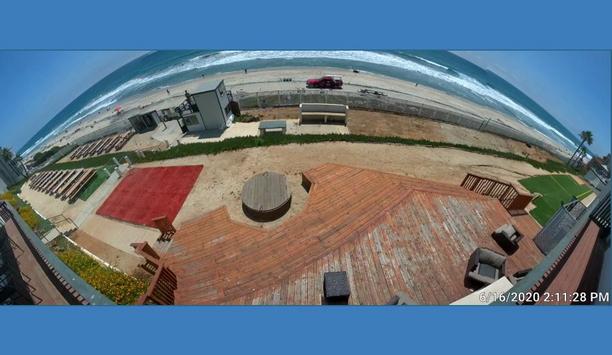
Hanwha Techwin America, a global supplier of IP and analog video surveillance solutions, has announced that Army and Navy Academy, a college preparatory military boarding school in California, has upgraded its security infrastructure with Hanwha security cameras. Located on a 23-acre beach-front property, the Army and Navy Academy is home to more than 300 students and employs more than 140 faculty and staff members. Two-fold surveillance upgrade According to Jeffrey Gibson, a system with anal...

Recently, Planet Fitness, with the help of their preferred system integrator Adirondack Direct, incorporated a video surveillance solution from Hanwha Techwin and Genetec that not only enhances security, but also improves operations. When leadership evaluated security at their 70-plus corporate run locations a few years ago, they chose to incorporate a video surveillance solution that would address security needs and would be advanced enough to help with management and operations. Each of...
Hanwha Vision America white papers







Hanwha Vision America virtual events


Hanwha Vision America videos


Hanwha Customer Stories: Buffalo And Erie County Naval And Military Park

COVID-19 Solutions: '5 Minutes With' Video Interview with Thomas Cook from Hanwha Techwin America
Hanwha Techwin’s Wisenet X series Plus
Introducing Hanwha Wisenet X Series Exclusive Wisenet 5 SoC Chipset
Expert commentary

Security beat