What Is The Potential Of Deep Learning In Physical Security And Surveillance?
23 Aug 2021


- Deep learning revolutionizes physical security with vast potential in AI applications.
- Security industry explores deep learning for enhanced surveillance capabilities and effectiveness.
- Understanding deep learning's full potential in security requires separating hype from reality.
Editor Introduction
“Deep learning” is recently among the more prevalent jargon in the physical security industry, and for good reason. The potential benefits of this subset of artificial intelligence (AI) are vast, and those benefits are only now beginning to be understood and realised. But how can we separate the marketing hype from reality? How can we differentiate between future potential and the current state of the art? To clarify the latest on this new technology, we asked this week’s Expert Panel Roundtable: What is “deep learning?” How well does the security industry understand its full potential?


Deep learning, a subset of artificial intelligence, enables networks to train themselves to perform speech, voice, and image recognition tasks. In video surveillance, these networks learn to make predictions through highly repetitive exposure to images of humans and vehicles from a camera feed. That ability is ideal for use with drones patrolling perimeters seeking anomalies or in software that significantly reduces the number of false alarms reported to central monitoring station operators. Through use, the software continues improving its accuracy. What makes these networks so powerful is their ability to generalize concepts they have learned and then apply them to images they never before have seen. Many end-users, consultants, integrators, and manufacturers understand the current potential of AI deep learning. However, it may be years before we know the full potential of this technology revolutionizing the industry. Next up, expect predictive behavior capabilities limited only by our imaginations.

From business intelligence to predictive analytics, big data, artificial intelligence, machine learning and now deep learning, the objective has always been the same: To provide accurate insight, all increasing in value and sophistication as they evolve. The security use cases are well-documented from protecting corporate data, to preventing cybercrime, to optimizing operations. To leverage deep learning to its full potential requires a 360-degree view of the business. The challenge is today we only have part of the picture. We have data from our digital world but lack data from physical operations. This data is locked in logbooks, checklists, stored in filing cabinets. To access and utilize this data is nearly impossible, it is unreliable, difficult to interpret, and not digital. However, it is needed to provide a complete view across the business of safety and security risks. Sourcing untapped data provides more accurate insights to save lives, money, and time.

Deep learning is a subset of machine learning. Unlike machine learning, deep learning excels at finding patterns in unstructured data, such as an image, making it well suited for our industry. It can also “learn” with less human supervision. Deep learning gives security cameras the ability to identify objects and their defining characteristics. This capability is revolutionizing applications such as motion-based video analytics, removing false positives that could result in costly false alarms. The full potential of this technology goes far beyond security as these devices can supply powerful insights into consumer behavior in retail environments while also providing actionable intelligence on operations that can streamline workflows and processes. We are just beginning to experience the benefits of this technology, so for the industry to truly understand the potential, it will take some imagination. The sky's the limit when it comes to potential use cases and solutions.

Deep learning is a subset of machine learning based on artificial neural networks. Neural networks attempt to mathematically mimic some of the human brain’s physiology and functions albeit gated by our own understanding. Apple’s Siri, including the voice inflections and seeming personality, is an example of deep learning. Having our faces unlock our phones is another example. We have just started our journey into deep learning and computer vision science within the security industry. It’s easy to imagine touchless access control becoming much more prevalent. Employees in critical infrastructure and other sensitive areas may be required to opt-in to a facial recognition database for the maximum security it can provide. As our world becomes increasingly complex, deep learning will enable the security industry to expand its role to become more proactive rather than reactive. This is how we can increase security and public safety and maintain convenience and user privacy.

Deep learning is the ability for machines to identify specific objects or characteristics of an object based on exposure to different data sets. In computer vision applications, deep learning can take the form of “watching” thousands or hundreds of thousands of hours of related video or images of, for example, a blue car, people crossing a line, or a large dog. Beyond object detection, deep learning can also be used for detecting behaviors, such as persons running or other behavioral anomalies. What we’re learning about deep learning and the resulting analytics, is that the accuracy of the analytics is directly proportional to the quality of the data sets used.

Deep learning is a category of machine learning that uses multiple layers of data analysis to transform data into useful information. Each of the learning layers solves a small part of a larger, complex problem. The technology is developing and is increasing ineffectiveness. Because of this, deep learning will be able to add extreme value to many industries, including the security industry. One example is Image/Video Analytics, providing deep understanding and insights from video feeds, such as safety protocols, process control, people flow, audit, and compliance. In alarm monitoring, the technology learns of patterns, external inputs, and historical activity to reduce false alarms and false dispatch. Uses include noise filtering and nuisance alarm filtering for audio and video verified systems.
In access control, deep learning aids with understanding patterns of using entering/exiting locations within a building, such as an occupancy management, mustering, and compliance to secure areas of a building.

One of the sub-disciplines of AI includes research in neural networks. Working with structured data (data that has been organized or labeled in a predefined manner), this research analyzes the relationship between inputs and outputs to gain new insights. Deep learning is a specific formulation of neural networks that also work with unstructured data. What is exciting about deep learning is that the accuracies gained lately have often even exceeded what humans can do with specific tasks. In the physical security industry, deep learning can help organizations sift through their data and tackle real-world solutions such as facial recognition or people counting. At Genetec, we are using Deep Neural Networks to improve our ALPR system’s performance and add analytics such as Vehicle Type and Color. We also optimized the People Detection feature to improve privacy protection and analytics such as the People Counter and the Intrusion Detection.

As a subset of AI, deep learning uses neural networks to analyze and group data and make predictions based on patterns. Neural nets attempt to mimic the human brain through a set of algorithms. Deep learning is particularly adept at working with unstructured data, like video or images, where it can draw conclusions in an unsupervised manner without relying on humans at every stage of the learning process. AI-based cameras with deep learning are more than cameras, they are smart data sensors that can positively impact a company’s revenue. At Hanwha Techwin, we use deep learning in our AI cameras to accurately detect and identify objects while also describing unique attributes about them. This might be the color and type of vehicle or the approximate age and color of clothing on a person. The full potential is vast, ranging from enhanced security workflows to generating actionable business and operational intelligence.

Deep Learning, sometimes referred to as Machine Learning or Artificial Intelligence, is a powerful tool to enhance the way we generate valuable information out of an immense camera data stream by recognizing certain pixel patterns. Camera systems today provide a variety of use cases, such as recognizing people crossing a line or detecting a license plate. As such, Deep Learning technology is changing and improving rapidly, but there are different levels of potential use. The first is the simplest and where most security systems are today – recognizing objects, people, animals, cars, or even discerning the type of car or characters on a license plate. The second level is behavioral, where potential violence, aggressive behavior, etc. can be detected. The third level is intentional behavior, or preventative, where systems can predict the possibility of a fight or theft. The possibilities are vast in terms of preventing an incident, versus looking back.

The security industry as a whole is just past the early stages of understanding where AI and Deep Learning can take us. Several factors are driving AI and Deep Learning, the first being the explosion and proliferation of data generated by 100’s of millions of sensors out in the world – including cameras, access control, and building management systems. All these sensors churn out data 24-7 and now we are beginning to use software systems to “mine” this data. This mining is throwing up hitherto unknown relationships between data from differing silos, which is creating some interesting results. Algorithms are then used to describe these relationships and these, in turn, are used or can be used, to recognize certain situations as incidents are occurring or even pre-incident. There are definitely shades of Minority Report when it comes to threat prediction!
Editor Summary
Our Expert Panel Roundtable’s responses reflect both a consensus on the definition of “deep learning” and a shared wonderment at its future potential to transform the physical security market. Our panelists also agree that we are now only in the early stages of implementing the promise of deep learning. As exciting as technology is today, its future holds even more possibilities, limited only by our imaginations.
Hanwha Vision America products



Hanwha Vision America news

Artificial Intelligence (AI) had a major presence at the ISC West 2026 show in Las Vegas. Almost every booth offered some variation on AI and how intelligence is transforming the physical security industry. Several industry leaders led the way, showcasing how they are tackling complex security challenges with smarter, more efficient solutions. Obviously, the security industry will never be the same. Milestone Systems: Responsible AI and open platforms Milestone has declared 2026 the "year of...

Following the introduction of BLAZE VMS, Hanwha Vision announced a new lineup of BLAZE appliances, purpose-built systems designed to simplify deployment and operation of the hybrid video management platform. Optimized for BLAZE VMS, the appliances provide organizations with a streamlined way to deploy scalable video surveillance systems while reducing installation complexity and ongoing system management. Purpose-built appliances for simplified deployment BLAZE appliances are specifically en...

Hanwha Vision is expanding its surveillance ecosystem with BLAZE VMS, a next-generation hybrid Video Management System (VMS) designed to simplify system deployment, AI-powered investigations, and multi-site management across modern surveillance environments. Built as a true Hanwha end-to-end platform, BLAZE integrates seamlessly with Hanwha Vision cameras and devices while combining on-premises system performance with cloud-based federation and centralized user management. The hybrid architectu...
Hanwha Vision America case studies

Wilson Bank & Trust, member FDIC, is an independent, community-based bank that began operating in Tennessee, USA in 1987. They have mortgage offices, operations centers, ATMs and branches located in and around Middle Tennessee that serve the city and surrounding rural areas. In total, they have operations and security at approximately 40 locations. One of the keys to their on-going success is their continuous search to improve their offerings. This drive extends to their physical security a...
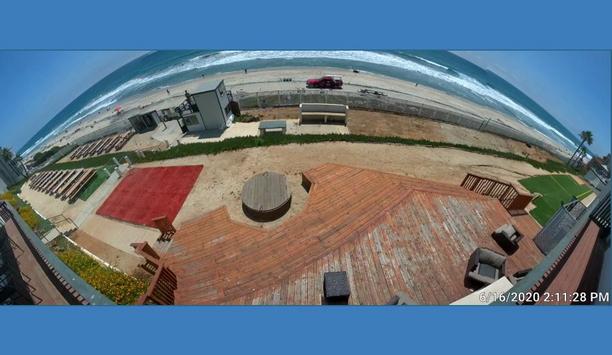
Hanwha Techwin America, a global supplier of IP and analog video surveillance solutions, has announced that Army and Navy Academy, a college preparatory military boarding school in California, has upgraded its security infrastructure with Hanwha security cameras. Located on a 23-acre beach-front property, the Army and Navy Academy is home to more than 300 students and employs more than 140 faculty and staff members. Two-fold surveillance upgrade According to Jeffrey Gibson, a system with anal...

Recently, Planet Fitness, with the help of their preferred system integrator Adirondack Direct, incorporated a video surveillance solution from Hanwha Techwin and Genetec that not only enhances security, but also improves operations. When leadership evaluated security at their 70-plus corporate run locations a few years ago, they chose to incorporate a video surveillance solution that would address security needs and would be advanced enough to help with management and operations. Each of...
Hanwha Vision America white papers






Hanwha Vision America virtual events

Hanwha Vision America videos


Hanwha Customer Stories: Buffalo And Erie County Naval And Military Park

COVID-19 Solutions: '5 Minutes With' Video Interview with Thomas Cook from Hanwha Techwin America
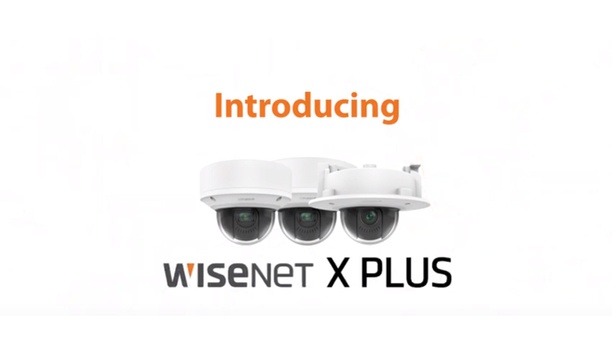
Hanwha Techwin’s Wisenet X series Plus

Introducing Hanwha Wisenet X Series Exclusive Wisenet 5 SoC Chipset
Expert commentary