Beyond Video Analytics, What Are the Benefits of AI and Machine Learning?
13 Aug 2020
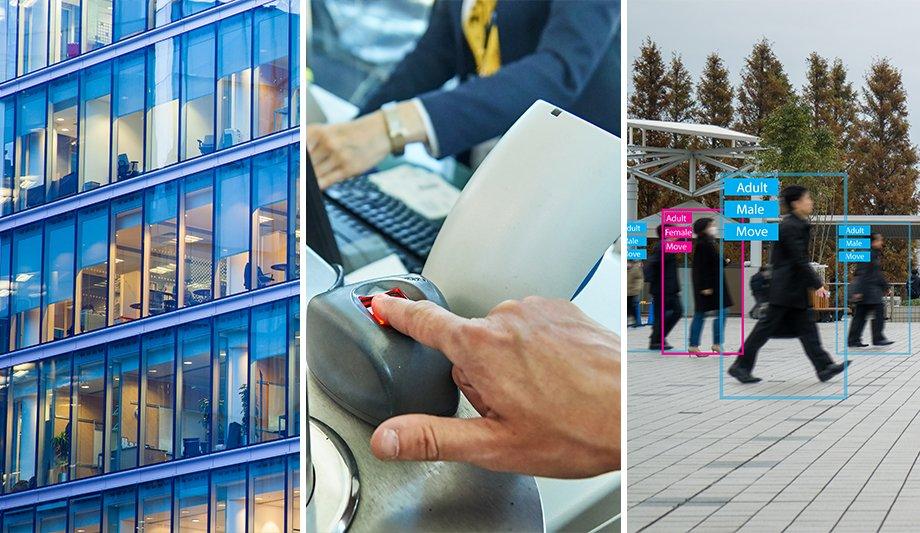

- AI enhances threat detection accuracy in physical security systems.
- Machine learning optimizes resource allocation and response times in security operations.
- AI-driven systems improve predictive maintenance for security equipment.
Editor Introduction
Artificial intelligence (AI) and machine learning have made a big splash in the physical security market, transforming video analytics to a new level of accuracy. In fact, the terms have become common buzzwords throughout the industry. However, the potential for AI and machine learning to impact the physical security industry goes far beyond their ability to improve video analytics. We asked this week’s Expert Panel Roundtable: Beyond better video analytics, how can artificial intelligence (AI) and/or machine learning benefit the physical security market?


While I do think we're a ways off from seeing the AI-driven results that we see in the movies these days, the addition of these algorithms can go a long way in allowing business leaders to ultimately make better decisions and reduce risk. Beyond video analytics, this goal is at the heart of the development in this market segment. Layering another tool, such as cloud-based functionality, to this intelligence brings an added benefit and additional flexibility that hasn't previously been seen by our industry. At the end of the day, however, the real benefit of this technology to the physical security department is the ability to take the data incoming from various Internet of Things (IoT) devices and use that information to establish best practices for business operations, solidify standard operating procedures for security operators, and bring a greater awareness of the risk an organization faces.

Users can utilize video analytics with more efficiency and accuracy through the use of AI, or more specifically, Deep Learning and Machine Learning capabilities. These terms, though sometimes used interchangeably, each offer different advantages. Machine learning offers better and more accurate incident detection analytics. Often when people think of video analytics, they associate it with facial recognition; however, Machine Learning capabilities extend far beyond and allow for the monitoring of mechanics and processes – as well as the detection of traffic and machine incidents. In contrast, AI is used to mimic what a person can do and contributes to the improvement of certain low-level tasks. AI in physical security is meant to supplement where human capabilities end. AI assists in improving automatic decision-making and alerts.

We are excited about the AI revolution in video analytics, but the application of AI goes beyond video. The true power of AI is in processing massive amounts of often disparate data sets to yield actionable insights. For instance, Asset Protection professionals have a firm understanding of what kind of point-of-sale transactions are red flags for fraud. AI can take that understanding to an exponentially higher level, evaluating millions of transactions across thousands of employees to identify fraudulent behaviors far earlier in the process (or even before it happens), thus leading to reduced shrink. The same type of AI pattern recognition can be applied to the reduction of false alarms in central stations, or hyper-accurate predictions of system failures to improve customer service. Our industry is just beginning to pair almost incomprehensible amounts of data with AI engines and algorithms. The applications are limitless, and the customer will benefit.

The real possibility of advancing intelligence through deep learning and other AI-driven technology applied to video is that, in the long term, we’re not going to be looking at the video until after something has happened. The goal of gathering this high level of intelligence through video has the potential to be automated to the point that security operators will not be required to make the decisions necessary for response. Instead, the intelligence-driven next steps will be automatically communicated to various stakeholders — from on-site guards to local police/fire departments. Instead, when security leaders access the video that corresponds to an incident, it will be because they want to see the incident for themselves. And isn’t the automation, the ability to streamline response, and the instantaneous response the goal of an overall, data-rich surveillance strategy? For almost any enterprise, the answer is yes.

Beyond better video analytics, artificial intelligence (AI) and/or machine learning can do plenty to benefit the physical security market. For cameras, AI can do much more than eliminating false alarms with motion-based analytics. From automating tasks to running routines and comparing data, AI and deep learning have the potential to change how we utilize security cameras. The technology couldn’t arrive at a better time since there are many more cameras installed than humans can monitor. In order to make use of all of this information, we need AI to make sense of the new data we are gathering and tell us what we should be paying attention to. We want to know about anomalies: Is that car going the wrong way down the street? Is there a person in the middle of the highway? These devices are a new breed of powerful IoT sensors that enhance business and operations directly.

Artificial Intelligence (AI) and Machine Learning can also benefit the physical security market through improved access control systems and integrations of the resulting data with other devices. Through the use of this technology, algorithms can recognize individuals through biometric identification and automatically integrate it with security cameras to develop more comprehensive access control solutions. AI can enhance a biometric fingerprint system by increasing the speed and accuracy of recognition. Additionally, AI and Machine Learning bring the added benefit of detecting complex events in real-time, which were previously only possible after the fact as part of a forensic analysis. This is enabling physical security systems and responses to become streamlined and more sophisticated.

Video analytics is typically used to identify people and other objects and then trigger a specific action, such as opening a door or triggering an alarm. While this functionality is useful, there is tremendous value in data analytics, which can provide useful insights extracted from the large amounts of data stored in access control systems. Artificial intelligence can “learn” what each user’s typical access patterns look like and alert security when it detects suspicious or anomalous behavior that may pose a threat to an organization. Beyond detection of potentially risky activity, data analytics can be used to better understand building occupancy and traffic patterns to help enforce physical distancing, highlight panels and devices that are misconfigured, or possibly about to fail, and so much more. Data analytics programs can help businesses improve their security and insider threat programs, understand their facility usage and traffic patterns, and optimize their security hardware.

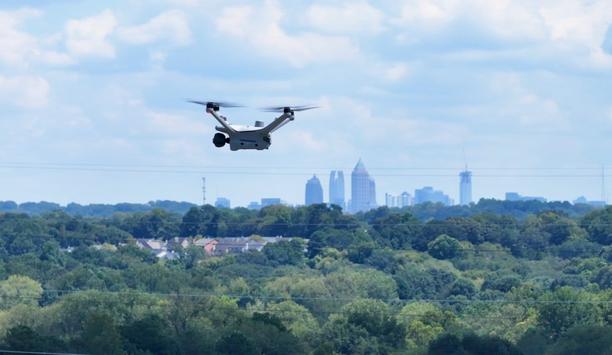
AI (be it true Artificial Intelligence or sophisticated machine learning) has a huge potential for assisting physical security. By learning and improving its own data, AI can rapidly ascertain what constitutes normal or abnormal behaviour to spot potential issues at an early stage. The benefits to video analytics are already well documented, but AI in the centralised security system can oversee a much broader range of complex data. For example, in a busy airport or train station a central AI system can process the movements of people in and out of secure areas (using access control as well as video surveillance) and find patterns that could suggest congestion issues or suspicious behaviour taking place. We are also seeing an increased use of AI in cutting edge technology such as drones, which can determine if remote installations, power lines or gas pipes have any issues or need attention, without human guidance.

Artificial intelligence and machine learning bring exponential changes to the way physical security processes input from video cameras and sensors. Data is the fuel that feeds AI, and cameras provide massive amounts of video for review. AI’s deep learning algorithms automatically detect differences between human and vehicle movements as opposed to animals, blowing leaves or reflections of light. One result is a tremendous reduction in false alarms and potentially related fines. We view AI as an added layer of security, helping, not replacing, humans to do a better job of securing people and assets. Using artificial intelligence, operators in central monitoring stations or enterprise security operations centers can train their attention on true alarms to improve the security response. With fewer false alarms wasting time, management can expand operations without adding staff. And today’s cloud-based AI software solutions add their capabilities to compatible cameras virtually anywhere in the world.
Editor Summary
Artificial intelligence (AI) and machine learning provide useful tools to make sense of massive amounts of Internet of Things (IoT) data. By helping to automate low-level decision-making, the technologies can make security operators more efficient. Intelligent capabilities can expand integration options such as increasing the use of biometrics with access control. AI can also help to monitor mechanics and processes. Intelligent systems can help end users understand building occupancy and traffic patterns and even to help enforce physical distancing. These are just a few of the possible uses of the technologies – in the end, the sky is the limit.
Hanwha Vision America products



Hanwha Vision America news
At ISC East 2025, Hanwha Vision is showcasing a range of high-performance surveillance solutions designed to elevate the security experience and transform an organization’s total operations. Attendees can see the future of security technology at Booth 507, ranging from AI cameras equipped with the Wisenet 9 System on Chip (SoC); to the new OnCAFE access control platform; to DesignPro, an intuitive project design and management resource. Hanwha Vision’s exhibit at ISC East demonstra...
Hanwha Vision is showcasing the future of security technology at GSX 2025 (Booth 2326), featuring its new Wisenet 9 System on Chip (SoC) and a growing suite of cloud-based solutions, including the new OnCAFE access control platform. Hanwha Vision will demonstrate how its latest technology simplifies security management, while providing powerful, intelligent, and scalable protection for any organization. Attendees will experience a full line of AI-powered cameras and devices supported by an...
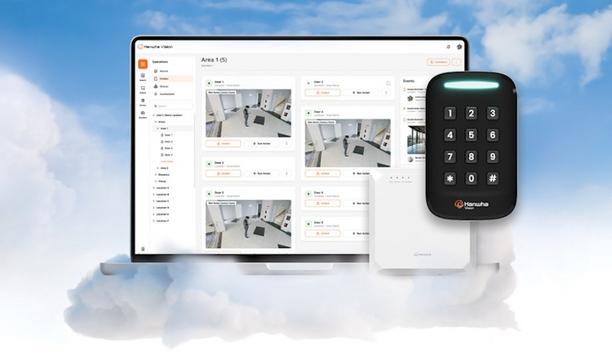
Hanwha Vision is opening new doors for security applications with the launch of OnCAFE (Cloud Access For Everyone), a cloud-hosted Access Control as a Service platform and the latest tool in the company’s expanding line of cloud-based solutions. Delivering a user-friendly, scalable, and cost-effective option for access control needs, OnCAFE reduces the deployment challenges traditionally associated with system initialization, device, user, and software management. Han...
Hanwha Vision America case studies
Wilson Bank & Trust, member FDIC, is an independent, community-based bank that began operating in Tennessee, USA in 1987. They have mortgage offices, operations centers, ATMs and branches located in and around Middle Tennessee that serve the city and surrounding rural areas. In total, they have operations and security at approximately 40 locations. One of the keys to their on-going success is their continuous search to improve their offerings. This drive extends to their physical security a...
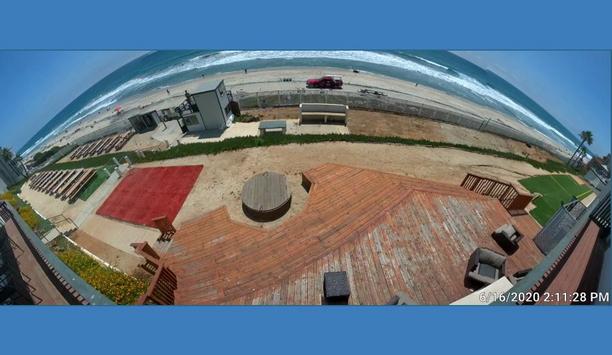
Hanwha Techwin America, a global supplier of IP and analog video surveillance solutions, has announced that Army and Navy Academy, a college preparatory military boarding school in California, has upgraded its security infrastructure with Hanwha security cameras. Located on a 23-acre beach-front property, the Army and Navy Academy is home to more than 300 students and employs more than 140 faculty and staff members. Two-fold surveillance upgrade According to Jeffrey Gibson, a system with anal...
Recently, Planet Fitness, with the help of their preferred system integrator Adirondack Direct, incorporated a video surveillance solution from Hanwha Techwin and Genetec that not only enhances security, but also improves operations. When leadership evaluated security at their 70-plus corporate run locations a few years ago, they chose to incorporate a video surveillance solution that would address security needs and would be advanced enough to help with management and operations. Each of...
Hanwha Vision America white papers




Hanwha Vision America virtual events

Hanwha Vision America videos

Hanwha Customer Stories: Buffalo And Erie County Naval And Military Park
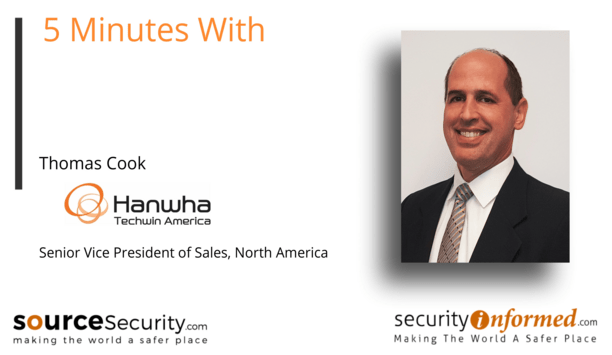
COVID-19 Solutions: '5 Minutes With' Video Interview with Thomas Cook from Hanwha Techwin America
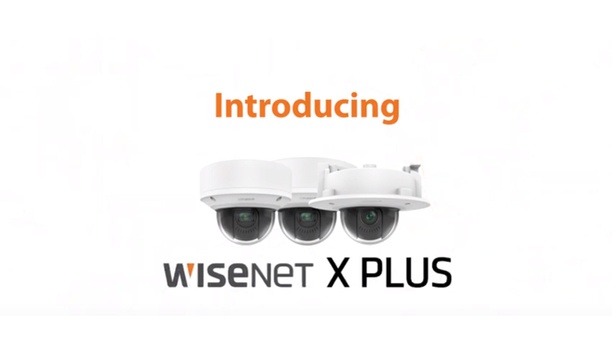
Hanwha Techwin’s Wisenet X series Plus
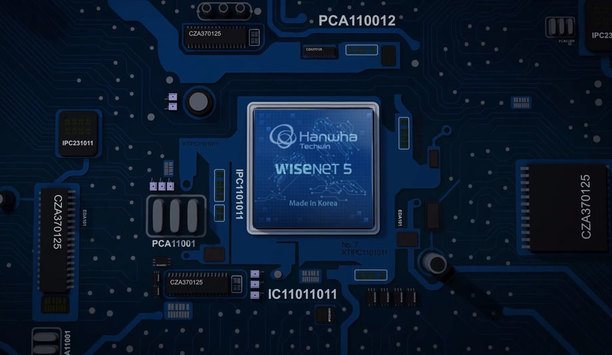
Introducing Hanwha Wisenet X Series Exclusive Wisenet 5 SoC Chipset
Expert commentary

Security beat