Physical security - Round table discussions

In tidying up after a year of Expert Panel Roundtable questions and answers, we came across some previously unpublished responses from our panel. These interesting responses address some of the hottest topics in the industry, from robots and deep learning to the “race to the bottom.” Taken together, the varied comments offer their own range of insights into the evolving physical security market. This week, we highlight some of these assorted Expert Panellist comments submitted over t...

Enterprise customers provide a large, and very lucrative, business opportunity for the physical security market. These customers include big global companies with plenty of revenue to spend and employees and facilities to protect. As a group, enterprise customers also tend to be a demanding lot, requiring systems that are large, scalable, that can operate across a wide geographic area, and that provide top-notch system performance. Enterprise customers set the standards of performance for the en...

Body-worn cameras are becoming more common every day, driven both by needs of the marketplace and technology developments. However, questions remain about the usefulness of the devices, and their future role in promoting safety and security. We asked this week’s Expert Panel Roundtable: What are the challenges of body-worn cameras for the security industry?

In recent years, information technology (IT) departments at end user companies have often been seen as adversaries of traditional security departments – or, at least, as a thorn in their side. One of the issues is territorial: As physical security products have migrated to use of Internet protocols and the network infrastructure, the IT and security departments have clashed – erm… make that interacted – more and more often. New realities such as cybersecurity have made i...

Industry standards make it possible for systems and technologies to connect and work together. Standards enable today’s integrated systems. But does adherence to standards stifle innovation? Does the necessity to interface using an industry-wide standard slow down the implementation of newer (and possibly not standards-compliant) capabilities? Or do standards eliminate extraneous variables, empower more integration and encourage greater innovation? We asked this week’s Expert Panel R...

Products are the building blocks of systems and solutions. How those products are combined, and where the integration happens, is a variable in the physical security market. Before the advent of open systems, a single manufacturer typically combined his own products, using proprietary connections, into end-to-end solutions for customers. Open systems undermined that paradigm to some degree and made it possible for customers to pick and choose products from multiple manufacturers to be integrated...

Companies in fast-moving industries tend to want half or more of their revenue to come from products released in the last three or so years. The logical extension of that philosophy is the demise of product "cash cows" that remain in a company's portfolio for many years. Where better to witness the shortening life cycles of technology products than in the smart phone market, where most of us buy into the hype of the "latest and greatest?" But does acceleration of new product introductions transl...

Even the most effective technologies usually require some level of human involvement. What new technologies do, generally speaking, is change the nature of a human’s role. Most jobs in today’s world are vastly different than 50 years ago, in many cases because of the changing role of technology. In the physical security world, what specific impact does technology have on the human element of systems? We asked this week’s Expert Panel Roundtable: Have recent developments in secu...

There’s a huge cloud hanging over the physical security market, but in a good way. Cloud-based systems, whether for video, access control or another category, are on the verge of taking the industry by storm. The benefits of that mythical “cloud” are well-known, or certainly well-touted, in the market. It’s almost as if the word “cloud” has become a buzzword that can mean different things, or at least whatever the customer wants it to mean (as long as they buy...

The world of politics, like the world of security, is an environment of constant change. But do changes in one have an impact on the other? Governments around the world are involved in buying a wide variety of physical security systems, so how those governments operate certainly affects how they spend money on security. But in a broader sense, governments (and the associated political forces at work) also impact how their citizens and those in the private sector view threats and, as a logical ex...

Big data is a buzzword, and data – presumably of all sizes – is a driving force in the physical security market. As systems become more sophisticated and expand their capabilities, the result is more data; in some cases, a lot more data. But a key question is: What do we do with the data? How do we use it to provide value? How do we interpret it, and transform it into useful information and/or intelligence? We presented the topic of data to our Expert Panel Roundtable and came away w...

For many years, cybersecurity was the unmentioned elephant in the room. Possible vulnerability of IP-connected devices to a cyber-attack was seldom, if ever, mentioned, and even the most basic measures to prevent such an attack were not implemented. For the last couple of years, however, the physical security industry has begun talking more about cybersecurity, in some cases with an abounding enthusiasm typical of the newly-converted. Have our discussions sufficiently addressed the long-standing...

Technology is changing at a break-neck pace, and the security marketplace is currently being bombarded by a wealth of new capabilities and innovations. But what will be the impact? Which of the currently-hyped new innovations will have a major impact, and which will fade over time? And even acknowledging the long-term significance of various technologies, what can we expect to be the more immediate effect? We asked this week’s Expert Panel Roundtable: What new security technology is poised...

The International Organization for Standardization (ISO) describes standards as guidelines or characteristics for activities or for their results, aimed at achieving the optimum degree of order. They might include product standards, test methods, codes of practice, guideline standards, and management systems standards. In the security marketplace, there are many standards currently used, including those from organizations such as ONVIF, PSIA and ASIS International. Might the value of standardiza...

Meeting a customer’s expectations is a key component of success for any business, including the physical security market. However, understanding customers’ expectations is a big challenge, which is made even more difficult because those expectations are a moving target. We asked this week’s Expert Panel Roundtable: How are customer expectations changing in the physical security market? Their wide-ranging answers highlight elements from technology expectations to adaptability to...

As security industry buzzwords go, “convergence” is perhaps the best known and most pervasive. We have been hearing about convergence in our market for almost 20 years. We have heard it’s happening soon. We have heard it’s inevitable. And yet, for all the talk of convergence, it has sometimes seemed there has been more talk than action. We wanted to check in with our Expert Panel Roundtable and get their latest takes on this most enduring of industry buzzwords. We asked t...

Once again, ISC West has come and gone. The show continues to please exhibitors and attendees. Reviews are generally glowing and enthusiastic. For all its successes, however, there is a certain repetition from year to year – a lot of the same players, the same technology trends (not to mention the same venue every year, but who doesn’t like Vegas?) But even among the repetition, there is usually at least one element that is surprising. Perhaps it’s the unexpected elements that...

Lower equipment prices (with less margin) are one industry trend leading more integrators to seek out new sources of revenue. With margins shrinking on lucrative, but unpredictable, “project-based” business, integrators are looking for more revenue stability. One solution is recurring monthly revenue (RMR), which is already common in the related field of alarm monitoring. But where does RMR come from? Creating more RMR also requires that integrators change how they do business, from...

The minutes are counting down to one of the biggest security industry trade shows of the 2017 calendar. Expectations are high going into ISC West 2017 in Las Vegas: Last year’s show was very well attended and highlighted lots of new technologies. Looking ahead to this year’s show, we wanted to get the Expert Panel Roundtable’s take on what news will dominate the show. So we asked our panel: What do you expect to be the big news at ISC West 2017?

Changes in our industry’s technologies are reflected in the language we use. Over the years, more than one industry trend has been tied to associated buzzwords – for better or worse. As the technologies change, so does the language. We asked this week’s Expert Panel Roundtable: What are the industry’s newest “buzzwords” and what do they reflect about the changing market?

Open systems are great at providing freedom for end user customers. But does the term “open system” mean the same thing throughout the industry? In the bad old days before the introduction and broad acceptance of open systems, security vendors produced proprietary systems that used only their own hardware and software. This locked in a customer to a specific vendor’s product line, and if another vendor offered a better product, the only way to get it was to switch to that vendo...

Some Expert Panel Roundtable topics are more challenging than others. Occasionally a question will “stump” the panel – i.e., no one will choose to answer it. Other times, only one or two panelists will step forward to answer a question. One comment does not a “panel” make. Taken together, however, these varied comments offer their own range of insights into the evolving physical security market. Let’s look at some of these assorted Expert Panel comments over t...

The end of the year is a great time to reflect on what the security industry has accomplished and to look ahead. We invited our Expert Panel Roundtable to weigh in on what they expect looking forward to the new year. Most industry-watchers are familiar with the major trends, but how will those trends play out in 2017? Specifically, we asked this week’s Expert Panel Roundtable: What will be the biggest headlines for the security marketplace in 2017?

In a fast-moving market like physical security, sharing information is an essential component of growth. However, there often seems to be more information available than an integrator or end user could ever digest and put to use. How does one go about finding the information he or she needs in an environment that can seem to be drowning in information (sometimes the wrong information). We asked this week’s Expert Panel Roundtable to share their strategies and suggestions. Specifically, we...

We in the physical security market tend to watch closely how the buying decision is made. If anything, the buying process has become more complex in recent years. We have seen the impact of security systems extending beyond the core security department, and with greater impact come more stakeholders. “Buying by committee” is more the rule than the exception, and the committee is getting rather large in some situations. We asked this week’s Expert Panel Roundtable: Who should be...

When a big security breach occurs, the phones start ringing at security companies, or so the expectation goes. The nature of security is that it takes a security breach, or even a high-profile tragedy, to convince managers of the need for security technology. When a school shooting occurs, schools take note. When terrorism strikes a soft target, other vulnerable institutions notice. Same for hospitals and airports and even nightclubs. When an event occurs, it gets attention that could translate...
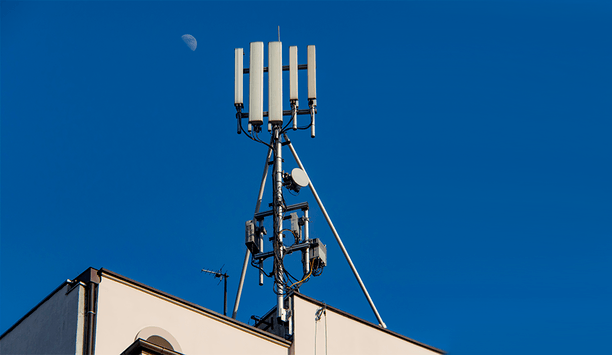
IP network dependability matters in physical security and safety applications, given that a company’s assets and people are at risk. There have been strides in the areas of network dependability, fault-tolerance, reliability, and survivability. However, networks (or affordable ones, at any rate) still cannot ensure near-100 percent uptime, which is why system designers acknowledge and plan for the possibility of a network outage. We asked this week’s Expert Panel Roundtable: How can/...

Big security trends are driving change in the physical security market. We see change happening around us every day, and much of it is disruptive to the status quo. We asked this week’s Expert Panel Roundtable: What has caused the greatest disruption to the physical security market in the last 12 months?

Here we are already at mid-year, and 2016 has been an eventful one for the security marketplace, dominated by mergers and acquisitions and lots of new products coming to the market. But what’s the outlook for technology in the second half of the year? What technologies will draw the most attention and drive the market into 2017? We asked this week’s Expert Panel Roundtable: What technology buzz will dominate the security industry in the second half of 2016?

Does seeing video cameras at a location make you feel safer or less safe? Do you feel better to know that video surveillance is capturing everything that happens, thus discouraging crime? Or do you think: What kind of neighborhood (or store) is this that needs a CCTV camera watching everything? Do you feel more secure when the security guard at the hotel elevator asks to see your room key? Do airport screenings ease your mind about getting on an airplane with 100 strangers? The “perception...