Physical security - Round table discussions

When security topics become a part of current events, it is usually in a negative light. Security generally only becomes news when it fails, sometimes in a dramatic, high profile and tragic way. However, security failures can also shed light on lessons learned and opportunities to improve. Working toward better security can translate into the purchase of more goods and equipment supplied by our market. For additional insights into the intersection of security and current events, we asked this we...

The security industry is full of individuals who call themselves consultants. It’s a term that is thrown around rather loosely, and in some situations the term can be roughly translated as “between jobs.” But “real” consultants provide real value to their clients in a variety of subject matter specialties. We asked this week’s Expert Panel Roundtable: What role should consultants play in the security technology buying decision?

A basic tenet of sales is ABC – always be closing. But it's a principle that most professional salespeople would say oversimplifies the process. Especially in a sophisticated, high-tech market such as physical security, the required sales skills are much more involved and nuanced. We asked this week's Expert Panel Roundtable: What unique characteristics are required of salespeople in the arena of physical security systems?

The year ahead holds endless promise for the physical security industry, and much of that future will be determined by which technologies the industry embraces. The menu of possibilities is long – from artificial intelligence to the Internet of Things to the cloud and much more – and each technology trend has the potential to transform the market in its own way. We tapped into the collective expertise of our Expert Panel Roundtable to answer this question: What technology trend will...
Cybersecurity continues to be a major theme in the physical security industry, but effective cybersecurity comes at a cost. Higher cost is contrary to another major trend in the market: lower product pricing, which some have characterized as a ‘race to the bottom’. Chinese manufacturers, whose products tend to have lower prices, have been the target of cybersecurity concerns and even a government ban. So what is the overall impact of cybersecurity on pricing trends in video products?...

The new year 2019 is brimming with possibilities for the physical security industry, but will those possibilities prove to be good news or bad news for our market? Inevitably, it will be a combination of good and bad, but how much good and how bad? We wanted to check the temperature of the industry as it relates to expectations for the new year, so we asked this week’s Expert Panel Roundtable: How optimistic is your outlook for the physical security industry in 2019? Why?

In many regards, 2018 was a turbulent year for the physical security marketplace, driven by evolving technologies and changing customer needs, among other factors. Year-end is a great time to reflect, so we asked our Expert Panel Roundtable: What caused the most disruption in the physical security marketplace in 2018?

Employee turnover is a problem for many companies, especially among younger employees who have not developed the philosophy of employer loyalty that was common in previous generations. Nowadays, changing jobs is the norm. The idea of spending decades working for a single employer seems almost quaint in today’s economy. However, excessive employee turnover can be expensive for employers, who are looking for ways to keep their brightest and best employees happily toiling away as long as poss...

The concept of how security systems can contribute to the broader business goals of a company is not new. It seems we have been talking about benefits of security systems beyond “just” security for more than a decade. Given the expanding role of technologies in the market, including video and access control, at what point is the term “security” too restrictive to accurately describe what our industry does? We asked the Expert Panel Roundtable for their responses to this p...

In today’s global economy, goods are manufactured all over the world and shipped to customers thousands of miles away. Where goods are manufactured thus becomes a mere detail. However, in the case of “Made in China”, the location of a manufacturer has become more high-profile and possibly more urgent. The U.S. government recently banned the use in government installations of video system components from two Chinese manufacturers, presumably because of cybersecurity concerns. A...

Physical security technologies operate successfully in many different markets, but in which markets do they fall short? Physical security is a difficult challenge that can sometime defy the best efforts of manufacturers, integrators and end users. This is especially the case in some of the more problematic markets and applications where even the best technology has to offer may not be good enough, or could it be that the best technology has not been adequately applied? We asked this week’s...

They say that every choice has a cost. It's a basic principle that, economically speaking, nothing is free. If it doesn't cost actual money, it may be expensive in terms of time, attention and/or effort. These are interesting observations to keep in mind as one peruses the various "free" video management system (VMS) offerings available on the market. Some are provided by camera companies to unify their products into a "system", even if it's a small one. Other free VMS offerings are entry-level...

In the simplest terms, video systems capture and record video. But supporting these basic operations are a growing number of other functions that expand usefulness and the ability to interact with related elements in a larger system. As video system functionality expands, we asked this week’s Expert Panel Roundtable: What is the most important function of a video surveillance system and why?

There is no expectation of privacy in a public space. That’s the premise on which most video surveillance applications are justified. But new concerns about privacy, specifically the General Data Protection Regulation (GDPR) in Europe, are changing expectations. And what if a camera must be positioned where a private area happens to be within its range? Fortunately, there are technology approaches to solving these dilemmas, as our Expert Panelists explain. We asked: What new technologies a...

Artificial intelligence (AI) is a current buzzword in the physical security market – and the subject of considerable hype. However, AI sometimes get negative press, too, including dire warnings of its potential and eventual impact from some of our most prominent technology thinkers. We decided to take the issue to our Expert Panel Roundtable with this week’s question: What are the negative impacts and/or new challenges of AI for physical security?

When is it too late to learn that a video camera isn’t working properly? As any security professional will tell you, it’s too late when you find that the system has failed to capture critical video. And yet, for many years, system administrators “didn’t know what they didn’t know.” And when they found out, it was too late, and the system failed to perform as intended. Fortunately, in today’s technology-driven networked environment, monitoring a system&rs...

Even the most advanced and sophisticated security systems are limited in their effectiveness by a factor that is common to all systems – the human factor. How effectively integrators install systems and how productively users interface with their systems both depend largely on how well individual people are trained. We asked this week’s Expert Panel Roundtable: What is the changing role of training in the security and video surveillance market?
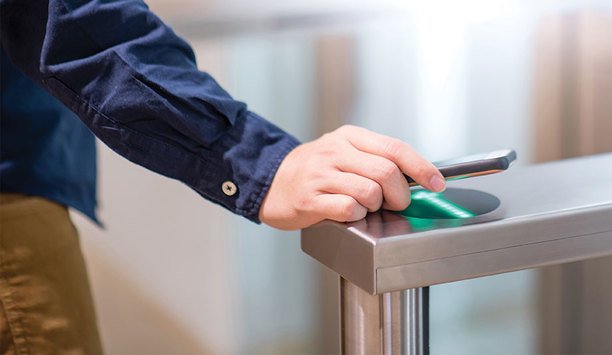
Using a smart phone as an access control credential is an idea whose time has come – or has it? The flexible uses of smart phones are transforming our lives in multiple ways, and the devices are replacing everything from our alarm clocks to our wallets to our televisions. However, the transformation from using a card to using a mobile credential for access control is far from a no-brainer for many organizations, which obstacles to a fast or easy transition. We asked this week’s Exper...

The physical security industry is embracing the cloud in a big way. Cloud-based systems – which involve accessing a shared pool of information technology resources via the Internet – are much higher-profile in the video and access control markets, and large and small companies are getting on the cloud bandwagon. We asked this week's Expert Panel Roundtable: What factors are contributing to growth in cloud systems in the security market?

We are living in the age of Big Data, and businesses are inundated with large volumes of data every day. Success depends on capturing, analyzing and ultimately transforming that data into information and intelligence that can be used to improve the business. So, it is with today's physical access control and video systems, too, which also generate unprecedented levels of data. But how can we make the data useful to end users and how can they realize its full value? We asked this week's Expert Pa...
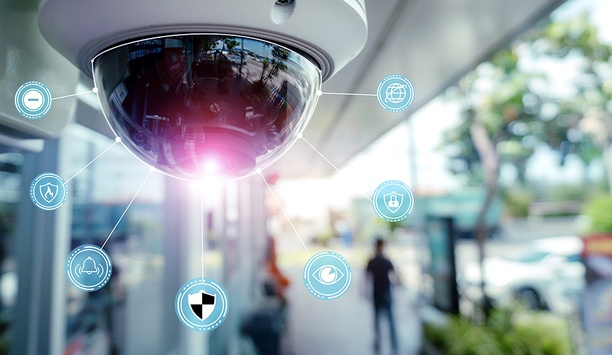
By definition, an edge device is an entry point to a network. In the physical security industry, edge devices are the cameras, sensors, access controllers, readers and other equipment that provide information to the IP networks that drive today’s systems. In the Internet of Things (IoT), edge computing refers to an increasing role of edge devices to process data where it is created instead of sending it across a network to a data center or the cloud. In our market, edge computing takes the...

What happens after the sale is complete, after the contracts are all signed and sealed? That’s when an abundance of variables can kick in – variables that can mean the difference between a successful security system or a case of buyer’s remorse. The features and value of equipment involved in a security system are well known before the sale closes, as hopefully are the integrator’s and end-user’s expectations about after-sale service. But what is the reality of afte...

High-quality products are the building blocks of successful physical security systems. How they are packaged may sometimes be seen as an unimportant detail or an afterthought. But should it be? Effective packaging can serve many functions, from creating a favorable customer impression to ensuring the product isn’t damaged in transit. Packaging can also contribute to ease of installation. On the negative side, excess packaging can be an environmental concern, especially for customers who ar...

Finding the exact right technology to solve an end user’s problem is challenging, but the rewards are great when an integrator gets it right. A wide range of available product types, price levels and added features increases the likelihood of identifying a technology to solve any problem. But with so many technology and product choices in the marketplace, identifying that one solution can be akin to finding a needle in a haystack. We wondered whether a vast range of product choices is alwa...
Consolidation – a decrease in the number of companies in a market achieved through mergers and acquisitions (M&A) – has been an important trend among manufacturers in the physical security market for many years. More recently, the trend has also appeared to extend to the integrator market. Larger integrators have been buying up other large integrators; in some cases, they have also been buying up smaller, regional integrators to expand their geographic coverage area. We wondered...

Knowledge shared among peers is often afforded more credibility than information from manufacturers. An approximation of that principle is at work in the use of case studies as marketing tools in the physical security industry. Case studies are aimed at telling real-world success stories – from actual customers – about how various technologies are used to accomplish security goals and make the world a safer place. But how useful are they? We asked this week’s Expert Panel Round...
You could say concerns about privacy are “trending” in our increasingly data-driven world. Unease about how Facebook and other high-tech companies use and share data dominates the news, and the full impact of new European Union (EU) regulations is about to be felt around the world. By May 25, companies that collect data on EU citizens will need to comply with strict new rules around protecting customer data, as enumerated in the General Data Protection Regulation (GDPR). But how do t...

A big trade show, such as the upcoming ISC West, has a lot to offer for attendees. How can attendees maximize the value they get out of ISC West? For advice, we go to our Expert Panel Roundtable, all seasoned veterans of many big trade shows. Specifically, we asked the panel: How can attendees get the most out of a big trade show like ISC West?

Cloud computing has been around since the turn of the millennium. Over the years, the concept of storing and accessing programs over the Internet (instead of using an on-premises computer system) has grown in almost every realm of business. Some might say the physical security industry has come late to the party, delayed in some instances by (misguided?) concerns about cybersecurity of cloud systems. The bandwidth needed to transfer video to the cloud has also been a challenge. We asked this wee...

Among its many uses and benefits, technology is a handy tool in the fantasy world of movie and television thrillers. We all know the scene: a vital plot point depends on having just the right super-duper gadget to locate a suspect or to get past a locked door. In movies and TV, face recognition is more a super power than a technical function. Video footage can be magically enhanced to provide a perfect image of a license plate number. We have all shaken our heads in disbelief, and yet, our indus...