Physical security - Round table discussions

Every day, the physical security industry succeeds in applying technologies that make the world a safer place. Manufacturers, integrators, and end users are eager to share their success stories, and their successes can inspire others to implement the same technology solutions. But, occasionally, technology does not live up to expectations and, in fact, fails to perform as promised. We asked this week’s Expert Panel Roundtable: How has the physical security industry failed to meet customer...

Ideally, every new product or technology serves a need in the market, but not all new products are created equal. The impact of some new technologies is so profound that they make us rethink our preconceptions and may create a total transition in the broader market. These are the technologies we call “game changers” because they prompt a significant shift in the current manner of doing or thinking about security. We asked this week’s Expert Panel Roundtable: What current techno...

Physical security is a large market overall, encompassing a range of diverse vertical markets, each with its own set of challenges and opportunities. The success of the security industry overall depends on the ability of companies and technologies to meet the specific needs of each vertical market. Some markets offer more lucrative opportunities than others. We asked this week’s Expert Panel Roundtable: Which vertical markets have the greatest potential for growth for physical security sys...

An organization’s security director manages a staff of security personnel, implements and enforces security policies and procedures, and generally ensures the safety of personnel and visitors to the organization’s premises. Over the years, the role of security director has expanded to include new disciplines such as cybersecurity. More and more, security directors are also taking a “seat at the table” as integral and critical members of a company’s management team....
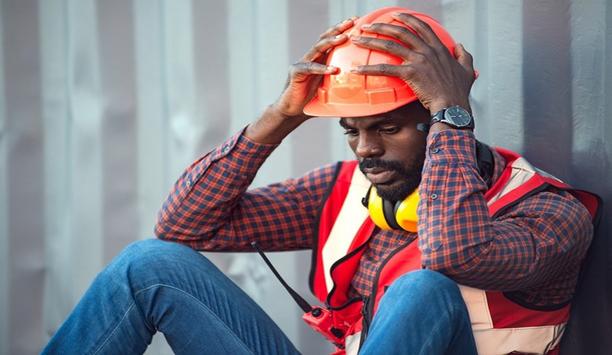
There is safety in numbers, or so the expression goes. Generally speaking, several employees working together tend to be safer than a single employee working alone. Even so, some environments require that workers complete their jobs alone, thus presenting a unique combination of security vulnerabilities. The U.S. Occupational Safety and Health Administration (OSHA) defines a lone worker as “an employee working alone, such as in a confined space or isolated location.” We asked this we...
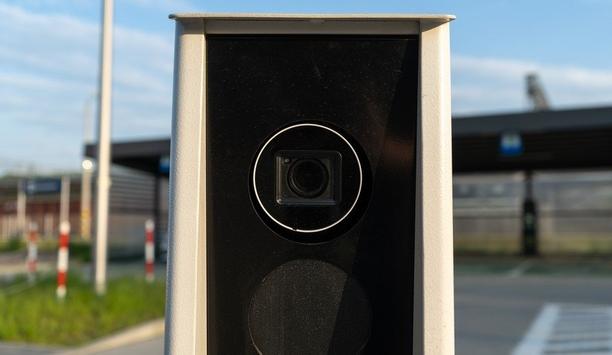
In the United States, they are called license plate recognition (LPR) systems. In Europe, the more common term is automated license number-plate recognition (ANPR). In either case, the systems provide capabilities that can benefit a range of applications from schools to municipalities to parking lots. Newer technologies can even identify vehicle color, type, make, and model. We asked this week’s Expert Panel Roundtable: What's new with license plate recognition (LPR) and/or automated numbe...

Headlines of violence in our schools are a reminder of the need to keep educational institutions safe. In fact, if there is a positive aspect to the constant bombardment of headlines, it is that it keeps our attention perpetually focused on how to improve school security. But what is the role of physical security systems? As the new school year begins, we asked this week’s Expert Panel Roundtable: Are schools safer because of physical security systems? Why or why not?

As physical security technologies become more complex, it is incumbent on the dealer/integrator to have the skills and expertise needed to ensure that a system operates smoothly. The value of integrators increasingly rests on the skill sets they bring to bear when installing a system. If the skills are missing, there is a problem. We asked this week’s Expert Panel Roundtable: What missing skills among security integrators can cause problems for customers?
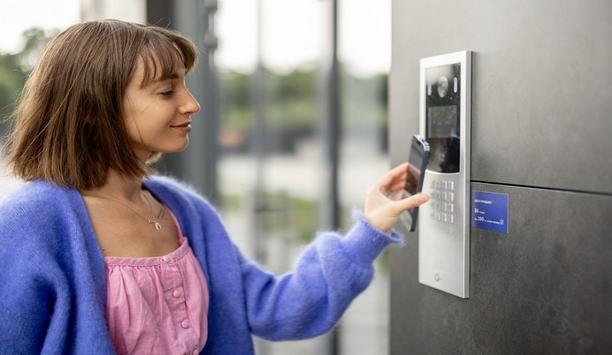
Driving the smart homes market is the convenience of simple technology solutions. Almost every home now has a “smart speaker” that makes it easier than ever for homeowners to interface and control their technology. But where does security fit into the new landscape of smart home systems? We asked this week’s Expert Panel Roundtable: What’s new in smart homes and residential security systems?

Historically, the emphasis of security systems has been on reactivity, whether it’s providing video evidence of an incident or data to support a resulting investigation. Reactivity is core to impactful security, but increasingly, systems are also seeking to be more proactive. A proactive system seeks to prevent events from happening in the first place, thus mitigating the harm to an organization, and making the need for a reactive response moot. We asked this week’s Expert Panel Roun...
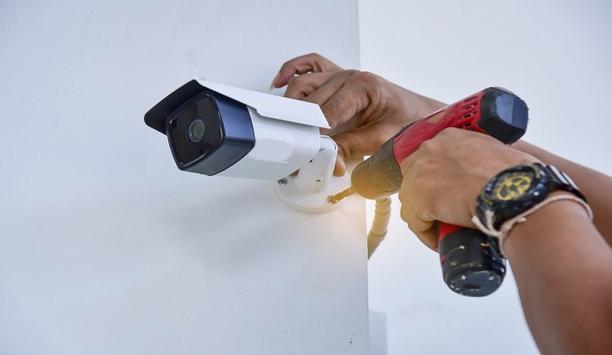
The role of the integrator/installer in the physical security marketplace is shifting as technologies evolve and applications expand. Integrators are being faced with a need to augment their expertise both in a wider range of systems and deeper into the specifics of each increasingly complex technology. At the end of the day, it falls to the integrator/installer to ensure a system performs as promised, however much a consultant or even a manufacturer might be involved in the process. We asked th...

Deployed across a wide range of devices, the Internet of Things (IoT) collects data to help business owners make decisions on a macro scale as well as at a granular level. The IoT is a network of physical devices embedded with sensors, software, and network connectivity that allows them to collect and share data. We called on this week's Expert Panel Roundtable to comment on the intersection of the IoT and physical security. We asked: How is the Internet of Things (IoT) increasing the effectiven...

Analog video cameras are still used in a variety of applications, primarily because yesterday’s robust and flexible technology is still functioning today, although it has been years, or even decades, since the initial installation. In many cases, this past generation of security cameras is still reliable and effective. Embracing an installed base of analog cameras is often the most cost-effective approach when updating or expanding a surveillance system. But what about the future? W...

According to a report by the U.S. Government Accountability Office (GAO), artificial intelligence (AI) is expected to transform all sectors of society, including national security. The physical security marketplace is certainly feeling the impact of the new technology, which has quickly gained prominence as one of the industry’s most popular buzzwords. To assess the more practical aspects of the situation, we asked this week’s Expert Panel Roundtable: How is artificial intelligence (...

Risk is a core concept in the practice of physical security. However, the risk is not always assessed effectively. Ideally, an organization's appetite for risk guides its security strategy and action planning to the minutest detail, including buying decisions for security equipment and systems. We asked this week's Expert Panel Roundtable: How does the concept of risk influence buying decisions in the security market?
A sad irony in the physical security industry has been the lax attention paid historically to the cybersecurity elements of our industry’s systems. However, the picture has improved starkly in recent years as manufacturers have stepped up to meet the cybersecurity challenges and awareness of the issue has become much higher. We asked this week’s Expert Panel Roundtable: What's new in cybersecurity for physical security systems?

Integrators and installers are on the front line of creating most security systems. They are also usually the first point of contact if there is a problem with the system. In general practice, many end users deal with integrators and seldom if ever speak to the manufacturer. Should it be that way? We asked this week’s Expert Panel Roundtable: Why does a manufacturer need a direct relationship with an end user?

Environmental, social, and corporate governance (ESG) standards in the broader marketplace reflect a growing recognition that business needs to lead the way in addressing a range of environmental and social issues. Environmental concerns, especially as they impact climate change, are a familiar facet of business life. In addition, social concerns include human rights and equity; basically, an organization's relationships with people. Governance refers to the structure of rules, practices, and pr...
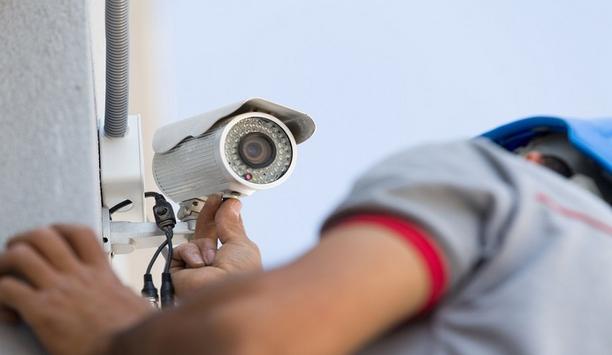
Every security system is unique, of course. Specific to each installation are the problems the customer and the integrator may experience along their journey. However, given the installation of hundreds of physical security systems, there are commonalities that occur. We asked this week’s Expert Panel Roundtable: What are the major pain points when installing a physical security system?

The return of trade shows has been an invigorating development for the security market. The morning-after reviews of this year's shows could not have been more positive. Everyone in the industry seemed to revel in the excitement and momentum as the shows decisively proclaimed: 'We're back.' Continuing that momentum into the future will depend on how well the shows adapt to changing industry trends and repeatedly reinvent themselves to be better every year. Adding feedback from GSX to our earlier...

Big Data is a persistent buzzword in the broader technology realm and in the physical security market. More every year, it seems we see a greater impact of the compilation of numerous data sources (Big Data) on our market. Smart leaders in the industry are looking at the vast opportunities that exist to leverage Big Data into greater intelligence and situational awareness. We asked this week’s Expert Panel Roundtable: What is the intersection of the security market and "big data?"
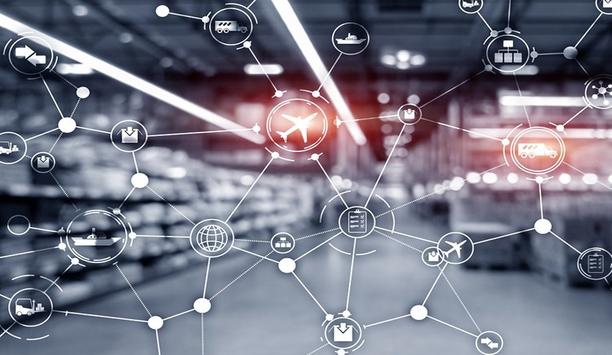
Challenges of the global supply chain have reverberated into the physical security marketplace in a big way in recent years. Dealers who historically could count on timely delivery of equipment have instead faced extended delays that in some cases have jeopardized their businesses. By most accounts, the situation is improving, so we turned to our Expert Panel Roundtable for an update. Our question this week: What is the current state of the physical security supply chain?

Biometrics is both a mature technology in the physical security world and an innovation perpetually on the cutting edge. Biometric technologies received a boost during the COVID pandemic when “touchless” became a buzzword with particular relevancy to the world of biometrics. Higher security needs, such as “two-factor authentication,” are also driving demand for biometric products. We asked this week’s Expert Panel Roundtable: What are the latest technology trends in...
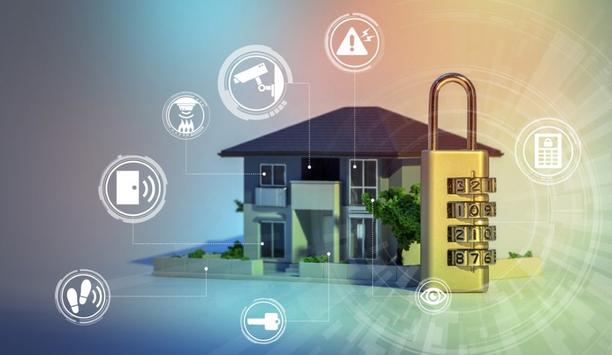
Some products may become obsolete faster than others, while some may have a longer life span due to ongoing innovation and demand. Technology and security threats are continuously evolving, and older security systems may no longer be effective in protecting against the latest threats. Additionally, older systems may have outdated technology, making them more vulnerable. We asked this week’s Expert Panel Roundtable: Given rapid technology development, are the lifecycles of security sy...

There’s always more to talk about in our Expert Panel Roundtable discussions, and we appreciate the variety of opinionated responses offered throughout the year. Looking back at 2022, we found several random and uncategorized Expert Panel responses that were not previously published. We have rescued these responses from our cutting-room floor and present them here in the interest of generating even more discussion.
As much as we each seem to live in our own bubble, the reality is that everything is connected and we are all part of a greater whole. So it is with the security market, which can be both inward-focused and also play a role in the bigger societal picture. A couple of recent questions we posed to the Expert Panel Roundtable highlight how the security market can and should interact with society in general.

A multi-factor authentication is a layered approach that requires users to provide two or more verification factors, such as credentials, to gain access to data and applications. If one of the credentials is compromised, the thinking goes, an unauthorized user will still be unable to meet the second authentication requirement and will be denied access to a targeted physical space, computing device, network, or database. Cybersecurity applications have long embraced the idea of MFA, which is also...

Some trends in the security marketplace continue for several years, while others come and go quickly and are soon forgotten. Scrutinizing a trend’s expected lifespan can help predict its impact on the marketplace. Trends that evaporate seemingly overnight are not useful for the greater good, and they can also distract customers from more enduring subjects. Unfortunately, sometimes hype is just hype. We asked this week’s Expert Panel Roundtable: Which new security trend do you think w...

Like any year, 2022 was full of surprises for the physical security industry. Adapting to supply chain shortages, lightning-fast technology development, and changing occupancy patterns in a shifting labor market were just a few of the factors that kept security professionals guessing in 2022. Wonder what the new year will hold? We asked this week’s Expert Panel Roundtable: What will be the biggest surprise for security in the year ahead (2023)?

As cloud-based systems become more common, Video Surveillance as a Service (VSaaS) is becoming mainstream in the physical security marketplace. There are certainly benefits for manufacturers and end users, but we asked our Expert Panel Roundtable to focus on the benefits to the dealer channel. We asked this week’s Expert Panel Roundtable: What is the impact of video surveillance as a service (VSaaS) on security integrators?