Hikvision - Experts & Thought Leaders


















White papers from Hikvision

Minimizing Storage, Maximizing Focus
Download
The Role Of Artificial Intelligence To Transform Video Imaging
Download
Hikvision DarkFighter Technology For High-quality Images At Night
Download
Hikvision Anti-IR Reflection Dome Camera
Download
Hikvision H.264+ Encoding Technology
Download
ROI (Region Of Interest) - Encoding Technology V0.5
Download
Hikvision Advanced Image Processing - Noise Reduction
Download
Understanding Digital Defog Technology
Download
H.264/AVC - Encode Technology V0.8.0
Download
Understanding Wide Dynamic Range
Download
Latest Hikvision news & announcements
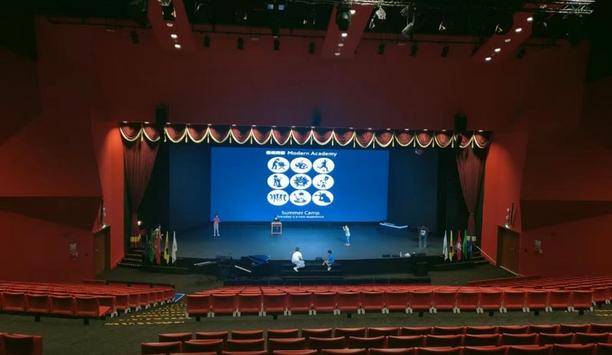
In order to turn its auditorium into a multi-purpose venue, and to improve the general visual experience, Dubai's GEMS Modern Academy replaced their legacy projection system with a massive LED wall from Hikvision. The renovated auditorium has become a popular venue for students, staff, and the community. Challenge: Turning the school auditorium into a multi-purpose performance venue. With the numerous approaches to the entertainment available, and with audiences' surging demand for rich, high-quality content display and immersive sound and video. As a result, venues such as showrooms, studios, auditoriums, and lecture halls are dabbling in a host of new technologies and applications to achieve the ‘wow factor’ audiences are looking for. Visual display systems GEMS Modern Academy is one of these venues. Offering Curriculum to children from kindergarten to grade 12, GEMS is one of the top ten schools in Dubai. Its large auditorium holds 500 seats for school events and can be rented out for private events on weekends. Originally, the auditorium had a large projection screen on the stage to display presentations, images, and videos. However, every element in the environment could take away from the image quality, from sunlight coming in through windows to the whiteness of the screen, the distance from the projector, the age of the system, and more. Offering Curriculum to children from kindergarten to grade 12, GEMS is one of the top ten schools in Dubai Ritesh Dhanak, Head of the IT team at GEMS Modern Academy said, "The projector system was not good enough with the ambient lighting. In order to create a better experience in our auditorium, and to pave the way for it to become a community hub, we need to do a complete upgrade to our live audio, stage lighting and visual display systems.” Remarkably refined images To achieve this, Mr. Dhanak worked with Almoe AV Systems, a renowned distributor and solutions provider of professional audio visual & IT products in the UAE. Almoe helped the school to upgrade the auditorium's touch control systems, matrix switchers, stage lighting, and speaker systems. For the most crucial part of the solution – the visuals – they worked with Hikvision to install a new LED display. The solution: A massive Hikvision LED wall and movable LED side-walls. LED displays offer many advantages, including flexibility and modularity. Therefore, the school decided to install a massive LED screen at a width of 12.48 meters, a height of 4.86 meters, and a pixel pitch of 2.5 mm at the center of the auditorium stage. The massive LED wall is made up of nine pieces of P2.5 Fine Pixel Pitch LED Display Units (DS-D4425FI-CAF). The wall delivers an outstanding color gamut and contrast ratio to create remarkably refined images. Massive center screen The two side-screens are used as backdrops, and can be easily removed when they are not needed For the setup, GEMS Modern Academy preferred to make the two sides of the screen removable to ensure flexibility on the stage, as well as to have multiple videos broadcasted on the screens simultaneously. Four smaller side-screens were designed to be 2 meters wide and 5 meters high, with a pixel pitch of 2.9 mm. They were installed on the two sides of the massive center screen. Each side-wall was composed of four P2.9 Indoor Rental LED Displays (DS-D4429RI-CAF). The two side-screens are used as backdrops, and can be easily removed when they are not needed. The LED walls are managed using Hikvision’s Video Wall Controller (DS-C10S-S11T), which supports up to 3840 x 2160 resolution at 30 Hz from multiple signal sources (VGA, DVI, HDMI, SDI, YpbPr, DP, and HDBaseT). This enables the school faculty to easily manage multiple video and audio inputs and outputs. Excellent visual experience The benefits: Excellent visual experience for audiences makes the auditorium a popular venue for students, staff, and the community. Hikvision's LED wall has vastly improved the visual performance of lectures and events held at the auditorium. With an extremely bright and clear image displayed, the screen loses none of its sharpness, color, or coherence, even when viewed at an angle or when the auditorium is brightly lit. The LED wall provides high-quality visuals, and is perfect for our large auditorium" "The LED wall provides high-quality visuals, and is perfect for our large auditorium," said Mr. Dhanak, adding "Unlike with the old system, we don't have to dim the lights in the auditorium during lectures, presentations, or live performance, and this allows students to take notes, remain more attentive and, for remote viewers joining via web conferencing, see the auditorium clearly." Ambient lighting conditions In the end, the video wall displays excellent visuals, adapts to ambient lighting conditions, and offers unique flexibility with the removable side-walls. As a result, Hikvision's LED display solution has turned the auditorium into a venue that fits all kinds of events. Since the LED screens have been installed, the school has hosted a large number of events at the auditorium, such as school lectures, stage plays, and musical performance. In addition, the venue has also been rented out for many private events such as public presentations and speeches. Impressively, the venue has also been used to host a TED Talk, one of the most popular lecture platforms in the world. Mr. Dhanak concluded, "With a large multi-purpose auditorium providing such excellent visual experience to the audience, events at GEMS Modern Academy are now on a different level and our auditorium is a much sought after event space in the community."
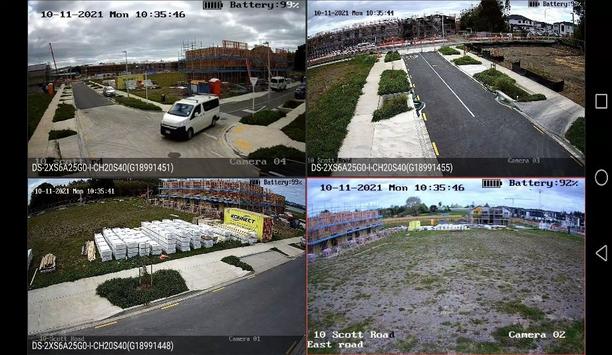
In the midst of a rise in building material thefts, construction company DECHO used Hikvision's solar-powered wireless cameras to guard the construction site for its much-anticipated Coast Garden project. Safeguarding valuable materials Building material shortages and rising prices fueled a rise in construction site thefts in New Zealand, which has prompted worries among builders, project managers, and contractors. The DECHO Group is one of Auckland’s most innovative and respected land developers, serving civil infrastructure, industrial, and building markets. DECHO's newly launched Coast Garden project is a new, premium development under construction in the highly sought-after Hobsonville Peninsula locale. The exclusive Coast Garden development is a brand new 4.3-hectare subdivision delivering exceptional waterfront living on an elevated clifftop site on the peninsula. Executing single project We need a security solution to protect our high-value items such as machinery" "We need a security solution to protect our high-value items such as machinery, tools, copper, and other building materials." Ning Zhao, Director of DECHO, said, "Our projects don't get completed overnight. It can take months and years to execute a single project. The construction sites endure all kinds of weather, power issues, security problems, and many other challenges. Therefore, we are in need of a solution that boosts security quickly and easily with simple installation and suited for deployment in any kind of outdoor environment, and without need for a fixed network or power supply." Hikvision's solar-Powered solution To protect its valuable tools and equipment, DECHO researched several options and deployed Hikvision's solar-powered security camera setup. EXIR Fixed Bullet Solar Power 4G Network Cameras and 4K ColorVu Fixed Bullet Solar Power 4G Network Camera Kits were placed around the perimeter of DECHO's Coast Garden construction site. DECHO researched several options and deployed Hikvision's solar-powered security camera setup The solar-powered security camera setup uses a 40-Watt photovoltaic panel and a highly durable 20 Ah rechargeable Lithium battery to power a Hikvision EXIR Fixed Bullet Solar Power 4G Network Camera. Because the setup gets power from the sun, there is no need for fixed power or network cables on site. With the product's smart power management features, each setup can provide up to 7 days of operation during cloudy or rainy periods when fully charged. Its 4G camera further adds a 32 GB eMMC (embedded MultiMediaCard) in addition to an SD memory card, this ensures continuous video recording even if there is an interruption with the SD card. Hassle-Free installation According to DECHO's Director, Ning Zhao, the fact that the Hikvision solar-powered cameras can be installed hassle-free was a key deployment feature for the company. The pole-mounted unit weighs just 14 kg (30 lbs), and no wires or cabling are required, making the deployment process fast, easy, and cost-effective. "With its own power source, each Hikvision camera can be deployed anywhere on the site without having to route cables, saving valuable time and resources, which could be redirected to other critical tasks to help the company complete construction on time," said Ning Zhao. Solar power cameras Empowered by ColorVu technology, the cameras offer clear vision in extremely dark environments Empowered by ColorVu technology, the cameras offer clear vision in extremely dark environments. "Construction site compounds are most vulnerable to theft at night," commented Ning Zhao, "With these cameras installed, our valuables are now well protected during vulnerable out-of-hours periods." Besides that, intrusions can now be detected accurately and addressed immediately. As the AcuSense technology embedded in the cameras helps to differentiate between humans and other moving objects such as animals, falling leaves, or heavy rain, false positives are minimized, and DECHO will only be alerted in the event of real security threats. In addition, being waterproof and dust-resistant, the solar power cameras are suitable for deployment in any kind of outdoor environment. Significant cost savings "These cameras are sturdy enough to withstand the harsh conditions on the construction site, as well as Auckland's frequent rainy and windy weather," said Ning Zhao. Requiring only a single solar panel, the self-contained setup operates for up to 7 days on a single battery charge, which delivers significant cost savings for DECHO. In addition, powered by clean and renewable energy, the solar cameras not only help to save operational costs for the building firm, but also reduce the company's carbon footprint. Ning Zhao commented, "We work hard to build a green culture within DECHO. Deploying a solar-powered wireless camera system represents an opportunity to have an immediate positive impact on sustainability."
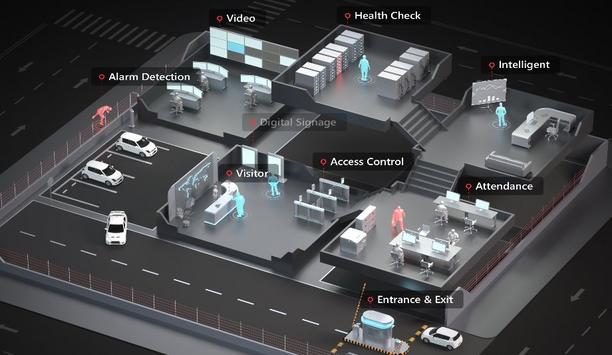
Hikvision launched newly updated HikCentral Professional 2.0 security software (“HCP 2.0”), which blends feeds from multiple systems onto a single platform. HCP 2.0 can be configured to link video security devices, alarm and access control systems, and more, including third-party systems through the OpenAPI – for easy centralized management of a variety of security and business applications. Frank Zhang, President of Hikvision’s International Product and Solution Center, said, “This is an important release for us, and a significant leap forward in our security management software offerings. HikCentral Professional 2.0 will help our customers manage a variety of activities seamlessly on one platform. We’re excited to see the value it delivers.” Nine key applications HikCentral Professional 2.0 integrates multiple business and security systems with nine key applications, making it valuable to a wide variety of common security and business scenarios seen in buildings, factories, stores, apartments, and the like. Among them, video cameras and security alarms are integrated into the platform to deliver fluid live viewing and timely alarm notifications. Streamline entrance management Furthermore, access control can be included to assign a variety of access permissions using multiple methods including facial recognition, ID cards, fingerprints, QR codes, and more. HCP 2.0 also allows various personnel such as HR managers to set flexible attendance rules, including schedules for shift work while delivering full reporting facilities. Additionally, site managers can also employ vehicle management and visitor management applications to streamline entrance management as well as on-site parking. Intelligent analysis and reporting Users can further rely on HCP 2.0 with intelligent analysis and reporting – an application that collects data and transforms it into easy-to-understand reports and dashboards. This includes flow status, people density, and more. HCP 2.0’s system application visualizes alarm and device notifications for targeted action in unusual events For systems management teams, HCP 2.0’s system maintenance application visualizes alarm and device notifications, as well as the full network and device topology for rapid, targeted action in unusual events. Digital signage systems Last but not least, HCP 2.0 lets users deploy digital signage systems to display advertisements and announcements. The software comes with eight pre-installed templates for users to present content optimally. This can be crowd numbers and temperature status in a supermarket scenario, for example. Greater operational efficiency With HCP 2.0, users will flexibly unite applications and build a tailored system to match their security and business needs. The unified approach not only creates greater situational awareness of their security environment but also reduces real day-to-day management resources previously required by disparate systems. For example, users can integrate visitor management with vehicle management to enhance daily operational efficiency for building facilities. Facility managers can register visitor information into the HCP 2.0 system, and – by linking to an ANPR system – can set visitors to be automatically permitted into on-site parking. Similarly, the system can also pre-authorize visitor access to specific areas of an organization’s premises. Personalized user experience HikCentral Professional 2.0 can be tailored to deliver specific information to assigned users HikCentral Professional 2.0 can be tailored to deliver specific information to assigned users. The system comes with three pre-configured roles: “system installation and management,” “security control and management,” and “attendance management.” In this way, HR staff can customize their feed to show employee attendance status, for example, while management staff can monitor the security of the facilities. There is also one custom role, which can be tailored to specific needs. Perhaps most importantly, HikCentral Professional 2.0 features an improved user interface. Users can customize the control panel to suit their viewing preferences, simply dragging and dropping key video and device feeds into the dashboard, adjusting where they sit and how they look. Dynamic and intuitive user interface HCP 2.0 also incorporates multiple visualized dashboards that display key security and business insights generated from various applications, facilitating decision-making processes with more accuracy and efficiency. What’s more, users apply 3D E-maps that vividly demonstrate device monitoring statuses in different locations, and manage instant alerts interactively by clicking and watching associated live videos and other integrated system information. Easy setup and maintenance HCP 2.0 is easy to deploy and quick to set up for a multitude of projects with single applications HikCentral Professional 2.0 is easy to deploy and quick to set up for a multitude of projects with single applications. Customers with minimum system requirements of Intel i3-CPU and 8 GB RAM can get up and running with a one-click installation procedure that makes HCP 2.0 setup a breeze. Operations guidance wizards are conspicuously displayed to support users in configuring key applications. In addition, the visualized health monitoring dashboards enable more focused and efficient IT maintenance.
Insights & Opinions from thought leaders at Hikvision
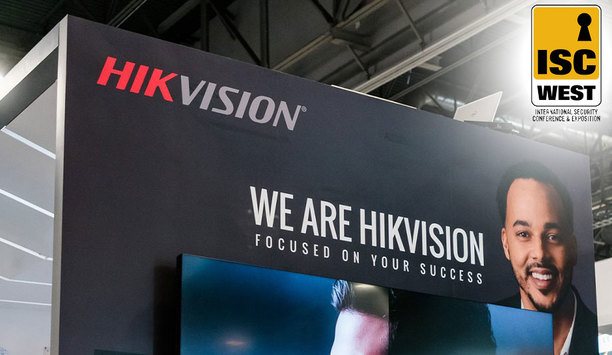
Despite any negativity you may hear, Hikvision is optimistic about their role in the U.S. market. “We demonstrate that we can be trusted, and that we should be trusted,” says Jeffrey He, Vice President, Hikvision, and President, Hikvision USA and Hikvision Canada. “We have sound products and technology. Our mission in the security industry is to protect, not to harm. Otherwise why would we be in this industry?” Hikvision is committed to investing in the North American market, where there was ‘positive year-over-year growth’ in 2018 and ‘strong’ sales in Q1 this year, according to Eric Chen, General Manager of Hikvision USA and Hikvision Canada. HikCentral Central Management Software The company’s U.S. focus is shifting from products to solution sales, with emphasis on ‘mid-market’ small- and medium-sized businesses (SMBs). The largest verticals are retail and education, and there are emerging opportunities in the cannabis market. Launch of the HikCentral central management software (CMS) is a component of the company’s solution-sales approach. Launch of the HikCentral central management software is a component of the company’s solution-sales approachMr. He acknowledges the growth of ‘anti-China sentiment’ in the United States and other parts of the world, which he says will impact Hikvision’s operations globally. Specifically, in the U.S., ‘political’ elements impacting Hikvision’s business include ongoing tariffs and a trade war, Congressional calls for export controls and sanctions, and a provision of the National Defense Authorization Act (NDAA) that bans use of Chinese video surveillance products in government applications. Specifying Cybersecurity Initiatives At ISC West In spite of it all, Hikvision’s message at the recent ISC West show was overwhelmingly positive, and the company also detailed cybersecurity initiatives they say put the Chinese company ahead of many competitors in the industry. Eric Chen came in as General Manager last year; he previously spent a decade working for Hikvision in China. Chen reports solid 18.8% year-over-year growth for Hikvision globally, totaling $7.4 billion last year. He notes the company saw 40% compounded growth between 2010 and 2018. Globally, there are 34,000 employees, 16,000 of whom are research and development (R&D) engineers. Hikvision’s expanding global footprint includes 46 international branches. There are three manufacturing facilities in China, in addition to one in India. HikRewards Program For HDP Customers At ISC West, Hikvision’s theme was ‘Focus on Your Success’, including introduction of the HikRewards program that provides rebates to HDP (Hikvision Dealer Partner) customers, their core dealer base. A new online Hikvision Knowledge Library for HDPs provides training and reference materials dealers can share with employees. A new tech center, introduced in December, provides data sheets, product information, and support resources. There is also a North American R&D team headquartered in Montreal. At the industry’s largest U.S. trade show, Hikvision unveiled a brand-new booth with plenty of open space and video walls A customer satisfaction survey launched in March provided good feedback from customers. “They know who to call if they have a problem,” says Chen. “We want to focus on making customers successful.” The success theme also extends to Hikvision employees, who are featured in videos describing their jobs and enthusiasm for Hikvision. There are some 400 employees in the North American operation. At the industry’s largest U.S. trade show, Hikvision unveiled a brand-new booth with plenty of open space and video walls. Half of the booth was focused on solutions, especially retail and education, and also gaming and commercial real estate. Security Products Displayed At ISC West A variety of devices, including access control, intercoms and cameras, are integrated using the HikCentral CMS systemProduct highlights at the ISC West booth included the 32-megapixel PanoVu multi-sensor dome camera, whose 180-degree panoramic image was displayed on a 65-inch monitor. A variety of devices, including access control, intercoms and cameras, are integrated using the HikCentral CMS system. Some products new to the North American market, including intercoms, turnstiles, emergency call stations, and under-vehicle inspection, were displayed. Hikvision’s deep learning products are moving into their second generation, including the ability to obscure private information on videos to comply with GDPR/privacy requirements (previewed at ISC West and released later in the year). Algorithm components of Hikvision’s DeepInMind artificial intelligence are being adapted into a platform called AcuSense for value-priced products, which can recognize a human or vehicle and help filter out false alarms. Also being adapted to products with lower price points are the ColorVu system that incorporates visible light LEDs to provide color images at night, and DarkFighter low-light capabilities. Penetration Testing Of Cameras And NVRs As a global manufacturer, Hikvision faces a high level of scrutiny about cybersecurity, which Mr. Chen says is “a good thing for us,” enabling them to highlight the steps they are taking to improve cybersecurity. Chuck Davis, Director of Cybersecurity, outlined specific milestones Hikvision has achieved in its quest to provide world-class cybersecurity. Chuck Davis, Director of Cybersecurity, outlined specific milestones Hikvision has achieved in its quest to provide world-class cybersecurity In September 2017, Hikvision began working with third parties (including Rapid7) for penetration testing (ethical hacking) of its cameras and recorders. That same month, Hikvision set up a Cybersecurity Hotline open to anyone with questions about cybersecurity, including white-hat hackers and researchers. Even before that, Hikvision had an open-door policy on cybersecurity and a program for patching and disclosing responsibility. In February of 2018, Hikvision released a 40-page Cybersecurity White Paper describing cybersecurity testing and processes built into the software development lifecycle. That same month, Hikvision launched an Opened Source Code Transparency Center and offered an open invitation to anyone wanting to inspect Hikvision’s source code and let them know of any vulnerabilities. FIPS 140-2 Certification By NIST Hikvision has also become a Common Vulnerabilities and Exposures (CVE) Numbering Authority (CNA), which ensures their patching and incident reporting programs have been reviewed by a CNA partnering company. Hikvision's encryption module (HIKSSL) received Level 1 FIPS 140-2 certification to be used in both IP cameras and NVRsIn August, Hikvision received Federal Information Processing Standard (FIPS) 140-2 certification, a U.S. government encryption standard created by the National Institute of Standards and Technology (NIST). Hikvision's encryption module (HIKSSL) received Level 1 FIPS 140-2 certification to be used in both IP cameras and NVR products. Davis said the FIPS 140-2 certification process began before the NDAA ban on use of Hikvision products in the U.S. government, and in any case is a standard that ensures a high level of encryption. “We wanted to make sure we had the same level of technology,” he says. “It was not to win over the government.” Making Industry More Cybersecure “We are really trying to have third parties test and certify our equipment,” adds Davis. “We are trying to be open and transparent. Education and awareness are key.” “We need the trust of customers in the security community,” says Mr. He. “No matter what, we have to follow the highest standards to offset the concerns and accusations.” In April 2018, Davis became a member of the Security Industry Association (SIA) Cybersecurity Advisory Board to help make the entire industry more cybersecure through education, awareness and standards. Hikvision has also joined the Forum of Incident Response and Security Teams (FIRST at first.org), a global cybersecurity incident response consortium that cooperatively handles computer security incidents and promotes incident prevention programs. Davis has presented Cybersecurity Road Shows in 22 cities in the United States and Canada, and also in Australia and New Zealand. The 90-minute presentations focus on education awareness around cybersecurity and seek to get attendees engaged and aware about cybersecurity in business and also in their homes.

Can we finally relax a little and announce that the pandemic is nearing an end? With all the false starts and stops, it’s understandable if uncertainty continues to be the dominant force. The apprehension that ruled at every stage continues even as the pandemic (hopefully) ends. But what about ‘the new normal?’ How will the industry need to reinvent itself in the post-pandemic world? We asked this week’s Expert Panel Roundtable: As the industry transitions back to in-person meetings, what will be the ‘new normal?’
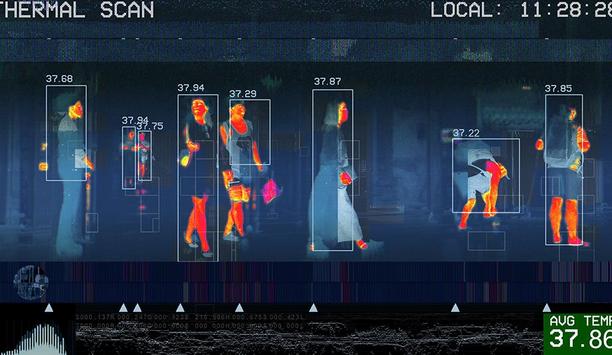
Thermal cameras can be used for rapid and safe initial temperature screening of staff, visitors and customers. Used the right way, the cameras can help prevent unnecessary spread of viruses like the novel coronavirus. During the global pandemic, use of thermal cameras has increased, but they have not always been used correctly, and therefore, not effectively. Hikvision’s temperature screening thermal products are currently assisting users in initial temperature screening across the global market. During 2020, demand increased in most markets, and the company highly recommends that Hikvision’s thermographic cameras be used in accordance with local laws and regulations. Limitations of the technology include throughput and the impact of ambient conditions. Detect viruses and fever Hikvision releases a video that illustrates how skin temperature measurements are normalized within minutes Thermal cameras cannot detect viruses and fever and should only be used as a first line of screening before using secondary measures to confirm, says Stefan Li, Thermal Product Director at Hikvision. “We also believe it is important for businesses and authorities to use [thermal cameras] alongside a full program of additional health and safety procedures, which includes handwashing, regular disinfection of surfaces, wearing protective clothing such as masks, and social distancing.” Hikvision has released a video that illustrates how skin temperature measurements are normalized within minutes after someone emerges from the cold. Mr. Li says the video demonstrates the accuracy of forehead measurement under difficult circumstances when people come inside from a cold outdoor environment. Temperature screening facilities “There have been some claims that measuring the forehead temperature is not as accurate as measuring the inner canthus, and we believe this video demonstrates the accuracy of forehead measurement very well,” he says. “We also illustrate how the skin temperature will experience a process of recovery (warming up), no matter if it is measured by a thermal camera or a thermometer.” Mr. Li adds that people should wait five minutes in such circumstances before starting a temperature measurement. “We hope that stakeholders who are involved in the design of temperature screening facilities and associated health and safety procedures will recognize how important it is to consider the skin temperature recovery time, and that forehead measurement can provide accurate test results,” says Mr. Li. Thermal imaging manufacturers The algorithm is based on a large number of test results to obtain a value that tends to be dynamically balanced The temperature measurement principle of thermal imaging is to detect the heat radiation emitted by the human body. The detected heat value often does not reflect the true internal body temperature of an individual. Furthermore, the temperature varies among different parts of the human, such as the forehead, ears, underarms, etc. A temperature compensation algorithm can be used to adjust the measured skin temperature to align with the internal body temperature. The algorithm is based on a large number of test results to obtain a value that tends to be dynamically balanced. At present, thermal imaging manufacturers in the market, and even forehead thermometer manufacturers, have developed their own algorithms to map the skin temperature measured by the camera to the internal body temperature, so as to compensate the skin temperature to the internal body temperature. Thermal cameras This is also why Hikvision recommends that the "actual body temperature" should be checked with a secondary device for confirmation. The calibration work for a thermal camera is completed in the production process at the factory, including calibration of reference values and detection point and so on. At the same time, the equipment parameters should be adjusted before on-site use to ensure accurate temperature reads. Hikvision does not deny the accuracy of temperature measurement at the inner canthus but prefers forehead temperature measurement and algorithms based on actual use scenarios, says Mr. Li. A large amount of test data and practical results indicates that the forehead is a correct and easy-to-use temperature measurement area, says the company. There are advantages and disadvantages of choosing different facial areas for temperature measurement. Default compensation temperature Two main approaches direct the measurement area and how compensation algorithms are applied: Forehead area + default forehead compensation algorithm value Upper half face (forehead + canthus) + default inner canthus compensation algorithm value. Both methods deploy compensation algorithms, but the default compensation temperature of the inner canthus will be less than the default compensation temperature of the forehead, generally speaking. The reason is that the temperature of the inner canthus of most people is higher than their forehead, so the temperature compensation is relatively low (i.e., closer to the actual temperature inside the body.) Upper face area Hikvision found that selecting the upper face area plus the default compensation value for the inner canthus resulted in situations when the calculated temperature is lower than the actual temperature. For the Hikvision solution, the forehead is a relatively obvious and easy-to-capture area on an entire face Mr. Li explains: “The reason is that when the camera cannot capture the position of the inner canthus (for example, when a person is walking, or the face is not facing the camera), the camera will automatically capture the temperature of the forehead. Then the result that appears is the sum of the forehead temperature plus the default compensation temperature of the inner canthus, which is lower than the actual temperature of the person being measured. Therefore, errors are prone to occur.” Thermal imaging products But for the Hikvision solution, the forehead is a relatively obvious and easy-to-capture area on an entire face. Also, the default forehead compensation temperature is based on rigorous testing and can also correctly mimic the actual temperature of the person being measured, says Mr. Li. After many test comparisons, considering that the results of forehead temperature measurement are relatively more stable, and in order to avoid the false results from inner canthus temperature measurement, Hikvision chose the forehead temperature measurement approach. “We look forward to bringing thermal imaging products from a niche market where there is a relatively high-end industry application to a mass market and serving more users,” says Mr. Li. Facial recognition terminals Additional application parameters can maximize effectiveness of thermal cameras for measuring body temperature: Positioning and height - All cameras must be mounted appropriately to avoid loss of accuracy and performance. The installation height of each camera must be adjusted according to camera resolution and focal length, and stable installation is needed to avoid errors caused by shaking. Ensuring a ‘one-direction path’ - The detection area must ensure that cameras capture the full faces of all those passing by or stopping, and obstacles should be avoided in the field of view, such as glass doors that block the camera. Adequate start-up and usage - A waiting time of more than 90 minutes is required for preheating, after the initial start-up. Before conducting a thermal scan, people should be given three to five minutes to allow their body temperature to stabilize. When Hikvision MinMoe facial recognition terminals are used, people must stand at a fixed distance, pass one by one, make a short stop, and face the camera directly. Hikvision cameras support efficient group screening, but one-by-one screening is suggested for more accurate results, says Mr. Li. Unstable environmental condition An unstable environmental condition may affect the accuracy of thermal camera systems Environmental factors can impact the accuracy of thermal cameras, and the idea of using a black body is to provide the camera with a reference point that has a stable temperature. The black body is heated to a specific temperature and helps the thermal camera to know how much error is caused by environmental factors in the room, and how the camera should calibrate itself in real time to improve its accuracy. A black body can help increase the temperature measurement accuracy, and the most common improvement is from ±0.5 degrees to ±0.3 degrees. However, it also increases the cost of the installation. In some markets, customers may require black bodies in order to comply with regulatory accuracy requirements. An unstable environmental condition may affect the accuracy of thermal camera systems for measuring temperature. Medical temperature measurement Therefore, Hikvision suggests that the ambient conditions should be met for installation and use. First of all, users should avoid installing devices in hot or changeable environments. All cameras require indoor environments with calm air, consistent temperature and no direct sunlight. Installation should also be avoided in semi-open locations that may be prone to changes in ambient conditions, such as doorways, and there should be enough stable, visible light. All devices should be installed to avoid backlighting, high temperature targets, and reflections in the field of view as far as possible. “We often see the misconception that thermal cameras can replace medical temperature measurement equipment, which is not the case,” says Mr. Li. Rapid preliminary screening “Temperature screening thermographic cameras are designed for the detection of skin-surface temperatures, and the measurement should be conducted to achieve rapid preliminary screening in public areas. It is really important that actual core body temperatures are measured subsequently with clinical measurement devices.”