 |
| Airbus Defense and Space will examine the feasibility of using latest radar technology for better air traffic management |
The Civil Aviation Authority (CAA), the UK's specialist aviation regulator, has awarded a study to Airbus Defense and Space to examine the feasibility of using the latest radar technology for better air traffic management.
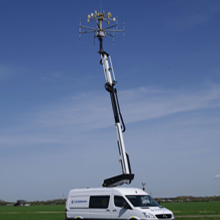
Conventional radar uses a rotating antenna to sweep the sky, actively sending out radio pulses and detecting those which are reflected back from aircraft. Airbus Defense and Space has developed a so-called “passive radar” system that doesn't emit any radiation, but instead analyses radiation reflections from other emitters, such as radio and television stations, to detect objects. By measuring the differences between the original broadcast signal and the signals reflected from aircraft in the air, the position of the aircraft can be detected. The difference is that a passive radar system that relies on signals already in the air avoids creating additional emissions in populated areas, releases bandwidth for other uses and addresses the problem of misleading echoes from wind farms.
This type of new system potentially offers a highly cost effective and extremely reliable system. Passive radar is expected to be highly reliable as well as cost effective compared to the current systems in use in civil airports, because the current approach relies on one radar transmitter per airport putting enough signals in the sky. Translating the motto "Four eyes see more than two" into the radar world, several cost effective passive radar sensors using a number of emitters could broaden the basis for detection. The current active radars used can be susceptible to confusing echoes and interference from the increasing number of wind farms in the UK. Placing several passive radar sensors intelligently can eliminate these unwanted effects. (Note, Airbus Defense and Space announced in 2011 the development of a software and hardware radar modification to significantly mitigate interference from wind turbines).
Airbus Defense and Space has |
Passive radar may also help to free up spectrum that could be used for an upcoming 5G network.
Airbus Defense and Space started to develop the passive radar solution in 2006 and has already demonstrated a working system, which can detect ultralight aircraft many kilometres away with accuracies down to 20m, as well as detect larger aircraft 200km away, making it one of the early pioneers and currently at the head of the field in this area. Airbus Defense and Space hopes that the application of this technology originally conceived for military use could reshape the way that air traffic is managed in the future.