Testing & Approvals

Truck-Lite Europe, a pioneering manufacturer of high-performance LED lighting for commercial vehicles, has unveiled a new state-of-the-art in-house testing facility, marking a major step forward in its commitment to product reliability, road safety, and regulatory compliance. The newly expanded facility significantly enhances Truck-Lite’s ability to validate its lighting systems under real, on-the-road conditions. It features a comprehensive suite of testing technologies, including an opt...
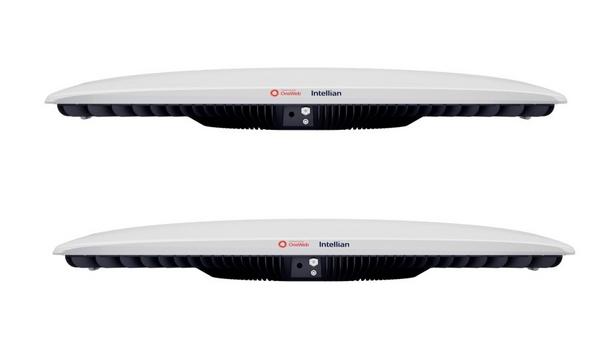
Intellian Technologies Inc., a global provider of resilient multi-constellation, feature-rich satellite user terminals and communications solutions, and OneWeb, the low Earth orbit (LEO) satellite communications company, have announced a new product portfolio of Intellian Flat Panel user terminals for use on OneWeb’s network. Flat Panel Series Intellian’s Flat Panel Series is a suite of both Pro and Compact user terminals that deliver exceptional performance in sle...

“3rd DNAKE Supply Chain Center Production Skills Contest”, jointly organized by the DNAKE Trade Union Committee, Supply Chain Management Center, and Administration Department, was successfully held in the DNAKE production base. More than 100 manufacturing workers from multiple production departments of video intercom, smart home products, smart fresh air ventilation, smart transportation, smart healthcare, smart door locks, etc. attended the contest under the witness of the pioneers...
Using B&R automation technology in maritime environments is easier and more flexible than ever thanks to additional certifications by DNV, KR, LR, and ABS for the X20 control and I/O system. B&R has also expanded the temperature and input voltage ranges of the X20 system. Certifications Life at sea puts extreme demands on automation components, so certification authorities subject them to intensive testing. The recent addition of type examination certificates from Det Norske Veritas...

SaaS Alerts, the cybersecurity company purpose-built for MSPs to protect and monetize their customers’ business SaaS applications released the results of its first-ever SASI (SaaS Application Security Insights) Report. The report, scheduled to be released semi-annually, reveals a shocking trend of over 3,000 Brute Force Attacks per day [against the current SMBs being monitored by the platform] and sheds light on risky file-sharing behavior and the top countries where bad actors are origin...
SaaS Alerts, the cybersecurity company purpose-built for MSPs to protect and monetize their customers’ business SaaS applications unveiled the findings of its latest edition of the SaaS Application Security Insights (SASI) Report. Published semi-annually, the free downloadable report is the only one of its kind to analyze approximately 136 million SaaS security events across 2,100 small and medium businesses (SMBs) globally and identify cyber trends negatively impacting businesses. SAS...
News
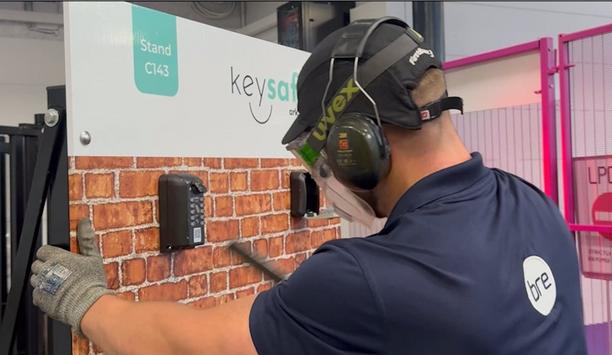
A specialist in access management hopes to use next week’s International Security Expo (ISE) 2025 in London to demonstrate that not all key safes are equal. The Key Safe Company will once again put its ark Tamo Pro under intense duress, when it goes under attack in the LPCB Live Testing Lab. BRE personnel The product, which stores keys at the point of need, could not be breached by BRE personnel The product, which stores keys at the point of need, could not be breached by Building Research Establishment (BRE) personnel during testing at last year’s ISE, reinforcing its claim as the world’s most secure mechanical key safe. And the company is confident that feat will be repeated when the product takes its turn in the attack testing spotlight on September 30 and October 1. ark Tamo Pro in action at the ISE “The ark Tamo Pro is as secure as most front doors because of the way it has been designed and manufactured,” said David Ogden, founder and Chief Executive of The Key Safe Company. He adds, “We don’t want people to take our word for it, we want them to see this for themselves, which is why we’re putting the ark Tamo Pro up for attack testing at one of the most important events in the security industry calendar. The response, whenever we have exhibited the product at trade shows around the world, has always been incredibly positive. We’re expecting exactly the same when industry experts see the ark Tamo Pro in action at the ISE.” Benchmark for other key safe manufacturers David Ogden continues: “The ark Tamo Pro is a product of 30 years’ worth of fine tuning and listening to customer feedback. It has evolved over time, in much the same way as the business. We have made research and development a big part of what we do. That hasn’t just benefited the products we build in-house, it has had a positive impact on our many clients in the commercial and consumer worlds.” He adds, “This has also been felt by the access management sector as a whole because our products have long set the benchmark for other key safe manufacturers to reach. By always striving to deliver more for customers – more resilience, more reliability, more convenience – we have improved the standard of our competitors’ products.” LPS1175 Issue 8 B1 security rating The ark Tamo Pro is the only mechanical key safe to achieve the LPS1175 Issue 8 B1 security rating The ark Tamo Pro is the world’s first and only mechanical key safe to achieve the LPS1175 Issue 8 B1 security rating from the Loss Prevention Certification Board. It is the latest product to join the company’s police-preferred range of key safes, meaning it has been certified by Secured by Design, an official police-led, product-based scheme that works to improve home security. Vigorous physical attacks Only key safes able to withstand vigorous physical attacks can achieve a police-preferred seal of approval and specification badge. Not only is it built to withstand the type of attack that might compromise other products on the market, it’s built to last and engineered with security and reliability front and center. key safe features The key safe features an anti-pick mechanism that makes it highly resistant to lock-picking or covert attacks and nitride anti-saw pins strategically placed at vulnerable points to prevent drilling and cutting attacks. Its patented, multi-push button function extends the number of potential code combinations to 9.7 million while its large, illuminated buttons ensure it is easy to use at all times of the day, and in all weathers. The Key Safe Company will exhibit from Stand C133 during the ISE.
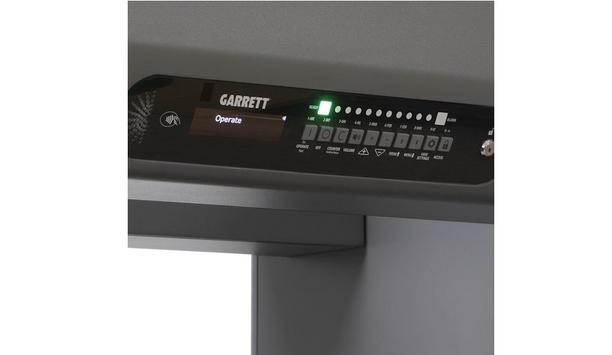
Texas-based Garrett Metal Detectors announced that its Paragon walk-through metal detector had met the European Civil Aviation Conference (ECAC) Standard 2.1 with SMD performance requirements. Meeting the laboratory testing requirements and subsequently receiving the review and endorsement of the ECAC CEP Management Group is the most stringent prerequisite to achieving ECAC certification, and grants automatic eligibility for EU approval of the product along with the stamp that marks products as confirmed by the CEP to meet ECAC/EU performance standards. Products listed on the European Commission's KSDA site are also eligible to pursue non-aviation bids and RFQs that list ECAC-certification as a product spec. ECAC certification "ECAC certification is a critical confirmation of Paragon's premium capabilities and suitability for high-security applications in the global marketplace," said Leonid Zelenkevich, Garrett Director of International Security Sales. He adds, "ECAC testing standards are respected well beyond the borders of the European Union, and this achievement will allow Paragon to bring its advanced feature set and industry-leading detection precision to the fast-moving and sophisticated world of airport security." Leonid Zelenkevich continues, "Airports and other pedigree institutions previously forced to settle for outdated – but certified – models can breathe a sigh of relief now that a modern metal detection system has achieved this important performance benchmark." Long future of product development "More than that, end users can look forward to a long future of product development within this advanced platform, with groundbreaking software updates, powerful new accessories, and other enhancements designed especially to serve the needs of the aviation industry," concluded Leonid Zelenkevich. The Garrett Paragon is manufactured at Garrett's Garland, Texas facility with appropriate design patents and trademark protections. All Paragon units with software version 2.00.1 or later contain the passing version of the ECAC screening program. Garrett encourages security customers to insist on buying genuine products from reputable companies to ensure quality, product performance, and effective security operations.
One year after introducing LabZ, ZBeta is showcasing how the initiative has evolved from a bold concept into a cornerstone of the company’s mission — enhancing its ability to anticipate and meet the evolving needs of its client base. What began as the first-of-its-kind proving ground has matured into a hub for immersive, data-driven testing and collaborative problem-solving. Advanced testing environments LabZ enables security pioneers to design, measure, and validate strategies for building more trusted operations By combining advanced testing environments with applied research, LabZ enables security pioneers to design, measure, and validate strategies for building more trusted and resilient operations. “LabZ reflects our dedication to creating meaningful opportunities,” said Hash Salehi, Director of Technology and Innovation, ZBeta, adding “In just one year, it has become a powerful platform where we can explore new ideas, gain actionable insights, and shape solutions — helping us build stronger relationships and attract new clients who share this vision.” How technologies perform in real-world environments? A key milestone of the past year is the creation of the industry’s first product hub, giving security pioneers the ability to differentiate between manufacturer solutions and document how technologies perform in real-world environments. Alongside initiatives in product testing, thought leadership, and compliance, LabZ equips organizations to anticipate emerging risks, harness data for greater intelligence, and strengthen resilience. New chapter for physical security When ZBeta unveiled LabZ, it marked a new chapter for physical security, long shaped by legacy approaches and gradual change. Built on the principle that the future of security should be tested and proven in real-world conditions, LabZ provides the framework for validating strategies before deployment at scale. “LabZ is now a proven platform for innovation and testing,” said Zack Brunette, CEO, ZBeta, adding “We’ve scaled its leadership, sharpened its focus, and expanded capabilities to deliver insights and experiences that create greater value for the wide range of organizations we work with.” Interactive LabZ demonstration At Global Security Exchange 2025 in New Orleans, ZBeta will feature an interactive LabZ demonstration, allowing participants to experience a day in the life of its activities. A new video also highlights the company’s vision, offering an integrated look at how LabZ’s culture of innovation is shaping modern security environments.
ASSA ABLOY Entrance Systems announced that ecoLOGIC has been awarded the first TÜV SÜD test mark for Low-Risk AI, making ASSA ABLOY the first manufacturer to receive the newly launched mark. The voluntary program provides third-party validation for AI applications considered low risk under the EU AI Act, where no mandatory legal testing is required. AI to fine-tune door parameters ecoLOGIC uses AI to fine-tune door parameters such as door speed, hold-open times and closing behavior to strike the right balance between people flow and comfort. ecoLOGIC helps reduce energy loss at access, yet saving skills money and reducing their carbon footprint By optimizing these parameters, ecoLOGIC helps reduce energy loss at entrances, ultimately saving facilities money and reducing their carbon footprint. In addition, unnecessary movements of the door are decreased, minimizing wear and tear, lowering maintenance needs and extending product life, which is especially valuable in high-traffic environments. Energy savings and reduction in opening cycles “Receiving TÜV SÜD’s new AI test mark is a powerful signal to our customers,” said Martin Sagnérius, Head of Digital Services at ASSA ABLOY Entrance Systems. “It independently validates ecoLOGIC’s performance and reliability, and reinforces the measurable energy savings and reduction in opening cycles that our AI delivers at the entrance.” How low-risk AI can deliver practical efficiency gains “ASSA ABLOY ecoLOGIC shows how low-risk AI can deliver practical efficiency gains in building operations with transparent, well-controlled methods." "Our test mark makes that quality visible to building owners and end users,” said Benedikt Pulver, Head of the Machine Safety Department at TÜV SÜD. Data security and operational reliability Certified to ISO 27001, ecoLOGIC operates independently from local IT networks, ensuring data security and operational reliability, and delivers intelligent automation that enhances both security and sustainability. Following ecoLOGIC’s Certified Energy Savings verification from GreenCircle Certified in June 2025, the TÜV SÜD recognition expands the solution’s track record of independent validation.

Blackline Safety Corp., a pioneer in connected safety technology, has announced a major expansion of its quality assurance (QA) program. As part of the expansion, the company has increased its QA team, upgraded its inspection equipment, and boosted in-lab testing of its entire product line. Real-time safety data Blackline manufactures an award-winning line of connected safety wearables and area gas monitors Headquartered in Canada with offices in the UK, France, U.S., and UAE, Blackline manufactures an award-winning line of connected safety wearables and area gas monitors, currently used by more than 2,200 organizations and protecting over 165,000 workers worldwide. Providing live monitoring, automatic incident alerts, and location-based insights, the technology helps teams respond faster, prevent incidents, and make informed decisions through real-time safety data. Expansion of Blackline’s QA program “When most people think of safety technology, they think about the moment it matters – a gas leak detected, an SOS alert triggered, or a worker protected – but our team is focused on everything that leads up to that moment because protection starts on the bench, in the lab, and on the line,” said Blair Svoboda, Director, Quality Assurance at Blackline Safety. The expansion of Blackline’s QA program – which is conducted entirely in-house at the company’s manufacturing facility – builds on its historical investment of CDN $2 million in Surface Mount Technology (SMT) and advanced inspection tools to provide greater oversight and control throughout the entire production process. Quality assurance testing Automated state-of-the-art kit tests product reliability and ensures the devices are able to withstand Automated state-of-the-art equipment tests product reliability (dock insertions, button presses, etc.) and ensures the devices are able to withstand water immersion, extreme temperatures, and dust penetration, which could potentially damage internal components. “All of our quality assurance testing is done in true-to-life simulated environments just steps from the manufacturing floor to enable us to react in real time as needed – a process that just can’t be achieved when manufacturing is done elsewhere,” Svoboda said. Blackline’s global team Svoboda explained that Blackline’s global team of 35 quality assurance specialists – which has grown by more than 250% – runs a 68-point quality test on every single safety device before it ships, from testing radios, sensors and alarms, to conducting connectivity checks across cellular and satellite networks. “Every test and check in our QA process comes down to one simple question: will this device keep someone safe when it counts?” Svoboda emphasized. “At Blackline, quality assurance isn’t about ticking boxes – it’s about protecting professionals like the lone worker in a remote oilfield, the firefighter charging into danger, or the technician maintaining a power grid in a storm.”
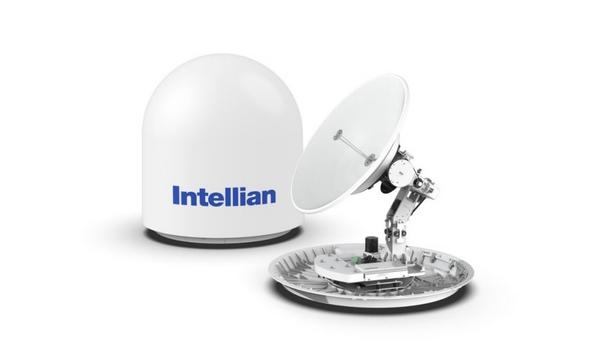
Intellian, the global pioneer of mobile satellite communication antenna systems, is introducing the new 1.5m Ku to Ka convertible VSAT terminal. v150NX The world’s first and only 1.5m Ku to Ka convertible VSAT, v150NX, is a future-proof system supporting 2.5GHz Wide Ka-band networks as well as GEO (Geostationary Earth Orbit), MEO (Medium Earth Orbit) and LEO (Low Earth Orbit) constellations. Its highly efficient design delivers the best RF performance of any 1.5m system on the market for ship owners, operators, and network providers. It is easily converted to Ka-band by changing the RF Assembly and Feed, as the reflector and radome are optimized for operation across both frequency bands. State-of-the-art terminal v150NX Ka delivers unmatched performance and is ready for operation with low-latency networks At the Satellite 2019 Show, which is held at the Walter E. Washington Convention Center in DC this week, May 6-9, 2019 (booth #925), Intellian is displaying its new product’s Ka-band version, the v150NX Ka. This state-of-the-art terminal is also compatible with future 2.5GHz Wide Ka-band networks and has delivered speeds of 830Mbps in trials already. With GEO/MEO/LEO tracking capability, the v150NX Ka delivers unmatched performance and is ready for operation with forthcoming new high-speed and low-latency networks. Cost-effective satellite tracking Both the v150NX and v150NX Ka enable reliable, high-throughput broadband at sea and can be quickly installed to deliver precise, cost-effective satellite tracking as a land gateway antenna system. With its ability to track any satellites on mobile and fixed platforms, and includes smart satellite handover capability enabled by an embedded mediator. Operators can now provide a seamless network with high-speed bi-directional IP connectivity. Additionally, the antenna can be interconnected with no loss of signal even at longer distances, using the Intellian Fiber Link Solution. NX platform A cutting-edge modular design results in lower cost of ownership throughout the entire lifecycle Moreover, with the new NX platform, Intellian’s 1.5m satellite communication systems use a single cable, which combines Tx, Rx, and DC power, to simplify installation. A cutting-edge modular design results in lower cost of ownership throughout the entire lifecycle, while improving reliability and streamlining maintenance. Flexible connectivity platforms Eric Sung, CEO of Intellian, said, “The industry-pioneering performance, simplified installation, and ensured compatibility with future constellations and networks positions our new 1.5m antennas as one of the most innovative, flexible, and cost-effective connectivity platforms available for diverse users on land and at sea.” Alongside the new v150NX Ka, Intellian will also highlight the expansion of its diverse portfolio with the launch of more new and innovative satellite communication technologies at Satellite 2019, including; the LP100, man-portable, military spec land terminal; the all-new GX100NX for use on the Global Xpress network; and the OW70 for LEO constellations.

Expert commentary

The European Union’s GDPR (General Data Protection Regulation) framework represents some of the toughest and most secure privacy laws in the world. Their creation signaled the EU’s dedication to individual privacy rights and generated new standards and requirements for an organization inside or outside of the EU wanting to do business in the region. This privacy stance raises an interesting question: to what extent (if any) will France be utilizing AI-assisted security and biometrics - at the upcoming Paris Summer Olympic Games? AI-assisted security systems As France prepares to host this global event, certain AI-assisted security systems like algorithmic video monitoring have been tested and are planned to be in use. The country also passed a law with a legal framework for addressing provisions of hosting the Games in their country, Law No. 2023-380. These technologies will support the police and security efforts to detect sudden crowd movements, irregular vehicle, and pedestrian movements, abandoned objects, people lying on the ground, and more, any of which could indicate an attack. Local connectivity One recent French poll found that an overwhelming number of respondents support the use of smart cameras Such technologies, which can be connected directly to localized command centers and police departments, provide an opportunity to prevent deadly incidents like the bombing at the 1996 Summer Olympics in Atlanta, GA. There are signs that citizens of the EU are becoming more receptive to such measures, with one recent French poll finding that an overwhelming number of respondents (89 percent) support the use of smart cameras in stadiums for this purpose. Biometric technology The general public and private use of biometric technology (face matching, face liveness, and other biometric modalities), on the other hand, continues to run into challenges with adoption in this privacy-focused region. For the most part, laws ban facial recognition, permitting its use only once someone has been convicted or is suspected of having committed a serious crime. Limitations of video surveillance Limiting the utility of biometrics to only video surveillance for an event of the Paris Olympics’ magnitude is not the best approach. The ability to quickly identify or de-identify possible suspects from regular attendees greatly strengthens the activities of the police and helps protect the rights of regular attendees. Consider the example of New York City detectives using facial recognition to identify a man who, in 2019, left a pair of potential bombs in the Fulton Street subway station. Benefits of facial recognition technology Many believe that the use of facial recognition could have expedited and solved the Boston Marathon bombing tragedy With facial recognition technology, it took only one hour to identify the suspect - a process that previously would have taken several hours or even days, leaving the possibility of further damage unresolved. Citing yet another example, many believe that the use of facial recognition could have expedited and solved the Boston Marathon bombing tragedy much sooner and more efficiently, aiding investigators who reportedly had to sift through 120,000 photos and nearly 13,000 videos before identifying the perpetrator. Need for real-time video With an estimated 16 million visitors expected to descend upon France for the Games - and an environment that is harder to protect from bad actors - is limiting the use of biometrics to video surveillance the most effective? In our minds, in certain high-urgency cases, such as tracking kidnapping cases or possible terrorism activity, it should be permissible for facial recognition to be applied to recorded video in real-time and without delay. Public safety Beyond this obvious good that biometrics can bring from a public safety perspective, there are other ways that biometrics can be woven into the fabric of the Summer Olympics to support a faster, more enjoyable experience for all. Consider queue management. In a few weeks, an estimated 2.3 to 3.1 million ticket holders will form lines to access Olympic events. Fingerprint scanning technology People could pass through lines in mere fractions of a second, versus having to fumble for a paper ticket If fingerprints were captured at the point of ticket purchase and fingerprint scanning technologies made available on-site, people could pass through lines in mere fractions of a second, versus having to fumble for a paper ticket that may be torn or damaged, or an e-ticket on a phone with a dead battery. This would speed up the processing of queues tremendously. Olympics-focused gambling activity Another area where biometrics can be beneficial is in Olympics-focused gambling activity, which is expected to gain steam as the Games get underway. Biometrics can be used to match facial images with legal documentation for age verification, and then combined with geofencing to ensure gambling participants are of legal age, depending on where they are physically based. Biometrics also makes it possible to identify, beyond the shadow of a doubt, all of the activities of particular individuals, which can help track nefarious activities like money laundering. Evolution of privacy and security We believe biometrics can be a force for major good in our society and around various facets of the upcoming Paris Olympics, most notably public safety. It will be interesting to watch both the 2024 Summer Olympics and the ongoing evolution of privacy and security laws and practices in France and the European Union.

Amidst the challenges of a prevailing economic downturn, the retail sector finds itself grappling with an unparalleled rise in incidents of shoplifting, theft, and burglaries. The disconcerting scenes witnessed on London’s Oxford Street in August 2023, where crowds gathered, looting as many stores as possible, sent shockwaves across the nation’s retailers. This alarming surge in retail crime has put retailers on high alert, as they contend with a rising tide of security concerns. Shoplifting concerns Recent data from the Union of Shop Distributive and Allied Workers (USDAW), has raised alarming concerns: shoplifting rates have surged by an unprecedented 24%. In the first half of 2023 alone, there were approximately 8 million reported shoplifting incidents. With the ongoing burden of the cost of living crisis and the approaching festive season, it is expected that these figures will keep surging. Implementing robust security measures Theft and prevention strategies cost retailers approximately £2 billion in 2021/2022 While more help from the Government to support retail workers and the businesses shoplifters target is certainly needed, the implementation of robust security measures will significantly contribute to deterring these crimes from occurring in the first place. British retailers spend millions on tools to deter and catch shoplifters inside stores, from CCTV and security guards to electronic tagging and alarms. The Grocer reported that theft and prevention strategies cost retailers approximately £2 billion in 2021/2022. Despite these initial costs, other threats are at play beyond the shop floor. Break-ins by criminal gangs For many large town center stores and supermarkets, and units in retail parks, the rear doors and delivery areas are commonly targeted by criminal gangs. It’s not uncommon for thefts to occur from pallets or cages that have been unloaded from lorries and sit waiting to be moved into the building. After-hours break-ins are a risk for all store owners too, particularly over the festive season when a lot of high-value stock has been delivered to shops and supermarkets. Addressing anti-social behaviour The additional fencing was deemed an essential measure to safeguard the community Anti-social behavior also poses a challenge for retailers. In 2022, an Aldi based in Derby invested in security fencing to protect staff and deter loitering groups. The additional fencing was deemed an essential measure to safeguard the community, as dangerous items were frequently found outside the store, including weapons and hypodermic needles. So how do physical security solutions such as fencing and gates help better protect retail establishments such as supermarkets and edge-of-town retail park shops? Fencing and gates: a critical component of retail security 1. Risk assessment and target hardening A thorough risk assessment will identify potential weak spots that require protection. ‘Target hardening’ involves implementing physical security measures that become more robust as they approach the target. This helps deter intruders while ensuring ease of access for customers and staff. 2. Effective perimeter security Opt for difficult-to-climb security fencing that provides a robust obstacle against thieves, vandals, and intruders Selecting fencing solutions according to the potential threats, site characteristics, and topography is crucial. It is important to specify fencing that strikes a balance and maintains a welcoming appearance while safeguarding external areas of the store or warehouse from potential harm and unauthorized access. Solid fencing which provides concealment can help to conceal expensive goods and remove them as a target for opportunistic theft. Opt for difficult-to-climb security fencing that provides a robust obstacle against thieves, vandals, and intruders. I recommend selecting a sufficiently tall and robust fence such as an acoustic barrier. Its noise-reducing properties are often beneficial for these types of sites too. 3. Controlling vehicular speeds and access To enhance security, consider controlling vehicular speeds and access. One effective approach is the installation of bollards at the ends of traditional high streets. This practice is already commonplace as a means of safeguarding against hostile vehicle attacks, but it can also play a pivotal role in preventing quick getaways of vehicles involved in potential heists. Additionally, employing road blockers and sliding gates at the rear entrances of delivery areas would serve to fortify security further. These measures can help in delaying vehicles, allowing for necessary checks to be conducted. 4. Balancing security with aesthetics The presence of high-security fencing can also make a site more of a target for vandals and burglars Another challenge is avoiding creating an imposing presence, especially important for areas situated near residential communities. The presence of high-security fencing can also make a site more of a target for vandals and burglars. To minimize this risk consider specifying timber fencing and traffic barriers to secure car parks, providing both security and a welcoming atmosphere for shoppers. Taking an integrated approach Combine secure perimeter fencing with effective lighting in places with shaded areas and at doors, gates, and shop windows, alongside Perimeter Intrusion Detection Systems (PIDS), and strategically placed CCTV. These measures will hinder unauthorized entry and escape, increasing the likelihood of detection and apprehension. Prioritising employee wellbeing Installing robust security fencing, complemented by CCTV, good lighting, and guarding, creates a safe environment Installing robust security fencing, complemented by CCTV, good lighting, and guarding, creates a safe environment for employees. This not only safeguards their well-being but also provides peace of mind that they are protected effectively in the case of a burglary or crime. When selecting security products for retail sites, it is advisable to opt for items that have undergone rigorous testing and carry relevant certifications for their security level. Each component should meet industry-specific standards for its intended purpose and originate from manufacturers accredited under ISO 9001:2015. This ensures a high standard of quality and reliability in safeguarding the premises. High-quality security fencing As the cost-of-living crisis continues, crime rates increase, and the festive season approaches, the time to act and implement on-site security is now. By investing in comprehensive security measures, retailers can protect their assets, employees, and customers, ensuring a safer and more secure shopping environment for all. High-quality security fencing is also a sound investment, that requires little or no maintenance once installed. The best fencing solutions are extremely weather-resistant, and won’t suffer from rust or corrosion. With all sectors preparing to ride the rapids of recession in the coming year, improving on-site security while selecting cost-effective measures, is one surefire way to protect your people, your property, and your profits from harm.

It’s no secret that the data security sector is constantly changing. It has an annual CGR of about 12.3%. Future trends in data security Much of this has to do with the rise of cybercrime in recent years, with reports showing that cyberattacks happen as often as every 39 seconds. To combat the growing rate of cybercrime, data security has been on the rise. As we journey further into this era, it becomes evident that a spectrum of significant trends is molding the future of data security. This exploration delves into a selection of these trends, unraveling their importance and the potential implications they carry 1. AI security tools will increase Artificial Intelligence is also being used in the development of smart attacks and malware The introduction of Artificial Intelligence in the data security industry brought significant changes, especially in cybersecurity. AI has been the golden standard for face detection, natural language processing, automated threat detection, and automated security systems. Additionally, Artificial Intelligence is also being used in the development of smart attacks and malware, bypassing even the latest security protocols in data control. And as time progresses, AI security tools will flourish and dominate the scene. Let’s take a more in-depth look at three of the top AI security tools. Targeted attack analysis tool Manufacturers utilize targeted attack analysis tools to uncover targeted and stealthy attacks. Artificial Intelligence can be applied to the program’s capabilities, processes, and knowledge. For instance, Symantec launched this tool to combat the Dragon 2.0 attack in 2022. The phishing attack reprimanded multiple energy companies while trying to gain access to their operational networks. Targeted Attack Analysis Tools can analyze incidents and look for similarities from previous situations. They also help detect suspicious activities and collect all the necessary data to determine whether a specific action is malicious. Intercept X tool Results from the Intercept X Tool feature high accuracy and a low false positive rate Sophos, a British security hardware and software company, launched the Intercept X Tool. It engages a neural network that records and analyses data like a human brain. Sophos’ Intercept X Tool can extract features from a single file and perform a deep analysis. It detects malicious activities within 20 milliseconds. Plus, it’s also trained to work on bi-directional sharing and real-world feedback of threat intelligence. Results from the Intercept X Tool feature high accuracy and a low false positive rate. IBM Watson Technology IBM’s QRadar Advisor uses IBM Watson Technology, a unique AI tool for fighting cyber attacks. Artificial Intelligence can auto-investigate activities and indicators for potential exploitation or compromise. With cognitive reasoning, IBM Watson Technology can present critical insights to accelerate the response cycle. Security analysts can utilize this technology to search for threat incidents, reducing the risk of letting them fly under the radar. 2. Blockchain as a security solution It guarantees no points of failure or hackable entrances that can expose datasets inside the system Blockchain is a type of distributed ledger technology (DLT) that aims to establish trust within an untrusting ecosystem. Today it’s one of the most robust cybersecurity technologies in the industry. Blockchain utilizes a decentralized ledger system, but your team members can still gain access to transparent information in the cloud. Members can also record, pass along, and view necessary transactional data in the blockchain. The entire blockchain process maintains data integrity within the system while establishing trust among team members. It guarantees no points of failure or hackable entrances that can expose datasets inside the system. Cybersecurity, biometrics Cybersecurity primarily benefits from these features because blockchain can create a secure and robust wall between data and hackers. On top of that, blockchain ledgers can include biometrics like fingerprints and retina scans. These prevent hackers from accessing any private data. Because blockchain is decentralized, it also limits hackable data. Together with the technology’s record-keeping system, each node is provided insight into data manipulation exposing real-time cybercrime attempts. 3. Increased and widened access control Without access control, expect your company to be open to security issues, including theft, data loss, and breach of data Access control is critical in data security. More than a valuable security tool, business leaders can use access control to regulate people accessing any given resource. A company with an IT security setting can control who has the liberty to edit certain files. One of the primary goals of access control is to minimize threats or attacks to organizations and businesses to keep people and data secure. Without access control, expect your company to be open to security issues, including theft, data loss, and breach of data protection laws. Benefits The benefits of increased and widened access control include: Identifying who can access and control your data at specific time intervals. Protecting data from overwriting, accidental deletion, and malicious intent. User permissions that can be readily changed. Compliance and regulation with data privacy laws. Central management of access to data through a reporting portal or a dashboard. Multi-factor authentication Access control comes in various types and systems, so it’s critical to know the features of what you’re looking for. The most common type is multi-factor authentication or MFA. It involves multiple steps before logging in, requiring the user to enter other relevant information besides the password. Some other examples of information include biometrics, answering a security question, or entering a code sent to the user’s email address. Two-factor authentication, role-based access control Two-factor authentication further prevents unauthorized entries that can result in unnecessary data possession Two-factor authentication further prevents unauthorized entries that can result in unnecessary data possession. Another type of access control is role-based access control. In this setup, only one individual can set up access guidelines and grant permissions to specific team members within an organization. 4. Greater use of the zero-trust security model The zero-trust security model is a framework that requires every user within and outside the organization to undergo authentication, authorization, and validation. These are all essential to ensure proper security configuration before access is granted to the company’s applications and data. A zero-trust model assumes that anyone can cause data breaches and that a traditional network edge is not taken into effect. Moreover, it addresses the following modern-day challenges: Hybrid cloud environments. Security of remote workers. Ransomware threats. This framework utilizes the combination of multiple advanced technologies, including: A risk-based multi-factor authentication. Endpoint security. Identity protection. Cloud workload technology. The zero-trust model uses all these innovative tools for system identification, user verification, access consideration, and system security maintenance. Constant validation and monitoring Enforcing strict policies and compliance with data privacy laws are also essential Additionally, it also considers data encryption, email security, and asset verification before establishing connections with applications. The architecture of a zero-trust framework requires constant validation and monitoring of the users and the devices they are using. Enforcing strict policies and compliance with data privacy laws are also essential. More importantly, the zero trust architecture requires all organizations to be aware of all their available services and accounts to gain complete control of data handling and manipulation. 5. Increased privacy regulations Privacy regulations and policies guide organizations in proper data control, handling, and security. These policies guide organizations in proper data control, handling, and security. As a responsible business owner, you must comply with these regulations to avoid legal issues. With cybersecurity attacks becoming common, expect increased and stricter privacy regulations to be released in the next few years. While current policies are still taken into effect, various modifications and adjustments will occur to compete with the rising numbers of data breaches, thefts, data loss, and more. California Privacy Rights Act (CPRA) Currently, the California Privacy Rights Act (CPRA) is the most comprehensive legislation on state data privacy. It only started to take effect on January 1, 2023. The CPRA introduces the following principles: Broad individual consumer rights. Significant duties of people who need to collect sensitive and personal information. Additional definitions of data privacy and security. An individual’s duties include releasing information about data collection to concerned data subjects and proper access, correction, and deletion of information. Final thoughts 2023 is a big year for data security. Trends such as increased adoption of zero-trust policies, a greater reliance on AI security tools, and the implementation of blockchain as a security solution are all things we expect to see shortly. Staying up-to-date with these trends is important for keeping your business current and ensuring that you’re adhering to new and changing regulations. Doing so can give you an edge over the competition and keep you out of legal hot water.
Security beat
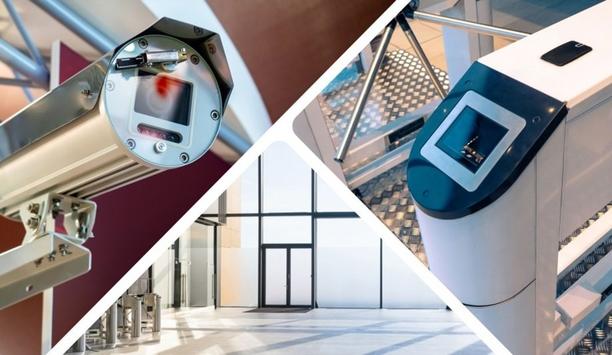
In today's complex security landscape, ensuring the safety of building occupants and assets requires more than just cutting-edge technology. Holistic approach The SHIELD certification, introduced by the Secure Buildings Council, is designed to help building owners, tenants, and security professionals navigate this challenge effectively. SHIELD offers a holistic approach to physical security that emphasizes not just the systems in place, but the collaboration among all stakeholders. With practical, actionable guidance, SHIELD certification seeks to become a benchmark for secure building environments. What is SHIELD? Its primary goal is that buildings are equipped with security systems and protocols that protect against threats SHIELD is a comprehensive certification program developed by the Secure Buildings Council to establish and maintain a standard of excellence in building security. Its primary goal is to ensure that buildings are equipped with security systems and protocols that not only protect against threats but also enhance the overall safety and operational efficiency of the facility. Forward-thinking design It encourages a multi-disciplinary approach, bringing together building owners, managers, security professionals, architects, and engineers to foster an integrated security strategy. By adhering to SHIELD's standards, facilities can assure tenants, visitors, and investors that the building is designed to be a secure and resilient environment. The intent is to create safer spaces through collaboration, forward-thinking design, and stringent security measures. Enhancing security and building resilience SHIELD certification helps to ensure that buildings are not only secure from external threats but are also resilient in the face of internal vulnerabilities. This includes everything from access control systems and surveillance infrastructure to cybersecurity measures and emergency response protocols. Detailed framework SHIELD acts as a roadmap to assess and improve the effectiveness of a building's security architecture The certification process provides a detailed framework for identifying potential risks, implementing best practices, and continuously monitoring security measures. For security professionals, SHIELD acts as a roadmap to assess and improve the effectiveness of a building's security architecture. The program emphasizes the importance of both physical and digital security, recognizing that modern threats often cross over from one realm to the other. Benefits for tenants, investors, and facility managers One of the standout benefits of SHIELD certification is the assurance it provides to tenants and investors. Certified buildings demonstrate a commitment to security that can attract higher-quality tenants and increase the building’s market value. For investors, a SHIELD-certified building represents a lower-risk investment, as the facility is better protected against both physical threats and operational disruptions. Standardized procedures Additionally, facility managers benefit from SHIELD's emphasis on clear, standardized procedures for maintaining and upgrading security measures. The certification helps streamline operations by ensuring that all security protocols are applied consistently and reviewed regularly. This results in a safer, more efficient building environment for everyone involved. Promoting collaboration and industry integration Architects, engineers, and security professionals are encouraged to work together from the earliest stages SHIELD certification is not just about the implementation of security technologies—it is also about fostering collaboration among various stakeholders. Building owners, architects, engineers, and security professionals are encouraged to work together from the earliest stages of design and planning. This collaborative approach helps ensure that security measures are integrated into the fabric of the building, rather than being tacked on as an afterthought. Multi-disciplinary synergy Furthermore, SHIELD works in alignment with other industry standards, such as LEED for environmental sustainability and WELL for health and well-being. This multi-disciplinary synergy allows building owners to pursue multiple certifications concurrently, enhancing the building's overall value and appeal. Achieving SHIELD certification: The process The process to become SHIELD certified involves a comprehensive assessment of a building’s security features and protocols. This begins with a gap analysis, where security professionals evaluate the building's current state against SHIELD's stringent standards. From there, a detailed action plan is developed to address any deficiencies. Once the necessary upgrades and protocols are in place, the building undergoes a final audit before the certification is awarded. Incorporating multiple elements SHIELD takes a holistic approach that encompasses not just physical security but also digital and procedural elements A common misconception about SHIELD is that it is solely focused on physical security systems. In reality, SHIELD takes a holistic approach that encompasses not just physical security but also digital and procedural elements. Another misconception is that SHIELD is only applicable to large-scale commercial properties, when in fact it can be adapted for buildings of various sizes and functions. Global adoption of SHIELD certification SHIELD certification is seeing increased adoption across North America, Europe, and parts of Asia. Its focus on a comprehensive, collaborative approach to security has made it particularly attractive in high-risk industries such as finance, healthcare, and data centers. While it is still gaining traction in some regions, SHIELD is poised to become a global standard for building security in the coming years. SHIELD certification represents a significant step forward for building security. By fostering collaboration and emphasizing a holistic approach, SHIELD helps create safer, more resilient buildings that protect both the physical structure and the people and assets inside.
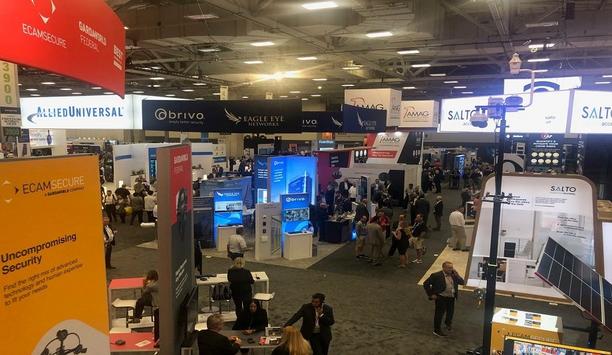
Companies at GSX 2023 emphasized new ways that technologies such as artificial intelligence (AI) and the cloud can address long-standing issues in the security market. Among the exhibitors at the event in Dallas were companies seeking creative ways to apply technology, lower costs, and make the world a safer place. Reflecting on the exhibition, here are some additional takeaways. Expanding AI at the edge i-PRO is a company reflecting the continued expansion of edge AI capability in the security market. Today, more than half of the company’s lineup supports AI at the edge so the customer has a wide choice of form factors when seeking to leverage the feature set. AI processing relay, extended warranty i-PRO is increasing their warranty period from 5 to 7 years, which could be a lifetime warranty in some cases I-PRO also has an “AI processing relay” device that accepts non-AI video streams and applies edge analytics. AI has progressed from a high-end technology to a feature available in a variety of cameras at different price points. i-PRO is also increasing its warranty period from 5 to 7 years, which could be a lifetime warranty in some cases depending on a customer’s refresh schedule and lifecycle management. Active Guard, MonitorCast The company’s video management system (Video Insight) is continuing to build new features including “Active Guard,” an integrated metadata sorter. Their access control platform, MonitorCast, is a Mercury-based solution that is tightly integrated with Video Insight. Their embedded recorders now have PoE built in. “We can move at a faster pace to fill out our product line since leaving Panasonic,” says Adam Lowenstein, Director of Product Management. “We can focus our business on adapting to the market.” Emphasis on retail and other verticals Shoplifting is a timely issue, and retail is a vertical market that got a lot of attention at GSX 2023. “We see a lot of retailers who are primarily interested in protecting employee safety, but also assets,” says Brandon Davito, Verkada’s SVP of Product and Operations. “Shrinkage is a CEO-level priority.” “Retailers are getting more engaged with security posture, instead of letting perpetrators walk,” Davito adds. Intrusion detection Verkada has an intrusion product that will notify a central station if there is an alarm On the alarm side, Verkada has an intrusion product that will notify a central station if there is an alarm, and operators can review videos to confirm the alarm. Other capabilities seeking to discourage trespassers include sirens, strobes, and “talkdown” capabilities. International expansion Verkada continues to expand internationally with 16 offices in all, including Sydney, Tokyo, and London. The core value proposition is to enable customers to manage their onsite infrastructure more simply, including new elements such as PTZ cameras, intercoms, and visitor management. Verkada emphasizes ease of use, including a mobile application to allow access to be managed across the user base. Forging partnerships “We are committed to the channel and industry, and we continue to build relationships and expand our reach,” says Davito. Among the industry relationships is a new partnership with Convergint, which was hinted at during the show and announced later the same day. They are also expanding their partnerships with Schlage, Allegion, and ASSA ABLOY. Working with other verticals They offer new features for K -12 schools, and a new alarm platform is easier to deploy and manage Verkada has also found success across multiple other verticals, notably healthcare, where they integrate with an electronic medical records system. They offer new features for K-12 schools, and a new alarm platform is easier to deploy and manage. They are integrating wireless locks to secure interior doors in schools, looking to secure the perimeter, and installing guest management systems. Transitioning the Mid-Market to the Cloud Salient is squarely focused on the “mid-market,” a large swath of systems somewhere between small businesses and enterprise-level systems. Pure cloud systems are not as attractive to this market, which has a built-out infrastructure of on-premise systems. Adding a camera to an existing system is easier and less expensive than tying it to the cloud. Benefits of cloud It’s a market that may not be ready for pure cloud, but there are benefits to be realized from adding a cloud element to existing systems. “We are continuing to augment our premise-based solutions with added cloud capabilities and flexibility,” says Sanjay Challa, Salient’s Chief Product Officer. The feedback Salient hears from their customers is “I want to own my data.” The hybrid cloud approach offers the right mix of control, flexibility, and unit economics. Cloud add-on capabilities We want to provide the flexibility for customers to go full-cloud as it becomes more economically attractive" Cloud add-on capabilities include bringing more intelligence about system operation to the user via the cloud. Over time, Salient expects to sell more cloud-centric offerings based on feedback from integrators and customers. “We want to provide the flexibility for customers to go full-cloud as it becomes more economically attractive over time,” says Challa. Vaidio AI technology Salient seeks to be a transition pioneer to help customers realize the path to the cloud. Their approach is “crawl, walk, run,” and helping customers make the transition at each stage. Salient has added AI to its product offering, incorporating Vaidio AI technology from IronYun into a powerful suite and broad array of on-premise analytics, which are gaining traction. The seamless approach makes it easy for customers to embrace AI analytics, although Salient remains broadly committed to open systems. Addressing ‘Soft’ Features for Integrators AMAG is in the process of enhancing its product line with the next generation of access control panels. However, “product” is just part of the new developments at AMAG. In addition to “hard” features (such as products), the company is looking to improve its “soft” features, too; that is, how they work with the integrator channel. Integrator channel Rebuilding a process to make your organization more efficient, is relatively easy; it just takes a lot of persistence" “We have the depth of our legacy customer base we can learn from, we just need to close the feedback loop quicker,” says Kyle Gordon, AMAG’s Executive Vice President of Global Sales, Marketing, and commercial Excellence, who acknowledges the value of reinstating face-to-face meetings after COVID. “We are laser-focused on nurturing our integrator channel,” he says. “Developing new features takes time, but rebuilding a process to make your organization more efficient, that’s relatively easy; it just takes a lot of persistence,” says Gordon. More cohesive internal communication is another useful tool, he says. Disrupting the cloud based on price Wasabi is working to make cloud applications less expensive by offering a “disruptive” price on cloud storage, $6.99 per terabyte per month (80% less than hyperscalers). Contending “hyperscalers” like AWS are charging too much for cloud storage, Wasabi is using its own intellectual property and server equipment co-located in data centers around the world. Wasabi sells “hot cloud storage,” which refers to the fact that they only have one tier of storage and data is always accessible. In contrast, a company such as AWS might charge an “egress fee” for access to data stored in a “colder” tier. Cloud storage “We saw that several video surveillance companies had not yet adopted cloud storage, and we saw an opportunity to make it easy to use,” said Drew Schlussel, Wasabi’s Senior Director of Product Marketing. “We just install a little bit of software that allows them to store data in the cloud and bring it back from the cloud.” Performance, protection (cybersecurity), and price Wasabi works with integrators, resellers, and distributors and also integrates with VMS companies Wasabi works with integrators, resellers, and distributors and also integrates with VMS companies such as Genetec and Milestone. Emphasizing performance, protection (cybersecurity), and price, their data centers are certified to SOC 2 and ISO 27001 standards. Faster throughput for weapons detection Xtract One is a young company focusing on weapons detection in a time of accelerated concern about gun issues post-COVID. Founded in Canada and based on technology developed at McMaster University, Xtract One has found a niche in providing weapons detection at stadiums and arenas. These customers already have budgets, and it is easy to shift the money to a newer, faster technology. Madison Square Garden in New York City is among its customers. Cost savings solution Xtract One can increase throughput to 30 to 50 people per entrance per minute (compared to 5 to 6 people per minute when using metal detectors). The solution doesn’t require anyone to empty their pockets and the system alarms on items beyond guns and knives. Using Xtract One allows customers to reduce the number of screening lanes and security staff, providing additional cost savings, all while getting fans through the screening process in half the time. Purpose-built sensors The system uses purpose-built sensors looking for specific characteristics, such as reflective and density properties In addition to stadiums and arenas, Xtract One, formerly Patriot One, is also getting “inbound” interest from schools, hospitals, manufacturers, and other verticals that makeup 50% of their business. “We’re on a rocket ride, mainly because the weapons issues are not going away,” says Peter Evans, CEO and Director at Xtract One. The system uses purpose-built sensors looking for specific characteristics, such as reflective and density properties, all correlated by an AI engine. Providing early warning of violence ZeroEyes is another company focused on weapons detection. Their AI gun detection system works with video images to identify if someone is “brandishing” (carrying) a weapon. In other words, the system does not detect concealed weapons. Identifying someone carrying a weapon provides early warning of a possible violent act. Increased response with AI-enables images Images are identified by AI and sent to a monitoring center where a human confirms the image before contacting first responders. Knowing the location of a shooter enables staff to lock entry points, move people to safety, and direct first responders. The company was founded to leverage existing camera views to stop mass shootings and gun violence by reducing response times.

A pioneer in the access control sector since 1971, AMAG Technology is looking to the future and the next generation of products that will expand its services to customers. “In our vision, we have advanced approaches that will not only provide our partners with advanced technologies but also ones that are easier to install with tools to expand their services,” says David Sullivan, who was appointed President of the venerable access control company in September 2022. New challenges at AMAG Sullivan brings a new outlook to the AMAG business, a part of Allied Universal, and a new vision to lead the company into the future. We caught up with David Sullivan to discuss his new challenges at AMAG and the journey ahead as the company looks to the future. Q: How does your background inform your approach to leading AMAG? I believe that it helps me to define a vision for AMAG that will be unique and on the leading edge of our industry David Sullivan: With the exception of only a few short years, my career has been in access control. I have experience with several systems and have had the privilege to manage several successful access control companies. As a result, I bring a great deal of experience into my role at AMAG. I believe that it helps me to define a vision for AMAG that will be unique and on the leading edge of our industry. Q: How would you describe AMAG’s journey over the last several years and how do you see the future? Sullivan: Prior presidents of AMAG always shared their leadership vision and direction with senior leaders located in the United Kingdom. This had an impact on the full direction of the business, sometimes limiting its ultimate success. Before I became a part of AMAG, these senior leaders that were located in the UK retired, placing for the first time the full management responsibilities of the president. This has allowed me to integrate the business into a single team, with single objectives, and a single vision. We expect to begin to reveal this new vision in the coming weeks. We are excited about the future of AMAG and believe we will surprise the industry with our new products and approach in the coming months and years. Q: How important is it that a manufacturer provides both hardware and software solutions? How does AMAG’s approach (in general) differentiate it in the market? We can design the complete solution, providing functionality that others may find more difficult to accomplish Sullivan: Regardless of the manufacturer, we all provide hardware and software. An access control solution is not complete without both. Some of us choose to make our panels, and others do not. Those who are dependent on third-party suppliers are restricted to the developments and direction of that company, and while it might be perceived to be an open technology, it still is proprietary to the hardware manufacturer. AMAG has controlled its manufacturing of panels from day one. The result means that we can design the complete solution, providing functionality that others may find more difficult to accomplish. Q: How does the breadth of AMAG’s product suite provide advantages to customers and/or integrators? Sullivan: AMAG’s product portfolio is unique and provides the end user with an end-to-end identity management solution from one company. Our Control Room PSIM, Symmetry CONNECT Identity Management Solution, Symmetry Access Control, and Symmetry GUEST solutions all integrate to provide the user with a broad set of features and capabilities from a single provider. There is no finger-pointing when we come to support your system. We hold full responsibility for making it work and can quickly provide a resolution to any application difficulties the user may be experiencing. Q: How does AMAG address the divide between on-prem and cloud systems? How do you help customers make the transition and/or plan for the future? We are in the early stages of developing our next generation of access control in which we intend to provide on-prem Sullivan: In our current product portfolio, we have three products that are cloud-based. Our mobile credential platform (Symmetry Mobile), our visitor management solution (Symmetry GUEST), and our physical identity and access management solution (Symmetry CONNECT) are all offerings that operate in the cloud. We are in the early stages of developing our next generation of access control in which we intend to provide on-prem, web client, and cloud-based offerings. One of the primary objectives is to ensure that the large installed base of systems that are out there today will be able to migrate not only to our next generation but as well to the cloud if the client so desires. Q: What is AMAG’s approach to mobile credentialing? Sullivan: As an access control provider, adding Symmetry Mobile credentialing to our portfolio just made sense. We want our customers to have a forward-thinking solution with the opportunity to save money not only on the physical badges but the cost of printing and distributing badges. Mobile credentials can be easily issued and revoked remotely, reducing administrative overhead, and eliminating the need for physical inventory management. Organizations can centrally configure what devices are used and the read range for each type of device and operating system, thus providing flexibility. Symmetry Mobile offers a customized questionnaire that controls access and reduces liabilities. Q: What has surprised you the most in your first year or so leading AMAG? Not many companies are blessed with such a broad portfolio that is supported by a resource-rich company Sullivan: I wouldn’t say I was surprised by this as much as happy to see, but I would say that the quality of our people was a pleasant surprise. As well, the AMAG product offering is broad and has some unique elements. When coupled with the depth of the resources that we have in AMAG, I know that we are second to none. Not many companies are blessed with such a broad portfolio that is supported by a resource-rich company that has so many talented people. Q: Please describe your dealer channel, and how you are seeking to expand it. Sullivan: The AMAG products are sophisticated and typically are installed for higher-end applications. With this sophistication comes a need to be well able to install such a solution. We have a strong group of certified and loyal partners who help us to deliver these enterprise solutions. We desire to provide our existing partners with updated and competitive systems to offer to their end users. Q: What is the security industry’s (and/or AMAG’s) biggest challenge in the next five years? We need to find ways to provide both our channel partners and the customers with solutions that are easily integrated Sullivan: I believe that the advancements that we are seeing in technology provide our industry with the opportunity to truly change how security is provided to our collective customers. As we advance these solutions, we will need to do so responsibly and in a way that helps the channel’s abilities. We need to find ways to train our partners to both install and support these more complex solutions. At the same time, we need to find ways to provide both our channel partners and the customers with solutions that are easily integrated, moving away from proprietary closed systems to open and cohesive solutions. This will ensure that the users get the best, and most complete solutions. Q: What does the industry as a whole misunderstand about AMAG -- time to set the record straight! Sullivan: Well, I am not ready to openly share where we are heading. We are in the process of putting together some advanced approaches to how we will do business with our partners. We are focused on providing tools that will enhance their services to their customers, and with products that are leading edge. I can only state that all should keep their eyes on AMAG, because over the next few years, we are going to surprise some people, and more importantly make our loyal partners quite powerful.
Case studies

Porthaven Care Homes, a provider of high-quality care services in the UK, recently completed the opening of its latest addition, Cavell Park Care Home, located in Maidstone, Kent. This marks another significant addition to their growing portfolio of 18 purpose-built care homes, each designed with a person-centered approach. Located near the historic town of Maidstone, Cavell Park Care Home provides a peaceful and secure environment for up to 80 residents. The care home offers a wide range of services - all within a setting that combines safety, comfort, and aesthetic appeal. Elevating security standards To ensure the safety of residents while also maintaining an inviting atmosphere, Jacksons Fencing was chosen to install a combination of black metal bow-top railings and matching gates at varying heights around the care home. The 1.8-meter-high bow top railings surround the gardens where residents enjoy much of their leisure time, while 1.2-meter high fencing was installed around the car park and entrance. First impressions matter The railings are built with welded pale-through-rail construction and tamper-proof panel-to-post connectors The design of the bow top railings features rounded pales, posts, and curved hoop tops which score highly for both safety and aesthetics, creating a secure and inviting environment while minimizing injury risk. Additionally, the railings are built with welded pale-through-rail construction and tamper-proof panel-to-post connectors, ensuring that the fencing is resistant to vandalism or break-in attempts. Weather-resistant railings Made from galvanized tubular steel, these railings are strong and weather-resistant. The polyester powder coating ensures a sleek, durable finish that won't crack or peel, offering long-lasting protection against wear and tear. This combination makes the railings both visually appealing and a sustainable investment. The design of the railings complements the home’s contemporary architecture and seamlessly blends with the surrounding landscaped gardens, creating a harmonious and secure environment for residents. Each railing installation is backed by a 25-year Service Life Guarantee from Jacksons Fencing, providing long-term peace of mind that the fencing will continue to deliver security and aesthetic value for years to come. A sense of safety and autonomy The advanced keypad entry system at the entrance further enhances security, not allowing unauthorized access Located adjacent to the reception entrance, the garden’s visibility offers visitors and prospective residents immediate assurance that their loved ones are in a safe and welcoming space. The vertical pale design of the fence ensures high visibility, which not only improves supervision but also enhances the autonomy of residents by making them feel connected to the outside world. The advanced keypad entry system at the entrance further enhances security, not allowing unauthorized access, while maintaining ease of entry for staff and residents. Bow top fencing and gates Reflecting on the success of the project, Peter Jackson, Managing Director at Jacksons Fencing, commented, “The installation of our bow top fencing and gates has not only provided Cavell Park Care Home with a secure and well-defined perimeter but also ensured exceptional durability. Jacksons Fencing’s products are designed to withstand the test of time, offering long-term protection while retaining an attractive finish." “A care home is more than just a building - it’s a community where safety, comfort, and a sense of belonging are paramount,” continued Peter. “We’re proud to have played a role in bringing this vision to life and blending robust security with sleek design.”
ZeroEyes, the creators of the only AI-based gun detection video analytics platform that holds the full US Department of Homeland Security SAFETY Act Designation announced that its proactive gun detection and intelligent situational awareness solution has been adopted by Cardinal Local Schools in Middlefield, Ohio to protect its students, faculty, and staff from gun-related threats. Gun-related violence Gun-related violence remains a significant and growing problem in the United States, affecting communities across the country. According to the ZeroEyes Gun Violence Research Center, 42% of Ohio shootings analyzed took place in K-12 institutions. “We are committed to ensuring the safety of our community,” said Jack Cunningham, superintendent of Cardinal Local Schools. AI gun detection “With the addition of a full-time Resource Officer and security measures like locked doors, visitor sign-ins, door barricade devices, and metal detectors, we are trying to take advantage of as many steps as possible to enhance our security efforts." "ZeroEyes’ AI gun detection is a crucial part of this multi-layered security plan and provides extra reassurance that we can respond swiftly to potential gun threats.” Cardinal Local Schools The district is recognized for successfully implementing PBIS district-wide Cardinal Local Schools is a rural public district serving approximately 750 K-12 students in Geauga and Trumbull counties. Students can take college preparatory classes, fine arts classes, and college credit plus courses. Through partnerships with local factories, Cardinal Local Schools provides an engineering and manufacturing pathway for students pursuing college or workforce opportunities. The district is recognized for successfully implementing Positive Behavioral Interventions and Supports (PBIS) district-wide, highlighting its commitment to a safe and supportive learning environment. Intelligent situational awareness software ZeroEyes’ AI gun detection and intelligent situational awareness software layers onto existing digital security cameras. If a gun is identified, images are instantly shared with the ZeroEyes Operations Center (ZOC), the industry’s only U.S.-based, fully in-house operation center, which is staffed 24/7/365 by specially trained U.S. military and law enforcement veterans. If these experts determine the threat is valid, they dispatch alerts and actionable intelligence including visual description, gun type, and last known location to local law enforcement and university security as quickly as 3 to 5 seconds from detection. School safety standards “By integrating our AI gun detection system, Cardinal is setting a new standard for school safety,” said Mike Lahiff, CEO and co-founder of ZeroEyes. “Our goal is to provide peace of mind and ensure that any potential gun threats are identified and addressed before first shots are fired, helping to create a safer learning environment for everyone."
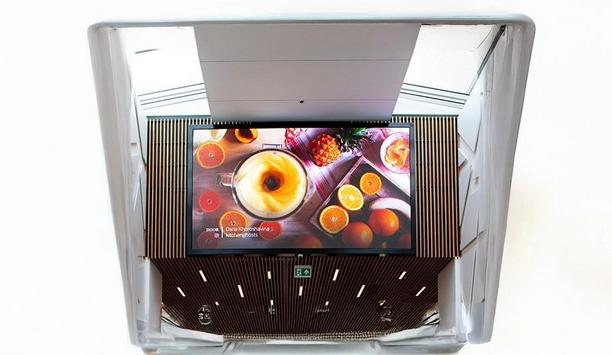
About a year and a half ago, Peter de Jong introduced Dahua to Fred Koks, General Manager of KITT Engineering. Since then, Dahua, KITT Engineering, and Ocean Outdoor have completed five joint projects. Follow-up appointments for the next two projects are already scheduled. Looking back "Let's see what happens" was Fred's reaction when introduced to Dahua. ''We evaluate our portfolio with suppliers every year,'' he explained. "We have to. So much is changing and new technology is developing incredibly fast. You have to keep up." He knows better than anyone how mobile the market is. "Among suppliers of LED screens, there is a constant battle for market position and new technology. We all know the big providers and the market pioneers. But it is not necessarily that they are also at the forefront of technology." Working in collaboration Erwin van Domselaar, Operations & Project Manager at Ocean Outdoor, says his company dares to blindly trust the expertise of Koks and his people when choosing a particular type of LED screen. "KITT Engineering is our technical supplier. They are very good at distinguishing good products from bad ones, and we trust them completely. When they have a product they see a future in, they discuss it with us to see if we can take on a project together with it." Shopping centre - Koperwiek In Dahua's case, that first project is a screen in a shopping center called Koperwiek – an indoor shopping center with more than a hundred fashion-related shops – located in Capelle aan den Ijssel. "That was a relatively small project," Erwin recalls. "The screen was not too big. But the initial learnings and experience with the screen were very good before we started. And the installation itself went off without a hitch. Exactly what we expected from this product." Shopping centre - Sterrenburg Soon, a second project was launched. This time in a shopping center called Sterrenburg in Dordrecht. "Here, not everything went smoothly right away. Not regarding the screen, but its coincidence with the shopping center's renovation. They had just finished." "All the walls had been neatly plastered and at that moment we asked if a new cable could be drawn. Fortunately, all this was eventually dealt with and solved in a very pleasant cooperation with the project developer, but it took some time." Pure craftsmanship The third and fourth projects are true masterpieces. In Hoofddorp, KITT Engineering installed a corner screen. "A unique screen for us," says Erwin. "It is the first screen that goes around a corner. It is half a meter that goes around the corner, fitting in super nicely with the surroundings." "On paper, a huge screen of forty square meters, but when you stand there, you don't notice it because it blends in so well with the surroundings. We are always looking for something new and surprising. And a screen that turns around the corner offers a lot of new possibilities. For example, in terms of 3D content." The screen turns around the corner Fred adds, "The screen doesn't just go around the corner, it goes around the corner seamlessly. KITT is always trying to bring novelties forward so we've had corner screens before. But that was in art projects and things like that where requirements are a lot lower." "In the process, we were able to try out various techniques and we also found out that the products we had at our disposal at that time were not one hundred percent ready." Cold corner "Then Dahua came up with a prototype, we were very pleased with the 'cold corner' as we call it. It is LED on LED, without a seam." To understand how clever this feat of engineering is, it's worth realizing that the margin you have to make the image seamless is the space between two LEDs. Millimeter work, on a length of ten by five meters. Zuidplein shopping centre "The fourth project was placing a screen in the atrium of Zuidplein shopping center in Rotterdam," Peter says. "The screen was placed against a glass elevator." "When you see that, [it is] not normal the way it came together. You don't see a cable or anything. Fantastic." Westfield Mall The fifth project collaboration between Dahua, KITT Engineering, and Ocean Outdoor is an LED display screen in Westfield Mall in the Netherlands. 24/7 remote system monitoring In addition to the regular LED screen and the driving system, a screen control and monitoring system was also developed to monitor the primary system at every point. “We want to see remotely how our assets in the country are doing," Fred explains. From the video player to dysfunctional LEDs, everything can be monitored remotely. For instance, it prevents the light intensity from being too high. Something that can have major consequences in outdoor advertising.

High-quality skin care products, developed using the latest technologies and manufactured sustainably: the international Babor Beauty Group is represented in more than 70 countries with its sought-after beauty brands. Research and development as well as production take place at the company's headquarters in Aachen, Germany, while filling and logistics are located just a few miles away in Eschweiler. Use of digital process In 2023, the family enterprise inaugurated a cutting-edge production facility here, known as the “Babor Beauty Cluster”. Around half a million jars, tubes, and ampoules are filled there every day, and logistics and shipping are also handled on-site. A special feature of the 60,000 sq.m plant is its extensive use of digital processes for working and operating as efficiently as possible. The fully networked complete solution from Bosch Building Technologies for safety, security, and building management makes a valuable contribution to this. Greater safety, security, comfort, and efficiency The smart solution integrates, among other things, fire protection, intrusion alarm, and access control systems The smart solution from Bosch Building Technologies was precisely tailored to meet the Babor Beauty Group’s requirements. It integrates, among other things, fire protection, intrusion alarm, and access control systems, as well as a video security solution for safeguarding the perimeter and premises. AI-based video security for fast, frictionless reception The AI-based video security solution analyzes every captured image while using predefined rules and only triggers an alarm if at least one of them is met. This avoids false alarms, thus enabling even more effective security management. The solution from Bosch Building Technologies also includes a digital visitor management system that saves time with a self-registration function. It ensures fast, frictionless reception of guests and tradespeople and includes audit-proof archiving, which significantly eases the workload of Babor’s operating team. Smart truck and parking space management The moment a truck enters a predefined loading zone, an intelligent recognition function initiates video recording Another highlight is the smart truck and parking space management with license plate detection for user-friendly access control. Properly secured loads are also automatically documented. The moment a truck enters a predefined loading zone, an intelligent recognition function initiates video recording to provide comprehensive documentation of the process. Management system for control across sites The Babor Beauty Group’s technical operations and facility management team is responsible for both the company’s headquarters in Aachen and the production and logistics cluster in Eschweiler. The safety and security systems of both sites have therefore been integrated into the “Building Integration System 360” from Bosch Building Technologies. Centralized management platform This centralized management platform provides control of all building systems, enabling Babor Beauty Group's operations and management team to respond efficiently to security-related events. The solution is also flexibly scalable to facilitate the integration of future site extensions. Bosch Building Technologies will operate this complete solution for the next ten years within the scope of a build-operate-transfer model.
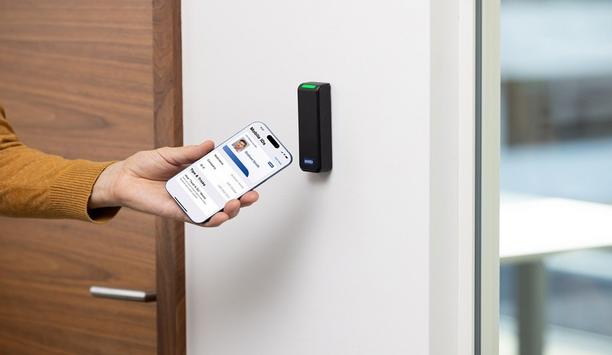
HID, a worldwide pioneer in trusted identity and access control solutions, announced that Deskbee, a global provider of corporate space management solutions, has integrated HID Mobile Access and Identity Positioning technologies into its platform. With an already robust workplace management application, Deskbee wanted to enhance security and optimize operational efficiencies by integrating digital credentials and real-time positioning into its platform. HID Mobile Access With HID Mobile Access, Deskbee app users can employ their smartphones and tablets to securely access facilities, eliminating the need for physical cards and reducing the risks associated with lost or misused credentials. This implementation not only enhances convenience and security but also seamlessly integrates with existing systems, simplifying the issuance and revocation of credentials from a single platform. Identity Positioning technology By analyzing occupancy data, managers can optimize space planning, improve resource allocation Furthermore, Identity Positioning technology enables building managers to track employee and visitor locations in real-time, providing valuable insights for optimizing space planning and resource allocation. By analyzing occupancy data, managers can optimize space planning, improve resource allocation (such as energy, water, and HVAC), and enhance overall operational efficiency. Secure, efficient, and personalized experience “The integration of HID’s Mobile Identities solutions demonstrates the enormous potential that application development companies have to transform access control systems and workplace management,” said Rogerio Coradini, HID’s Commercial Director of Physical Access Control in Latin America. “Through collaboration with HID, developers of mobile platforms and applications can adapt to the changing needs of the market and provide a more secure, efficient, and personalized experience for their clients.” Detailed monitoring and improved access management Deskbee offers real-time dashboards that allow for detailed monitoring of space and access usage Due to HID mobile identity technologies, Deskbee offers real-time dashboards that allow for detailed monitoring of space and access usage, providing accurate data on occupancy, location, and duration of stay. “The ability to automate the registration process and improve access management has been a significant change. HID's reliability and support have been fundamental to these advancements, and we are seeing how these results are positively impacting our clients. The trust in the brand and its support has been essential to our success,” said Gorguet. Employee badge integration Headquartered in Brazil, Deskbee has experienced rapid growth, consolidating its position in the Brazilian market and expanding its operations to more than 25 countries, including Mexico, Chile, Argentina, the United States, Portugal, Spain, Germany, and the United Kingdom. Still this year, the company will offer employee badge integration with Google Wallet, also powered by HID technology.
Matrix's client, a pivotal divisional office within the Railways Department, manages railway operations across multiple divisions. Serving as the central administrative hub, the Divisional Railway Manager (DRM) office is dedicated to ensuring safe, efficient, and dependable train services, while addressing operational challenges and enhancing the passenger experience. This case study explores the DRM office’s adoption of innovative communication strategies and processes that optimize management, streamline operations, and elevate service delivery throughout the region. Requirements The DRM office sought a telecom solution to modernize their existing system, to enhance communication efficiency and reliability. The primary challenges they faced included: Outdated Communication Infrastructure: The existing system struggled to keep up with operational demands, causing frequent communication disruptions both within the office and with external entities. Need for Technology Integration: The office required a scalable, modern solution capable of merging traditional telephony with advanced VoIP systems, enabling seamless communication across all departments. Seamless System Compatibility: It was essential for the Matrix VoIP Gateway to integrate smoothly with the current third-party PBX, ensuring uninterrupted communication and compatibility with the existing setup. Improved Call Management: Reliable, real-time communication between the DRM office and other railway divisions was vital for coordinated operations and efficient management. Solution The Matrix solution, featuring the Matrix VoIP gateway, was seamlessly integrated with the existing third-party PBX system, successfully bridging modern communication technologies with legacy infrastructure. Key aspects of the solution include: Connection with Third-party PBX: The Matrix VoIP-PRI gateway (SETU VTEP) seamlessly integrated with the existing third-party PBX system, while the Matrix SIP phone (SPARSH VP510) connected effortlessly via LAN to support cohesive and efficient communication within the same PBX setup. Connection to Railway Network: The VoIP-PRI gateway established a dependable PRI network specifically for the Railways, efficiently managing multiple communication lines and ensuring robust connectivity across the network. Analog Network Integration: The Matrix FXO and FXS gateway (ETERNITY GENX12S) enabled analog connections, linking to the third-party PBX through a network switch to extend connectivity options while maintaining a unified communication structure. This configuration allowed the DRM office to bridge modern digital and analog communication systems, ensuring reliable and adaptable connectivity across all platforms. Results The implementation of the Matrix VoIP Gateway in the DRM office's communication system brought significant operational improvements, achieving the following outcomes: Improved Reliability: The ETERNITY GENX12SAC ensured continuous connectivity across divisions, enabling a smooth and uninterrupted flow of information. This enhanced reliability improved coordination and accelerated decision-making processes. Effortless Integration: The Matrix VoIP Gateway integrated seamlessly with the existing third-party PBX system, creating a unified and efficient communication ecosystem that streamlined internal and external communications. Future-Ready Solution: Designed with scalable VoIP technology, the Matrix solution was built to support future growth, upgrades, and evolving communication needs. This future-ready approach provides the DRM office with long-term efficiency and adaptability without requiring major infrastructure changes. The Matrix VoIP Gateway delivered a robust, integrated, and future-ready communication system that not only addressed the office's current needs but also strategically positioned it for future advancements and scalability.
Round table discussion

2025 is likely to see further advancements in artificial intelligence, with potential impacts on various aspects of society, including the security industry. The new year will also require security professionals to adapt to changing market conditions and develop contingency plans for unforeseen events. Industry changes will accelerate and challenge everyone in the security market to keep up. Making specific predictions for the new year can be a struggle, but we asked our Expert Panel Roundtable: What will be the big news for security in the year ahead?

The Internet of Things (IoT) has revolutionized many industries, including physical security. By connecting physical devices to the internet, IoT technology offers significant enhancements to security systems. Benefits include real-time monitoring, remote access, and the utility of new devices such as temperature and humidity sensors. At the same time, IoT devices come with challenges, including greater cybersecurity vulnerability. We asked this week's Expert Panel Roundtable: How is the Internet of Things (IoT) impacting the physical security marketplace?

While technology like cameras, alarms, and access control systems are crucial components, they are only as effective as the people who use and manage them and the systems that deploy them. When installing physical security systems, the focus should be on the holistic operation of the system rather than the functioning of individual components. However, in the end, overlooking critical factors can undermine the totality of system performance. We asked this week's Expert Panel Roundtable: What is the most overlooked factor when installing physical security systems?