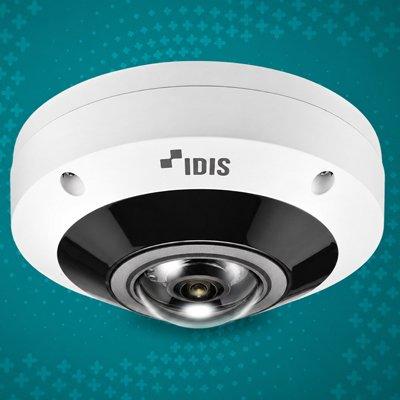
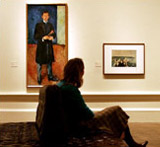
Axis cameras were deployed by CNL to help secure priceless art works including ‘The Scream' on loan to the Royal Academy of Arts from the Munch Museum in Oslo
Network cameras by the global leader in network video Axis Communications, were selected as part of a comprehensive surveillance solution put together for the Royal Academy of Arts (RAA) by leading integrator CNL (Computer Network Ltd). The RAA was given less than a week to install a new security system in its main galleries prior to the hanging of key works from the Munch Museum in Oslo for a loan exhibition held from September to December 2005.
The additional surveillance was requested by the head of security from the Munch Museum who came to assess security measures at the RAA less than a week before the Munch loan exhibition was due to be exhibited. Only a year before three key Munch works, including one of three original ‘The Scream' paintings, had been stolen from the Munch Museum in Oslo by masked gunmen.
 With no time to run cables in the listed building at Burlington House, one of the twelve wireless access points placed at the entrance to the main public galleries was used to provide an encrypted network connection to a number of AXIS 206W wireless network cameras.
The AXIS 206Ws were installed to cover the key exit points from the main galleries due to house the Munch works. David Vobes, facilities manager of the RAA summarised the installation: "Having our new surveillance system running over IP enabled us to extend the system rapidly via the wireless access points without damaging the fabric of the building, thereby avoiding major capital outlay. No less importantly, with CNL's assistance, we created a system which reliably delivers high quality images helping us meet modern high specification requirements to protect works of art which often cost millions."
James Condron, sales and marketing manager at CNL, said: "Axis has an extremely strong portfolio of technology allowing us to meet and respond to our customers needs. The AXIS 206W was ideal to meet the requirements for this part of the project whilst their codecs provided the platform to seamlessly integrate with the RAA's existing analog infrastructure - providing a highly-efficient and cost-effective surveillance network."
 CNL worked with RAA's IT and facilities management staff to provide output from existing CCTV cameras to RAA's network via AXIS 241Q Video Server Blades. Together with new Axis network cameras installed on the RAA's roofs, foyer and administrative offices, the RAA now has a highly comprehensive surveillance system designed to meet the highest standards requested by museums loaning work to them, the Museums Libraries & Archives Council and the Home Office.
Steve Gorski, managing director of Axis Communications (UK) Ltd, said:
"The installation at the RAA by CNL demonstrates how our wireless and wired network cameras can work together with our video server technology to create a secure site using a mixture of traditional analog-based CCTV cameras and state-of-the-art wireless networking infrastructure. The outcome is a system which has cost effectively enabled the RAA to migrate to IP-Surveillance whilst upgrading their system to meet dynamically changing security requirements."