
 |
| Ethics and the security industry is a balancing act |
Most of us have a basic instinct as to what is and is not ethical behavior. But is instinct enough?
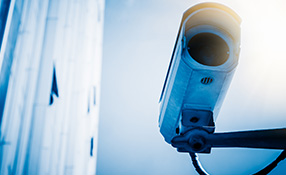
“Ethics and the security industry is a balancing act,” says Mike Hurst, vice chairman of the UK Chapter of ASIS International. “Most people will have an instinct as to what ethical behavior is, but there’s an absence of hard and fast rules.” Examples often crop up in video surveillance situations, Hurst says. For instance, when and where is it ethical to install CCTV cameras: in a store’s changing rooms to prevent theft? “It’s what is proportional and reasonable. To have security, you have to give up some privacy, but it’s a balancing act.”
Ethical Issues Arising From Investigation
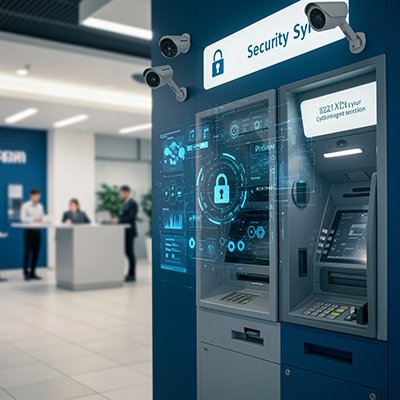
Big data is another area that can pose ethical issues. Some people see data collection as an invasion of privacy, while others see it as a useful tool for security. For example, to what extent is it ethical to use information extracted from an access control system on the habits and preferences of individual users, or to conduct predictive analysis to ascertain future threats?
The investigations area of the security industry can also have ethical pitfalls. “I was told of an instance when a company, seeking to do business in the Indian sub-continent, asked a ‘reputable’ investigator to do some background checks on a potential business partner, only to be asked if they wanted to see his bank details as well, as this could be easily arranged by a small payment to a bank employee. The company declined the offer.” Is “blagging” (knowingly or recklessly obtaining or disclosing personal data or information without the consent of the data controller) ethical, even if the motives of the investigator are good?
‘Code Of Ethics’
“Most professional bodies and industry associations have some sort of code of ethics to which their members are expected to adhere. But it’s important to review such documents to ensure they are current and meaningful – a code of ethics should be a living document.”
Although many companies may not have a formal written code of ethics, most will touch on ethical behaviorin employee handbooks, job descriptions or as part of any Corporate Social Responsibility policy, explains Hurst. But to ensure that these are more than mere words, the ethos of a company should be part of any induction process with sessions on ethics as part of ongoing staff training and development.
Big data is another area that can pose ethical issues. Some people see data collection as an invasion of privacy, while others see it as a useful tool for security |
An ethical approach can be good for business. “Just contrast the reputations of, for example, the unethical producers of adulterated beef products during the horsemeat scandal a few years ago with those of, say, producers of organic natural yogurt. You need to behave ethically and then promote the fact to the wider world.” As with a Corporate Social Responsibility policy, says Hurst, if your business engages with your local community, that makes your staff feel good about themselves and adds value to being a member of that organization. Many customers and consumers will pay a higher price if they feel that the service they are getting is more ethical.
Security Code Of Ethical Conduct
This is a hot topic currently. Hurst recently attended both a roundtable discussion on ethics at Leeds University and an industry dinner organized by the Industry and Parliament Trust at the House of Lords. What is needed is to “bring together security membership and industry bodies to agree basic ethical issues and sign up to a Security Code of Ethical Conduct” that enhances the reputation of the profession, he says.
“Corporate security managers may be involved in numerous areas of a business that may not be perceived as security issues: intellectual property; brand protection; Corporate Social Responsibility; so why not ethics?” Hurst contends that security managers and their teams are uniquely placed to “lead from the front” on this, benefitting their organizations’ reputations and bottom lines – and having a positive impact on society at large.