What Are The Security Challenges Of Healthcare Facilities?

- Healthcare facilities face unique challenges with physical security system integration.
- Video, access control, and asset protection systems enhance healthcare facility security.
- Identifying healthcare security needs is crucial for effective technological implementation.
Editor Introduction
Hospitals and healthcare facilities are an important vertical sector in the physical security market. Protecting healthcare facilities is a rich opportunity to leverage the value of physical security systems that range from video to access control to newer location and asset protection systems. But understanding how technology can excel in the healthcare vertical requires that we first identify and understand what these institutions need. Therefore, we asked this week’s Expert Panel Roundtable: What are the physical security challenges of hospitals and healthcare?


The scope and diversity of their activities make hospitals one of the security industry’s biggest challenges. It’s somewhat like protecting a small city with thousands of people coming and going 24/7. Valuable assets and sensitive personal data need protection. And like a city, a hospital can never fully close. Many areas – such as nurseries, pharmacies, labs and computer rooms – require strict access control. One of the most dangerous areas is the emergency department. While lobby doors must remain open, doors to triage and treatment areas should be locked. Visitor management systems help monitor patients and visitors. Tracking patients and portable medical systems is critical. Real-time location systems (RTLS) use RFID chips to track newborns, patients prone to wandering, drug carts and other medical devices. There’s much more involved in securing a hospital, so always work with an experienced integrator to create or update a security plan.

Hospitals face an array of unique challenges in creating a safe environment for patients, staff and visitors while abiding by the strict standards and requirements established by key regulatory organizations including the NFPA (National Fire Protection Association), The Joint Commission, HIPAA (Health Insurance Portability and Accountability Act) and the FDA (Food and Drug Administration). It can be difficult for hospitals to offer an inviting care environment while working to keep up with the constantly changing codes and providing maximum safety. The sheer number of staff in a hospital pose a challenge as well, complicating universal communication in the event of an emergency. Technologies that enable tailored and targeted communications, like a display board that provides message alerts or addressable speakers that deliver a specific message to a precise location within a facility, can be highly beneficial in healthcare environments.

There has been an increase in demand for the safety and security of patients, staff and visitors at healthcare institutions, as evidenced by the new CMS (Centers for Medicare and Medicaid Services) Emergency Preparedness Rule. On Nov. 17, 2017, healthcare institutions that participate in Medicare or Medicaid must demonstrate compliance with the rule. At its core, the new rule seeks to establish national emergency preparedness requirements to ensure adequate planning for both natural and man-made disasters, and coordination with federal, state, tribal, regional and local emergency preparedness systems. A major challenge in compliance to this rule is balancing patient safety with comfort. Institutions should consider two-way communication that enables leadership to disseminate targeted messages quickly and efficiently, while arming all employees with a tool that can alert the appropriate staff should an incident occur. Solutions like this enable swift communication of issues without disturbing patients and visitors unless necessary.

A major hospital presents security challenges unlike other facilities. People enter day and night. Sick, elderly and newborn patients must be protected. Valuable equipment, supplies, pharmaceuticals and computer centers must be secured. Accomplishing this task required layers of security, primarily access control and video surveillance. Access control should include lobby-based visitor management systems to maintain lists of visitors. Card readers and keypads protect surgical suites and supply rooms, while highly secure areas such as nurseries, pharmacies and executive offices benefit from video intercoms that allow staff to see and communicate with visitors before unlocking a door. Areas such as infectious disease labs may employ biometrics – iris or fingerprint readers – for enhanced identity verification. In order to keep visitors, staff and patients protected, it is important to remember perimeters and parking garages. Video surveillance provide guards with live views of remote areas, and intercom-equipped emergency stations are in contact with security.

Protection of network security “closets” is often overlooked in the healthcare environment. Installing access control and video surveillance will help provide security. A simple vulnerability risk assessment can help administrators understand the current security risk in areas where critical information is stored. When securing servers, other devices and HIPAA information, administrators should consider policies that limit physical access, securing machines in locked rooms, managing physical keys, and restricting the ability to remove devices from a secure area. An effective security plan will provide deterrence, detection, delay and response.

Hospitals and healthcare facilities are posed with a unique security challenge because of the constant flux of people coming and going, the 24/7/365 nature of the enterprise, and the need to secure multiple locations within a facility at various levels. These organizations have to ensure they have a solution in place that manages incidents, provides access control across the board, can streamline emergency response and is able to coordinate on asset protection. All these elements are critical to the safety of patients, visitors, staff and the expensive assets that are often housed within these facilities. Utilising real-time location system (RTLS) software can help streamline security efforts, while allowing for both emergency and day-to-day communications, which can make the use of this technology a business continuity tool.

Physical security for hospitals and healthcare facilities must encompass an integrated approach, combining video surveillance, video management, emergency management, fire and intrusion alarms, and access control into an overall security plan. Access control, in particular, requires a unique approach, as these systems encompass not only main entrances and exits, but many internal doors that must be programmed with multiple levels of access. Security officials working in this sector also require the ability to control access remotely, through mobile applications, to confirm identity quickly and easily, and to program varying levels of access for visitors, patients, doctors, and staff. These facilities also require oversight 24 hours a day, seven days a week, which can be a challenge for security directors, and also require that the implemented technology work seamlessly while offering maximum uptime.

Video surveillance is integral to meeting the security challenges of hospitals and healthcare facilities. There are many healthcare facilities that are still running older analog technology because they see transitioning to IP as both costly and difficult to deploy. This can be a problem when integrating new technology as it becomes available, as it is critical for security systems to integrate seamlessly to better deliver a security platform that enables streamlined responses to security events. Hospitals also have vast amounts of space that needs to be covered, which can make the transition from IP to analog costly if strictly using traditional IP cameras; this can be solved by the implementation of 360-degree panoramic video coverage that can replace between four and five of these traditional cameras.

Institutions must keep pace with physical security threats by employing an open and expandable physical access control system (PACS) infrastructure that supports ongoing improvements while enabling users to do more than simply open doors with their ID cards. Today’s solutions support applications—ranging from secure access to doors and other locations to accessing IT resources--and enable administrators to adopt new ways of thinking about how to use trusted identities across the healthcare continuum. Trusted identities transform how institutions operate and manage access to patients, data and equipment, and how they protect patient privacy without compromising the quality of care. Through a single convenient and cost-effective integrated solution, healthcare organizations can deploy a combination of strong authentication and new IoT applications that address today’s security challenges while simplifying all aspects of healthcare operations, from opening hospital doors, accessing healthcare records and e-prescribing to how healthcare professionals interact with patients and log their activities.

Healthcare providers face security risks including theft, fraud, cyber threats, violence and missing persons. In the 2016 Hospital Security Survey conducted by Health Facilities Management and the American Society for Healthcare Engineering (ASHE), 75 percent of respondents said that maintaining security has become more challenging over the past two years. Hospitals look to supplement training programs, cyber threat detection and security plans with technology systems and sensors that seek to identify and prevent issues from occurring. Video surveillance, in particular, is often used to improve overall situational awareness. Increasingly, video analytics are a valuable addition to aid help achieve early risk detection. Downtime can lead to compliance issues and potential operational interruptions. Because of this, video storage becomes an even more important piece of the video surveillance infrastructure, and today’s advanced organizations are looking at new innovations for storage and data management, specifically advancements proven in the IT market.

Video surveillance and other security sensors and networked systems (i.e. access control, video analytics, dispatch, nurse call, alarms, RFID, et.al) help users realize new levels of awareness; but the value of data derived from these systems cannot be fully understood without correlating information from these platforms together. The ability to fuse multiple data sources (even traditional security, IT and cyber) into one intuitive system will help healthcare facilities realize new levels of situational awareness. Often, hospital security teams must manually combine information from multiple systems to try to gain information on a particular event or trend. This process is time-consuming but necessary to understand the full context of what is happening. Situational awareness solutions combine critical data points from multiple systems and sensors. We like to think of this approach as a single pane of glass—helping enable officials to swiftly and efficiently identify risks, manage situations and thoroughly investigate.
Editor Summary
As environments that require the best the physical security industry has to offer, hospitals and healthcare facilities are large, ever-changing, unrelenting and unforgiving. By definition, hospitals are life-and-death environments that must function at optimal levels without being plagued by security concerns or threats that can interfere with their mission – and become life-and-death situations, too. Healthcare is also a mature market whose security and safety requirements are well defined, well understood, and in many cases, regulated. It’s fortunate that there are, as our Expert Panelists point out, many effective solutions to meet the panorama of challenges.
HID products



HID news

There are many new technologies at ISC West this year. There are also some tried-and-true solutions on display. More mature products have the benefit of being fully vetted and battle-tested, which may make them a more comfortable choice for security customers. I had a couple of discussions on Day 2 of the show about the advantages, and possible drawbacks, of new products. “To a security director, when you say ‘new,’ he translates that into ‘risk,’” says Bill...

HID, a pioneer in trusted identity solutions, has achieved Texas Risk and Authorization Management Program (TX-RAMP) certification for its Public Key Infrastructure as a Service (PKIaaS) solution. This certification demonstrates HID’s commitment to cybersecurity excellence and enables Texas state and local government to confidently engage with approved, trusted providers to procure secure, cloud-based certificate lifecycle management services with faster timelines and reduced administrati...

HID, a worldwide pioneer in trusted identity solutions, announced the appointment of Jos Beernink as Vice President Europe for its Physical Access Control (PACS) business. In this role, Beernink will lead HID’s strategy, sales and operations across the whole European region, helping organizations leverage trusted identity and access control technologies to create a secure, smarter and more efficient workplace and physical spaces. Prior roles of Beernink Beernink brings more than 2...
HID white papers












HID case studies
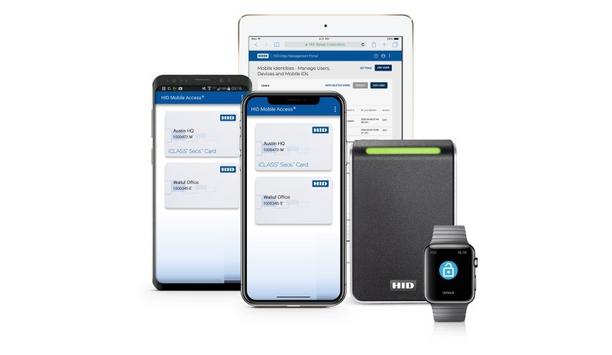
Enhancing enterprise security is high on the list of priorities for businesses across sectors. Within the retail industry, there is an additional focus on enabling new ways of working through management tools. Integrated solutions and applications help to create a robust security landscape and ensure a future-ready posture as organizations look to address emerging risks and create better experiences for next-gen employees. Physical access control (i.e., the readers on the door and the credentia...
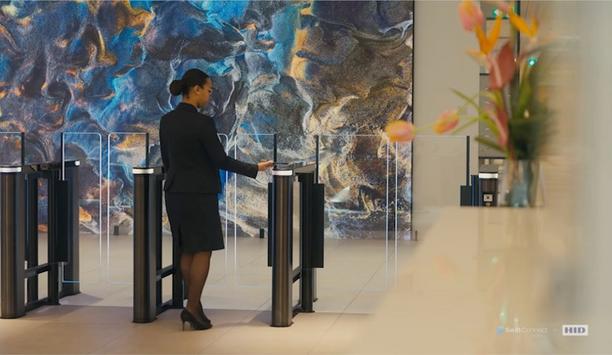
How do you rethink and transform building access for a 241-year-old company? BNY started by asking employees. The response was encouraging. The BNY team found that employees embraced the concept of mobile access solutions. The thought of implementing access solutions was already being considered by the company and the team was excited about the idea of providing a modern experience that allows employees worldwide to conveniently access their building spaces with a simple iPhone or Apple Watch....
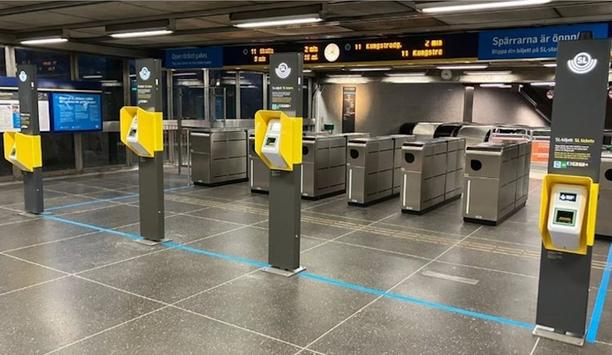
HID, the pioneer in trusted identity and authentication solutions, announced that it successfully supported Stockholm's public transit authority, Storstockholms Lokaltrafik (SL), in transforming the daily travel experience for hundreds of thousands of passengers in the capital through a comprehensive digital ticketing modernization program. The initiative has eliminated paper tickets and enabled seamless contactless payments across buses, ferries, trams and metro stations. The technology u...
HID virtual events




Expert commentary

Security beat


HID Global
611 Center Ridge Drive
Austin
Texas 78753
Telephone: (512) 776-9000