
Which Technologies Are Transforming Airport Security?
26 Oct 2021
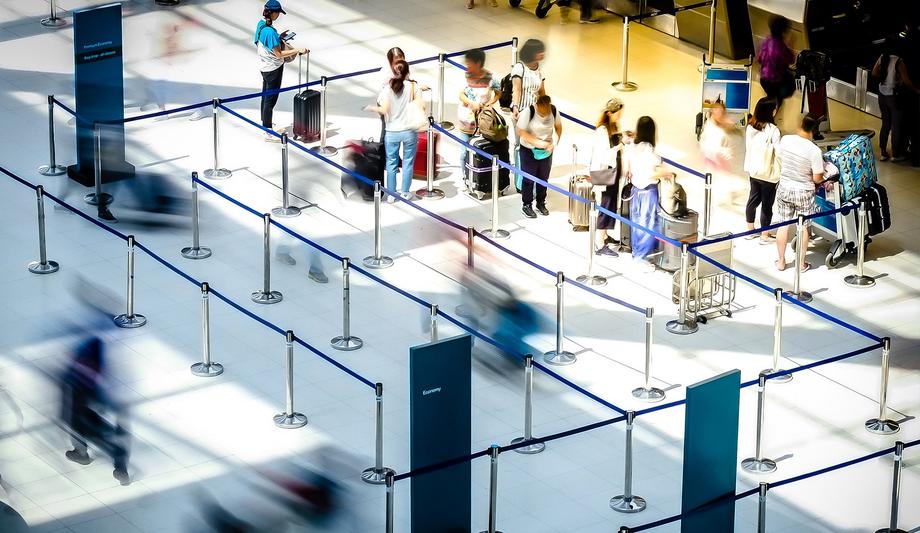

- Airports adopt AI to streamline security checks and enhance safety protocols.
- Biometric technologies improve identity verification, boosting airport security efficiency.
- Advanced screening tech accelerates threat detection, ensuring passenger safety.
Editor Introduction
Air travel is returning to pre-pandemic levels. COVID and its aftermath have added new compliance and operational concerns for airport security, and social and political volatility around the world emphasises the need for constant vigilance. A range of new technologies are enhancing airport security, not to mention providing new tools to simplify processes throughout the airport. We asked our Expert Panel Roundtable: Which technologies are transforming airport security?


AI-based video analytics is not only revolutionizing airport security, but surveillance capabilities coupled with AI/Deep Learning have become an operational performance tool. These combined technologies are beginning to function as an all-in-one security solution at airports, with the capability to detect hazardous objects, track a person of interest, automate perimeter protection, etc. Beyond serving as a traditional surveillance tool, AI-based video analytics can support a range of operations and maintenance efforts, including airport capacity and passenger experience concerns, ramp and gate operations, queue management, passenger flow, and tracking and restroom cleaning management. The mass amounts of data that these cameras consume are driving comprehensive situational awareness at all levels. The database of collected data provides an invaluable tool to glean insights across terminals, checkpoints, ramps, and perimeters to identify important information. This information not only ensures the safety of staff and passengers but also fuels business efficiency across operations.

Airports manage multiple security touchpoints: customs are concerned with evaluating items entering the country; TSA is focused on what travelers are bringing with them; airline personnel is worried about getting their flights out safely, and airport management wants to deliver an exceptional traveler experience. Airport security is part of the critical infrastructure. Biometrics is having a moment right now as an important part of identification measures, and the associated security solutions will continue to capture greater market share and make physical access control systems in airports more secure. At the same time, industry associations and government entities are wrestling with privacy concerns, all of which impact widespread adoption. As the industry works through this and technology upgrade challenges, we see biometrics becoming one of the most transformative security solutions for smarter, more secure, airports.

As large airports navigate an uneven return to pre-pandemic operations, they are relying on unified physical identity and access management solutions to automate and simplify airport access control across their workforces. Unlike standalone access control systems that only manage workforce credentialing, these solutions support vendors and visitors, too. Many of the world’s largest airports use solutions like HID® SAFE™ for Aviation to provide one unified platform for managing identities, TSA compliance, and COVID-related compliance including contactless check-ins and screening visitors against internal and external watchlists. Benefits include reducing duplicate data input, enhancing customer service, achieving paperless records management, reducing costs, and improving efficiency. Cloud hosting minimizes rip-and-replace practices through standards-based APIs and connectors that integrate with existing physical and IT infrastructure and an airport’s other authoritative systems. Today’s solutions also deliver actionable security insights and reports through real-time machine learning technology that collects and correlates cyber and physical identity data.

Airport security changed on 9/11; people suddenly sat up and took notice. Customers, employees, vendors, and guests looked at security differently, airports and technology vendors responded with innovative solutions to keep people safe. Today, due to COVID we are at another turning point, people are looking at physical safety differently, this time it’s about sanitization. When we look at security (aka safety) from the perspective of health and safety, environmental, emergency management, and fire prevention, we have not yet applied technology. Relying on antiquated, manual, paper-based solutions to ensure everything necessary to keep people safe is completed. Responsibilities are delivered via email, checklists are filed, data is compiled manually, there is no visibility, it’s reactive. Thus, increasing the probability of errors, omissions, and risk. With the combination of the latest in mobile, SaaS, and NFC technology we can eliminate the risk, help ensure physical operating compliance and keep people safe.

Identity Management and Credentialing Systems that are converged across cyber and physical security are transforming the airport transportation market. Security credentials and vetting employees, contractors, and visitors are now part of an automated approach that incorporates compliance and regulatory procedures with new health and safety mandates to keep facilities safe and secure. Cyber-physical security convergence platforms enable airlines to eliminate security silos, deliver complete views of threats and vulnerabilities and provide frictionless entrance controls. A common digital identity for people and things is critical in provisioning airline systems, data, networks, and physical access. Identity Intelligence technology helps prevent airline insider threats by maintaining a risk profile for the internal and external workforce, tracking access to critical areas within airports and flight operations. Integrations with various HR, ERP, and IT applications offer a “single pane of glass” view of each identity across all operations for the highest levels of situational awareness.

Airport/seaport security is a particular challenge due to the large numbers of the general public that need to have unfettered access to the estate. Recent improvements in scanning technology are proving to be very effective in moving large numbers of people through body scanners rapidly, and that is always the top priority of security professionals in these environments. Improvements in gunshot and weapons detection are also improving the traveler experience while increasing the margin of safety around public transport. Vastly improved video analytics is allowing us to examine movement and behaviors in real-time within large crowds of people. This, in conjunction with improved connectivity among disparate security platforms, is helping to provide these facilities with proactive security measures. Sharing the vast amounts of data on-premises security systems produce delivers a much more holistic view of the intelligence needed to provide safe and secure public areas.
Editor Summary
In the future, as we look back, the coronavirus pandemic may represent another turning point in airport security. Slower air travel during the pandemic simplified security upgrades in airports, and post-pandemic needs have shifted to include more compliance and operational concerns in addition to security.
HID products







HID news

There are many new technologies at ISC West this year. There are also some tried-and-true solutions on display. More mature products have the benefit of being fully vetted and battle-tested, which may make them a more comfortable choice for security customers. I had a couple of discussions on Day 2 of the show about the advantages, and possible drawbacks, of new products. “To a security director, when you say ‘new,’ he translates that into ‘risk,’” says Bill...

HID, a pioneer in trusted identity solutions, has achieved Texas Risk and Authorization Management Program (TX-RAMP) certification for its Public Key Infrastructure as a Service (PKIaaS) solution. This certification demonstrates HID’s commitment to cybersecurity excellence and enables Texas state and local government to confidently engage with approved, trusted providers to procure secure, cloud-based certificate lifecycle management services with faster timelines and reduced administrati...

HID, a worldwide pioneer in trusted identity solutions, announced the appointment of Jos Beernink as Vice President Europe for its Physical Access Control (PACS) business. In this role, Beernink will lead HID’s strategy, sales and operations across the whole European region, helping organizations leverage trusted identity and access control technologies to create a secure, smarter and more efficient workplace and physical spaces. Prior roles of Beernink Beernink brings more than 2...
HID white papers













HID case studies
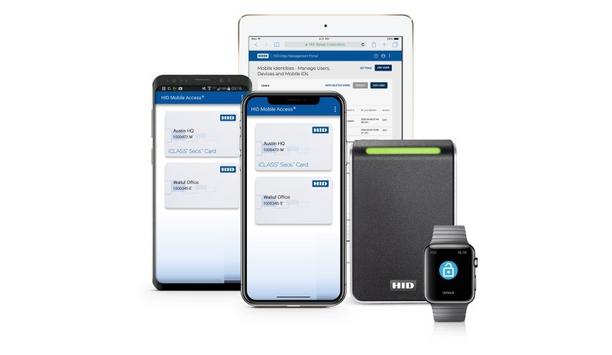
Enhancing enterprise security is high on the list of priorities for businesses across sectors. Within the retail industry, there is an additional focus on enabling new ways of working through management tools. Integrated solutions and applications help to create a robust security landscape and ensure a future-ready posture as organizations look to address emerging risks and create better experiences for next-gen employees. Physical access control (i.e., the readers on the door and the credentia...

How do you rethink and transform building access for a 241-year-old company? BNY started by asking employees. The response was encouraging. The BNY team found that employees embraced the concept of mobile access solutions. The thought of implementing access solutions was already being considered by the company and the team was excited about the idea of providing a modern experience that allows employees worldwide to conveniently access their building spaces with a simple iPhone or Apple Watch....
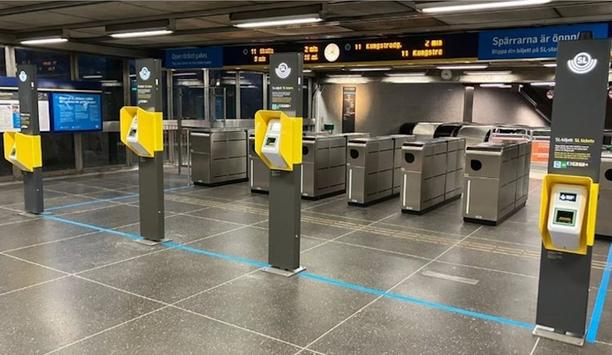
HID, the pioneer in trusted identity and authentication solutions, announced that it successfully supported Stockholm's public transit authority, Storstockholms Lokaltrafik (SL), in transforming the daily travel experience for hundreds of thousands of passengers in the capital through a comprehensive digital ticketing modernization program. The initiative has eliminated paper tickets and enabled seamless contactless payments across buses, ferries, trams and metro stations. The technology u...
HID virtual events





Expert commentary

Security beat

HID Global
611 Center Ridge Drive
Austin
Texas 78753
Telephone: (512) 776-9000