What Are The New Developments In Facial Recognition?
20 Sep 2021


- AI innovations are enhancing facial recognition technology capabilities significantly.
- Privacy concerns impact wider market acceptance of facial recognition advancements.
- Facial recognition technology continues evolving, sparking discussions about its implications.
Editor Introduction
Facial recognition is a mature technology that continues to change and evolve. New innovations such as artificial intelligence (AI) are expanding facial recognition capabilities, even as privacy concerns, though often misguided, undermine wider acceptance in the market. We asked this week’s Expert Panel Roundtable: What are the new developments in facial recognition?


Advancements in facial recognition technology (FRT) are adding new levels of convenience, speed and security to many touchpoints across our daily lives. Improvements in AI and machine learning technologies are fuelling matching-speed and performance possibilities – making facial recognition faster, more accurate and harder to hack. While fingerprint biometrics are widely used by some industries such as the banking and financial services, facial recognition is gaining in popularity as it strengthens security and improves user experience. At the ATM, combining fingerprint and facial recognition eliminates the need to insert a card and type a PIN. A quick face scan while entering a branch office allows bank employees to recognize the customer and pre-loads their account information for the teller. More efficient for both sides of the counter, the approach also nurtures customer relations as patrons are greeted by name and spend less time waiting for services.

The attention to ethical use and the issue of racial bias (which is introduced because of poor algorithm training) are major trends driving new developments. At RealNetworks, we appreciate the importance of these issues and low-bias/stable face recognition scoring has been a priority for algorithm development from our inception. Another major development in face recognition is related to lowering the total cost of ownership by miniaturization, edge and cloud computing. This reduces the demand for expensive hardware on-premise, and better supports businesses with geographically dispersed operations. By developing high-speed, compact systems, we have removed barriers to entry for many businesses considering a whole range of use cases. And of course, by adopting a ‘privacy by design’ approach to development, we can enable organizations to comply with ever-evolving privacy standards and best practices regarding how data is used and who has access to it.

Facial recognition technology has been comprehensively improved and developed in the past five years focusing on three main aspects. First is the hardware performance and improvement of AI core, enabling the dynamic face databases to reach to 50,000 within a second level. Secondly, with the improvement of algorithms, especially the increase in the number of international face databases that can be used for deep learning, the accuracy of face recognition can reach more than 99%. Finally, there are improved security encryption and transmission technology. With the introduction of GDPR and the laws of collection and use of biometric information, the encryption and transmission technology of facial biometric templates have also been greatly improved, effectively reducing the risk of information theft and hacker tampering.

There is growing adoption of face biometric technology in various applications, such as access control for identity verification. Facial authentication technologies have become common in our everyday lives, from when we travel to unlocking our phones. Privacy is now at the forefront of organizations looking to adopt biometric technology. Companies like Alcatraz AI hold high standards when it comes to data security and user privacy. The Alcatraz identity verification solution respects the privacy of all users and relies on a user providing consent before participating in the program and secures data following ISO 27001 requirements. Technology that focuses on privacy, compliance, and data security with end-to-end encryption will be the core to all physical access control development in the coming years.

Advances in computing power have allowed facial recognition software to rapidly mature over the past five years. Competition and lower costs are spurring adoption across a wide range of industries and applications. In key sectors of our industry, facial recognition technology is enhancing the capabilities of identity proofing, document security and access control technologies that help protect people, property and information. Across applications ranging from helping law enforcement rescue children from sexual exploitation to assisting people with blindness and other disabilities, the benefits of the software are growing. Though critics have grown louder – misrepresenting research and blurring vast differences between government and consumer applications – broad bans on facial recognition failed in 17 U.S. states throughout 2020 and 2021 and were limited to law enforcement use in two states where they were adopted. SIA and its members have developed policy principles outlining how we can address concerns about accuracy and bolster public trust with measures to ensure facial recognition is used in bounded, appropriate ways – without limiting applications that clearly benefit society. With shortsighted bans beginning to have a real and measurable impact on public safety, we believe the time is ripe for balanced, common sense policy that addresses concerns while preserving the proven benefits of the technology.
Editor Summary
Technology advancement continues to drive expansion of facial recognition capabilities in the marketplace. In addition to security, facial recognition can also boost other benefits such as convenience. However, there are concerns about privacy and ethical use of the technology that must be dealt with directly to clear the path to wider acceptance.
HID products







HID news

There are many new technologies at ISC West this year. There are also some tried-and-true solutions on display. More mature products have the benefit of being fully vetted and battle-tested, which may make them a more comfortable choice for security customers. I had a couple of discussions on Day 2 of the show about the advantages, and possible drawbacks, of new products. “To a security director, when you say ‘new,’ he translates that into ‘risk,’” says Bill...

HID, a pioneer in trusted identity solutions, has achieved Texas Risk and Authorization Management Program (TX-RAMP) certification for its Public Key Infrastructure as a Service (PKIaaS) solution. This certification demonstrates HID’s commitment to cybersecurity excellence and enables Texas state and local government to confidently engage with approved, trusted providers to procure secure, cloud-based certificate lifecycle management services with faster timelines and reduced administrati...

HID, a worldwide pioneer in trusted identity solutions, announced the appointment of Jos Beernink as Vice President Europe for its Physical Access Control (PACS) business. In this role, Beernink will lead HID’s strategy, sales and operations across the whole European region, helping organizations leverage trusted identity and access control technologies to create a secure, smarter and more efficient workplace and physical spaces. Prior roles of Beernink Beernink brings more than 2...
HID white papers












HID case studies
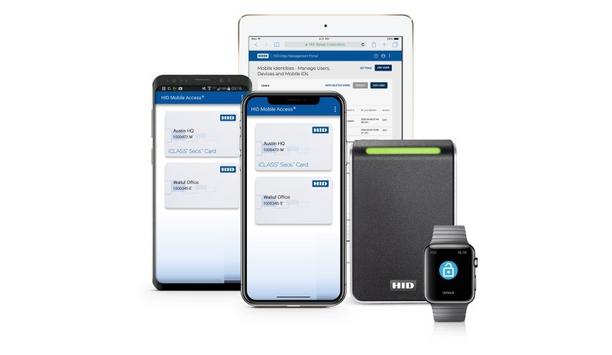
Enhancing enterprise security is high on the list of priorities for businesses across sectors. Within the retail industry, there is an additional focus on enabling new ways of working through management tools. Integrated solutions and applications help to create a robust security landscape and ensure a future-ready posture as organizations look to address emerging risks and create better experiences for next-gen employees. Physical access control (i.e., the readers on the door and the credentia...
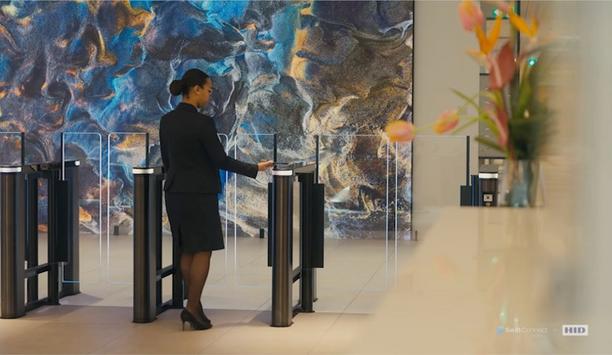
How do you rethink and transform building access for a 241-year-old company? BNY started by asking employees. The response was encouraging. The BNY team found that employees embraced the concept of mobile access solutions. The thought of implementing access solutions was already being considered by the company and the team was excited about the idea of providing a modern experience that allows employees worldwide to conveniently access their building spaces with a simple iPhone or Apple Watch....
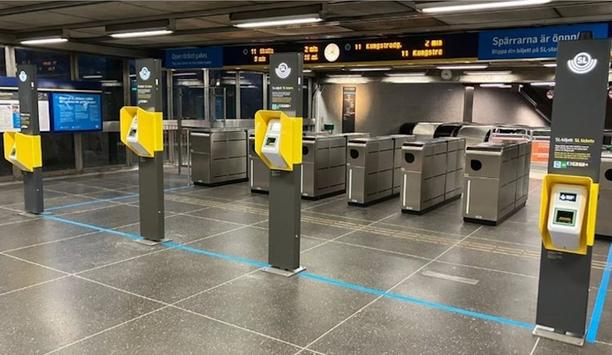
HID, the pioneer in trusted identity and authentication solutions, announced that it successfully supported Stockholm's public transit authority, Storstockholms Lokaltrafik (SL), in transforming the daily travel experience for hundreds of thousands of passengers in the capital through a comprehensive digital ticketing modernization program. The initiative has eliminated paper tickets and enabled seamless contactless payments across buses, ferries, trams and metro stations. The technology u...
HID virtual events




Expert commentary
Security beat

HID Global
611 Center Ridge Drive
Austin
Texas 78753
Telephone: (512) 776-9000