Wireless Access Solutions In Healthcare
Product Profile


Security stakes are high at healthcare premises. Patients expect and deserve privacy and safety. Yet most medical buildings must remain welcoming spaces, many open around the clock. The protection of drugs and confidential data is critical — and every breach demands thorough investigation. Such needs go way beyond what the mechanical security was designed to meet.
Hospitals, for example, are often large and spread out. Their locks may need to integrate with fire detection, CCTV and other building systems. Labs and pharmacies are safer when access is managed with time-limited “keys” which can be revoked. In care homes, security must be matched by user-friendliness for a client group who may have limited dexterity or learning skills. Here, real-time control and monitoring can help managers to react quickly.
We ask too much of a traditional metal key if we expect it to do all this. Yet wired security doors can be an expensive retrofit option. Fortunately, there is a solution: wireless access control.
The wireless way to controlling access better
Wireless devices provide the easiest upgrade or replacement for any access system based on mechanical or magnetic locks. Credentials including RFID smartcards, programmable keys or secure mobile keys stored on a smartphone replace cumbersome physical keys.
Wireless components make it cost-effective to add electronic control to many more areas of a building. With online locking systems, facility managers can monitor and manage premises at any time of day or night, even viewing the status of medicine cupboards or server racks from the same administration software interface.
Integrating wireless locks to maximize the reach of access control
Swapping existing locks for battery-powered cylinders or escutcheons can link a door to an access control system. In one recent survey of access control professionals, 95% of respondents judged “system integration with other building/security management functions to be ‘somewhat’ or ‘very’ important”*. To meet this challenge at the Haute Savoie region’s new hospital, managers selected Aperio® locking integrated online with an ARD access management system.
Because Aperio locks are wireless, the hospital could introduce more layers of security and secure doors without incurring excessive installation or operating costs, including for sensitive offices and drug stores. Staff no longer carry big bunches or waste time hunting down keys. Individual permissions are all stored on a single, programmable RFID credential. All battery powered Aperio devices integrate natively with the central system, so wired and wireless access points at Centre Hospitalier Métropole Savoie (CHMS) are managed together, with real-time logs, remote door opening and free time slot management.
“Having just a single badge — and not having to carry around heavy keys — has been a major advantage for us,” says Béatrice Dequidt, Health Executive at CHMS. “We have implemented internal HR management procedures, creating badges that are automatically integrated into ARD's operating software,” adds Alain Gestin, CHMS’s IT Systems Architect. Aperio and ARD also maintain compatibility of credentials with the French government’s electronic Health Professional Card (CPS), for added staff convenience.
Powerful, real-time control which works out the box
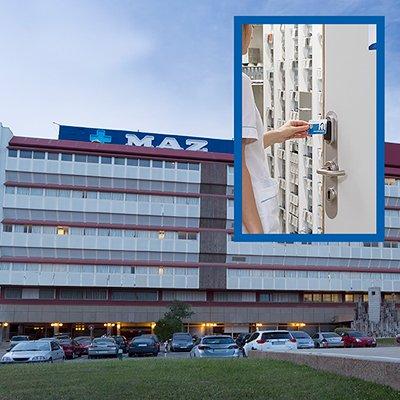
Multiple key systems; varied openings including fire doors, glass doors, offices, pharmacies, car parks and lifts; plus hundreds of workers and contractors needing different, constantly changing permissions. Faced with these challenges, managers at Hospital MAZ, in Zaragoza, knew mechanical keys could not provide the 21st-century security they needed.
MAZ upgraded locks to SMARTair® Wireless Online electronic access control, which keeps facility managers updated in real time. A unified access system is controlled by intuitive software, installed at the central server and managed via client servers in different departments. Because the SMARTair Wireless Online system updates via communications hubs in real time, security managers implement all changes via the central system, without needing to waste time walking through the hospital, changing rights one door at a time.
Employee convenience is greatly enhanced. Staff and contractors carry a single MIFARE® smart card programmed with individual access permissions. Cards are personalized to double as employee IDs, so 625 staff and approximately 100 contractors only carry a single card. "We have achieved all our objectives with the installation of the system,” says Miguel Angel Hernández Jerez at Hospital MAZ.
Making keys more intelligent
Programmable electronic key systems put the advantages of access control into a familiar form: they reinvent the key for the 21st century, making it more flexible, more powerful and better equipped to handle modern security demands. Lost keys and departed employees are no longer a problem, because their access rights are canceled with a click. The key’s familiarity is welcome to a user group who are not experts — at least, not in access control.
Managing physical keys can impact nursing care, as pharmacy managers at the UK’s Queen Elizabeth Hospital, Birmingham discovered. An older, mechanical system made it difficult to keep track of who held the right keys. Searching for that person wasted valuable time. They identified a better solution for convenient secure access to controlled medicines: CLIQ® electromechanical locking.
CLIQ offers easy-to-use access control based on high-security mechanical disc cylinders combined with encrypted electronic locking and identification. With CLIQ, power to the lock is supplied by a standard battery inside every CLIQ key, so no wires are required — making it an ideal retrofit solution for doors, cabinets and mobile drug trolleys. Each employee carries a single programmable CLIQ key to open any authorized CLIQ lock. No CLIQ device unlocks without the key first being authorized by the software.
QE Birmingham’s new CLIQ system allows for remote key management. Audit trails for locks and padlocks are available on demand, so nurse managers can instantly see who has accessed particular cabinets or drug trolleys. “Programmable key solutions really boost medicine safety in hospitals,” says Stephan Schulz, CLIQ Product Manager at ASSA ABLOY Opening Solutions EMEA. “Nurses at Queen Elizabeth, Birmingham, carry their own key with personalized access rights, so they don’t waste time finding out who has the key to every cupboard. Patients benefit.”
“The message from all nursing staff is that patients are getting medicines much easier and in a more timely fashion,” says Inderjit Singh, Chief Pharmacist at QE Birmingham. “For us, the key return on investment is the quality of service we’re providing.”
Simple, effective door control without software
In any busy medical facility, however small, it is easy to leave a door unlocked. With expensive equipment or controlled drugs on the other side, an opening invites opportunist trouble. But if you install a Code Handle® electronic PIN lock, you need never worry again.
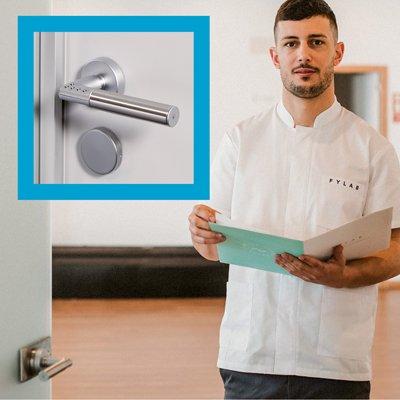
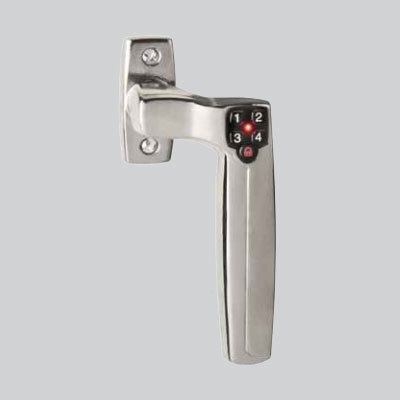
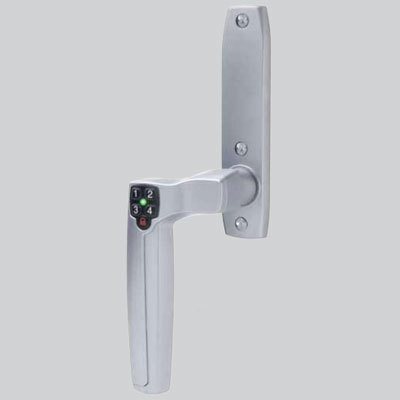
A Code Handle fits right over an existing cylinder. You simply swap the current handle for a low-profile Code Handle, and fix it in place with two screws, to instantly add PIN security to a consultation room, medicine store or equipment cupboard. It adds electronic security without a bulky push-button door unit which disrupts interior aesthetics.
In Spain’s Basque Country, Fylab sought this easy solution for their consulting rooms. Requirements were straightforward: secure, keyless access around a facility with a lot of daily traffic from professionals and the public. They needed a device that is easy to retrofit with a design to chime with Fylab’s contemporary medical workplace.
Code Handle added this security to three consulting-room doors — without wires or cables. “I am no artist or handyman, but I managed to fit the handles within 10 minutes,” says Fylab founder, Borja Saldias Retegui. Their Code Handle devices lock both wooden and glass doors, keeping equipment and personal belongings safe.
“Code Handle" provides the most simple solution for access control in a small facility,” he adds.
*: see www.ifsecglobal.com/resources/wireless-access-control-report-2021
Technical Specification
| Make | ASSA ABLOY |
|---|---|
| Manufacturer | ASSA ABLOY |
| Category | Access Control>Electronic lock systems |
| Model code | Wireless access solutions |
| Lock Type | Electric Locks |
| Additional info |
|
More ASSA ABLOY Electronic lock systems




You might be interested in these products
Anviz Global Inc. news
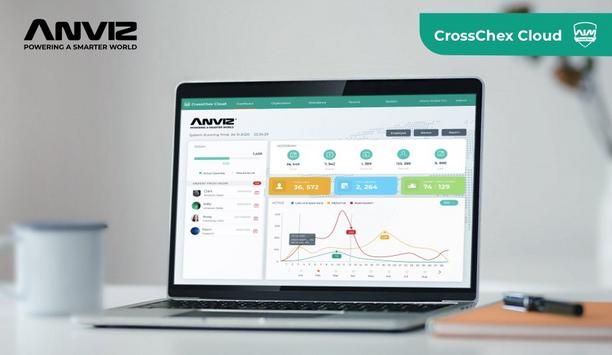
A time attendance system can help to keep a close eye on an employee’s working hours, prevent time theft by accurately tracking and recording employees’ time and attendance. A biometric time attendance system allows employees to clock in quickly and easier compare to the standard system and eliminate “buddy punching” in advance to the traditional time card system. A complete biometric time attendance system includes both hardware and software. Include the electronic div...
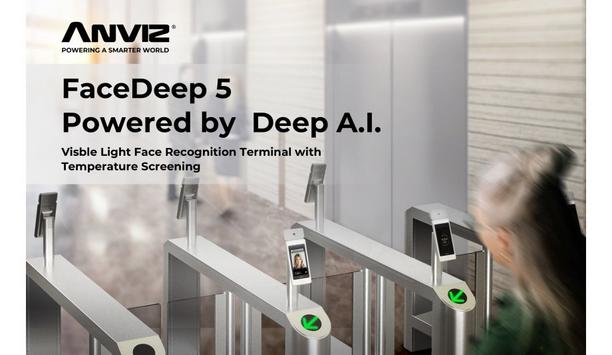
Understanding access control technology has surpassed its core application as a security tool and is helping protect individuals from infection, Anviz announced the release of a strategic addition to its product line, Go Touchless - FaceDeep 5 and FaceDeep 5 IRT. Safely return to work and school during the post pandemic period leaves people with a question -with what health and safety precautions. Deep learning algorithm The dual camera for live face detection and mask, temperature alert are...

Access control, video surveillance, and intrusion detection systems evolved largely independently in the physical security industry. Integrating those systems to the benefit of an enterprise's overall security has traditionally fallen on security integrators working in cooperation with manufacturers. However, today's market has also evolved to include companies that provide "unified platforms,” bringing together various disparate security systems and functions under a single, centralized...
Anviz Global Inc. white papers






Anviz Global Inc. case studies

When they talk about digitalization, there is one topic that keeps coming up: Smart Office. Intelligent IoT solutions that makes the users’ everyday lives safer, more comfortable, and more efficient. Systems to centrally manage employees' access with no keys and physical cards - face recognition, manage employee time tracking, and secure office printing with the embedded face recognition reader, are now seen as state-of-the-art. Dürr, founded in 1896, is a mechanical and plant engine...
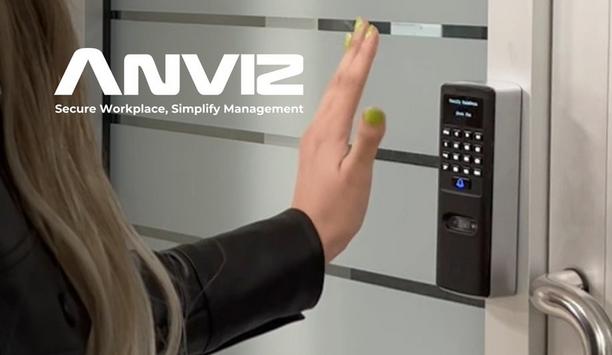
With the market constantly demanding security changes, Anviz has taken a bold step forward with the launch of the M7 Palm—a groundbreaking smart biometric access control terminal that harnesses the power of palm vein recognition technology. As the need for intelligence and security in building spaces continues to evolve, the demand for more compatible yet user-friendly access control solutions has never been stronger. The M7 Palm represents our answer to this challenge, offering a u...

The Middle East has recently expanded its real estate market as the region's economy grows and urbanization accelerates. This trend has led to an increasing demand for smart security, and the pace of digital intelligence change is gradually increasing. The security industry in the Middle East is rapidly growing, driven by the government's strong emphasis on national security and terrorism prevention. Centralized systems management Significant attention and investment have been directed towar...
Anviz Global Inc. videos


CrossChex Mobile App Guide for Access Control - M3 PRO
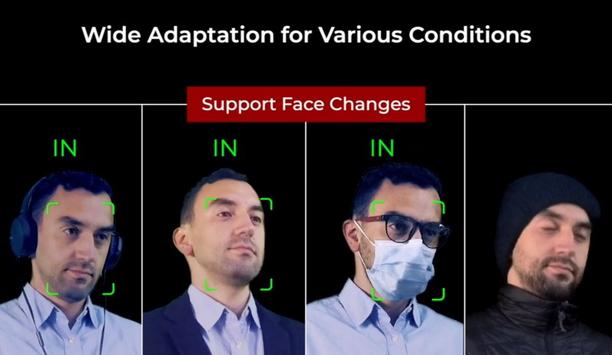
Anviz Releases FaceDeep 5 And FaceDeep 5 IRT With Touchless Face Recognition Terminal With Temperature Detection Features
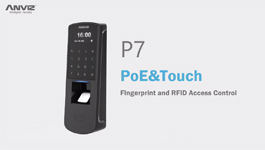
Anviz P7- PoE Touch Fingerprint And RFID Access Control Device


Anviz Global Inc.
32920 Alvarado-Niles Rd Ste 220, Union City, CA 94587
Toll-free: +1-855-ANVIZ4U (855-268-4948)
Email: info@anviz.com
Anviz Singapore
16 Collyer Quay #12-01
Income@Raffles Singapore 049318
Email: info@anviz.com