Video compression - Expert commentary

Daniel May of Consort reviews the integration of access control systems in healthcare settings, outlining the benefits and key considerations decision-makers must make throughout product specifications. From patient safety and traversal to the protection of sensitive data and pharmaceuticals, healthcare environments are faced with several operational challenges. And where security remains at the forefront of decision-making, modern access control systems may often hold the answers. Physi...

Security systems represent a significant investment, yet many organizations still only use a small percentage of their physical security systems’ capabilities. That’s before we even begin to consider the different ways that the likes of video, access control, and ANPR can add additional value beyond security by serving the needs of other business functions. Whether that be to obtain additional insight, streamline compliance, or drive operational efficiencies. Consumption ga...

Global transportation networks are becoming increasingly interconnected, with digital systems playing a crucial role in ensuring the smooth operation of ports and supply chains. However, this reliance on technology can also create vulnerabilities, as demonstrated by the recent ransomware attack on Nagoya Port. As Japan's busiest shipping hub, the port's operations were brought to a standstill for two days, highlighting the potential for significant disruption to national economies and supply cha...

One of the biggest security trends in the last two years has been the adoption of cloud-based services, spearheaded mainly by an increasing number of video surveillance-as-a-service (VSaaS) offerings. VSaaS market value According to MarketsandMarkets Research, the global VSaaS market value is expected to reach $6.2 billion by 2026. This growth is propelled by demand for remote access video services, less local hardware to maintain, new internet-enabled devices, and a lower total cost of owners...

In today’s market, efficient use of bandwidth and storage is an essential part of maintaining an effective video surveillance system. A video management system’s ability to provide analysis, real time event notifications and crucial image detail is only as a good as the speed and bandwidth of a surveillance network. In the physical security industry, H.264 is the video compression format used by most companies. Some companies also employ H.264 enhancements to compress areas of an im...

Video surveillance across the world is growing exponentially and its major application is in both public safety and law enforcement. Traditionally, it has been fixed surveillance where cameras provide live streams from fixed cameras situated in what is considered strategic locations. But they are limited in what they can see given by their very definition of being “fixed”. The future of video surveillance includes the deployment of more mobile video surveillance with the benefits it...

Cameras capable of recording video at 60 frames per second (fps) are becoming widely available in the security industry. It’s important to understand what 60-fps brings to the table for the security industry and how to leverage the technology for particular scenarios. Capturing video at 60-fps represents a unique application. System integrators typically use much lower frame rates, ranging from 7- to up to 30-fps. The potential for an incident might only represent 1%, or less, of the tim...

Our most popular articles in 2017 reflected changing trends in the U.S. security market, from deep learning to protection of mobile workers, from building automation to robotics. Again in 2017, the most read articles tended to be those that addressed timely and important issues in the security marketplace. In the world of digital publishing, it’s easy to know what content resonates with the market: Our readers tell us with their actions; i.e., where they click. Let&rsq...

The number of security cameras in use today is growing exponentially. At the same time, resolutions are getting higher and higher. These two factors are placing heavy demands on servers and storage equipment. Of course, the capacity of these systems is also increasing, but that alone does not make the equipment truly suitable for the most demanding applications - such as camera surveillance. A video stream is not comparable to 'normal' data, for which storage systems are usually designed. This a...

End users can add security, safety and business intelligence – while achieving a higher return on investment at their protected facilities – with live streaming video. It can be deployed effectively for IP video, network video recorders (NVRs) and body-worn cameras. The growing use of streaming video is resulting in vast technological developments and high-end software that promotes reduced bandwidth, high scalability and lower total cost of ownership (TCO). Here’s how users c...

When a news story of global interest begins to break, reporters across the world will scramble to find CCTV footage of the event, however isolated the incident may seem. Given the average of one camera installed for every twenty-nine people on the planet, it is perhaps unsurprising how often a persistent journalist, investigator or member of the public will actually be able to uncover footage. In fact, this number is estimated to be as high as one camera for every eleven people in mature market...

Everybody has been hooked on the discussions about Analog HD or IP systems, but shouldn’t we really be thinking about WiFi and 5G connectivity, removing the need for expensive cabling? Are wireless networks secure enough? What is the potential range? Even the basic question about whether or not the network is capable of transferring the huge (and growing) amount of data required for High Res Video, which will soon be quadrupled with the advent of 4K and higher resolutions. The Future Of...

What do users want from their surveillance system? Ask any security professional, and you will hear answers like these: sharp, high quality images; widespread camera coverage; real-time analytics; fast search and retrieval of video footage with minimal, if any, intervention from people in the information technology department. In other words, they want the tools they need to do their job. Delivering those tools requires an underlying technology infrastructure that includes a storage file system...

http://hubs.ly/H0800J20 Video surveillance systems have some unique requirements that set them apart from other types of enterprise applications. Determining where and how the cloud can support these systems depends on a set of five primary requirements: bandwidth, storage, cost, security and accessibility. This March Networks white paper outlines some of the key considerations mid- and large-sized enterprises need to examine before deciding to move their video surveillance...

The role of storage in video surveillance systems has evolved, from a means of preserving evidence to an evidence search tool, and soon as the main data repository for predictive analytics. Old analog systems are now being replaced with massive multi-camera IT systems. Necessary storage volumes keep growing as video resolutions increase. 1K, 4K, and 8K megapixel cameras require such gigantic storage space that network video recorders (NVRs) can hardly handle more than a handful of them...
Gaps in video from dropped video frames are a common problem. A web search on the phrase “dropped video frames” turns up links oriented towards gamers, YouTube videographers and even the world of video surveillance, discussing why frame drops happen and providing advice for coping with them. On Windows computers, video frame drops are a fact of life. Much of the advice can help reduce the number of frame drops, though never completely eliminate them. If you are an amateur filmmaker,...
![[Download] Choosing The Right Solution For Video Data Needs](https://www.securityinformed.com/img/news/612/hitachi-vms-editorial920.jpg)
Demand is increasing rapidly for more video, higher quality video, and increasing use of video for innovations like video analytics that provide enhanced security and operational intelligence. The growing demand is driving higher resolutions, larger camera counts, and longer retention times, which have all contributed to the growing importance and higher profile of data management and storage systems in the video surveillance industry. Customers need...

Through new technology, applications and analytics, video surveillance systems are helping to make hospitals a safer place Healthcare organizations face many challenges. Federal mandates associated with the Affordable Care Act (ACA), changing reimbursement models, an ageing population and competition are among the most concerning issues. Unfortunately, so are safety and security. However, video surveillance is helping. Through new technology, applications and analytics, v...

With the current state of economic uncertainty, there is a huge opportunity in 2017 for perimeter intrusion detection (PID) manufacturers to reach the commercial market. Petty crime rates, such as theft and vandalism, are on the rise and, as a result, small business owners are looking for new security options to enhance their current camera and alarm systems. Often thought of as complicated, expensive, and only for high-value applications, PID has a chance to change its perception in the years...

If one component within the infrastructure changes, other components may need to be changed too Developing a bill of materials for an infrastructure is not difficult if you have the right information. One word of caution: Infrastructures are unique. Each is individual, so don’t depend on drop-down menus; it simply will not work. If one component within the infrastructure changes, take the time to check and see if the rest of the components need to be changed, too. Let&...
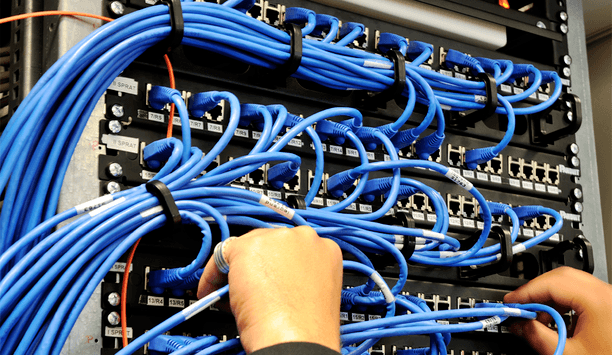
The use of multiple wires has advantages for network transmission Network connection to a remote device begins by considering the type of cable. In some cases, installed cable may already be present and available for reuse, or you may have the option to install a new cable. Let’s review the major types of cable used for most security applications, their advantages and disadvantages. Types Of Cables In general, there are four major types of cable. First is coaxial cab...

Camera apps provide flexibility that is unheard-of with traditional server-based processing and analytics solutions The ability to customize IP video surveillance cameras with third-party apps has been a game-changer in system design and implementation. Traditional analytics require streaming all video to a server or external processor for deep interpretation to detect a license plate, face, or other criteria in each video frame. Apps perform image processing within the camera...

Video surveillance plays a significant role in any comprehensive security plan, and the value derived from surveillance continues to expand Across the globe, organizations are challenged by a diverse risk landscape and a dynamic operational environment. The safety and security of people, assets and intellectual property are a No. 1 priority, and stakeholders look to gain continuous insight into what is happening at any given time. The ability to identify threats early and effi...

H.265 compression continued to be a popular topic from exhibitors on the second day of IFSEC Video beyond security, compression, HD over analog and integration were on the lips of several exhibitors at IFSEC International 2016. Strangely for a security exhibition, there were plenty of exhibitors talking about non-security applications on the second day of IFSEC International in London. For Axis Communications, Atul Rajput, Regional Director for Northern Europe, said the...

Though primarily developed for consumer electronic devices, the advantages ofH.265 compression technology make it ideal for the world of physical security Ever since digital video systems were introduced the race was on to develop compression technologies to reduce runaway bandwidth and storage consumption. We’ve watched the industry roll out MJPEG, MPEG and H.264 advanced compression standards in direct response to each innovation. With adoption of HDTV and 4K solutions...

According to Merit LILIN, the UAE will be a thriving new and potential market in 2016since Europe’s economy is still sluggish The global Chinese community recently welcomed the year of the Fire Monkey with a two-week celebration, concluding with the lantern festival at the end of February. According to Chinese astrology, we are now in the year of the Fire Monkey. What’s in store for businesses around the world? Global economic growth is predicted for the ye...

Determining how the cloud can best support your business depends on five factors: Bandwidth, storage, cost, security and accessibility Until about a decade ago, most enterprises used their video surveillance systems primarily to view live video or review security incidents after the fact. Today, many are taking advantage of intelligent video solutions to reduce losses from theft and fraud, monitor and improve customer service, track commercial conversion rates and performance...

No more confusion: high definition and megapixel resolution explained The growing popularity of IP-based video systems in the video surveillance market provides the ability to capture high-resolution images through megapixel video. The use of HDTV standards in the consumer video market is becoming more prevalent. The images produced by this new generation of surveillance cameras are often collectively referred to as high-definition (HD) or as megapixel images. Sin...

Understanding the complexities of the transform matrix In the concluding part of this 3-part review of the H.264 video compression standard, Kate Huber, Peter de Konink and Piet Nieuwets of Siqura discuss the transform, quantisation and entropy encoding - various block-encoding steps following motion estimation. Describing data in the transform matrix In contrast to the motion estimation step, the transform phase in the encoding process is relatively similar in H.2...

Image quality of objects in motion is greater with H.264 technology In the first part of this three part series, the authors described the H.264 video compression standard including its history. In part two, the authors discuss motion estimation, the phase during which H.264 really distinguishes itself from other MPEG standards. Differentiating from other MPEG standards: Adapting raster block sizes for more detailed images H.264 distinguishes itself from the other MPEG s...