Office security systems


HackerOne, a global pioneer in Continuous Threat Exposure Management (CTEM), announces the H1 Platform, an agentic AI platform designed to help enterprises eliminate exploitable risk with continuous discovery, validation, prioritisation and remediation at AI scale. The launch comes as the discovery-remediation gap becomes the defining security problem of the AI era. AI is now writing meaningful portions of enterprise code. Recent surveys indicate 73% of engineering teams now use AI coding tools...
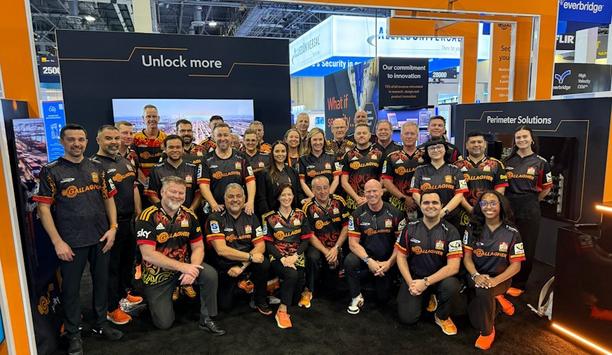
Gallagher Security has wrapped up another successful year at ISC West 2026, using the industry’s premier event to demonstrate the power of integration, debut innovation, and lead discussion on the future of security. Held March 23–27 at the Venetian Expo, ISC West saw strong engagement at Gallagher’s booth, which served as a hub for connection and conversation. Partners, End Users, and industry leaders spent time with the team exploring how a unified and interoperable security...
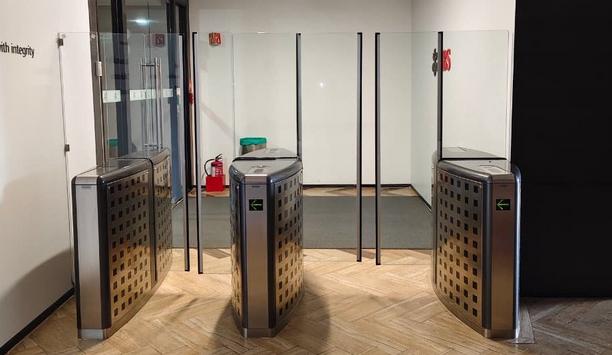
Gunnebo Entrance Control has partnered with UBS at multiple sites across India to deliver security solutions designed to support controlled and reliable movement within an upgraded commercial office environment. The UBS offices regularly experience busy periods, particularly at the start and end of the working day. The company needed a solution that could handle high volumes of people without causing queues or delays, while still meeting internal security requirements. Main entrance control sy...

Automatic Systems, an industry-pioneer manufacturer of secure pedestrian and vehicle entrance control access systems, is pleased to introduce its latest access control solutions. SlimLane EVO The SlimLane EVO next-generation optical turnstile combines a slender design with high-precision detection, a future‑proof electronic and software platform, and a cabinet that is customisable and easy to install. Its modular security architecture meets the needs of every application, from advanced tailgat...
COPS Monitoring and RelyOn today announced a strategic partnership that brings AI-powered mobile personal safety to the U.S. security company channel. The collaboration positions COPS as the first wholesale monitoring center to offer RelyOn's mobile safety platform nationwide. Partnership details The partnership expands professional monitoring beyond fixed locations, enabling security companies to deliver protection that follows their customers wherever life takes them. RelyOn's AI-driven...

Yubico, a modern cybersecurity company and creator of the most secure passkeys, announced the launch of YubiNation Partners, a new global channel program designed to unite a community of security experts. In the face of growing AI-driven cyber threats, the program enables partners to become trusted advisors and cultivate a safer digital world for their customers, making identities private and secure. YubiKeys As the average cost of a corporate security breach climbs to $4.4 million...
News

Flir, a Teledyne Technologies company, is introducing its FCB-Series AI thermal analytics camera for robust perimeter and site security. This innovative addition to Flir's mid-range infrared security line-up merges weather-resilient, lighting-agnostic thermal sensitivity of <20 mK with advanced deep-learning video analytics. The result? Accurate and dependable detection of people and vehicles, inside or outside, whatever the conditions. Preventing costly incidents Flir’s new FCB-Series AI thermal camera transforms chaotic and noisy environments into clear, reliable views that security teams can respond to effectively and efficiently. With various lens options, Nexus-enabled geolocation, and robust IP67 ingress protection rating, the sensor supports seamless installation at locations of all sizes. With the Flir FCB-Series AI thermal camera, businesses can detect, classify, and respond faster than ever, helping to prevent costly incidents and maintain safe and efficient operations. Supporting reliable identification Beneficial features of the Flir FCB-Series AI: Advanced DNN deep-learning video analytics support reliable identification and categorisation of individuals and vehicles with exceptional precision. With the help of these sophisticated onboard neural networks, businesses can distinguish between genuine threats and false alarms, such as moving trees, rain on the camera lens, or inquisitive small animals. When the wind shakes a construction tarpaulin or foliage swirls during a storm, the FCB-Series AI remains silent. Unnecessary alarms no longer trigger the VMS (video management system). Nexus-enabled target geolocation facilitates situational awareness and precise hand-off to a PTZ (Pan-Tilt-Zoom) camera for close-up tracking of an intruder around corners, along fences, or between buildings. Forming a cohesive security ecosystem, this workflow promotes real-time data sharing and interoperability among thermal cameras, visible cameras, radars, and analytics platforms. Subtle temperature differences Five lens options from 18° to 50° field of view (VGA or QVGA resolution) let businesses cover long fence lines, tight corners, and irregular building layouts without blind spots. Difficulty in matching security coverage to different sites becomes a challenge of the past. Industry pioneer thermal sensitivity of <20 mK reveals subtle temperature differences that standard thermal and visible cameras miss. Crystal-clear thermal means sharper, more detailed images across entrances, parking areas, and perimeter zones for faster and more accurate detection. A person cutting between parked trucks in a foggy yard or walking along a campus boundary lit by harsh floodlights, still appears as a crisp thermal profile. Wide application range Easy to install, the rugged IP67 camera is built to endure dust, heat, and driving rain, providing cost-effective, reliable thermal detection across a host of perimeter, small area, and remote site applications. These include: Small-to-medium commercial businesses: construction sites, warehouses, shopping malls. Campuses and industrial plants: education facilities, business parks, factories. Energy and remote installations: solar farms, utilities, storage yards. Effective security system As thefts and burglaries at businesses continue to rise, implementing an effective security system is crucial. However, many believe that adopting a new security system requires a complete overhaul that users have to start from scratch. Not so with Flir, which employs a smart multilayered strategy that enhances security incrementally through foundational systems, camera integration, intelligence adoption, and maintenance. This approach enables businesses to develop a system that adapts to their site while maintaining budgetary constraints and ensuring continuous security improvements. Continuous security improvements “If you suffer with false alarms from non-threat movement or weather, inconsistent detection in challenging conditions, or complex system integration and calibration needs, you will see more, know more, and protect more with our FCB-Series AI,” said Matt Strautman, Director of Global Business Development, Flir. “Advanced thermal imaging and AI analytics collaborate to deliver high-accuracy detection, even in adverse weather or lighting conditions. With flexible lens options, Nexus integration, and rugged all-weather design, our FCB-Series AI thermal camera is not only the smart choice for precise and reliable protection, it’s a cost-effective way to upgrade an outdated security system. It will integrate seamlessly with your current set-up and provide insights that expedite your decision making.”
ESTYA, a French electronic fire safety and security systems services provider, backed by Charterhouse Capital Partners and Chequers Capital, and led by Ludovic Goëta, announces the acquisition of SIMIE Group, a player in the French fire protection services sector. Founded in 2019, SIMIE has a turnover of more than €40 million, and offers a comprehensive suite of services, notably the installation and maintenance of fire protection materials. Other activities include fire detection, distribution, and training. Operating through 18 agencies across France and employing over 100 technicians, SIMIE has become one of France’s preeminent fire protection services specialists. Preeminent fire protection services ESTYA, founded in 1974, is a national pioneer in electronic fire safety and security systems, offering expertise across fire detection, smoke and gas control, and electrical protection. With 15 sites across France, the company has grown strongly in recent years to deliver over €120 million in annual revenue today, with SIMIE marking its eighth acquisition since 2021. ESTYA is majority-backed by Charterhouse, one of the longest-established private equity firms operating in Europe, which invested in the company in March 2025, in partnership with ESTYA’s management, and Chequers, who have been a shareholder since 2021. Contractual maintenance services The acquisition of SIMIE represents a transformational milestone for ESTYA, doubling its regional network in France. It also enables the company to strongly reinforce its presence in the fire protection market, a highly complementary extension of its existing expertise, and further enhances ESTYA’s focus on contractual maintenance services. The combined entity, which will have close to 1,000 employees and generate revenue north of €160 million, will be well positioned to pursue further organic growth and M&A opportunities, and to deliver fully integrated, high quality fire safety solutions to customers across France. Electronic fire safety systems Ludovic Goëta, Founder of ESTYA, commented: “We are delighted to welcome SIMIE Group and its management team to ESTYA. This partnership is fully aligned with our strategy of expanding into adjacent fire safety markets while maintaining our core DNA in fire detection and technical excellence.” “SIMIE’s capabilities in fire protection and extinguishers will perfectly complement ESTYA’s strength in electronic fire safety systems, enabling us to offer customers a complete, end-to-end fire safety solution. Together, and through our strengthened network, we will continue to expand our national presence to bring even greater access and services to our customers, and to set new standards of quality and service in the French market.” Impressive national network Alexandre Danjou, CEO of SIMIE Group, added: “Joining ESTYA is a natural next step for SIMIE. From the outset, we were impressed by the cultural alignment, operational rigour, and shared commitment to technical quality that define ESTYA. Partnering with a premium group focused on fire detection and maintenance will allow us to accelerate our growth while preserving the entrepreneurial spirit that has driven SIMIE’s success. Together, we will deliver even greater value to our clients and create new opportunities for our teams across France.” Cédric Barthélemy, Partner at Charterhouse Capital Partners, said: “This acquisition marks a transformational milestone in ESTYA’s journey. SIMIE is an exceptional business with a high-quality offering and an impressive national network which are both complementary to ESTYA. We are proud to support Ludovic and his team as they continue to accelerate ESTYA’s growth to become the leading integrated fire safety services provider in France.”
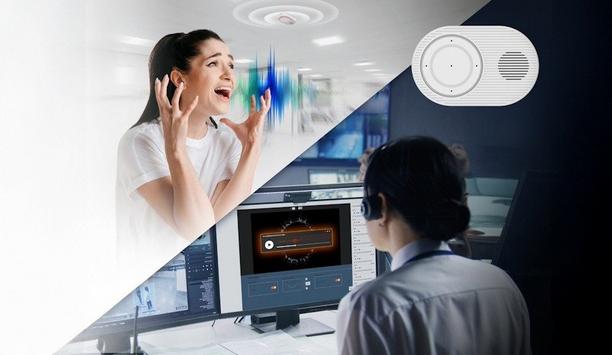
Hanwha Vision, a pioneer in security and surveillance solutions, introduces the Audio Beacon, SPS-A100M, an advanced AI-powered audio surveillance solution that ensures users can be alerted and respond rapidly to critical situations. Equipped with a powerful 90dB speaker, five integrated microphones, and intelligent sound classification, the Audio Beacon is engineered to enhance situational awareness and real-time communication. Decision-making and direct communication LED ring provides a visible and reassuring confirmation that an alert has been triggered From schools, offices, and hospitals to restricted areas where cameras may not be an option, the Audio Beacon enables immediate awareness through high-volume alerts and full-duplex two-way audio, supporting rapid decision-making and direct communication with on-site individuals. As well as functioning as a deterrent, the LED ring provides a visible and reassuring confirmation that an alert has been triggered, signaling that the situation has been detected and that assistance is on the way. AI-based sound classification The Audio Beacon incorporates powerful AI-based sound classification to elevate real-time situational awareness. It can detect specific predefined sounds - such as screams or breaking glass - using deep-learning AI. In addition, direction-finding algorithms support users to detect the direction of events. These capabilities enhance situational awareness in complex environments, helping to quickly identify and respond to critical events. Interactive layer to security infrastructure High-output speaker and noise-reducing microphone system enables effective touch even in loud environments A clear, high-output speaker and noise-reducing microphone system enables effective communication even in loud environments. Whether used to broadcast warnings, speak directly to intruders, or respond during emergencies, the SPS-A100M adds an intelligent, interactive layer to security infrastructure. Furthermore, the LED ring enhances visibility of alerts in any lighting condition, to provide staff and on-site individuals with a clear visual signal in real time. The feature has customizable colors and patterns to signal different types of events. Full integration with key VMS platforms The Audio Beacon supports full integration with key VMS platforms like Genetec, Milestone, and Wisenet WAVE, and communicates across smart building systems using the MQTT protocol. It supports Boolean event logic and delivers alerts via FTP, email, HTTP/S, and more. With FIPS 140-3 Level 3 certification, secure boot, encrypted firmware, and a tamper-detection switch, the device ensures maximum data protection and reliability. Key features of the Audio Beacon 90dB speaker for broadcast, deterrence, and alerts Five noise-reducing microphones for clear voice capture Full-duplex two-way audio communication Pre-event audio recording for incident verification High-visibility LED indicator for event signaling and deterrence AI-powered sound classification for screams and glass breaks Direction-finding with time difference of arrival (TDoA) and directional algorithms Device alignment calibration via Wisenet installation Real-time notifications via speaker, alarm, FTP, email, HTTP/S, TCP, and MQTT Supports Boolean logic for complex event triggers Compatible with Genetec, Milestone, and Wisenet WAVE SCADA and MQTT protocol support for industrial automation Two digital I/O ports for flexible event input/output setup FIPS 140-3 Level 3 certified with secure boot and encrypted firmware Built-in case tamper switch for physical security Easy USB-based installation

Evolution, the pioneering employee-owned electronic security and life safety systems integrator, has opened a new office in Leeds, to better serve and support the needs of its clients across the north of England. The new office, located in Priestley House, Elland Road – with quick and easy access to the M62 corridor, will be home to a new account management, service and support base to enable the business to meet and exceed ever-changing client needs with its innovative and technical integrated service capabilities. Diverse security needs of customers The new office in Leeds follows Evolution's opening of its new flagship UK office in Marlow Nick Wardle, Area Sales Manager at Evolution, who will serve as Evolution’s dedicated lead across the north of England, says the new office provides a strategic hub to serve customers throughout the region: "Our new facility in Leeds represents a significant step forward in our continued and rapid growth across the UK." He adds, "Strategically located along the M62 corridor, the new office gives us direct access to each of the key cities and towns across the North – from Liverpool, Manchester and Newcastle to Sheffield, Hull and beyond." Nick Wardle continues, "It also allows our dedicated local team to provider faster, on-the-ground support, as well as delivering tailored support and solutions to the meet the diverse security needs of our customers across the region." Evolution's opening in the UK Nick Wardle further adds: "The North East, North West, Yorkshire and the Humber, represent a hugely important market for us, and this investment reinforces our commitment to providing exceptional service to both existing and new clients where they need it." The new office in Leeds follows Evolution's opening of its new flagship UK headquarters in Marlow earlier this year and adds to its growing portfolio of UK locations, which also includes offices in Belfast, Birmingham, and Edinburgh.
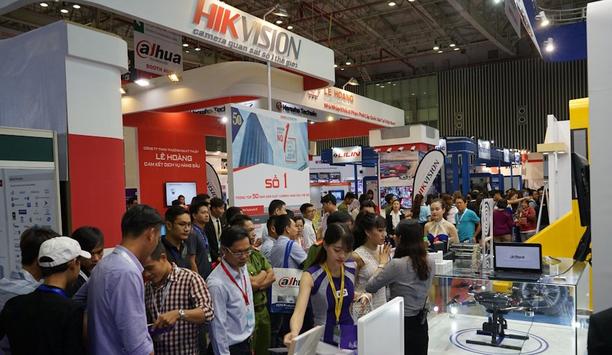
Against the backdrop of Vietnam’s expanding security, fire safety, and smart building sectors, Secutech Vietnam will return to the Saigon Exhibition and Convention Center (SECC) in Ho Chi Minh City from 14 – 16 August 2025. The 18th edition will span 13,000 sqm, hosting 480 exhibiting brands, presenting the latest solutions driving safer cities and smarter infrastructure. Held with concurrent events Fire & Safety Vietnam and SMABuilding, Secutech Vietnam will spotlight technologies advancing safety, efficiency, and resilience across the country’s urban and industrial sectors. Increasing Demand Driving this demand is a 7.3% year-on-year increase in Foreign Direct Investment (FDI) in Vietnam Driving this demand is a 7.3% year-on-year increase in Foreign Direct Investment (FDI) in Vietnam, reaching over USD 6.7 billion in the first four months of 2025. This influx creates significant opportunities for companies offering security systems, fire protection equipment, and smart building technologies. In addition, the country’s rapid infrastructure development, and its construction sector’s integration of advanced security solutions, further heightens the need for enhanced security measures. Secutech Vietnam provides a targeted networking environment, connecting exhibitors directly with investors, developers, and project managers seeking innovative solutions. Factors driving market growth Ms Regina Tsai, General Manager of Messe Frankfurt (HK) Ltd – Taiwan Branch, elaborated on the factors driving market growth: “The demand for safety and security in Vietnam is on the rise, fueled by market expansion, urbanisation, and government initiatives such as smart city investments and stricter safety regulations.” “These efforts are bolstering urban resilience and creating a significant need for advanced solutions. Testament to the market’s potential, the healthy showing of exhibitors at Secutech Vietnam 2025 are featuring a wide array of technologies, from surveillance cameras, to synergy voice alarm systems, to advanced fire suppression systems.” “This platform serves as a catalyst for international suppliers to connect with Vietnamese businesses eager to enhance their capabilities.” More to showcase at the fair In addition to traditional security systems, the fair will showcase AI-powered surveillance tools, IoT-enabled devices, ICT infrastructure, and technologies for smart city development, industrial automation, and smart building management. Other featured technologies include cybersecurity, access control, smart home automation, and advanced fire prevention systems. Featured pavilions and new zones spotlight industry development Providing suppliers with opportunities to connect with local distributors, integrators, and other market players, the fair’s numerous pavilions and zones reflect global interest in Vietnam’s growing security market. The platform will feature prominent international pavilions from Korea, Japan, and Singapore, as well as the MIT (Made-in-Taiwan) Innovation Pavilion. Complementing these, the fair will introduce dedicated solution zones focused on AI Video Analytics and Facility Access Control – areas experiencing rapid demand driven by the need to safeguard critical infrastructure and optimize operational efficiency. AI Video Analytics: featuring intelligent video surveillance solutions with automated threat detection and real-time alerts to improve situational awareness and response efficiency. Facility Access Control: presenting advanced visitor management systems that secure industrial and critical infrastructure by regulating entry and monitoring personnel movement. Fire safety will also take a prominent role, with two dedicated areas: the Occupational Safety and PPE Zone and the Disaster Prevention Zone, emphasising Vietnam’s commitment to safety in both industrial and urban settings. New fire safety law fuels growth for concurrent shows Vietnam is prioritising fire safety, as demonstrated by the 2024 Law on Fire Prevention, Fighting, and Rescue, mandating stricter requirements for mixed-use buildings and driving investments in the most advanced systems. Set to take effect this July, this law will create significant opportunities for exhibitors at Fire & Safety Vietnam, supported by the Fire and Rescue Police Department, and SMABuilding, both held concurrently with Secutech Vietnam. Conclusion The convergence of these shows allows visitors to efficiently source a wider range of products and services, from fire detection and suppression to integrated security and smart building technologies, all under one roof. The platform addresses the interconnected needs of Vietnam's security, fire safety, and smart building sectors, bringing the market’s newest inventions directly to industry professionals and decision-makers.

Vismo has optimized its mass notification offering to strengthen customers’ employee wellbeing anywhere in the world during an emergency or emerging threat, by including it on the Vismo Monitor App. For the first time, employers can now see their employees' real-time locations on the app instead of a desktop computer, and immediately send mass notifications to staff affected by, or under potential threat from, a crisis, via the app. “Having all the functionality of our mass notification on the app saves crucial time and gives security teams greater flexibility by not having to be in a static, fixed place of work in front of a computer screen,” says Vismo Global Sales Director Colin Dale. Any mobile device The app works with any mobile device, and the Vismo platform supporting satellite phones and trackers, to give a faster response to any risk to wellbeing and to business continuity. “We achieved this by integrating the app and with our secure portal so that the app mirrors the full functionality of the portal,” says Dale. “That saves time for employers’ security operations. No longer do they have to switch platforms to run mass notifications or indeed any other function of the app. They can do everything on a smartphone.” Robust network connectivity “One unique aspect of our tier one service is our ability to use more than 600 direct roaming agreements globally in a permanent roaming solution where needed,” Dale adds. “They give employer organizations very powerful roaming connectivity, with fallbacks and optional eSIMs, to ensure the most robust network connectivity possible for all two-way mass notification actions.” Multi-channel messaging – and more Vismo’s mass notification makes use of multi-channel messaging between security teams and app users Vismo’s mass notification makes use of multi-channel messaging between security teams and app users. It is real-time communication with an entire workforce, selected groups of staff or one individual, regardless of their location. Additionally, it can be integrated with - and customized via - employer organizations’ own infrastructure including HR systems and security protocols. Intelligence feeds Vismo utilizes intelligence feeds 24/7 to see threats as they are reported by specialist intelligence gathering operations, and other sources, including emergency services, individuals and news and other organizations. Dale comments, “Mass notification is a fundamental part of safeguarding staff in any situation anywhere, whether in at-risk areas and or wherever the unexpected can suddenly happen.” “Immediately they learn of a threat, employer organizations’ security staff, or outsourced security team, can take immediate steps to help. Step number one is to use mass notification to give an urgent warning about what is happening or about to happen, and then give more details, with advice on how to be safe as events unfold.” Emergency services Dale adds, “Step two includes optional phone conversations between those under duress or at risk, and security staff, to gain further information including the proximity of the app users to what is unfolding and more detail about it.” “Step three involves liaison with emergency services and private security companies, and, ultimately, evacuation, if required.”

Expert commentary

The average business owner or investor has some kind of security precaution in place, especially in the after-hours when there are fewer deterrents to inhibit criminal activity. Security guards, video surveillance systems, motion sensor lights, or even just fake cameras placed around the property are some of the common options people choose. Future of overnight security Smart business owners are starting to realize, however, that some of these traditional security measures are becoming antiquated and no longer cutting. The now and future of overnight security is in remote guarding. Pioneered by companies like Los Angeles-based Elite Interactive Solutions, which was founded back in 2007, remote guarding is revolutionizing the overnight security business. Minimizing criminal activity Remote guarding is fast becoming the most popular choice among commercial end-user property owners Remote guarding utilizes a combination of cutting-edge technology, “digital guards,” highly trained security agents, and local law enforcement if and when necessary to minimize the potential of criminal activity. For those adequately enlightened to its overwhelmingly impressive crime prevention capabilities, remote guarding is fast becoming the most popular choice among commercial end-user property owners to secure and protect their investments. What Is Remote Guarding? Remote guarding is a revolutionary concept and increasing trend in security systems that utilize a combination of methods to effectively analyze potential threats to property. Cameras and/or other monitoring devices running highly advanced algorithmic software are installed in strategic areas or vulnerable places onsite and remotely located security agents are immediately notified of any activity within a designated perimeter of the property. A blend of AI, cybersecurity, and video analytics When properly deployed by an expert provider, the technology stack includes a proprietary blend of video analytics, artificial intelligence, cybersecurity, and more. Done right, “noise” is effectively filtered out, allowing agents to act on legitimate alerts and achieve zero false alarms communicated to first responders. Today, there are a lot of terms and descriptions tossed around about remote guarding, remote video, virtual guarding, etc., but those attributes must be present to represent the true definition of the offering and its many virtues. Realtime situational awareness Many systems have a two-way speaker that allows the security agent to give a verbal warning When specially trained security agents are alerted to trespassers, possible intruders, or other suspicious activity, they analyze the situation in real time and determine the necessary level of action. Many systems have a two-way speaker that allows the security agent to give a verbal warning, known as a voice-down, to the individual(s) that they are being watched. Most perpetrators, often believing the response is emanating directly from security personnel on the property itself rather than from a remote command center, flee immediately. However, if the threat persists, the security agent enlists local law enforcement to get on the scene. Customized remote guarding When properly deployed, remote guarding systems are also customized to specific properties. A team of consultants visits the client’s property to evaluate its vulnerabilities and where to best place cameras and/or other monitoring devices for system efficacy. Traditional Security Shortfalls According to Keith Bushey, a retired commander for the Los Angeles Police Department, there is much frustration between law enforcement officers and potential victims of crime due to the historically unreliable performance of traditional burglar alarm systems and central monitoring stations. He states about 90% of security-related calls are false alarms, a problem that has been well-documented through the years. Onsite challenges When a legitimate emergency does occur, the perpetrators have often already done their damage When a legitimate emergency does occur, the perpetrators have often already done their damage and/or escaped by the time law enforcement arrives. Onsite security guards are not the remedy either as they bring their own set of issues and challenges. Unexpected costs Traditional security systems can also have unexpected costs. The cost is not only in the security guards’ paycheck or the cost of the equipment itself. The cost comes when an actual incident occurs. In worst-case scenarios, the security guard(s) are injured, the business suffers inventory loss, and/or damage is sustained to the property. The medical and other costs for the security guard(s), the loss of inventory, property damage, deployment of law enforcement resources, and possible fallout of legal expenses all add up. Even in the best-case scenario, false alarm expenses incur if law enforcement is dispatched. These, among many others, are some of the primary issues that remote guarding resoundingly answers as a superior alternative. A Bounty of Benefits Remote guarding systems have been proven to cut costs and be more effective than traditional security systems. Even though the monthly monitoring costs of remote guarding are significantly higher than traditional intrusion detection system monitoring, the much higher effectiveness in crime reduction, elimination of false alarms, and augmenting or replacement of manned guards result in a substantially higher return on investment (ROI) to the end user. Easy tracking of threats The security cameras already have their image captured on record, making them easier to track down For example, case studies have demonstrated reduced security costs for clients by 60%, on average. These reductions have come from the costs of security staff, inventory, or property loss, plus saving money on insurance premiums and deductibles. The nature of remote guarding reduces the risk and costs of false alarms, with professional security agents able to determine an actual threat before law enforcement is called. In a rare instance when a perpetrator escapes before law enforcement arrives or can detain the individual(s), the security cameras already have their image captured on record, making them easier to track down and identify. Reduction of false alarms The significant reduction in false alarms is greatly appreciated by law enforcement, as it allows them to focus on real emergencies or crises. Better relationships are also developed between clients and law enforcement, as remote guarding systems are highly reliable in providing accurate and real-time information to officers as they approach the scene. In short, it assists law enforcement in doing their job more effectively, as well as more safely thanks to having eyewitness information before engaging in an active crime scene. Partnership When you combine the decreased cost with the increased efficiency and success rate, it is easy to see why many commercial end-user property owners across the country are making the shift to remote guarding. It’s also an outstanding opportunity for professional security dealers and integrators to partner with a remote guarding services provider to bring a superior solution to their end customers and pick up a recurring monthly revenue stream in the process.

It’s no secret that the data security sector is constantly changing. It has an annual CGR of about 12.3%. Future trends in data security Much of this has to do with the rise of cybercrime in recent years, with reports showing that cyberattacks happen as often as every 39 seconds. To combat the growing rate of cybercrime, data security has been on the rise. As we journey further into this era, it becomes evident that a spectrum of significant trends is molding the future of data security. This exploration delves into a selection of these trends, unraveling their importance and the potential implications they carry 1. AI security tools will increase Artificial Intelligence is also being used in the development of smart attacks and malware The introduction of Artificial Intelligence in the data security industry brought significant changes, especially in cybersecurity. AI has been the golden standard for face detection, natural language processing, automated threat detection, and automated security systems. Additionally, Artificial Intelligence is also being used in the development of smart attacks and malware, bypassing even the latest security protocols in data control. And as time progresses, AI security tools will flourish and dominate the scene. Let’s take a more in-depth look at three of the top AI security tools. Targeted attack analysis tool Manufacturers utilize targeted attack analysis tools to uncover targeted and stealthy attacks. Artificial Intelligence can be applied to the program’s capabilities, processes, and knowledge. For instance, Symantec launched this tool to combat the Dragon 2.0 attack in 2022. The phishing attack reprimanded multiple energy companies while trying to gain access to their operational networks. Targeted Attack Analysis Tools can analyze incidents and look for similarities from previous situations. They also help detect suspicious activities and collect all the necessary data to determine whether a specific action is malicious. Intercept X tool Results from the Intercept X Tool feature high accuracy and a low false positive rate Sophos, a British security hardware and software company, launched the Intercept X Tool. It engages a neural network that records and analyses data like a human brain. Sophos’ Intercept X Tool can extract features from a single file and perform a deep analysis. It detects malicious activities within 20 milliseconds. Plus, it’s also trained to work on bi-directional sharing and real-world feedback of threat intelligence. Results from the Intercept X Tool feature high accuracy and a low false positive rate. IBM Watson Technology IBM’s QRadar Advisor uses IBM Watson Technology, a unique AI tool for fighting cyber attacks. Artificial Intelligence can auto-investigate activities and indicators for potential exploitation or compromise. With cognitive reasoning, IBM Watson Technology can present critical insights to accelerate the response cycle. Security analysts can utilize this technology to search for threat incidents, reducing the risk of letting them fly under the radar. 2. Blockchain as a security solution It guarantees no points of failure or hackable entrances that can expose datasets inside the system Blockchain is a type of distributed ledger technology (DLT) that aims to establish trust within an untrusting ecosystem. Today it’s one of the most robust cybersecurity technologies in the industry. Blockchain utilizes a decentralized ledger system, but your team members can still gain access to transparent information in the cloud. Members can also record, pass along, and view necessary transactional data in the blockchain. The entire blockchain process maintains data integrity within the system while establishing trust among team members. It guarantees no points of failure or hackable entrances that can expose datasets inside the system. Cybersecurity, biometrics Cybersecurity primarily benefits from these features because blockchain can create a secure and robust wall between data and hackers. On top of that, blockchain ledgers can include biometrics like fingerprints and retina scans. These prevent hackers from accessing any private data. Because blockchain is decentralized, it also limits hackable data. Together with the technology’s record-keeping system, each node is provided insight into data manipulation exposing real-time cybercrime attempts. 3. Increased and widened access control Without access control, expect your company to be open to security issues, including theft, data loss, and breach of data Access control is critical in data security. More than a valuable security tool, business leaders can use access control to regulate people accessing any given resource. A company with an IT security setting can control who has the liberty to edit certain files. One of the primary goals of access control is to minimize threats or attacks to organizations and businesses to keep people and data secure. Without access control, expect your company to be open to security issues, including theft, data loss, and breach of data protection laws. Benefits The benefits of increased and widened access control include: Identifying who can access and control your data at specific time intervals. Protecting data from overwriting, accidental deletion, and malicious intent. User permissions that can be readily changed. Compliance and regulation with data privacy laws. Central management of access to data through a reporting portal or a dashboard. Multi-factor authentication Access control comes in various types and systems, so it’s critical to know the features of what you’re looking for. The most common type is multi-factor authentication or MFA. It involves multiple steps before logging in, requiring the user to enter other relevant information besides the password. Some other examples of information include biometrics, answering a security question, or entering a code sent to the user’s email address. Two-factor authentication, role-based access control Two-factor authentication further prevents unauthorized entries that can result in unnecessary data possession Two-factor authentication further prevents unauthorized entries that can result in unnecessary data possession. Another type of access control is role-based access control. In this setup, only one individual can set up access guidelines and grant permissions to specific team members within an organization. 4. Greater use of the zero-trust security model The zero-trust security model is a framework that requires every user within and outside the organization to undergo authentication, authorization, and validation. These are all essential to ensure proper security configuration before access is granted to the company’s applications and data. A zero-trust model assumes that anyone can cause data breaches and that a traditional network edge is not taken into effect. Moreover, it addresses the following modern-day challenges: Hybrid cloud environments. Security of remote workers. Ransomware threats. This framework utilizes the combination of multiple advanced technologies, including: A risk-based multi-factor authentication. Endpoint security. Identity protection. Cloud workload technology. The zero-trust model uses all these innovative tools for system identification, user verification, access consideration, and system security maintenance. Constant validation and monitoring Enforcing strict policies and compliance with data privacy laws are also essential Additionally, it also considers data encryption, email security, and asset verification before establishing connections with applications. The architecture of a zero-trust framework requires constant validation and monitoring of the users and the devices they are using. Enforcing strict policies and compliance with data privacy laws are also essential. More importantly, the zero trust architecture requires all organizations to be aware of all their available services and accounts to gain complete control of data handling and manipulation. 5. Increased privacy regulations Privacy regulations and policies guide organizations in proper data control, handling, and security. These policies guide organizations in proper data control, handling, and security. As a responsible business owner, you must comply with these regulations to avoid legal issues. With cybersecurity attacks becoming common, expect increased and stricter privacy regulations to be released in the next few years. While current policies are still taken into effect, various modifications and adjustments will occur to compete with the rising numbers of data breaches, thefts, data loss, and more. California Privacy Rights Act (CPRA) Currently, the California Privacy Rights Act (CPRA) is the most comprehensive legislation on state data privacy. It only started to take effect on January 1, 2023. The CPRA introduces the following principles: Broad individual consumer rights. Significant duties of people who need to collect sensitive and personal information. Additional definitions of data privacy and security. An individual’s duties include releasing information about data collection to concerned data subjects and proper access, correction, and deletion of information. Final thoughts 2023 is a big year for data security. Trends such as increased adoption of zero-trust policies, a greater reliance on AI security tools, and the implementation of blockchain as a security solution are all things we expect to see shortly. Staying up-to-date with these trends is important for keeping your business current and ensuring that you’re adhering to new and changing regulations. Doing so can give you an edge over the competition and keep you out of legal hot water.

Security systems represent a significant investment, yet many organizations still only use a small percentage of their physical security systems’ capabilities. That’s before we even begin to consider the different ways that the likes of video, access control, and ANPR can add additional value beyond security by serving the needs of other business functions. Whether that be to obtain additional insight, streamline compliance, or drive operational efficiencies. Consumption gap When users aren’t tapping into the full power of the solution they bought, they aren’t realizing their full return on investment. This creates a consumption gap. It’s a situation that has the potential to go in one of two very different directions. A misunderstanding of a system, its capabilities and functionality can quickly result in user dissatisfaction Left unchecked a consumption gap can create frustration for system integrators, manufacturers, and end users alike. A misunderstanding of a system, its capabilities and functionality can quickly result in user dissatisfaction. Leading to a greater likelihood that they’ll look to change or focus investment into overlapping and likely competing solutions. Customers’ security goals Addressed appropriately it can help manufacturers, system integrators, and end users to build trusted partnerships in which everybody wins. Understandably, systems integrators are primarily focused on installation—delivering reliable solutions that meet customers’ security goals to ensure their long-term success. However, engagement can go beyond deployment. Closing the consumption gap can be a strategic way to differentiate yourself from competitors. The deeper you understand your customer’s business, the better advice you’re able to offer—and the stronger the partnership you form. Why do consumption gaps exist? For customers, finding the time to learn multiple capabilities of a security system can be time-consuming. Often, taking advantage of new tools and solutions takes a backseat to the urgency of daily tasks. Often, taking advantage of new tools and solutions takes a backseat to the urgency of daily tasks There are many reasons why customers may not be taking full advantage of the features available to them in their security platform. They may feel overwhelmed by a steep learning curve after deployment and might delay diving into the additional system features. Sometimes, there might be a lack of awareness of the technology’s full capabilities, and despite a willingness to learn, there are few options for training. Often, it can simply be they are not aware of the benefits of their system or are too busy with day-to-day and urgent tasks to learn other features. Bridging the consumption gap Systems are built to deal with a wide variety of use cases and broaden market appeal, but the goal isn’t to get everyone to use all the features of every product. You want to guide your customers toward the features and functionality that best meet their needs. This could entail reducing the friction they experience in their day-to-day operations, solving unique issues related to their business, or addressing their most important challenges. Having these conversations with your customers deepens your relationship and can organically open up new revenue streams. Continuous engagement allows you to recommend other relevant products or services that they may find helpful. Customized training plan Customers can learn at their own pace and gradually expand their understanding of their system Furthermore, customers are often not able to implement all features at once. You can help by proposing a plan to gradually evolve systems and processes over time. This could include a customized training plan to get the most value from their investment. Some manufacturers are also now providing learning management tools that system integrators can pass on to their customers. Customers can learn at their own pace and gradually expand their understanding of their system in accordance with their bandwidth. This allows them to get more out of their system. Simplifying deployment With the right software partners, systems integrators can focus on solving customer problems, not reactively troubleshooting issues. Look for manufacturers who offer good support systems for integrators. This includes not only quality technical support but also configuration and training services you can build on. Look for partners that offer tools and consultation services you can use to complement your value-added services, either to spend less time on the basics or for specialized expertise on complex projects. Beyond support and services, one telling sign is the configuration interface and tools that you as an integrator will primarily interact with. Ask yourself whether the manufacturer invests in their back-end tools and their primary user interface. Is there a noticeable difference between these two interfaces in terms of look and feel? Does one feel more dated? Widening consumption gap The harder it is to implement upgrades, the more reticent customers are to make the changes If the end user interface is easy to use but changes on the back end are difficult, the resulting friction can contribute to the widening consumption gap. It can become too time-consuming or difficult to upgrade or make changes to the system. The harder it is to implement upgrades, the more reticent customers are to make the changes. Configuration should be painless. If the system has a solid graphical user interface, you’ll be able to interact with the software in a fluid and intuitive way. When the system is intuitive for both you and your customers, you spend less time on setup and training. You can invest more attention in value-added activities. Conclusion A consumption gap could be a sign that technological innovation is outpacing people's ability to implement them in their day-to-day lives. You can work with your customers to simplify the adoption of the innovations so they can more easily implement them and realize the full value of their investment. By reviewing opportunities to bridge the consumption gap for your customers, you increase the likelihood of growing and renewing your system and service contracts. You also build relationships as a trusted partner. Customers will turn to you when looking to expand their security system and proactively solve new and incipient problems.
Security beat
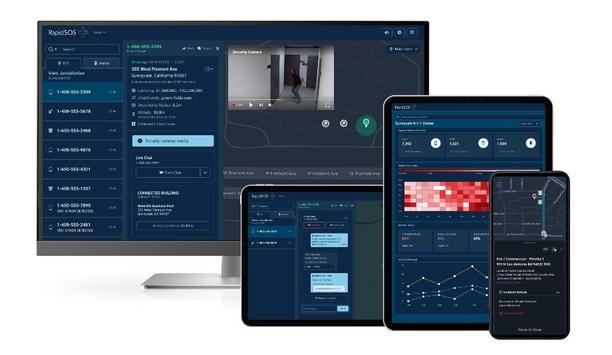
In an emergency, information is pivotal. More information provides better understanding of an emergency and empowers potentially life-saving decision-making. Emergency response teams depend on information to guide their efforts and to deliver targeted assistance. On the front lines of emergency response are 911 and field responder agencies, which must direct reaction to life-or-death situations rapidly and efficiently. Historically, 911 operators had to respond based on very little information, perhaps just a voice on the phone or a location on their screen. Providing critical information Today, there are literally millions of information sources available, ranging from connected buildings to vehicle telematics to live video streams to health information from wearable devices. In fact, there are 540 million connected devices, any one of which could provide critical information in an emergency. But how can those information sources be leveraged to improve emergency response? That’s the mission and value proposition of RapidSOS, an ‘intelligent safety platform’ company that connects 911 operators with the vast universe of information available to promote better and faster emergency response. Highly sophisticated operation The platform is integrated into every major public safety software system and first responder agency “RapidSOS fuses human and artificial intelligence to put critical information from any connected device directly into the existing systems and operating procedures of first responders across the United States,” says Michael Martin, CEO of RapidSOS. RapidSOS is widely used by first responders. The platform is integrated into every major public safety software system and first responder agency. There are more than 4,600 software integrations that serve more than 21,000 first responders and 911 agencies. In 2023, RapidSOS supported the lifesaving work of public safety across 171 million emergencies with 3.3 billion data payloads. The system is adaptable and configurable to support any agency, from a highly sophisticated operation in New York City to a local sheriff running their own 911 center. Intelligent analytics and reporting RapidSOS Unite is the latest evolution of the product, a single solution that includes AI automation, rich content pathways, redundant connection to caller phones, and access to millions of connected devices. In an emergency, Unite intelligently fuses data from among millions of sensor feeds into a unified picture of an incident, allowing public safety officials to view real-time location, health profile, telematics, alarm data, and more. RapidSOS Unite is the latest evolution of the product, a single solution that includes AI automation RapidSOS offers core modules that handle call, text, video, sensor, mapping, and administration tools, and that provide partner data from connected devices. Additional modules provide enhanced geographic information system (GIS) data, and automated translation and transcription. There is also a single sign-on (SSO) upgrade, intelligent analytics and reporting, and seamless integration into field responder applications. Field responder applications Consider how an emergency might unfold and how RapidSOS can help. In a car accident, data from a modern automobile telematics system can alert a 911 operator of the accident as it happens. Data from a passenger’s wearable device might provide information about their health and condition. A nearby video or traffic camera could fill in details of how the accident occurred. Useful information in an emergency might come from any one of thousands of sources, including public safety data, sensor feeds, enterprise security systems, smart phones, etc. In a train derailment, electronic access to the cargo manifest can identify which train cars contain hazardous materials and how to manage the specific type of hazmat. This information could save valuable time when responding to incidents like the Feb. 3, 2023, Norfolk Southern train derailment involving 38 cars in East Palestine, Ohio. Consider how an emergency might unfold and how RapidSOS can help Institutional security partners Norfolk Southern is one of the companies that provides information to first responders using RapidSOS; in effect, the company provides a direct digital link from their rail security operations to any first responder in the United States. Amazon’s global operations centers also interface with RapidSOS to provide critical information to first responders. Partnering with corporate security helps to better support the flow of data from institutional security partners and their solutions. Information can transform and guide emergency responses. For example, in a structure fire, real-time sensor feeds throughout a building can help 911 and first responders understand how the fire is progressing. Real-time security camera footage Having access to live feeds can save lives as 911 provides pre-arrival instructions such as CPR Leading the way to providing video feeds from private camera systems to 911 operators is an agreement between Eagle Eye Networks and RapidSOS, which was announced in April 2024. The agreement allows an enterprise to opt-in to share real-time security camera footage from an Eagle Eye video stream during a live 911 call. Having access to live feeds can save lives as 911 provides pre-arrival instructions such as CPR. “Security cameras are crucial in many locations, including schools, but previously those cameras could not be accessed by 911 during an emergency but were only used for investigation after an incident,” says Martin. Improving fire and life safety systems RapidSOS is also integrated with Honeywell’s Connected Life Safety Services (CLSS) system, a cloud platform that combines software and hardware to improve fire and life safety systems. Technology integrations between the two companies further modernize and digitize the public safety communications process to provide faster, more accurate communications with emergency centers (i.e., 911 agencies). RapidSOS technology securely transmits detailed data about an emergency CLSS provides real-time visibility and connectivity to help systems integrators and facilities managers make informed decisions and manage fire systems more efficiently. When combined with Honeywell's solutions, RapidSOS technology securely transmits detailed data about an emergency, such as the type of hazard, severity, and location within the impacted building, to emergency response centers. Video object detection Rapid SOS’s emerging Harmony artificial intelligence (AI) product serves as a ‘co-pilot’ for 911 operators, helping them manage the high volume of emergencies by making their response more efficient. Harmony pulls all the sensor feeds in an emergency and works to make only the most important information available in the hands of 911 and first responders. Harmony can take key insights from text and video data, use ‘sentiment analysis’ to determine the emotion tone of a message, and help 911 professionals using language translation, keyword alerts and video object detection. Harmony can help local agencies as they address a 25% average staffing shortage by providing additional support to 911 professionals while lessening the workload. Harmony is also working to help RapidSOS expand the ecosystem, stitching more data together and quickly making it more actionable than ever. Emergency response system RapidSOS also interfaces with Iamresponding, a comprehensive end-to-end emergency response system for first responders in the fire and other emergency sectors. Iamresponding’s field responder application is used by RapidSOS to get information out to first responders in the field. More than 650,000 first responders use RapidSOS’s field application RapidSOS’s recent acquisition of Iamresponding helps the company improve the connection with the last mile “in-the-field” piece of the puzzle, ensuring partners across computer-aided dispatch (CAD), integrated applications, mobile data terminals, body cameras and other responders have access to critical data. More than 650,000 first responders use RapidSOS’s field application. Enhancing emergency response RapidSOS’s Safety Pioneer Program formalizes the important partnership between RapidSOS and public safety agencies. Participants in the program receive early access to new platform features, contribute to the platform roadmap, and drive feedback to enhance emergency response. “911 and first responders do incredible lifesaving work,” says Martin. “Everything we have done and built at RapidSOS is a direct result of the engagement, partnerships, inside advice and insight we have gotten from public safety. We have learned from them, developed new technologies and tested them.” Martin adds: “Companies have data and we now know how to make that data actionable into the hands of 911 and first responders to save lives. This is an exciting moment for us continuing our mission in partnership with public safety, and for technology and security companies to have a major hand in that.” {##Poll1719488782 - What is the most valuable benefit of artificial intelligence (AI) in an emergency call center?##}
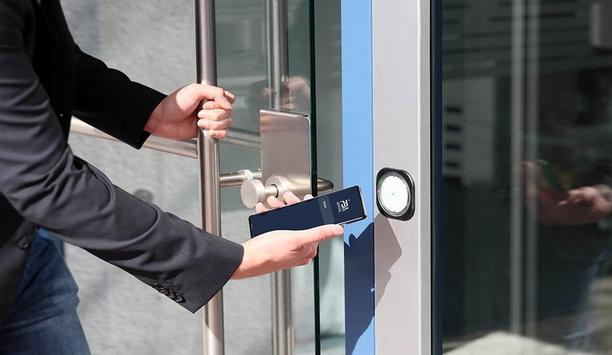
PKOC stands for Public Key Open Credential. It is a new standard that will meet a 30-year industry challenge and strip away much of the complexity and cost involved in protecting and administering credentials for access control. It could also accelerate the transition from cards to mobile access control. PKOC is a standards-based mobile credential that is essentially free, vendor-agnostic, and interoperable across multiple devices and systems. It is a highly secure access credential that can live on a mobile phone, in a plastic access card, or in any device capable of generating a public-private key pair. Access control systems PKOC is the newest standard of the Physical Security Interoperability Alliance (PSIA), a tax-exempt organization created to define, recommend, and promote standards for IP-enabled security devices and systems. PSIA introduced the Physical Logical Access Interoperability (PLAI) specification in 2013 to normalize identity data across disparate physical access control systems. The PKOC specification was introduced in 2021. We’re convinced this is the future A challenge for PSIA in promoting the PKOC mobile credential is to explain it quickly and in layman’s terms “We see the benefit of implementing the PKOC technology and doing it well,” says Sam Siegel, Senior Field Applications Engineer for ELATEC, a manufacturer of credential-agnostic readers/writers. “We wanted to get involved and join the discussion.” ELATEC has been participating in PSIA for more than a year. “This is a better way to do things,” says Siegel. “The PSIA, myself included, are convinced this is the future. The challenge is to get enough people to understand that it is a seismic shift away from what has been in place for so long.” A challenge for PSIA in promoting the PKOC mobile credential is to explain it quickly and in layman’s terms. The explanation spans the concept of public key infrastructure (PKI) and the difference between symmetrical and asymmetrical digital keys. Protecting symmetrical keys A symmetrical key system, which has been used historically in the access control market, involves the use of a single proprietary digital key to both encrypt and decrypt information. This means that digital public keys must be incorporated into each access control reader in the form of a module or a license, which the reader uses to read any compatible cards. Protecting symmetrical keys has been an expensive technology challenge the access control world The need to share these digital keys (in effect, the ability to read every compatible card) securely among access control manufacturers, integrators and end users involves extra administration and costs to ensure the security of the system. Protecting symmetrical keys has been an expensive technology challenge the access control world has borne for decades. The use of proprietary keys also promotes dependence on a single manufacturer or vendor to expand the ecosystem. The use of asymmetrical keys takes away these challenges. Advantages of using asymmetrical key pairs PKOC embraces the principle of PKI (public key infrastructure), a two-key asymmetrical system used to ensure confidentiality and encryption. In effect, there are two digital "keys," one public and one private, that are used to encrypt and decrypt information, in this case, a credential for an access control system. The secure credential standard is generated independently of a third-party credential issuer. It is generated within the device. In the access control scenario, the smartphone generates a key pair in the secure element of the phone, including a private key, which is stored on the smartphone, and a public key, which serves as the user’s ID number in the access control system. Sharing the public key is not a security risk because it is worthless without the private key that is locked away on the smartphone. PKOC-enabled smartphone The smartphone must contain the private key in order to interface with the access control system When a PKOC-enabled smartphone approaches a PKOC-enabled reader, the reader sends a one-time random number (a ‘nonce’) to the smartphone, which then encrypts it using the private key, and sends it along with the public key back to the reader. The reader uses the public key to decrypt the random number, which confirms the authorized access associated with the smartphone. The signals are sent via Bluetooth Low Energy (BLE). Importantly, the private key never leaves the smartphone and is never shared with any other elements of the access control system. Therefore, there are no administrative or technical costs associated with protecting it. The smartphone must contain the private key in order to interface with the access control system using the public key. Mobile credentialing system For ELATEC, embracing PKOC provides a new way to highlight the company’s value proposition and promote it to a new group of companies; i.e., those who adopt the PKOC approach to mobile credentialing. The ‘universal’ configuration of the ELATEC reader hardware is credential-agnostic “PKOC serves as a great way to show off our value and what we do best,” says Siegel. ELATEC provides credential readers/writers that operate in a variety of card and reader environments, incorporating an integrated BLE module to support mobile ID and authentication solutions, including PKOC. Using applicable firmware, the ‘universal’ configuration of the ELATEC reader hardware is credential-agnostic and so compatible with any RFID card or mobile credentialing system, all in a small form factor (around 1 1/2 inches square). How readers and smartphones interact The PKOC standard addresses the variables of how the reader and the smartphone share information. Currently, the PKOC standard addresses communication via BLE, but the principle is the same for systems using near-field communication (NFC), ultra-wideband (UWB), or any future protocols. PKOC also defines how device manufacturers can enable devices (readers, locks, control panels, biometric devices, etc.) to securely consume the credential for authentication and access. PKOC can be used with smart cards as well as with smartphones. In the case of a smart card, the public and private keys are contained on the smart card, which communicates via NFC with the reader. The encryption/decryption scenario is exactly the same. PKOC enables users to ‘bring your own credential’ (BYOC). Public key number ELATEC is proud to have played an instrumental role with the PSIA in the implementation of PKOC" BLE offers a broader read range than NFC; the read range can be managed using software and/or by signaling intent or two-factor authentication. Because private keys remain secure inside a smartphone, they do not have to be incorporated into a digital wallet for security purposes, although they could be incorporated for matters of convenience. To simplify administration, the public key number can be used as a badge number. If badge numbers have already been assigned, a column could be added to the database to associate badge numbers with public key numbers. “ELATEC is proud to have played an instrumental role with the PSIA in the implementation of PKOC,” said Paul Massey, CEO of ELATEC, Inc. “End-users should not be limited in their solution mix to one or two vendors due to their proprietary technology. PKOC now provides the ideal combination of security, convenience, interoperability, and cost for industry participants, by industry participants.” ‘Experience PSIA’ will promote PKOC at ISC West ISC West participants include PSIM manufacturer Advancis Software and Services The flexibility of PKOC will be on display at ISC West 2023, where ‘Experience PSIA’ will register attendees and provide them with a PKOC credential that can be used with a variety of readers throughout the show. Also showcasing the PLAI standard, PSIA’s presence at ISC West will include ELATEC along with several other vendors/manufacturers. A special PSIA event will be held from 5:30 to 7:30 p.m. on March 29 at the Venetian Ball Room B&C in Las Vegas. ISC West participants include PSIM manufacturer Advancis Software and Services, which acquired Cruatech software in 2012; and Idemia, specializing in identity-related security services including facial recognition and other biometrics. Integrated security systems Also involved are Johnson Controls (JCI), an integrated security systems provider that offers a range of security products and services; and Siemens, which offers its own range of security solutions and systems. Other participants include Last Lock, which has a unique spin on internet-enabled locks; while SAFR from Real Networks offers accurate, fast, unbiased face recognition and additional computer vision features, and Sentry Enterprises provides the SentryCard biometric platform for a privacy-centric, proof-of-identity solution. Finally, rfIDEAS manufactures credential readers.
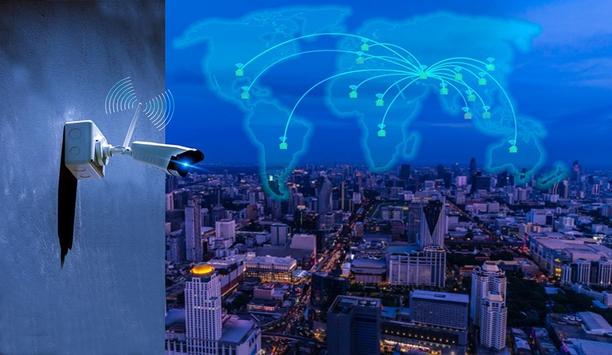
New buzzwords were abundant in the articles that generated the most clicks on our website in 2022. From the metaverse to the Internet of Things, from frictionless access control to artificial intelligence (AI), the topics most popular among our site’s visitors were at the cutting edge of change and innovation in the physical security marketplace. Here is a review of the Top 10 Articles of 2022, based on reader clicks, including links to the original content: Metaverse will promote collaboration and enable more efficiencies for security Metaverse is a familiar buzzword currently, but few people grasp what it means. In the simplest terms, the metaverse is an online “place” where physical, virtual, and augmented realities are shared. The term, Metaverse, suggests a more immersive online environment that combines elements of augmented reality (AR) and virtual reality (VR). For the physical security industry, the looming creation of a complex online environment offers possibilities and challenges. Establishing identity will be a central principle of the metaverse, and various biometrics are at the core of ensuring the identity of someone interacting in the virtual world. Cybersecurity elements are also key. On the benefits side, the security market is already taking advantage of technologies related to the eventual evolution of the metaverse. For example, the industry has deployed AR to provide information about a door lock’s status on a screen, headset, or smart glasses as a patrolling guard walks by. What are the security challenges of the transportation industry? Because transit agencies rely on several IoT devices, they get exposed to higher cybersecurity risks Rapid technological advancement, increasing urbanization, and the growing expectations of commuters and governments are pressuring transit industry players to modernize. Commuters, urban planners, first responders, and other stakeholders want to use transit data to support their decision-making. Transit agencies’ security and operations teams need closer collaboration to stay ahead. However, for many years, most transit agencies have relied on siloed, proprietary systems. Because transit agencies rely on an ever-growing number of Internet of Things (IoT) devices, they also get exposed to higher cybersecurity risks as there are more network access points to manage. The future is here: ADT’s innovation lab evaluating robots and indoor drones New robots and indoor drones for security applications are on the horizon, based on the work of ADT Commercials’ Innovation Lab, which is evaluating the latest technologies’ value to customers and some typical use cases. The ideal use of humanoid robots is to perform jobs that are considered repetitive, dirty, dangerous, and/or mundane. In security, that describes most security guard positions. As the name implies, autonomous indoor drones are focused on flying indoors versus the outdoor environment, which is heavily regulated by the U.S. Federal Aviation Administration (FAA). Flying autonomously indoors not only eliminates FAA oversight but also will enable ADT Commercial to offer another choice to customers to further reduce their dependencies on and costs of human guards. Innovative security: the key to business efficiency, cost savings, and more Organizations have shifted business focus countless times since the onset of the pandemic. While many leaders have been primarily concerned with the immediate health and safety of their customers and employees, 2022 has given rise to a new trend. More than ever, business leaders are seeking security solutions that increase operational efficiency and cost savings as well as improve logistics and business insight. As working environments become more complex, organizations looking to drive higher productivity and profitability margins should consider security upgrades that prioritize integrated analytics and automation. Shoplifting today is more sophisticated, and so are the tools to fight it One tool to fight shoplifting is analytics, which can be used to determine where shrink is occurring Shoplifting is often viewed as petty theft by individuals, but that is not always the case. Overall, shoplifting is becoming more sophisticated and coordinated. Traditional “shoplifting” has two major differences when compared to organized retail crime (ORC). The differences are numbers and motivation. ORC consists of groups working together to monetize theft, very different than an individual taking an item they need. One tool to fight to shoplift is analytics, which can be used to determine where shrink is occurring. Understanding where crimes take place helps retailers make strategic decisions about where to place their loss prevention efforts. Oosto offers 10 reasons to switch to frictionless access control in commercial buildings Access control for buildings is nothing new. It’s only in recent years that the urgency to implement smarter, more efficient, and more convenient forms of access control has increased, in the context of public and private sector digital transformation. Upheavals from the COVID-19 pandemic have forced organizations to re-think, pivot, and invest in new technology solutions that will incorporate Artificial Intelligence (AI) and Machine Learning, to gain speed in their operations, glean actionable insights from their video analytics, and enhance productivity with their teams. Which security trend is here to stay? Technologies and trends in the security marketplace come and go with some regularity. But how can you tell which trends are gaining traction and which amount to “the flavor of the month.” For example, while many physical security departments were hesitant to consider cloud-connected solutions in the past, they now better understand the benefits these solutions bring and how they can help them utilize their resources to achieve business goals while minimizing overall operational complexity. Other technologies mentioned in the article include mobile credentials, AI-based analytics, video management systems, cybersecurity, and a new emphasis on data. What do these technology trends have in common? They are opening new possibilities for greater system efficiency and functionality. In short, they are playing a role in transforming our industry. GSX 2022 reflects changing technologies and evolving role of security The role of the security director increasingly will encompass facets of cybersecurity and physical security GSX 2022 in Atlanta highlighted the changing role of security in the enterprise. The role of the security director increasingly will encompass facets of cybersecurity as well as physical security. Transitioning to an operation that incorporates both disciplines requires a workforce that embraces education and building new skills. Education and the opportunity to build new skills are evident everywhere at GSX, including in the hundreds of education sessions and also in the knowledge shared on the show floor in the exhibit hall. Consolidation changing the face of the security market Consolidation is a dominant trend in the security marketplace. Large companies typically swallow up smaller companies as a means of expanding both their technology portfolios and their geographic reach. Sometimes a big fish is swallowed up by an even bigger fish. Despite the pandemic and resulting economic challenges, the security market has continued to be a desirable environment for both big players and startups, which then provide abundant acquisition targets for larger companies. This article highlighted recent mergers and acquisition news. Six trends at the intersection of video and AI Video has evolved beyond the capabilities of advanced imaging and performance to include another level: Artificial Intelligence. Video imaging technology combines with AI, delivers a wealth of new data, not just for traditional physical security applications, but for a much deeper analysis of past, present, and even future events across the enterprise. This is more than a big development for the physical security industry; it is a monumental paradigm shift that is changing how security system models are envisioned, designed, and deployed. Much of the heightened demand for advanced video analytics is being driven by six prevalent industry trends.
Case studies

Centro Ilarco is a state-of-the-art commercial office building in the heart of Bogotá, Colombia. Designed to accommodate three corporate towers with a total of 90 offices, this landmark structure focuses on providing innovative, secure, and seamless access experiences for its tenants. The solution As a multi-building office complex, Centro Ilarco required a robust access control system to ensure security, manage tenant entry, and streamline visitor access at every entry point. To meet these needs, the DNAKE S617 8” Facial Recognition Door Station was installed across the building. Since its implementation, Centro Ilarco has experienced a significant boost in both security and operational efficiency. Tenants now enjoy hassle-free, touchless access to their offices, while building management benefits from real-time monitoring, detailed access logs, and centralized control of all entry points. DNAKE smart intercom solution has not only enhanced security but also improved the overall tenant experience. Installed products S617 8” Facial Recognition Android Door Station Smart Pro APP
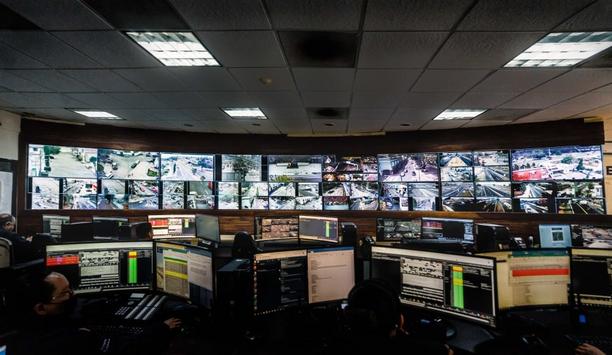
Alarming increases in vehicle thefts, unsolved traffic collisions, and stolen cargo in the Mexican State of Tlaxcala, motivated the Executive Commission of the State Public Security System (CESESP) to expand and upgrade its video security system. To counter the rise in crime, the CESESP sought a flexible, scalable, open-platform video management system (VMS) that could seamlessly incorporate existing cameras as well as over 800 new cameras and edge devices from a range of hardware and software providers. Tlaxcala Located in East-Central Mexico, Tlaxcala is one of 32 states within the Federal Entities of Mexico. With a population of approximately 1,343,000, based on the 2020 census, Tlaxcala is the smallest yet one of the most densely populated states in Mexico. The CESESP of Tlaxcala is tasked with safeguarding residents across the state's 60 municipalities. C4 center C4 center has multiple teams of six security professionals who monitor the system around the clock At the core of all security operations, including the 911 emergency response and 089 confidential tip line, is the CESESP's Control, Command, Communications, and Computing Center (C4). The state’s C4 center has multiple teams of six security professionals who monitor the system around the clock on a large, 24-screen video wall. The C4 also houses the system’s HP and Lenovo servers. Flexibility, scalability, and budget “Flexibility, scalability, and strictly adhering to the budget were top requirements for this critical, state-wide project,” said Maximino Hernández Pulido, Executive Commissioner of the State Public Security System. “We considered a variety of proposals and providers, but we ultimately followed the advice of our integrator, Digital Information Systems, and selected XProtect Corporate from Milestone Systems.” XProtect Corporate The new system includes cameras from Hanwha Vision, Bosch Security and Safety Systems, Hikvision, and Pelco The new system includes cameras from Hanwha Vision, Bosch Security and Safety Systems, Hikvision, and Pelco, all integrated within the system and managed by XProtect Corporate VMS from Milestone Systems. The system is also fully integrated with the BriefCam Video Analytics Platform, delivering video intelligence for system managers to identify, monitor, investigate, and visualize incidents plus video data to make smarter decisions. Efficient and cost-effective integration “Because state officials rely on their video system 24/7, the update needed to be gradual with no downtime. As new cameras were integrated into the Milestone platform, the previous system slowly disappeared,” said Isaac Sánchez Morales, an engineer at Digital Information Systems (SDI), an integrating company. “The XProtect Corporate open platform VMS allowed us to leverage our existing cameras and servers, integrate new equipment and devices, making the process very efficient and cost-effective, and we never had a gap in service.” Data-driven video for fast response times BriefCam video analytics technology The solution detects, identifies, and classifies video metadata to drive more efficient investigations The BriefCam video analytics technology seamlessly integrates into Milestone’s XProtect Smart Client. The solution detects, identifies, and classifies video metadata to drive more efficient investigations and business decisions, such as finding missing persons, investigating vandalism, theft, assaults, accidents, injuries, or acts of violence, as well as extracting and analyzing through heatmaps, dashboards, and visualizations. The analytics have proven beneficial in accelerating investigations, attaining situational awareness, and optimizing operational intelligence for enhanced video search, alerting, and data visualization. Real-time alerts, situational awareness “We installed the BriefCam Insights and Investigator products, and regularly use the platform’s RESPOND and RESEARCH capabilities. One of the advantages of all these XProtect-integrated analytics is that operators do not have to open additional windows or enter new credentials to access them,” said Sánchez. “With this integration of technologies, operators can trigger real-time alerts based on complex object classifications and filter combinations to increase situational awareness meaning authorities can react to events as they unfold.” Proactive policing with LPR With the BriefCam RESPOND solution, object characteristics and license plate recognition tools can be used" Sánchez added, "With the BriefCam RESPOND solution, object characteristics such as vehicle, person, or animal, and license plate recognition tools can be used to trigger rule-based alerts." "These tools can help overcome the challenges of urban video surveillance and drive proactive policing in Tlaxcala." Video technologies reduce state crime rates Following the comprehensive expansion of the security infrastructure, statistics from the Executive Secretariat of the National Public Security Systems revealed Tlaxcala boasted the lowest crime rate nationwide. With the modernized system in place, officials documented a 93% reduction in pilfered freight from transport companies. Similarly, vehicle theft declined by 22.5%. A cost-efficient and flexible way Milestone Interconnect provides a cost-efficient and flexible way to gain central surveillance According to Sánchez and the SDI team, it is expected that each municipality within the territory will soon have its own locally focused VMS. With the use of Milestone Interconnect, all the municipality subsystems will integrate directly with the state-wide platform. Milestone Interconnect provides a cost-efficient and flexible way to gain central surveillance of multiple sites spread across a region. C4 video surveillance operation “The integrated solution delivered through Milestone is a robust, efficient, and secure system that provides all the necessary tools for the C4 video surveillance operation,” added Executive Commissioner Hernández-Pulido. “In addition, the excellent technical and post-sales support from Milestone and SDI has led us to meet the system and performance goals we set for ourselves.”

As one of the main tourist destinations in the Caribbean, The Bahamas welcomes nearly seven million visitors every year. Unfortunately, the City of Nassau, the capital of the Bahamas, has seen increased crime in certain parts of the city over the last several years from pickpockets and vehicular crimes to armed robberies and kidnappings. Policing, safety, and security Based in Nassau, the Royal Bahamas Police Force (RBPF) employs over 3,000 officers and provides policing, safety, and security services to residents and visitors. However, the RBPF was challenged to keep up with the rising tide of criminal activity. The government fully supported the RBPF’s initiative to expand the country's surveillance system as a strategic tool in the fight against crime. Track and monitor, situational awareness The RBPF added system infrastructure and hundreds of new IP-video cameras to increase police presence" “There are known criminal hotspots across the city that people of interest frequent," said Ethan Munnings, CTIO at Proficient Business Services, Bahamas, and the lead engineer for the City of Nassau video surveillance project. “To curb incidents in those areas and to better track and monitor suspects, gain situational awareness, and to be able to help locate or identify people after leaving the scene, the RBPF added system infrastructure and hundreds of new IP-video cameras to increase police presence. One of those areas, for example, is the surroundings of the house of the Prime Minister.” Milestone video management system In 2011, the city set up its initial Milestone video management system, overseeing around 250 cameras. Later, in 2019, Nassau officials collaborated with Proficient Business Services to integrate almost 500 additional cameras and edge devices into the system. A restructuring of the network infrastructure was required to consolidate all data feeds to the city's Real-Time Crime Center. The new crime center, located at the police headquarters, opened in February 2021, acting as the Royal Bahamas Police Force's technological epicenter. Innovative technology Integration In early 2020, the Ministry of National Security of the Bahamas began expanding its existing Milestone XProtect video management system. Milestone's open platform data-driven video technology system is compatible with various hardware and software vendors. The upgrade led to redesigning of the network infrastructure and the addition of over 500 high-quality network cameras from Axis Communications. Facial recognition and video analytics ShotSpotter, the gunshot detection system was also integrated into the greatly expanded system The project involved several Milestone technology partners, including system servers from Rasilient Systems, and video analytics applications such as License Plate Recognition (LPR) and facial recognition from BriefCam. ShotSpotter, the gunshot detection system from SoundThinking, was also integrated into the greatly expanded system. Artificial intelligence and deep learning Within the Milestone VMS, the cameras and servers integrate with BriefCam’s video analytics, providing facial recognition and person/object tracking. By harnessing the power of artificial intelligence and deep learning, integrated BriefCam technologies transform video data into valuable insights for rapid video review, search, and real-time alerting. Two types of LPR The system also offers two types of License Plate Recognition. The first is via the Milestone LPR add-on, and the second is through direct integration with BriefCam. A team of 14 operators relies on Auvik for device monitoring and SolarWinds to manage the core network. The fiber network, with a 10G backbone, is based on Cisco technologies. Traffic safety revolutionised Video technology was pivotal in this endeavor, with fatal accidents in New Providence dropping to 33 in 2019 Beyond enhancing security, Nassau's updated city video system has proved instrumental in monitoring traffic accidents and holding drivers responsible for their behavior. Eyewitness News from Nassau reported 69 deaths related to traffic in 2018. After witnessing an almost 30 percent surge in fatalities from 2017 to 2018, authorities committed to reducing traffic-related deaths and accidents. Video technology was pivotal in this endeavor, with fatal accidents in New Providence dropping to 33 in 2019. Traffic surveillance “The cameras we have strategically installed on traffic lights around the city use LPR integrated with Milestone Systems, which have helped control hit-and-run accidents,” said Munnings. “There have been cases of pedestrians being hit by vehicles that didn’t stop; now the police can track those vehicles and bring those drivers to justice. The new surveillance system has also helped prevent human abductions.” Technology and innovation For more than 12 years, the City of Nassau has been relying on and expanding the capabilities of its video surveillance system. With the help of technologies and deep integration within an open platform VMS ecosystem, the city's authorities and police have effectively addressed evolving challenges to ensure safety for both residents and tourists. “Technology and innovation have taken off at the speed of light and this will only accelerate. Embracing the innovations that improve police work is no longer optional," said Zhivago Dames, Assistant Commis.

Sandwell Aquatics Centre in Smethwick is a state-of-the-art leisure center that originated as a purpose-built arena for the 2022 Commonwealth Games in Birmingham. The facility played host to the highest number of medal events compared to any other, showcasing both swimming and diving competitions. The newly constructed complex included a competition pool for swimming and diving, a temporary pool for swimming and para-swimming warm-up, and an area dedicated to dry-dive training. Reclaiming the space Following its key role in the games, the original structure was reconfigured so it could be used by the local community from the summer of 2023 onwards. The 4000 temporary seats have been removed and fresh facilities tailored for community use have replaced them. The leisure hub boasts a gym with over 100 stations, a specialized ladies-only gym with 25+ stations, along with amenities such as a sauna, steam room, football pitch, two 4-court sports halls, three exercise studios, an indoor cycling studio, and a trio of swimming pools. Plant noise assessment The anticipated noise levels generated by various mechanical components within the plant room In the proposal documents, Mach Acoustics included two detailed acoustic reports – one addressing operational noise and the other focusing on plant noise. The plant noise assessment specifically outlined the anticipated noise levels generated by various mechanical components within the plant room, which includes several pumps and air handling units. Acoustic barrier with integrated louvre The acoustician's initial recommendation proposed an acoustic barrier with integrated louvre features to ensure adequate airflow while mitigating noise. However, a subsequent design amendment specified a solid acoustic barrier with slatted top sections to maintain airflow and enhance aesthetics. Additionally, steel louvre doors were specified for access. Absorptive acoustic barriers These barriers effectively reduce noise pollution originating from mechanical plant areas It has become standard practice to install absorptive acoustic barriers around new and renovated leisure centers. These barriers effectively reduce noise pollution originating from mechanical plant areas and operational compounds. It's not uncommon for heat pumps and air conditioning units to produce a continuous low-level hum or buzzing noise, which can disrupt neighboring properties and create an unpleasant auditory environment for facility members and visitors alike. Game-changing solutions With prior experience in similar acoustic installations for aquatic and leisure centers, Jackson Fencing successfully secured a subcontractor contract with Wates. They designed, manufactured, and installed customized acoustic fencing and gates across three elevations: The first elevation covered 16.5m and featured 2.8m high Jakoustic Reflective panels with 2.1m high timber slats above. The second elevation spanned 11m, incorporating 3.2m high Jakoustic Reflective panels with 2.1m high timber slats above, 9.64m of 5.3m high panels, and 11.3m of 3.2m high panels with 2.1m high timber slats. The third elevation extended 16.5m and used 3.2m high Jakoustic Reflective panels with 2.1m high timber slats above. Benefits of solid acoustic barriers These barriers offer an appealing noise reduction solution that conceals machinery and serves as a robust security barrier The different heights of the solid acoustic barriers were strategically chosen to benefit noise reduction, with timber slats enhancing aesthetics and airflow. The project also included matching double-leaf acoustic gates for access. In the first elevation, two apertures were left for steel louvre panels. The acoustic barriers, mounted on galvanized steel posts, were constructed from tongue and groove boards with a deep V profile, tightly slotting together to reflect noise by up to 28dB. These barriers not only offer an appealing noise reduction solution that conceals machinery but also serve as a robust security barrier, devoid of footholds and challenging to scale. Tailored security solutions Peter Jackson, Managing Director, of Jacksons Fencing says, “The Sandwell Aquatics Centre serves as a remarkable example of how facilities can undergo effective reconfiguration to align with their new objectives to ensure they are being utilized effectively." "This project showcases our team's dedication to tailoring security solutions precisely to the task at hand, achieved through the customization of acoustic fencing. The outcome not only exudes a sleek and sophisticated appearance but also fulfills its vital function. Coupled with a reliable 25-year guarantee, this acoustic fencing ensures enduring noise reduction, cost efficiency, and sustainability.”

Quanergy Solutions, Inc., a provider of 3D LiDAR (Light Detection and Ranging) solutions for highly dynamic environments, has successfully partnered with a prominent social media provider to effectively optimize the organization’s use of space across campuses for enhanced productivity and improved employee experience. Improve space utilization The social media giant faced the critical need to improve space utilization across their campuses, which comprised numerous conference rooms, cafeterias, and other general-purpose areas. Existing legacy solutions proved unreliable in these complex environments, failing to provide the desired level of accuracy while compromising employee privacy. Q-Track Q-Track ensures that employees’ privacy is protected while enabling the sensors to track individuals seamlessly To overcome these limitations, Quanergy leverages its seamlessly integrated solution that combines long-range 3D LiDAR sensors with advanced perception software. Quanergy’s solution provides extensive coverage across diverse campus environments, accommodating both large and small rooms with various occlusions, such as tables, chairs, cabinets, columns, and pillars. With a unique object stitching mechanism, Q-Track ensures that employees’ privacy is protected while enabling the sensors to track individuals seamlessly, even when temporarily obscured from view. Hyper-accurate detection, tracking Quanergy’s solution resulted in the hyper-accurate detection, tracking, and classification of employees without compromising privacy or capturing any Personal Identifiable Information (PII). Through the use of occupancy-related insights, the social media giant can optimize the use of available areas and achieve enhanced productivity among its workforce. The result is a comprehensive solution that outperforms traditional camera-based solutions and dramatically lowers total cost of ownership. 3-D LiDAR solutions Quanergy’s success in optimizing space utilization for the social media giant showcases the transformative potential of 3-D LiDAR technology in smart spaces. With its privacy-preserving capabilities and accurate tracking, Quanergy 3-D LiDAR solutions are already the preferred solution at over 100 global locations providing security for critical infrastructure such as data centers, utility plants, and airports, as well as for safe cities, and industrial automation.
Gunnebo Entrance Control solutions have been installed at travel software and technology specialist Sabre’s remodeled office in Uruguay, to ensure the safety and well-being of its employees, clients, and visitors. As a global technology company serving the travel industry, Sabre’s innovative software has revolutionized the way personalized travel experiences can be delivered, pioneering to an increasingly digital and interconnected world. Entrance control requirements With its visionary approach and dedication to customer success, its base in Uruguay is currently home to over 800 staff. To help Sabre meet its entrance control requirements, Gunnebo was invited to work with Abelenda Hermanos as a security system supplier to design and install a comprehensive solution, created to optimize access control while maintaining a seamless flow of people. Author's quote By proactively working with Gunnebo Entrance Control we were able to design a system" Says Natalie Sarmiento, Sabre Security & Safety Manager: “Our vision is always to connect people with travel experiences that matter most. And in doing so, our team is the most important part of our business to think differently and make this happen for our customers. We needed to ensure their security on-site in our remodeled office in Uruguay, with the highest standards." He adds, “By proactively working with Gunnebo Entrance Control we were able to design a system that easily blended with its surroundings, while coexisting with the welcoming environment we wanted to create for our employees and our guests. This is something that flows throughout our offices and has been received well by all on site.” Gunnebo's entrance control solutions Gunnebo Entrance Control worked closely with Sabre to create a bespoke entrance control solution, incorporating its latest sleek design SpeedStile FP 1200 EV speed gates, finished in full stainless steel grade 304, to operate six lanes in place. By implementing Gunnebo's entrance control solutions, Sabre has significantly enhanced security measures, reducing the risk of unauthorized access without compromising on speed or esthetic design. Gunnebo SpeedStile system Real benefit of working with the Gunnebo SpeedStile system is the focus on ease of installation" Says Omar Ferrero, Director at Abelenda Hermanos: “It was an absolute pleasure to work with Sabre and install entrance control for the benefit of its staff and guests. The real benefit of working with the Gunnebo SpeedStile system is the focus on ease of installation, together with its use of advanced technology to balance speed, security and design. The finish is stylish and maintains the highest level of safety for all who work and visit the new facilities.” Gunnebo's SpeedStile FP 1200 EV system enhances security and optimizes the flow of people in office environments. The system's high throughput capability ensures efficient traffic management, allowing for swift and smooth access for authorized individuals. Customized security solutions Equipped with intelligent sensors, it provides accurate and reliable entrance control, effectively preventing tailgating. Additionally, the system's customizable design options enable integration with the surrounding architecture, enhancing the esthetic appeal of the new headquarters. Thomas Axelson, Gunnebo Partner Network Manager – LATAM concluded: “The successful installation of Gunnebo’s entrance control solutions at Sabre’s offices in Uruguay highlights our capability to deliver customized security solutions. We will work with our clients and installers right from the initial design stage to project completion to deliver a solution that presents the highest level of security while maintaining a welcoming feel. We are thrilled with the results and proud to support Sabre as they continue their mission to make travel happen across the globe.”
Round table discussion

There is safety in numbers, or so the expression goes. Generally speaking, several employees working together tend to be safer than a single employee working alone. Even so, some environments require that workers complete their jobs alone, thus presenting a unique combination of security vulnerabilities. The U.S. Occupational Safety and Health Administration (OSHA) defines a lone worker as “an employee working alone, such as in a confined space or isolated location.” We asked this week’s Expert Panel Roundtable: How can security technologies help to protect "lone workers?"
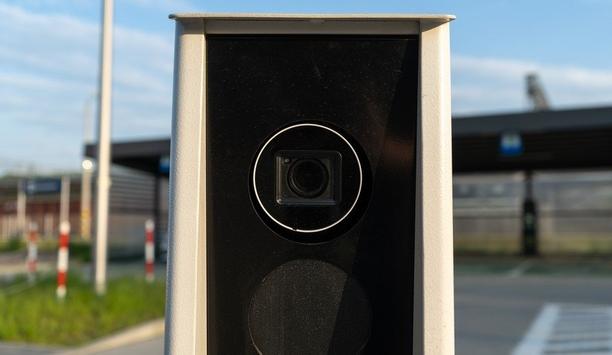
In the United States, they are called license plate recognition (LPR) systems. In Europe, the more common term is automated license number-plate recognition (ANPR). In either case, the systems provide capabilities that can benefit a range of applications from schools to municipalities to parking lots. Newer technologies can even identify vehicle color, type, make, and model. We asked this week’s Expert Panel Roundtable: What's new with license plate recognition (LPR) and/or automated number-plate recognition (ANPR) systems?

Headlines of violence in our schools are a reminder of the need to keep educational institutions safe. In fact, if there is a positive aspect to the constant bombardment of headlines, it is that it keeps our attention perpetually focused on how to improve school security. But what is the role of physical security systems? As the new school year begins, we asked this week’s Expert Panel Roundtable: Are schools safer because of physical security systems? Why or why not?
Products
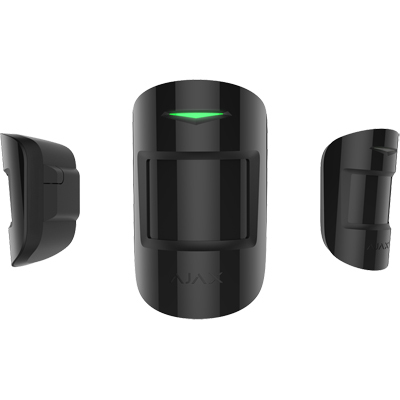



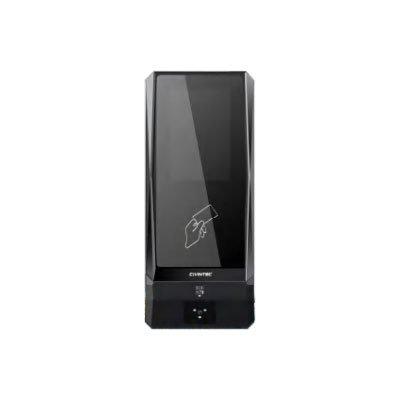
White papers

Preventing Loss, Securing Assets
Download
Managing Security In The Age Of Boundaryless Working
Download
The Welcoming Workplace
Download
Access and Security In The Age of Hybrid Working
Download
The Benefits of Edge AI + Cloud For Security Systems
Download
11 Advantages Of A Combined System For Access Control And Intrusion
Download
Integrated Access Control: Reap The Benefits Of Connected Security
Download
Choosing the Right Storage Technology for Video Surveillance
Download
The Role of Access Control in a Safe Return to the Workplace
Download
'Boosting On-Site Safety And Security
Download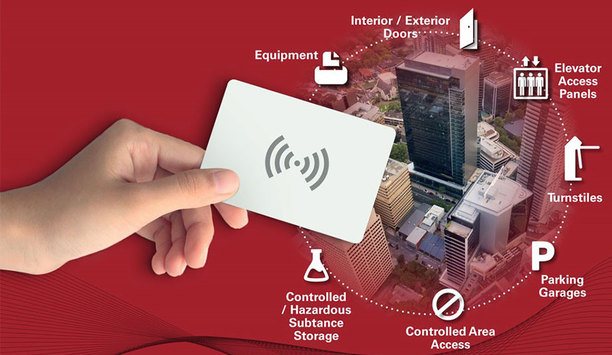
RFID and Smartphone Readers in Physical Access Control
Download
Preparing Your Organization With Quality Situational Awareness
Download