Data Security - Round table discussions

The year ahead holds endless promise for the physical security industry, and much of that future will be determined by which technologies the industry embraces. The menu of possibilities is long – from artificial intelligence to the Internet of Things to the cloud and much more – and each technology trend has the potential to transform the market in its own way. We tapped into the collective expertise of our Expert Panel Roundtable to answer this question: What technology trend will...

Cybersecurity continues to be a major theme in the physical security industry, but effective cybersecurity comes at a cost. Higher cost is contrary to another major trend in the market: lower product pricing, which some have characterized as a ‘race to the bottom’. Chinese manufacturers, whose products tend to have lower prices, have been the target of cybersecurity concerns and even a government ban. So what is the overall impact of cybersecurity on pricing trends in video products?...

The new year 2019 is brimming with possibilities for the physical security industry, but will those possibilities prove to be good news or bad news for our market? Inevitably, it will be a combination of good and bad, but how much good and how bad? We wanted to check the temperature of the industry as it relates to expectations for the new year, so we asked this week’s Expert Panel Roundtable: How optimistic is your outlook for the physical security industry in 2019? Why?

Employee turnover is a problem for many companies, especially among younger employees who have not developed the philosophy of employer loyalty that was common in previous generations. Nowadays, changing jobs is the norm. The idea of spending decades working for a single employer seems almost quaint in today’s economy. However, excessive employee turnover can be expensive for employers, who are looking for ways to keep their brightest and best employees happily toiling away as long as poss...

The concept of how security systems can contribute to the broader business goals of a company is not new. It seems we have been talking about benefits of security systems beyond “just” security for more than a decade. Given the expanding role of technologies in the market, including video and access control, at what point is the term “security” too restrictive to accurately describe what our industry does? We asked the Expert Panel Roundtable for their responses to this p...

There is no expectation of privacy in a public space. That’s the premise on which most video surveillance applications are justified. But new concerns about privacy, specifically the General Data Protection Regulation (GDPR) in Europe, are changing expectations. And what if a camera must be positioned where a private area happens to be within its range? Fortunately, there are technology approaches to solving these dilemmas, as our Expert Panelists explain. We asked: What new technologies a...

When is it too late to learn that a video camera isn’t working properly? As any security professional will tell you, it’s too late when you find that the system has failed to capture critical video. And yet, for many years, system administrators “didn’t know what they didn’t know.” And when they found out, it was too late, and the system failed to perform as intended. Fortunately, in today’s technology-driven networked environment, monitoring a system&rs...

The physical security industry is embracing the cloud in a big way. Cloud-based systems – which involve accessing a shared pool of information technology resources via the Internet – are much higher-profile in the video and access control markets, and large and small companies are getting on the cloud bandwagon. We asked this week's Expert Panel Roundtable: What factors are contributing to growth in cloud systems in the security market?

We are living in the age of Big Data, and businesses are inundated with large volumes of data every day. Success depends on capturing, analyzing and ultimately transforming that data into information and intelligence that can be used to improve the business. So, it is with today's physical access control and video systems, too, which also generate unprecedented levels of data. But how can we make the data useful to end users and how can they realize its full value? We asked this week's Expert Pa...
By definition, an edge device is an entry point to a network. In the physical security industry, edge devices are the cameras, sensors, access controllers, readers and other equipment that provide information to the IP networks that drive today’s systems. In the Internet of Things (IoT), edge computing refers to an increasing role of edge devices to process data where it is created instead of sending it across a network to a data center or the cloud. In our market, edge computing takes the...

Hospitality businesses work to provide a safe and pleasant customer experience for their guests. Hotels offer a “home away from home” for millions of guests every day around the world. These are businesses of many sizes and types, providing services ranging from luxury accommodations to simple lodging for business travelers to family vacation experiences. Hospitality businesses also include restaurants, bars, movie theaters and other venues. Security needs are varied and require tech...

In the analog era, videotape was the storage media of choice for CCTV systems. Since the advent of digital video, and of IP-based systems, a variety of other storage formats have come to the fore, including hard drives, flash drives, SD cards and others. Now we are in the age of the cloud, which offers new opportunities to store vast amounts of video and presents challenges such as bandwidth and cybersecurity. For a current perspective on storage, we asked this week's Expert Panel Roundtable: Ho...

Finding the exact right technology to solve an end user’s problem is challenging, but the rewards are great when an integrator gets it right. A wide range of available product types, price levels and added features increases the likelihood of identifying a technology to solve any problem. But with so many technology and product choices in the marketplace, identifying that one solution can be akin to finding a needle in a haystack. We wondered whether a vast range of product choices is alwa...

Social media is part of our everyday lives, and increasingly it is also part of the security marketplace. Social media can be used for effective marketing and to communicate with customers, and it can be leveraged as a tool to make us all more secure. Communicating information in a crisis is another role social media can play to promote security. To elaborate on social media’s increasingly vital presence in the security marketplace, we asked this week’s Expert Panel Roundtable: What...
Consolidation – a decrease in the number of companies in a market achieved through mergers and acquisitions (M&A) – has been an important trend among manufacturers in the physical security market for many years. More recently, the trend has also appeared to extend to the integrator market. Larger integrators have been buying up other large integrators; in some cases, they have also been buying up smaller, regional integrators to expand their geographic coverage area. We wondered...
You could say concerns about privacy are “trending” in our increasingly data-driven world. Unease about how Facebook and other high-tech companies use and share data dominates the news, and the full impact of new European Union (EU) regulations is about to be felt around the world. By May 25, companies that collect data on EU citizens will need to comply with strict new rules around protecting customer data, as enumerated in the General Data Protection Regulation (GDPR). But how do t...

The reviews are in, and ISC West was another hit. Brisk attendance and a comprehensive lineup of the industry’s top companies and products contributed to another successful show for Reed Exhibitions. Our Expert Panel Roundtable, who have attended many such events, added their own reflections to the industry’s post-ISC glow. We asked this week’s Expert Panel Roundtable: How successful was ISC West 2018 for security industry exhibitors and visitors?
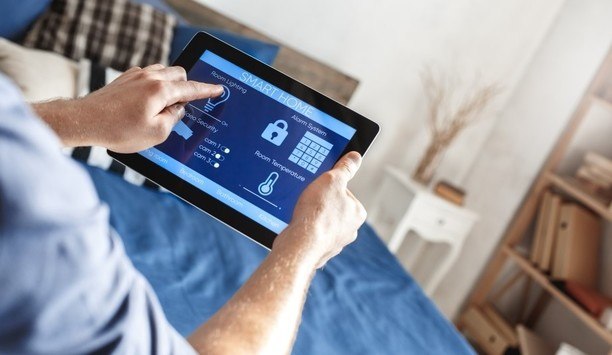
The residential/smart home market is undergoing revolutionary transformation, with a flood of new products and technologies helping to make our homes more connected, easier to manage and, yes, smarter. These massive steps forward provide challenges, and also opportunities, for the security industry, which has played a major role in protecting homes and residents for decades. We asked this week’s Expert Panel Roundtable: How are changes in the residential/smart home market impacting securit...

A big trade show, such as the upcoming ISC West, has a lot to offer for attendees. How can attendees maximize the value they get out of ISC West? For advice, we go to our Expert Panel Roundtable, all seasoned veterans of many big trade shows. Specifically, we asked the panel: How can attendees get the most out of a big trade show like ISC West?
Cloud computing has been around since the turn of the millennium. Over the years, the concept of storing and accessing programs over the Internet (instead of using an on-premises computer system) has grown in almost every realm of business. Some might say the physical security industry has come late to the party, delayed in some instances by (misguided?) concerns about cybersecurity of cloud systems. The bandwidth needed to transfer video to the cloud has also been a challenge. We asked this wee...

How much does a security system cost? We all know that total costs associated with systems are substantially higher than the “price tag.” There are many elements, tangible and intangible, that contribute to the costs of owning and operating a system. Taking a broad view and finding ways to measure these additional costs enables integrators and users to get the most value from a system at the lowest total cost of ownership (TCO). However, measuring TCO can be easier said than done. We...

Enterprise customers provide a large, and very lucrative, business opportunity for the physical security market. These customers include big global companies with plenty of revenue to spend and employees and facilities to protect. As a group, enterprise customers also tend to be a demanding lot, requiring systems that are large, scalable, that can operate across a wide geographic area, and that provide top-notch system performance. Enterprise customers set the standards of performance for the en...

Body-worn cameras are becoming more common every day, driven both by needs of the marketplace and technology developments. However, questions remain about the usefulness of the devices, and their future role in promoting safety and security. We asked this week’s Expert Panel Roundtable: What are the challenges of body-worn cameras for the security industry?

In recent years, information technology (IT) departments at end user companies have often been seen as adversaries of traditional security departments – or, at least, as a thorn in their side. One of the issues is territorial: As physical security products have migrated to use of Internet protocols and the network infrastructure, the IT and security departments have clashed – erm… make that interacted – more and more often. New realities such as cybersecurity have made i...

It seems there are more “bad things” happening than ever before. We hear news every day of workplace shootings and terrorist attacks, of smash-and-grab thefts and child abductions. Beyond the possible human tragedy involved, such events pose a persistent question to anyone involved in the realm of security: Could we have prevented it? The first step toward prevention is to predict or foresee an event before it happens. Too often, technology enters the picture after the fact, most com...

We have been hearing about smart buildings for more than a decade, but the increasing profile of the Internet of Things (IoT) expands the possibilities for intelligent building systems and makes them even more attainable. Security is often among the “smart” functions of a building, and the capabilities of many physical security systems can contribute in new ways to building intelligence. We asked this week’s Expert Panel Roundtable: What is the impact of “smart buildings&...

Industry standards make it possible for systems and technologies to connect and work together. Standards enable today’s integrated systems. But does adherence to standards stifle innovation? Does the necessity to interface using an industry-wide standard slow down the implementation of newer (and possibly not standards-compliant) capabilities? Or do standards eliminate extraneous variables, empower more integration and encourage greater innovation? We asked this week’s Expert Panel R...

Products are the building blocks of systems and solutions. How those products are combined, and where the integration happens, is a variable in the physical security market. Before the advent of open systems, a single manufacturer typically combined his own products, using proprietary connections, into end-to-end solutions for customers. Open systems undermined that paradigm to some degree and made it possible for customers to pick and choose products from multiple manufacturers to be integrated...

Even the most effective technologies usually require some level of human involvement. What new technologies do, generally speaking, is change the nature of a human’s role. Most jobs in today’s world are vastly different than 50 years ago, in many cases because of the changing role of technology. In the physical security world, what specific impact does technology have on the human element of systems? We asked this week’s Expert Panel Roundtable: Have recent developments in secu...

There’s a huge cloud hanging over the physical security market, but in a good way. Cloud-based systems, whether for video, access control or another category, are on the verge of taking the industry by storm. The benefits of that mythical “cloud” are well-known, or certainly well-touted, in the market. It’s almost as if the word “cloud” has become a buzzword that can mean different things, or at least whatever the customer wants it to mean (as long as they buy...