ATM Security
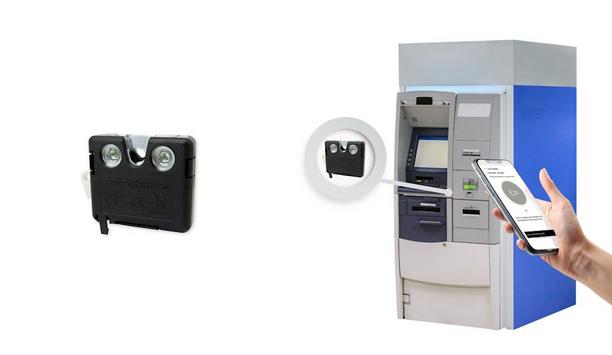
dormakaba, a pioneer in safe locks and trusted provider of ATM security solutions for financial institutions worldwide, announces the launch of its newest innovation, Apexx Strato™ Rotary. The keyless electronic ATM rotary lock is designed to secure the ATM top hatch and help prevent unauthorized access that can lead to malware installation and jackpotting attacks. Apexx Strato delivers Bluetooth® Low Energy (BLE)-enabled protection for the ATM’s most vulnerable access point, th...

Convergint, a global pioneer in service-based systems integration, is acquiring Nusource Financial LLC, a pioneering provider of branch transformation, ATM services, and security solutions for financial institutions across the United States. It is anticipated that this acquisition strengthens Convergint’s capabilities in financial services, ATMs, ITMs, Teller Cash Recyclers (TCRs), core integrated ATMs and remote managed services and reinforces an area of strategic growth. Convergint&rsq...

Suprema, a pioneer of AI-based security solutions, announced that its Q-Vision Pro has been named “Best Product (First Prize)” in the IoT Security category at the 25th Detektor International Awards. The awards ceremony took place during Sectech Expo 2025, the largest security exhibition in the Nordic region, held in Stockholm, Sweden, from October 14–15. This recognition highlights Suprema’s growing leadership in Northern Europe, a region known for its advanced standards...

It was recently reported in EU Business News that three in five young people would be unlikely to consider a career in manufacturing. When one couples this with the fact that there has been a steady decline of traditional manufacturing apprenticeships in many European countries, it creates a real risk for a significant skills gap in the industry. If manufacturing isn’t attracting and retaining early talent, this will lead to a skills gap that will ultimately mean less innovation and lowe...

Hanwha Vision, the vision solution provider, launches the AI remote-head camera, featuring a single-body design with support for up to four channels, ideal for a multitude of applications and sites. This advanced multi-sensor solution delivers intelligence and comprehensive monitoring in a compact and discreet form. Covert monitoring and collection An intelligent design developed for a range of uses where a discreet presence is needed, or for the monitoring of more confined spaces, for exampl...
IDEMIA Secure Transactions (IST) revolutionizes the world of digital payments by demonstrating the first ever offline central bank digital currency (CBDC) payments incorporating enhanced security against quantum threats. This major innovation promises to transform financial transactions and pave the way for an era of post-quantum security with IST positioning itself as the leader in this transformation. With quantum computers soon to enter all areas of business and finance, it is vital that com...
News
IDEMIA Secure Transactions (IST), a division of IDEMIA Group, is a major provider of payment and connectivity solutions for financial institutions, mobile network operators and automotive manufacturers. IDEMIA Secure Transactions (IST) is pleased to announce its latest partnership with arab national bank (anb), one of the largest banks in the Middle East. IDEMIA and anb launch payment card On February 5th, anb and IST launched a payment card in the Kingdom of Saudi Arabia On February 5th, anb and IDEMIA Secure Transactions (IST) launched a payment card in the Kingdom of Saudi Arabia, distinguished by the unique feature of having all essential details printed in Braille. This includes the card number, expiry date and CVV. This development marks a first in the country and exemplifies the shared ambitions of IDEMIA Secure Transactions (IST) and arab national bank (anb) to build a strong partnership based on progress and innovation. An innovative partnership to facilitate the everyday life of visually impaired customers With this innovative solution in the payment market, IST and anb reaffirm their dedication to improving accessibility for partially sighted and blind cardholders, by tackling barriers in payment processes, particularly in online transactions that often necessitate third-party interventions - an aspect that can be unsettling for the cardholder. The addition of Braille text to cards helps to remove some of the obstacles, empowering consumers to be autonomous and ensuring the security of all their payment actions. A long-standing commitment to delivering accessible payment methods IDEMIA Secure Transactions has consistently distinguished itself as a highly committed actor, particularly in providing solutions adapted to all. This innovation aligns with the inclusive approach with the creation of Touch Cards, which enable partially sighted and blind individuals to identify their payment cards in their wallets, as well as the development of biometric payment cards. Deployment of Braille card in the Kingdom of Saudi Arabia Deployment of Braille card in the Kingdom of Saudi Arabia is a further step in this inclusive payment strategy The deployment of this Braille card in the Kingdom of Saudi Arabia is a further step in this inclusive payment strategy, and a real achievement for IDEMIA Secure Transactions and arab national bank. Hennie Duplessis, Senior Vice-President for Payment Services in MEA at IDEMIA Secure Transactions (IST) said, “This partnership with arab national bank on an inclusive payment solution is a genuine source of pride for IDEMIA Secure Transactions. It underscores our ambition to pursue our development in the country, following our implementation with a card personalization center in Riyadh.” Innovative and inclusive payment feature Hennie Duplessis adds, “We are pleased to be the first in the Kingdom to offer this innovative and inclusive feature, and we will remain dedicated to bringing ambitious innovations to the people of Saudi Arabia in the years to come.” Khaled Al Rashed, Head of Retail Banking Group at arab national bank (anb), said “anb’s launch of the braille card represents a step forward in its commitment to make its services accessible to all segments of society.” Improving the overall customer experience Khaled Al Rashed adds, “It also encompasses boosting social well-being and improving the overall customer experience by leveraging all resources and capabilities to stimulate meaningful change. anb shapes its community programs and initiatives around a set of core values: sustainability, empowerment, innovation, partnership, and meaningful impact.”

From 10 to 13 October, the global airport community will gather for the 24th edition of inter airport Europe at the Munich Trade Fair Centre in Germany. The event returns with an impressive line-up of well over 400 airport suppliers from 37 countries, including seven national pavilions and more than 100 new exhibitors. Live exhibits Visitors can look forward to plenty of live exhibits in the halls and Outdoor Area and a new 600 square meter GSE Experience Area. An exciting event program including Technical Seminars, Innovation Awards, and the co-located inter airport FOCUS, The Sustainability Summit provides interesting opportunities to further engage with new technologies and suppliers, all dedicated to improving airport performance while delivering a return on investment. New economic importance inter airport Europe has developed into the most senior gathering of global airport operators, airlines, CAAs, service suppliers The Munich Trade Fair Centre will once again turn into the world’s biggest hub for exploring and sourcing new technology, equipment, and services for better airports. Over nearly 50 years, inter airport Europe has developed into the most senior gathering of global airport operators, airlines, CAAs, service suppliers, investors, and other experts in this sector. The upcoming event marks another milestone for the airport industry which is currently rising to new economic importance with a multitude of opportunities and challenges. Airport professionals Airport professionals from more than 100 countries have already registered as visitors, including key representatives from AENA, Air France, Deutsche Lufthansa, Fraport AG, Heathrow Airport, İGA Istanbul Airport, Oman Airports, Shell Aviation, WISAG, and many more. Over four exhibition days, they can explore an excellent cross-section of technologies and services for the entire airport supply chain, including airside operations, terminal management, passenger services, baggage handling, safety and security, airport IT, air traffic control, airport maintenance, and environmental management. Insights into technology innovations Networking and knowledge platform on how to develop, embed, and integrate sustainability strategies An impressive program of accompanying events offers additional insights into technology innovations about wider market trends. These include Technical Seminars, Innovation Insight Sessions, the prestigious Innovation Awards, and the co-located inter airport FOCUS Sustainability Summit, a two-day, high-profile networking and knowledge platform on how to develop, embed, and integrate sustainability strategies into every aspect of airport life. Roadmap to airport operations “Co-locating exhibition and summit is an exciting opportunity for us to provide more value to the global airport community. Both events naturally complement each other, providing attendees with a great roadmap to future-proof their airport operations,” says Olaf Freier, Portfolio Director Transport of inter airport Europe, on behalf of show organizer RX. “The co-location offers new and encouraging perspectives that will help pave the way for innovation, resilience, and sustainability at future airports.” inter airport Europe at a glance: Indoor and outdoor stands with live equipment Over 30% of exhibitors are newcomers on the inter airport show floor, forming an impressive line-up A large show floor in halls B5, and B6, and the adjacent outdoor area invite visitors to discover more than 400 suppliers who deliver advanced airport equipment, technology, and services across the globe. The top five exhibitor countries are Germany, Italy, the United Kingdom, France, and the Netherlands, with 37 countries represented in total. Over 30% of exhibitors are newcomers on the inter airport show floor, forming an impressive line-up of well-known international brands alongside promising startups and scaleups. A new 600 square meter GSE Experience Area, sponsored by Weihai Guangtai Airport Equipment, will offer visitors the opportunity to see the latest equipment for aprons and runways live and in action. National Pavilions and First-time Exhibitors Several National Pavilions will feature this year – Italy, France, the UK, the Netherlands, Finland, and newcomer Spain, all showcasing some of their countries’ finest tech companies and products. Long-term show partner GATE (The Airport Technology Network) will be hosting a number of its members at their dedicated GATE Pavilion again. In addition, there will be two First-time Exhibitor pavilions specifically dedicated to companies new to inter airport Europe. Opening and Innovations Awards Ceremony The spotlight on best practices, technologies, and partnerships that drive innovation and excellence The inter airport Europe Innovation Awards celebrate the achievements of the many inventors and technical pioneers within the exhibitor community, putting the spotlight on best practices, technologies, and partnerships that drive innovation and excellence for better airports. The winners will be announced at the Opening and Innovation Awards Ceremony on Tuesday, 10th October, 11:00 - 12:00, at the Seminar Theatre in Hall B5. Welcoming presentations include speeches from Nicola Hamann, Managing Director at RX, Kay Bärenfänger, President at GATE Alliance, and Jost Lammers, CEO at Munich Airport. Seminar Programme: Three days of expert talks The free-to-attend inter airport Europe Seminar features a selection of technical talks on pioneering solutions and approaches to pressing airport issues, including the Innovation Insight Sessions featuring participants of the Innovation Awards. The 15-to-30-minute sessions will touch on key aspects of the passenger experience and passenger journey, baggage handling, security systems, as well as ramp and terminal management. The technical seminars will run between 10 - 12 October at the Seminar Theatre in Hall B5, stand B5-1580. Visit the show website for the full seminar agenda. inter airport FOCUS – The Sustainability Summit The Sustainability Summit offers two days of top-tier education, networking, and collaboration opportunities The co-located inter airport FOCUS – The Sustainability Summit offers two days of top-tier education, networking, and collaboration opportunities for aviation stakeholders looking to develop, discuss, or initiate sustainability measures required to reach their net zero commitments, including sustainable airport operations, net-zero infrastructure, and new mobility concepts. inter airport FOCUS takes place on 11 and 12 October at the Press Centre East Entrance (Rooms 1A, 1B, 2). The Summit tickets can be purchased online or on-site and also include free entry to the inter airport Europe exhibition and seminars. For the full summit program, please visit inter airport FOCUS. Visitor tools, Matchmaking Visitors are invited to use the Exhibitor List Tool and Online Show Preview to search for products and companies that are of particular interest to them. Once registered, visitors have access to the inter airport Europe Matchmaking Platform, allowing them to send or receive meeting invitations based on their business requirements. Meetings can be arranged at the exhibitor’s stand or in the dedicated meeting lounge in Hall B6, stand B6-590. Hosted Buyer Programme The Hosted Buyer Programme offers a tailored networking experience with industry pioneers The Hosted Buyer Programme offers a tailored networking experience with industry pioneers from airfield construction, ground handling, ground support equipment, interior design, hardware and software solutions, terminal infrastructure, and operations in the 2023 group. It focuses on growing markets and emerging regions, with buyers from UAE, India, Kenya, South Africa, Saudi Arabia, and Ghana, and it is an excellent opportunity to open up new markets for exhibitors. Venue, tickets, and opening times inter airport Europe 2023, the 24th International Exhibition for Airport Equipment, Technology, Design, and Services, takes place in halls B5, B6, and the adjacent outdoor area at the Munich Trade Fair Centre in Germany. Access to the exhibition halls is via Entrance East. Please visit the Online Travel Hub for further information on transport, accommodation, and visa. Show opening hours are from 9:00 AM to 5:00 PM on Tuesday, Wednesday, and Thursday (10 to 12 October), and from 9:00 AM to 3:00 PM on Friday (13 October). Visitors can register via the Online Ticket Shop and benefit from a reduced price when purchasing their ticket in advance. Day tickets cost €42 online or €52 on-site; season tickets cost €62 online or €72 on-site.

ISS (Intelligent Security Systems), a global provider of video intelligence and data awareness solutions, announced that industry veterans Dennis Connor and Jason Lloyd have joined the company as its new Director of Program Management NA and Regional Business Manager for the Midwest respectively. Dennis Connor's responsibilities Connor, who most recently served as Program/Project Manager for CX (customer experience) Initiatives at ADT, will spearhead the development of new end-user and partner deployment methodologies for ISS. He will simultaneously work with the company’s sales, engineering, manufacturing, and R&D teams to create and foster other customer engagement programs. Work experience Connor has an extensive background in similar initiatives throughout his time in the security industry, beginning in the early 2000s as Program Manager, Returns and Repairs Operations, at Tyco International. He would go on to work at the company in various leadership positions for the next 14 years, overseeing its transition from a Bermuda-domiciled organization with a U.S. headquarters in New Jersey to being a Swiss-based company. AI-powered video analytics ISS is in a tremendous position to take advantage of the third wave of video surveillance innovation" “As the preeminent developer of AI-powered video analytics globally, ISS is in a tremendous position to take advantage of the third wave of video surveillance innovation the industry currently finds itself in,” said Connor. “I have a lot of operational experience to bring to the table and ISS, in a sense, represents just a larger version of what I have gone through in the past establishing program management initiatives at other firms.” Jason Lloyd's responsibilities Lloyd, who most recently served as Regional Sales Manager at Vicon, will be responsible for driving the sales and business development efforts for ISS across the Midwest. Prior to Vicon, Lloyd headed up a low-voltage division at ADT for just over a decade. High-trust video intelligence solutions My goal is to exceed customer expectations and demonstrate how they can leverage our neural network technology" “Being laser-focused on customer service and providing high-trust video intelligence solutions that are solving actual security and business challenges today was one of the factors that most appealed to me about ISS,” said Lloyd. “My goal is to exceed customer expectations and demonstrate how they can leverage our industry-pioneering neural network technology to keep their businesses safe.” Matt comments “ISS is experiencing incredible growth, not only in North America, but globally, and bringing in experienced team members will be critical to our continued growth,” explained Matt Powell, Managing Director for North America at ISS. “With Jason, we gain a well-respected face, and voice of our partners, in the Midwest. And in Dennis, we gain an experienced program manager who will ensure that we speak the language of success to our integration partners and customers alike." Integration in the value chain The experience of both Jason and Dennis shows that we are dedicated to a new approach to the North American market" "Solution creators must strive to do a better job of speaking ‘integration’ to our integrators, pulling them into the value chain instead of pushing them out." "That begins with the relationships we build and our value propositions to our partners and customers. The experience of both Jason and Dennis show that we are dedicated to a new approach to the North American market and continued growth of ISS.” Education Connor, who has a degree in industrial engineering from Virginia Polytechnic Institute and State University and is also Six Sigma/Lean DMAIC Master Black Belt and Scrum Master certified, resides in Orlando. Lloyd, PSP, PMP, who is based in Chicago and holds Lenel Master and Genetec certifications.

The Security Industry Association (SIA) has launched a new learning management system (LMS) – SIAcademy as part of its efforts to advance industry professionalism through premier education and training. SIAcademy SIAcademy is a living library of on-demand training and professional development programs designed to enhance security professionals’ industry knowledge, technical skills, and overall job performance. The new LMS offers a modern, simple, and centralized place to access role-based training, certification prep materials, and other relevant educational content anytime, anywhere, and on any device. Dynamic learning tools It offers immense growth opportunities for those who prioritize their professional development" “The launch of the SIAcademy learning management system and course catalog is a milestone within SIA and for the security industry,” said Dr. Elli Reges, SIA’s director of learning and development. “This robust new platform offers dynamic learning tools to help learners and employers harness and unleash individual performance potential through customizable learning pathways and strategic investments in human capital, and it offers immense growth opportunity for those who prioritize their professional development.” Features of the LMS SIAcademy, powered by the cloud, delivers on-demand e-learning offerings and live online courses. Features of the new system include: Easy accessibility and a mobile-friendly interface. Interactive engagement tools and gamification. Continuing education credits. When accessing SIAcademy, members can find content such as: SIA’s Security Project Management (SPM) training. SIA’s Security Cornerstones series is designed for new employee onboarding. A microlearning series created to propel young professionals’ knowledge and growth. A training course on the federal grants life cycle and security-related grant programs. On-demand SIAcademy LIVE! courses on video security, access control, sales, and more. Materials and guidelines to help members prepare for the Security Industry Cybersecurity Certification (SICC) exam. Key learning objections SIA member companies will be able to create their customizable microsites “I think learners will be very pleased with the new capabilities of SIAcademy! It allows us to facilitate more engagement through discussion boards and other features and reinforce key learning objectives with interactive gamification tools,” said DeAndre Thornton, SIA’s manager of learning and development. Through SIAcademy’s microsite capability, which SIA plans to make available shortly, SIA member companies will be able to create their customizable microsites, on which they can build their own content and license content from SIA’s LMS to develop learning plans for their teams, partners and/or clients. SST Apprenticeship program SIA’s new Security Systems Technician (SST) Apprenticeship program, using the SIAcademy microsite capability, will provide participating employers with access to more than 100 hours of curated e-learning content. SIA members are invited to contribute educational course content that is product-agnostic and vendor-neutral to support apprentice knowledge and skill development in designated competency areas.
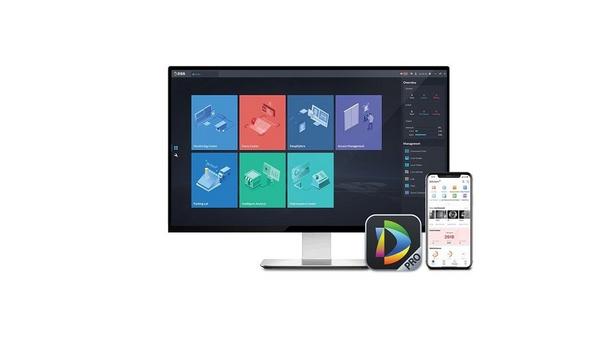
Dahua's latest DSS Pro V8.3 enhancement equips security personnel with advanced tools, enabling them to rapidly identify and monitor suspicious individuals' movements in just seconds. It is a cutting-edge Video Management Software (VMS) security solution designed for efficiency and scalability. It leverages users' video security systems to help them make informed decisions quickly and serves as the backbone of the operation. AcuPick Technology The key upgrades primarily focus on integrating Dahua's advanced algorithm, AcuPick Technology, which helps investigators save time in searching for and identifying people of interest. The feature also supports multiple user logins with specific permissions for up to 200 individuals simultaneously. Remote-control capability The company predicts that this upgrade will foster digital transformation across various sectors Another feature is the remote-control capability, which enables security staff to monitor and track events from anywhere, whether they are on the move or at home. The company predicts that this upgrade will foster digital transformation across various sectors and empower stakeholders from retail, residential, and other sectors to become more digital and efficient. Integrated Search Algorithm Traditional security methods demand frame-by-frame analysis of hours of video footage. With AcuPick, all searchable targets can be scanned instantly. The search algorithm breaks up people and vehicle objects into feature values that are sent to the DSS platform for processing. DSS saves these feature values to its database and finds the target object by comparing the feature values. Streamlines the user experience Even without clear details, security staff can find and track a person or vehicle of interest using a single reference image. Upon selecting a person, individuals will instantly see a history of each appearance on all AcuPick-enabled cameras throughout the premises. DSS Pro 8.3 streamlines the user experience, eliminating the need for lengthy training sessions. The process is as simple as installing AcuPick, selecting the target, viewing the desired thumbnails, and receiving video feedback instantly. Enhanced Workflow This allows users to easily see personal assignments for each door and personnel situation DSS Pro V8.3 also introduces a clearer assignment system, simplifying the entire workflow. The workflow is divided into three groups – staff assignment, safeguarding doors, and the routes connecting the two. This allows users to easily see personal assignments for each door and personnel situation. Visualized and intuitive dashboard The company has improved its user interface to offer a more visualized and intuitive dashboard. This upgraded feature provides a comprehensive overview of peak times, equipment status, and other vital information, making it easier for stakeholders to manage their security systems. Existing stakeholders enjoy these updates free of charge. While clients are required to purchase their servers for data storage, data transfer during a DSS Pro upgrade is an additional cost.
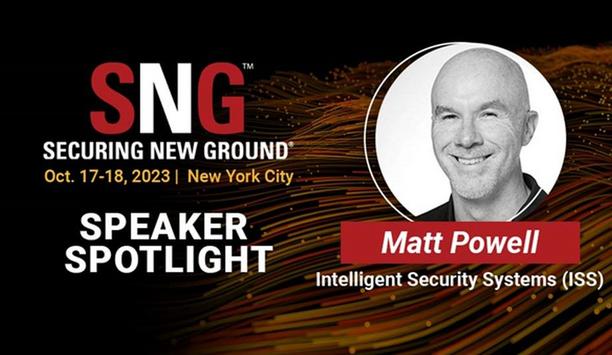
Intelligent Security Systems (ISS), a global provider of video intelligence and data awareness solutions, announced that its Managing Director for North America, Matt Powell, has been selected to speak at next month’s Securing New Ground (SNG) conference in New York City. Scheduled to take place from October 17-18 at the InterContinental Times Square, SNG conference brings together executives and entrepreneurs from across the security industry to network and share information on different technology and business trends that are affecting the market. Impact of artificial intelligence Matt’s session entitled, “What AI Means for your Business,” will examine the impact of AI Matt’s session entitled, “What AI Means for your Business,” will examine the impact of artificial intelligence on security applications and how these effects will be felt by firms throughout the industry within the next two to three years. Joining Matt on the panel will be Hamish Dobson, CVP, Product–Enterprise Physical Security Solutions, Motorola Solutions; Jumbi Edulbehram, Global Business Development, Smart Cities and Spaces, NVIDIA; and, Kurt Takahashi, CEO, Netwatch Group. AI adoption at an exponential rate “The customers that our industry serves are adopting AI at an exponential rate for all aspects of their businesses. Answering the question of how to utilize AI in a business, or how to become part of the value chain that is AI, is fast becoming the dominant conversation across every market sector,” explained Matt Powell. He adds, “Our panel draws from a cross-section of the industry, bringing incredible insights based on experience to this important topic. If I were attending and wanting to understand the most important aspects of artificial intelligence and augmented intelligence in our industry, this is a panel I would not want to miss.” ISS analytics With over three million devices running ISS analytics in 56 countries around the world Matt has over two decades of experience in security and transportation technologies and brings a lessons-learned approach to AI and advanced technology deployments. Matt joined ISS in 2022, combining his manufacturing knowledge with his integration experience to help bring the expertise of the company to the North American market. With over three million devices running ISS analytics in 56 countries around the world, ISS is the largest video analytics provider. Prior roles of Matt Matt formerly served as Principal–Transportation Markets and Principal-Infrastructure Markets at systems integrator Convergint where he set the strategy for business development and professional services that led the company from a handful of airports to 60-plus aviation deployments, including some of the world’s largest airports and airlines. He has overseen technology deployments including video management, access control, analytics, and AI, as well as developed methodologies for deployment used for complex systems, such as identity management and single pane of glass solutions. Prior to Convergint, Matt was the developer of transportation market strategies for Moog and Videolarm.

Expert commentary

The average business owner or investor has some kind of security precaution in place, especially in the after-hours when there are fewer deterrents to inhibit criminal activity. Security guards, video surveillance systems, motion sensor lights, or even just fake cameras placed around the property are some of the common options people choose. Future of overnight security Smart business owners are starting to realize, however, that some of these traditional security measures are becoming antiquated and no longer cutting. The now and future of overnight security is in remote guarding. Pioneered by companies like Los Angeles-based Elite Interactive Solutions, which was founded back in 2007, remote guarding is revolutionizing the overnight security business. Minimizing criminal activity Remote guarding is fast becoming the most popular choice among commercial end-user property owners Remote guarding utilizes a combination of cutting-edge technology, “digital guards,” highly trained security agents, and local law enforcement if and when necessary to minimize the potential of criminal activity. For those adequately enlightened to its overwhelmingly impressive crime prevention capabilities, remote guarding is fast becoming the most popular choice among commercial end-user property owners to secure and protect their investments. What Is Remote Guarding? Remote guarding is a revolutionary concept and increasing trend in security systems that utilize a combination of methods to effectively analyze potential threats to property. Cameras and/or other monitoring devices running highly advanced algorithmic software are installed in strategic areas or vulnerable places onsite and remotely located security agents are immediately notified of any activity within a designated perimeter of the property. A blend of AI, cybersecurity, and video analytics When properly deployed by an expert provider, the technology stack includes a proprietary blend of video analytics, artificial intelligence, cybersecurity, and more. Done right, “noise” is effectively filtered out, allowing agents to act on legitimate alerts and achieve zero false alarms communicated to first responders. Today, there are a lot of terms and descriptions tossed around about remote guarding, remote video, virtual guarding, etc., but those attributes must be present to represent the true definition of the offering and its many virtues. Realtime situational awareness Many systems have a two-way speaker that allows the security agent to give a verbal warning When specially trained security agents are alerted to trespassers, possible intruders, or other suspicious activity, they analyze the situation in real time and determine the necessary level of action. Many systems have a two-way speaker that allows the security agent to give a verbal warning, known as a voice-down, to the individual(s) that they are being watched. Most perpetrators, often believing the response is emanating directly from security personnel on the property itself rather than from a remote command center, flee immediately. However, if the threat persists, the security agent enlists local law enforcement to get on the scene. Customized remote guarding When properly deployed, remote guarding systems are also customized to specific properties. A team of consultants visits the client’s property to evaluate its vulnerabilities and where to best place cameras and/or other monitoring devices for system efficacy. Traditional Security Shortfalls According to Keith Bushey, a retired commander for the Los Angeles Police Department, there is much frustration between law enforcement officers and potential victims of crime due to the historically unreliable performance of traditional burglar alarm systems and central monitoring stations. He states about 90% of security-related calls are false alarms, a problem that has been well-documented through the years. Onsite challenges When a legitimate emergency does occur, the perpetrators have often already done their damage When a legitimate emergency does occur, the perpetrators have often already done their damage and/or escaped by the time law enforcement arrives. Onsite security guards are not the remedy either as they bring their own set of issues and challenges. Unexpected costs Traditional security systems can also have unexpected costs. The cost is not only in the security guards’ paycheck or the cost of the equipment itself. The cost comes when an actual incident occurs. In worst-case scenarios, the security guard(s) are injured, the business suffers inventory loss, and/or damage is sustained to the property. The medical and other costs for the security guard(s), the loss of inventory, property damage, deployment of law enforcement resources, and possible fallout of legal expenses all add up. Even in the best-case scenario, false alarm expenses incur if law enforcement is dispatched. These, among many others, are some of the primary issues that remote guarding resoundingly answers as a superior alternative. A Bounty of Benefits Remote guarding systems have been proven to cut costs and be more effective than traditional security systems. Even though the monthly monitoring costs of remote guarding are significantly higher than traditional intrusion detection system monitoring, the much higher effectiveness in crime reduction, elimination of false alarms, and augmenting or replacement of manned guards result in a substantially higher return on investment (ROI) to the end user. Easy tracking of threats The security cameras already have their image captured on record, making them easier to track down For example, case studies have demonstrated reduced security costs for clients by 60%, on average. These reductions have come from the costs of security staff, inventory, or property loss, plus saving money on insurance premiums and deductibles. The nature of remote guarding reduces the risk and costs of false alarms, with professional security agents able to determine an actual threat before law enforcement is called. In a rare instance when a perpetrator escapes before law enforcement arrives or can detain the individual(s), the security cameras already have their image captured on record, making them easier to track down and identify. Reduction of false alarms The significant reduction in false alarms is greatly appreciated by law enforcement, as it allows them to focus on real emergencies or crises. Better relationships are also developed between clients and law enforcement, as remote guarding systems are highly reliable in providing accurate and real-time information to officers as they approach the scene. In short, it assists law enforcement in doing their job more effectively, as well as more safely thanks to having eyewitness information before engaging in an active crime scene. Partnership When you combine the decreased cost with the increased efficiency and success rate, it is easy to see why many commercial end-user property owners across the country are making the shift to remote guarding. It’s also an outstanding opportunity for professional security dealers and integrators to partner with a remote guarding services provider to bring a superior solution to their end customers and pick up a recurring monthly revenue stream in the process.

It’s no secret that the data security sector is constantly changing. It has an annual CGR of about 12.3%. Future trends in data security Much of this has to do with the rise of cybercrime in recent years, with reports showing that cyberattacks happen as often as every 39 seconds. To combat the growing rate of cybercrime, data security has been on the rise. As we journey further into this era, it becomes evident that a spectrum of significant trends is molding the future of data security. This exploration delves into a selection of these trends, unraveling their importance and the potential implications they carry 1. AI security tools will increase Artificial Intelligence is also being used in the development of smart attacks and malware The introduction of Artificial Intelligence in the data security industry brought significant changes, especially in cybersecurity. AI has been the golden standard for face detection, natural language processing, automated threat detection, and automated security systems. Additionally, Artificial Intelligence is also being used in the development of smart attacks and malware, bypassing even the latest security protocols in data control. And as time progresses, AI security tools will flourish and dominate the scene. Let’s take a more in-depth look at three of the top AI security tools. Targeted attack analysis tool Manufacturers utilize targeted attack analysis tools to uncover targeted and stealthy attacks. Artificial Intelligence can be applied to the program’s capabilities, processes, and knowledge. For instance, Symantec launched this tool to combat the Dragon 2.0 attack in 2022. The phishing attack reprimanded multiple energy companies while trying to gain access to their operational networks. Targeted Attack Analysis Tools can analyze incidents and look for similarities from previous situations. They also help detect suspicious activities and collect all the necessary data to determine whether a specific action is malicious. Intercept X tool Results from the Intercept X Tool feature high accuracy and a low false positive rate Sophos, a British security hardware and software company, launched the Intercept X Tool. It engages a neural network that records and analyses data like a human brain. Sophos’ Intercept X Tool can extract features from a single file and perform a deep analysis. It detects malicious activities within 20 milliseconds. Plus, it’s also trained to work on bi-directional sharing and real-world feedback of threat intelligence. Results from the Intercept X Tool feature high accuracy and a low false positive rate. IBM Watson Technology IBM’s QRadar Advisor uses IBM Watson Technology, a unique AI tool for fighting cyber attacks. Artificial Intelligence can auto-investigate activities and indicators for potential exploitation or compromise. With cognitive reasoning, IBM Watson Technology can present critical insights to accelerate the response cycle. Security analysts can utilize this technology to search for threat incidents, reducing the risk of letting them fly under the radar. 2. Blockchain as a security solution It guarantees no points of failure or hackable entrances that can expose datasets inside the system Blockchain is a type of distributed ledger technology (DLT) that aims to establish trust within an untrusting ecosystem. Today it’s one of the most robust cybersecurity technologies in the industry. Blockchain utilizes a decentralized ledger system, but your team members can still gain access to transparent information in the cloud. Members can also record, pass along, and view necessary transactional data in the blockchain. The entire blockchain process maintains data integrity within the system while establishing trust among team members. It guarantees no points of failure or hackable entrances that can expose datasets inside the system. Cybersecurity, biometrics Cybersecurity primarily benefits from these features because blockchain can create a secure and robust wall between data and hackers. On top of that, blockchain ledgers can include biometrics like fingerprints and retina scans. These prevent hackers from accessing any private data. Because blockchain is decentralized, it also limits hackable data. Together with the technology’s record-keeping system, each node is provided insight into data manipulation exposing real-time cybercrime attempts. 3. Increased and widened access control Without access control, expect your company to be open to security issues, including theft, data loss, and breach of data Access control is critical in data security. More than a valuable security tool, business leaders can use access control to regulate people accessing any given resource. A company with an IT security setting can control who has the liberty to edit certain files. One of the primary goals of access control is to minimize threats or attacks to organizations and businesses to keep people and data secure. Without access control, expect your company to be open to security issues, including theft, data loss, and breach of data protection laws. Benefits The benefits of increased and widened access control include: Identifying who can access and control your data at specific time intervals. Protecting data from overwriting, accidental deletion, and malicious intent. User permissions that can be readily changed. Compliance and regulation with data privacy laws. Central management of access to data through a reporting portal or a dashboard. Multi-factor authentication Access control comes in various types and systems, so it’s critical to know the features of what you’re looking for. The most common type is multi-factor authentication or MFA. It involves multiple steps before logging in, requiring the user to enter other relevant information besides the password. Some other examples of information include biometrics, answering a security question, or entering a code sent to the user’s email address. Two-factor authentication, role-based access control Two-factor authentication further prevents unauthorized entries that can result in unnecessary data possession Two-factor authentication further prevents unauthorized entries that can result in unnecessary data possession. Another type of access control is role-based access control. In this setup, only one individual can set up access guidelines and grant permissions to specific team members within an organization. 4. Greater use of the zero-trust security model The zero-trust security model is a framework that requires every user within and outside the organization to undergo authentication, authorization, and validation. These are all essential to ensure proper security configuration before access is granted to the company’s applications and data. A zero-trust model assumes that anyone can cause data breaches and that a traditional network edge is not taken into effect. Moreover, it addresses the following modern-day challenges: Hybrid cloud environments. Security of remote workers. Ransomware threats. This framework utilizes the combination of multiple advanced technologies, including: A risk-based multi-factor authentication. Endpoint security. Identity protection. Cloud workload technology. The zero-trust model uses all these innovative tools for system identification, user verification, access consideration, and system security maintenance. Constant validation and monitoring Enforcing strict policies and compliance with data privacy laws are also essential Additionally, it also considers data encryption, email security, and asset verification before establishing connections with applications. The architecture of a zero-trust framework requires constant validation and monitoring of the users and the devices they are using. Enforcing strict policies and compliance with data privacy laws are also essential. More importantly, the zero trust architecture requires all organizations to be aware of all their available services and accounts to gain complete control of data handling and manipulation. 5. Increased privacy regulations Privacy regulations and policies guide organizations in proper data control, handling, and security. These policies guide organizations in proper data control, handling, and security. As a responsible business owner, you must comply with these regulations to avoid legal issues. With cybersecurity attacks becoming common, expect increased and stricter privacy regulations to be released in the next few years. While current policies are still taken into effect, various modifications and adjustments will occur to compete with the rising numbers of data breaches, thefts, data loss, and more. California Privacy Rights Act (CPRA) Currently, the California Privacy Rights Act (CPRA) is the most comprehensive legislation on state data privacy. It only started to take effect on January 1, 2023. The CPRA introduces the following principles: Broad individual consumer rights. Significant duties of people who need to collect sensitive and personal information. Additional definitions of data privacy and security. An individual’s duties include releasing information about data collection to concerned data subjects and proper access, correction, and deletion of information. Final thoughts 2023 is a big year for data security. Trends such as increased adoption of zero-trust policies, a greater reliance on AI security tools, and the implementation of blockchain as a security solution are all things we expect to see shortly. Staying up-to-date with these trends is important for keeping your business current and ensuring that you’re adhering to new and changing regulations. Doing so can give you an edge over the competition and keep you out of legal hot water.

Timely and important issues in the security marketplace dominated our list of most-clicked-upon articles in 2018. Looking back at the top articles of the year provides a decent summary of how our industry evolved this year, and even offers clues to where we’re headed in 2019. In the world of digital publishing, it’s easy to know what content resonates with the security market: Our readers tell us with their actions; i.e., where they click. Let’s look back at the Top 10 articles we posted in 2018 that generated the most page views. They are listed in order here with a brief excerpt. 1. U.S. President Signs Government Ban On Hikvision and Dahua Video Surveillance The ban on government uses, which takes effect ‘not later than one year after … enactment,’ applies not only to future uses of Dahua and Hikvision equipment but also to legacy installations. The bill calls for an assessment of the current presence of the banned technologies and development of a ‘phase-out plan’ to eliminate the equipment from government uses. 2. Motorola Makes A Splash With Avigilon Video Surveillance Acquisition Early clues point to Motorola positioning Avigilon as part of a broader solution, especially in the municipal/safe cities market. The company says the acquisition will enable more safe cities projects and more public-private partnerships between local communities and law enforcement. Motorola sees Avigilon as ‘a natural extension to global public safety and U.S. federal and military’ applications, according to the company. 3. Impact Of Data-Driven Smart Cities On Video Surveillance One of the major areas of technology that is going to shift how we interact with our cities is the Internet of Things (IoT). One benefit will be the ability to use video surveillance to analyze data on large crowds at sporting events The IoT already accounts for swaths of technology and devices operating in the background. However, we’re increasingly seeing these come to the forefront of everyday life, as data becomes increasingly critical. Bosch is highlighting its “Simply. Connected” portfolio of smart city technology to transform security as well as urban mobility, air quality and energy efficiency 4. CES 2018: Security Technologies Influencing The Consumer Electronics Market Familiar players at security shows also have a presence at the Consumer Electronics Show (CES). For example, Bosch is highlighting its “Simply. Connected” portfolio of smart city technology to transform security as well as urban mobility, air quality and energy efficiency. Many consumer technologies on display offer a glimpse of what’s ahead for security. Are Panasonic’s 4K OLEDs with HDR10+ format or Sony’s A8F OLED televisions a preview of the future of security control room monitors? 5. SIA Predicts Top Physical Security Trends For 2018 Traditional security providers will focus more on deepening the customer experience and enhancing convenience and service. The rise of IoT also places an emphasis on cybersecurity, and security dealers will react by seeking manufacturers and technology partners with cyber-hardened network-connected devices. 6. High-Speed Visitor Screening Systems Will Improve Soft Target Security The system is more expensive than a metal detector, but about a third the cost of familiar airport body scanners. Labor reduction (because of faster throughput) can help offset the system costs, but “it’s difficult to quantify the improvement in the visitor experience,” says Mike Ellenbogen, CEO of Evolv Technology. 7. How To Prevent ATM Jackpotting With Physical And Cyber Security A new crime wave is hitting automated teller machines (ATMs); the common banking appliances are being rigged to spit out their entire cash supplies into a criminal’s waiting hands. The crime is called “ATM jackpotting” and has targeted banking machines located in grocery shops, pharmacies and other locations in Taiwan, Europe, Latin America and, in the last several months, the United States. Rough estimates place the total amount of global losses at up to $60 million. The safety and security world bring a complex problem to solve how to pick out a face in a moving and changing environment and compare it to several faces of interest 8. Why We Need To Look Beyond Technology For Smart City Security Solutions Although technology is necessary for an urban area to transition in to a safe and smart city, technology alone isn’t sufficient. Truly smart cities are savvy cities and that includes how they employ software, sensing, communications and other technologies to meet their needs. 9. How New Video Surveillance Technology Boosts Airport Security and Operations Employing airport security solutions is a complex situation with myriad government, state and local rules and regulations that need to be addressed while ensuring the comfort needs of passengers. Airport security is further challenged with improving and increasing operational efficiencies, as budgets are always an issue. As an example, security and operational data must be easily shared with other airport departments and local agencies such as police, customs, emergency response and airport operations to drive a more proactive approach across the organization. 10. The Evolution Of Facial Recognition From Body-Cams To Video Surveillance The safety and security world bring a complex problem to solve how to pick out a face in a moving and changing environment and compare it to several faces of interest. “One-to-many” facial recognition is a much harder problem to solve.
Security beat

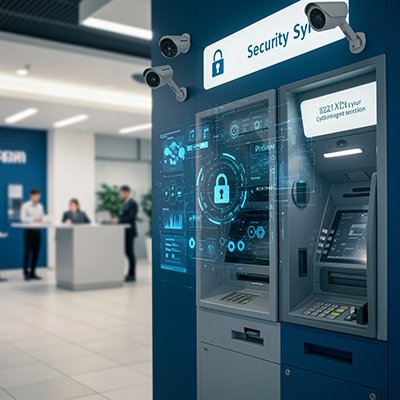
Most customers interface with their financial institutions using automated teller machines (ATMs), which have security issues. However, there are solutions available to combat all current security threats, and the cost of protection is coming down. The ATM industry is therefore in a position to minimize losses, while ensuring consumers continue to get the vital cash they need to lead their daily lives. It is important for the ATM industry to constantly innovate to meet new security challenges. So what innovations are we going to see in the next five years? Contactless Technology Contactless technology will be a great help against ATM skimming, in which criminals steal personal information at ATM machines. Contactless is already being used in some European countries, and the number is increasing. Not having to insert a card into the ATM removes the opportunity to trap cards and also gets around the problem of “foreign” devices installed to read cards. So contactless technology, which some saw as the end of cash, can help make ATMs and cash more secure. Biometrics are certain to be used increasingly to bolster ATM security. Finger, palm, vein, iris and facial recognition all have potential in this respect. Any of these may in the future be used with or without cards, PINs and one-time codes. Speed of operation in relation to biometrics could ultimately govern their use at ATMs. There may also be privacy issues that need to be addressed. The ATM vestibule environment must add security with proper security and surveillance equipment. ATM vestibules, or lobbies, are installed for many good reasons. For one, more convenient, 24/7 locations equals better customer retention for a bank, offering comfort and convenience. 24/7 access to ATMs, night drops, coin counters, online banking kiosks, and other self-service solutions are very much in demand. Second, ATM vestibules protect customers from inclement weather and provide a more comfortable banking environment (however, vagrancy can be an issue; therefore ATM vestibules should require card access). Security and surveillance solutions can’t just be for show. ATMs And Crime A new crime wave is hitting automated teller machines (ATMs); the common banking appliances are being rigged to spit out their entire cash supplies into a criminal’s waiting hands. The crime is called “ATM jackpotting” and has targeted banking machines located in grocery shops, pharmacies and other locations in Taiwan, Europe, Latin America and the United States. Rough estimates place the total amount of global losses at up to $60 million. The Protection Of ATMs ATMs in supermarkets and pharmacies tend to be targeted because they may not be as well-protected, and store personnel likely would not know who is authorized to work on the ATM. In contrast, anyone approaching an ATM at a bank location would be more likely to be challenged. ATM jackpotting originated back in 2010 when Barnaby Jack, a New Zealand hacker and computer expert, demonstrated how he could exploit two ATMs and make them dispense cash on the stage at the Black Hat computer security conference in Las Vegas. Since then, malware has been created and made available on the “Dark Web” that can instruct an ATM to dispense all its cash on demand. ATM Jackpotting ATM jackpotting is a combination of a physical crime and a cyberattack. Typically, a criminal with a fake ID enters a grocery shop or pharmacy posing as an ATM technician, then uses a crowbar to open the top of the ATM – the “top hat” – to gain access to the personal computer that operates the machine. Once he or she has access to the PC, they remove the hard drive, disable any anti-virus software, install a malware program, replace the hard drive and then reboot the computer. The whole operation takes about 30 seconds. The malware then enables the thief to remotely control the ATM and direct it to dispense all its cash on command. If a legitimate customer approaches the machine in the meantime, it can operate as usual until activated otherwise by the malware.

We live in an age when private customer data is constantly under attack from hackers. Cyber-threats have taken a front seat in the line-up of primary risks facing banks and financial institutions. The fact that cyber-attacks are becoming more prevalent isn't the only issue; they're also becoming more complex and therefore harder to address. And although the convenient interconnectivity of the Internet of Things (IoT) creates many advantages for financial institutions, there is also an increased risk to dangerous threats.# The Impact Of Cyber Heists According to Cybersecurity Ventures, the amount of money taken in cyber heists, both in banking and elsewhere, was estimated at $3 trillion overall for 2015, and this substantial amount is expected to double by 2021. In today’s environment, banks, credit unions, and financial organizations of all types are primary targets for hackers. But it’s not just the monetary loss that these businesses need to be concerned about — there is also a threat to the brand, customer trust, and employee safety. Banking Surveys Banking choices are influenced by how secure consumers feel when conducting transactions, either in their local branch, at an ATM or online. In one survey, a vast majority of consumers (98%) felt most secure when conducting transactions at their local banking branch, compared with 92% when conducting transactions online and 85% using a mobile phone app. Further, 90% of consumers said they feel safer when they can see video surveillance cameras in their bank or credit union and would choose a financial institution with surveillance over one without, all other things being equal. Here are some other key findings from the survey: Half of consumers have walked away from an ATM without conducting their intended transaction because someone was loitering in the vestibule 60% of consumers noticed a fraudulent transaction before their financial institution, leaving plenty of opportunity for banks and credit unions to be more proactive when it comes to identifying and notifying customers about potential fraud “Banks and credit unions recognize that today’s consumers want a mix of in-person and online banking service options and have very high expectations when it comes to security and customer service,” said Peter Strom, President and CEO, March Networks, which provides security systems for banks. To increase security, biometric solutions are replacing PINs at physical ATMs To increase security, biometric solutions are replacing PINs at physical ATMs and providing a more fool-proof form of identification for banking security. Ways To Increase Banking Security Popular use cases include a) PIN replacement at physical ATMs; b) proof-of-presence (such as pension benefit distribution) that requires liveness detection; c) more easily authenticating multiple transactions during a single ATM session; d) incorporating biometric information directly into a smart device; and e) the ability to leverage investments in biometric enrollment databases across multiple applications. An example of the latter is when fingerprint authentication on mobile devices used for payments and secure mobile banking is also used in conjunction with enrolled information for authentication at an ATM. The availability of interoperable authentication devices would permit cross-bank usage and pave the way for many new applications in the future. By enrolling a citizen’s fingerprints and then creating an ecosystem in which these transactions are strongly tied to that individual’s biometrics, the potential for fraud and identity theft approaches zero, and the process is simple and convenient for users.

A video analytics system that provides ‘behavioral understanding’ can yield more meaningful and actionable data for a range of applications. In public safety and security, such a system can alert on violent or suspicious behaviors, such as people fighting, vandalism, people with weapons, etc. In advanced traffic surveillance and monitoring, it can provide alerts to vehicle collisions (accidents), traffic hazards or vehicle that aren’t using the road properly, such as a car that stops in the middle of the junction. For enterprise and campus security, it can provide advanced anti-tailgating and detect unauthorized activity. Video surveillance infrastructure viisights was founded by a group of entrepreneurs with track records in developing technology businesses These uses are among the benefits of viisights’ video analytics technology based on behavioral understanding of video content. “It means we can extract more meaningful data from the huge amount of video content that is captured, and we can transform that data to actionable insights that eventually justify the massive investment in video surveillance infrastructure,” says Asaf Birenzvieg, CEO of viisights. Their behavioral understanding systems for real-time video intelligence leverage artificial intelligence technology. viisights was founded by a group of serial entrepreneurs with track records in developing technology businesses. The Israeli company’s founders recognized a growing global need for intelligence to make physical and virtual public areas safer – and realized the role that smart video understanding technology can play. Developing artificial intelligence technologies viisights is committed to developing artificial intelligence technologies that facilitate human-like video understanding, which in turn serves as the basis for fully autonomous video intelligence systems powered by pattern prediction technology. “Behavioral recognition is the future of video analytics and the next generation of the object classification analytics systems that hold the majority of the market today,” says Birenzvieg. viisights has developed a video understanding technology for real-time video processing “To date most video analytics systems still base their product features on static analysis of objects from images using image recognition, even the ones that use ‘AI analytics.’ Products built using such object classification technology are extremely limited.” For example, object classification analytics cannot recognize behavioral events in a video such as people fighting or a car collision because such behaviors can’t accurately be concluded in large scale from analyzing a single static image/frame. Video understanding technology viisights has developed a video understanding technology for real-time video processing. The technology can process live video feeds. In addition to recognizing a particular object (e.g., person) and its attributes (e.g., red shirt), the system can understand an object’s actions, interactions with other objects (events), the scene being viewed (i.e., crowd is gathering, riots) and the context (a car is driving on the road or on the sidewalk). The main verticals are smart cities, enterprises and campuses, banks and ATM security“Basically, we are able to extract more meaningful data from a live video feed and therefore create actionable insights and greater ROI,” says Birenzvieg. The company focuses mostly on security and safety use-cases. The main verticals are smart cities, enterprises and campuses, banks and ATM security, security guard companies and transportation hubs. The company is working on a new product for in-vehicle monitoring mostly for security, safety, vehicle protection and proper vehicle use; it monitors passengers’ behavior inside a bus, train, or taxi. The product will come to market next year. Video management system viisights’ video analytics offering is currently optimized for server-side deployment, and the integration architecture is similar to most video analytics systems. From one side it is integrated with the video management system (VMS). They are a Milestone verified partner and soon will be part of Milestone's marketplace. From the other end, it is connected to a command-and-control system for processing the data and presenting the alerts to the end-user. The analytics company makes most sales through system integrators. They have partnerships with big system integrators like Motorola Solutions and NEC and are also working with smaller ones. They are looking to expand their system integrator network, mostly in the USA and Europe. Behaviors can have many variations and they can be very diverse Cloud video surveillance “We will continue to invest in performance and accuracy, meaning higher recall and lower false positive rate,” says Birenzvieg. “Since our major value proposition is in behavior recognition, behavior events many times are not clearly defined, which is very different from object classification. Behaviors can have many variations and they can be very diverse.” An example is a simple behavior like a person falling on the floor. A person can fall on the floor in many ways, but the challenge is to ignore similar behaviors that are not a person falling and that confuse the system, such as a person bending over to tie his shoelaces. With cloud video surveillance becoming a trend, viisights is also looking into offering some of their advanced functionalities in a video-analytics-as-a-service-model.
Case studies
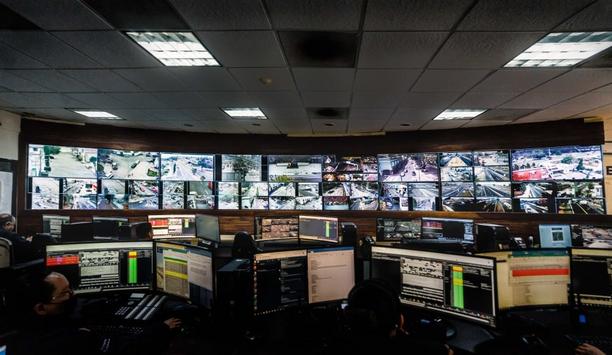
Alarming increases in vehicle thefts, unsolved traffic collisions, and stolen cargo in the Mexican State of Tlaxcala, motivated the Executive Commission of the State Public Security System (CESESP) to expand and upgrade its video security system. To counter the rise in crime, the CESESP sought a flexible, scalable, open-platform video management system (VMS) that could seamlessly incorporate existing cameras as well as over 800 new cameras and edge devices from a range of hardware and software providers. Tlaxcala Located in East-Central Mexico, Tlaxcala is one of 32 states within the Federal Entities of Mexico. With a population of approximately 1,343,000, based on the 2020 census, Tlaxcala is the smallest yet one of the most densely populated states in Mexico. The CESESP of Tlaxcala is tasked with safeguarding residents across the state's 60 municipalities. C4 center C4 center has multiple teams of six security professionals who monitor the system around the clock At the core of all security operations, including the 911 emergency response and 089 confidential tip line, is the CESESP's Control, Command, Communications, and Computing Center (C4). The state’s C4 center has multiple teams of six security professionals who monitor the system around the clock on a large, 24-screen video wall. The C4 also houses the system’s HP and Lenovo servers. Flexibility, scalability, and budget “Flexibility, scalability, and strictly adhering to the budget were top requirements for this critical, state-wide project,” said Maximino Hernández Pulido, Executive Commissioner of the State Public Security System. “We considered a variety of proposals and providers, but we ultimately followed the advice of our integrator, Digital Information Systems, and selected XProtect Corporate from Milestone Systems.” XProtect Corporate The new system includes cameras from Hanwha Vision, Bosch Security and Safety Systems, Hikvision, and Pelco The new system includes cameras from Hanwha Vision, Bosch Security and Safety Systems, Hikvision, and Pelco, all integrated within the system and managed by XProtect Corporate VMS from Milestone Systems. The system is also fully integrated with the BriefCam Video Analytics Platform, delivering video intelligence for system managers to identify, monitor, investigate, and visualize incidents plus video data to make smarter decisions. Efficient and cost-effective integration “Because state officials rely on their video system 24/7, the update needed to be gradual with no downtime. As new cameras were integrated into the Milestone platform, the previous system slowly disappeared,” said Isaac Sánchez Morales, an engineer at Digital Information Systems (SDI), an integrating company. “The XProtect Corporate open platform VMS allowed us to leverage our existing cameras and servers, integrate new equipment and devices, making the process very efficient and cost-effective, and we never had a gap in service.” Data-driven video for fast response times BriefCam video analytics technology The solution detects, identifies, and classifies video metadata to drive more efficient investigations The BriefCam video analytics technology seamlessly integrates into Milestone’s XProtect Smart Client. The solution detects, identifies, and classifies video metadata to drive more efficient investigations and business decisions, such as finding missing persons, investigating vandalism, theft, assaults, accidents, injuries, or acts of violence, as well as extracting and analyzing through heatmaps, dashboards, and visualizations. The analytics have proven beneficial in accelerating investigations, attaining situational awareness, and optimizing operational intelligence for enhanced video search, alerting, and data visualization. Real-time alerts, situational awareness “We installed the BriefCam Insights and Investigator products, and regularly use the platform’s RESPOND and RESEARCH capabilities. One of the advantages of all these XProtect-integrated analytics is that operators do not have to open additional windows or enter new credentials to access them,” said Sánchez. “With this integration of technologies, operators can trigger real-time alerts based on complex object classifications and filter combinations to increase situational awareness meaning authorities can react to events as they unfold.” Proactive policing with LPR With the BriefCam RESPOND solution, object characteristics and license plate recognition tools can be used" Sánchez added, "With the BriefCam RESPOND solution, object characteristics such as vehicle, person, or animal, and license plate recognition tools can be used to trigger rule-based alerts." "These tools can help overcome the challenges of urban video surveillance and drive proactive policing in Tlaxcala." Video technologies reduce state crime rates Following the comprehensive expansion of the security infrastructure, statistics from the Executive Secretariat of the National Public Security Systems revealed Tlaxcala boasted the lowest crime rate nationwide. With the modernized system in place, officials documented a 93% reduction in pilfered freight from transport companies. Similarly, vehicle theft declined by 22.5%. A cost-efficient and flexible way Milestone Interconnect provides a cost-efficient and flexible way to gain central surveillance According to Sánchez and the SDI team, it is expected that each municipality within the territory will soon have its own locally focused VMS. With the use of Milestone Interconnect, all the municipality subsystems will integrate directly with the state-wide platform. Milestone Interconnect provides a cost-efficient and flexible way to gain central surveillance of multiple sites spread across a region. C4 video surveillance operation “The integrated solution delivered through Milestone is a robust, efficient, and secure system that provides all the necessary tools for the C4 video surveillance operation,” added Executive Commissioner Hernández-Pulido. “In addition, the excellent technical and post-sales support from Milestone and SDI has led us to meet the system and performance goals we set for ourselves.”

Residents at Chapel View can receive and answer door entry requests via mobile while granting temporary access using QR codes, due to Comelit-PAC’s dedicated mobile app and use of the latest security technology. Chapel View Set in the quaint village of Gildersome in Leeds, Chapel View is an exclusive housing development, presenting seven residential homes in a discreet cul-de-sac, all secured with a communal gate. The community featured a legacy door entry system that required an upgrade to ensure the security of residents. Comelit-PAC worked with local installation specialists AC Secure from the initial design process, through the works programme to project completion. Door entry Each house has its licence and users can use the feature-rich Comelit app to control the gate Door entry, via Comelit-PAC’s VIP system, was specified, utilizing its stylish Ultra door entry solution, to enable control of the gate to the housing estate. Each house has its license and users can use the feature-rich Comelit app to control the gate while also creating QR codes to allow temporary access for visitors. Says David of the resident’s association of Chapel View, “With high expectations for our residents to deliver ultimate security, every element of the new door entry system also had to be considered from a convenience perspective, to enable them to answer door entry requests remotely, from their smartphone." Additional benefits “AC Secure worked with us right from the specification process and took the time to understand these requirements, before recommending Comelit-PAC as an ideal solution." "The additional benefits of utilizing app technology to present door entry and QR codes for temporary access to visitors immediately appealed. And the system was installed with minimal disruption and a great benefit to our community." Smart home security systems Adam Cousens, Managing Director at AC Secure added, “Chapel View has the look and feel of a quaint village community where security and door entry is a high priority. All the smart home security systems had to be stylish and futureproof to suit the requirements of the community, whilst also ensuring ease of installation and simple use." “Comelit-PAC’s Ultra system with VIP technology, coordinating with its dedicated app was the natural choice for door entry." Ultra digital entrance panel The system enables new residents to grant access through the vehicle gates using Comelit’s dedicated mobile app "Residents love the sleek design and the VIP technology is easy to use and allows them the convenience to receive calls and see visitors from anywhere. The combination has truly elevated the door entry experience.” The entrance to Chapel View has been enhanced with Comelit-PAC’s stylish, flush-mounted Ultra digital entrance panel. The system enables new residents to grant access through the vehicle gates using Comelit’s dedicated mobile app. Mobile-first solution Stephen Wragg, Business Development Manager for Comelit-PAC concluded, "What our work with AC Secure at Chapel View demonstrates is how Comelit-PAC is ‘with you always.” There is no project too big or too small for us to work with our installers and partners to provide smart, yet stylish door entry solutions for residents to benefit from the latest in smart access control." "Ultra, together with VIP presents a powerful mobile-first solution that can ensure the ultimate security for this residential community.”

More than 2,000 innovative Safetyflex anti-terrorist bollards have now been installed in the heart of Melbourne, Australia, as part of a local government scheme launched in response to a fatal vehicle attack. Coventry-based Safetyflex Barriers has installed its spring steel bollard system across the Melbourne Central Business District (CBD) with the help of its Australian distributer, Ezi Security Systems. Most prominent pedestrian The city was rocked by a vehicle attack in January 2017 when a car was deliberately driven into pedestrians along Bourke Street, killing six people and leaving 27 seriously injured. In the aftermath, a AUS$52.5 million security upgrade at Melbourne's busiest and most prominent pedestrian sites was commissioned by The City of Melbourne, with hostile vehicle mitigation predominantly featuring Safetyflex’s advanced spring steel bollards. More than 2,000 of the slimline bollards have now been installed across key sites within the CBD, in addition to further sites in Australia, helping to keep high-risk crowded places safe from the threat of vehicle attacks. Anti-terrorist bollard system The unique thing about our bollards is they only require shallow foundations around 200mm deep" Marcus Gerrard, Director at Safetyflex Barriers, said: “Our patented anti-terrorist bollard system has been game-changing, providing unprecedented crash test certified performance in an attractive, slimline design. We are the only company in the world to use this type of technology in anti-terrorist bollards and crash rated street furniture.” He adds, “The unique thing about our bollards is they only require shallow foundations around 200mm deep, which is key in helping cities such as Melbourne navigate around in-ground obstructions, while still providing high-level security systems. The installation of the 2,000th spring steel bollard is of great satisfaction and pride, and reflects our strong experience and expertise in securing busy cities and centers worldwide. Our bollards will help ensure the safety of residents and visitors to Melbourne and Australia for years to come.” Stopping vehicle attacks The spring steel technology means the bollards can be installed in fixed, removable or retractable versions, while the elegant stainless-streel shrouds are also fitted with reflective bands to provide night-time visibility. The bollards have already proved their worth in stopping vehicle attacks, when in 2021 a stolen car fleeing police in Melbourne CBD was halted in its tracks by a Safetyflex bollard before the drivers could inflict any damage. Pedestrians were able to retreat to the protection offered by the line of Safetyflex bollards, ensuring nobody was hurt. Safetyflex has now become one of the biggest suppliers of anti-terrorist bollards in Australia, protecting high-profile locations in Brisbane, Melbourne and Sydney from the threat of vehicle attacks.

Genetec Inc., a provider of unified security, public safety, operations, and business intelligence solutions, announced that the Carrollton-Farmers Branch Independent School District (CFBISD) in Texas has implemented a unified school security solution with Genetec™ Security Center for video surveillance and access control and Bosch Security Systems for intrusion detection. CFBISD CFBISD provides schooling for 25,000 pre-kindergarten through twelfth grade in the Dallas suburbs. The district comprises 24 elementary schools, six middle schools, five high schools, and three specialty program centers. The overhaul was the result of a three-year bond project to refurbish older buildings and update all security systems to increase video coverage and door monitoring while implementing a standardized modern intrusion system. Need for a unified security solution There was very little standardization across our schools and facilities" “There was very little standardization across our schools and facilities,” Daniel Robertson, Senior Security Systems Engineer at CFBISD. “We needed a more streamlined approach to security. The upgrade wasn’t only about investing in a new unified security solution. It was a complete change of mindset in how we secured our district.” Genetec-Bosch solution Currently, the Genetec-Bosch solution has been deployed across 42 CFBISD sites, including most schools, administrative buildings, sports stadiums, transportation depots, service centers, and other facilities. At all locations, the team is using Genetec Security Center to manage nearly 2000 cameras, 50 door readers, and 600 Bosch intrusion sensors with Bosch G series intrusion panels. Video intercom setup CFBISD help facilitate responses and keep all parties on the same page in the event of an emergency They also have a video intercom setup at main entrances and are using Security Center to manage more than 7,000 cardholders, streamlining activation/deactivation. CFBISD has even given authorized School Resources Officers and district Police Chief administrative accounts, to help facilitate responses and keep all parties on the same page in the event of an emergency. Security Center Daniel Robertson adds, “Security Center allows us to quickly investigate any situation across our facilities. All our doors and intrusion points are linked to video, so we can easily retrieve everything from one platform." "And if there’s an alarm triggered, we can click on that event and immediately know what’s going on. All this can be done quickly, so we see what’s happening and address it right away,” said Robertson.

Wilson Bank & Trust, member FDIC, is an independent, community-based bank that began operating in Tennessee, USA in 1987. They have mortgage offices, operations centers, ATMs and branches located in and around Middle Tennessee that serve the city and surrounding rural areas. In total, they have operations and security at approximately 40 locations. One of the keys to their on-going success is their continuous search to improve their offerings. This drive extends to their physical security as well. Starting in 2016, the Bank began to look at upgrading their physical security system with a particular focus on replacing their analog cameras. Upgrading Wilson Bank & Trust’s physical security system The bank had cameras from multiple manufacturers on multiple systems" According to Elvis Huff, the Assistant Vice-President and Director of Security at Wilson Bank & Trust, “The bank had cameras from multiple manufacturers on multiple systems. Most of them were already 8-10 years old, when we began the process.” He adds, “This meant that the image quality was low and we could not get the video retention rates we wanted. In addition, many of the cameras had licensing agreements, so we were paying fees for products that were not meeting our needs.” IT-based, PoE (Powered over Ethernet) cameras Elvis Huff, whose experience prior to joining the Bank includes 12-years in law enforcement, established clear selection criteria at the beginning of the process. The Bank wanted IT-based, PoE (Powered over Ethernet) cameras that could produce high-quality video and did not require licenses. They also wanted DVRs or NVRs that would give them longer-term retention rates, 90-days at a minimum. After investigating their options, Wilson Bank & Trust determined that working with Hanwha Techwin cameras and systems would be the best fit for their requirements. Cyber security as a key consideration During the decision-making process, one of the deciding factors was that Hanwha cameras and systems are manufactured in-house end-to-end. In their view, this was particularly important for mitigating cyber security risks. According to Elvis Huff, “At the time, cyber security and network security issues were frequently reported, as cameras were being compromised for use in Distributed Denial of Service (DDoS) attacks. The ability to work with a company that does everything from manufacturing the chipset and camera to developing the software was a game-changer for us. We knew it would give us tremendous peace of mind.” Multi-sensor panoramic and network IR dome cameras They have taken a multi-year approach to satisfy budget and personnel constraints The bank began with a preliminary test at a single location. According to Elvis Huff, “We tested it for about a month and we loved it. The system was easy to deploy and easy to navigate.” Following this, they began upgrading their physical security systems at several branches, ATMs and other locations each year. They have taken a multi-year approach to satisfy budget and personnel constraints. Till date, they have installed new NVRs and more than 600 cameras. Installation and maintenance cost savings By switching to industry standard PoE, IP-based cameras, the bank has realized significant savings with regards to installation and maintenance costs. “We have reduced our installation costs because we do not have to run extra wire. And, we have reduced maintenance costs because the system is less complex and is less likely to breakdown,” explained Elvis Huff. Upgrading the branches has included the installation of several panoramic cameras and network IR dome cameras. PNM-9020V multi-sensor 180-degree panoramic camera The PNM-9020V multi-sensor 180-degree panoramic camera provides up to 30fps at full resolution. These cameras are a favorite of Huff’s for their ability to capture good quality images of a large area. Elvis Huff adds, “I like that I can put them on the side of a building and capture what is going on in an entire parking lot.” Huff has also installed cameras to record parking lot entrances and exists. Recently, this strategy helped as the security team was able to identify a vehicle associated with a fraud case, by using an image of its license plate captured, as it was leaving the facility. Dome cameras installed For branch and building interiors, they installed a variety of dome cameras, including the QND – 6010R Network IR For branch and building interiors, they installed a variety of dome cameras, including the QND – 6010R Network IR. This indoor camera provides 2MP maximum resolution, 30fps at all resolutions, motion detection, as well as tampering and defocus detection. According to Elvis Huff, “When it comes to capturing images of vehicles, license plates and transactions, the directional dome cameras cannot be beat.” Capturing high-quality images with hidden cameras The bank has also made use of the XNB-H6241A Network ATM Camera Kit with 8m cable. Elvis Huff has used the kits to install hidden 2MP HD cameras. The fact that the cameras do not disrupt a branch’s aesthetics is important for maintaining a positive customer experience. At the same time, these kits have allowed the bank to capture images that are not possible with a traditional top-down view. Waist-up images, which include a person’s face, can be vital, when it comes to investigating or prosecuting theft and fraud. Having access to images from this angle is already proving to be invaluable. In a recent case of fraud involving identity theft, an individual presented fictitious and forged documents at one of the bank’s branches. “Thanks to the Hanwha high resolution camera, we had a clear image that we were able to use to identify the individual,” said Elvis Huff. Meeting required retention rates with XRN 2011 NVR Each location has a similar setup with cameras connected to a dedicated NVR Each location has a similar setup with cameras connected to a dedicated NVR (network video recorder). At this point in the process, the majority of the NVRs are XRN 2011s. The XRN 2011 NVR supports up to 32 channels and has a maximum internal storage capacity of 48 terabytes. According to Elvis Huff, the ability to store such a large amount of data was an important factor in selecting the XRN 2011 NVR. He said, “It is not uncommon for us to have a 40 to 50 terabyte NVR as this allows us to meet our 90-day retention requirements.” Video used for investigative purposes Elvis Huff also appreciates the fact that the new NVRs send security personnel notifications, when a camera goes down or if storage issues arise. The video captured is used mostly for investigative purposes. Because their NVRs notify them in the event of an error or potential concern, the team can rest assured that they are continuously capturing the information they need to keep the bank secure. According to Elvis Huff, the relationship with Hanwha Techwin has been a positive one. The bank is happy with the upgraded technology, and Huff continues to be impressed with the equipment, stating “We really like our cameras. We have already seen good returns on the money we have invested. They are proving very beneficial in helping us serve our customers and prevent loss at Wilson Bank & Trust.”
IDEMIA has been awarded a new contract that includes identity and travel documents, the identification system, and related services by Chile’s Civil Registry and Identification Service for 10 years. The new generation of ID documents will incorporate multibiometrics: fingerprints, face, and iris. The ID documents will meet a higher level of security standards, making the Chilean passport one of the securest travel documents in the world. Digital ID The contract will also include a Digital ID that will enable local citizens to securely access online services. The new contract includes an upgrade of ID documents and the provision of a digital ID for all Chilean citizens. The ID documents also comply with the highest security standards on the market, including cryptographic technologies. For the first time, Chilean identity documents will include iris biometrics in addition to face and fingerprint biometrics. Private and public access IDEMIA’s solution allows visually impaired people to use their ID card and passport through an app to reproduce data The digital ID (in compliance with ISO and ICAO standards) allows secure access to online public and private sector facilities, for example, telemedicine and transport booking services. Additionally, Chilean citizens will be able to securely share ID attributes online for remote ID verification. An average of 320,000 passports will be produced per year, in addition to 4.8 million ID cards. IDEMIA’s solution allows visually impaired people to use their ID card and passport through an app that uses voice assistance to reproduce the data. IDEMIA also proposes identity cards and passports that contain the initials of the citizen in braille. Identification solutions “We are proud to continue our long-term partnership with Chile by providing one of the most robust and globally recognized identification solutions on the market.” “With this new generation of secure ID documents based on multibiometrics and cryptography, we are providing an end-to-end solution that meets the stringent requirements of the Chilean authorities, enabling the country’s digital transformation,” said Matthew Cole, EVP of Public Security & Identity at IDEMIA. Increasing passport ranking IDEMIA has been present in Chile since 2012 and has issued over 3.37 million passports and 29 million ID cards IDEMIA has been present in Chile since 2012 and has issued over 3.37 million passports and 29 million ID cards, with delivery times averaging less than 24 hours. IDEMIA’s longstanding collaboration with the Civil Registry and Identification Service has resulted in Chile’s passport ranking 16th in the world, allowing visa-free entry to 174 countries and an exclusive visa waiver for the United States. Additional information on ID documents Special attention was paid to the design of the passport and ID card to reflect the unique character of the world’s longest country (north to south). The development of the solution for Chile’s ID program is based on the latest developments of IDEMIA’s innovative automated biometric identification system, IDEMIA’s Biometric Recognition System (IBRS) that ensures each citizen is provided with a strong and unique legal ID that is valid throughout their lifetime. It also includes specific components (MBIS) for interconnection with National Security Organisms.
Round table discussion

Headlines of violence in our schools are a reminder of the need to keep educational institutions safe. In fact, if there is a positive aspect to the constant bombardment of headlines, it is that it keeps our attention perpetually focused on how to improve school security. But what is the role of physical security systems? As the new school year begins, we asked this week’s Expert Panel Roundtable: Are schools safer because of physical security systems? Why or why not?

As physical security technologies become more complex, it is incumbent on the dealer/integrator to have the skills and expertise needed to ensure that a system operates smoothly. The value of integrators increasingly rests on the skill sets they bring to bear when installing a system. If the skills are missing, there is a problem. We asked this week’s Expert Panel Roundtable: What missing skills among security integrators can cause problems for customers?

Driving the smart homes market is the convenience of simple technology solutions. Almost every home now has a “smart speaker” that makes it easier than ever for homeowners to interface and control their technology. But where does security fit into the new landscape of smart home systems? We asked this week’s Expert Panel Roundtable: What’s new in smart homes and residential security systems?
Products