Security Industry Association (SIA) - Experts & Thought Leaders
































Latest Security Industry Association (SIA) news & announcements
The Security Industry Association (SIA) is proud to announce a new partnership with AMAG Technology to enhance education on the Open Supervised Device Protocol (OSDP), an access control communications standard designed to improve security, system efficiency and interoperability across security products. With OSDP rapidly becoming the industry standard among developers, expertise in designing, specifying and configuring OSDP systems is increasingly essential for integrators, government and corporate security teams and consultants. Secure communications protocol “All of the leading access, identity and credential companies have adopted OSDP as their primary secure communications protocol. But building the technology is only half the battle: consultants and commercial teams need to know how to lead with it, and technical professionals need to know how to install and commission it correctly. AMAG is proud to be the first manufacturer to make SIA certified OSDP training part of our core curriculum, with participants earning a SIA OSDP Certified badge upon completion, because that’s where the promise of OSDP is actually realized,” said Kyle Gordon, executive vice president of global revenue and customer experience at AMAG Technology. This collaboration introduces a comprehensive, tiered educational program aimed at equipping sales and marketing professionals with a solid foundation in OSDP, highlighting its advantages over legacy protocols like Wiegand, including improved cost-efficiency, security, and interoperability. Additionally, installers and operators will benefit from hands-on training covering device setup, configuration and troubleshooting through combined AMAG technical courses and the SIA OSDP Boot Camp. Interoperable security environments Together, SIA and AMAG Technology are committed to preparing security professionals to confidently educate customers on the benefits of OSDP and smoothly guide them through system upgrades, fostering safer and more interoperable security environments. “Expanding OSDP technical education is crucial for the security industry’s future,” said Dr. Elli Reges, director of learning and development for SIA and executive director for the Foundation for Advancing Security Talent (FAST). “This partnership will play a vital role in reaching end-users directly, ensuring they not only understand the benefits of OSDP but also have the hands-on knowledge needed to install and maintain systems effectively. By empowering all stakeholders with the right skills, we’re helping to build safer, more reliable access control solutions for everyone.” Access control systems This partnership will support the industry in meeting the increasing demands of organizations seeking advanced security technologies, offering access to essential knowledge, resources, and training to help teams understand and implement OSDP effectively. By building the skills needed to transition from legacy access control systems, professionals will be better positioned to adopt modern technologies and contribute to raising security standards throughout the industry. Learn more about AMAG’s SIA certified OSDP training program here.
The Security Industry Association (SIA) announced a major milestone in its SIA OSDP Verified initiative—that over 200 device models have been named OSDP Verified through the comprehensive program, which validates device conformance to the SIA Open Supervised Device Protocol (OSDP) standard. About SIA OSDP SIA OSDP is an access control communications protocol standard maintained by SIA to improve interoperability, add advanced functionalities and support an AES-128 encryption for security. Already in use by many leading manufacturers, the standard offers compliance with access control installations that require advanced security or are used in government per FIPS 201-3. Products that are OSDP Verified are displayed in the OSDP Verified Product List and can use the SIA OSDP Verified mark in their product marketing materials. With this milestone, security integrators, specifiers and practitioners now have a wider array of OSDP offerings to recommend, and buyers have the confidence products from the SIA OSDP Verified list have been third-party tested and perform within the requirements of the OSDP standard. Representing countries “Since its launch in April 2020, the SIA OSDP Verified program has tested and validated 222 products from 32 companies and brands—substantial progress in six years, highlighting the market need and the program’s success,” said Cameron Walker-Miller, director of standards and technology at SIA. “The program now has representation in nine countries across North America, Europe, Asia and the Middle East, and we’re seeing growing enthusiasm across domestic and international participation.” OSDP Verified product list and program As of July 2026, 46 access control units and 9 peripheral devices have been recognized as OSDP Verified. In addition to the growth of the OSDP Verified product list and international adoption, IDmachines has been renewed as SIA’s testing provider for the OSDP Verified program. The establishment of the SIA OSDP Verified program was a response to the growing adoption of OSDP in the industry to provide an authoritative source of OSDP solutions and the market confusion for nonverified claims of product compliance with the OSDP standard. By becoming OSDP Verified and displaying the SIA OSDP Verified mark on their products, access control manufacturers can instill confidence in their customers that their devices have gone through rigorous testing as required by the OSDP standard. Benefits of SIA OSDP Verified Benefits of becoming SIA OSDP Verified include an authoritative listing of OSDP solutions; a consultative process that provides vendors with implementation and remediation guidance; a lightweight, nonpunitive program with no annual membership fees; and continuous access to open-source testing tools and community feedback that promotes device conformance through the product life cycle.
The security industry is undergoing a fundamental transformation as organizations move beyond traditional video surveillance toward AI-driven “visual intelligence.” This shift reflects a growing demand for proactive, real-time security solutions that not only capture incidents but help prevent them. Once viewed primarily as passive recording tools, traditional video surveillance systems are rapidly evolving into intelligent solutions capable of delivering actionable insights. As a result, surveillance is no longer just about capturing evidence after the fact. It is becoming a strategic tool to actively protect people, assets, and operations. Delivering actionable insights This transformation is fueling significant market growth. According to Markets and Markets, the global commercial security market is projected to reach $381 billion by 2030, driven largely by the adoption of AI-powered, proactive monitoring technologies. With an estimated 150 million installed cameras still operating as simple, reactive devices containing little to no intelligence, according to the Security Industry Association (SIA), there is a significant opportunity to upgrade the existing infrastructure to adopt AI powered proactive monitoring technology. “Businesses are realising that traditional surveillance creates operational blind spots, leaving room for missed threats, response delays, and costly false alarms,” said Wes Usie, president of CHeKT. “Security is no longer about watching video. It’s about understanding what’s happening in real time and taking action.” Next-generation platforms A key driver behind this shift is the increasing focus on artificial intelligence and predictive analytics. AI is now the primary area of research and development investment for security solution providers, with predictive data analytics widely viewed as a critical component of next-generation platforms. These technologies enable systems to distinguish between real threats and harmless activity, dramatically improving response times and operational efficiency. The industry is also moving toward a Software-as-a-Service (SaaS) model, where cloud-based, camera-agnostic AI platforms layer advanced analytics onto existing infrastructure. This approach allows organizations to modernise their security systems without costly hardware replacements, while enabling integrators to deliver high-margin, long-term managed services with continuous updates and improvements. Limitation of human monitoring At the same time, growing challenges with traditional security models are accelerating the need for change. False alarms, for example, have reached a tipping point. More than half of security users report experiencing at least one false alarm and 10 percent report five or more, according to Parks Associates. These excessive alerts are overwhelming law enforcement agencies, prompting many municipalities to require verified alarms before dispatch and imposing fines of up to $400 for repeated false alarms. Compounding the issue is the limitation of human monitoring. An IEEE study shows that when operators monitor multiple screens, up to 60 percent of events can be missed, highlighting the inefficiency of labor-intensive surveillance models. These gaps contribute to widespread dissatisfaction, with 35 percent of customers citing false alarms and system unreliability as key reasons for dissatisfaction or cancelling services, according to Parks Associates. Providing meaningful notifications “The traditional model creates alert fatigue, delayed response, and unnecessary costs,” added Usie. “When critical events are missed or misinterpreted, the consequences can be severe.” These challenges are reshaping expectations across both the residential and commercial markets. Residential customers are increasingly seeking “video-first” solutions that deliver reliable, real-time alerts and active deterrence. They expect systems to automatically filter out false alarms and provide meaningful notifications, not noise. In response, 42 percent of security dealers now offer video verification as a core service, according to the SIA 2025 Security Megatrends report. Visual intelligence platforms Meanwhile, commercial and enterprise organizations are redefining how they view security investments. No longer considered a sunk cost, security is now expected to deliver a measurable return on investment. Businesses are demanding multi-purpose visual intelligence platforms that go beyond safety to provide operational insights, support compliance, and optimize logistics. Proactive visual security offers a path forward. By leveraging AI-driven analytics and real-time verification, organizations can identify threats earlier, reduce false alarms, and enable faster, more effective responses. This not only strengthens protection but also delivers tangible business value. CHeKT is at the forefront of this evolution, delivering a proactive visual security platform with intelligence that transforms how security is monitored and managed. By combining real-time video verification with advanced analytics and a network of monitoring partners, CHeKT enables security teams to detect, verify, and respond to incidents as they happen and often before they escalate.
Insights & Opinions from thought leaders at Security Industry Association (SIA)
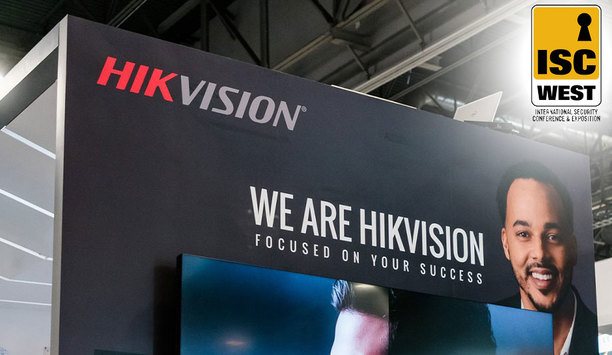
Despite any negativity you may hear, Hikvision is optimistic about their role in the U.S. market. “We demonstrate that we can be trusted, and that we should be trusted,” says Jeffrey He, Vice President, Hikvision, and President, Hikvision USA and Hikvision Canada. “We have sound products and technology. Our mission in the security industry is to protect, not to harm. Otherwise why would we be in this industry?” Hikvision is committed to investing in the North American market, where there was ‘positive year-over-year growth’ in 2018 and ‘strong’ sales in Q1 this year, according to Eric Chen, General Manager of Hikvision USA and Hikvision Canada. HikCentral Central Management Software The company’s U.S. focus is shifting from products to solution sales, with emphasis on ‘mid-market’ small- and medium-sized businesses (SMBs). The largest verticals are retail and education, and there are emerging opportunities in the cannabis market. Launch of the HikCentral central management software (CMS) is a component of the company’s solution-sales approach. Launch of the HikCentral central management software is a component of the company’s solution-sales approachMr. He acknowledges the growth of ‘anti-China sentiment’ in the United States and other parts of the world, which he says will impact Hikvision’s operations globally. Specifically, in the U.S., ‘political’ elements impacting Hikvision’s business include ongoing tariffs and a trade war, Congressional calls for export controls and sanctions, and a provision of the National Defense Authorization Act (NDAA) that bans use of Chinese video surveillance products in government applications. Specifying Cybersecurity Initiatives At ISC West In spite of it all, Hikvision’s message at the recent ISC West show was overwhelmingly positive, and the company also detailed cybersecurity initiatives they say put the Chinese company ahead of many competitors in the industry. Eric Chen came in as General Manager last year; he previously spent a decade working for Hikvision in China. Chen reports solid 18.8% year-over-year growth for Hikvision globally, totaling $7.4 billion last year. He notes the company saw 40% compounded growth between 2010 and 2018. Globally, there are 34,000 employees, 16,000 of whom are research and development (R&D) engineers. Hikvision’s expanding global footprint includes 46 international branches. There are three manufacturing facilities in China, in addition to one in India. HikRewards Program For HDP Customers At ISC West, Hikvision’s theme was ‘Focus on Your Success’, including introduction of the HikRewards program that provides rebates to HDP (Hikvision Dealer Partner) customers, their core dealer base. A new online Hikvision Knowledge Library for HDPs provides training and reference materials dealers can share with employees. A new tech center, introduced in December, provides data sheets, product information, and support resources. There is also a North American R&D team headquartered in Montreal. At the industry’s largest U.S. trade show, Hikvision unveiled a brand-new booth with plenty of open space and video walls A customer satisfaction survey launched in March provided good feedback from customers. “They know who to call if they have a problem,” says Chen. “We want to focus on making customers successful.” The success theme also extends to Hikvision employees, who are featured in videos describing their jobs and enthusiasm for Hikvision. There are some 400 employees in the North American operation. At the industry’s largest U.S. trade show, Hikvision unveiled a brand-new booth with plenty of open space and video walls. Half of the booth was focused on solutions, especially retail and education, and also gaming and commercial real estate. Security Products Displayed At ISC West A variety of devices, including access control, intercoms and cameras, are integrated using the HikCentral CMS systemProduct highlights at the ISC West booth included the 32-megapixel PanoVu multi-sensor dome camera, whose 180-degree panoramic image was displayed on a 65-inch monitor. A variety of devices, including access control, intercoms and cameras, are integrated using the HikCentral CMS system. Some products new to the North American market, including intercoms, turnstiles, emergency call stations, and under-vehicle inspection, were displayed. Hikvision’s deep learning products are moving into their second generation, including the ability to obscure private information on videos to comply with GDPR/privacy requirements (previewed at ISC West and released later in the year). Algorithm components of Hikvision’s DeepInMind artificial intelligence are being adapted into a platform called AcuSense for value-priced products, which can recognize a human or vehicle and help filter out false alarms. Also being adapted to products with lower price points are the ColorVu system that incorporates visible light LEDs to provide color images at night, and DarkFighter low-light capabilities. Penetration Testing Of Cameras And NVRs As a global manufacturer, Hikvision faces a high level of scrutiny about cybersecurity, which Mr. Chen says is “a good thing for us,” enabling them to highlight the steps they are taking to improve cybersecurity. Chuck Davis, Director of Cybersecurity, outlined specific milestones Hikvision has achieved in its quest to provide world-class cybersecurity. Chuck Davis, Director of Cybersecurity, outlined specific milestones Hikvision has achieved in its quest to provide world-class cybersecurity In September 2017, Hikvision began working with third parties (including Rapid7) for penetration testing (ethical hacking) of its cameras and recorders. That same month, Hikvision set up a Cybersecurity Hotline open to anyone with questions about cybersecurity, including white-hat hackers and researchers. Even before that, Hikvision had an open-door policy on cybersecurity and a program for patching and disclosing responsibility. In February of 2018, Hikvision released a 40-page Cybersecurity White Paper describing cybersecurity testing and processes built into the software development lifecycle. That same month, Hikvision launched an Opened Source Code Transparency Center and offered an open invitation to anyone wanting to inspect Hikvision’s source code and let them know of any vulnerabilities. FIPS 140-2 Certification By NIST Hikvision has also become a Common Vulnerabilities and Exposures (CVE) Numbering Authority (CNA), which ensures their patching and incident reporting programs have been reviewed by a CNA partnering company. Hikvision's encryption module (HIKSSL) received Level 1 FIPS 140-2 certification to be used in both IP cameras and NVRsIn August, Hikvision received Federal Information Processing Standard (FIPS) 140-2 certification, a U.S. government encryption standard created by the National Institute of Standards and Technology (NIST). Hikvision's encryption module (HIKSSL) received Level 1 FIPS 140-2 certification to be used in both IP cameras and NVR products. Davis said the FIPS 140-2 certification process began before the NDAA ban on use of Hikvision products in the U.S. government, and in any case is a standard that ensures a high level of encryption. “We wanted to make sure we had the same level of technology,” he says. “It was not to win over the government.” Making Industry More Cybersecure “We are really trying to have third parties test and certify our equipment,” adds Davis. “We are trying to be open and transparent. Education and awareness are key.” “We need the trust of customers in the security community,” says Mr. He. “No matter what, we have to follow the highest standards to offset the concerns and accusations.” In April 2018, Davis became a member of the Security Industry Association (SIA) Cybersecurity Advisory Board to help make the entire industry more cybersecure through education, awareness and standards. Hikvision has also joined the Forum of Incident Response and Security Teams (FIRST at first.org), a global cybersecurity incident response consortium that cooperatively handles computer security incidents and promotes incident prevention programs. Davis has presented Cybersecurity Road Shows in 22 cities in the United States and Canada, and also in Australia and New Zealand. The 90-minute presentations focus on education awareness around cybersecurity and seek to get attendees engaged and aware about cybersecurity in business and also in their homes.

March is Women in Security Month, a time dedicated to celebrating and promoting the contributions of women in the security field—particularly in cybersecurity. This observance aligns with Women’s History Month, providing an opportunity to reflect on the progress made and the work still needed to advance gender equity in security. evolving role of women in security The security industry has witnessed a steady increase in women's participation. According to ISC2 Research in its “Women’s Role in Filling the Workforce Gap” report, women make up an estimated 20 to 25 percent of the security industry. Promisingly, younger generations are entering the profession at higher rates, with 26 percent of working professionals under 30 identifying as women. The security industry has witnessed a steady increase in women's participation The research tells us that women are thriving in a variety of roles, from engineering and system administration to sales, marketing, and project leadership. Key factors driving this transformation include mentorship programs, male allies advocating for gender equality, and cultural shifts recognizing the unique perspectives and strengths women bring to security challenges. These efforts are fostering more inclusive environments and ultimately strengthening the industry. The value of diverse perspectives in security Security is not a one-size-fits-all industry—each organization and facility has unique needs that require varied perspectives. Greater representation of women has introduced fresh approaches to problem-solving, fostering collaboration and driving innovation. By integrating diverse viewpoints, security professionals can create more effective solutions that better address end-user needs. Industry support for women’s professional growth SIA's WISF offers subcommittees such as NavigateHER, SupportHER, and UpLiftHER Organizations like the Security Industry Association (SIA) and ASIS International have established networking platforms and initiatives to support women in security. Events such as the Security LeadHER Conference provide valuable professional development and networking opportunities. Companies are also investing in science, technology, engineering, and mathematics (STEM) initiatives, hands-on training, and recruitment programs to attract more women into the field. Additionally, SIA's Women in Security Forum (WISF) offers subcommittees such as NavigateHER, SupportHER, and UpLiftHER, which provide pathways for engagement and growth. Challenges women in security face Despite progress, challenges remain. Many women still feel it necessary to repeatedly prove their expertise, take on additional informal responsibilities, or carefully navigate workplace dynamics. Imposter syndrome can be another hurdle, even for accomplished professionals. However, women in security are addressing these challenges by setting boundaries, advocating for themselves, and supporting one another through mentorship. By excelling in leadership and technical roles, women are reshaping outdated perceptions and advocating for more inclusive workplace policies. Steps industry pioneers can take To further support women in security, industry pioneers could: Provide targeted professional development and career advancement opportunities. Foster strong, supportive communities that recognize and mentor women. Implement structured mentorship programs that connect experienced professionals with newcomers. Promote workplace flexibility to help employees balance personal and career commitments. Actively challenge biases and advocate for meaningful change within organizations. Advice for women entering the security field Here are key pieces of advice for women considering a career in security: Own Your Expertise – Have confidence in your knowledge and skills. Seek Out Mentors & Allies – Connect with supportive professionals who can guide your career. Build a Strong Network – Join organizations like ASIS Women in Security, SIA Women in Security Forum, or Women in CyberSecurity (WiCyS), and attend industry events to expand your connections. Speak Up & Take Space – Confidently share your ideas and challenge outdated norms. Develop Resilience & Advocate for Yourself – Push past biases, demand the respect you deserve, and negotiate for fair salaries and promotions. Keep Learning & Stay Ahead – Continually build your expertise to stay competitive in the evolving security industry. The future of women in security As the security industry evolves with technological advancements and global changes, opportunities for women will continue to expand. Women are not just participating in the industry’s growth—they are shaping its future. With growing mentorship programs, male allies advocating for gender equality, and ongoing cultural shifts, the focus is no longer just on breaking barriers but on building bridges to new opportunities.

The days of being reactive are over. That’s right, we as an industry, can no longer afford to be reactive. As threats evolve, the need for proactive security is critical. While traditional methods, including physical barriers and security personnel, are still necessary, the future of our approach is built on the backs of emerging technologies. Substantial vulnerabilities As an industry, we’ve operated reactively for decades, it has been common for security teams to address threats only after they occur. The growing risk landscape proves that this approach has significant limitations. Human oversight, delayed responses, and the inability to monitor large areas have exposed substantial vulnerabilities. Emergence of AI AI enables real-time monitoring, advanced data analysis, and more accurate risk detection Times are changing though and it’s largely due to the emergence of AI. AI is revolutionizing the security landscape by making technology smarter. It enables real-time monitoring, advanced data analysis, and more accurate risk detection. This ensures a higher level of security and safety, minimizing potential incidents' impact while enhancing overall safety. Focus on strategic aspects AI's ability to process vast amounts of data quickly and accurately is, quite frankly, a game-changer. It can identify patterns and anomalies that can provide stakeholders with critical insights to respond in a more prepared manner. By automating routine tasks and highlighting potential issues, AI also allows operators to focus on more complex and strategic aspects of security management, rather than responding to false alarms. The future is AI The future of security lies in AI. The Security Industry Association (SIA) has recognized AI as one of the top security megatrends in 2024. However, the challenge is not adopting AI, it is about effectively using it to enhance security. AI can enhance video surveillance by improving object detection and enabling real-time, informed responses AI systems can easily integrate with existing infrastructures, providing a layered defense that combines traditional methods with more modern technology. For example, AI can enhance video surveillance by improving object detection, reducing false alarms, and enabling real-time, informed responses. This ensures that security measures are adaptive, scalable, and capable of addressing the evolving risk landscape. Don’t react, anticipate One of AI's most significant benefits is its ability to provide proactive insights. AI can predict potential breaches by analyzing behavior patterns and detecting anomalies allowing security pioneers to do something before an event happens. This shift, from reactive to anticipatory measures, marks a significant advancement in asset protection and risk management. AI systems can also continuously analyze data and distinguish between everyday events and real-world threats. It’s AI's continuous learning capabilities that mean the systems can adapt and improve over time to become more accurate and efficient in threat detection and response. Save money, scale on demand Contrary to common belief, adopting AI technologies will not put a security department over budget. It may be surprising, but these solutions offer cost-effective and scalable alternatives to traditional security measures. An initial investment in AI technology can result in substantial long-term savings (and ROI) by reducing the need for physical infrastructure and on-site security personnel. Customizable solutions The ability to scale and customize AI solutions makes them an efficient choice for enhancing perimeter defense AI systems are also inherently scalable and can be tailored to meet the specific needs of different environments. This ensures the system can evolve with emerging threats and technological advancements without requiring a complete system overhaul. The ability to scale and customize AI solutions makes them a practical and efficient choice for enhancing perimeter defense. How’s that for staying within budget? Embrace the possibilities Integrating AI into perimeter security is the future of proactive and intelligent security. As these technologies continue to evolve, we can expect even more refined solutions that are predictive, autonomous, and capable of directly addressing new and emerging threats. We’re experiencing an exhilarating transformation as AI becomes more trusted, precise, and advanced on multiple levels. This evolution is bigger than pilots and small, low-profile deployments. AI in perimeter security For instance, France is preparing to deploy AI-powered video surveillance as it gears up to host the 2024 Olympics, part of its efforts to detect sudden crowd movements, abandoned objects, and suspicious activities. Think about the sheer scale of that project. We’re finally moving forward, and staying one step ahead must be our priority. But this shift requires a significant change in mindset. Are you ready to make the change?