HID - Experts & Thought Leaders













































White papers from HID

How Digital Transformation Is Delivering New Opportunity
Download
The 2024 State Of Physical Access Trend Report
Download
The Truth Behind 9 Mobile Access Myths
Download
6 Good Reasons To Embrace Mobile Credentialing
Download
Three Essential Reasons To Upgrade Your Access Control Technology In 2022
Download
The Role of Access Control in a Safe Return to the Workplace
Download
Physical Access Control In Higher Education
Download
A Brief History of Access Control Credentials
Download
The 2020 State of Physical Access Control Report
Download
Financial Institutions Require Future-Ready Physical Security Technologies
Download
Latest HID news & announcements
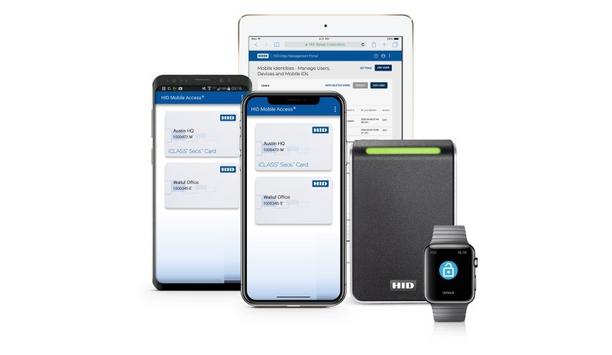
Enhancing enterprise security is high on the list of priorities for businesses across sectors. Within the retail industry, there is an additional focus on enabling new ways of working through management tools. Integrated solutions and applications help to create a robust security landscape and ensure a future-ready posture as organizations look to address emerging risks and create better experiences for next-gen employees. Physical access control (i.e., the readers on the door and the credentials that individuals present to them for authentication) is not only one of the first interactions employees have with security technology but is also the first line of defense in security programs. Good user experience The balance of a good user experience and strong security is critical, though striking that balance has been a challenge historically as security teams are tasked with prioritizing safety and protection. Innovative companies who want to go beyond traditional access control have found the balance of a frictionless user experience and strong security in mobile access solutions. Żabka is one of the largest European retail companies with 7000 locations across Poland Żabka is one of the largest European retail companies with 7000 locations across Poland and the Czech Republic. Innovation is in its DNA and the organization is known as an early adopter. From introducing AI to create an autonomous and checkout-free shopping experience to launching a cloud-based platform to better the franchise management process, Żabka has actively embraced continuous change and improvement. When implementing security for its new headquarters in Poznań, Poland, Żabka returned to its pioneering roots, requiring a highly secure, automated solution that enabled the integration of custom applications and simplified the use of other building-wide office functionalities. Physical security components Żabka’s vision included seamless access starting at building entrances with employees using their mobile phones to ‘badge’ into the building. From there, the same mobile credential would unlock turnstiles, authenticate floor access in elevators, track time and attendance and release documents at shared printers. Most importantly, user data would need to be secured via encryption and authentication through appropriate access keys with the introduction of new users being completely under Żabka’s control. The implementation of an ecosystem with multiple capabilities — including a migration from plastic cards to mobile identities, surveillance tools, access management, and physical security components to underpin the entire solution — also necessitated collaboration between partners who shared Żabka’s spirit of modernization and vision for a seamless user experience. Traditional plastic credentials Żabka’s comprehensive ecosystem utilizes digital access control processes The project team included HID Global who managed the transition from traditional plastic credentials to mobile identities, with Zonifero to develop a custom mobile app, and Cynergy to complete the installation of hardware and embedded components. Żabka’s comprehensive ecosystem utilizes digital access control processes and integrated surveillance tools with a security management platform enabling Żabka to migrate completely to the use of mobile identities. The move to HID Mobile Access has changed the experience of employees, visitors, HR, and security administrators by accelerating and automating access control management for the entire building. Integrated surveillance tools Mobile identities, contactless employee onboarding, touchless visitor management, time and attendance, and integration with the security system of the entire building are now aggregated and facilitated within the smartphone app. Security administrators remotely managed a pool of allocated mobile identities The ability to manage the access control system from anywhere with no physical contact was especially valuable. Launched amid the pandemic, the new infrastructure enabled Żabka employees to maintain social distancing and limit contact through automatic and remote activation of access. Security administrators remotely managed a pool of allocated mobile identities and individual access to users’ devices, thereby solving the problem of storing physical cards, facilitating credential transfers, issuing new credentials in the case of lost or damaged ones, and deactivating cards in the event they were lost or stolen. Mobile identity functionalities Żabka implemented mobile access on a large scale with mobile IDs in use by about 800 employees. The retailer also plans to implement further mobile identity functionalities, such as opening parking lot gates, making cafeteria purchases, and seamlessly logging in to computers. Steve is responsible for leading and coordinating demand generation programs and channel marketing activities for HID's Physical Access Control Solutions (PACS) business area in Europe. He has over 20 years of experience working in B2B marketing, 15 of which have been in the safety and security industries.

HID, a pioneer in trusted identity solutions, has joined the FIDO Alliance Board of Directors to help accelerate the shift to passwordless authentication across the enterprise. Sean Dyon, Vice President of the Authentication Business Unit, will serve as the company’s Primary Board Delegate. HID joins the Board with decades of leadership across physical and digital identity, bringing a real-world perspective to the Alliance’s work advancing interoperability, lifecycle management and deployment at scale. “HID has been a longtime and valuable contributor to the FIDO Alliance, and we're pleased to welcome them and Sean Dyon to our Board,” said Andrew Shikiar, Executive Director and CEO of the FIDO Alliance. “As enterprises scale passkey deployments, HID's perspective on converged physical and digital identity will help us bring the security and usability benefits of passkeys to a wider range of environments.” Digital identity work together The FIDO Alliance enables identity technologies that put trust and simplicity at the center of interactions among people, services and devices, including the open standards behind passkeys and passwordless sign-in. Passkeys built on FIDO standards are phishing-resistant because they never transmit reusable passwords and bind authentication to a specific device and origin. The Alliance's board shapes its strategy, standards and certification priorities, and HID will contribute to that work through board governance and strategy discussions, collaborating with other industry leaders to advance more secure, interoperable authentication. HID’s appointment comes as passkey implementation moves from limited pilots to wider deployments, a shift that has brought attention and scrutiny to interoperability, lifecycle management and how physical and digital identity work together at scale. FIDO-certified authenticators A FIDO Alliance member since 2015, HID has contributed to working groups spanning FIDO2, digital credentials and consumer deployment, and has partnered with the Alliance on research into identity security and convergence. HID also builds FIDO-certified authenticators and authentication platforms trusted by enterprise and government users worldwide. This expertise will be valuable as the Board guides a broader shift already underway in the market: 93% of organizations are now at some stage of passkey adoption and 65% report high or expert technology familiarity, according to the FIDO Alliance and HID report. On the Board, HID will draw on that dual vantage point to represent enterprise priorities around converged identity, lifecycle management and multi-vendor interoperability as passwordless adoption accelerates from pilot programs to full-scale deployment. Lifecycle management and interoperability "As enterprises scale passkeys and passwordless authentication, the standards behind them must address the real-world challenges of deployment, lifecycle management and interoperability," said Sean Dyon, Vice President of the Authentication Business Unit at HID. “The FIDO Alliance has been instrumental in advancing open standards for secure, passwordless authentication, and we are proud to contribute to that work. Because our business spans both physical and digital identity, we understand these challenges across the full range of how people authenticate. That is the perspective we intend to bring to the table.”

Skanska CDE, a developer of modern office buildings across Central and Eastern Europe, has implemented a digital wallet access control system at its Studio A office building in Warsaw, as part of a growing shift among commercial buildings toward wallet-based credentials as the default. Aimed at removing the friction of separate access apps for employees, tenants and guests, the deployment is built on the company's proprietary StudioApp web application and HID Origo Web Provisioning, a cloud-based credential management platform from HID, a global leader in trusted identity solutions. Mobile access card systems Located in Wola, the burgeoning business district in the Polish capital, Studio A is one of the first large-scale deployments in Europe built entirely on web provisioning rather than a dedicated mobile app. Employees and building staff receive an email invitation and can add their credentials to Apple Wallet or Google Wallet within seconds. Skanska CDE occupies a dual role in the project, as both the developer behind the StudioApp integration and the system's first end user, having deployed it across its Warsaw office before extending it to tenants and guests. The company is evaluating similar deployments across its other offices around the globe. Traditional mobile access card systems require users to download separate building apps, register accounts and go through activation processes, a barrier in corporate environments where security policies limit additional software installs. The Skanska-HID system at Studio A removes that step: users receive and activate their credentials directly within the wallet already installed on their phone. Separate building apps “Our intention was to create an intuitive, secure solution built to scale that responds to the real needs of tenants. The solution not only simplifies access but also meets high requirements in terms of data protection and operational security,” says Rafał Kot, Technical Quality Expert at Skanska Commercial Development Europe. “Moving away from physical badges toward fully digital and integrated solutions sets a new standard in designing and managing the access lifecycle process of a building or office space. In practice, the solution shows that the future of access control lies in systems that are invisible to the user, but highly effective and secure,” adds Mateusz Gluz, Senior Project Leader at Skanska Commercial Development Europe. Access control system The system is powered by HID Origo Web Provisioning for Wallet credentials. To issue a digital credential, an administrator needs only a user's first name, last name and email address. The credential is delivered directly to the user's Apple Wallet or Google Wallet through a secure link, with no app to download or install. Users simply tap their phone at the reader to gain access, using NFC technology. At the heart of the solution is the proprietary StudioApp web application, which serves as a central integration point between the access control system, the parking system and the HID Origo cloud back-end via a local server installed on site. Real-time integration “Web provisioning is a modern way to distribute digital Apple Wallet and Google Wallet credentials. It enables users to receive and install access cards directly via a web interface, without needing a mobile application, while maintaining full, real-time integration with the access control system. The Studio A project is one of the first in Europe where web provisioning serves as the default standard for all employees, tenants and guests using the Skanska property. It provides simple and fully automated onboarding,” comments Kamil Targalski, HID Business Development Manager for mobile access. This deployment demonstrates a faster, lower-friction model for managing access across large office portfolios, without the ongoing cost of maintaining a dedicated mobile app. Visit their Media Center, read Industry Blog, and follow them on Facebook, LinkedIn and X (Twitter).
Insights & Opinions from thought leaders at HID

There are many new technologies at ISC West this year. There are also some tried-and-true solutions on display. More mature products have the benefit of being fully vetted and battle-tested, which may make them a more comfortable choice for security customers. I had a couple of discussions on Day 2 of the show about the advantages, and possible drawbacks, of new products. “To a security director, when you say ‘new,’ he translates that into ‘risk,’” says Bill Spence, VP of Sales, U.S., Canada and Western Europe for HID Global’s Lumidigm biometrics brand. “Anytime you say new, there is a probability of risk. The key is to educate. Education quantifies risk, and an educated customer can make an intelligent decision about risk versus reward.” “We have to take customers from where they are to help them understand new technologies,” says Spence. “We must give them a bridge to that understanding, and education is the bridge.” Lumidigm Biometrics Integrations An app provides graphics that take installers step-by-step through the installation process HID Global is incorporating Lumidigm biometrics into the new iClass SE RB25F fingerprint reader being highlighted at the show. Two-factor authentication can use either a card or mobile credential along with biometrics; there is no latency; and templates can be stored on a card. Another new offering at the HID Global booth is an augmented reality tool to simplify installation of newer systems that incorporate the more secure OSDP protocol. An app provides graphics that take installers step-by-step through the installation process. Also highlighted at the HID Global booth — and at the booths of turnstile manufacturers throughout the show — are embedded readers that provide tested and certified mobile access control for turnstiles. IClass SE technology is embedded in the iRox-T Turnstile Reader from Essex Electronics. Innovative Security Technologies There’s a delicate balance at any trade show between creating excitement about new products and educating customers to be comfortable with new technologies. There is some of both at ISC West 2019. In the future, hardware will be a delivery device, not the core of systems “We are on the cusp of change in the industry, and it’s closer than ever,” says Jennifer Doctor, Johnson Controls’ Senior Director, Project Management - Intrusion. “We will see the impact of promised technologies that will come from other industries, such as artificial intelligence. The very definition of security is changing. We are an industry that needs to be risk-averse, and we need to prove out the technology. There is innovation, but we just need to make sure technologies are what the market wants and expects.” “In the future, hardware will be a delivery device, not the core of systems, which will come from intelligence in the software and from services,” she adds. “The products we deliver will enable that.” Have 30 percent of service companies in the U.S. security market jumped into the cloud? PowerSeries Pro Intrusion Portfolio Johnson Controls is highlighting the commercial PowerSeries Pro intrusion portfolio, which features PowerG encrypted technology that enables wireless systems that are cyber-secure. The cloud is coming on strong, and one company finding success in cloud systems is Eagle Eye Networks, which has seen 93% compounded annual growth over the past three years. Economies of scale have enabled them to lower subscription prices by 35%, with an extra 10% decrease for customers that pay annually. Ken Francis, President of Eagle Eye Networks, says they are signing up 50 new dealers a month for the cloud video offering. Francis estimates that 30 percent of service companies in the U.S. security market have jumped into the cloud “It’s really heating up,” says Francis. “The general cloud is driving increases in the surveillance cloud.” Jumping To Cloud Embracing the cloud and recurring monthly revenue (RMR) requires that dealers transform their businesses to ensure success. Francis says dealers should dedicate sales resources to cloud offerings rather than expect everyone to sell the cloud, and there should be a base commission plan on RMR services in lieu of upfront project fees. March Networks is also showing integration of video with the Shopify cloud-based point-of-sale (POS) system “Talk to professionals about your cash flow and understand how to capitalize on financing partners to ensure cash flow while investing in the RMR stream,” he adds. “And look for ways to reduce your costs to serve the customer base as your RMR increases.” For example, use of remote site diagnostics, configuration and support can avoid the need for expensive “truck rolls” that can undermine profitability. Francis estimates that 30 percent of service companies in the U.S. security market have jumped into the cloud. Alarm companies, which are accustomed to the RMR model, are generally ahead of the curve, while traditional security integrators are lagging. “It’s a requirement to change or die,” he notes. Insight Hosted Managed Service Also, in the area of managed services, March Networks is highlighting its Insight hosted managed service that can provide instant information on video systems located at remote sites, including visibility into firmware versions, camera warranty information, and cybersecurity status of systems. The ability to dive deeply into system status empowers a new recurring revenue stream for integrators. Color-coded icons summarize system status and show pending issues and clicking on the icons provides detailed workflow information. The system can also be offered for smaller systems such as those at convenience stores and quick-serve restaurants. March Networks is also showing integration of video with the Shopify cloud-based point-of-sale (POS) system. The integration enables managers to evaluate POS information, especially anomalies, to determine possible employee theft and other shrinkage issues.

Critical national infrastructure encompasses sectors such as energy, utilities, healthcare, and data centers – environments that underpin economic stability and public safety. With so much at stake, the importance of effective security systems is that much higher. We asked our Expert Panel Roundtable: What are the unique aspects of the critical infrastructure market, and how should the security industry adapt?

Biometrics today provide better security and frictionless user experiences. Biometric identifiers like fingerprints, facial recognition, and iris scans are unique and difficult to forge. They eliminate the vulnerabilities of traditional authentication and streamline secure access control. Identity verification reliably protects sensitive digital information and physical entry. We asked our Expert Panel Roundtable: How is the role of biometrics evolving in physical access control?