British Security Industry Association (BSIA) - Experts & Thought Leaders














Latest British Security Industry Association (BSIA) news & announcements
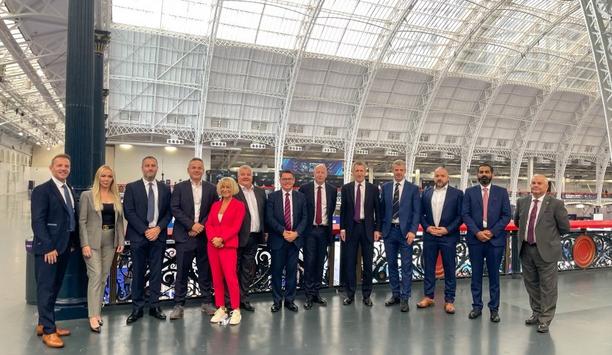
The newly formed Security Guarding Leadership Group (S12) met with Security Minister - Dan Jarvis MBE for the first time at the International Security Expo, Olympia London, and announced Paul Evans (CEO, Carlisle Security) and Peter Harrison (FGH Security) as Chair and Deputy Chair of the Group, which brings together a diverse team of elected leaders from across the security industry. The Group will regularly engage directly with the Minister, Homeland Security and the Security Industry Authority (SIA), offering a voice and insight from all areas of the industry. Its mission is to raise industry standards, help shape policy, accelerate the implementation of critical legislation and ensure that a diverse range of voices are heard to inform future decisions. Implementation of critical legislation Members range from the largest national providers to small and medium independent firms plus representation from industry trade associations. Each member is a senior security executive and will serve a minimum two-year term within the Group, meeting at least once a month. Each S12 member will lead on at least one industry initiative and seek to create enlarged sub-working groups from the widest possible reach into the industry. Transparent records of their objectives and actions will be found on the newly created website. Highest professional standards The S12 will meet with the Security Minister and engage with the SIA on a regular basis The S12 will meet with the Security Minister and engage with the SIA on a regular basis to drive the highest professional standards, drawing on industry wide data, and insights from trade associations, as well as supporting with the establishment of the Security Skills Academy. During his speech at the International Security Expo, Security Minister, Dan Jarvis, said: “I am very pleased to announce the formation of the S12, a new industry-led initiative to bring together various parts of the private security industry to be able to speak to Government with one voice.” He adds, “Earlier this morning we had a good and constructive meeting with the elected leaders who make up the S12. I was able to listen to what they had to say about how we can organize to improve standards within the security industry. I am keen for the government and for the SIA to work closely with them.” Enhancing public protection Paul Evans, Chair, Security Guarding Leadership Group (S12), said: “This Group has been built on the principles of inclusive representation, accountability and action. We recognize this is a critical time for our industry and the sense of collaboration has never felt stronger. However, we also face rising threat levels and there are still unfortunately reports of malpractice and shortcuts being taken which simply will not stand up against new legislation.” He adds, “A core part of our mission is to equip security professionals with tools and training that reflect the changing landscape and to improve standards that will further enhance public protection. With the support of the Security Minister, we look forward to making a lasting difference and making the country a safer place for all.”

The British Security Industry Association (BSIA) has appointed Pauline Norstrom and Uzair Osman as new non-executive directors of the Association’s Operating Board. Pauline Norstrom Pauline, the CEO of Anekanta®AI and Anekanta®Consulting, and a former Chair of the Association, has driven good practice for security sector technology for over 20 years. She has a background in leadership, innovation, and commercialization, and in her current role at Anekanta®, has created the architecture for several AI risk and governance frameworks featured by the UK Government, Organization for Economic Co-operation and Development, and the Institute of Directors. Uzair Osman Uzair Osman is a corporate executive with over 18 years of experience driving transformational growth and operational excellence across diverse sectors, including construction, security, digital innovation, and consulting. He is a Fellow of the Royal Institute of Surveyors and is a Project Management Professional(PMP) with the Project Management Institute. He is also the Managing Director of Galliford Try Asset Intelligence, an award-winning provider of integrated physical and electronic security, active fire, and artificial intelligence solutions direct to Critical National Infrastructure, high-value assets, and strategic estates within the built environment sector. Invaluable independent insight As non-executive directors, their appointments will add invaluable independent insight into board matters As non-executive directors, their appointments will add invaluable independent insight into board matters, with their respective specialist knowledge offering an invaluable contribution to the Association’s overall strategic direction. Uzair Osman, Managing Director, of Asset Intelligence, said, "I am delighted to join the BSIA Operating Board as a non-executive director and look forward to contributing to enhancing the brand of the BSIA in its mission of advancing the professional security industry." AI and remote biometrics “In this ever-changing landscape, I am excited to work with the Board and our members to navigate the opportunities and challenges ahead,” said Osman.Pauline Norstrom, CEO, of Anekanta Consulting, said, “I am honored to be appointed as a non-executive director of the BSIA. I look forward to bringing my perspectives to the board regarding the responsible use of AI and remote biometrics in security to influence policy and create opportunities while minimizing harm." Video analytics-based AI technologies “I have worked with the BSIA for over 20 years, to pioneer guidance for the safe use of emerging video analytics-based AI technologies including facial recognition software." "It is a pleasure to be working with the Association to continue the journey to promote good practice. I am also delighted to see more women in statutory and senior leadership roles, compared with 20 years ago.” New appointments Martin Watson, BSIA Chair, said, “We are delighted to welcome Pauline Norstrom and Uzair Osman to the BSIA Operating Board as non-executive directors." “With their collective years of expertise and professionalism within the security industry - and the wider business realm - our new appointments will provide a long-term term benefit to the overall direction of the Association and their contributions will be highly valued.” Pauline and Uzair will take up their posts immediately.
The delegates of Euralarm’s Services Section have elected Dave Wilkinson as Vice-Chair of the section. He follows in the footsteps of Brian Cunningham. Robert Thilthorpe, Chair of the Services Section, stated, “I’d like to thank Brian for his efforts as the previous Vice-Chair and I am sure that Dave will be given the support that our delegates have always given Brian and I, to help us to move the Services Section to the next level." Development of service standards Thilthorpe added: "Dave has been a long-standing contributor to the work of Euralarm and previously held the positions of Vice Chair & Chair of the Security Section from 2015-2019.” Asked about his new role within Euralarm Dave commented: “The Services section has proactively and successfully contributed to the development of services standards and guidance. The work has been focused on the services for fire safety and security systems as well as remote services for fire safety and security." Services section Dave added: "When it comes to digitalization the Services Section is at the forefront of the developments. By monitoring these emerging technologies and identifying the possibilities these technologies offer to our members, along with the challenges they bring to the market, the Services section continues to facilitate innovation. I am delighted to be part of the team.” Dave Wilkinson represents the Euralarm member BSIA, the trade association for security manufacturers, installers, and ARCs.
Insights & Opinions from thought leaders at British Security Industry Association (BSIA)
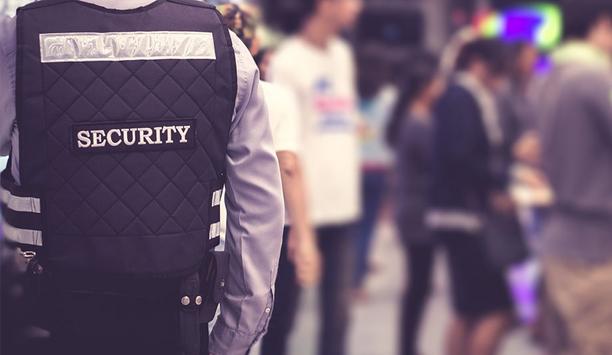
The general public doesn’t give much thought to the important role of security officers in creating and promoting safer environments. The low-profile work of security officers is vital to protecting people, places and property. During the pandemic, newer aspects to that role have emerged. Security personnel have been called on to perform diverse tasks such as managing queues at the supermarket, safeguarding testing centers and hospitals, ensuring food deliveries, and supporting police patrols. The British Security Industry Association (BSIA) and two other organizations in the United Kingdom are joining forces to raise awareness of the work of security officers and to recognize the vital importance of the duties they perform. BSIA, a trade association, includes members who are responsible for 70% of privately provided UK security products and services, including security guarding, consultancy services, and distribution and installation of electronic and physical security equipment. BSIA, the Security Institute and the Security Commonwealth Joining BSIA in the awareness campaign are the Security Institute, a professional security membership body; and the Security Commonwealth, which is comprised of 40 organizations from across the security landscape with common objectives to build professionalism, raise standards and share best practices. “The recognition of security officers as key workers is the start of a re-appraisal of what service they provide to the community in keeping the public safe and secure,” says Mike Reddington, BSIA Chief Executive. “As we exit lockdown and have to navigate public spaces again, [security officers] will have a crucial role in supporting public confidence. We are working closely with the Police and all other public bodies to find the best way to achieve this.” Security officers acknowledged as key workers The campaign will showcase security professionals as a respected, valued, professional service provider and a key worker that is acknowledged and embedded in daily lives. The British Security Industry Association (BSIA) and two other organizations in the United Kingdom are joining forces to raise awareness of the work of security officers “Great effort has been invested in the professional standards and capabilities of frontline [security] officers, and they have proven their worth during the coronavirus crisis in the UK,” says Rick Mounfield, Chief Executive, the Security Institute. “They, along with the wider security sector, deserve to be recognized, respected and appreciated for the safety and security they provide across the United Kingdom.” “[We are working to] build professionalism, raise standards and share best practices, and I hope this campaign can make more people recognize the changes we have all made and continue to make,” says Guy Matthias, Chairman of the Security Commonwealth (SyCom). The industry will be reaching out to companies, professionals, and organizations in the sector to participate in the campaign. The hope is that, over the coming weeks as lockdown is eased, the industry can play its part to ensure that the country emerges with confidence to start to recover and build for the future. Private security more important than ever The campaign will showcase security professionals as a respected, valued, professional service provider Across the pond in the United States, law enforcement professionals are facing a crisis of confidence during a time of civil unrest as protestors call to “defund the police” and to otherwise undermine and/or recast law enforcement’s role in preserving the peace and ensuring public safety. If an upshot is that public policing is starved of resources, the role of private security to supplement their mission is likely to increase. In short, the role of private security is more important than ever on both sides of the Atlantic. Public recognition of that role is welcome, obviously. In any case, the importance of their role protecting people, places and property has never been greater.
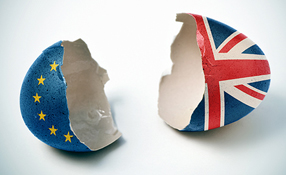
How will the UK's decision to leave the European Union affect security cooperation between its member countries and with European countries? 'Strength through unity' is the term being used by pro-European economists observing the fall-out from Brexit, but it's surely an even more pertinent phrase for the security sector and this is being underlined in the most unexpected quarters. Fifty-six percent of the referendum votes cast in Northern Ireland were for 'Remain' and even staunch Loyalist politicians have spotted a way of staying in Europe through the previously unthinkable option of a united Ireland. Possible Hard Border Enforcements Pending a possible reunification, what are the security implications for an Ireland that is now only part-EU? The border is currently 'soft': drive south into the Republic and the first indication is speed warning signs changing from miles to kilometers. The Irish Government has pledged to 'do its utmost' to retain the so-called 'Common Travel Area' on the island. But don't rule out reintroduction of occasional (possibly mobile) physical checkpoints across the 300-mile divide. Much of the security will remain covert, but scrutiny of freight vehicles for customs purpose will be mandatory. Border control at English ports will also be hardened. Currently, in a spirit of co-operation, French authorities allow their British opposite numbers to check vehicles and even foot passengers at Calais while there is French immigration control at Dover for travelers wishing to enter the Schengen Area via Calais or Dunkirk. The juxtaposed arrangement is a result of the Treaty of Le Touquet dating from 2003 and is bilateral, having nothing to do with the EU. But don't underestimate the toxicity of the current situation. There has been flip-flopping on the treaty already; local government in northern France initially said it was safe but the mayor of Calais now wants it 'renegotiated' (read scrapped) while leading candidate for the 2017 presidential election Alain Juppé says it will be pain grillé if he is wins power. "We must move the border back to where it belongs." How will the soft border between Ireland and Northern Ireland change once it becomes the only land border between the UK and the EU? Greater Fragmentation In Europe? Is the outlook for international co-operation between European countries really this bleak? The doom mongers who see more drawbridges being raised and further exits from the EU should bear in mind that much international security cooperation stems from Interpol (headquartered in Lyon, France) and below the radar of most media comment including the security trade press. Brexit has no doubt pleased Vladimir Putin, who must be encouraged by the prospect of a weakened Europe with the possibility of more fragmentation to come. EU disunity can only reduce the resolve of member countries to implement sanctions on Russia after its military intervention in Ukraine. It's unlikely that France will secede from the EU but prepare for ultra-right-wing politician Marine Le Pen of the Front National progressing to the second round of her country's election in April on a Brexit platform. Newly merged pan-Europeancompanies will surely find thatpost-Brexit, movement ofproducts and people hits moreobstacles Apart from UK manufacturers focused predominantly on exports who gleefully welcomed the slump of pound sterling against the Euro and dollar (short-termism since the situation remains volatile), few in the security industry can be satisfied with Brexit. And manufacturers not reliant on imported raw materials must be rare indeed meaning that any gain can easily be lost in increased costs. The current trend in our industry is acquisitions with the playing field dominated by an increasingly small number of major corporates. Newly merged pan-European companies will surely find that post-Brexit, movement of products and people hits more obstacles. International Cooperation To argue that collaboration on production standards through organizations such as CENELEC and CEN will come to an end post-Brexit would be excessively gloomy. CENELEC (based in Brussels by the way) is not an EU institution and in addition to member countries it works with five other European nations. But these standards organizations have been founded in the interests of European harmonization and hassle-free legislation. The decision by the UK electorate last month can only hinder open working methods, and I for one don't want to go back to the bad old days in which the British kitemark was predominant. If you're an R&D engineer in the UK with an innovative new product on the bench, don't rule out the possibility that piqued international standards bodies may make your life a little more difficult in order to send a message to others. Brexiters who argued that Brussels is synonymous with bureaucracy may see UK exporters surrounded in yet more red tape as they try to get their products approved abroad. It's highly likely that Scotland will hold a second referendum within the next two years to leave the UK as a result of the Brexit vote I frequently find myself on university campuses talking to academics researching technology with security applications notably in 'big data' and video analytics. Long before Brexit hardened into a possibility, interviewees were reminding me that UK universities as a whole receive ten percent of their funding from the EU (£1bn a year) and they feared the worst. The European academic community is at its strongest in terms of developing strategies to combat terrorism when universities from several countries pool resources. One such initiative is the EU-funded PRIME project which studies terrorism carried out by individuals working alone, the acronym being LAEEs (Lone Actor Extremist Events). The collaborators include University College, London, King's College, London, the University of Warsaw, Leiden University and Aarhus University (Denmark). You tell me which two institutions would lose out if the program were being drawn up and funded post-Brexit. The BSIA has described theUK's position post-Brexit as'uncharted territory' andspoken about a need topersuade member statesthat we will "remain anenthusiastic partner in allsecurity and trade issues" What Will Scotland Do? On the macro level there is an elephant in the room or at least an elephant in the Firth of Clyde. Scotland voted overwhelmingly to remain in the EU making another referendum on independence probable within the next two years. The Scottish Nationalist Party (SNP) is implacably opposed to the Royal Navy's nuclear-armed submarines which are housed to the west of Glasgow. If Scotland secedes the Navy will be told to take its fleet off Scottish shores immediately. Remember the £350m a week that the Vote Leave campaign claimed (prior to a retraction) would be saved on EU contributions and could go to the National Health Service? A new naval facility for England would dwarf this and cost billions. The British Security Industry Association (BSIA) has described the UK's position post-Brexit as 'uncharted territory' and spoken about a need to persuade member states that we will "remain an enthusiastic partner in all security and trade issues." I wish I could be so sanguine. Yes, it will be apparent from my focus here that I voted 'Remain' after making it into a polling station at the last minute, late on the final day of IFSEC. I'm aware that the UK is part of Europe in terms of shared history and culture as well as commerce. But I'm sceptical about our ability to trade effectively and share strategic information with the member states now that we have all but left. I've spoken to installers, consultants, manufacturers and fellow industry observers and found that none of them are able to greet Brexit as a positive thing for the international security industry.

Rapid technology innovation in the physical security market comes with it a commensurate need to dispose of older systems as they are replaced. Some technologies can help minimize the waste, providing, for example, the ability to use existing coaxial cable with newer IP video systems. However, absent the ability to reuse equipment, how should integrators manage disposal of systems at end-of-life? Here are some responses from our Expert Panel.