Boon Edam - Experts & Thought Leaders









































Latest Boon Edam news & announcements

Boon Edam Inc., a global pioneer in physical security entrances, will demonstrate its advanced secure entry innovations and the latest biometric and access control integrations at GSX 2026 booth 2633. The company will feature innovations like the Speedlane Compact and its Turnlock Full Height Turnstile on a forklift-ready mobile platform, as well as integrations with biometric industry leaders. Advanced entrances for secure, seamless access "Securing complex facilities—from outer perimeters to high-security interior zones—relies on physical barriers that actively stop unauthorized access," said Patrick Nora, President and Managing Director, Boon Edam. "At GSX 2026, we’re showcasing how our advanced entrances do exactly that. We've also paired select solutions with market-leading biometric technologies to deliver multi-factor authentication right at the entryway, giving organizations a highly sophisticated way to stop tailgating and piggybacking without slowing down access." Visit booth 2633 to learn more about these solutions Speedlane Compact Optical Turnstile with IDEMIA MorphoWave: This compact swing barrier gate helps prevent unauthorized access while optimizing space, security, and throughput. IDEMIA MorphoWave’s contactless 3D fingerprint technology scans up to four fingerprints in under a second with a simple wave of the hand. Integrated with the Speedlane Compact, the technology supports secure, hygienic access for up to 50 people per minute. Lifeline Speedlane Swing with Standard Card Reader: This sleek optical turnstile combines a swinging glass barrier with accurate tailgating detection and uses a standard card reader to provide secure access control and smooth pedestrian flow. Designed for corporate offices, healthcare facilities, commercial buildings, and more, the Speedlane Swing balances aesthetics, accessibility, and security in a streamlined footprint. Circlelock Interlocking Portal with Alcatraz Rock and Iris ID: The Circlelock delivers a high-security, unmanned entrance with piggybacking protection. At GSX, the portal interior will feature the Alcatraz Rock facial authentication for biometric access and tailgating detection. Iris ID will be featured on the exterior of the portal, showcasing iris and iris/face fusion technology for touch-free biometric access. Tourlock 180 with the Alcatraz Rock X: This high-security revolving door prevents piggybacking and tailgating with simultaneous, multi-directional access, ideal for unmanned and high-traffic areas. Paired with the Alcatraz Rock X, it brings leading-edge facial authentication for fast, frictionless entry across critical infrastructure, corporate headquarters, and more. Turnlock Full Height Turnstile on a Mobile Platform with BE Secure and Standard Card Reader: Constructed of heavy-duty aluminum, it’s pre-mounted on a rugged, forklift-ready steel base for flexible deployment at construction sites and other temporary or outdoor applications. The BE Secure overhead system uses real-time measurement with AI to detect when two people try to enter the same compartment with one credential. Built for exterior and interior applications, it enables secure card access while detecting piggybacking and tailgating. Enjoy Happy Hour with Boon Edam experts All GSX attendees are invited to join Boon Edam for Happy Hour on Monday and Tuesday from 2:30 p.m. to 4:30 p.m. in booth 2633 to meet with product experts, experience live demonstrations, and discuss today's evolving entrance security challenges.

Boon Edam Inc., a global pioneer in physical security entrance solutions, has announced a strategic partnership with Sitemetric centred on a customized Boon Edam Turnlock 100 Mobile Platform. Marketed as the Sitemetric Deluxe Turnstile, the mobile full height turnstile combines Boon Edam’s proven security entrance expertise with Sitemetric’s Integrated Construction Intelligence platform to deliver superior security and safety for evolving construction projects. Boon Edam and Sitemetric initiated discussion to develop a standardized mobile full height turnstile that could be deployed consistently across Sitemetric construction site projects. Within a few short months, the companies agreed on a customized solution that was prototyped to meet Sitemetric’s operational, technical and branding requirements and field tested to ensure proof of performance. Factory-integrated technology The new Sitemetric Deluxe Turnstile features the company’s branding with proprietary factory-integrated technology to be shipped fully assembled for fast and easy deployment. This allows Sitemetric to provide customers with a consistent, fully integrated solution that can be easily relocated to evolving construction sites and moved to new sites when and where it is needed. Boon Edam began shipping the new Sitemetric Deluxe Turnstile in the second quarter of 2026. The customized turnstiles are being manufactured and stocked by Boon Edam at their factory in North Carolina to meet growing demand for Sitemetric’s Integrated Construction Intelligence platform. Physical access control “Boon Edam is in a unique position to support the specific operational requirements of enterprise customers,” said Patrick Nora, President and Managing Director, Boon Edam. “In addition to supplying Sitemetric with a very specific customized configuration of our Turnlock 100 Mobile Platform – a standardized, branded solution that can be deployed consistently and at scale – we are producing and stocking the units and shipping them directly to the construction sites where they are operational shortly upon arrival.” Based on Boon Edam’s Turnlock 100 Mobile platform, the Sitemetric Deluxe Turnstile features a forklift-ready diamond plate platform that can be shipped directly to a jobsite and positioned without anchor bolts or permanent infrastructure. Its mobile design allows the unit to be relocated as construction perimeters and access points change, helping to maintain consistent physical access control throughout different phases of a project. Robust security entrance “We approached Boon Edam with the objective of producing a high performance and robust security entrance that could be standardized to support our Integrated Construction Intelligence platform, be deployed quickly, perform reliably in demanding conditions, and easily be relocated as the jobsite changes,” said Rich Riley, CEO Sitemetric. “At Sitemetric, we are providing services and data to projects at every scale, including the country’s mission-critical hyperscale construction projects. We back up our onsite access control and security with our Joint Security and Operations Center (JSOC), which monitors every site around the clock, responding in real time the moment something needs attention. Boon Edam understood our demanding requirements and worked closely with us on the new branded Sitemetric Deluxe Turnstile while accommodating unique manufacturing, stocking and delivery needs. We look forward to a long and productive relationship.”
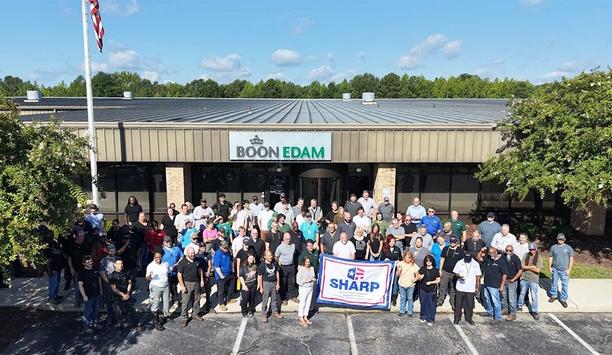
Boon Edam Inc., a global pioneer in physical security entrance products, has maintained its Safety and Health Achievement Recognition Program (SHARP) designation from the U.S. Department of Labor’s Occupational Safety and Health Administration (OSHA) for five years. The designation is for its manufacturing facility in Lillington, N.C. The SHARP designation recognises model workplaces that exemplify the best safety and health management systems and approaches in their operations. Ongoing training initiatives "Achieving SHARP status once is an honor, but maintaining it for five years requires a relentless, daily dedication," said Patrick Nora, President & Managing Director, Boon Edam. "This milestone proves that safety at Boon Edam isn't a temporary initiative—it is deeply woven into our culture. I am incredibly proud of our Lillington team for looking out for one another and proving that manufacturing excellence and employee safety go hand in hand." Boon Edam’s Lillington facility continues to support workplace safety through employee-led safety committees, ongoing training initiatives, near-miss reporting programs, and continuous process evaluations designed to identify and reduce risk throughout the manufacturing environment. Critical infrastructure markets “Our employees are the reason we continue to achieve this level of recognition,” added Nora. “Maintaining SHARP status takes consistency, teamwork and a shared commitment to looking out for one another every day.” Boon Edam’s North American manufacturing facility produces security entrances and architectural revolving doors for customers across global commercial, healthcare, education, transportation and critical infrastructure markets.
Insights & Opinions from thought leaders at Boon Edam
In the competitive world of physical access control, Big Tech companies are seeking to play a larger role. Physical access competition Apple Wallet continues to stake its claim on mobile credentialing. Amazon One Enterprise is pushing a palm-based identity service. Google/Nest offers smart locks for home access control, with identity and access management provided in the Google Cloud. The entry of these big companies in the historically fragmented physical access control market is causing disruption and foreboding new levels of competition. Apple Wallet Impacting Credentialing Trends The popularity of mobile wallets and contactless technologies in general has grown, creating more demand At Apple’s Worldwide Developer Conference in June 2021, the company announced support for home, office, and hotel keys, including corporate badges and student ID cards, in Apple Wallet. Later, the company announced Hyatt as the first hotel partner to support the technology. Since then, the popularity of mobile wallets and contactless technologies in general has grown, creating more demand for a seamless solution such as Apple Wallet. Easy access In 2023, HID Global announced the availability of their employee badge in Apple Wallet, allowing staff and guests to easily access corporate spaces with their iPhone or Apple Watch, including doors, elevators, turnstiles, etc. Employees just need to hold their iPhone or Apple Watch near the reader to unlock. Factors affecting the rate of adoption However, implementing and maintaining an Apple Wallet-based access control system can incur costs for hardware updates, software licensing, and ongoing maintenance. Factors affecting the rate of adoption include the need to upgrade existing infrastructures to accommodate the technology, and the necessity for access control manufacturers to develop and implement integrations with Apple Wallet. Benefits of Adoption Keys in Apple Wallet take full advantage of the privacy and security built into the iPhone and Apple Watch With larger companies leading the way, some smaller ones might take longer to catch up. There is also a need to educate building owners and administrators to see the value and benefits of switching to Apple Wallet-based access control. Convenience and greater security can accelerate adoption. Keys in Apple Wallet take full advantage of the privacy and security built into the iPhone and Apple Watch. Sensitive data protection A compatible app, specific to the building’s access control system, is needed. Once added, credentials are securely stored in the iPhone's Secure Enclave, a dedicated hardware chip designed for sensitive data protection. Holding an iPhone near an NFC-enabled reader enables the transmission of encrypted credentials. In addition to Near Field Communication (NFC), some systems also utilize Bluetooth Low Energy (BLE) for added security, longer read range, and hands-free unlocking. Phones need sufficient battery charge to function. Amazon One Enterprise Enables Palm-Based Biometrics In November 2023, Amazon Web Services Inc. (AWS) announced an identity service providing comprehensive and easy-to-use authentication for physical and digital access control. The system enables users to employ their palm as an access control credential, allowing organizations to provide a fast and contactless experience for employees and others to gain access to physical locations as well as digital assets. Physical and digital locations Physical locations include data centers, office and residential buildings, airports, hotels, resorts Physical locations include data centers, office and residential buildings, airports, hotels, resorts, and educational institutions. IT and security administrators can easily install Amazon One devices and manage users, devices, and software updates using AWS’s Management Console. Elimination of physical credentials An advantage of the Amazon approach is the elimination of physical credentials such as fobs and badges, and digital elements such as personal identification numbers (PINs) and passwords. AWS says security is built into every stage of the service, from multi-layered security controls in the Amazon One device, which is the same technology used in the Amazon Go retail stores, where shoppers can pay for purchases by scanning the palm of their hands. The devices combine palm and vein imagery for biometric matching and deliver an accuracy rate of 99.9999%, which exceeds the accuracy of other biometric alternatives, says the company. AI and ML The palm-recognition technology uses artificial intelligence and machine learning to create a “palm signature” that is associated with identification credentials such as a badge, employee ID, or PIN. Boon Edam, a revolving door and turnstile manufacturer, offers Amazon’s palm biometric technology on its equipment, and IHG Hotels & Resorts uses the technology to provide employees a convenient way to identify themselves and gain access to software systems. Google and Nest Devices in Access Control When the Nest × Yale Lock is connected to the Nest app, a resident can unlock a door from their phone Google’s Nest devices include smart locks for home access control. The Google Nest × Yale Lock allows access control via both physical keys and passcodes accessible through the Google Home app. When the Nest × Yale Lock is connected to the Nest app, a resident can unlock a door from their phone. Passcodes can be created for family, guests, and other trusted persons. Alerts can be provided whenever someone unlocks and locks the door. When Nest “knows” a resident is away, the door can lock automatically. Voice control, Google Home app Voice control, using Google Assistant integrated with various Nest devices, enables the use of voice commands to lock and unlock doors, thus adding another level of convenience. Smart home devices from various manufacturers can be controlled through the Google Home app. SMART Monitoring ADT’s Self Setup smart home security systems integrate Google Nest smart home products with ADT security and life safety technology, including SMART Monitoring technology. Microsoft Azure is another company that could impact access control. The Microsoft Azure Active Directory is an identity and access management platform that could be extended to physical access control, leveraging existing user credentials. Long-Range Impact on the Security Marketplace Big Tech companies are creating platforms for managing access control data, integrating with other security systems Increasingly, Big Tech companies are creating platforms for managing access control data, integrating with other security systems, and offering analytics for optimizing security and building operations. Big Tech is also actively researching and developing new technologies for access control, such as facial recognition, voice authentication, and AI-powered anomaly detection. Access control communication and integration As their involvement in physical access control grows, Big Tech companies could potentially gain more influence in setting industry standards for access control communication and integration, similar to how they have become dominant in other areas such as mobile platforms. Given their expertise in user interface design and data analysis, Big Tech companies could help to direct how future access control systems are managed and how users interact with them, including more intuitive and user-friendly operations. Future of physical access control Existing concerns about privacy, security, and potential dominance by a few Big Tech companies could spill over into physical access control. However, traditional security companies, startups, and industry consortiums are also actively developing innovative solutions. Ultimately, the future of physical access control will likely be shaped by a combination of many different players and technologies – large and small.
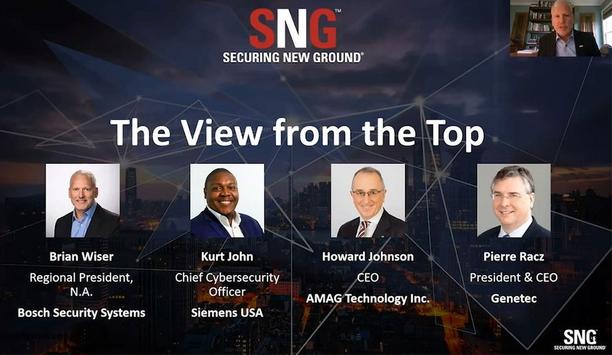
Close collaboration with customers has been a hallmark of the physical security industry for decades. And yet, less ability to collaborate face-to-face to discuss customer needs has been a consequence of the COVID-19 pandemic. “True innovation, which comes from close collaboration with customers, is more difficult to achieve remotely,” said Howard Johnson, President and COO, AMAG Technology, adding “Not being able to visit in person has not been helpful. Kurt John, Chief Cyber Security Officer at Siemens USA, adds “We need to plan intentionally with a strategic approach for collaboration and innovation.” Securing New Ground virtual conference Security experts from three manufacturers reflected on the impact of COVID-19 on the physical security industry Security experts from three manufacturers reflected on the impact of COVID-19 on the physical security industry at a ‘View from the Top’ session, during the Securing New Ground virtual conference, sponsored by the Security Industry Association. Their comments covered business practices during the pandemic and the outlook for technology innovation in response. “We had to pivot quickly on business models and create a cross-portfolio team task force to discuss how we can leverage technologies to help customers [during the pandemic],” said John, adding “We are having outcome-based conversations with customers about their businesses and operations, and how we can combine short-term benefits with long-term growth and flexibility.” But some of those conversations are happening from a distance. Results-oriented approach in remote work environment After the pandemic took hold, Siemens shifted rapidly to remote work and embraced other infrastructure changes. “We had to refocus and lead with empathy, flexibility and trust,” said John, adding “We gave our staff flexibility to set their hours and used a results-oriented approach.” There is also a social element missing in the work-from-home model. “Virtual coffee machines do not replace being there in person,” said Pierre Racz, President and CEO, Genetec, adding “Small talk about the weather is important psychological elements.” Positives in using multi-factor identity management He predicts that, in the future, office hours may be reduced, but not floor space, with space needed for in-person collaboration and long-term social distancing. Employees will come to the office to do collaborative work, but can work from home to accomplish individual tasks that may be ‘deferred’ to after-hours, when the kids have been fed. When the pandemic hit, Genetec had resumed 95% of their operations within 36 hours, thanks to their use of multi-factor identity management. They did not suffer from malware and phishing issues. “Multi-factor is really important so that well-engineered phishing campaigns are not successful,” said Pierre Racz. Shift to ‘Zero Trust’ model All three panelists noted a coming skills gap relating both cyber security and systems integration Remote working technologies are shifting to a ‘zero trust’ model, in which access to systems is granted adaptively based on contextual awareness of authorized user patterns based on identity, time, and device posture. For example, an office computer might have more leeway than a home computer and a computer at Starbucks would be even less trusted. The approach increases logical access security while providing users their choice of devices and apps. Skills gap in cyber security and systems integration A growing skills gap has continued throughout the pandemic. “Where we have vacancies, we have struggled to find candidates,” said Howard Johnson. All three panelists noted a coming skills gap relating both cyber security and systems integration. New technologies will clearly require new skills that may currently be rare in the workforce. Cyber security will become even more important with growth in new technologies such as AI, machine learning, 5G and edge computing. A workforce development plan is needed to address the technologies and to enable companies to pivot to new business needs, said John. Adoption of temperature sensing solutions From a technology viewpoint, Johnson has seen attention shift to the reception area and portal, away from touch technologies and embracing temperature sensing as a new element. There have also been new requests for video and audio at the portal point, to create methods of access and egress that do not require security personnel to be present. “Some customers are early adopters, and others are waiting for the market to mature before investing,” Howard Johnson said. “Security companies have been faced with the need to respond rapidly to their customers’ needs during the pandemic, but without seeming like ‘ambulance chasers’,” said Pierre Racz. In the case of Genetec, the company offered new system capabilities, such as a 'contamination report', to existing customers for free. Move to a hybrid and flexible work environment In the new normal, the pendulum will swing back to the middle with more flexibility and a hybrid approach" An immediate impact of the pandemic has been a reduction in required office space, as more employees have worked from home, raising questions about future demand for office space. “The pendulum tends to swing to the extremes,” said Kurt John, adding “In the new normal, the pendulum will swing back to the middle with more flexibility and a hybrid approach.” “Users will be much more careful about letting people into their space, which requires more policies and procedures,” said Lorna Chandler, CEO, Security by Design, who participated in a panel at Securing New Ground about how the pandemic is changing commercial architecture and access control. “Users should also be careful in the rush to secure premises from COVID-19 that they don’t violate HIPAA laws or create other potential liabilities,” adds Chandler. Continuum of mechanical and electromechanical devices Mark Duato, Executive Vice President, Aftermarket, ASSA ABLOY Opening Solutions, said a “Continuum of mechanical and electromechanical devices is needed to protect premises and ensure convenient operation of an access control operation.” “First and foremost, the immediate reaction to the impact of COVID-19 is to rush to educate and invest in technologies to increase the ability to analyze people,” said Duato, who also participated in the access control panel. Shift to touchless, frictionless access control “The move to touchless, frictionless access control “is really a collaboration of people, process and technology,” said Valerie Currin, President and Managing Director, Boon Edam Inc., adding “And all three elements need to come together. Touchless and frictionless have been in our market for decades, and they’re only going to become heightened and grow. We’re seeing our business pivot to serve markets we have not served in the past." More and more data is a feature of new systems, but is only helpful when it is analyzed. “We all live in a world of data, or IoT and sensor technology,” said ASSA ABLOY’s Mark Duato, adding “But we don’t want to be crushed by data. Data is only helpful when you can reduce it to functional benefits that will help us innovate. We have to take the time to squeeze the value out of data.”

Serving customer needs is the goal of most commerce in the physical security market. Understanding those needs requires communication and nuance, and there are sometimes surprises along the way. But in every surprising revelation – and in every customer interaction – there is opportunity to learn something valuable that can help to serve the next customer’s needs more effectively. We asked this week’s Expert Panel Roundtable: What was the best lesson you ever learned from a security end user customer?