|
| The global multi-technology reader market was worth an estimated $33 million in 2012, up from $30 million in 2011 |
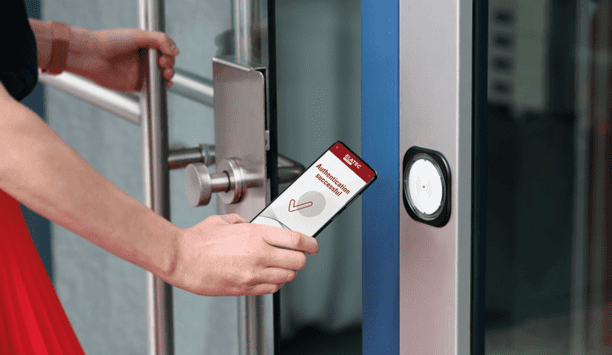
Despite the exciting trends and industry buzz surrounding mobile technologies, wireless locks and hosted access control, more long-standing and less sensational trends such as encryption and multi-technology readers are taking center stage in the access control market.
The global multi-technology reader market was worth an estimated $33 million in 2012, up from $30 million in 2011, according to the latest access control research from IMS Research, now part of IHS Inc.
“Although multi-technology readers have been around for many years, these devices are now being installed in more applications than ever before,” said Blake Kozak, senior analyst for access control, fire and security at IHS. “Historically, multi-technology readers would be offered specifically for end users that requested the technology. Today, more readers come preconfigured to offer both proximity and smart card technology. This allows customers to future-proof themselves, and many end users will opt for this technology regardless of their current needs, in order to save on costs in the coming years.”
Furthermore, there has been a surge in the number of partnerships between reader vendors.
“Although multi-technology readers have been around for many years, these devices are now being installed in more applications than ever before" |
For example, most suppliers now offer readers that are compatible with all ISO standards, regardless of the brand, with some of these partnerships existing since 2010. This trend is likely to continue as more progress is made toward open standards. Beyond the availability of multi-technology readers that are compatible with proximity or smart cards, more multi-technology readers are also being offered with a mix of keypads, proximity, smart cards, biometrics—and in some cases—magnetic stripes. Electromechanical locks are likewise following suit, with products offering biometrics as well as RFID and a keypad available in the market today.
Multi-technology not only allows for greater flexibility for the end user but also provides additional security options. In some end-user applications, security threats can be applied to each lock or reader. In instances where a security threat is elevated, the locks or readers may require additional verification, such as personal identification numbers (PIN) and biometrics, versus only the PIN during a low-threat scenario. Although this option is used predominantly at high-security locations like airports, other end-user applications are also feasible.
With legacy technologies slowly being replaced by more modern technologies, the need for multi-technology readers will continue to increase during the coming years. Offering a multi-technology reader, electromechanical lock or even a multi-technology credential will not only help expand a product line but also will increase the probability of success for integrators and end users seeking flexibility and functionality.