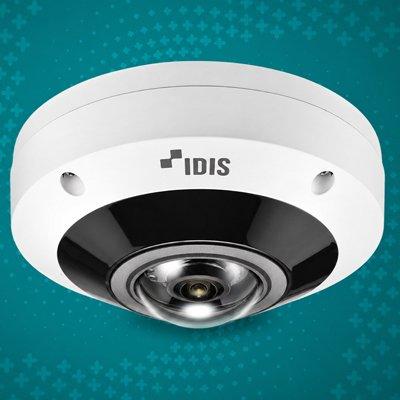
Axis Communications, the world leader in network video surveillance, announces a new transportation-focused IP camera series that offers protection against dust and water with the ability to withstand tough vehicular conditions such as vibrations, shocks, bumps and temperature variations with the AXIS P39-R Network Camera Series. AXIS P39-R Series also features an active tampering alarm function that allows for the detection of tampering attempts such as blocking or spray-painting the camera.
“Axis is the pioneer in developing COTS (commercial-off-the-shelf), mobile-rated IP cameras and we are excited to maintain this leadership position with this release,” said E. Anthony Incorvati, business development manager, critical infrastructure & transportation. “AXIS P39-R Series is our third generation suite of ruggedized cameras designed for the onboard environment and, for customers who want to upgrade to this latest version, AXIS P39-R Series shares the same physical interface as AXIS M31-R cameras.”
The cameras are specially adapted to respond quickly to changes in light levels, ensuring that high image quality and image usability are maintained. Also, the use of progressive scan enables the cameras to show moving objects without distortion. Traffic Light mode helps to better distinguish colors of traffic lights in very dark scenes.
“In addition to the rail and bus markets, we are seeing more and more mobile applications for this type of highly reliable camera for rugged environments that include cargo and freight, emergency, mining and other types of utility vehicles,” continued Incorvati.
The AXIS P39-R Series includes AXIS P3904-R network camera with HDTV 720p resolution, AXIS P3905-R with HDTV 1080p resolution and AXIS P3915-R with HDTV 1080p resolution as well as audio-in and I/O capabilities. Each model is available with either a male RJ45 connector or a rugged M12 connector.
AXIS P39-R Series allows for a quick and reliable installation, as the desired field of view and leveled image can be easily achieved by using the supplied lens tool to direct and rotate the ball that holds the lens and image sensor. The tool can also be used to exchange and focus the lens when a lens with a different angle of view is required. The cameras provide a pixel counter for verifying that the pixel resolution of an object meets specific requirements.