What Are The Benefits Of Extended Service Contracts?

- Extended service contracts provide stability in security system operations for professionals.
- Benefits users, integrators, and suppliers by ensuring continuous, predictable system performance.
- Ongoing maintenance through these contracts supports dependable operation of security technology.
Editor Introduction
Seeking to manage uncertainty is part of the core mission of security professionals. When it comes to the technology systems they depend on every day, extended service agreements are a tool to manage uncertainty as it applies to system operation. We asked our Expert Panel this week to comment on how extended service contracts benefit users, integrators and/or suppliers. Their answers effectively enumerate multiple benefits to all parties involved. Ongoing service and maintenance help to ensure continuous, dependable operation of security systems. Seeking to manage uncertainty is part of the core mission of security professionals. When it comes to the technology systems they depend on every day, extended service agreements are a tool to manage uncertainty as it applies to system operation. We asked our Expert Panel this week to comment on how extended service contracts benefit users, integrators and/or suppliers. Their answers effectively enumerate multiple benefits to all parties involved. Ongoing service and maintenance help to ensure continuous, dependable operation of security systems.


The goal for any service contract is to ensure that the equipment is working properly at all times during its lifespan and, if it fails, that it is repaired in a contractually-specified period of time. We have found that extended service contracts only provide great value when combined with proactive system health monitoring. Digital video recorders are generally not monitored daily by the end user, and problems are too often found after an incident has occurred and investigations are taking place. Often, as a result of the system failure, the evidence that the equipment was designed to collect and store is unavailable. When health monitoring services are supplied as part of an extended service contract, the system integrator can proactively monitor the system and take steps to resolve problems before the end user even knows there is an issue.
Extended service contracts are very much a win-win for all parties concerned. Naturally for end users they provide real peace of mind, ensuring they have assistance from experienced experts for the life cycle of the product. Equally, for integrators/installers they offer an ongoing revenue stream that helps with long-term business planning. For suppliers, the benefits are clear too. With extended service contracts, solutions are properly maintained, so end users reap the full benefits and will appreciate the quality of the products – which is a key driver for repeat business. There will also be opportunities to provide training to installers and at the same time fewer direct demands on the supplier for technical support. This saves time and money that can be invested in new market opportunities.

We consider preventative maintenance agreements to be an important vehicle for the end user to know their security system is operating properly. With a preventative maintenance agreement, we are doing periodic inspections and continued maintenance thereby prolonging the life of the system, which is a benefit to the end user. Preventative maintenance agreements can also raise the performance of the system. In the case of IP videos cameras, camera domes are kept clean for optimal viewing by the security officer or operator because the systems integrator is inspecting those cameras on a regular basis. Also, preventative maintenance agreements reduce downtown by decreasing costly service calls. From a liability standpoint, the end user can demonstrate to senior management they are taking every measure possible to ensure the safety of employees and the company’s assets. Finally, preventative maintenance ensures that customers have the latest software revisions.

Bringing some certainty to future income and outgoings is usually popular with both suppliers and buyers, especially their bean-counters. Agreements stretching years into the future enable more reliable long-term planning for budgets, resources and staff. Buyers savvy enough to calculate Total Cost of Ownership (TCO) could make better cases to resist the lure of the cheap installation with nasty surprises around the corner. They could make sure they can afford their maintenance for years to come. Integrators could strike better deals with suppliers, and hire the staff needed to service the extended contracts. Suppliers might see a reason to extend manufacture and support of each product if there is foreseeable demand. However, there’s always been the risk that being locked-in can remove the flexibility that buyers enjoy, especially in a volatile world. Suppliers can slack off over time, too, so rigorous quality checks and get-out clauses are vital.

While having an extended warranty can sometimes save you repair costs downstream, it is important to understand what type of warranty the manufacturer is offering. It's rare to find warranties that provide full repair or replacement of all components. Most will have limited clauses. Find out what the warranty does cover and whether it includes labor and shipping. If the cost of an extended warranty is high and you're not sure if it's worth it, you might want to reconsider other factors such as the reliability of the product brand and how durable the product will be. Has it stood up to the amount of use you project at similar customers? What have been their maintenance issues and costs?

We see that, as in the IT industry, the role of software in security solutions is getting more and more important. We also see that integrations between IT systems and physical security systems are required more often. In this respect, it is important that the physical security system is upgraded along with the IT systems, because if it isn’t, it can easily cause miscommunication between systems, meaning security is compromised. To obtain exchange of data between a physical security system and other systems such as SQL Server and interfaces, updating a security system is mandatory. That’s why upgrade assurance in physical security is just as relevant as in the world of IT. Regular upgrading not only ensures all systems communicate correctly, it means that customers always have the latest new features, so their security is always up-to-date.

One of the main benefits is that it gives the end user peace of mind, as they have trust in the relationship established through extended service contracts. From the point of view of the systems integrator and distributor there’s also a potential financial security benefit, as this kind of contract means that any issues will automatically be addressed by them, rather than competitors.
Editor Summary
Extended service contracts can help end users ensure dependable operation of their security systems. For integrators, the contracts provide both an additional source of revenue and an opportunity to demonstrate superior customer service and build long-term relationships that could translate into future business. For manufacturers, good service and maintenance ensure their products continue to function at optimum levels for many years, thus enhancing manufacturers’ reputations in the market. Extended service contracts are a rare example of a “win-win-win” for everyone.
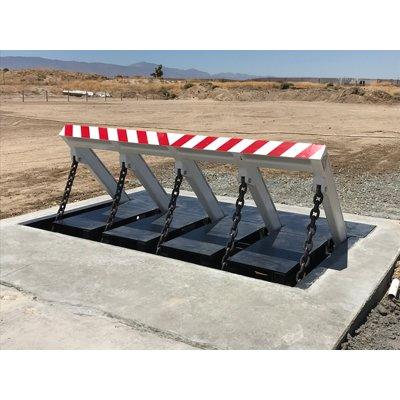
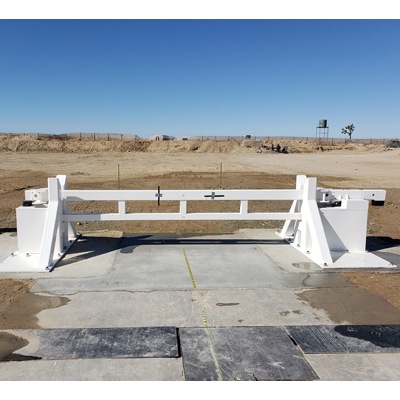
Delta Scientific Corporation products


Delta Scientific Corporation news

Delta Scientific Corporation, the global pioneer in high-impact vehicle barricade systems, is proud to announce the launch of its newest innovation: the DSC50 “S” Barrier, a lightweight, crash-rated security solution tailored for temporary deployment across high-traffic urban environments. Motivated by recent public safety challenges and a mounting global awareness of vehicular threats, Delta’s engineering team designed the DSC50 “S” Barrier to provide rapid, visua...
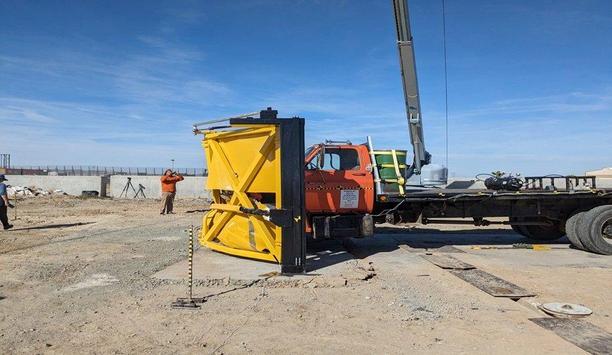
Delta Scientific, the manufacturer of counter-terrorist vehicle control systems used globally, announced their MP100 portable barrier system has successfully achieved an M30/P3 designation. Total penetration was measured at a mere 51 feet, making this an industry pioneer. The MP100 was tested to the new ASTM F2656-23 standard which measures the penetration level from the pioneering edge of the barrier versus the back-side of the barrier of the previous standard. Foldable design The MP100 port...
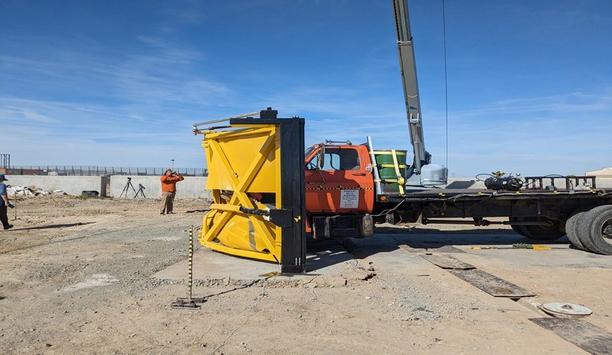
Delta Scientific, the manufacturer of counter-terrorist vehicle control systems used globally, announced their MP100 portable barrier system has successfully achieved a PU30/P3 designation. Total penetration was measured at a mere 29 ft, making this an industry pioneer. The MP100 was tested to the new ASTM F2656-20 standard which measures the penetration level from the leading edge of the barrier versus the back-side of the barrier of the previous standard. MP100 portable barrier system The M...
Delta Scientific Corporation case studies
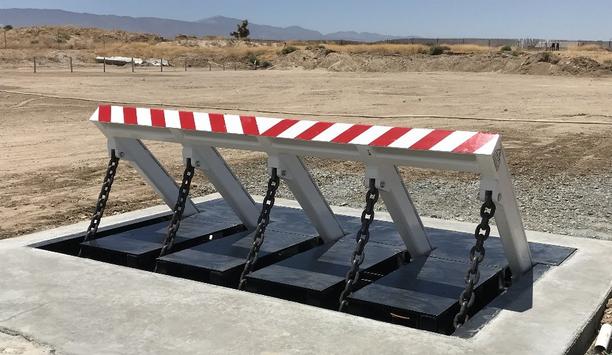
The DSC550 was tested to the new ASTM F2656-20 standard which measures the penetration level from the foremost edge of the barrier versus the back-side of the barrier like the previous standard. This can provide a difference of (1.52 m.) and makes the negative penetration level even more impressive. Design and features The DSC550 Open Frame barrier features a shallow foundation of only 24 inches (61 cm). The open-frame design additionally provides a unique counter-balance design with no spring...
This July, Delta Scientific expanded its partnership with American Family Field, home of the Milwaukee Brewers, delivering new levels of crowd protection for fans and staff alike. After deploying MP5000 portable barriers for perimeter safety, stadium officials turned to Delta again, this time for a flexible solution at tighter access points. The answer: the MP100, Delta Scientific’s newest portable barrier with M30/P3 crash rating, rapid setup, and custom Brewers decals. Whether protec...

Delta Scientific, the pioneering manufacturer of counter-terrorist vehicle control systems used globally, announced that on Monday, April 1st, a DSC501 High-Security Barricade stopped an unauthorized vehicle from entering an FBI field facility in Atlanta, Georgia. According to officials, the orange Buick Encore tried to follow an FBI employee’s car into the facility before being stopped by the Delta DSC501 barrier. The driver was then apprehended by special agents who were in the immediat...
Delta Scientific Corporation videos


Delta Scientific: 40 Years Protecting the World's Most Important Facilities
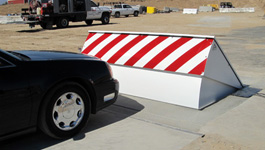
Delta Scientific Corporation DSC 207s Embassy Barricade For US State Department
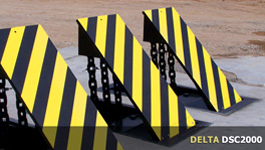
Delta Scientific DSC 2000 Barricade for Hotels and Soft Targets
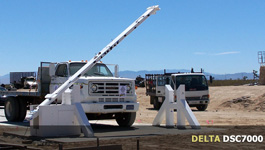
Delta's DSC7000 Barricade System K12 Crash Certified by US Department of State

Delta DSC 7500 Beam Barricade certified for K12 Crash Test of Department of State, US

Delta Scientific Corporation- Leading Manufacturer of Electronic Vehicle Detection
DSC501 Barricade System K54 Crash Certified

DSC 288 Slide Gate

DSC 650 Shallow Bollard System

Delta Scientific Portable Barriers-MP5000

Delta Scientific Corporation- DSMP5000 16 Foot Version
MP5000 Portable Barricade by Delta Scientific complies to specification of U.S. Department of state

Delta Scientific Corporation DSC600 Shallow Foundation Fixed Bollard Array -K12 Crash Test
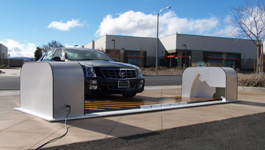
Delta Scientific Corporation DSC-1200 Surface Mounted Barricade
Expert commentary

Security beat