Veterans in security

DigiFlight, Inc., a provider of aerospace, cybersecurity, engineering, and training solutions for government and commercial organizations, announces that industry veteran Melody Berry has joined the company as manager of cybersecurity and compliance. She will support the cybersecurity, assessment, and compliance programs of DigiFlight and its affiliated cybersecurity company, Camelot Secure, helping manage requirements across multiple industry frameworks, National Institute of Standards and Tec...
ASIS International, the world’s largest association for security management professionals, opened its 2026 Global Security Exchange (GSX) conference at the Georgia World Congress Center in Atlanta. The event continues through 16 September and features more than 200 education sessions and over 500 exhibitors from more than 150 nations. The conference opened with two days of pre-conference programming on Saturday and Sunday, including ASIS Volunteers’ Day and the ASIS Awards of...

As defense contractors face mounting pressure to comply with evolving Department of Defense cybersecurity requirements, DigiFlight Inc. announces the appointment of cybersecurity governance and compliance veteran Jermaine Stanley as Director of Cybersecurity Compliance. Stanley's addition strengthens DigiFlight's ability to help organizations reduce cyber risk and accelerate compliance readiness across the defense industrial base. Stanley brings more than 25 years of experience in cybersecurity...

ZeroEyes, creators of the pioneering multi-analytics weapons detection and threat intelligence platform, announces a planned $10 million U.S. investment in AI/ML research and development. This includes a commitment to hiring over 100 veterans in Southeastern Pennsylvania over the next 24 months to fill the roles of Technical Program Managers (AI), MLOps Engineers, and AI Solutions Specialists. The company made the announcement at Senator Dave McCormick’s 2026 Pennsylvania Defense and Inno...

Cawamo, the developer of the AI-powered VisiGuard™ intelligent remote video monitoring platform, announces that security industry veteran Scott Goldfine has joined the company as Chief Marketing Officer & Strategic Growth Advisor. As CMO, Goldfine will lead Cawamo's global marketing strategy while serving as a strategic advisor to the CEO and executive leadership team. His responsibilities include corporate marketing, global brand development, demand generation, product positioning an...
Cequence Security, the pioneer in application, API, and agentic AI protection, announced record momentum in the fourth quarter of fiscal year 2026, capping a year of accelerating growth with its strongest quarter on record and the largest deal in company history, driven by surging demand across telecommunications, financial services, and energy and utilities sectors spanning the Americas, Asia-Pacific, and the Middle East. The foundation of this quarter's momentum is the continued adoption of t...
News

Mission 500, the security industry’s nonprofit charity dedicated to supporting children in need across the US, Canada, and Puerto Rico, is pleased to announce two significant leadership appointments. Tristin Vaccaro, who has been instrumental in expanding Mission 500's impact as Community Engagement Coordinator, has been elevated to Executive Director. Joining her in this next chapter is Phil Leverette, CEO of ECT Fire & Security, who has been named to the Mission 500 Board of Directors. Physical security industry Vaccaro joined Mission 500 as Community Engagement Coordinator in May 2024, bringing her expertise in social media management, public relations, and event organization. As owner of Vaccaro Copywriting & Marketing Solutions, she had already established herself as a trusted voice in the physical security industry. During her time at Mission 500, she has been instrumental in growing the organization’s community presence and financial impact. As Executive Director, she will take on expanded responsibility for the organization’s communications, operations, and outreach. Presence and financial impact “Tristin’s impact on Mission 500 and the security industry has been nothing short of remarkable,” said Jason Lutz, Chair of Mission 500. “She has poured her heart into this organization and has made a measurable impact on how we connect with our communities and carry out our mission.” “I am deeply honored and excited to step into this role and continue championing the incredible work Mission 500 does,” said Vaccaro. "My love for this organization runs deep, having witnessed how it positively impacts both the lives we touch and those who contribute. I can't wait to build on that legacy and bring even more of our industry along for the journey." Commercial fire alarms Mission 500 is furthermore proud to welcome Phil Leverette to its Board of Directors. A U.S. Army Veteran of Desert Storm, Leverette has spent over 30 years building and organizations in the security industry. He currently serves as CEO and owner of Extreme Custom Technology, Inc. (ECT) Fire & Security, a provider of commercial fire alarms, suppression systems, and technical integration services. He is also the founder of Pure Aqua Vitae, a water and air filtration company, and serves on the board of access control manufacturer, HavenLock. Leverette has been a visible and committed presence in the Mission 500 community for years, including his participation in the 2025 Mission 500 Service Trip. Most recently, he was honored with the Mission 500 Chairman's Award at ISC West 2026 in recognition of his steadfast dedication to the organization's charitable initiatives. Access control manufacturer “Phil embodies the spirit of what Mission 500 is all about,” said Lutz. “He sees a need and doesn’t hesitate to act. His experience as an entrepreneur, veteran, and community servant will bring tremendous value to our board, and we are grateful to have him officially join us.” “Mission 500 has shown me time and again what it looks like when an industry and its people decide to give back,” said Leverette. “I’m proud to take on a greater role in supporting this organization and the families it serves.”
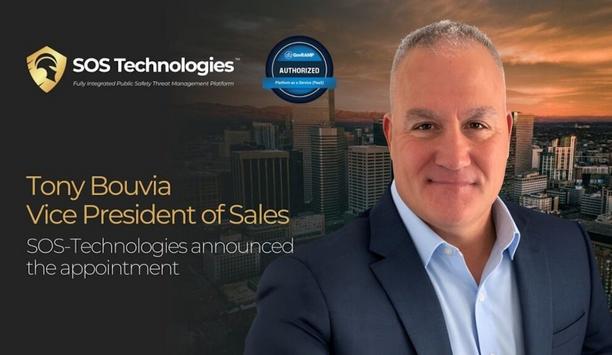
SOS Technologies, a pioneer in accelerated emergency alert platforms, announces the appointment of Tony Bouvia as Vice President of Sales. As organizations across healthcare, education, and critical infrastructure seek faster emergency response and improved safety outcomes, SOS Technologies is expanding its leadership team to support growing demand for its SOS Precision Response platform. Emergency response gap Tony brings more than three decades of experience helping technology companies grow through public sector, enterprise, and partner-led sales. His deep background working with government, higher education, healthcare, and other regulated industries will help accelerate SOS Technologies’ growth strategy as the company expands adoption of SOS Precision Response designed to close the critical 14–17 minute emergency response gap. Prior to joining SOS Technologies, Tony spent nearly seven years at Ericsson/Cradlepoint driving growth across public sector, federal, enterprise and partner channels. Earlier in his career, he spent 18 years at Cisco in partner-facing technical leadership roles before moving into leading technical sales and managed services at a reseller partner. Tony is also a 10-year United States Air Force Communications Specialist and Gulf War veteran.

ISC West 2026, hosted March 23 to March 27 in collaboration with premier sponsor the Security Industry Association (SIA), announces a robust SIA Education@ISC Program (Platinum Education Sponsors: Ambient.Ai and Axis Communications) aimed to educate the industry on what’s new and next. With a three-day keynote series and sessions featuring top cybersecurity experts and stakeholders from organizations across the private and public sector, 2026 sessions will provide attendees with invaluable insights into the challenges and opportunities shaping the field of security. Recognized learning environment “SIA Education@ISC content helps industry professionals stay current on security technologies, practices and market trends impacting their employers and clients,” said SIA Chief Executive Officer Don Erickson. “This is our most robust conference program yet, a place where we have insights from top CSOs, practical learning into what is shaping key vertical markets like data center security, and technical insights into areas like digital identity, perimeter security and converged security approaches. The content mirrors SIA’s programming offered to its members through our vibrant member communities. This is the most recognized learning environment to receive continuing education credits from SIA and other organizations, including ASIS International, NICET, ETA International, BICSI and ALOA.” New networking experiences “Education is a cornerstone of ISC West, and this year we are proud to introduce an enhanced conference program designed to deliver even greater value,” said Nicole Miller, Conference Director at ISC Security Events. “With expanded benefits such as additional workshops, curated session summaries, a dedicated content hub, and new networking experiences; including an exclusive reception, we are creating a more engaging, accessible, and impactful experience for every attendee.” Redefining security landscape Keynote presentations feature visionary leaders who will explore how digital trust, human psychology and AI innovation are redefining the security landscape. Sessions include: Day 1 Keynote: The Battlefield Beyond the Fence: What National Security Teaches Us About Vulnerabilities, Trust and Protection Wednesday, March 25 | 9:00–10:00 a.m. | Venetian Ballroom F Featuring Haywood Talcove, Chief Executive Officer for Government, LexisNexis Risk Solutions; Paul Eckloff, Senior Director of Public Affairs, LexisNexis Special Services, LexisNexis Risk Government As threats evolve, protection is no longer just about securing physical space, but about understanding how people, systems, and trust can be exploited together. 23-year U.S. Secret Service veteran Paul Ecklof grounds the audience in the realities of national security protection, while Haywood Talcove, CEO of government at LexisNexis Risk Solutions, applies the same national-security protection model to the growing fraud and identity exploitation crisis facing enterprises and government programs. Shared protection principles Their discussion examines how adversaries probe and exploit gaps across physical access points, digital systems, and human processes to undermine trust and organizational resilience. Drawing on decades of work in national security and alongside federal law enforcement, Talcove and Eckloff demonstrate how public-private partnerships and shared protection principles, paired with continuous assessment and preventive technologies, can help detect exploitation patterns before financial or physical damage is done. Future of enterprise safety Day 2 Keynote: Securing the Full Spectrum: AI-Driven Resilience in a Converged Security Era Thursday, March 26 | 9:00–10:00 a.m. | Venetian Ballroom F Featuring Keith White, Chief Safety and Security Officer, Salesforce In an era of interconnected risks, physical security can no longer exist in a vacuum. The modern agentic enterprise requires a seamless integration of physical protection and cybersecurity. Keith White shares his vision for the future of enterprise safety, demonstrating how AI and automation bridge the gap between bits and bricks to create a holistic, human-led security ecosystem. Susceptible to online manipulation Day 3 Keynote: The Human Nature of Cybersecurity Presented by the SIA Women in Security Forum Friday, March 27 | 10:00–11:00 a.m. | Venetian Ballroom F Featuring Dr. Jessica Barker MBE, Cybersecurity Expert, Author and Speaker Dr. Jessica Barker highlights how human bias makes us all susceptible to online manipulation and how we can practically apply psychology, sociology and neuroscience to understand how cybercriminals operate. Attendees will leave the session with an understanding of how to unlock the human element of this field. Evolution of identity technologies ISC West 2026 introduces four specialized education tracks to help attendees understand and secure identities as security and safety ecosystems continuously evolve. New tracks include: Digital Trust and Identity—Explores the evolution of identity technologies, from personal identity verification (PIV) credentials to biometric authentication and mobile credentials, this track highlights interoperability and multi-manufacturer ecosystems. Data Center Security—Examines the unique challenges, specialized design, system integration and risk considerations required to protect this rapidly expanding segment of critical infrastructure. Perimeter Security—Looks beyond the built environment to assess layered defense systems and strategies designed to safeguard both physical and digital assets. Converged Security—Addresses the convergence of physical and cybersecurity domains by integrating Internet of Things (IoT)-enabled devices and cloud platforms to deliver unified protection across operational environments. Digitally connected world “The new identity-focused tracks underscore the industry’s continued evolution away from traditional siloed solutions,” said Chris Peckham, an ISC West event speaker who serves on the SIA Education@ISC Advisory Board and chairs SIA’s Learning and Development Committee in addition to his role as chief operating officer at Ollivier Corporation. “By examining interoperable digital identity frameworks, resilient data center security architectures, layered perimeter defense strategies, and the convergence of physical and cyber systems through IoT-enabled devices and cloud platforms, security professionals will learn how to design scalable and integrated security systems that anticipate risk, adapt to emerging technologies, and safeguard operations in a digitally connected world.” More defensible decisions “From both a speaker and attendee perspective, these tracks matter to me, and every ISC West participant because security concerns rarely sit in just one lane,” said Rachelle Loyear, event speaker, SIA Education@ISC Advisory Board member and vice president, sales, integrated security solutions at Allied Universal. “Digital trust and identity underpin access and confidence as organizations adopt new security controls. Data centers increasingly support mission critical operations and demand specialized, integrated protection. Perimeter security establishes safe operating conditions for people and property. Converged security ties all these elements together, showing us all how physical and digital risks intersect and enabling clearer, more defensible decisions in complex environments. These are the topics we need to be discussing as an industry and learning about individually.” Personalized session recommendations ISC West 2026 also features the debut of Rozie.AI Synopsis, an intelligent platform that delivers real-time translations, insightful summaries, key takeaways, and personalized session recommendations designed to enrich attendee learning and engagement. Available across most sessions, attendees can instantly access these insights by simply scanning a QR code at the start of each presentation, significantly enriching the learning and engagement experience. The 2026 program welcomes back several cornerstone experiences that have become attendee favorites, including: Security Operations Centers (SOC) Track: Practical insights into modern SOC strategies and operations RSA@ISC IT for Security Professionals: Series bridging IT and security for professionals tackling converged threats SIA Security Megatrends: Expert briefings on the forces shaping the industry’s future Active Shooter Workshop: Essential, actionable preparedness and response strategies Tech Talks: Fast-paced perspectives on cutting-edge security tech

SOS Technologies, a fast-growing pioneer in threat detection and emergency response, today announced the appointment of Jonathan Fischer as Chief Revenue Officer (CRO). A veteran enterprise and public safety technology executive and former first responder, Fischer brings more than two decades of experience building scalable revenue engines, partner ecosystems, and go-to-market strategies for mission-critical technologies deployed in high-stakes environments. Experience and responsibilities Fischer has held senior leadership roles at some of the world’s most respected technology companies, including AT&T, Motorola, Nokia, Ericsson, and Cradlepoint, operating at the intersection of connectivity, software platforms, and edge technologies. Across these organizations, he helped translate complex, emerging technologies into deployable, revenue-producing solutions, aligning executive strategy with operational realities in large-scale enterprise and public-sector deployments. His leadership perspective is uniquely shaped by hands-on public safety experience. A former firefighter who remains active with the U.S. Coast Guard Auxiliary, Fischer evaluates technology through a frontline lens: systems must be reliable under pressure, integrate seamlessly into existing workflows, and deliver actionable intelligence in seconds. not minutes. New role Fischer joins SOS at a moment of accelerating national growth, highlighted by a landmark deployment with New York City Public Schools. The company is expanding across education, healthcare, government, and enterprise environments through large-scale SmartEAS deployments that connect frontline staff directly to first responders, supported by state and local security authorization milestones such as GovRAMP and growing demand for integrated, real-time emergency response technology. Growth “Jonathan brings the rare combination of enterprise growth leadership and real-world public safety experience,” said Travis Leonardi, CEO of SOS Technologies. “As we scale nationally, it’s critical that revenue execution, partner strategy, and marketing leadership remain grounded in operational credibility. Jonathan understands how these systems are used when lives are on the line and how to build predictable growth without compromising trust.” Serving people “SOS is addressing an urgent, deeply human challenge,” Fischer said. "Having built and scaled enterprise organizations, and having personally operated in emergency environments. I know how essential it is for technology to perform reliably under pressure. What drew me to SOS is the opportunity to scale a platform already proven in high-stakes deployments, unifying detection, communication, and first-responder response into a single, dependable experience for institutions that serve people every day.”

SwiftConnect, provider of the connected access network for places and spaces, announced its acquisition of Trecerdo, a boutique engineering firm known for its embedded software development and hardware-level access control integrations. Trecerdo's deep expertise in bridging access control platforms with downstream hardware and elevator destination-dispatch systems strengthens SwiftConnect's end-to-end integration capabilities and expands the company's ability to serve complex, multi-layered security environments. Trecerdo also brings its off-the-shelf Ascend elevator solution that connects access control systems with elevator destination-dispatch stacks in any high-rise environment. Authority comments “Customers often seek seamless access integration solutions to address specific needs of their buildings, systems, and risk profiles. Our latest acquisition extends SwiftConnect’s ability to solve the toughest physical access challenges across hardware, software, platforms, and devices,” said Chip Kruger, Co-CEO, SwiftConnect. “It also deepens our embedded software knowledge and destination-dispatch integration capabilities, accelerating SwiftConnect’s ability to address the heightened market demand for increased elevator security.” Trecerdo's sofware development Trecerdo brings decades of experience in the critical hardware-facing layer that integrates downstream devices, controllers, and destination-dispatch systems. Its embedded software development offering will become part of SwiftConnect’s custom solutions portfolio that also includes software-level access control integration capabilities from earlier Detrios and FlitchTech acquisitions. This combined skillset creates a complete custom integration offering by SwiftConnect that is unmatched in the market. Additionally, the Trecerdo Ascend interface, which is already proven in landmark buildings and major enterprises, will be a product offering in the SwiftConnect connected access platform. Evolution in providing solution "As forerunners in developing Honeywell’s ProWatch solution as well as early developers of the Mercury Security controller line, Trecerdo’s talented team has built a strong reputation around solving complex hardware integration challenges for enterprises and other organizations for over 20 years,” said Jonathan Lawry, Principal of Trecerdo. "Our focus has always been on making disparate hardware systems communicate reliably, which makes joining SwiftConnect the natural next step in our evolution. We look forward to applying our technical depth to their modern connected access platform." Jonathan Lawry and his team of veteran developers will join the SwiftConnect custom solutions group, effective immediately.

Camelot Secure, a revolutionary cybersecurity company, announced that its CEO, Stan Oliver, has been named one of The Daily Record’s 2025 Most Admired CEOs in the category of Private Company with 50 or Fewer Employees. Oliver earned this recognition for his visionary leadership, groundbreaking innovations in proactive cybersecurity, and steadfast commitment to diversity and workforce development — qualities that continue to shape Camelot Secure’s growth and industry impact. Independent panel of judges The Most Admired CEOs award honors talented business pioneers, higher education executives, and nonprofit directors across Maryland whose vision, professional accomplishments, and community service inspire those around them. Honorees are selected by an independent panel of judges, with three-time winners inducted into the program’s Circle of Leadership. Next generation of pioneers “The 2025 Most Admired CEOs are extraordinary pioneers. They have impressive resumes, work to lead their companies to success, and are truly admired by their peers, teams, and in the community,” said Suzanne Fischer-Huettner, managing director of BridgeTower Media/The Daily Record. “They help to grow the next generation of pioneers in Maryland by empowering those who work for them, those they work with on community boards, and through mentoring. The Daily Record is pleased to recognize these outstanding CEOs.” AI-driven CMMC compliance solution Oliver’s recognition reflects a career defined by both innovation and inclusivity. Since founding Camelot Secure in 2022, he has spearheaded pioneering work in Advanced Persistent Threat (APT) Hunting, Attack Surface Management, Penetration Testing, and Threat Detection & Incident Response. Under his leadership, the company has also developed award-winning tools like its AI-driven CMMC compliance solution, Myrddin, which integrates Natural Language Processing and Generative AI to streamline gap assessments. Investment in economically depressed areas Beyond technology, Oliver is currently employing 284 veterans and is dedicated to promoting diversity and fostering workforce development. Camelot Secure actively recruits from Historically Black Colleges and Universities, tribal and Hispanic communities, and women-owned organizations. The company also advocates for investment in economically depressed areas to expand opportunities and talent pipelines. Internally, Oliver fosters a mentorship-driven, mission-focused culture that empowers diverse teams to achieve both professional and organizational goals. Numerous additional awards In addition to this latest honor, Oliver was also named a 2025 Influential Marylander in the Technology category by The Daily Record. He and Camelot Secure have received numerous additional awards in the past year, including the Security Innovator Award, Fortress Cybersecurity Award, Cybersecurity Excellence Award, and recognition as CEO of the Year by the Cybersecurity Excellence Awards. The 2025 Most Admired CEOs will be honored at a celebration on November 3, 2025, at the Hilton BWI in Linthicum Heights, MD. The event begins at 4:30 p.m. with networking, followed by the awards program at 5:30 p.m. and a dessert reception at 6:30 p.m.

Expert commentary

The average business owner or investor has some kind of security precaution in place, especially in the after-hours when there are fewer deterrents to inhibit criminal activity. Security guards, video surveillance systems, motion sensor lights, or even just fake cameras placed around the property are some of the common options people choose. Future of overnight security Smart business owners are starting to realize, however, that some of these traditional security measures are becoming antiquated and no longer cutting. The now and future of overnight security is in remote guarding. Pioneered by companies like Los Angeles-based Elite Interactive Solutions, which was founded back in 2007, remote guarding is revolutionizing the overnight security business. Minimizing criminal activity Remote guarding is fast becoming the most popular choice among commercial end-user property owners Remote guarding utilizes a combination of cutting-edge technology, “digital guards,” highly trained security agents, and local law enforcement if and when necessary to minimize the potential of criminal activity. For those adequately enlightened to its overwhelmingly impressive crime prevention capabilities, remote guarding is fast becoming the most popular choice among commercial end-user property owners to secure and protect their investments. What Is Remote Guarding? Remote guarding is a revolutionary concept and increasing trend in security systems that utilize a combination of methods to effectively analyze potential threats to property. Cameras and/or other monitoring devices running highly advanced algorithmic software are installed in strategic areas or vulnerable places onsite and remotely located security agents are immediately notified of any activity within a designated perimeter of the property. A blend of AI, cybersecurity, and video analytics When properly deployed by an expert provider, the technology stack includes a proprietary blend of video analytics, artificial intelligence, cybersecurity, and more. Done right, “noise” is effectively filtered out, allowing agents to act on legitimate alerts and achieve zero false alarms communicated to first responders. Today, there are a lot of terms and descriptions tossed around about remote guarding, remote video, virtual guarding, etc., but those attributes must be present to represent the true definition of the offering and its many virtues. Realtime situational awareness Many systems have a two-way speaker that allows the security agent to give a verbal warning When specially trained security agents are alerted to trespassers, possible intruders, or other suspicious activity, they analyze the situation in real time and determine the necessary level of action. Many systems have a two-way speaker that allows the security agent to give a verbal warning, known as a voice-down, to the individual(s) that they are being watched. Most perpetrators, often believing the response is emanating directly from security personnel on the property itself rather than from a remote command center, flee immediately. However, if the threat persists, the security agent enlists local law enforcement to get on the scene. Customized remote guarding When properly deployed, remote guarding systems are also customized to specific properties. A team of consultants visits the client’s property to evaluate its vulnerabilities and where to best place cameras and/or other monitoring devices for system efficacy. Traditional Security Shortfalls According to Keith Bushey, a retired commander for the Los Angeles Police Department, there is much frustration between law enforcement officers and potential victims of crime due to the historically unreliable performance of traditional burglar alarm systems and central monitoring stations. He states about 90% of security-related calls are false alarms, a problem that has been well-documented through the years. Onsite challenges When a legitimate emergency does occur, the perpetrators have often already done their damage When a legitimate emergency does occur, the perpetrators have often already done their damage and/or escaped by the time law enforcement arrives. Onsite security guards are not the remedy either as they bring their own set of issues and challenges. Unexpected costs Traditional security systems can also have unexpected costs. The cost is not only in the security guards’ paycheck or the cost of the equipment itself. The cost comes when an actual incident occurs. In worst-case scenarios, the security guard(s) are injured, the business suffers inventory loss, and/or damage is sustained to the property. The medical and other costs for the security guard(s), the loss of inventory, property damage, deployment of law enforcement resources, and possible fallout of legal expenses all add up. Even in the best-case scenario, false alarm expenses incur if law enforcement is dispatched. These, among many others, are some of the primary issues that remote guarding resoundingly answers as a superior alternative. A Bounty of Benefits Remote guarding systems have been proven to cut costs and be more effective than traditional security systems. Even though the monthly monitoring costs of remote guarding are significantly higher than traditional intrusion detection system monitoring, the much higher effectiveness in crime reduction, elimination of false alarms, and augmenting or replacement of manned guards result in a substantially higher return on investment (ROI) to the end user. Easy tracking of threats The security cameras already have their image captured on record, making them easier to track down For example, case studies have demonstrated reduced security costs for clients by 60%, on average. These reductions have come from the costs of security staff, inventory, or property loss, plus saving money on insurance premiums and deductibles. The nature of remote guarding reduces the risk and costs of false alarms, with professional security agents able to determine an actual threat before law enforcement is called. In a rare instance when a perpetrator escapes before law enforcement arrives or can detain the individual(s), the security cameras already have their image captured on record, making them easier to track down and identify. Reduction of false alarms The significant reduction in false alarms is greatly appreciated by law enforcement, as it allows them to focus on real emergencies or crises. Better relationships are also developed between clients and law enforcement, as remote guarding systems are highly reliable in providing accurate and real-time information to officers as they approach the scene. In short, it assists law enforcement in doing their job more effectively, as well as more safely thanks to having eyewitness information before engaging in an active crime scene. Partnership When you combine the decreased cost with the increased efficiency and success rate, it is easy to see why many commercial end-user property owners across the country are making the shift to remote guarding. It’s also an outstanding opportunity for professional security dealers and integrators to partner with a remote guarding services provider to bring a superior solution to their end customers and pick up a recurring monthly revenue stream in the process.

It’s no secret that the data security sector is constantly changing. It has an annual CGR of about 12.3%. Future trends in data security Much of this has to do with the rise of cybercrime in recent years, with reports showing that cyberattacks happen as often as every 39 seconds. To combat the growing rate of cybercrime, data security has been on the rise. As we journey further into this era, it becomes evident that a spectrum of significant trends is molding the future of data security. This exploration delves into a selection of these trends, unraveling their importance and the potential implications they carry 1. AI security tools will increase Artificial Intelligence is also being used in the development of smart attacks and malware The introduction of Artificial Intelligence in the data security industry brought significant changes, especially in cybersecurity. AI has been the golden standard for face detection, natural language processing, automated threat detection, and automated security systems. Additionally, Artificial Intelligence is also being used in the development of smart attacks and malware, bypassing even the latest security protocols in data control. And as time progresses, AI security tools will flourish and dominate the scene. Let’s take a more in-depth look at three of the top AI security tools. Targeted attack analysis tool Manufacturers utilize targeted attack analysis tools to uncover targeted and stealthy attacks. Artificial Intelligence can be applied to the program’s capabilities, processes, and knowledge. For instance, Symantec launched this tool to combat the Dragon 2.0 attack in 2022. The phishing attack reprimanded multiple energy companies while trying to gain access to their operational networks. Targeted Attack Analysis Tools can analyze incidents and look for similarities from previous situations. They also help detect suspicious activities and collect all the necessary data to determine whether a specific action is malicious. Intercept X tool Results from the Intercept X Tool feature high accuracy and a low false positive rate Sophos, a British security hardware and software company, launched the Intercept X Tool. It engages a neural network that records and analyses data like a human brain. Sophos’ Intercept X Tool can extract features from a single file and perform a deep analysis. It detects malicious activities within 20 milliseconds. Plus, it’s also trained to work on bi-directional sharing and real-world feedback of threat intelligence. Results from the Intercept X Tool feature high accuracy and a low false positive rate. IBM Watson Technology IBM’s QRadar Advisor uses IBM Watson Technology, a unique AI tool for fighting cyber attacks. Artificial Intelligence can auto-investigate activities and indicators for potential exploitation or compromise. With cognitive reasoning, IBM Watson Technology can present critical insights to accelerate the response cycle. Security analysts can utilize this technology to search for threat incidents, reducing the risk of letting them fly under the radar. 2. Blockchain as a security solution It guarantees no points of failure or hackable entrances that can expose datasets inside the system Blockchain is a type of distributed ledger technology (DLT) that aims to establish trust within an untrusting ecosystem. Today it’s one of the most robust cybersecurity technologies in the industry. Blockchain utilizes a decentralized ledger system, but your team members can still gain access to transparent information in the cloud. Members can also record, pass along, and view necessary transactional data in the blockchain. The entire blockchain process maintains data integrity within the system while establishing trust among team members. It guarantees no points of failure or hackable entrances that can expose datasets inside the system. Cybersecurity, biometrics Cybersecurity primarily benefits from these features because blockchain can create a secure and robust wall between data and hackers. On top of that, blockchain ledgers can include biometrics like fingerprints and retina scans. These prevent hackers from accessing any private data. Because blockchain is decentralized, it also limits hackable data. Together with the technology’s record-keeping system, each node is provided insight into data manipulation exposing real-time cybercrime attempts. 3. Increased and widened access control Without access control, expect your company to be open to security issues, including theft, data loss, and breach of data Access control is critical in data security. More than a valuable security tool, business leaders can use access control to regulate people accessing any given resource. A company with an IT security setting can control who has the liberty to edit certain files. One of the primary goals of access control is to minimize threats or attacks to organizations and businesses to keep people and data secure. Without access control, expect your company to be open to security issues, including theft, data loss, and breach of data protection laws. Benefits The benefits of increased and widened access control include: Identifying who can access and control your data at specific time intervals. Protecting data from overwriting, accidental deletion, and malicious intent. User permissions that can be readily changed. Compliance and regulation with data privacy laws. Central management of access to data through a reporting portal or a dashboard. Multi-factor authentication Access control comes in various types and systems, so it’s critical to know the features of what you’re looking for. The most common type is multi-factor authentication or MFA. It involves multiple steps before logging in, requiring the user to enter other relevant information besides the password. Some other examples of information include biometrics, answering a security question, or entering a code sent to the user’s email address. Two-factor authentication, role-based access control Two-factor authentication further prevents unauthorized entries that can result in unnecessary data possession Two-factor authentication further prevents unauthorized entries that can result in unnecessary data possession. Another type of access control is role-based access control. In this setup, only one individual can set up access guidelines and grant permissions to specific team members within an organization. 4. Greater use of the zero-trust security model The zero-trust security model is a framework that requires every user within and outside the organization to undergo authentication, authorization, and validation. These are all essential to ensure proper security configuration before access is granted to the company’s applications and data. A zero-trust model assumes that anyone can cause data breaches and that a traditional network edge is not taken into effect. Moreover, it addresses the following modern-day challenges: Hybrid cloud environments. Security of remote workers. Ransomware threats. This framework utilizes the combination of multiple advanced technologies, including: A risk-based multi-factor authentication. Endpoint security. Identity protection. Cloud workload technology. The zero-trust model uses all these innovative tools for system identification, user verification, access consideration, and system security maintenance. Constant validation and monitoring Enforcing strict policies and compliance with data privacy laws are also essential Additionally, it also considers data encryption, email security, and asset verification before establishing connections with applications. The architecture of a zero-trust framework requires constant validation and monitoring of the users and the devices they are using. Enforcing strict policies and compliance with data privacy laws are also essential. More importantly, the zero trust architecture requires all organizations to be aware of all their available services and accounts to gain complete control of data handling and manipulation. 5. Increased privacy regulations Privacy regulations and policies guide organizations in proper data control, handling, and security. These policies guide organizations in proper data control, handling, and security. As a responsible business owner, you must comply with these regulations to avoid legal issues. With cybersecurity attacks becoming common, expect increased and stricter privacy regulations to be released in the next few years. While current policies are still taken into effect, various modifications and adjustments will occur to compete with the rising numbers of data breaches, thefts, data loss, and more. California Privacy Rights Act (CPRA) Currently, the California Privacy Rights Act (CPRA) is the most comprehensive legislation on state data privacy. It only started to take effect on January 1, 2023. The CPRA introduces the following principles: Broad individual consumer rights. Significant duties of people who need to collect sensitive and personal information. Additional definitions of data privacy and security. An individual’s duties include releasing information about data collection to concerned data subjects and proper access, correction, and deletion of information. Final thoughts 2023 is a big year for data security. Trends such as increased adoption of zero-trust policies, a greater reliance on AI security tools, and the implementation of blockchain as a security solution are all things we expect to see shortly. Staying up-to-date with these trends is important for keeping your business current and ensuring that you’re adhering to new and changing regulations. Doing so can give you an edge over the competition and keep you out of legal hot water.

We work with and buy from “middlemen” all the time, yet the term remains loaded with negative connotations. It’s telling that the term remains gendered, no one has tried very hard to normalize the term “middleperson” in the same way as “chairperson” or “police officer.” Why? It’s easy to see a middleman as an inconvenience, someone who skims profit off the top while offering no real value to the end customer. Think of the second-hand car salesperson or estate agent of the popular imagination. Management of added services Yet we buy from retailers and marketplaces every day without complaint. As long as we see a middleman as providing value and convenience rather than getting in the way, they’re safe. This does mean, however, that resellers and integrators need to carefully manage how they are perceived and how much their added services are valued by their customers. The risk to security integrators Security policies need to be integrated, and the way physical and cybersecurity works needs to reflect these policies Businesses have often relied on security integrators to break down silos between security systems to strengthen both physical and cybersecurity postures. Typically, these have been seen as separate, but the increase in remote working and the adoption of cloud-based physical security has blurred the lines between the physical and the digital. Security policies need to be integrated, and the way physical and cybersecurity works needs to reflect these policies, rather than a siloed approach that will mean one is more secure than the other, and security integrators can help bridge this gap. Macroeconomic headwinds, digital transformation Security integrators have also proved invaluable in filling skill gaps within organizations. Not every business can be expected to have the staff and skills needed to successfully overcome integration challenges, they may have cybersecurity and physical security experts, but perhaps not both. And if they do have experts on staff, they may lack knowledge of the cutting-edge technologies that will protect their businesses best. This unique and esteemed role of security integrators is today at risk of disruption. Macroeconomic headwinds mean that businesses are scrutinizing every budget line and asking if each is necessary. Digital transformation means they are questioning old ways of doing things are the providers they worked with five years ago, or longer, the same people who are going to give them the best value today? Research findings on current trends Unfortunately, many security integrators are not keeping up with change. Our research has found that only 26% of customers consider integrators up to date with the latest technologies. Businesses rely on these providers to navigate a new and confusing security landscape and only one in four say they are confident their partners have researched the road ahead. In the past, providers may have relied on having better knowledge than their customers. But 73% of security solutions buyers are doing their research on vendors and technology. Integrators risk being underprepared to serve a market that is more and more educated in the products they are providing a dangerous situation for any middleman. Finding the gap Who needs to outsource in-depth technical knowledge of security when they have that knowledge available in-house? The research suggests a shrinking gap for security integrators. Who needs to outsource in-depth technical knowledge of security when they have that knowledge available in-house? However, the problem may not be as dire as the research first suggests as long as integrators act to address the risks they face. Education Businesses are educating themselves about the market. They want to know what is available to stay safe, both in a physical environment and from online threats. This is understandable given how the news cycle, both of these spaces have seen an increase in potential threats, and the cost of cleaning up after a ransomware or similar attack has spiraled. Any sensible business will review what they have in place and their future options. Advance industry knowledge It has never been more important for the integrator community to advance their industry knowledge. They truly are the experts, and have an in-depth understanding of the latest trends, the advancement in cloud security, and the shifting demands of users. They also need to provide better service and consultancy. As the security world gets smarter and more cloud-based, security integrators who are well-informed and educated will have a clear advantage in the market. After all, most businesses don’t want to spend time researching and upskilling in areas where they can effectively outsource. Security integrators must be able to reassure their customers that they are up to the task. Bring on added value But to thrive, security integrators need to bring more value to the table and also be seen to be providing more value The problem may be perceptions rather than the actual value that integrators can offer. If integrators are more informed than their customers realize, they need to do more to let their customers know. This could be down to being too reactive i.e., not anticipating customer needs and simply waiting for them to ask for particular services or products or not demonstrating knowledge as part of regular customer service. There is still very much of a gap for security integrators in today’s market. They can survive in this gap. But to thrive, security integrators need to bring more value to the table and also be seen to be providing more value, more than a middleman, but a provider that can advise on the right products to meet specific needs and make those products work for their customers in an integrated way. Reinventing via consultancy They need to provide consultancy so their customers understand how best to ensure online and physical security work together to keep a business safe. Most of all, they need to demonstrate their knowledge to their customers and make sure they understand the value they bring. Businesses won’t be safer by relying on their research and knowledge to buy and install security products, but if they don’t understand the benefits of a specialist integrator, they may choose this route. It’s up to security integrators to reinvent themselves as the better kind of middleman if they want to remain relevant.
Security beat

Consolidation is a dominant trend in the security marketplace. Large companies typically swallow up smaller companies as a means of expanding both their technology portfolios and their geographic reach. Sometimes a big fish is swallowed up by an even bigger fish. Despite the pandemic and resulting economic challenges, the security market has continued to be a desirable environment for both big players and startups, which then provide abundant acquisition targets for the larger companies. Acquisitions of Motorola Motorola Solutions has been among the most acquisitive of the larger players, recently adding several smaller companies to their growing portfolio. Just this year, Motorola has acquired Ava Security, a video security and analytics company; Calipsa, another analytics company; and Videotec, an Italian provider of ruggedized video solutions for critical infrastructure applications. Video solutions that help to enhance safety and streamline operations while supporting customers In one announcement, Motorola chairman and CEO Greg Brown stated the goal of acquisitions is “to support our customers’ evolving security needs by expanding our portfolio of intelligent video solutions that help to enhance safety and streamline operations.” Previously, Motorola Solutions acquired Envysion, a video analytics company for the retail market. On the access control side, Motorola acquired Openpath Security, a cloud-based, mobile access control provider, in 2021. Motorola entered the video surveillance business back in 2018 with the acquisition of Avigilon for around $1 billion. Also now a part of Motorola are IndigoVision and Pelco, among others. ACRE's mergers and acquisition Another company active in the mergers and acquisition market has been ACRE (Access Control Related Enterprises). The company began with a spinoff from Ingersoll Rand in 2012 to become Vanderbilt Industries. As ACRE, the parent company has been active both in acquisitions and divestitures over the next decade. Vanderbilt grew with the acquisition of Siemens’ Security Products in 2015. ACRE owned Mercury Security, a manufacturer of OEM hardware used by access control companies, from 2013 until it was sold to HID Global in 2017. The acquisition of Razberi enhances the ComNet portfolio while providing complementary technologies ACRE’s more recent access control acquisitions are RS2 Technologies (in 2019), Open Options (2018), Feenics (2021), and Matrix Systems (2021). They acquired ComNet, a manufacturer of video and data transmission equipment, in 2016. The acquisition of Razberi (in 2020) enhances the ComNet portfolio and provides complementary technologies to the access control brands. Acquisition of ACRE ACRE itself was acquired by European investment firm Triton in 2021, and Joseph Grillo, the company’s founder, and CEO, announced his retirement in 2022. His knowledge of the security and access control markets helped to drive the company’s growth, including 11 successful acquisitions in all. Securitas acquiring Stanley Security The acquisition of Stanley Security is transformational for both Securitas and the security industryStanley Security has also made headlines. In December 2021, Securitas signed an agreement to acquire the Electronic Security Business from Stanley Black & Decker for $3.2 billion in cash. Securitas President and CEO Magnus Ahlqvist says “the acquisition of Stanley Security is transformational for both Securitas and the security industry.” Allegion plc, global security products, and solutions provider, later signed an agreement to acquire Stanley Access Technologies and assets related to the automatic entrance solutions business from Stanley Black & Decker, Inc. for $900 million. Acquisition by HID Global, ADT Inc., & Allied Universal HID Global has acquired Vizinex RFID, thus increasing its presence and relevance in key vertical markets, including healthcare/medical, manufacturing, oil and gas, data centers, etc., and adding a key technology to HID Global’s RFID tag portfolio. ADT Inc. recently expanded its geographic reach with the acquisition of Key-Rite Security, a locally owned and operated security provider specializing in access control, surveillance, intrusion, and intercom systems in Colorado and for customers across the United States. Allied Universal continues its strategic growth with the acquisition of Attenti Group, an electronic monitoring company Allied Universal has acquired Star Protection Agency, the largest Hawaiian-owned and veteran-owned security company in the state. Although Star is primarily a guard patrol service, with workers at 125 sites throughout the state, it provides a range of security technology and consulting services. Internationally, Allied Universal continues its strategic growth with the acquisition of Attenti Group, an electronic monitoring company. Allied Universal will integrate Attenti Group with G4S Monitoring Technologies, to create Allied Universal Electronic Monitoring Services. SALTO Systems making acquisition news Also internationally, SALTO Systems has made acquisition news by investing in Bluefield Smart Access, thus strengthening its portfolio of access control solutions. SALTO Systems is a manufacturer of electronic access control and operating system solutions, designed to provide a seamless, keyless, and mobile experience for modern buildings. Also joining the SALTO Group is Cognitec Systems, a face recognition company. The goal is to strengthen their research, development, and market reach while working with SALTO on new technologies for expanding biometric markets. SALTO strategically selected Cognitec Systems to meet market requests for adding face recognition and artificial intelligence (AI) technologies to the company’s electronic access control and ticketing solutions. Acquisitions by MOBOTIX and Resideo Technologies Resideo Technologies, Inc. entered into an agreement to acquire First Alert, Inc., a provider of home safety products Further, on the international scene, MOBOTIX has reached an agreement to acquire Vaxtor Group, Tres Cantos, Spain, an artificial intelligence (AI) based video analytics provider, specializing in Optical Character Recognition (OCR) and Deep Learning technologies. On the residential system's front, Resideo Technologies, Inc. entered into an agreement to acquire First Alert, Inc., a provider of home safety products, from Newell Brands Inc. for $593 million in an all-cash transaction. Established in 1969 and based in Aurora, Illinois, First Alert offers a strong omnichannel presence serving end-users directly through retail and e-commerce channels and professional contractors through relationships with distributors and home builders.
Case studies
ZeroEyes, the creators of the first AI-based gun detection video analytics platform to earn the full US Department of Homeland Security SAFETY Act Designation, announced that its technology has been deployed at East Hill Synagogue in Englewood, New Jersey, to proactively address gun-related threats. East Hill Synagogue is a 20+ year-old house of worship serving a diverse community of Modern Orthodox Jews, offering Shabbat and holiday prayer services, adult education and family activities. Proactive security measures ZeroEyes is one of multiple solutions in East Hill’s multi-layered security approach ZeroEyes is one of multiple solutions in East Hill’s multi-layered security approach, enabling members to participate in religious activities without fear or distraction. Anti-Semitic attacks have reached new levels in the past 18 months, with the Anti-Defamation League reporting that the U.S. has seen a 200% increase in hate crimes. This concerning fact highlights the need for increased proactive security measures to protect congregants during worship services and other events. Overall security initiative “Jewish law dictates that preserving (saving) life is a top priority, and we take that quite literally at East Hill Synagogue; safety is our top priority,” said Jonathan Blinken, Directory of Security, East Hill Synagogue. “ZeroEyes is one of the most important layers that we have in our overall security initiative. It is an extremely powerful tool to help us protect those that we love, our institutions and everyone that comes to visit them.” Digital security cameras ZeroEyes' AI gun detection and awareness software layers onto existing digital security cameras ZeroEyes' AI gun detection and intelligent situational awareness software layers onto existing digital security cameras. If a gun is identified, images are instantly shared with the ZeroEyes Operations Center (ZOC), the industry’s only U.S.-based, fully in-house operation center, which is staffed 24/7/365 by specially trained military and law enforcement veterans. If these experts determine that the threat is valid, they dispatch alerts and actionable intelligence — including visual description, gun type, and last known location — to local law enforcement and synagogue staff as quickly as 3 to 5 seconds from detection. ZeroEyes to safeguard from gun-related threats "Every individual has the right to safety in their place of worship, and it’s deeply troubling when violence threatens that sense of peace," said Mike Lahiff, CEO and co-founder of ZeroEyes. "We thank East Hill Synagogue for trusting ZeroEyes to safeguard their congregation from gun-related threats, ensuring their community remains secure and welcoming."
ZeroEyes, the creators of the first AI-based gun detection video analytics platform to earn the full U.S. Department of Homeland Security SAFETY Act Designation, announced that its proactive AI gun detection and intelligent situational awareness platform has been deployed at St. John Elementary in Franklin, LA, to protect students and faculty against gun-related violence. Founded in 1871, St. John Elementary is a Catholic elementary school in historic Franklin, LA, that serves families in Franklin and its surrounding communities. Its staff of 20 educates 176 children ranging from the age of two all the way through the fifth grade. The school has added ZeroEyes as a proactive, unobtrusive security measure to its current layered security strategy. Unobtrusive security measures “By prioritizing unobtrusive security measures, we are creating an environment where the students can focus on their education,” said Sheri Higdon, Principal of St. John Elementary. “I’m grateful to our community for their unwavering support in helping protect our students and staff through the deployment of ZeroEyes.” Digital security cameras ZeroEyes' AI gun detection and intelligent situational awareness software layers onto digital security cameras ZeroEyes' AI gun detection and intelligent situational awareness software layers onto existing digital security cameras. If a gun is identified, images are instantly shared with the ZeroEyes Operations Center (ZOC), the industry's only U.S.-based, fully in-house operation center, which is staffed 24/7/365 by specially trained U.S. military and law enforcement veterans. If these experts determine that the threat is valid, they dispatch alerts and actionable intelligence — including visual description, gun type, and last known location — to local law enforcement and school staff as quickly as 3 to 5 seconds from detection. Safe and secure "Every child deserves to feel safe and secure at school so they can focus on learning and growing,” said Mike Lahiff, CEO and co-founder of ZeroEyes. “I applaud St. John Elementary for taking a proactive step to tackle the epidemic of gun-related violence and create a safer environment for its students."
ZeroEyes, the creators of the only AI-based gun detection video analytics platform that holds the full U.S. Department of Homeland Security SAFETY Act Designation, announced that its proactive gun detection and intelligent situational awareness solution has been deployed by Union Community School District (UCSD) across La Porte City and Dysart, Iowa to protect students and staff from gun-related violence. Formed through the merger of the La Porte City Community School District and the Dysart-Geneseo Community School District, UCSD serves communities covering Benton, Black Hawk, and Tama counties, including Buckingham, Dysart, Garrison, Geneseo, La Porte City, and Mount Auburn. Multilayered approach ZeroEyes is the latest addition to the district’s security methods, enhancing its multilayered approach The district educates approximately 965 students across a preschool, two elementary schools, a middle school, and a high school. ZeroEyes is the latest addition to the district’s security methods, enhancing its multilayered approach to protecting students and staff from gun-related threats and ensuring a safe learning environment. Safety and security "It is a privilege for the Union Community School district to be the only district in eastern Iowa to collaborate with a well-known, respected company like ZeroEyes to enhance our school environments,” said John Howard, superintendent of UCSD. “Our number one goal has always been and will continue to be, the safety and security of our staff and students. Adding the equipment, technology, and personal expertise associated with ZeroEyes to our current measures further helps us achieve this goal on a daily basis. I am proud of all those who made this possible." Digital security cameras ZeroEyes' AI gun detection and intelligent situational awareness software layers onto UCSD’s cameras ZeroEyes' AI gun detection and intelligent situational awareness software layers onto UCSD’s existing digital security cameras. If a gun is identified, images are instantly shared with the ZeroEyes Operations Center (ZOC), the industry's only U.S.-based, fully in-house operation center, which is staffed 24/7/365 by military and law enforcement veterans. If these experts determine that the threat is valid, they dispatch alerts and actionable intelligence — including visual description, gun type, and last known location — to first responders and local staff as quickly as 3 to 5 seconds from detection. Advanced security methods “Every student deserves a safe learning environment,” said Mike Lahiff, CEO and co-founder of ZeroEyes. “It's inspiring to see communities such as Union Community School District emphasize the importance of advanced security methods through the deployment of proactive measures such as ZeroEyes.”

The Transportation Services and Mobility department for the city of Grand Prairie, Texas recently completed a substantial project to replace the locks on their Intelligent Traffic Cabinets with a better and more secure choice. Turns out what they needed was only a few miles away with ALCEA’s Traffic Cabinet Locking Solution powered by ABLOY technology. ALCEA is the brand formerly known as ASSA ABLOY Global Solutions - Critical Infrastructure. The ALCEA Traffic Cabinet Locking Solution has gained traction with transportation infrastructure departments in major cities across the United States. It was developed by Jerry Burhans, managing director for North America, and Michael Woody, manager of the ALCEA Competence Center in Irving, which shares a border with Grand Prairie. Now this access management solution is beginning to impact medium-sized communities like them. Proactive cybersecurity measures Perez said this skill project will save all city signal cabinets from tampering and unauthorized key Raul Perez, a 13-year transportation industry veteran who has served as Grand Prairie’s ITS Specialist for 2-1/2 years, said this installation project will protect all city signal cabinets from tampering and unauthorized access. Involving 240 smart locks, 210 high-security mechanical locks, and padlocks on all city traffic cabinets plus 10 message boards, 191 mechanical locks for all school flashing sign cabinets, and 20 Bluetooth keys is in step with the city’s policy of adopting proactive cybersecurity measures. “Having control over who has access and when to our traffic cabinets was a major driver for this project,” he acknowledged. “We have not had people trying to force their entry into our cabinets, but we did have several occasions where contractors were gaining access to them without permission or notice. ALCEA was the clear choice for our smart lock needs, offering a solution that aligns with our requirements.” Substantial growth and the need to safeguard assets Grand Prairie has a long history associated with technology. Located in the Dallas-Fort Worth metroplex, it is the sixteenth largest city in Texas with a population of more than 207,000 people. During World War I and since, it began an association with the defense and aviation industries and served as an aircraft production site. The city sits 12 miles west of downtown Dallas and is only 10 minutes south of the Dallas-Fort Worth International Airport. With rail lines and major interstates 20 and 30 running through it, Grand Prairie has become a well-established distribution center. The majority of the Great Southwest Industrial District’s approximately 80 million square feet of space is in the city. State’s transportation infrastructure Grand Prairie’s growth resembles the rest of Texas, the largest of the 48 continuous states Combine major attractions like the Lone Star Park horse racetrack and Epic Waters, one of the largest indoor waterparks in Texas, and the city’s 81 square miles of road experience heavy traffic activity all day long. Grand Prairie’s growth resembles the rest of Texas, the largest of the 48 continuous states. After an unprecedented boom, the U.S. Census Bureau declared it is now home to more than 30 million residents following a 43% increase from 2020 to 2022. That development in part led to the Texas Department of Transportation announcing a $142 billion investment in the state’s transportation infrastructure last August as part of a 10-year state roadways plan. About the same time the announcement was made is when the city of Grand Prairie began researching options for a separately funded project to increase cybersecurity preparedness. Flexibility of a Hybrid Locking Solution “I started looking for smart locks and found ALCEA’s mechanical lock with a high-security key during an online search. I was intrigued so I contacted them, inquired about their product and arranged a visit to their office for a presentation,” said Perez, who also evaluated the offerings of three other vendors. “It was then I learned about the capability of unlocking both the electronic and mechanical locks – including padlocks – and the versatility of their keys. I was very impressed by the user-friendly design of their Bluetooth smart key,” he said in reference to the ABLOY PROTEC2 CLIQÔ system. Mechanical and electromechanical locks Remote access control system mixes the parts of robotic and electromechanical locks The remote access management system combines the best characteristics of mechanical and electromechanical locks. After the initial meeting with ALCEA, Perez said he was convinced of the value of this hybrid solution but had to secure buy-in from his supervisor and department director. “Working with the ALCEA team, we tailored a price quote aimed at convincing our department director to allocate funds for this investment. The initiative was successfully integrated into our budget by the end of 2023, and the purchase order was placed in mid-January.” Demonstrated by the ALCEA team The city of Grand Prairie chose ALCEA for several key reasons. “Their product offered the advantage of securing all our enclosures with a single key, with efficiency and convenience,” said Perez. “The versatility of giving us the capability to integrate both mechanical and electronic locks, as well as padlocks, contributed to a more cost-effective final solution. The user-friendly key system, coupled with the security features, ensures ease of use without compromising safety." “The expertise, customer service, and professionalism demonstrated by the ALCEA team added confidence in our decision-making process,” added Perez. “Being a local company, they are able to provide localized support.” Common problems with #2 keys protecting roadside equipment The mechanical lock series that was installed contains ABLOY’s unique high-security cylinder The mechanical lock series that was installed contains ABLOY’s unique high-security cylinder. The electromechanical locks support electronic access control, key tracking, and audit trails with CLIQ Web Manager software. Perez says it instantly solves a problem that existed with their old system. “The challenges we encountered before are widespread in the transportation industry. Many traffic enclosures are accessible with a #2 key, which is impossible to track and makes unauthorized access a potential risk,” he explained. “Anyone can buy that type of key for a couple of dollars. This lack of accountability is a significant security concern, particularly with the increasing prevalence of cyber threats targeting government agencies.” Open cabinet locks and padlocks Perez says the ALCEA solution gives Grand Prairie continuity for its program. “Given the critical nature of our infrastructure and the investment in our high-tech signal control devices, protecting our assets is a top priority,” he acknowledged. “We now have versatility where the same key will open cabinet locks and padlocks, and it can be updated by using the CLIQ app, which is convenient for everyone on our team. Technicians and supervisors wiil be using most of the keys, and the others are for the contractors who need access to the traffic cabinets on an occasional basis.”

Wetlands, the "kidneys of the Earth", are considered one of the three major ecosystems on Earth, along with forests and oceans. Hosting a diverse range of terrestrial and aquatic plant and animal species, wetlands serve as crucial habitats for numerous bird species. Red-crowned cranes Beautiful Wetlands vs Critically Endangered Cranes The Red-crowned Crane is considered as the "God of Wetlands" and is highly sensitive to environmental changes. It is one of 14 bird species in China classified as critically endangered, with only around 2,000 wild Red-crowned Cranes remaining worldwide. Monitoring these rare bird species not only aids in their effective protection but also reflects changes in the wetland ecosystem to some extent. Red-crowned Cranes migrate between the regions of East China and Northeast China In China, during spring and autumn seasons, Red-crowned Cranes migrate between the regions of East China and Northeast China, requiring wetland management personnel to make all necessary preparations in advance every year. Recording and tracking data (e.g. time of arrival/departure, and total number) play a significant role in monitoring both the Red-crowned Cranes and the wetland ecosystem. Hence, monitoring rare bird species is essential not only for their conservation but also for understanding the changes in wetland ecological environments. Vigilant cranes, eager for improved, smarter observation However, Red-crowned Cranes have extremely strong vigilance. Even while foraging or resting, there are often adult birds designated to be on alert, making warning calls and taking flight if any danger is detected. Therefore, it becomes challenging for monitoring personnel to observe them up close, as they need to maintain a distance of several hundred meters using binoculars to avoid disturbing the cranes. Such limitations in observation pose difficulties in monitoring the population distribution and activities of Red-crowned Cranes. To achieve efficient and intelligent monitoring while minimizing human interference, many wetlands have enlisted the assistance of an intelligent "avian expert". Dahua: the guardian of cranes with smart technologies In recent years, avian intelligent recognition systems have been increasingly applied in wetland monitoring. Dahua Technology actively explores the integration of technology and wetland conservation to support the monitoring and protection of bird species across multiple wetlands. Rare bird species like the Red-crowned Crane can be automatically identified and counted By employing high-point video footage combined with avian intelligent recognition algorithms, rare bird species like the Red-crowned Crane can be automatically identified and counted. This allows monitoring personnel to discover and observe various bird species clearly and promptly without disturbing them. Additionally, techniques such as background removal and contour deformation processing help reduce the interference caused by lighting conditions and backgrounds, ensuring that the footage presents the identifying characteristics, location, and time for each bird. With this approach, comprehensive and accurate data recording and result analysis can be achieved without disturbing the Red-crowned Cranes up close. A brighter future for biodiversity using intelligent analysis In addition to population counting, vocalizations play a crucial role in bird research. By utilizing voiceprint recognition, it becomes possible to track and study the population distribution of rare bird species. Many regions have established and improved databases of avian vocalizations, creating a foundation for biodiversity monitoring and analysis. These databases, combined with visual identification, are being cataloged in order to facilitate more comprehensive research and analysis, optimize timely conservation measures, and enhance dynamic and diverse science communication and education. Dahua Technology continues to empower biodiversity conservation through technology. The Dahua AI platform enables continuous algorithm training that helps reduce the development cycle of recognition algorithms for specific species. At present, Dahua has developed over 800 bird recognition algorithms, with more than 500 focused on waterfowl and migratory birds primarily inhabiting wetland environments. This extensive collection of algorithms greatly supports and contributes to biodiversity conservation efforts around the globe.
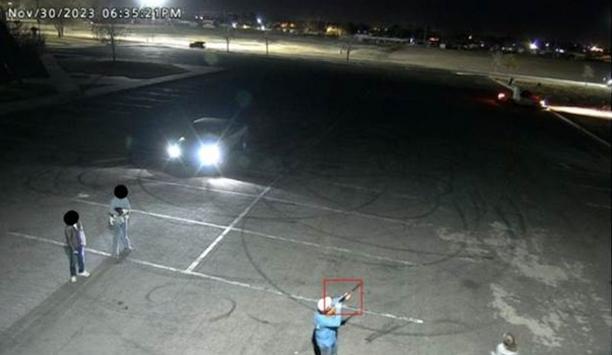
ZeroEyes, the creators of the only AI-based gun detection video analytics platform that holds the US Department of Homeland Security SAFETY Act Designation, announced a positive detection of an illegally brandished firearm in Hobbs, New Mexico that has resulted in criminal charges. At 6:35 p.m. MDT on November 30, 2023, ZeroEyes alerted the Hobbs Police Department and Eagle I.C. dispatch center of an illegal gun detection captured on a security camera in the parking lot of Del Norte Pool. The ZeroEyes Operations Center (ZOC) provided intelligent situational awareness about the threat, which involved individuals shooting sporting clays dangerously close to North Grimes Street. The responding officers detained the suspects and filed criminal charges against one of them. Rapid human verification ZeroEyes' AI gun detection and intelligent situational awareness software layers over living security cameras “My team and I were highly impressed with ZeroEyes’ AI detection and rapid human verification, which helped us stop this dangerous activity before anybody was hurt,” said Hobbs police chief August Fons. “In the past, something like this would have been missed entirely. We absolutely cannot have our citizens illegally firing guns in a public area, where anybody could walk by and get injured or even killed.” ZeroEyes' AI gun detection and intelligent situational awareness software layers over existing digital security cameras. When a gun is identified, images are instantly shared with the ZOC, staffed 24/7/365 by specially trained U.S. military and law enforcement veterans. Visual description If these experts determine that the threat is valid, they dispatch alerts and actionable intelligence, including visual description, gun type, and last known location, to law enforcement in as fast as three to five seconds from detection. “It is always gratifying to learn that our system has successfully prevented a potential shooting,” said Mike Lahiff, CEO and co-founder of ZeroEyes. “We are thankful that Hobbs PD acted swiftly to stop this illegal behavior, and look forward to continued success working with the department.”
Round table discussion

Headlines of violence in our schools are a reminder of the need to keep educational institutions safe. In fact, if there is a positive aspect to the constant bombardment of headlines, it is that it keeps our attention perpetually focused on how to improve school security. But what is the role of physical security systems? As the new school year begins, we asked this week’s Expert Panel Roundtable: Are schools safer because of physical security systems? Why or why not?

As physical security technologies become more complex, it is incumbent on the dealer/integrator to have the skills and expertise needed to ensure that a system operates smoothly. The value of integrators increasingly rests on the skill sets they bring to bear when installing a system. If the skills are missing, there is a problem. We asked this week’s Expert Panel Roundtable: What missing skills among security integrators can cause problems for customers?

Driving the smart homes market is the convenience of simple technology solutions. Almost every home now has a “smart speaker” that makes it easier than ever for homeowners to interface and control their technology. But where does security fit into the new landscape of smart home systems? We asked this week’s Expert Panel Roundtable: What’s new in smart homes and residential security systems?