Fleet surveillance

When a firefighter uses a Teledyne FLIR thermal camera to see through thick smoke, or an electrician scansa breaker panel for signs of a problem, they’re using a device designed and built in Europe. Much of that work happens in Tallinn, Estonia, and in Sweden, where the company’s teams handle everything from engineering and assembly to testing and quality control. Engineering and manufacturing Much of the electronics industry spreads manufacturing across multiple countri...

DigiCert, a pioneer in intelligent trust, announces Secure Releases, new functionality in DigiCert Software Trust Manager that helps organizations assess software risk when a release ships and as new vulnerabilities emerge. Part of the DigiCert ONE platform, it brings together information about supported GitHub releases, their software bills of materials (SBOMs), known vulnerabilities, severity, and security scan results. Teams can identify which versions need attention and use that information...

Scality, a global pioneer in data infrastructure software for AI storage at scale, announces the availability of Scality AI Inference Factory, an open-code software stack for deploying and operating AI inference on enterprise-owned infrastructure. The solution gives enterprises, government agencies and neo-cloud providers a supported alternative to cloud-based AI services, without having to assemble, integrate and maintain the entire software stack themselves. As AI moves from experimentation i...

HID, a pioneer in trusted identity solutions, is rolling out enhancements across its FARGO® DTC ID card printers, including the DTC1250e, DTC4500e and DTC1500 models, to help organizations issue secure, professional-quality ID cards faster, with less IT support and the ability to easily scale as needs evolve. Organizations that issue ID cards — from schools and healthcare systems to government offices, corporate campuses and others — need printers that are easy to operate, produ...

March Networks®, a pioneer in video surveillance and business intelligence, and VIVOTEK, a global security solutions provider, will showcase their combined vision for intelligent transit security at the American Public Transportation Association (APTA) TRANSform Conference & EXPO 2026, Oct. 5-7 at McCormick Place in Chicago. At APTA, the companies will bring “Connected Intelligence: On the Move” to life by demonstrating how transit agencies can connect video, AI and operatio...

As millions of people jet off for their summer holidays or make their way home, airports are under increased scrutiny. For many, their eagerly awaited trip begins and ends in the airport. Meeting passenger expectations with a seamless and secure journey from check-in to boarding is critical at a time when passenger numbers are rising, with almost 1.1 billion air passengers traveling through EU airports in 2025, an increase of 4.8% year-on-year. Increased complexity ahead But there are headwin...
News

Inovonics, a provider of wireless solutions for life safety and security applications, is celebrating 40 years of innovation and continued growth in commercial security, senior living e-call, multi-family submetering, and commercial monitoring markets. Founded in 1986, Inovonics has continued to advance 900 MHz wireless technology to develop solutions designed for life safety, intrusion detection, and environmental monitoring. “Inovonics has spent four decades building technology that performs when it matters most,” said Tom Chittenden, President of Inovonics. “We continue to pioneer new solutions using the latest advancements in wireless technology that deliver higher levels of performance, reliability, and versatility to solve real-world challenges.” Open integration options The next chapter for Inovonics builds on the same foundation of reliable hardware backed by cloud software and open integration options for systems integrators and other technology partners. "We're building the platform that will define the next 40 years for our company," Chittenden said. "Our newest Intrusion System and Duress Card reflect where we are headed, toward connected solutions that leverage the best in 900 MHz wireless, AI, and cloud technologies that our partners can trust today and grow into tomorrow." Noted Inovonics milestones over the past 40 years include: 1986: Inovonics Corporation founded in Boulder, CO by Steve Koonce & Don Hume to develop commercial wireless products leveraging frequency-hopping, spread spectrum RF technology. 1996: Inovonics trademarks Frequency Agile as the brand name for its proprietary 900 MHz wireless technology. 1997: Inovonics launches Wireless Guardian security control panel for small commercial security applications. 1998: Inovonics launches TapWatch wireless utility submetering software and pulse-meter transmitter solution to the multifamily market. 1999: Inovonics launches Comset and Comset Superlight wireless telephone headsets. 2000: Inovonics awarded ISO 9001 certification. 2001: Inovonics partners with 3M to create ergonomic wireless headset solutions for drive-thru restaurants. 2005: Inovonics ships millionth TapWatch transmitter. 2007: Inovonics launches EchoStream next-generation high-performance wireless mesh network. 2008: Inovonics develops commercial UL-listed wireless security sensors and repeaters. UL had not previously listed any commercial wireless universal transmitters or repeaters, making the EchoStream products uniquely qualified for the commercial marketplace. 2010: Millionth EchoStream sensor shipped. 2010: Patent No. 7,746,804 awarded for EchoStream directed messaging network architecture. 2010: Inovonics launches Remote Data Logger and TapWatch 3 software for utility subtering solutions. 2013: Inovonics launches EN6080 Gateway, one of the first PSIA-compliant wireless area gateways enabling IP and system integration. 2013: Inovonics launches TapWatch Cloud, the company’s first cloud-hosted software solution. 2015: Patent No. 9,111,432 awarded for mobile duress pendant management system. 2018: Awarded patents for the EN1221S-60, wearable emergency call device pendants specifically for the senior living industry. 2018: Over 3 million wireless pulse transmitters sold. Company releases EN1550EP Encoder Pulse Transmitter expanding IoT and building management utility products. 2022: Inovonics launches fall detection and alarm location solutions for senior living communities. 2024: Inovonics announces Advanced Location solution. 2025: Patent No. 12,367,757 issued for fall detection pendant systems and methods. 2026: Inovonics introduces groundbreaking Intrusion Detection and Duress Card solutions. Celebrates 40th anniversary.
Xtract One Technologies announces the release of Mean Time to Secure (MTTS), a new feature suite and performance metric set available across its SmartGateway, Xtract One Gateway, and Xtract One View platforms, introducing Mean Time to Secure (MTTS) metrics. MTTS provides security operators a complete, end-to-end, data-driven view of their entry screening program's performance. MTTS combines Mean Time to Detect (MTTD), which measures primary screening speed, with Mean Time to Resolve (MTTR), which measures secondary screening resolution time, into a single metric: MTTS = MTTD + MTTR. The metric is tracked continuously in Xtract One View and available across all deployed systems. Screening resolution time The release also introduces Divestor enhancements that allow security staff to categorize threats directly in the Console App during secondary screening. Verified weapon counts by type feed in real time to Xtract One View's hero stats dashboard, giving security directors audit-ready reporting for executive leadership without manual logging. "The security industry often defaults to “vanity” metrics, such as number of people per minute. These metrics do not tell the true and complete story. Throughput only tells you how fast people move through a single point - the primary screen," said Peter Evans, CEO of Xtract One. "By itself, throughput is a meaningless measurement.” Long secondary screening takes “A solution could have fast ingress, but low detection. Or, fast ingress and very high alert rates, which then defines a different story at secondary screening.” “Throughput alone, or other single data point measures, do not provide the operator the full picture, and insights to outcomes; what happens after an alert, how long secondary screening takes, or what's driving time, or the end-to-end guest experience. Security speed and guest experience speed are not the same number, and as an industry has been measuring only one of them. MTTS gives operators the complete picture for the first time, and the data changes how security programs get evaluated, staffed, and improved.” Multiple adjacent systems Security teams have had visibility into how quickly individuals move through the primary screening point but no way to account for, or measure, the overall outcomes of their security program. Security staff have been reporting to their management teams on throughput rates while management noticed a difference between what the numbers showed and what the entry point experience actually felt like on a busy event night or a peak shift change. Real Xtract One anecdotes include an entertainment venue that couldn't prove screening wasn't the bottleneck, a manufacturer that couldn't document that individuals were clearing security within an acceptable window, and a corporate security team that couldn't tell leadership how long secondary screening was taking or whether anything was being found. Mean Time to Secure was built to answer all of these questions. The September release also includes continued AI model improvements for both SmartGateway and Xtract One Gateway, cloud-managed over-the-air software updates for SmartGateway via Xtract One View, and Auto Pod Sync for Xtract One Gateway, which removes manual configuration steps when setting up a fleet of multiple adjacent systems. The September software release is available to all SmartGateway, Xtract One Gateway, and Xtract One View customers.

As cloud and managed service providers race to deliver backup-as-a-service (BaaS) at scale, a critical operational challenge has emerged: managing tens to hundreds of individual object storage deployments spread across customer sites, each requiring monitoring, maintenance, and billing reconciliation. Scality, a pioneer in data infrastructure software for AI-era storage at scale, today announced general availability of Scality Maestro, a fleet management platform purpose-built for service providers operating large numbers of Scality ARTESCA object storage deployments on behalf of their customers. Managing single deployment Managing distributed object storage infrastructure at scale is fundamentally different from managing a single deployment. Service providers need a single pane of glass to monitor health, push firmware and software updates, track capacity utilization across all customer sites, and do so without requiring VPN tunnels into every customer environment. As BaaS offerings grow from dozens to hundreds of sites, this operational gap becomes a hard constraint on scalability. Co-developed with cloud and service provider partners (SCSP), Scality Maestro is now in production use across customer deployments and provides service providers with: Centralized health monitoring and alerting across the entire Scality ARTESCA fleet End-to-end management down to the hardware layer, including ARTESCA software upgrades and server firmware updates Aggregated capacity utilization data across all customer deployments, enabling automated pay-as-you-go billing Out-of-band connectivity architecture that eliminates VPN requirements, as all traffic flows from ARTESCA to Maestro, never the reverse Support for enterprises managing ARTESCA across branch offices or distributed edge locations Data protection architecture "We manage multiple Scality ARTESCA deployments across our key customer sites in the UK and Ireland as part of our backup-as-a-service offering, and until Maestro, every one of them was independently managed - separate logins, VPN tunnels, manual update cycles, and monthly capacity reports assembled by hand. Instead, Maestro gives us a single view of the entire fleet. Software updates that consume hours of staff time can now be monitored centrally, and we can grow the fleet without adding operational headcount. We can already foresee a significant difference in running our service," said Dominic McLouglin, CEO Autodata. While Maestro was designed primarily for the SCSP and MSP market, the platform is equally well suited to enterprise organizations running ARTESCA across multiple locations, whether at the edge, in branch offices, or as part of a distributed data protection architecture. Operational inflection point Once deployments expand beyond a handful of sites, organizations reach an operational inflection point: tools that work well for a single site cannot efficiently manage tens or hundreds. Maestro provides the centralized management needed to operate at that scale. “Service providers building BaaS businesses on Scality ARTESCA are managing infrastructure at a scale that demands enterprise-grade operational tooling. Maestro was built with our SCSP partners to solve the real operational problems they face every day with centralized visibility, automated management, and the billing infrastructure to run a sustainable managed service. The fact that it requires no VPN and no network reconfiguration on the customer side was a hard requirement from day one,” said Thomas Danan, Sr. Product Director, Scality. Scality Maestro 1.1 is generally available and supports all Scality ARTESCA deployments running version 4.0.3 or later. It is currently available as an on-premises deployment, with a SaaS delivery model planned for future release. For Scality service providers, full documentation is available at documentation.scality.com.
ABAX, a pioneer in smart mobility solutions, launches ABAX Vision AI in the UK. This new solution integrates high-definition video evidence and real-time driver safety technology directly into the core ABAX fleet management platform, eliminating the need for standalone dashcam systems. Powered by edge-native AI, ABAX Vision AI moves video telematics beyond passive recording. It actively detects risky driving behaviors—such as fatigue, distraction, phone use, tailgating, and lane drift—and delivers instant in-cab audio alerts to help drivers prevent incidents in real time. High-definition video evidence "A traditional dashcam tells you what happened. ABAX Vision AI helps fleets understand why it happened and helps drivers prevent incidents before they occur. By bringing video, AI, and fleet data together, we're giving customers the complete picture," said Jack Bell, Senior Technical Project Manager, ABAX. Key Features and Benefits: AI-Powered Safety: Detects hazards and risky behaviors, providing real-time in-cab alerts to actively support safer driving. Instant Incident Visibility: Automatically uploads event footage to the cloud for remote retrieval—no physical SD card access required. Unified Intelligence: Seamlessly connects video clips with trips, drivers, and routes within the existing ABAX platform. Exonerate Drivers: Provides clear, timestamped video evidence to support investigations and defend against false claims. Privacy-First Design: Features event-triggered recording and controlled access to balance safety with driver privacy. Fully Managed: Includes professional installation, 24/7 support, and a lifetime hardware warranty. Streamline incident investigations The launch strengthens ABAX's fleet management offering by unifying tracking, driver behavior, and visual evidence. This allows operators to streamline incident investigations, improve driver coaching, and accelerate insurance claims handling. ABAX Vision AI is available in road-facing and dual-facing configurations. To support UK adoption, ABAX is offering a free first hardware installation on qualifying contracts.

Stuart Wheeler, Managing Director at Keynetics, the company behind the smart keyholding solution SentriGuard, explores how operational pressures surrounding alarm response are forcing security providers to rethink traditional keyholding models and reassess the role access management now plays within modern mobile response operations. The operating environment surrounding alarm response has changed significantly over the past couple of decades. Client requirements are rising and, with them, the pressure on security providers to rethink how mobile response operations are delivered in practice. Faster security response times are now expected as standard, alongside full accountability of the response process, detailed reporting and tighter operational visibility. Service level agreements At the same time, providers are under pressure to control operational costs while continuing to meet demanding service level agreements across increasingly complex contracts and larger geographical areas. The challenge is compounded further by ongoing staffing pressures across the sector. Many organizations are operating within a constant recruitment cycle while trying to maintain service consistency with limited resources on the ground. While technology continues to support certain aspects of mobile response, many of the pressures facing alarm response operations run deeper than simply digitising parts of the service. Increasingly, security providers are being forced to examine the operational structure of alarm response itself and, in particular, the way access to client sites is managed during incidents. For many security companies, the challenge is no longer simply responding quickly, but balancing service delivery, operational efficiency and sustainability expectations at the same time. Clearest contractual measures Ongoing conversations with security providers reveal that the operational challenge is no longer linear but rather balancing three competing demands that often pull in opposite directions: maintaining service delivery targets, controlling operational costs and meeting ESG expectations. Response performance remains one of the clearest contractual measures within mobile security. Alarm response times are monitored closely and, particularly within higher-risk sectors, delays can carry serious operational and financial consequences. At the same time, providers are facing growing costs linked to fleet management, staffing, fuel and keyholding operations, while continuing to protect margins and meet customer pricing expectations. ESG Pressures That Add Further Complexity To complete this triangle of challenges, ESG considerations are becoming increasingly difficult to ignore. Growing compliance expectations Sustainability is no longer simply a future ambition or corporate talking point. Companies are facing growing compliance expectations that require measurable operational improvements. Yet reducing emissions is challenging for a security function that depends on patrols covering vast mileage, operating for long shifts and transporting heavy key lockers. The operational realities surrounding traditional keyholding can make fleet electrification far more difficult in practice. Looking beyond environmental considerations alone, the wider Social and Governance elements of ESG may also be affected by the operational pressure surrounding alarm response. Tighter response targets can place additional strain on patrol officers, creating pressure to attend sites faster and complete inspections within increasingly compressed timeframes. In some cases, this can contribute to unnecessary operational risk, process breaches and wider health and safety concerns. Recurring operational themes To understand the complexity of this balancing act, it is important to examine the most common service delivery methods and the role keyholding continues to play within them. The scenarios discussed below are drawn from recurring operational themes that Keynetics encounters through ongoing conversations with security providers, mobile response teams and organizations responsible for keyholding operations, particularly when reviewing access control and key management strategies. Scenario One: Keys Carried in Patrol Vehicles One of the most common operational models within mobile response involves storing large quantities of client keys inside secure lockers fitted within patrol vehicles. Patrol officers complete routine assignments throughout the shift while remaining ready to respond to alarm activations when required. While this model offers clear advantages and has been historically tested, there are limitations. Only the patrol carrying the relevant keys can respond to an alarm. But what happens if that patrol is already dealing with another incident miles away from this site? Maintaining operational coverage Delays may follow and, where alarms are genuine, the consequences for the client’s property can become significant. There are also wider governance concerns attached to carrying hundreds of physical keys within a single vehicle. Any theft, vehicle break-in or road traffic collision involving the patrol may affect a large number of client sites simultaneously. Replacing locks and keys across numerous properties can quickly become both operationally disruptive and financially significant. Sustainability pressures add another layer of complexity. Keyholding vehicles need reinforcing to meet strict security requirements, while patrols may cover significant mileage during a single shift with large quantities of keys onboard. For many providers, this creates practical limitations when attempting to transition towards lighter hybrid or electric fleets while maintaining operational coverage. As a result, organizations are beginning to explore alternative approaches to access management to reduce operational dependency on transporting physical keys. Simplifying auditing processes Scenario Two: Collecting and Returning Keys to a Secure Storage Location - An alternative operational model involves storing all client keys within a secure central facility, with patrol officers collecting and returning keys only when alarm attendance is required. From a governance perspective, this model offers advantages. It can simplify auditing processes and reduce some of the risks associated with transporting large numbers of keys during routine patrols. It may also simplify the transition towards lighter hybrid or electric fleets. Operationally, however, the compromises shift elsewhere. Additional journeys to collect and later return keys introduce downtime, extra mileage and labor inefficiencies. Most importantly, key collection may slow alarm response times. In sectors where rapid attendance is critical, even relatively small delays may lead to client dissatisfaction and penalties for missed contractual response targets. Alarm response operations For many providers, the bigger question is whether physical key movement should remain central to alarm response operations at all. While these pressures may appear to affect security providers alone, clients are increasingly part of the same balancing exercise. The sustainability impact of alarm response operations is no longer isolated to suppliers themselves. Procurement and sustainability teams are paying closer attention to Scope 3 emissions and the environmental impact of outsourced services. At the same time, clients continue to expect rapid response times, competitive pricing and full service accountability. This creates pressure on both sides. Providers are being asked to reduce emissions and operational costs while continuing to meet demanding response targets within service models still heavily dependent on physical key movement. Physical key movement Can Changes to Keyholding Help Ease the Pressure? All of the points discussed above are forcing security providers to reassess operational models that, in many cases, have remained largely unchanged for decades. For many organizations, keyholding has historically been viewed simply as part of the alarm response process. However, growing pressure around sustainability, response performance, accountability and operational efficiency is now pushing providers to examine whether traditional approaches to managing access still support the wider demands placed on modern mobile response operations. Stuart comments, “There has most certainly been a sense of urgency in addressing these challenges across the security sector. The discussion is now moving beyond alarm response itself and towards reassessing how keyholding and access management fit within the wider operational model.” Reducing unnecessary journeys As a result, security providers are increasingly exploring whether changes to access management could help ease some of the operational strain surrounding alarm response delivery. Why the Industry is Beginning to Explore Access Control Alternatives - If physical keys no longer needed to be routinely transported or collected throughout the response process, the nearest available patrol could potentially attend incidents more efficiently, helping providers maintain SLA targets while reducing unnecessary journeys and operational downtime. Reducing the dependency on transporting large quantities of keys may also support wider sustainability goals. Lighter patrol vehicles and reduced reliance on reinforced key lockers could help with fleet strategies and support the transition towards more environmentally friendly vehicles. Systems reducing physical key circulation until attendance at site is required are increasingly being viewed not simply as security upgrades, but as practical ways of easing some of the pressure surrounding modern alarm response. However, changing long-established response processes is rarely straightforward. Deploying mobile credentials Introducing new technologies, workflows and compliance procedures requires operational buy-in, training, long-term planning and, in many cases, client education before changes can be implemented effectively. Fully digital access control or a hybrid approach? With a wide range of alternatives to traditional keyholding now available, ranging from legacy-key compatible solutions such as SentriGuard through to fully digital systems deploying mobile credentials as the primary means of access, the discussion is no longer simply about functionality, but operational suitability. While fully digital access control may appear to offer the most straightforward long-term direction, the operational reality across the security sector is often far more complex, particularly for organizations managing large multi-site estates. For many clients, replacing access systems across hundreds of locations may not be operationally or financially realistic in the short term. As a result, many organizations are instead exploring hybrid approaches that avoid large scale lock replacements while introducing greater access traceability and remote management. Exploring hybrid approaches Stuart adds, “We are often approached by organizations seeking a hybrid approach to access control, one that continues deploying existing keys while improving visibility and operational control around how access is managed.” He continues, “The discussion is no longer simply about eliminating keyholding challenges. Organizations are also looking at auditability, integrations, remote management and futureproofing alarm response processes as operational requirements continue evolving.” While no single approach is likely to eliminate every challenge surrounding modern alarm response, access management is increasingly becoming part of how providers are trying to make response operations more efficient overall. Significant operational consideration Traditional keyholding models have supported the security sector for decades and will continue to remain part of many operations for years to come. However, the pressures surrounding modern alarm response are changing the way organizations evaluate operational efficiency, sustainability and service delivery. What is becoming increasingly clear is that the discussion is no longer simply about response times alone. Increasingly, it is about how efficiently alarm response can operate as a whole. As providers continue balancing demanding SLA targets, operational costs and ESG expectations, access management is likely to become a far more significant operational consideration within alarm response than it once was.

Cequence Security, the pioneer in application, API, and agentic AI protection, announces general availability of Cequence Platform 9.0, an AI-native release that fundamentally changes how users interact with API security tools. Platform 9.0 ships with a built-in AI Assistant, an open Model Context Protocol (MCP) server that exposes every platform capability to an organization’s agents or automation workflows, a compliance-ready risk rules library mapped to 25 global regulatory frameworks, and a re-architected API security engine built to handle the largest enterprise API estates without performance degradation. Adopting AI agents Agentic AI is transforming how enterprises interact with their customers, and internal IT teams are adopting AI agents faster than their security tools can keep up. Unlike vendors that add a simple chatbot to their existing product, Cequence took the opposite approach; the entire platform is AI-native and open, enabling customers to use Cequence's built-in model or one of their choosing. With Platform 9.0, any practitioner can open a conversation and start asking the questions they actually care about, without knowing the interface, navigating menus, or understanding how the product works. The platform finds the answers. Teams with sophisticated AI workflows can use their own agents to directly drive these same capabilities through the open MCP architecture, with no custom integration required. High-traffic enterprise environments Ameya Talwalkar, CEO and Co-Founder at Cequence, said: “Most vendors looked at the agentic era and added a chatbot. We looked at it and rebuilt the architecture. Cequence Platform 9.0 exposes the entire Cequence platform through an open MCP architecture so any agent can operate it directly, whether through our built-in AI Assistant, or a customer’s own agent. That is what AI-native actually means: the UI becomes optional. We are building for the way the agentic enterprise already works, while making sure a human approves every change along the way.” Cequence Platform 9.0 ships with a built-in AI Assistant that answers plain-language questions such as “What is my biggest risk right now?” with ranked, evidence-backed findings drawn from live platform data. Unlike most security chatbots that only deliver value in the hands of experienced practitioners, the Cequence AI Assistant arrives with skills built on years of application, API, and data protection work in high-traffic enterprise environments, able to guide practitioners of all skill levels from day 1. Broader agentic workflows Agent capabilities in Platform 9.0 include: Drive valuable actions from simple conversation: use plain-English to easily and quickly drive results. The possibilities are endless. Have the AI Assistant classify APIs, identify risks, draft rules, and create reports, all without navigating the UI. Open MCP server: any MCP-capable agent, SOAR platform, or automation workflow can interact with, configure, and pull insights from the platform through an open API contract, with no custom integration, incorporating API security into broader agentic workflows. Human in the loop: read actions run freely; every proposed write shows the exact change and requires explicit human approval before anything happens. Full transparency: every answer exposes the AI Assistant’s reasoning and the underlying tool calls; when it lacks a tool for a task, it says so rather than guessing. Evidence-backed recommendations Shreyans Mehta, CTO and Co-Founder at Cequence, said: “Most security chatbots are only as useful as the person asking the questions, which means they fall flat in the hands of anyone who is not already an expert.” “We built the Platform 9.0 agent differently. It runs a full agentic loop, planning which tools answer the question, calling them, and synthesising ranked, evidence-backed recommendations while showing you exactly how it got there. When it does not have the tool to do something, it tells you instead of guessing. That governance-first design is not an afterthought. It is the same conviction behind the Cequence AI Gateway, and it is what makes this safe to put in front of any practitioner on Day 1.” Custom rule development Compliance is the most common forcing function for an API security purchase, and the most common place programs stall. Platform 9.0 ships the rules, frameworks, and reports to make customers audit-ready immediately, with no professional services and no custom rule development required. Compliance capabilities in Platform 9.0 include: 250+ pre-built risk rules: more than four times the previous version, mapped to 25 global compliance frameworks including OWASP API Security Top 10 (all versions), PCI DSS, GDPR, HIPAA, SOC 2, ISO 27001, NIST CSF, DORA, NIS2, LGPD, SAMA, MAS TRM, and additional regional frameworks across the Americas, EMEA, and APAC One-click audit-ready reports: each report builds from live data, maps findings to the framework’s specific controls, scores risk by control area, and provides remediation guidance for every gap; reports can be company or partner branded Observe mode: see how proposed rules perform for testing purposes without raising formal issues, allowing teams can add frameworks without a flood of unreviewed findings Test panel: validates any rule against sample request and response data before activation Delivering higher performance Agentic AI is accelerating API endpoint growth faster than any prior technology wave. Platform 9.0 includes a complete rebuild of the engine that discovers, catalogues, and scores risk across an organization’s API estate, delivering higher performance at a smaller CPU footprint. API security engine improvements in Platform 9.0 include: 50x increase in API endpoints supported: with sub-five-second page load times across every view regardless of endpoint count Reduced compute costs: dramatic CPU footprint improvements translate directly into lower infrastructure costs, especially for on-premise deployments Availability - Cequence Platform 9.0 is immediately available for new customers.

Expert commentary

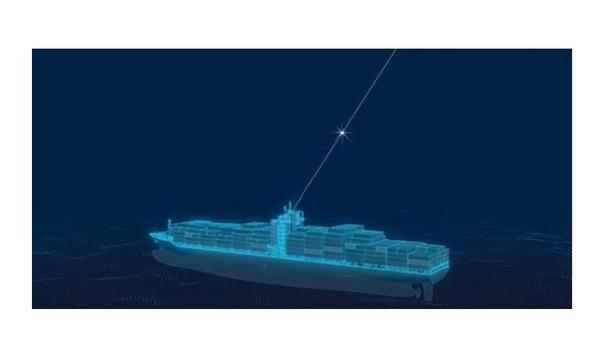
The global maritime surveillance market is projected to grow from $21.9 billion in 2023 to $ 42.7 billion by 2033. This growth is being driven by increasing global trade, maritime security concerns, and the adoption of advanced surveillance technologies such as radars, drones, and satellite monitoring systems. Moreover, the global shipping industry is now on the frontlines of a new kind of conflict — one defined by economic coercion, shadow fleets, and contested logistics – a durable competition where adversaries seek control and influence over global supply chains. As tariff regimes expand and national security policies increasingly target commercial vessels, maritime operators are being forced to navigate a risk environment shaped more by geopolitics than wind and weather. Infrastructure of global trade Trade disruptions are no longer accidental by products of diplomacy — they are deliberate policy levers. Tariff escalation between the U.S. and China, sanctions on Russian oil, and Houthi attacks in the Red Sea are not isolated threats; they signal a new normal in which governments treat the shipping industry as a tactical asset. From China's military-civil fusion shipbuilding policies to LOGINK, its state-run maritime surveillance network, the very infrastructure of global trade is becoming entangled in nation-state agendas. Contested logistics: Struggle for global economic stability The current maritime threat landscape involving contested logistics contains strategic positioning The current maritime threat landscape involving contested logistics encompasses strategic positioning across critical chokepoints and infrastructure. The statistics are sobering: major shipping companies reported traffic through the Suez Canal dropped by 66% as of September 2024 due to Houthi attacks, with J.P. Morgan estimating shipping costs have surged significantly, particularly from Asia to Europe, nearly five-fold. Regional maritime security issues These developments illustrate how foundational industries, such as shipbuilding, semiconductors, and rare earth minerals, have become battlegrounds in a broader geopolitical struggle where a cascade of effects have the potential to destroy economies. For example, a military blockade of Taiwan — where Taiwan Semiconductor Manufacturing Corporation operates — would impact every company dependent on advanced semiconductors. This interconnectedness means that what may, on the surface, appear to be regional maritime security issues, can be much more — the potential for global economic disruption across multiple industries. Monitoring of Arctic fleet movements Shadow fleets operated by sanctioned states rely on tactics such as false flagging, frequent ownership changes New threat vectors are coming into focus as the seas expand. As the polar ice caps melt, new Arctic shipping lanes are opening, with a large portion of traffic driven by Russian vessels. These routes present unique surveillance challenges due to their remote nature and the limited presence of traditional maritime enforcement bodies. Monitoring of Arctic fleet movements and infrastructure developments is essential for maintaining security in this emerging corridor. Concerns about dual-use capabilities and strategic readiness Shadow fleets, illicit networks, and military-grade commercial vessels represent real risks, posing challenges in the areas of regulatory compliance, insurance viability, and operational safety. Shadow fleets operated by sanctioned states rely on tactics such as false flagging, frequent ownership changes, and manipulations of the Automatic Identification System (AIS). By turning off transponders, spoofing locations, or falsifying data, these vessels can effectively vanish from traditional tracking systems. This disappearance makes ships harder for authorities to trace and easier for adversaries to exploit for sanctions evasions and/or covert logistics. China's commercial fleets increasingly mirror military standards, raising concerns about dual-use capabilities and strategic readiness under the guise of trade. The need for a new risk framework To navigate this new threat landscape on the high seas, organizations must adopt a new kind of visibility For logistics and shipping pioneers, these implications are profound. This is no longer about simply avoiding sanctioned cargo — it's about forecasting how governments will act and how quickly those actions can alter operations. Vessels may be commandeered, sanctioned, or rerouted without warning. Insurance may evaporate. Contracts may become liabilities. To navigate this new threat landscape on the high seas, organizations must adopt a new kind of visibility — one that models the cascading effects of tariffs, military requisition policies, and enforcement shifts. This is where Open-Source Intelligence (OSINT) becomes indispensable. Real-time context on geopolitical risks OSINT draws from publicly available data -- including satellite imagery, port registries, and social media — to provide real-time context on geopolitical risks. It can be used to track vessel flagging and ownership changes, monitor transshipment hubs, and surface anomalies in crew rosters and employment histories — indicators often tied to sanctions evasion or illicit activity. AIS anomaly detection reveals when ships "go dark." Satellite imagery exposes vessels operating without transponders. Tracking shifts in vessels' flagging or changes in crew manifests can signal risk before it hits operations. Early indicators of disruption OSINT supports risk modeling by revealing trends like flag-of-convenience usage, secondary insurance For insurers and regulators, OSINT supports risk modeling by revealing trends such as flag-of-convenience usage, secondary insurance underwriting in high-risk zones, and affiliations with known bad actors. OSINT doesn't just enhance compliance — it enables foresight, empowering industry players to anticipate when and where governments will act. Now, tariff announcements, sanction designations, and strategic military exercises are not isolated datapoints — they're potentially early indicators of disruption. Maritime situational awareness is a business imperative The age of separating business risk from political risk is over. Global shipping is now a domain of contested logistics where the rules can change as fast as a sanctions update or new enforcement directive. Companies that integrate OSINT into their operational planning gain the ability to model and mitigate threats proactively. Those that don't may find themselves caught in the wake of potential financial, operational, and reputational harm. The shipping industry needs access to the same kind of threat modeling governments use to act. In an era of growing complexity, the role of OSINT in securing global shipping networks cannot be overstated.

Open platform video technology software is more than just a product; it's a tool that helps customers achieve their desired business outcomes. Safety, round-the-clock security, and increased operational efficiencies are now the norm due to video technology. Responsible Technology Despite humanity’s impressive technological advances, we also recognize the immense responsibility that comes with technological innovation. It's not enough to focus solely on the positive impact video technology can make, we must also be vigilant in identifying and addressing any potential negative consequences it can have on society and its citizens. This is the role of Responsible Technology. Data privacy We want to use all the good things that technology innovation brings, whether it be video, AI, ML, facial recognition, etc. We want to use all the good things that technology innovation brings, whether it be video, Artificial Intelligence, machine learning, facial recognition, etc. to serve people in societies in a responsible way. That means making sure that we regulate technology in a way that respects human rights and data privacy. Addressing the challenges The challenge is, that rather often technology leaders and policymakers either have conflicting interests or collaborate too late. To be responsible, business leaders must support their societies and policymakers in making regulations in the interest of the common good. At Milestone Systems, we are actively looking at how we develop our software responsibly, how our partners responsibly sell our software, and very importantly, how our customers use our software with a responsible mindset. Ensuring good corporate governance As a long-time partner within the security industry, we’re celebrating our 25th Anniversary this year, we are supporting the regulation of video technology for the good of society. However, it of course needs to strike the fine line between the right legislation and not hindering innovation. UNGP The UNGP is the most authoritative and widely adopted set of principles for responsible business At Milestone Systems, we want to play an active role in this and that is why we have pledged our support to the UN's Guiding Principles on Business and Human Rights (UNGP). The UNGP is the most authoritative and widely adopted set of principles for responsible business. The principles call on governments and companies to identify, prevent, mitigate, and remedy actual and potential human rights abuses. Since its launch in 2011, the UNGPs have received wide support from states, civil society organizations, and the private sector, making them the key global foundation for business and human rights. Protect, respect, and remedy Through this commitment, we are taking steps to ensure good corporate governance and ethical standards in the development of our technology. We're generating mechanisms to prevent misuse and we are building educational practices internally. Based on the UNGP’s three pillars: protect, respect, and remedy, we are developing a set of Responsible Technology Principles and procedures for the development, selling, and use of our products. Need for video technology regulation In addition, we are currently evaluating all the various technology areas in which our video software can be used, such as with third-party integrations that utilize e.g., facial recognition. We are mapping out the advantages and disadvantages for societies. One key area of concern is how local authorities are mapping and storing data about us as individuals. This is the reason why we're inviting more legislation to regulate video technology rather than less. Engaging With policymakers We are meeting ministers and trade organizations as we believe this needs to be a joint effort where all parties are heard We are proactively reaching out to and connecting with policymakers and other relevant stakeholders to discuss our approach to and take on Responsible Technology and encouraging the political landscape to work with us around regulation and legislation. We are meeting ministers and trade organizations as we believe this needs to be a joint effort where all parties are heard and where we can openly weigh the advantages and the challenges of technology, whether it is video, facial recognition, machine learning, Artificial Intelligence, or other technologies. Striking a balance Implementing Responsible Technology is a journey, not a destination. To give it the focus needed, we have created a dedicated team to implement this initiative at Milestone Systems. At the same time, we are reaching out to the political landscape to discuss how we balance regulation without hindering innovation. Video technology used ethically We are a global company with worldwide operations, and we are having dialogues about how video technology is being used and how we can have meaningful talks about what regulation and legislation should look like. However, we don’t necessarily want to limit access to the technology itself. Facial recognition We encourage the policymakers to engage with us in the industry so that together we can strike the fine line Facial recognition is a great example of this. The EU is considering making live facial recognition illegal. That would be a huge inhibitor of proactive terrorism prevention. For example, if a well-known terrorist is walking down the street and is being mapped out against Interpol’s most wanted list, the authorities should be able to react. However, if a person walking down the street but is not mapped out or does not have any priors then the city should not be allowed to store the data of that individual’s whereabouts at that point in time. This potential legislation is concerning to me as a citizen of Europe. Instead, we encourage the policymakers to engage with us in the industry so that together we can strike the fine line for the better good of all of us. Maintaining high ethical standards We have a firm understanding and expectation that ethical standards are a huge driver in the security business. Citizens are not in favor of technology companies abusing data about them and monetizing from things that they have not opted in to do. Soon, I think we will see many more companies and governments leaning toward suppliers that do have a responsible mindset and high ethical standards for partnerships. Ethical practices Our journey toward Responsible Technology is an ongoing process, and we must remain steadfast in our commitment to ethical practices and the protection of human rights. We recognize that the rapidly changing technological landscape continually presents new challenges and opportunities. For this reason, we continuously look into how we can improve, for example, our end-user license agreements to avoid potential human rights abuses. An industry responsibility Security companies must prioritize careful planning and preparation, including developing policies and procedures For Responsible Technology to truly become a reality, compliance with international human rights laws and data privacy regulations is critical. Security companies must prioritize careful planning and preparation, including developing policies and procedures that govern the ethical use of video surveillance systems. The secure and ethical community In today's technology environment where deep integrations, machine learning, and artificial intelligence are becoming the norm, Responsible Technology is more relevant than ever. The security industry has a unique opportunity to set an example for other sectors by promoting a secure and ethical development community that prioritizes Responsible Technology, trustworthy data collection, and the protection of human rights. We must all rise to this challenge and embrace our role as ethical leaders for the greater good of both people and societies.

Inadequate security measures on your essential infrastructure can have severe consequences. Consequences Consider the rail industry: If a vandal cuts the cables on a vital mechanism that controls train signals, train safety is jeopardized. To avoid train collisions or derailments and thus significant damage to property and potential loss of life, the operating company must shut down the service until the infrastructure is repaired and the network is up and running again. The disruption affects the rail ecosystem itself, but also the people using the trains, the transportation of cargo, and more. The financial cost of repairing the damage, restoring signal functionality, and compensating for delays can be substantial. For another example, consider electrical substations: A fire or targeted attack can damage the system and lead to devastating power outages. Traditional surveillance limitations Traditional video surveillance has its limits when it comes to protecting transformer stations Traditional video surveillance has its limits when it comes to protecting transformer stations. The facilities are often located in rural areas, where straying animals or flying leaves trigger false alarms. 3D Surveillance solutions overcome these challenges by volumetrically securing the area and immediately detecting intruders only raising the alarm in the event of a human intruder and even identifying drone attacks. Protecting critical infrastructure with 3D surveillance Critical infrastructure must be monitored. It remains at risk if operators do not have systems for monitoring entire areas rather than just the periphery if security personnel has limited information in case of an intrusion and if security response protocols are not automated. 3D Surveillance solutions 3D Surveillance is an important tool for protecting critical infrastructure and ensuring the safety of those who rely on it. Integrating LiDAR technology, 3D Surveillance solutions provide a comprehensive view of the area being monitored with real-time monitoring and response, protecting critical infrastructure from damage and providing a more comprehensive security system. Advanced analytics and artificial intelligence Security personnel can identify and verify threats more easily and track the movements of individuals or vehicles, as well as respond to incidents as they happen. 3D Surveillance systems can be equipped with advanced analytics and artificial intelligence (AI) capabilities to detect patterns and anomalies that may indicate a potential threat. This can help to prevent potential attacks or accidents before they occur, as well as enable more accurate responses to incidents. Talent challenge Turning to autonomy by implementing sensor- and software-based solutions requires fewer if any, in-person patrols 3D Surveillance can also help tackle the talent challenge in the industry: Recruiting security professionals involves extensive background checks, and jobs in the industry are notorious for their low salaries, which results in high staff turnover. Turning to autonomy by implementing sensor- and software-based solutions requires fewer if any, in-person patrols and ensure reliable infrastructure protection. Additional security measures In many countries, more stringent legislation now mandates the implementation of additional security measures to safeguard critical infrastructure, particularly at a country's points of entry, such as airports and harbors. Protecting the perimeter is no longer enough. For instance, airport management must ensure that critical areas, including the space around aircraft and near unauthorized access points, are secure. While multi-layered screening of individuals at the perimeter is a valuable security measure, it must be complemented by smooth and efficient surveillance of the entire area, which can only be achieved through advanced technology. Different adoption rates 3D Surveillance technology is only beginning to gain traction in most locations, and adoption rates differ significantly from one region to another. For instance, Scandinavia and Eastern Europe have embraced 3D Surveillance to a greater extent than Western Europe. Regions with lower adoption rates will likely catch up as they seek to reinforce the security of their critical infrastructure, especially given the conflict in Eastern Europe. Vandalism and damage protection 3D Surveillance enhances the security of critical infrastructure, reduces the risk of downtime and loss of revenue 3D Surveillance offers reliable protection against vandalism and damage - major concerns for companies that rely on critical infrastructure. LiDAR-based, software-enhanced 3D Surveillance solutions provide real-time insights and enable automatic processing of the information so that operators can autonomously and quickly detect and respond to potential threats. These solutions are scalable and customizable, allowing companies to adapt their security measures to their unique needs and changing environments. 3D Surveillance enhances the security of critical infrastructure, reduces the risk of downtime and loss of revenue, and ensures compliance with regulatory requirements. Asset management and maintenance planning Beyond its security benefits, 3D Surveillance can help with tasks such as asset management and maintenance planning. It can help identify potential problems or maintenance needs before they become more serious issues by providing a real-time view of the monitored infrastructure. This can help to reduce downtime and keep critical infrastructure running smoothly. Real-time management The same technology can also perform volume monitoring tasks and thus facilitate the management of valuable resources such as bulk material, grain, wood chips, or chemicals. By scanning the stock 24/7 and automatically calculating stock volume updating records in real-time, this technology supports lean production systems and automated processing.
Security beat

Security professionals are recognizing the intelligence value of leveraging publicly and commercially available information. This information can now be accessed more effectively from typically hard-to-reach regions. Also, the technological capabilities have matured in our age of artificial intelligence, machine learning, and data science. Intelligence has historically been based on classified data. However, today’s unclassified data, including open-source intelligence (OSINT), is increasingly being used to provide context and queuing for other types of intelligence. Advanced identity intelligence Babel Street is a technology company providing advanced identity intelligence and risk operations using an AI-enabled data-to-knowledge platform to unlock insights from a flood of data. The company provides advanced data analytics and intelligence for the world’s most trusted government and commercial organizations. Experts have predicted that by 2025 over 463 exabytes of data will be generated each day globally The sheer volume of data is growing exponentially. Experts have predicted that by 2025 over 463 exabytes of data will be generated each day globally. Not only are we seeing exponential growth in the volume of data, but there is also disparity in the veracity and the variety of data. This is being compounded by the ‘app economy’ in which data is created in a new format for every app added around the globe. Human language technology “The problem is that the data ‘junk’ and the ‘crown jewels’ are in the same bucket, and government and commercial entities need better and faster ways to extract intelligence from these torrents of data,” says Farid Moussa, VP, Strategy & Public Sector, Babel Street. Prior to joining Babel Street, Farid retired from the National Security Agency (NSA). He has guided video, image, speech, and text analytics (VISTA) and developed an appreciation for human language technology. An elusive source of data is the Dark Web, where every user, by design, is attempting to obfuscate their identity, and bad actors are hiding much better. “This presents a cat and mouse game – the cat must be smarter than the mouse, but the mouse is continually getting smarter,” says Moussa. Intelligence tools for data analysis SIGINT and HUMINT – while both vital – are also the most expensive forms of intelligence There are several intelligence tools for analyzing data. One of them is signals intelligence (SIGINT), which refers to electronic transmissions collected by ships, planes, ground sites, or satellites. Another is human intelligence (HUMINT), which is collected in a human-to-human fashion. Open-source intelligence (OSINT) is obtained by searching on topics or entities of interest that are publicly available on the Internet at large. Today, these various categories are often done in ‘silos of excellence.’ However, the best practice is using all forms together in a holistic fashion. SIGINT and HUMINT – while both vital – are also the most expensive forms of intelligence, while OSINT, which is growing in importance, is most cost-effective. All are vital forms of intelligence; OSINT is complementary and crucial to holistic intelligence practices. Holistic intelligence practices When it comes to physical security of people and places, OSINT has become a critical source of actionable information. Security directors leverage Publicly Available Information (PAI) to safeguard against threats to individuals, property, travel routes, and event sites. By monitoring PAI, security teams can detect and respond to potential dangers, including during and after events where thorough preparation is vital. Online information can contain warning signs of impending threats. It informs security professionals in uncovering digital traces, confirming intentions, and addressing risks across language barriers, ensuring proactive risk management for the protection of people and property. Role of Natural Language Processing (NLP) The Internet and social media were mostly English language by default, but that has changed exponentially Natural Language Processing (NLP) is a crucial capability that has evolved to recognize the richness and variety of words and names in multiple languages and scripts, and their use across cultures. Using machine learning and linguistics algorithms, the technology simultaneously considers numerous types of name variations. At one time, the Internet and social media were mostly English language by default, but that has changed exponentially. Babel Street’s world-class entity matching technology measures over 100 features to calculate the similarity of entities across multiple languages. Despite advances in data management and the cloud, there are still multiple challenges and complexities with integration of these data elements. Challenges include spelling variances/phonetics, language translation issues, criminal evasion, human error upon input, typos, etc. Accessing data from a scattered landscape While there have been advancements in cloud technologies, agencies utilizing open-source data are typically working within a highly scattered data landscape and must use a wide array of tools to get at the relevant pieces. This fragmentation makes it difficult to run analytics and apply AI and machine learning at scale in order to derive actionable insights. Unstructured and relationship data are visualised through advanced link analysis As with many disciplines, artificial intelligence (AI) is changing the game when it comes to intelligence. NLP and AI algorithms are employed to enhance datasets for greater quality, usability, and completeness. Unstructured and relationship data are visualized through advanced link analysis, geographic heat maps, influential entity carousels, topic clouds, and patterns by time and day. Geographic heat maps The advanced algorithms accurately score and prioritize critical entities within the relationship network while providing the citations from which an AI/ML-based decision was made. “With the democratization of AI, the world is becoming flat,” says Moussa. “Just like the most prosperous countries, even the poorest countries have the most advanced capabilities to do damage. Third-world economies often present a scenario where the financial gain of nefarious schemes and low-to-no regulation combine to incentivize bad actors.” The Challenges of Name Matching Identity has been an ongoing challenge for intelligence analysis due to the vast complexity of linguistics, spelling and cultural variances, human error, as well as human evasion. Technology and data science approaches are maturing, however machine translation can still struggle with meaning. The best-of-breed natural language processing capabilities run against the data while it still is in its native language. This minimizes the occurrence of analytic errors caused by inaccurate machine translations. This minimizes the occurrence of analytic errors caused by inaccurate machine translations It’s tempting to think that name matching is like doing a keyword search. The complexity of language makes it more challenging. New names are constantly created, with multiple spellings and no set of rules to encompass how names are formed. They are variable across languages, scripts, cultures, and ethnicities. Culturally specific nicknames and aliases add to the complexity. Replacing human involvement The investigation of the Boston Marathon Bombing in 2013 spotlighted an example of the significance of intelligence analysis. Even though the FBI had issued a detain alert for Tamerlan Tsarnaev back in 2011, Tsarnaev managed to travel to Russia in January 2012; and in July 2012, he returned to Boston. He was not detained on either occasion because there were too many names on the lists, and Tsarnaev’s last name had been spelled differently from the way it was on travel documents, thus enabling him to get through security. With the Internet, social media, and the dark web, there’s been an exponential increase in public communications in various languages, adding significantly to the amount of analysis required to keep societies safe. Name matching, using AI, analyses multiple contextual data points across languages to arrive at matches. Name matching, using AI, analyzes multiple contextual data points across languages to arrive at matches A common misconception is that this technology will replace human intelligence. “It’s more accurate to recognize its role as a force-multiplier, allowing humans to focus on the on the harder problems and/or vetting the results of AI,” says Moussa. “The technology can efficiently analyze massive volumes of data and distill it into actionable information in a timely manner. It augments human capabilities, enabling analysis at speed and scale beyond human capacity, without replacing human involvement.” Commercial Technology to the rescue “When it comes to threat and identity intelligence, we face a risk-confidence gap, underscored by the challenge of integrating traditional tactics with the modern digital landscape,” adds Moussa. “We cannot ‘hire’ our way out of this problem. Instead, it is imperative that we adopt technology to scale our efforts and free humans to solve the harder problems that machines cannot solve yet.” The public sector loves to build things, but there are time-to-value and return-on-investment considerations to the ‘build or buy’ decision. When commercial technology can be leveraged by government, it frees resources up to work on problems that the commercial world hasn’t yet figured out, says Moussa. “The public and private sectors need to come together – one team, one nation, working together with mutual trust and collaboration,” he says.

Operational technology (OT) uses hardware and software to monitor and control physical processes, devices, and infrastructure. Historically, OT systems were not connected to the Internet and were therefore not vulnerable to cyber-threats. Internet of Things (IoT) However, today’s OT systems are increasingly part of a company’s networks as technologies converge and the Internet of Things (IoT) gains prominence. No longer can OT systems be counted on to be “air-gapped,” that is, not connected to other systems. When OT systems are vulnerable, companies face a “cyber-physical risk.” A bad actor could create a catastrophic risk in the physical security world by compromising OT systems. To understand more about OT and the related cybersecurity concerns, we spoke with Lisa Hammill, VP of Commercial Markets for Shift5, a company that applies cybersecurity best practices to OT systems and networks, thus dramatically reducing their cyber risk. Q: What is operational technology (OT)? How are the cybersecurity concerns for OT different than those for information technology (IT) systems? Hammill: Operational technology (OT) refers to the computer systems that underpin critical infrastructure, enabling it to run continuously and reliably. For example, planes and trains rely on OT to execute basic flying or driving commands. OT cybersecurity solutions for planes, trains, or weapon systems must be capable of the basics of IT cyber-hygiene Most OT is built on legacy technology manufactured before cybersecurity became a priority and relies on serial bus networks like MIL-STD 1553, CAN 2.0, or RS-232, instead of the standard TCP/IP communications protocols that IT security solutions can monitor and defend. Any effective OT cybersecurity solution for planes, trains, or weapon systems must be capable of the basics of IT cyber-hygiene, including ensuring signed software and firmware updates, full data capture, and continuous monitoring and detection aboard planes, trains, and weapon systems. This all makes cybersecurity for onboard OT difficult, but not impossible. Q: What is a “cyber-physical risk” and why is the term important? Hammill: Cyber-physical systems integrate digital components into physical objects and infrastructure; we focus on critical infrastructure like transportation as well as weapon systems. Cyber-physical risks manifest when actors intrude on these delicate processes to manipulate real-world outcomes, whether that’s grounding plane flights, or disabling train brakes. The risks of attacks facing OT within cyber-physical systems are highly consequential, can cause disruptions to civil society, economic disruption, and potential harm to citizens, as well as shift the balance of power in military conflict and geo-political matters. Q: Please describe the breadth of the risks when it comes to OT cybersecurity. Hammill: Cyber-physical attacks can jeopardize business and mission-critical operations, and risks are highly consequential when it comes to transportation systems, creating safety risks for operators and passengers, economic impact, and millions in downtime losses, remediation, and ransom payments. Transportation is a particularly vulnerable sector of critical infrastructure. An attacker could leverage a tested playbook to disrupt operations with minimal effort As we’ve seen from recent attacks demonstrating the attackers’ focus is trained on this space. The motivation of an attacker will vary, but for example, let’s say a bad actor wanted to target an aircraft to disrupt service and ground a flight. There have been examples of basic cyber-attacks targeting noncritical aircraft systems; however, many of these systems remain vulnerable. An attacker could leverage a tested playbook to disrupt operations with minimal effort. An attacker could target a system considered least critical to passenger safety systems categorized as a Design Assurance Level E (DAL E) like an in-flight entertainment system. This type of system has been hacked before and could be used as a vector for a ransomware attack. If an attacker takes control of video screens on seatbacks mid-flight, they would certainly damage passenger trust. They would also likely try to move up the design assurance level chain to gain further access. For example, when a plane pulls into a gate, communication between the aircraft and airline operations happens automatically. An attacker could exploit this connection to move from one system to another. If an attacker gets into those communications channels, they could alter data or hold it hostage, while the airline halted operations to resolve the issue. Q: What industries/markets are most vulnerable to OT cybersecurity threats and why? Hammill: Operational technology lacks the historical focus on cybersecurity that IT has, and basic best practices are nascent for OT industry-wide. Cyber-attacks targeting Colonial Pipeline and Florida's water systems (in 2021) have spurred those industries into action to prioritize cyber hygiene. The aviation and rail industries are watching and taking proactive steps to prevent such cyber-attacks. As weapons systems and vehicles on roads, rail lines, and in the air add on new technology, they are at risk of cyber-attacks Shift5 defends planes, trains, and weapon systems because these vehicles leverage a vast swath of distinct serial bus networks and protocols unseen in other critical infrastructure technologies. We have experts creating a tool that can monitor and detect traffic aboard these bespoke networks. And as weapons systems and vehicles on roads, rail lines, and in the air add on new technology, like autonomation, they are increasingly at risk of cyber-attacks. Q: What are the various sources of OT cybersecurity risks (e.g., other governments, individual hackers, criminal organizations, etc.)? Which are the most urgent and/or pervasive? Hammill: Because of their ability to cause deeply consequential impacts on the business, economy, and human safety, OT cybersecurity risks must be considered scrupulously. Attackers targeting OT could have a range of motivations, from financial gain or market advantage through the theft of intellectual property, to insider threats and geopolitical advantage in a contested environment. It’s no secret that most malicious adversaries choose the path of least resistance when developing their attack strategy. When OT is aboard planes, trains, and tanks, we’re only in the early innings of creating obstacles for those actors to overcome. One threat we’re watching closely is the evolution of ransomware targeting OT. Digital extortion could cause operational disruption and impact consumer trust. Q: What is the Shift5 approach to cybersecurity? Hammill: Shift5 extends 40 years of expertise in adversarial tactics, techniques, and procedures from IT endpoint security into the OT world. For the first time in history, operators can apply cybersecurity best practices to OT systems and networks, dramatically reducing their cyber risk. Shift5 allows rail, aerospace, and defense to generate data-informed insights and make accurate decisions Shift5 brings complete observability and threat detection to OT systems as cyber-physical attacks become an increasingly attractive strategy for digital attackers. By providing visibility into the data that powers their most expensive, longest-lived, and most consequential fleet assets, Shift5 allows rail, aerospace, and defense companies to generate data-informed insights and make timely, accurate decisions once considered impossible. Q: Has OT cybersecurity trailed IT cybersecurity in terms of awareness? If so, why is it true, and how can organizations become more aware (and more prepared) of OT cybersecurity risks? Hammill: OT cybersecurity is nascent compared to IT security, but the industry is catching up. While most organizations understand the importance of visibility and observability in IT systems to enable their defense, very few have this same level of oversight for their most expensive, consequential, and longest-lived OT-powered assets. Simple best practices geared towards defending OT can make an adversary’s job more difficult. Start with taking inventory of all OT assets, then move to gain situational awareness so you can develop your baseline for “normal” operations (and can identify any abnormal events), and finally take steps to shore up gaps in cybersecurity. Q: Tell me more about Shift5. Hammill: Shift5 was founded by Josh Lospinoso and Michael Weigand, two of 40 people hand-selected to stand up to U.S. Cyber Command, the nation’s most elite unit of cyber-defenders. There, Mike and Josh became familiar with challenges in defending weapons systems, and the idea for Shift5 was born. Shift5 provides OT cybersecurity and operational intelligence for fleet operators and military platforms Military weapon systems are built on the same OT infrastructure found within planes and trains, and today Shift5 provides OT cybersecurity and operational intelligence for fleet operators and military platforms. Our customers include the DoD, US Army, Air Force, and Navy, and several of the largest U.S. passenger rail and household-name aviation companies. Many of these industries are beginning to seek out partnerships with Shift5; for example, AEI HorizonX, the venture capital investment platform formed between AE Industrial and The Boeing Company, today works with Shift5. Q: What is the biggest misconception when it comes to OT cybersecurity? Hammill: A common misconception is that OT aboard planes, trains, or weapon systems isn’t at risk. Many security experts have implemented air gapping as a cybersecurity strategy to keep cybersecurity threats away from sensitive systems. However, due to the convergence of IT and OT, there are more inroads to OT than ever, and air gapping isn’t as effective. Transportation assets like planes and trains are flying and rolling data centers that produce valuable and useful data, and they need to be protected just as we protect client data or IP. It’s a hard problem to solve, but the stakes are high and attackers are increasingly aiming their attention at this surface area. Modern cybersecurity principles must be extended to the onboard OT networks of aerospace, rail, and defense Amid the war in Ukraine, we saw attackers target the Belarusian Rail System to thwart Russian adversaries, and Russia digitally attacked Viasat to disable this critical piece of infrastructure ahead of a kinetic strike. Digital attacks facing aerospace, rail, and defense targets are on the rise, and modern cybersecurity principles must be extended to their onboard OT networks. Q: How can organizations start to address these challenges? Hammill: Cybersecurity done well is a lot of preventative work, and when we hear no news, that’s often good news. The U.S. government has increased the levels of dialogue around cybersecurity risks facing US critical infrastructure operators and has led by example in sharing information to help critical infrastructure organizations bolster their defenses. I recommend that transportation organizations engage proactively with local FBI field offices or CISA Regional Offices to establish relationships in advance of any cyber-incidents and visit the websites of CISA and the FBI where they will find technical information and other useful resources. They should also take advantage of other resources like TSA, AAR, ICA, and relevant ISACs that have working groups focused on these challenges. I encourage every transportation operator to understand the risks for these large transportation assets through vulnerability assessments, pen testing, and exercises just as they do with their IT environments.
Foot traffic remained at respectable levels during Day Two of IFSEC International 2016 at ExCeL London. Attendees are bombarded with sensory overload as manufacturers look for new ways to stand out from the crowd. The result sometimes seems more like a lot of noise. Everyone is looking for ways to stand out from the noise of competing product features and claims at the show. One exhibitor, Tyco Security Products, is taking a different approach at this year's show, abandoning traditional emphasis on individual products and opting instead to focus on customer solutions targeted to end users. Tyco Security Products’ End-User Targeted Solutions Peter Ainsworth, Tyco Security Products' Director of Marketing for Europe, Middle East and Africa (EMEA), says everything at the Tyco stand -- from the layout to collateral material -- is built around the need to answer "so-what" questions from customers. "They want to know how we can save them money and make their lives better," says Ainsworth. A single brochure provides the "ultimate takeaway" for Tyco's visitors at this year's show; the "augmented reality" brochure has images that can be scanned with a smartphone to provide additional information, data sheets, etc. Tyco Security Products is also giving away a "magic cube" that can be configured as a cube showing Tyco's product lines, and then reconfigured into a multi-sided "star" shape that depicts various vertical market applications. There are "trigger points" on the cube that can be scanned using a smartphone app to provide additional information for potential customers, including videos. The design of both the brochure and the cube emphasize the message that Tyco Security Products understands customers' businesses. "This is where we see our product fitting within your establishment," says Ainsworth. "We take them through the journey at our stand." The brochure depicts the same journey and "helps the end customer understand what we can do for them," he adds. "It's not about intrusion, access or video, but about the total solution." "At a trade show like IFSEC, we are one of hundreds of stands," says Ainsworth. "We want something that people will remember us for. It's different and innovative, and reflects who we are as an organization." TDSi Gardis Access Control "At a trade show like IFSEC, weare one of hundreds of stands.We want something that peoplewill remember us for. It's differentand innovative. It's not aboutintrusion, access or video, butabout the total solution" In addition to getting customers' attention, some manufacturers have other agendas. Gathering feedback for product development is another way exhibitors can get the most out of IFSEC. For example, TDSi is previewing its new Gardis access control platform at IFSEC, including all-new, intuitive software that is easier to navigate, and a new hardware controller, both conformant to ONVIF Profiles A and C. Two years in development, the system will be easier to integrate with third party systems, using a REST-based application programming protocol (API). The new TDSi products are six months or so away from launch, and TDSi is using the IFSEC show to get feedback about changes customers might like to see as the software is fine-tuned; then it will undergo extensive field trials in the next several months. Getting feedback from potential customers is an invaluable tool for TDSi's development engineers, and IFSEC is an ideal venue to provide the feedback. "We can do an awful lot in three days that would take us weeks driving around in a car or flying around," says John Davies, TDSi's Managing Director. "It's a cost-effective way to achieve the same thing. Also, every year at the show we dig up a couple of projects that pay for the stand. This year we met with a customer that has 900 sites. We're in the early stages of talking with them about the new platform." IFSEC 2016 provides a first look at the new TDSi technology, which Davies says the company will introduce to the U.S. market by 2017, likely as a hardware component of an OEM partner's access control system. The open, ONVIF-conformant strategy makes it possible. TDSi has not been active in the U.S. market for 10 years or more; developing the open-architecture product is a favorable alternative to entering the large market with an older, "me too" product, says Davies. HID Global Seos And Mobile Access Solution Also at the show, HID Global introduced new high-definition direct-to-card printers, and showed its HID Mobile Access solution, powered by Seos. The company also emphasized integration of its Seos mobile credentialing system with time and attendance, fleet management and hand-held devices. There is a related managed services offering. A lot of buzz has surrounded Seos since it came on the market in September 2014, and currently there are several hundred mobile access systems installed worldwide, including hundreds of thousands of mobile identities in use in Western Europe and the United States. There have been several notable installations in the United States, especially among colleges and universities. HID Global is currently in the process of building out a "global wallet" in cooperation with chip manufacturer NXP, which is preloading its computer chips with Seos, usable for many applications beyond physical access control. At IFSEC, HID Global announced it has been selected by Vodafone Italy to modernize the company's physical access control system by providing a group of employees a mobile access solution across multiple sites and applications at the Vodafone Village in Milan.
Case studies

In a move to modernise campus operations and create a smoother experience for students and staff, Peru’s National Agrarian University has deployed a comprehensive Hikvision smart campus solution. From streamlined access to safer transportation, the university is building a safer, connected and efficient campus environment. Universidad Nacional Agraria La Molina (National Agrarian University) is one of Peru's most respected academic institutions. Its 102-hectare campus operates more like a small city than a traditional university, serving eight faculties, around 8,000 students, and about 600 teachers every day. Campus bus operations As campus activity continued to grow, the university wanted a more modern and efficient way to manage daily operations. Previously, visitor and vehicle access relied heavily on manual checks and handwritten records. The university also wanted better visibility over campus bus operations and more effective support for security teams patrolling the large campus area. Their goals included: Streamlining pedestrian and vehicle access Equipping patrol teams with mobile tools to enable them to respond to incidents faster Enhancing safety and visibility across campus bus operations Centralizing management through a single unified platform To achieve these, the university worked with system integrator Consorcio Valtar Security y Serinfortel to deploy a unified Hikvision smart campus solution. Anti-tailgating functions To improve pedestrian access, the university installed 18 Hikvision Pro Swing Barriers (DS-K3B530X) and 28 Face Recognition Terminals (DS-K5671-ZV) at the main and side entrances. The solution helps students and staff move through gates quickly while improving entry management. The facial recognition terminals support recognition speeds of less than 0.2 seconds per user and accuracy rates above 99%. Anti-tailgating functions, which prevent people slipping in behind others, helps ensure only authorized individuals can enter. LED indicators, meanwhile, provide visual indicators guide people through the turnstiles in order to avoid bottlenecks. To further streamline visitor handling, the university deployed a Visitor Terminal (DS-K5032-D) together with an Enrolments Station (DS-K1F600U-D6E-F) at the main entrance. The dual-screen visitor terminal supports paperless registration, helping security staff process guests more efficiently while reducing manual paperwork. At the same time, the enrollment station simplifies face enrollment and user management through an easy-to-use touch-screen interface. Anti-hitting protection mechanisms For vehicle access, Hikvision deployed 6 ANPR Cameras (DS-TCG406-E(S)) together with 6 Barrier Gates (DS-TMG520-H/B) at two campus entrances. The system automatically recognises license plates and manages vehicle access in real time, helping reduce waiting times and improve traffic flow. Staff vehicles can be pre-registered through the university’s app, allowing smoother entry during peak hours. Adjustable barrier speeds and multiple anti-hitting protection mechanisms also help improve operational safety. To further improve the driver experience, LED Screens (DS-TVL224-4-5Y) display welcome messages and vehicle information in real time. Because of the campus’s large size, motorcycle patrol teams play an important role in maintaining daily operations and responding quickly across different areas. To support these teams, the university has deployed 10 Hikvision Ultra Series Body Cameras (DS-MH2311) together with 2 Dock Stations (DS-MDS001). Several features make this solution particularly suitable for mobile patrol work: Clear 2 MP video recording with a wide 129° horizontal field of view Up to 8 hours of recording with a removable 3,300 mAh battery Wireless connectivity for improved communication Real-time positioning support through GPS Centralized charging, storage, and evidence upload through dock stations Professional campus operations The cameras are mainly used during routine motorcycle patrols and when responding to incidents on campus. Recorded footage helps clearly document security procedures and provides reliable records of how situations were handled, supporting transparent and professional campus operations. The university has also upgraded safety across its fleet of 11 campus buses with Hikvision onboard solutions. Each bus is equipped with: Mobile Dome Cameras (DS-2XM6726G1-IM/ND) and Mobile Network Cameras (DS-2XM6522G1-ID): These provide real-time HD video coverage inside and outside the buses, helping operators monitor passenger boarding, alighting, and road conditions clearly. DSM Camera (AE-VC1B1I-ISF(RJ45)): This improves driving safety by detecting critical safety indicators such as fatigue, distractions, and smoking. When potential risks are identified, alerts are immediately issued to the driver, helping encourage safer driving practices during daily routes. Touch Monitor (AE-MW1203): Drivers can view live camera feeds through the monitor. The display automatically switches to relevant views when doors open or when reversing, helping drivers monitor passenger movement and blind spots more effectively. Alarm Button (DS-1530HMI(AE)(O-NEU)): It allows drivers to immediately notify the control center for rapid assistance in emergency situations. Mobile NVR (AE-MN5043(1T/SSD)(RJ45)(O-STD)): This records and stores video while also supporting GPS positioning, geofencing, and route monitoring through Google Maps integration. Campus bus management Every solution, from access control and patrol operations to campus bus management, is centrally managed through HikCentral Professional. From this single platform, the university can: Monitor access events in real time Manage user permissions and visitor records Track campus buses through GIS-based maps Receive centralized alarms and event notifications Coordinate faster responses across campus According to the university, the solution has significantly improved operational visibility and coordination across the campus. “With Hikvision’s smart campus solution, we now have a much more efficient and connected way to manage daily campus operations,” says Joseph Jimy Ordóñez Blanco, General Coordinator of the University’s Security Unit. “From access management to transportation safety, the platform gives our teams better visibility, faster response capabilities, and greater confidence in maintaining a safe environment for students and staff.”

Viação Santa Brígida partnered with Dahua Technology to improve the safety and efficiency of its bus fleet in São Paulo, Brazil. The integrated solution enables real-time monitoring, reduces blind spots, supports passenger counting and fare-evasion control, and helps operators respond to incidents more effectively. Overview - Viação Santa Brígida is a major operator serving São Paulo with a fleet of more than 650 buses. To improve fleet supervision, passenger and driver safety, and operational visibility, the client partnered with Dahua Technology to deploy an intelligent mobile video surveillance and fleet management solution featuring onboard cameras, passenger counting, vehicle tracking, and centralized real-time monitoring. Potential safety risks Challenges - Managing hundreds of buses operating across a densely populated metropolitan area requires continuous coordination and reliable access to operational information. Viação Santa Brígida needed a more effective way to monitor its vehicles in real time and respond rapidly to incidents. Limited visibility inside and around buses made it difficult for the company to verify events, identify potential safety risks, and support drivers during daily operations. Blind spots around large vehicles also presented a concern, particularly during passenger boarding, manoeuvring, and interactions with pedestrians and other road users. Assessing vehicle occupancy The company additionally needed better tools to address fare evasion and monitor passenger movement. Without centralized and accurate data, assessing vehicle occupancy, reviewing suspicious activity, and identifying possible revenue losses could be time-consuming. Another priority was improving the efficiency of fleet management. Information from individual vehicles had to be consolidated and made readily accessible to the operations team, enabling managers to make faster, better-informed decisions. Centralized management software Solutions - Working with Dahua Technology, Viação Santa Brígida deployed an integrated mobile video surveillance solution combining strategically positioned onboard cameras, intelligent analytics, vehicle information, and centralized management software. Cameras installed inside the buses provide continuous recording and real-time monitoring of passenger areas. This allows the operations team to review incidents, observe passenger movement, and obtain reliable video evidence when necessary. The system also helps identify cases of fare evasion, supporting the protection of company revenue and improving operational control. Passenger-counting capabilities External cameras give drivers a more complete view of the areas surrounding each vehicle. By reducing blind spots, the solution helps drivers see pedestrians, passengers, and other nearby road users more clearly throughout the journey. This is particularly valuable during boarding and disembarking, when people may be positioned close to the vehicle or outside the driver’s direct field of vision. The deployment also incorporates intelligent passenger-counting capabilities. By automatically analyzing boarding activity, the system provides more accurate information about passenger volumes, vehicle occupancy, and potential discrepancies associated with revenue collection. Comprehensive view of fleet activity All information is brought together at Viação Santa Brígida’s Integrated Control Center, where operators can monitor the fleet through a video wall and Dahua’s mobile management software. The platform consolidates live and recorded video with vehicle location and operational information, giving the control team a clearer and more comprehensive view of fleet activity. The centralized system also supports the identification and investigation of unusual events. When an incident occurs, operators can access the relevant vehicle information and video footage, helping the company evaluate the situation and take appropriate action more efficiently. Continuous video monitoring Results - Dahua’s integrated mobile video surveillance solution has significantly improved Viação Santa Brígida’s fleet visibility by enabling continuous video monitoring, more accurate passenger counting, stronger fare-evasion control, and faster incident verification. External cameras also reduce blind spots, helping drivers operate more safely during daily journeys and passenger boarding. By centralizing video, location, and operational data in the Integrated Control Center, the company can analyze events more quickly and make better-informed decisions. Overall, the collaboration between Viação Santa Brígida and Dahua Technology has delivered a safer, more transparent, and more efficient approach to public transportation management, benefiting the company, its employees, and the thousands of passengers who rely on its services each day. “Today, we can continuously monitor the cameras installed across our buses and provide our managers with more accurate operational information. Dahua’s technology helps us control fare evasion, improve safety for drivers and passengers, and manage our fleet with much greater efficiency and confidence,” says a representative from Viação Santa Brígida.

The New Brunswick Parking Authority (NBPA) is the organization for parking information in New Brunswick, NJ. The duties of the Authority are to construct, improve, maintain and operate offstreet parking facilities, to promote traffic improvements and the free flow of traffic. The Authority is also responsible for the management and operation of on-street parking by means of parking meters and residential permit parking. The NBPA maintains a uniformed security force to provide an adequate level of security in its facilities and to patrol the downtown area. Uniformed security force Technology Objective - Apply a key control system that will tighten access to keys and allow management to more easily track and control the keys which are used for NBPA vehicles, administrative offices, revenue equipment (parking meters) and other Authority assets. The system additionally needs to be capable of remote access and programming so that emergency access to specific keys or other secured items can be granted instantly and without management physically having to be present. Key management system The Challenge - The NBPA has a fleet of 25 vehicles and the problem with a manual key control system (i.e. signing a key in or out) is that it would be difficult to determine, with certainty, which employee last drove a particular vehicle. Employees are requested to examine the vehicle prior to taking it out, making note of any scrapes, dents, etc., and then do the same when returning the car. When this is not done, it is very difficult to identify and prove who may have last driven the car or who was responsible for any damages and this can usually only be done by going back and checking logs which may or may not be accurate. Implementing a key management system with an audit trail would eliminate this problem. The NBPA is also responsible for the collection of coins from the various parking meters and keys to these meters must be carefully controlled and a verifiable audit kept, ensuring the integrity of the operation. In addition, lost or damaged keys can cost thousands of dollars to replace and knowing who last accessed a key can assist management in determining a remedial course of action. Priority email alerts Morse Watchmans Solution - KeyWatcher® Key Control System — The KeyWatcher is a customdesigned solution that automatically records the access history of each key, including user, date and time of checkout/ return. By releasing assigned keys only to users with the proper authorization code, the KeyWatcher system helps to ensure that all assets of the NBPA are better secured and protected. The unit’s rugged stainless steel construction and near indestructible key fobs are designed for heavy use and the illuminated key slots make accessing and returning keys easier. KeyPro® Performance Software –The user-friendly PC application software delivers real-time polling transactions, status, alarm and reporting capabilities for the KeyWatcher system. Activity reports can be customized to trace key movements by time, date and user code or biometric access data. And because the software allows the KeyWatcher Key Control System to be conveniently accessed and programmed remotely via an IP connection, control of the keys can be more efficiently and safely managed. Additionally, priority email alerts can be sent to management to keep them informed of the whereabouts of high security keys such as those needed for parking meters. Accurate and detailed information In Action - The KeyWatcher cabinet holds every key used in the organization – approximately 150 – and each user has defined access to specific keys. As well, the keys are programmed for the length of time they are allowed to be out and if the key is not returned within the scheduled time period, management is notified via a priority email alert. The KeyPro Performance Software generates reports which provide accurate and detailed information, such as which employees drove which cars and when, storage areas accessed, etc. The network connectivity of the system also allows management to remotely release any key, adding to the convenience and inherent safety provided by the KeyWatcher solution. For example, if on the weekend an employee calls in sick, management can go online remotely and release a key to the individual who is covering for the sick employee. Prior to the system upgrade to network connectivity, the NBPA used a “ghost” code for these incidents. The ghost code allowed a few senior managers to access most or all keys but it still meant that one of them had to physically go to the building to release the required key. Problems of unreported damage The Results - The problem of unreported damage to fleet vehicles has been totally eliminated since the NBPA started using the Morse Watchmans KeyWatcher system. This is because the system provides management with fully detailed and accurate reports of who accessed keys for which cars and when. Management is also able to better limit access to keys which are used for collecting coins from parking meters. If an employee is not authorized to take one of these keys, they cannot physically access it. Also, when reported information is combined with images from video surveillance cameras that are installed in the parking garages, management can absolutely determine who accessed any of the revenue equipment and when.
The Metropolitan Sewer District of Greater Cincinnati serves the wastewater removal and treatment needs of Hamilton County, Ohio. The Sewer District uses a variety of vehicles and equipment, including vans, bulldosers, cranes, service trucks and cars. Operation of the equipment involves a total of 180 keys, used as needed by the district’s 150 or so employees. A KeyWatcher® key control and management system makes it possible to keep up with the keys. Three cabinets are located side-by-side on a catwalk in the Sewer District’s large garage. The garage operates 24 hours a day, seven days a week, so employees have access to the cabinets anytime, including the middle of the night. Three additional boxes are located elsewhere in the department – one in the maintenance shop, one in another wing of the building and one in the mechanics’ area. Embedded RFID chip Each cabinet has a capacity of 48 keys, organized by group: one cabinet is set up for customer service, another for repair, a third for inspection and cleaning, and a fourth for heavy equipment. About 150 employees have access to the keys, although some keys are restricted to individual employees or small groups. Employees access the key control system by scanning their employee ID badge/access card, which has an embedded RFID chip. “Before the key control system was adopted, keys were stored on a pegboard in the Sewer District with spare keys kept in a box,” said Rahn A. Wuest, Wastewater Collections (WWC) Supervisor of Cincinnati’s Metropolitan Sewer District. “Theoretically, supervisors kept a log of who took what keys, but the system was not accurate and didn’t work very well. Employees would often take keys home or put them in a locker, and no one would know who had which keys.” Assigning several vehicle keys The KeyPro III software is programmed to assign SmartKey rings to a vehicle number. The software tracks the keys and sends emails when a key has not been returned. It also handles assigning several vehicle keys to a limited number of employees who have access; most vehicle keys can be accessed by any employee. The system is set up to send an email if a key is kept out of the box for more than 20 hours. Reports supplied by the software can list how often a vehicle is being used, along with who’s using what equipment. The system can also tell who was driving a vehicle at a certain time, which is helpful information if there is a report of a district vehicle speeding or running a traffic light. If someone is looking for an available vehicle, it’s easy to jump on the system and see what’s not in use. Making work easier Now there are fewer lost keys in the District, with no need to put spare keys into service. People are still assigned “ownership” of the vehicle they use most of the time, but if there is a call in the middle of the night, the vehicle is available to be used by someone else. The District’s many keys are easier to access and control now with the KeyWatcher system in place – making work easier and more convenient for employees while keeping vehicles and equipment safe and secure.
Bell Ambulance Company, based in Milwaukee, Wisconsin, has been in operation since 1977 and grown into the largest provider of ambulance services in the state. The company responds to around 75,000 calls per year and provides a range of services including, basic life support, advanced life support, critical care paramedics, long-distance ground transportation and more. To accommodate its vast fleet of ambulances, the company operates 9 remote stations throughout the greater Milwaukee area. Each of these stations is a hive of activity, with ambulances coming and going 24/7, responding to calls around the city. Given the geographical area Bell Ambulance serves, vehicles often return to a different station from where they were dispatched – making the tracking and managing of keys a major challenge. Critical care paramedics Another main issue for Bell Ambulance was accountability. Video surveillance and access control systems are installed at each of its stations, but some are located in high-crime areas of Milwaukee. So while the company had deployed a great deal of security measures externally, anyone who managed to breach that security would have free access to keys, which were stored on hooks out in the open. An additional concern was the fact that ambulance drivers based at these stations are always out on the road, leaving stations unoccupied most of the time. This further underscored the need for a way to distribute keys securely without having a person responsible for that task. Newer ignition technologies The cost of lost keys had also become a pain point for Bell Ambulance. Whereas in the past, replacing a key may have been relatively inexpensive, the secure key fobs used with today’s newer ignition technologies are much more costly, around $300 each. In addition to this cost, when a key goes missing the ambulance’s ignition system must also be reprogrammed to prevent someone from starting and potentially stealing the vehicle. For any company that operates a large fleet of vehicles like Bell Ambulance, these costs can add up quickly. All of these factors created greater concern for key management, making it clear the company needed a better solution for securing keys at all of its locations. As Bell Ambulance worked with Hoffman Security Solutions to compare products from a number of manufacturers to find the best solution for their needs, finding exactly what the company was looking for proved to be a challenge. To Bell, it seemed that the perfect solution hadn’t yet been invented, which was indeed the case – sort of. Developing new solution Having established a strong relationship with Morse Watchmans, Nick Hoffman, co-owner of Hoffman Security Solutions, knew the company was developing a new solution that would be perfect for Bell Ambulance. “Their biggest hurdle was finding a system that would be flexible and scalable for the capacity of their fleet across all of their stations throughout Milwaukee, but while some of the products we looked at were close, none were quite right,” Hoffman said. “KeyWatcher Touch, which was in the first stage of beta testing at the time, opened the door to make this application feasible and provide exactly what they were looking for.” Extensive and exhaustive process Not surprisingly, flexibility was a key feature that made KeyWatcher Touch the right choice. Keys were rotating constantly throughout the system from location to location. Because the KeyAnywhere feature of KeyWatcher Touch addressed this, Hoffman knew he’d found exactly what Bell Ambulance needed. After an extensive and exhaustive process of qualifying KeyWatcher Touch, Bell Ambulance was so confident the solution was perfect for meeting their goals that they were willing to wait and pull the trigger once the solution hit the market. As a result, Bell ended up being one of the earliest adopters of KeyWatcher Touch. Transaction gathering functions “We were willing to be the first to implement KeyWatcher Touch when it came out and it’s worked out very well,” said Jason Becker, Senior Systems Administrator for Bell Ambulance. “We’ve had the system for about five years and as we’ve outgrown the initial system size, we’ve been able to add stations very easily.” Bell Ambulance currently has nine KeyWatcher Touch stations installed, three of which were purchased in the last 12 months. “We really like the KeyAnywhere feature and the automatic reporting and transaction gathering functions. Not having to go out to each of the nine locations to collect reports and other information is a major benefit,” Becker said. First-generation processor Two of these latest cabinets are equipped with the new second-generation CPU, which will be slowly phased into the remaining seven cabinets moving forward. Hoffman recommended the upgrade based on the growing size of Bell Ambulance’s systems, particularly in its busy maintenance department. With all of the company’s ambulances going in and out of the shop for repairs, oil changes, new tires and other services in a relatively short time, the volume and speed of transactions was going beyond the capabilities of KeyWatcher Touch’s first-generation processor. “Now the system is lightning fast – about four or five times faster than before,” he said. Because the KeyWatcher Touch system is networked and sends data in real time, Bell Ambulance has been able to integrate it with additional networked systems for more complete reporting. Key management system Networking the systems this way also helps Bell Ambulance monitor the safe driving profile of each of their drivers. As each driver checks in and out, they place a road safety fob into a reader in the ambulance, which logs driving habits to ensure safety. The fobs are stored in the KeyWatcher cabinets along with keys, and the system is programmed to prevent a driver from clocking out until both are returned. “When they go to check out, KeyWatcher Touch pulls up the key use report and will let the employee know that they need to return the key or safety fob to the cabinet,” Becker says. “By making sure keys and fobs remain on the premises, KeyWatcher Touch has had a huge impact on reducing and even eliminating the problems and high costs we were having with lost keys.” “Bell Ambulance is at the cutting edge of fleet management. They’ve created a cool integration that ties their time and attendance system and road safety fobs into the key management system,” Hoffman said.

Evolv Technologies Holdings, Inc., a security technology company pioneering AI-based solutions designed to create safer experiences, announces that it has renewed and expanded its subscription agreement with the Houston Astros, a Major League Baseball team. Under the new agreement, which builds on an original partnership initiated in 2023, the Astros are upgrading their Express fleet to the latest Evolv Express® Gen2 hardware. Evolv Express uses advanced sensor technology and AI to detect concealed threats and identify the person and location of the potential threat, while allowing people to move through checkpoints at their natural walking pace. Advanced sensor technology The system is designed to screen visitors effectively while helping minimize congestion and disruptions to traffic flow at entry points. These systems are deployed venue-wide at Daikin Park, the team’s 41,000-seat stadium in downtown Houston, TX, and provide entry screening for all guests and ballpark staff. The renewal agreement also deploys Evolv eXpedite™ systems at Daikin Park, a first for a professional baseball stadium. eXpedite is Evolv’s AI-powered weapons detection solution for bags and is intended as a complement to Express in situations where venue entrants are carrying multiple items. At Daikin Park, the eXpedite units will perform screening for venue staff, who often arrive with high-clutter bags. Professional baseball stadium “Evolv has been a trusted supplier to the Astros since 2023, and we look forward to continuing our productive relationship into the future,” said Marcel Braithwaite, the team’s Senior Vice President, Business Operations. “Over the years, Express has helped us create a great guest arrival experience at hundreds of ballgames, concerts, and other events at Daikin Park. The upgrade to Gen2 hardware and the addition of eXpedite help us continue to deliver on our experience goals and standards for guests and staff alike.” Entertainment customer roster “We’re pleased to grow and renew our relationship with the Astros and Daikin Park,” stated John Baier, Evolv’s Vice President of Sports & Entertainment. “Together with the world-class staff at the team and ballpark, we’ve had a positive impact on more than nine million venue guests to date, and we’re excited to help welcome many million more in the coming years.” With the Astros renewal, Evolv’s customer count in professional baseball stands at twelve. The new subscription agreement also cements the company’s position within the Houston sports market, where all four major league teams are customers. In addition, elsewhere in Texas, Evolv has professional and collegiate sports customers spanning from Dallas to El Paso. Worldwide, the company counts some 100 organizations on its sports and entertainment customer roster.
Round table discussion

As physical security technologies become more complex, it is incumbent on the dealer/integrator to have the skills and expertise needed to ensure that a system operates smoothly. The value of integrators increasingly rests on the skill sets they bring to bear when installing a system. If the skills are missing, there is a problem. We asked this week’s Expert Panel Roundtable: What missing skills among security integrators can cause problems for customers?

The transportation industry is unique because it plays a role in both the minutiae of everyday life and the overall economy's well-being. Providing uninterrupted and efficient transportation services depends heavily on the safety and security of transportation entities. Due to the vast amount of people frequenting transit stations and the importance of the items on ships and ferries, the transportation sector faces multiple challenges that evolve as the industry advances. We asked this week’s Expert Panel Roundtable: What are the security challenges of the transportation industry?