Bullet cameras

Verkada, a pioneer in AI-powered physical security technology, today announced a broad range of hardware and software updates across its platform, including: new generations of bullet cameras and access control units, expanded AI-powered alerting capabilities, and enhanced visitor management for healthcare. "Every update we make to Verkada's platform is focused on giving security teams the right tools for the right situations," said Brandon Davito, Senior Vice President of Product and Operation...
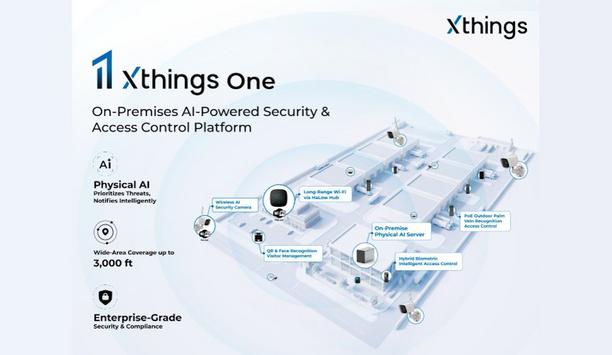
At ISC West 2026, Xthings, a global pioneer in AIoT and smart security, unveiled two new Ulticam Wi-Fi HaLow long-range camera systems, designed to solve the most persistent and expensive problems in commercial security: reliably covering large, complex, and hard-to-wire properties without running cable. Built on the Wi-Fi HaLow (802.11ah) standard, the new Ulticam Long-Range Wireless AI Security Kit and the Wireless Long Range 8-Camera Bullet Kit + NVR use sub-GHz wireless connectivity to reac...
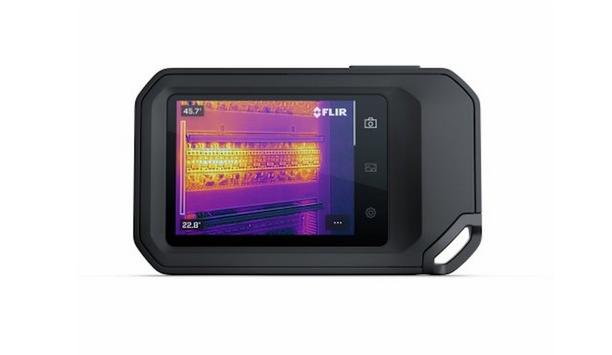
Flir, a Teledyne Technologies company, launched the C8 thermal imaging camera, a new device set to enhance compact thermal diagnostics with high-clarity, rapid results. Improvements to the new-generation C8 include enhanced image quality, higher accuracy, improved sensitivity, and the addition of advanced reporting templates within Flir Ignite Pro. Traditional thermal inspections can be slow, unclear, and hard to document, relying on manual processes that risk overlooking critical issues. The...

Syrenis, a pioneer in advanced consent and preference management solutions, is pleased to announce its strategic partnership with The Data Privacy Group (DPG), a premier provider of privacy program consultancy and implementation expertise. This collaboration marks a powerful union of cutting-edge technology and elite privacy consulting to empower organizations in managing compliance and building trust in the digital era. Syrenis' flagship platform Syrenis' flagship platform, Cassie, offers o...

As a pioneer in access control systems, Delta Scientific understands that building security is vital in today’s business environment. Layered systems bring a comprehensive approach to physical and digital assets. Use this essential building security checklist to build a multi-layered approach. What are the elements of a building security checklist? The following steps are critical to ensuring building, grounds, and employee safety. Customize them to the level of security necessa...

IDIS, the largest in-country manufacturer of trusted South Korean-made video tech, now offers an extensive and versatile range of intrinsically safe explosion-proof ATEX, UL, and IP68-rated cameras. The new lineup is already delivering operational, financial, and safety benefits in risk-critical applications. It includes explosion proof versions of IDIS’s multi award winning 12MP and 5MP fisheyes delivering wide-area coverage without blind sports; quad high definition 5MP mini-dome camer...
News

Magenta Security Services, one of the UK’s pioneer security firms, has achieved an exceptional score of 87.5% in its most recent SIA Approved Contractor Scheme (ACS) audit - placing the company firmly within the top 5% of security companies nationwide. With only the top 10% of security firms scoring above 75%, Magenta’s remarkable result reflects the company’s consistent dedication to quality, compliance, and operational excellence across every area of its business. Exceeding expectations Commenting on the achievement, Managing Director Abbey Petkar said: “This incredible result is a testament to the dedication, teamwork, and professionalism of our entire team. Achieving such a high score doesn’t happen by chance - it’s the outcome of hard work, commitment, and a shared passion for doing things right.” “I want to extend my heartfelt thanks to all our staff whose efforts made this possible. Together, we continue to raise the standard for security services in the UK.” The ACS audit rigorously assesses key areas including pioneership, corporate responsibility, staff development, and service delivery. Magenta’s strong performance across the board highlights its ability to not only meet but exceed industry expectations. Security Excellence This milestone reaffirms Magenta’s position as a priority security provider, delivering reliable, high-quality services while continuing to grow and innovate in a demanding industry.

At ISC West 2025, Resideo Technologies, a pioneering provider of solutions for home comfort, security and safety, introduced the new First Alert® CX4 Camera Series. Compatible with both the Resideo ProSeries Security System and Resideo’s new First Alert® VISTA® Hybrid Security System, the cameras offer ultra-high-definition continuous recording and enhanced analytics to monitor homes and small and medium businesses (SMB). Advanced video analytics “Our new First Alert CX4 Cameras are our most capable cameras ever and provide the features end-users need along with the brand name they can trust," said Ryan Park, Senior Product Director of Safety and Security at Resideo. "They deliver ultra-high-definition video, advanced video analytics and seamless integration with our security systems to provide comprehensive detection for homes and businesses." Three different models of the First Alert CX4 Camera Series With 4K sharpness, the First Alert CX4 Camera Series offers three different models to cover a range of applications: CX4B Bullet Camera for perimeter monitoring, warehouses, or retail applications. CX4T Turret Camera for lobbies, stairwells, and retail areas. CX4D Dome Camera for entrances, exits, offices, or food service applications. Integration with ProSeries and VISTA Hybrid Security System The Camera Series offers seamless integration with both the ProSeries and VISTA Hybrid Security System, and the following features: Advanced resolution. With an 8-megapixel resolution and a high-performance image sensor, the CX4 Series captures critical details with clarity, making it easy to identify faces, license plates and other important details. Edge video storage. Edge-based continuous recording keeps video data on-site, reducing network requirements and costs. Cloud-based video-event storage sends the important event video to the cloud, reducing the impact of hardware theft or tampering while protecting important information. Intelligent viewing capabilities. Users can view live feeds of multiple cameras on one screen with the familiar Total Connect® 2.0 experience. Intelligent analytics identify people, vehicles, animals and packages to reduce unnecessary notifications, delivering actionable alerts that matter most. The First Alert CX4 Camera Series will be available at ADI Global Distribution, a Resideo company, in the third quarter, and were on display at the Resideo booth #10047.

At The Security Show (TSE), on stand 5/G55, i-PRO Co., Ltd. (formerly Panasonic Security), a pioneering manufacturer of edge computing cameras for security and public safety, will showcase its brand new U-series range of AI-powered cameras for the first time in the UK. Designed and manufactured in Japan, the U-Series delivers the accuracy of AI-based object detection to entry-level security installations. Benefit from AI-driven analytics U-Series delivers the accuracy of AI-based object detection to entry-level security installations Built on efficient edge-computing architecture, it offers advanced capabilities — including intrusion detection, loitering alerts, direction monitoring, speeding, and line-crossing detection — without compromising on performance or affordability. “After pioneering AI across our higher-end cameras, we’re excited to bring that same edge-based intelligence to the entry-level market,” said Gerard Figols, Chief Operating Officer at i-PRO. “Security organizations of any size can now benefit from AI-driven analytics.” U-series highlights AI Video Motion Detection (AI-VMD) Built-in audio recording Direct-to-cloud VSaaS support FIPS 140-3 Level 3 cybersecurity compliance Future firmware updates The new lineup includes high-resolution imaging options — 2MP, 5MP, and 4K — in dome, box, and bullet formats, delivering enhanced clarity and precision. Built for flexibility, the U-series is an ideal fit for direct-to-cloud VSaaS deployments. With future firmware updates planned, these cameras will continue to evolve, adding new capabilities while maintaining a lightweight, efficient architecture. Adding AI to the U-Series cameras embodies i-PRO’s mission to democratize AI as a standard feature across all its camera lines, delivering real-time alarms, improving response times, strengthening data privacy and reducing bandwidth use. Active guard analytics Visitors are able to see the latest version of its award-winning Active Guard intelligent search application At TSE, visitors will also be able to see the latest version of its award-winning Active Guard intelligent search application. Active Guard ensures that the wealth of metadata (98 unique characteristics from the X and S-series camera line-up) describing the unique attributes of humans and vehicles captured by i-PRO cameras are seamlessly delivered to popular Video Management Systems (VMS) from Milestone, Genetec, and others. This not only allows deep forensic search from edge-based AI analytics but also enables real-time notifications for operators of essential events that require attention. High zoom bullet and corner cameras Shown at TSE for the first time, the new High Zoom Bullet camera includes the longest IR illumination in its class (up to 250m) and unique automated functions that remove the burden from operators when focusing on unique objects of interest. For example, a High-Zoom bullet camera might initially show a wide-angle view of a street by default. When a vehicle is detected at an entrance, the camera can automatically zoom in and capture the license plate using Vaxtor ALPR analytics (pre-bundled with the camera). This type of automation requires no intervention by the operator, making it a perfect match for safe cities. Open platform–freedom of choice Customers and integrators are never locked into a proprietary approach, and can pick the best analytics The company’s open-platform approach ensures flexibility and scalability for the unique analytics requirements of every installation through the use of third-party tools. Customers and integrators are never locked into a proprietary approach, and can choose the best analytics for the job from the best development partners like Vaxtor, Noema and many more. Cybersecurity and ethical AI Every i-PRO product is designed with cybersecurity and data integrity at its core. While many companies follow FIPS 140-2 standards, the new U-Series goes further, achieving FIPS 140-3 Level 3 compliance. Powered by an NXP EdgeLock secure element, these cameras meet the industry’s highest data security standards. Level 3 certification introduces stricter cryptographic protections, enhanced physical tamper resistance, and safeguards against key extraction and hardware attacks. With secure boot functionality, the U-Series offers robust defense against unauthorized access and cyber threats — even at the entry-level. ISO/IEC 42001 certification for AI i-PRO is the first company in the physical security industry to reach this level of ethical AI governance Recently, the company also announced it is in the final stage of obtaining the ISO/IEC 42001 certification for its Artificial Intelligence (AI) management systems. Once completed, this certification will make i-PRO the first company in the physical security industry to reach this level of ethical AI governance, reinforcing its commitment to transparency, accountability, and security in AI deployment. Innovation driven by independence Since becoming independent from Panasonic, i-PRO has evolved into an agile, customer-first company, bringing to market over 250 new camera models in the last couple of years. “Our independence allows us to stay laser-focused on our customers,” said Jose Riolobos, EMEA President at i-PRO. “By combining more than 60 years of Japanese engineering expertise with a flexible, market-driven approach, we deliver high-end technology built for real-world needs.”

Konica Minolta has announced the sale of its entire 65% stake in MOBOTIX AG, along with all associated shareholder loans, to CERTINA Software Investments AG, a 100% subsidiary of the Munich-based family equity investor CERTINA Group. The CERTINA Software Division of CERTINA Group specializes in the development and expansion of technology-driven businesses worldwide. CERTINA expands portfolio KONICA MINOLTA's medium plan to divest non-focus business and concentrate on core business areas globallyKONICA MINOLTA's medium plan to divest non-focus business and concentrate on core business areas globally. CERTINA acquires the stock-listed MOBOTIX AG shares from KONICA MINOLTA and strengthens its software division. Acquisition of an established software and hardware manufacturer of high-end video and surveillance systems Strategic step to further expand the existing CERTINA Software Division and strengthen joint development activities Increased sales The purchase price has not been disclosed, including to the company. Closing is expected to occur in May 2025, and will be subject to mandatory antitrust clearance. The divestment is part of KONICA MINOLTA's medium plan to divest non-focus business and concentrate on core business areas globally, as outlined in their recent statement. KONICA MINOLTA’s Imaging-IoT Solutions business will continue to provide highly value-added video solution services centered on security and safety. KONICA MINOLTA will keep sourcing from MOBOTIX also in the future. A new chapter for MOBOTIX AG The CERTINA Software Division of CERTINA Group specializes in the development and expansion of technology-driven businesses worldwide. With a strong track record in strategic investments and business transformation, CERTINA brings deep industry expertise and financial backing to support MOBOTIX’s next phase of growth. By leveraging synergies within its broader portfolio, CERTINA aims to enhance MOBOTIX’s market position and drive continued innovation in security and video solutions. MOBOTIX joins CERTINA Tobias Eiblmeier, Head of Mergers & Acquisitions CERTINA Group: “The acquisition of MOBOTIX is a strategic step to further strengthen our software investments and underlines our long-term growth ambitions in our Group.” "We are excited to bring MOBOTIX into our portfolio, as we firmly believe our strategic expertise and commitment to innovation provide the best home for its future. By leveraging synergies with our existing technology investments, we are committed to supporting MOBOTIX’s next phase of growth and market pioneership," said Giovanni Santamaria, Managing Partner of CERTINA´s Software division. Revitalizing MOBOTIX vision “We look forward to working with CERTINA as a strong partner on our side. The combination of our unique hardware designs with innovative software solutions on the edge based on our MOBOTIX DNA will bring exciting opportunities to grow together while utilizing the synergies from all portfolio companies”, stated Christian Cabirol, CTO of MOBOTIX AG. Klaus Kiener, CFO of MOBOTIX AG, adds: “This transaction will also revitalize the MOBOTIX equity story for our 35% minority shareholders”. Transition and governance changes CERTINA intends to be represented on the supervisory board of MOBOTIX AGIt is expected that all current members of the supervisory board of MOBOTIX AG will resign in the course of the closing of the transaction. CERTINA intends to be appropriately represented on the supervisory board of MOBOTIX AG. Additionally, key pioneership updates include: Klaus Kiener (CFO) and Christian Cabirol (CTO) have extended their contracts until March 2027, ensuring continuity in financial and technological pioneership. Thomas Lausten (CEO) will leave MOBOTIX in mutual understanding at the end of his current contract in June 2025, working closely with the new pioneership team to ensure a smooth transition until then. Next steps for growth “It has been a pleasure to work with our many colleagues, partners and customers around the world during the past 8 years and it is now a good time to change pioneership with a new investor. CERTINA will bring significant value to our company with their experience in technology companies and I look forward to work with Giovanni Santamaria, Tobias Eiblmeier and their teams during the transition next months”, says Thomas Lausten.

Regula, a global developer of forensic devices and identity verification solutions, now has 15,000 templates in its identity document template database, the most comprehensive in the world. This significant update ensures that businesses and government agencies around the globe can verify the latest IDs, including the most advanced biometric documents, with the highest accuracy. Global ID verification simplified Incorporating ID templates from 251 countries and territories and capable of reading 138 national languagesRegula’s proprietary identity document template database contains detailed descriptions of each document’s security features. Combined with the advanced capabilities of Regula Document Reader SDK, this enables online ID verification with the same level of precision previously achievable only in on-site scenarios. Incorporating ID templates from 251 countries and territories and capable of reading 138 national languages, this database enables the recognition and proper verification of nearly every ID from any corner of the world, even the rarest ones. Tracking global shifts in identity documents The latest expansion of Regula’s ID template database reflects the global shift towards more sophisticated identity documents. More and more countries are introducing biometric passports, which are considered the most secure at the moment. For example, among the recent additions to Regula’s database are the first-ever biometric passports issued by India, Sri Lanka, and Guyana. Apart from the format, documents’ security features are also becoming more complex and elaborate. First and foremost, ID issuers are switching from paper substrates in favor of polycarbonate pages, which are much harder to counterfeit. For this reason, states like Benin, Burkina Faso, Chile, and Djibouti have recently issued new IDs with polycarbonate data pages. Advanced ID security features MLIs significantly enhance document protection with hard to illegally duplicate by designAnother advanced security feature that has become quite widespread across different identity documents is the Multiple Laser Image (MLI). An MLI embeds two distinct images within a document. Typically, these include the passport holder’s photo and their personal data. Special lenses positioned above the images can visualize either image clearly by tilting the document. Hard to illegally duplicate by design, MLIs significantly enhance document protection. Among the IDs that were added to Regula’s ID template database with the latest update, the US driver’s license from Wisconsin, as well as the ID cards of Jamaica, San Marino, and Yemen contain such security features. Combating fraud with precision “The growing complexity of identity documents presents notable challenges for ID verification workflows. Businesses and government agencies must be prepared to properly verify all the document security features so as not to miss any forgery or identity fraud attempts.” “Furthermore, they have to handle multiple ID versions from the same country simultaneously, as many older documents remain in circulation alongside the new formats. By keeping pace with evolving security features and document standards, we help streamline ID verification workflows, reduce fraud risks, and maintain compliance with global regulations,” says Ihar Kliashchou, Chief Technology Officer at Regula. Expanding global ID coverage Among the new IDs added to Regula’s database to hit 15,000 templates are the following, issued in 2024-2025: Passports: Azerbaijan Benin Burkina Faso Burundi Chile Djibouti Germany Guyana India Kosovo Malawi Myanmar Netherlands Romania Saint Kitts and Nevis Slovakia Sri Lanka Tajikistan ID cards: Argentina Bosnia and Herzegovina Chile Guatemala Jamaica Kazakstan Kosovo Netherlands Nigeria Norway Philippines Puerto Rico San Marino Slovakia Somalia Sri Lanka Vietnam Yemen Driver’s licenses: Azerbaijan Denmark Honduras Iran Kosovo Mongolia Puerto Rico Slovakia Sweden Venezuela Bolivia US states: Michigan, Mississippi, New Hampshire, North Carolina, Tennessee, Wisconsin
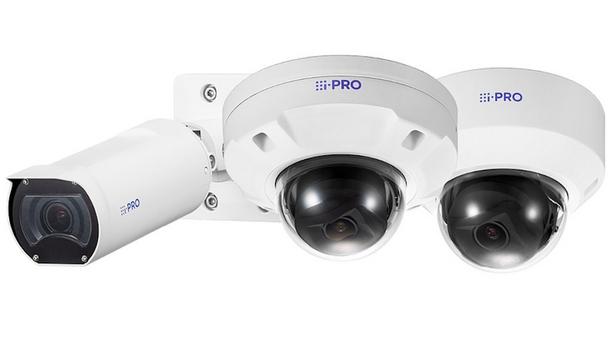
i-PRO Co., Ltd. (formerly Panasonic Security), a pioneering manufacturer of edge computing cameras for security and public safety, announced the launch of the new U-series, marking the first time edge AI has been introduced to all its security camera lines. The U-series is designed for installations that need the accuracy advantages of AI-based object detection in security environments at an entry level. i-PRO U-series line-up The models are mainly suited for detecting intruders, loitering, direction, and line crossing The models are particularly suited for detecting intruders, loitering, direction, line crossing, and speeding. Providing an efficient, edge-computing approach without compromising on performance. "As a pioneer in edge computing within the security industry, i-PRO was the first to integrate AI across our entire S-series line, setting a new standard. Now, the i-PRO U-series line-up introduces essential edge computing technology to our entry-level models, transforming them into proactive devices that align with market trends,” said Gerard Figols, Chief Product Officer at i-PRO. New product line introduces imaging options Figols added: “By bringing the advantages of AI to fundamental security installations, we’re offering smarter technology for end-users who don’t require forensic search and advanced business insights based on metadata and attributes." The new product line introduces higher-resolution imaging options, including 2MP, 5MP, and 4K dome, box, and bullet cameras, enhancing clarity and precision. Additional features include: Advanced AI Image Analytics: AI-VMD for intelligent video motion detection Audio recording capabilities for enhanced situational awareness Increased Optical Zoom for improved focus on image clarity and analytics accuracy Direct-to-cloud VSaaS support Cameras deliver real-time insights while reducing bandwidth consumption The U-series camera line was designed to be a perfect companion for direct-to-cloud VSaaS deployments offering flexibility and scalability. As cloud-based solutions continue to evolve, future firmware updates will enable additional features and functionality. By combining Direct-to-Cloud connectivity with AI on the Edge, these cameras deliver real-time insights while reducing bandwidth consumption, improving response times, and enhancing data privacy. Strengthening cybersecurity In line with its mission to pioneer edge computing, i-PRO has integrated AI technology across the entire product line-up. Recognizing the responsibility this entails, the company remains committed to enhancing its cybersecurity standard. While other companies adhere to FIPS 140-2, the new U-Series surpasses this with FIPS 140-3 level 3 compliance, utilizing an NXP EdgeLock secure element, to provide the industry's highest level of data security. Requirements for cryptographic modules Level 3 certification includes stricter requirements for cryptographic modules Level 3 certification includes stricter requirements for cryptographic modules, further reinforcing security by improving physical tamper resistance and safeguarding against key extraction and hardware attacks. Featuring secure boot functionality, the cameras deliver strong protection against unauthorized access and cyber threats. Non-AI replacement models “i-PRO does not compromise cybersecurity by any means - not even in our entry-level camera line-up. By prioritizing the highest level of cybersecurity, we demonstrate our commitment to data integrity, ensuring peace of mind for all our customers and users,” adds Figols. The new U-series consists of 28 models, with 15 featuring edge-processed AI analytics and 13 serving as non-AI replacement models. AI-enabled models will be available from June/July, and the non-AI models will be available later this year.

Expert commentary

The autumn equinox, which marks the start of autumn, occurs this weekend on Saturday, September 23. With darker evenings ahead, the experts at ADT have shared five ways to maximize your home's security. Author's quote Michele Bennett, General Manager at ADT UK&I comments: “Opportunistic thieves use darkness to their advantage, so it’s no surprise that the number of burglaries committed increases when the darker nights draw in." He adds, "Our 2022 burglary report found that burglaries are most common at night, with 58% of burglaries occurring between 6 p.m. and 6 a.m. Taking steps to optimize your home’s security before the clocks go back this year will provide reassurance that your property is as secure as possible.” Five ways to secure your property: Get a monitored alarm installed: A visible alarm system is a strong deterrent to potential burglars, as criminals are less likely to target a home that is protected. In the event of a break-in, a monitored alarm will alert you, your keyholders and depending on the package you take out, the police, ensuring a swift response to an alarm activation. Light up the dark: Well-lit exteriors make your home less appealing to potential intruders. Install motion-activated lights around any entry points, particularly porches and gardens, which alert you to movement on your property. This will also prevent burglars from operating under the cloak of darkness and increase the chance of a passerby spotting suspicious activity. Trim your garden landscape: Thieves look for escape routes and hiding spots when deciding which homes to break into, making gardens with high, overgrown hedges more likely to be targeted. This is especially true in the darker evenings, so be sure to give your garden a thorough tidy-up to make your property less likely to be targeted. It’s also advisable to ensure any tools are locked away in sheds and garages that could assist a burglar such as ladders, or a garden spade to force entry. Be smart with your lights: Using smart plugs allows you to turn on a few well-appointed lights and radios or televisions from any location from your phone. Used in conjunction with an outdoor camera or video doorbell, you can have lamps plugged into smart plugs come on when motion is detected. Programming lights to come on at different times throughout the night will help to deter burglars by making your property look occupied. Purchase a smart doorbell or outdoor camera: Smart doorbells are an effective way to deter burglars as they provide evidence in the event of a break-in, package theft, or other suspicious activity around your home. They also notify you when someone is at your door reducing the chance of you being caught out by a late evening or early morning robbery. Further encroachment Smart doorbells also act as a deterrent to unscrupulous door-to-door sellers and con artists, as video footage is recorded. In the event of a late-night door knock, you can see and speak to whoever is at your front door, without having to open the door. ADT’s new outdoor camera also has two-way audio and a high-pitch deterrent siren so you can warn off anyone from your property to deter any further encroachment.

Open platform video technology software is more than just a product; it's a tool that helps customers achieve their desired business outcomes. Safety, round-the-clock security, and increased operational efficiencies are now the norm due to video technology. Responsible Technology Despite humanity’s impressive technological advances, we also recognize the immense responsibility that comes with technological innovation. It's not enough to focus solely on the positive impact video technology can make, we must also be vigilant in identifying and addressing any potential negative consequences it can have on society and its citizens. This is the role of Responsible Technology. Data privacy We want to use all the good things that technology innovation brings, whether it be video, AI, ML, facial recognition, etc. We want to use all the good things that technology innovation brings, whether it be video, Artificial Intelligence, machine learning, facial recognition, etc. to serve people in societies in a responsible way. That means making sure that we regulate technology in a way that respects human rights and data privacy. Addressing the challenges The challenge is, that rather often technology leaders and policymakers either have conflicting interests or collaborate too late. To be responsible, business leaders must support their societies and policymakers in making regulations in the interest of the common good. At Milestone Systems, we are actively looking at how we develop our software responsibly, how our partners responsibly sell our software, and very importantly, how our customers use our software with a responsible mindset. Ensuring good corporate governance As a long-time partner within the security industry, we’re celebrating our 25th Anniversary this year, we are supporting the regulation of video technology for the good of society. However, it of course needs to strike the fine line between the right legislation and not hindering innovation. UNGP The UNGP is the most authoritative and widely adopted set of principles for responsible business At Milestone Systems, we want to play an active role in this and that is why we have pledged our support to the UN's Guiding Principles on Business and Human Rights (UNGP). The UNGP is the most authoritative and widely adopted set of principles for responsible business. The principles call on governments and companies to identify, prevent, mitigate, and remedy actual and potential human rights abuses. Since its launch in 2011, the UNGPs have received wide support from states, civil society organizations, and the private sector, making them the key global foundation for business and human rights. Protect, respect, and remedy Through this commitment, we are taking steps to ensure good corporate governance and ethical standards in the development of our technology. We're generating mechanisms to prevent misuse and we are building educational practices internally. Based on the UNGP’s three pillars: protect, respect, and remedy, we are developing a set of Responsible Technology Principles and procedures for the development, selling, and use of our products. Need for video technology regulation In addition, we are currently evaluating all the various technology areas in which our video software can be used, such as with third-party integrations that utilize e.g., facial recognition. We are mapping out the advantages and disadvantages for societies. One key area of concern is how local authorities are mapping and storing data about us as individuals. This is the reason why we're inviting more legislation to regulate video technology rather than less. Engaging With policymakers We are meeting ministers and trade organizations as we believe this needs to be a joint effort where all parties are heard We are proactively reaching out to and connecting with policymakers and other relevant stakeholders to discuss our approach to and take on Responsible Technology and encouraging the political landscape to work with us around regulation and legislation. We are meeting ministers and trade organizations as we believe this needs to be a joint effort where all parties are heard and where we can openly weigh the advantages and the challenges of technology, whether it is video, facial recognition, machine learning, Artificial Intelligence, or other technologies. Striking a balance Implementing Responsible Technology is a journey, not a destination. To give it the focus needed, we have created a dedicated team to implement this initiative at Milestone Systems. At the same time, we are reaching out to the political landscape to discuss how we balance regulation without hindering innovation. Video technology used ethically We are a global company with worldwide operations, and we are having dialogues about how video technology is being used and how we can have meaningful talks about what regulation and legislation should look like. However, we don’t necessarily want to limit access to the technology itself. Facial recognition We encourage the policymakers to engage with us in the industry so that together we can strike the fine line Facial recognition is a great example of this. The EU is considering making live facial recognition illegal. That would be a huge inhibitor of proactive terrorism prevention. For example, if a well-known terrorist is walking down the street and is being mapped out against Interpol’s most wanted list, the authorities should be able to react. However, if a person walking down the street but is not mapped out or does not have any priors then the city should not be allowed to store the data of that individual’s whereabouts at that point in time. This potential legislation is concerning to me as a citizen of Europe. Instead, we encourage the policymakers to engage with us in the industry so that together we can strike the fine line for the better good of all of us. Maintaining high ethical standards We have a firm understanding and expectation that ethical standards are a huge driver in the security business. Citizens are not in favor of technology companies abusing data about them and monetizing from things that they have not opted in to do. Soon, I think we will see many more companies and governments leaning toward suppliers that do have a responsible mindset and high ethical standards for partnerships. Ethical practices Our journey toward Responsible Technology is an ongoing process, and we must remain steadfast in our commitment to ethical practices and the protection of human rights. We recognize that the rapidly changing technological landscape continually presents new challenges and opportunities. For this reason, we continuously look into how we can improve, for example, our end-user license agreements to avoid potential human rights abuses. An industry responsibility Security companies must prioritize careful planning and preparation, including developing policies and procedures For Responsible Technology to truly become a reality, compliance with international human rights laws and data privacy regulations is critical. Security companies must prioritize careful planning and preparation, including developing policies and procedures that govern the ethical use of video surveillance systems. The secure and ethical community In today's technology environment where deep integrations, machine learning, and artificial intelligence are becoming the norm, Responsible Technology is more relevant than ever. The security industry has a unique opportunity to set an example for other sectors by promoting a secure and ethical development community that prioritizes Responsible Technology, trustworthy data collection, and the protection of human rights. We must all rise to this challenge and embrace our role as ethical leaders for the greater good of both people and societies.

Inadequate security measures on your essential infrastructure can have severe consequences. Consequences Consider the rail industry: If a vandal cuts the cables on a vital mechanism that controls train signals, train safety is jeopardized. To avoid train collisions or derailments and thus significant damage to property and potential loss of life, the operating company must shut down the service until the infrastructure is repaired and the network is up and running again. The disruption affects the rail ecosystem itself, but also the people using the trains, the transportation of cargo, and more. The financial cost of repairing the damage, restoring signal functionality, and compensating for delays can be substantial. For another example, consider electrical substations: A fire or targeted attack can damage the system and lead to devastating power outages. Traditional surveillance limitations Traditional video surveillance has its limits when it comes to protecting transformer stations Traditional video surveillance has its limits when it comes to protecting transformer stations. The facilities are often located in rural areas, where straying animals or flying leaves trigger false alarms. 3D Surveillance solutions overcome these challenges by volumetrically securing the area and immediately detecting intruders only raising the alarm in the event of a human intruder and even identifying drone attacks. Protecting critical infrastructure with 3D surveillance Critical infrastructure must be monitored. It remains at risk if operators do not have systems for monitoring entire areas rather than just the periphery if security personnel has limited information in case of an intrusion and if security response protocols are not automated. 3D Surveillance solutions 3D Surveillance is an important tool for protecting critical infrastructure and ensuring the safety of those who rely on it. Integrating LiDAR technology, 3D Surveillance solutions provide a comprehensive view of the area being monitored with real-time monitoring and response, protecting critical infrastructure from damage and providing a more comprehensive security system. Advanced analytics and artificial intelligence Security personnel can identify and verify threats more easily and track the movements of individuals or vehicles, as well as respond to incidents as they happen. 3D Surveillance systems can be equipped with advanced analytics and artificial intelligence (AI) capabilities to detect patterns and anomalies that may indicate a potential threat. This can help to prevent potential attacks or accidents before they occur, as well as enable more accurate responses to incidents. Talent challenge Turning to autonomy by implementing sensor- and software-based solutions requires fewer if any, in-person patrols 3D Surveillance can also help tackle the talent challenge in the industry: Recruiting security professionals involves extensive background checks, and jobs in the industry are notorious for their low salaries, which results in high staff turnover. Turning to autonomy by implementing sensor- and software-based solutions requires fewer if any, in-person patrols and ensure reliable infrastructure protection. Additional security measures In many countries, more stringent legislation now mandates the implementation of additional security measures to safeguard critical infrastructure, particularly at a country's points of entry, such as airports and harbors. Protecting the perimeter is no longer enough. For instance, airport management must ensure that critical areas, including the space around aircraft and near unauthorized access points, are secure. While multi-layered screening of individuals at the perimeter is a valuable security measure, it must be complemented by smooth and efficient surveillance of the entire area, which can only be achieved through advanced technology. Different adoption rates 3D Surveillance technology is only beginning to gain traction in most locations, and adoption rates differ significantly from one region to another. For instance, Scandinavia and Eastern Europe have embraced 3D Surveillance to a greater extent than Western Europe. Regions with lower adoption rates will likely catch up as they seek to reinforce the security of their critical infrastructure, especially given the conflict in Eastern Europe. Vandalism and damage protection 3D Surveillance enhances the security of critical infrastructure, reduces the risk of downtime and loss of revenue 3D Surveillance offers reliable protection against vandalism and damage - major concerns for companies that rely on critical infrastructure. LiDAR-based, software-enhanced 3D Surveillance solutions provide real-time insights and enable automatic processing of the information so that operators can autonomously and quickly detect and respond to potential threats. These solutions are scalable and customizable, allowing companies to adapt their security measures to their unique needs and changing environments. 3D Surveillance enhances the security of critical infrastructure, reduces the risk of downtime and loss of revenue, and ensures compliance with regulatory requirements. Asset management and maintenance planning Beyond its security benefits, 3D Surveillance can help with tasks such as asset management and maintenance planning. It can help identify potential problems or maintenance needs before they become more serious issues by providing a real-time view of the monitored infrastructure. This can help to reduce downtime and keep critical infrastructure running smoothly. Real-time management The same technology can also perform volume monitoring tasks and thus facilitate the management of valuable resources such as bulk material, grain, wood chips, or chemicals. By scanning the stock 24/7 and automatically calculating stock volume updating records in real-time, this technology supports lean production systems and automated processing.
Security beat

Companies at GSX 2023 emphasized new ways that technologies such as artificial intelligence (AI) and the cloud can address long-standing issues in the security market. Among the exhibitors at the event in Dallas were companies seeking creative ways to apply technology, lower costs, and make the world a safer place. Reflecting on the exhibition, here are some additional takeaways. Expanding AI at the edge i-PRO is a company reflecting the continued expansion of edge AI capability in the security market. Today, more than half of the company’s lineup supports AI at the edge so the customer has a wide choice of form factors when seeking to leverage the feature set. AI processing relay, extended warranty i-PRO is increasing their warranty period from 5 to 7 years, which could be a lifetime warranty in some cases I-PRO also has an “AI processing relay” device that accepts non-AI video streams and applies edge analytics. AI has progressed from a high-end technology to a feature available in a variety of cameras at different price points. i-PRO is also increasing its warranty period from 5 to 7 years, which could be a lifetime warranty in some cases depending on a customer’s refresh schedule and lifecycle management. Active Guard, MonitorCast The company’s video management system (Video Insight) is continuing to build new features including “Active Guard,” an integrated metadata sorter. Their access control platform, MonitorCast, is a Mercury-based solution that is tightly integrated with Video Insight. Their embedded recorders now have PoE built in. “We can move at a faster pace to fill out our product line since leaving Panasonic,” says Adam Lowenstein, Director of Product Management. “We can focus our business on adapting to the market.” Emphasis on retail and other verticals Shoplifting is a timely issue, and retail is a vertical market that got a lot of attention at GSX 2023. “We see a lot of retailers who are primarily interested in protecting employee safety, but also assets,” says Brandon Davito, Verkada’s SVP of Product and Operations. “Shrinkage is a CEO-level priority.” “Retailers are getting more engaged with security posture, instead of letting perpetrators walk,” Davito adds. Intrusion detection Verkada has an intrusion product that will notify a central station if there is an alarm On the alarm side, Verkada has an intrusion product that will notify a central station if there is an alarm, and operators can review videos to confirm the alarm. Other capabilities seeking to discourage trespassers include sirens, strobes, and “talkdown” capabilities. International expansion Verkada continues to expand internationally with 16 offices in all, including Sydney, Tokyo, and London. The core value proposition is to enable customers to manage their onsite infrastructure more simply, including new elements such as PTZ cameras, intercoms, and visitor management. Verkada emphasizes ease of use, including a mobile application to allow access to be managed across the user base. Forging partnerships “We are committed to the channel and industry, and we continue to build relationships and expand our reach,” says Davito. Among the industry relationships is a new partnership with Convergint, which was hinted at during the show and announced later the same day. They are also expanding their partnerships with Schlage, Allegion, and ASSA ABLOY. Working with other verticals They offer new features for K -12 schools, and a new alarm platform is easier to deploy and manage Verkada has also found success across multiple other verticals, notably healthcare, where they integrate with an electronic medical records system. They offer new features for K-12 schools, and a new alarm platform is easier to deploy and manage. They are integrating wireless locks to secure interior doors in schools, looking to secure the perimeter, and installing guest management systems. Transitioning the Mid-Market to the Cloud Salient is squarely focused on the “mid-market,” a large swath of systems somewhere between small businesses and enterprise-level systems. Pure cloud systems are not as attractive to this market, which has a built-out infrastructure of on-premise systems. Adding a camera to an existing system is easier and less expensive than tying it to the cloud. Benefits of cloud It’s a market that may not be ready for pure cloud, but there are benefits to be realized from adding a cloud element to existing systems. “We are continuing to augment our premise-based solutions with added cloud capabilities and flexibility,” says Sanjay Challa, Salient’s Chief Product Officer. The feedback Salient hears from their customers is “I want to own my data.” The hybrid cloud approach offers the right mix of control, flexibility, and unit economics. Cloud add-on capabilities We want to provide the flexibility for customers to go full-cloud as it becomes more economically attractive" Cloud add-on capabilities include bringing more intelligence about system operation to the user via the cloud. Over time, Salient expects to sell more cloud-centric offerings based on feedback from integrators and customers. “We want to provide the flexibility for customers to go full-cloud as it becomes more economically attractive over time,” says Challa. Vaidio AI technology Salient seeks to be a transition pioneer to help customers realize the path to the cloud. Their approach is “crawl, walk, run,” and helping customers make the transition at each stage. Salient has added AI to its product offering, incorporating Vaidio AI technology from IronYun into a powerful suite and broad array of on-premise analytics, which are gaining traction. The seamless approach makes it easy for customers to embrace AI analytics, although Salient remains broadly committed to open systems. Addressing ‘Soft’ Features for Integrators AMAG is in the process of enhancing its product line with the next generation of access control panels. However, “product” is just part of the new developments at AMAG. In addition to “hard” features (such as products), the company is looking to improve its “soft” features, too; that is, how they work with the integrator channel. Integrator channel Rebuilding a process to make your organization more efficient, is relatively easy; it just takes a lot of persistence" “We have the depth of our legacy customer base we can learn from, we just need to close the feedback loop quicker,” says Kyle Gordon, AMAG’s Executive Vice President of Global Sales, Marketing, and commercial Excellence, who acknowledges the value of reinstating face-to-face meetings after COVID. “We are laser-focused on nurturing our integrator channel,” he says. “Developing new features takes time, but rebuilding a process to make your organization more efficient, that’s relatively easy; it just takes a lot of persistence,” says Gordon. More cohesive internal communication is another useful tool, he says. Disrupting the cloud based on price Wasabi is working to make cloud applications less expensive by offering a “disruptive” price on cloud storage, $6.99 per terabyte per month (80% less than hyperscalers). Contending “hyperscalers” like AWS are charging too much for cloud storage, Wasabi is using its own intellectual property and server equipment co-located in data centers around the world. Wasabi sells “hot cloud storage,” which refers to the fact that they only have one tier of storage and data is always accessible. In contrast, a company such as AWS might charge an “egress fee” for access to data stored in a “colder” tier. Cloud storage “We saw that several video surveillance companies had not yet adopted cloud storage, and we saw an opportunity to make it easy to use,” said Drew Schlussel, Wasabi’s Senior Director of Product Marketing. “We just install a little bit of software that allows them to store data in the cloud and bring it back from the cloud.” Performance, protection (cybersecurity), and price Wasabi works with integrators, resellers, and distributors and also integrates with VMS companies Wasabi works with integrators, resellers, and distributors and also integrates with VMS companies such as Genetec and Milestone. Emphasizing performance, protection (cybersecurity), and price, their data centers are certified to SOC 2 and ISO 27001 standards. Faster throughput for weapons detection Xtract One is a young company focusing on weapons detection in a time of accelerated concern about gun issues post-COVID. Founded in Canada and based on technology developed at McMaster University, Xtract One has found a niche in providing weapons detection at stadiums and arenas. These customers already have budgets, and it is easy to shift the money to a newer, faster technology. Madison Square Garden in New York City is among its customers. Cost savings solution Xtract One can increase throughput to 30 to 50 people per entrance per minute (compared to 5 to 6 people per minute when using metal detectors). The solution doesn’t require anyone to empty their pockets and the system alarms on items beyond guns and knives. Using Xtract One allows customers to reduce the number of screening lanes and security staff, providing additional cost savings, all while getting fans through the screening process in half the time. Purpose-built sensors The system uses purpose-built sensors looking for specific characteristics, such as reflective and density properties In addition to stadiums and arenas, Xtract One, formerly Patriot One, is also getting “inbound” interest from schools, hospitals, manufacturers, and other verticals that makeup 50% of their business. “We’re on a rocket ride, mainly because the weapons issues are not going away,” says Peter Evans, CEO and Director at Xtract One. The system uses purpose-built sensors looking for specific characteristics, such as reflective and density properties, all correlated by an AI engine. Providing early warning of violence ZeroEyes is another company focused on weapons detection. Their AI gun detection system works with video images to identify if someone is “brandishing” (carrying) a weapon. In other words, the system does not detect concealed weapons. Identifying someone carrying a weapon provides early warning of a possible violent act. Increased response with AI-enables images Images are identified by AI and sent to a monitoring center where a human confirms the image before contacting first responders. Knowing the location of a shooter enables staff to lock entry points, move people to safety, and direct first responders. The company was founded to leverage existing camera views to stop mass shootings and gun violence by reducing response times.

The cloud is here to stay. Its resilience and ability to connect the world during the COVID-19 pandemic has proved its worth, even to the uninitiated who have now witnessed first-hand the value of connected systems. Video and access control as a service provides a flexible and fluid security and business solution to meet the demands of a rapidly evolving industry, where the changing threat landscape means investing in the cloud is an investment towards success. This article will look back at our articles in 2020 about the growing popularity of cloud solutions for physical security, with links to the original content. Product offering While most people agree on the definition of “cloud,” there are several points about the terminology that may require clarification. Private cloud or public cloud? VSaaS or unlimited storage for video? Beyond the basics, the terms become foggy, reflecting a variety of notions about how cloud services fit into the broader physical security marketplace. As cloud usage becomes more popular, it’s important that marketers be precise in their terminology, and that integrators and end users be diligent in understanding the specifics of available product offerings. Different meanings “The cloud has many different possible connotations, depending on the context,” says Yu Hao Lin of Rasilient Systems, one of our Expert Roundtable panelists. For example, corporate CIOs will more likely understand the cloud to be a private cloud platform. As such, the public cloud is a ubiquitous term while the private cloud is more specified. Cloud system security Security of cloud systems is an ongoing discussion in the industry, especially how cloud system cybersecurity compares to that of on-premise systems. Our Expert Panel Roundtable weighed in on this question. “While both kinds of security systems serve their purpose, it can be argued that the streamlined updates that are commonplace with cloud-based solutions may put them at more of an advantage when it comes to data security,” says panelist Eric Widlitz of Vanderbilt Industries. “Also, most reputable cloud-based solutions are running in secured data centers by companies such as Google, Microsoft, or Amazon, so you also get to take advantage of all the security layers they have protecting your data.” Hybrid cloud video security solution A growing list of cloud players reinforces the importance of the cloud in the future of physical security There are several relatively new companies pushing cloud in a big way. Verkada is fast-growing company currently currently focusing to deliver an all-in-one hybrid cloud video security solution powered by edge processing inside the camera. The growing list of cloud players reinforces the importance of the cloud in the future of physical security. Combining AI and cloud video One company investing in the cloud is Eagle Eye Networks, which has raised $40 million of Series E funding from venture capital firm Accel to finance the realization of their vision to combine AI and cloud video. The money will allow Eagle Eye to continue its steep growth curve and leverage AI on its true cloud platform to reshape video surveillance. “The investment will make video surveillance smarter and safer for end-users,” says Ken Francis, President. Eagle Eye offers an application programming interface (API) to enable the integration of best-in-breed third-party AI and analytics systems to leverage the video. Eagle Eye is also investing in its own AI development and hiring additional development and customer service personnel. Hirsch Velocity Cirrus and MobilisID Identiv introduced the Hirsch Velocity Cirrus cloud-based Access Control as a Service (ACaaS) solution and MobilisID smart mobile physical access control solution. Hirsch Velocity Cirrus is an optimal solution for both end-users and integrators, with lower upfront costs, reduced maintenance, enhanced portability, and the future-proof assurance of automatic security updates and feature sets. MobilisID is a smart mobile physical access control solution that uses Bluetooth and capacitive technologies to allow frictionless access to a controlled environment without the need to present a credential. Advantages and disadvantages Advantages of cloud-based physical security technologies are many, when supporting staffThe advantages of cloud-based physical security technologies are many, and have wide-ranging applications for all areas of the transport sector; across stations, transport hubs, and vehicles. When used to support staff and complement existing processes, such systems can prove invaluable for transport professionals in helping to create a safer working environment, promoting confidence among personnel and passengers, and assuring passengers who are fearful about the current pandemic that all possible precautions are being taken during their journey. 5G supporting cloud-based applications 5G is the first communication environment that is cloud-native. As such, 5G networks will support cloud-based applications in a way that 4G, 3G and 2G can’t support. For instance, sensors (e.g. in a manufacturing plant) often have small internal storage and rely on synced devices (e.g. gateways) to interact with the cloud. Soon, these sensors will be able to work more efficiently, interacting with the cloud via the ultra-low latency and the edge computing capabilities supported by 5G networks. Increasing use of IoT Unlike current IoT services that make performance trade-offs to get the best from these existing wireless technologies, 5G networks will be designed to bring the high levels of performance needed for the increasing use of IoT. It will enable a perceived fully ubiquitous connected world, with the boosted capacity offered by 5G networks transferring exponentially more data at a much quicker rate.
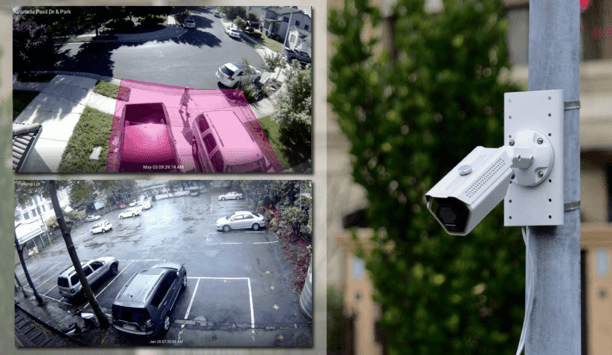
The cloud and deep learning are two technologies on the verge of transforming the video surveillance market. You often hear the two technologies mentioned as separate trends, but lately, I have been hearing about how interdependent they are. Economies of scale provided by the Cloud (Software as a Service, or SaaS) are making the sophisticated capabilities of deep learning affordable to a wider audience. Meanwhile, deep learning augments cloud systems with capabilities that may not be available (or affordable) in on-premise systems, thus accelerating the broader move to cloud systems. A New Era Of Autonomous Video One company that is combining the cloud and deep learning in an end-to-end system is Umbo Computer Vision, an “autonomous video security technology” company built on its founders’ expertise in deep learning and machine vision. The company’s cameras are equipped with basic video analytics, and they are tied into a cloud infrastructure that provides additional deep learning algorithms. The cameras provide computer vision pre-processing, with the bulk of detailed analysis happening in a neural network in the cloud.One customer benefits from another customer and all the knowledge is aggregated together" “Having a SaaS model gives companies like ours the resources to improve the deep learning model,” says Shawn Guan, CEO and co-founder of Umbo Computer Vision. “We can make more accurate systems that scale better and faster. SaaS enables vendors to do something great with deep learning. You don’t have to redo it for everybody. One customer benefits from another customer and all the knowledge is aggregated together.” Adapting To A Changing Landscape Umbo’s deep learning analytics provide higher accuracy, says Guan. For example, the system can provide accurate alerts on people climbing a wall, and it can accommodate for elements such as shadows and adverse weather conditions. The cameras can also provide occupancy information from a video view of a room; unlike people-counting applications, the camera does not need to be mounted above the door. The algorithms can detect loitering and can track a subject even if he or she disappears briefly from view (such as walking behind a building). Umbo developed the algorithms from scratch using the company’s deep roots in technology. Guan says the company was “built on data and using data.” The company’s cameras are equipped with basic video analytics, and they are tied into a cloud infrastructure that provides additional deep learning algorithms The Cloud Serves As A Media Gateway “Cybersecurity is ensured,” says Guan. The cloud provides built-in authentication with the camera; user names and passwords are handled in the cloud, so there is no manual reset of the password at the device level. The cloud serves as a media gateway, and two-way communication between the camera and the cloud addresses how much data is streamed. Data in the camera has 256-bit encryption, and there is a secure “tunnel” through which data moves in the Internet. In the cloud, the host provider, such as Google, Microsoft or Amazon, protects the data to their own high standards. Each camera has industrial grade SD providing 30 days’ storage of full frame rate, 30fps video at 1080p, with backup in the cloud. In effect, the camera operates in-lieu of a network video recorder.The end-to-end system is designed to handle an essentially-unlimited number of cameras and can also be integrated with other products Handling Unlimited Cameras Customers interface with the system through the cloud’s software user experience. The end-to-end system is designed to handle an essentially-unlimited number of cameras and can also be integrated with other products. Umbo targets the enterprise market and has around two-hundred enterprise customers in the United States - their biggest market - as well as offices in London and Taipei, and customers around the world. The cost structure involves an annual payment per camera, between $280 and $600 depending on features/capabilities. Umbo is introducing a new bullet camera with a zoom lens for exterior applications, incorporating a higher-end Sony sensor for good low-light performance and wide dynamic range (WDR). The camera’s modular design enables the addition of features such as longer-range infrared – increased from 100 to 160 feet – white-light LED to provide a color image, and greater deterrence, at night, and a long-range microphone for audio. The company also offers a fixed-lens dome camera for indoor applications.
Case studies

Barnet Council recently undertook a major upgrade of its CCTV infrastructure, partnering with i-PRO and systems integrator DSSL to enhance security, improve urban planning, and drive smart city initiatives. The project was driven by the need to replace an aging and largely non-functional CCTV network while maximising cost efficiency and scalability. With i-PRO’s market-leading edge computing analytics, the council was able to implement a future-proof technology that not only delivers high-quality security and safety but also provides valuable data insights for business and community planning. Future-proof technology The Customer - Barnet London Borough Council, also known as Barnet Council, is the local authority for the London Borough of Barnet in Greater London, England. The borough's major urban settlements are Hendon, Finchley, Golders Green, Friern Barnet, Chipping Barnet, Whetstone, and Edgware; there are also village settlements notably Totteridge and Arkley along with rural areas and countryside part of the Green Belt. As such, the area is geographically diverse and is also the largest London borough by population, with close to 350,000 residents. Business Challenge - The council’s previous CCTV system was in a state of disrepair, with only 15-20 of its 3000 cameras operational across the entire estate. Further to this, the council also looked ahead and made the decision to future-proof existing technology and enhance the capabilities of the system by strategically upgrading to smarter technology, capable of providing deeper insights, finding new efficiencies and generally improving the quality-of-service Barnet Council could provide to constituents and local businesses alike. Prominent AI capability The Solution - To address this, Barnet opted for a phased upgrade and system enhancement using the X-series AI Processing Relay Application, integrating i-PRO cameras with a newly upgraded control room and an enhanced Genetec video management system (VMS). The decision to go with i-PRO was influenced by its prominent AI capability and the substantial cost savings— an estimate of £600,000 over five years — when compared to server-based alternatives. Additionally, the system’s scalability allowed Barnet to expand its camera network without requiring extra server infrastructure, space, or cooling requirements. “A key factor in the decision was the ability of i-PRO cameras to serve as multifunctional sensors, capturing both security footage and valuable urban analytics. The cameras are used for people and vehicle counting, feeding real-time data into Power BI for internal council reports,” states Aaron Stephens, Managing Director at DSSL Systems. Planning future expansions The analytics data has become instrumental in planning future expansions, which will include additional coverage in parks, railway stations, and high-traffic areas. The insights generated help local businesses understand customer footfall, assist in investment decisions for town infrastructure, and support the council in managing traffic and public spaces more efficiently. “Unlike traditional server-based AI technology, which place a heavy burden on network infrastructure, i-PRO cameras process analytics on the edge, transmitting only metadata rather than large video files,” continues Stephens. Video management solution This approach significantly reduces costs while enabling faster and more efficient data analysis. The system was deployed with strict cyber security compliance, in alignment with regulations such as NDAA. Installed by DSSL, the network adheres to stringent firewall policies and integrates seamlessly with the Genetec video management solution, ensuring secure and reliable data management. "The i-PRO forensic capabilities are directly embedded within Genetec Security Center, which enables control room operators to quickly find specific objects or events by filtering through attributes and characteristics captured by the cameras. This speeds up the investigative process and enhances collaboration with the Metropolitan Police," said Benjamin Durrant, Account Executive, Genetec UK & Ireland. Culturally diverse community The deployment included 127 X-series bullet cameras for general safety and monitoring, 10 fisheye cameras in libraries for heat-mapping and people counting, and dual-view 5G re-deployable units for festivals and outdoor events. In Barnet’s unmanned libraries, the cameras also play a critical role in security, with audio detection triggering alerts for disturbances and automated people counting ensuring buildings are empty before lockdown procedures are initiated. Barnet Council’s investment in smart city technology extends beyond security. Re-deployable 5G cameras are being used to track attendance at public events, festivals, and religious gatherings, providing valuable crowd insights for better planning within a culturally diverse community. Return on investment and planning “With an initial £1 million investment, the council has maximized existing infrastructure to expand its data capabilities without significant additional spending. Phase two of the project, which has already been approved, will see the addition of 60-70 new i-PRO bullet cameras,” states Stephens. Beyond security, the smart city and community safety teams are leveraging i-PRO’s capabilities for advanced applications such as people and vehicle analytics. A new trial for automatic number plate recognition (ANPR) is also set to begin, potentially leading to a larger rollout. The council has already started benefiting from i-PRO’s analytics, such as heat-mapping in libraries, but is awaiting governance approval before publicly sharing results. The system complies with data privacy regulations as it does not use facial recognition. Smart city infrastructure Looking to the future, Barnet is exploring additional IoT integrations, including environmental sensors, flood detection, and traffic signal coordination. These efforts will further enhance the council’s smart city infrastructure. “This transparency, combined with i-PRO’s compliance with strict security standards, solidified the council’s trust in the solution. The i-PRO team came in to answer questions from the council and really won them over with their knowledge and honesty,” said Stephens. “Furthermore, i-PRO’s deep integration with the Genetec security solutions portfolio created a seamless ecosystem, reinforcing its market position as a leading smart city solution provider.” Looking to the future As Barnet Council continues its journey towards a fully integrated smart city, the focus remains on future scalability and efficiency gains. The initial return on investment is still being assessed, but the long-term impact is clear: by leveraging real-time data insights, the council can optimize public spending, justify infrastructure investments, and drive smarter, more connected urban development. As more councils recognize the benefits of data-driven planning, projects like Barnet’s will set the standard for the future of smart city technology.

Paderborn/Lippstadt Airport plays a central infrastructural role in the East Westphalia-Lippe region of Germany. In order to meet the growing requirements of the German Aviation Security Act (LuftSiG), the airport comprehensively modernised its existing video surveillance system. The objective was to ensure efficient monitoring of critical areas such as the apron, access roads, car parks, and terminal entrances – with minimal resource use. Together with systems integrator Horn Sicherheitstechnik, Dallmeier developed a solution that allows gradual migration to IP-based components such as the multifocal sensor system Panomera®, without the need to immediately replace existing analog technology. The solution complies with all applicable security and data protection requirements and is designed for future scalability. Secure airport operations Roughly six million people live within the catchment area of Paderborn/Lippstadt Airport. As a regional transportation hub, the airport provides vital connectivity to both tourist and business destinations. Scheduled and charter flights as well as business, private, and cargo traffic are all part of daily operations. This makes the airport not only an important infrastructure facility but also a regional employer and mobility partner. Smooth operations and full compliance with legal obligations – such as the Aviation Security Act (§5 and §8), the General Data Protection Regulation (GDPR), and the NIS-2 Directive – form the foundation for secure airport operations. Increasing regulatory requirements The decision to upgrade and extend the video security infrastructure was driven by increasing regulatory requirements and technological advancement. The focus was on reliable video coverage of the approximately 65,000 square metre apron area, as well as other critical zones such as access roads, car parks, terminal entrances and the so-called aviation security boundaries – the transition point for passengers from landside to airside. Analog systems were not replaced in one step; instead, a step-by-step migration to IP technology was planned and implemented – in a manner that was flexible and adapted to the airport’s existing infrastructure and operational needs. Modern IP cameras The implementation was carried out by experienced systems integrator Horn Sicherheitstechnik in collaboration with Dallmeier electronic. At the heart of the project is a hybrid system architecture that combines existing analog components with modern IP cameras. Video recording is handled by Dallmeier recording appliances such as the DMS 2400 and IPS 10000, which enable simultaneous operation of both analog and IP technologies. To monitor sensitive zones, various camera models are used – including Domera®, fisheye, and bullet cameras, as well as Panomera® systems from the W4 and S8 series. Panomera® enables wide-area coverage with a minimum number of cameras while still delivering high-resolution detail – a major advantage for large apron areas where both overview and detailed monitoring are essential. Video management is handled via SeMSy® Compact in combination with the SeMSy® Event Manager. Additionally, door and alarm contacts were integrated using Moxa devices to enable functional synergies and alarm forwarding – particularly at the aviation security boundaries. Aviation security boundaries With the new system, the airport fully meets the requirements of §5 and §8 of the German Aviation Security Act – for example, in monitoring aviation security boundaries, access roads and other sensitive operational areas. The hybrid system architecture allows targeted expansion of the existing infrastructure. One key benefit: Thanks to Panomera®, the number of cameras required was significantly reduced – without sacrificing field of view or image quality. This results in savings not only in installation and operational costs but also in ongoing maintenance. The modular system design supports step-by-step migration and offers long-term flexibility. “With the Dallmeier solution, we were able to seamlessly modernise our existing infrastructure while efficiently meeting new security requirements. We were particularly impressed by the flexibility to integrate both analog and IP systems,” explains Paul Sawatzki, Head of IT & Technology at Paderborn/Lippstadt Airport. AI-driven technologies The Dallmeier solution meets all requirements set forth by the GDPR and the NIS-2 Directive – especially in terms of data protection, IT security, and system availability. As an ISO-certified company – including certification to ISO/IEC 27001 for information security management systems – Dallmeier delivers the highest standards in the handling of sensitive data. These certifications provide a reliable foundation for deploying the technology in critical infrastructure environments. Additionally, Dallmeier’s in-house development and production in Germany (“Made in Germany”) ensures transparency and legal certainty for operators. Another key advantage of the new system is its future-proof design. Beyond surveillance alone, AI-based analytics for process optimization and cost savings are increasingly in focus. The airport plans to deploy AI-driven technologies such as the Dallmeier “Attribute Finder”, which can be seamlessly integrated into the existing infrastructure. High integration capability The project at Paderborn/Lippstadt Airport demonstrates how intelligent planning and cutting-edge technology can bridge the gap between legacy infrastructure, system modernisation, and long-term readiness. The “Made in Germany” solution delivers durability, efficiency, and high integration capability – representing a successful deployment of modern video technology in a critical infrastructure environment. Horn Sicherheitstechnik also draws a positive conclusion: “Thanks to close coordination with all project stakeholders and the use of Dallmeier’s PlanD camera planning tool, we always had full control over the project. The tool gave us complete planning reliability right from the design phase,” says Michael Horn, Managing Director of Horn Sicherheitstechnik. Video information technology In 1984, Dieter Dallmeier founded what is now Dallmeier electronic – not in the proverbial garage, but in a garden shed in Regensburg, Germany. Today, the company, which can justifiably call itself a hidden champion for video information technology "Made in Germany", has several hundred employees worldwide, more than 250 of them at the company headquarters in the center of Regensburg alone. Dallmeier's camera, recording, software, and analysis solutions optimize security and processes for B2B end customers in a wide range of industries in over 60 countries. The focus is on users from the casino, smart city, airports, logistics, stadiums, and industrial sectors. But also, banks, critical infrastructure facilities as well as medium-sized companies from all sectors. Image storage system With pioneering innovations, Dallmeier has succeeded time and again in placing itself at the forefront of technology: From the world's first digital image storage system with motion analysis in 1992, the patented "multifocal sensor technology" Panomera® with its "Mountera®" mounting system, to the latest Domera® camera family, which allows up to 300 camera variants with only 18 components. These and many other innovations provide real, tangible customer benefits. And with a low Total Cost of Ownership (TCO) and a high Return on Investment (ROI) they can easily compete with systems produced and supplied from low-wage countries. With "Made in Germany", they also guarantee their customers the highest standards in data protection, cybersecurity, and ethical responsibility. With high quality and short supply chains, they also ensure – almost incidentally – sustainability and environmental protection. From their prestigious headquarters in the center of Regensburg, Dallmeier not only carries out its own research and development but also the complete manufacturing process – from component to product to solution.

Pathway Church, founded in 1959 and located in Wichita, Kansas, operates three main campuses – Goddard, Westlink, and Valley Center – along with 16 additional leased or hosted worship sites. The facilities range widely in size, from 25,000 square feet at Goddard to 195,000 square feet at Westlink, serving thousands of congregants each week. In addition to worship services, Pathway manages a large preschool and children’s ministry. The challenge Like many organizations, Pathway faced new security challenges in the wake of the COVID-19 pandemic. Budget constraints and staffing limitations made it difficult to reliably monitor across its large campus environments and numerous entry points. The church also wanted to address insurance requirements, safeguard children’s areas, and streamline facility management without adding significant recurring costs. “We didn’t have the manpower to cover every corner of our buildings,” said Dan Doerflinger, Facilities Director at Pathway Church. “We needed a camera system that could help us extend our reach, so one person can monitor spaces that would otherwise take multiple staff to oversee.” The solution To offset budget limitations, Pathway independently applied for the Nonprofit Security Grant Program (NSGP), which provides up to $200,000 per location to support high-risk nonprofits, such as faith-based organizations, in strengthening physical security and reducing vulnerability to potential threats. Utilizing funding awarded by NSGP, Pathway selected i-PRO for its advanced camera technology, cost-effectiveness, and seven-year warranty. The church deployed a mix of S and X-series cameras at its Goddard and Westlink campuses, including multi-sensor units for exterior coverage, fisheye and dome cameras for interior spaces, and bullet cameras for parking lots. The cameras are managed through i-PRO’s VideoInsight™ Video Management System, chosen for its scalability and no-license-fee model, which aligned with the church’s long-term budgeting and growth. “The lack of recurring licenses made a huge difference for us as a nonprofit,” said Doerflinger. “It meant we could budget gradually and know the system would be scalable long-term.” With the ability to manage hundreds of cameras across multiple campuses, VideoInsight provides a unified view of operations and simplifies security oversight for Pathway. AI-driven features i-PRO’s AI-driven features were another key factor. Object detection reduces false alarms caused by environmental movement, such as trees blowing in the wind. Analytics like people counting give Pathway a clearer view of service attendance without compromising privacy, while clothing color search – such as looking for someone in a blue shirt or jeans – make it easy to find specific individuals in a large, busy building. These tools have also significantly reduced the time required to review footage. Privacy protection features, including facial masking for students, are equally important for Pathway’s school, helping ensure compliance with privacy laws when video must be downloaded for incident reviews. The system was implemented with support from ADS of Wichita, Pathway’s systems integrator, which also provided training to help church staff operate the system independently. Results The impact of the new system has been immediate. Monitoring stations now provide live oversight throughout the week and during weekend services, while remote access allows Pathway to quickly verify alerts, eliminating unnecessary late-night trips to campus. Insurance claims are easier to resolve as well. In one case, i-PRO footage confirmed that a damaged vehicle window resulted from an accident rather than vandalism. The church is continuing to expand coverage, with plans to install cameras in all 46 classrooms at its main campus by next year. Long-term, Pathway is exploring advanced applications like vehicle counting and integration with i-PRO’s end-to-end safety system, ClassSecure™, to further strengthen security and operations. “Our congregation values knowing we’re proactive about safety,” said Doerflinger. “The cameras help us protect our members, support our staff, and steward our resources wisely.” i-PRO Grants Support Program While Pathway applied for the NSGP on its own, the i-PRO Grants Support Program provides free, no-obligation assistance to nonprofit customers. This includes customized funder research and consultation to help develop project ideas, guide efforts to secure funding for technology-driven initiatives, and support the expansion of projects already underway.

VIVOTEK, the global pioneer security solution provider, has partnered with dechant hoch- und ingenieurbau gmbh, a prestigious, family-owned construction company with over 140 years of industry experience. Renowned for its expertise in exposed concrete construction, dechant has contributed to iconic projects such as the Deutsche Bundestag and the Galileo Control Centre. Seeking to elevate construction site security, dechant turned to VIVOTEK for an integrated security solution, seamlessly facilitated by its subsidiary, Compu-House GmbH. Significant security concerns Challenge The construction industry is often vulnerable to theft and vandalism, resulting in financial losses and project delays. dechant faced similar challenges at their construction sites, where large areas and valuable materials presented significant security concerns. Monitoring such expansive zones and responding to incidents in real-time posed logistical challenges, especially at night or in remote locations. Solution To address these challenges, VIVOTEK developed an innovative, AI-driven security solution integrated with dechant’s Security SEC-WATCH Tower—a mobile system specifically designed for construction site security. By combining VIVOTEK's technology with the flexibility of the SEC-WATCH Tower, dechant was able to effectively address its unique security needs, setting a new benchmark for construction site protection. Key features of the solution: VIVOTEK 5mp Speed Dome SD9384-EHL: Offering high-resolution imaging and exceptional pan-tilt-zoom capabilities, this speed dome camera ensures comprehensive coverage of large construction sites. VIVOTEK 5mp Bullet IB9387-EHTV-v3: This bullet camera provides superior image quality and low-light performance, making it ideal for monitoring outdoor areas with challenging lighting conditions. VIVOTEK Advanced AI-Powered Video Analytics: By harnessing the power of artificial intelligence, the surveillance station is equipped with advanced video analytics capabilities, including motion detection, intrusion detection, and object tracking. Vision Object Analytics: VIVOTEK's vision object analytics further enhance the station's capabilities by enabling the detection and classification of objects in real-time, facilitating proactive security measures and incident response. Two-Way Communication: The IP Audio Speaker allows remote communication and pre-recorded announcements to deter intruders. Real-Time Monitoring and Alerts: Integrated with AI-driven analytics, including intrusion detection, line crossing detection, and loitering detection. Additionally, the backend solution provided by VIVOTEK partner artec AG ensures seamless integration and centralized management of video feeds and analytics data. Notifying security personnel Results VIVOTEK's AI-driven security solution, integrated with dechant’s Smart Security SEC-WATCH Tower, demonstrated its effectiveness during a real-world incident. During a real-world incident, VIVOTEK's system detected an unauthorized individual on-site after hours, triggering an alarm and notifying security personnel in real time. Leveraging VIVOTEK’s Smart Tracking and advanced PTZ cameras, the system automatically tracked the individual’s movements, capturing high-quality video evidence. The footage and real-time alerts enabled swift action, ensuring the individual was safely removed from the premises without further disruption. This success of the security solution was highlighted by German BR Frankenschau news on January 10, 2025, showcasing its effectiveness in real-world scenarios. Key benefits Enhanced Security: Real-time monitoring and AI-driven analytics deter theft and vandalism. Cost Efficiency: Reduced financial losses from theft and minimized project delays. Flexibility: Mobile video towers can be relocated as project needs evolve. Reliability: Durable equipment ensures uninterrupted operation in all weather conditions. Peace of Mind: Comprehensive security solutions protect assets, personnel, and progress. Conclusion & customer feedback VIVOTEK’s innovative security solution, integrated with the dechant Security SEC-WATCH Tower, has set a benchmark for construction site security. By combining cutting-edge cameras, AI analytics, and mobile flexibility, dechant has successfully addressed the challenges of site security, ensuring the safety of its projects and assets. This success underscores the value of robust and innovative security solutions in the construction industry. Johann Steuer, Founder of Compu-House GmbH, emphasized: "Empowering construction sites with cutting-edge technology is not just about security; it's about enabling progress and ensuring the safety of those who build our future."

ZeroEyes, the creators of the only AI-based gun detection video analytics platform that holds the full U.S. Department of Homeland Security SAFETY Act Designation. Announced that its proactive gun detection and intelligent situational awareness solution has been deployed by Carbon Cliff-Barstow School District (CCBSD) in Rock Island County, Illinois. Strengthening security with AI The ZeroEyes Gun Violence Research Center has already analyzed 34 gun-related eventsThe AI technology will be implemented at the district’s Pre-K through 8th grade school to enhance security and reduce response times in the event of a gun-related threat. The ZeroEyes Gun Violence Research Center has already analyzed 34 gun-related events at Illinois K-12 school districts this year alone. Recognizing the ongoing threat of gun-related violence, the district is taking an important step by integrating ZeroEyes’ AI gun detection system to further bolster its security measures and protect against potential threats. Commitment to campus safety CCBSD maintains a comprehensive, multi-layered security program in partnership with the Rock Island County Sheriff's Department to ensure the safety of students and staff. Alongside the district’s school resource officer, CCBSD has invested in a third-party monitored alarm system and recently upgraded its camera infrastructure. An on-site behavioral interventionist is also employed to build strong relationships with students and families. Strengthening security “We take great pride in ensuring the safety and success of all students and staff members at our school,” said Eric Lawson, Superintendent of CCBSD. “By incorporating ZeroEyes, we’re adding another important layer of safety to our campus, and we’re confident that this proactive approach will help us promote a safe learning environment.” Smart solutions with ZeroEyes CCBSD serves 240 students from diverse backgrounds in an urban area of northwest Illinois CCBSD serves 240 students from diverse backgrounds in an urban area of northwest Illinois, part of the Quad Cities region. The district’s mission is to prepare students to be academically successful and career-ready, foster a love for learning, and help students reach their full potential as confident, lifelong learners. The district’s 40 staff members are dedicated to ensuring the safety and educational success of every student. ZeroEyes' AI gun detection and intelligent situational awareness software layers onto CCBSD’s existing digital security cameras. If a gun is identified, images are instantly shared with the ZeroEyes Operations Center (ZOC. Protecting with precision The industry's only U.S.-based, fully in-house operation center, which is staffed 24/7/365 by military and law enforcement veterans. If these experts determine that the threat is valid, they dispatch alerts and actionable intelligence — including visual description, gun type, and last known location — to first responders and local staff as quickly as 3 to 5 seconds from detection. Innovating school security “The safety of students and staff is a priority for Carbon Cliff-Barstow, and we are honored to play a role in supporting that mission," said Mike Lahiff, CEO and co-founder of ZeroEyes. “Our AI gun detection system will provide the district with the actionable intelligence needed to mitigate potential threats, helping to ensure a safer environment for students and staff."

The City of Edinburgh is the capital of Scotland and the second most populous city in the country. It is the seat of the Scottish Government and the official residence of the British monarch in Scotland. As well as serving a vital role in government, the city is economically significant for the region, attracting global tourism as well as being home to a world-renowned university. Protecting citizens and visitors as they move through the city and keeping Edinburgh’s roads running smoothly is of the utmost importance. Transforming into a smart city City of Edinburgh Council leadership modernizes security and surveillance across the capital The City of Edinburgh Council leadership needed to modernize security and surveillance across the capital. This involved upgrading the control center to a new smart city operations center to receive real-time data from Edinburgh’s surveillance network. The center also integrates with traffic and transport platforms to enhance operational management and improve city planning. Hanwha Vision IP cameras The new control center gives operators access to real-time data and analytics, for insights that improve response times and situational awareness. Smart technology solutions provider, North, designed a security solution built with more than 100 high-resolution Hanwha Vision IP cameras including the PNM-9322VQP multi-directional PTZ camera and XNO-8080R 5MP IR bullet camera. The solution also incorporates a video management system from Genetec. Comprehensive coverage and intelligence Multi-directional cameras are ideal for monitoring large and complex areas such as city centers Multi-directional cameras are ideal for monitoring large and complex areas such as city centers. The multi-directional PNM-9322VQP features five camera sensors in a single device, minimizing the amount of cabling and server infrastructure required compared to installing five separate devices, to improve cost-efficiency while streamlining installation. The XNO-8080R is a 5MP IR bullet camera with accurate video analytics. These analytics - carried out on the device to reduce server needs - include loitering, directional detection, audio detection, and sound classification. It features Hallway View to cover narrow areas such as alleyways. Additionally, using the proprietary compression technology WiseStream II improves bandwidth by up to 75% while retaining video quality. Best-in-class cybersecurity Cybersecurity is crucial in a smart city, given the number of connected devices that could be exploited. Hanwha Vision has been hardening its cybersecurity measures for many years with the National Defense Authorization Act compliance (NDAA), UL CAP Certification, and a dedicated security vulnerability response team (S-CERT). Furthermore, North is part of Genetec’s “network of trust” initiative, signaling the close partnership between the two solution providers and their shared focus on securing network and critical surveillance infrastructure. Low-carbon technology Hanwha Vision has been hardening its cybersecurity measures for many years with the NDAA “The new operations center has been years in the making and it’s fantastic to see it live in action,” said Councilor Jane Meagher, Council Leader, The City of Edinburgh Council. “With cutting-edge low-carbon technology designed to keep the city moving and our communities safe, it drastically steps up our capabilities as a council. Edinburgh is fast becoming an example of a truly smart city and it’s thanks to trailblazing projects like this.” New video surveillance system Andrew Foster, MD – Public Services at North, added: “Helping to drive positive change through smart technology and improved operational systems across Edinburgh is something that North is incredibly proud of. Working together, the city now has access to real-time data that will influence the future of city planning, improve large-scale events and create a greener environment for generations to come.” The new video surveillance system provides Edinburgh with a future-proofed smart city solution with the option to expand and add connected devices such as air quality sensors, smart parking applications and flood sensors.
Round table discussion

As physical security technologies become more complex, it is incumbent on the dealer/integrator to have the skills and expertise needed to ensure that a system operates smoothly. The value of integrators increasingly rests on the skill sets they bring to bear when installing a system. If the skills are missing, there is a problem. We asked this week’s Expert Panel Roundtable: What missing skills among security integrators can cause problems for customers?

Historically, the emphasis of security systems has been on reactivity, whether it’s providing video evidence of an incident or data to support a resulting investigation. Reactivity is core to impactful security, but increasingly, systems are also seeking to be more proactive. A proactive system seeks to prevent events from happening in the first place, thus mitigating the harm to an organization, and making the need for a reactive response moot. We asked this week’s Expert Panel Roundtable: How can security systems be proactive? Please provide a couple of examples.
The role of the integrator/installer in the physical security marketplace is shifting as technologies evolve and applications expand. Integrators are being faced with a need to augment their expertise both in a wider range of systems and deeper into the specifics of each increasingly complex technology. At the end of the day, it falls to the integrator/installer to ensure a system performs as promised, however much a consultant or even a manufacturer might be involved in the process. We asked this week’s Expert Panel Roundtable: How is the role of the security installer/integrator changing?
Products
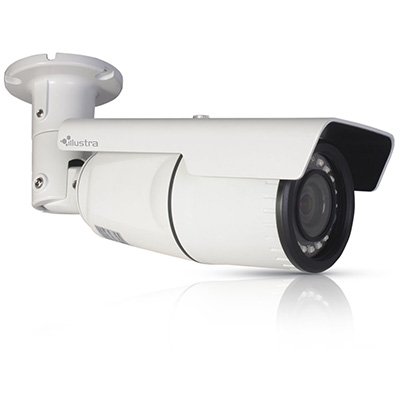

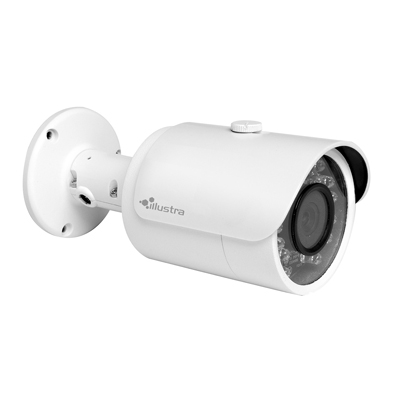
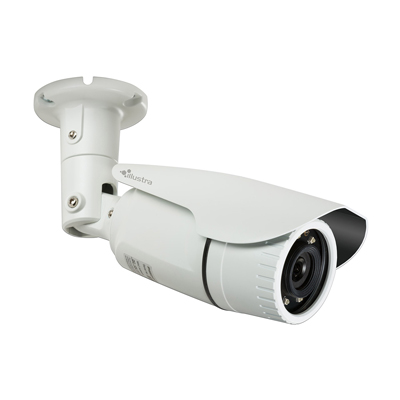
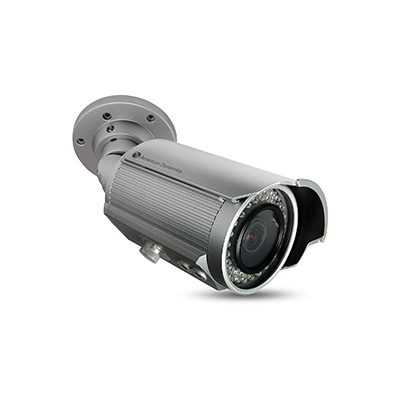
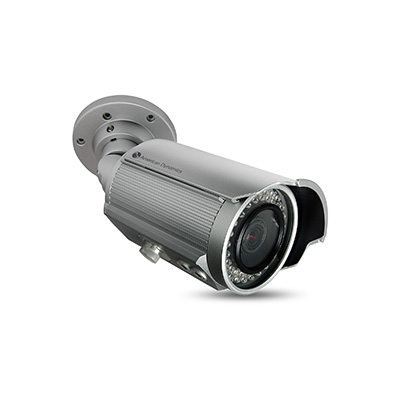
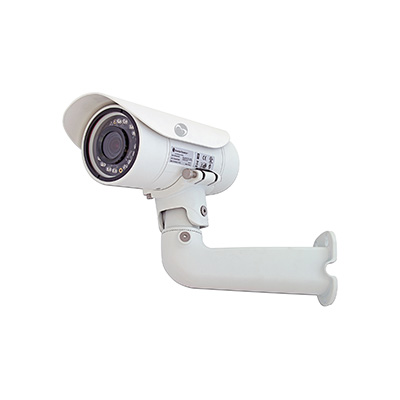
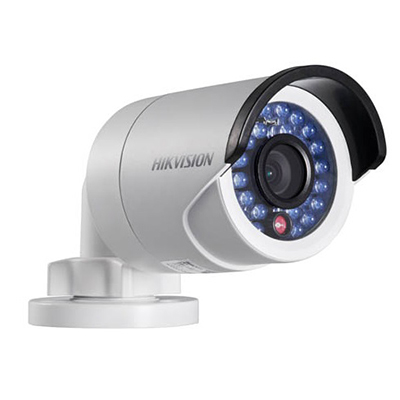
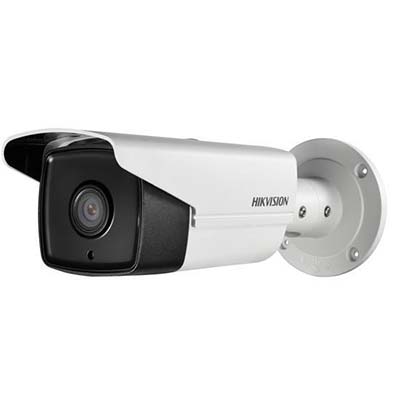
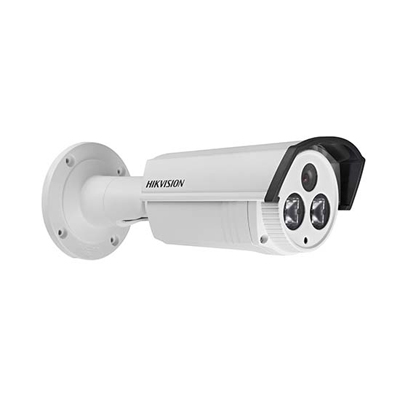
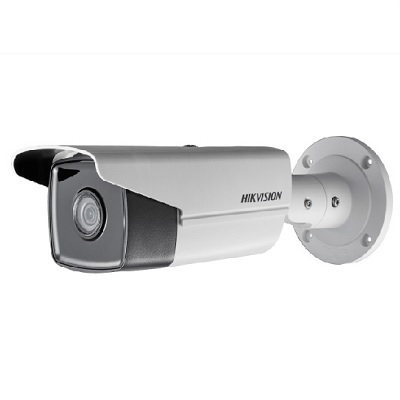
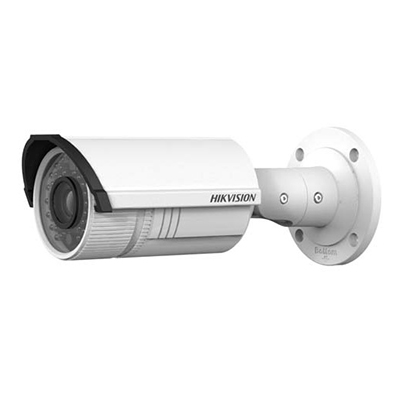
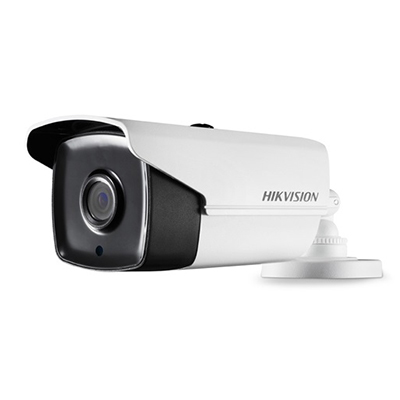

Videos



Bullet cameras: Manufacturers & Suppliers
- Hikvision Bullet cameras
- Dahua Technology Bullet cameras
- Honeywell Security Bullet cameras
- Axis Communications Bullet cameras
- Messoa Bullet cameras
- Vicon Bullet cameras
- LILIN Bullet cameras
- Visionhitech Bullet cameras
- Avigilon Bullet cameras
- Hanwha Vision Bullet cameras
- Bosch Security Systems Bullet cameras
- IDIS Bullet cameras
- LTV Europe Bullet cameras
- VIVOTEK Bullet cameras
- AV Costar Bullet cameras
- TruVision Bullet cameras
- Verkada Bullet cameras
- FLIR Systems Bullet cameras
- eneo Bullet cameras
- Speco Technologies Bullet cameras