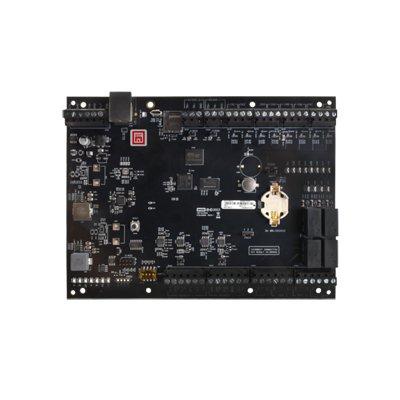
TAC CMX 9924 Access control controller
Technical Specification

- Make: TAC
- Model code: CMX 9924
- Series: Continuum Series
- Controller Type: Networkable
- Max No. of Doors per Controller: 64
The CMX 9924 is a cost-effective network controller for Andover’s Continuum facility management system. While Andover’s Infinet field application controllers are providing standalone control of all building services — heating, ventilating, air conditioning, lighting, access control, and smoke control — the CMX 9924 controller provides a cost-effective means for dial-up and network communications, information management, and underground storage tank monitoring for small to medium facilities, and when Continuum’s modular I/O is not needed.
Read more| Make | TAC |
|---|---|
| Manufacturer | TAC Satchwell |
| Category | Access Control>Access control controllers |
| Model code | CMX 9924 |
| Controller Type | Networkable |
| Max No. of Doors per Controller | 64 |
| Networkable | Yes |
| Communication Type | TCP/IP |
| Dial-up Functionality | Yes |
| Electrical Specifications |
Voltage: 24 ~ 230 V AC Power Consumption: 32 VA |
| Physical Specifications |
Dimensions mm: 482.6 x 381 x 120.6 Weight g: 9.5 kg |
| Environmental Specifications |
Operating Temp oC: 0 ~ 49 Operating Humidity %: 10 ~ 95 |
| Additional info |
The CMX 9924 is a cost-effective network controller for Andover’s Continuum facility management system. While Andover’s Infinet field application controllers are providing standalone control of all building services — heating, ventilating, air conditioning, lighting, access control, and smoke control — the CMX 9924 controller provides a cost-effective means for dial-up and network communications, information management, and underground storage tank monitoring for small to medium facilities, and when Continuum’s modular I/O is not needed. |
You might be interested in these products

Related Whitepapers
Cybersecurity in Keyless Access Management

Three Essential Reasons To Upgrade Your Access Control Technology In 2022
Securing Unmanned Infrastructure at the Network Edge