Suprema - Experts & Thought Leaders


















Latest Suprema news & announcements

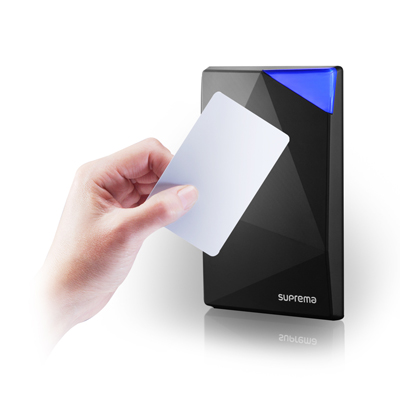
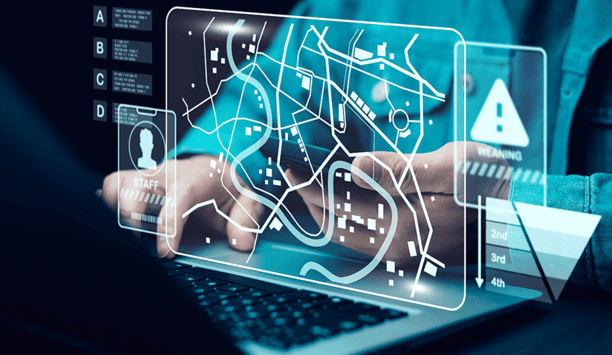
Suprema, a pioneer in intelligent access control and physical security solutions, will showcase BioStation 3, its best-selling biometric terminal to date, and debut its newest flagship terminal, BioStation 3 Max, in India for the first time, at the Fire & Security India Expo (FSIE) 2026. Suprema will also present its access control platforms, BioStar X and BioStar Air. The event will take place September 3–5, 2026, at the Jio World Convention Centre in Mumbai, where Suprema will exhibit at Booth A15. India's enterprise security market continues to expand, driven by the development of new airports, transit systems, data centers, and corporate campuses. As these facilities modernise, organizations increasingly require access control solutions capable of scaling alongside them. In response, Suprema will present its largest FSIE showcase to date, featuring an expanded booth and its most comprehensive hardware and platform lineup for the Indian market, reflecting Suprema's growing brand presence in the region. Robust data protection BioStation 3 is recognized worldwide for its competitiveness, built on three strengths: highly accurate, stable AI-powered facial authentication; a user experience optimized for real-world operating conditions; and robust data protection. Building on that global recognition, with demand that has been especially strong in India, Suprema will present BioStation 3 Max, its newest flagship terminal, to customers in India for the first time. BioStation 3 Max is Suprema's most advanced biometric terminal, featuring enhanced platform security with a CC EAL6+-certified secure element and a full range of authentication methods: face and fingerprint biometrics at its core, alongside RFID, mobile credentials, QR codes, and PINs, all integrated into one hardened, identity-first platform. Campus-wide deployments A large touchscreen display and integrated VoIP intercom support verification workflows at main entry points while Power over Ethernet (PoE) simplifies installation and reduces deployment costs. Rounding out the hardware lineup, XPass Q2, Suprema's intelligent QR/RFID reader, will also be on display for fast scanning at stadium entrances and coworking spaces. Suprema's security platforms offer customers and integrators flexibility to deploy and manage access control in whichever way best suits their business, on-premises or in the cloud by choosing between BioStar X and BioStar Air without compromising on performance. BioStar X, the on-premises platform, integrates access control, video surveillance, and third-party system integrations into a single system. It scales from small sites to large, campus-wide deployments. Faster incident response A unified monitoring console provides real-time visibility into access events and video feeds through interactive maps, enabling faster incident response. BioStar Air, by contrast, is a cloud-native platform built for organizations seeking to expand without maintaining on-premises servers. Additional readers can be deployed within minutes across multiple sites using a single network connection. Mobile credentials are included as standard, saving organizations time and deployment costs. Both platforms run on the same biometric, RFID, and mobile-ready hardware. Additionally, Suprema's Access Control Units (ACUs) let system integrators build either centralized or distributed architectures, allowing customers to select the deployment model that fits operational and IT requirements today and adapt as those needs evolve. Public safety scenarios Suprema is also introducing Q-Face Finder, an AI-powered facial authentication solution designed to identify suspects and locate missing persons in public safety scenarios such as police deployments and across private-sector facilities, including department stores and casinos. By easily integrating with existing CCTV infrastructure, it identifies missing persons and suspects in real time, enabling operators to respond quickly and effectively. Leveraging a Geographic Information System (GIS), the solution visualises a movement path on a smart map, allowing operators to understand the overall situation intuitively and coordinate resources more efficiently. Video management systems To show how seamlessly Suprema’s technology fits into broader security environments, live demonstrations will highlight how Suprema hardware and software integrate with leading global access control and video management systems, such as Genetec and Milestone. Visitors to the booth will also be able to meet local partners in India. “Strong technology alone doesn’t build a market position; a strong ecosystem does,” said Sachin Chadha, Country Manager of Suprema India & South Asia. “At FSIE, we are building exactly that: integrating with the access control and video management systems our customers already rely on and standing alongside partners who understand this market. That is how we will grow Suprema’s brand presence and footprint in India’s physical security industry, starting with proven hardware like BioStation 3 and BioStation 3 Max, and backed by the ecosystem that puts it to work for our customers.”

Suprema, a global pioneer in intelligent access control and physical security solutions, has obtained ISO/IEC 42001 certification, the international standard for Artificial Intelligence Management Systems (AIMS). The certification confirms that Suprema has established a formal governance framework for AI in its access control solutions is built, operated, and continuously improved. ISO/IEC 42001 is not a benchmark for product performance. The standard evaluates the organizational framework behind AI operations: the policies, accountability structures, risk controls, and oversight practices that determine how AI systems are managed. For Suprema, the certified scope covers AI applied to biometric authentication and identity verification across BioStation Series, BioEntry Series, and BioStar Platform. Public sector procurement Certification required an independent audit by an accredited third-party body, providing customers with external verification about Suprema's AI governance practices rather than self-reported assurances. Enterprise, government, healthcare, and financial customers evaluating Suprema's access control systems can now formally review how Suprema governs its AI as part of procurement due diligence. As AI governance requirements tighten in regulated industries and public sector procurement, that level of transparency is increasingly relevant to vendor selection. Future expansion of AI use Suprema applies AI in its access control solutions to improving the accuracy and processing speed of biometric authentication. The scope of AI use is verified under ISO/IEC 42001 framework, and as Suprema's AI capabilities develop, that governance structure is designed to scale with them, ensuring any future expansion of AI use is held to the same standards of review and accountability. ISO/IEC 42001 also provides a foundation relevant to evolving regulatory requirements, including the EU AI Act, which applies differentiated obligations based on AI risk classification. High-risk AI system obligations are scheduled to take effect on August 2, 2026, with implementation details still under discussion. Suprema is monitoring these developments and addressing related requirements on an ongoing basis. Information security management Suprema previously held ISO/IEC 27001 certification for information security management and ISO/IEC 27701 for privacy information management. With ISO/IEC 42001 now in place, customers can evaluate Suprema's security, privacy, and AI governance posture as a single integrated framework. "Our customers need to know that the AI in their security systems is not only accurate, it is also governed responsibly and verified independently," said Hanchul Kim, CEO of Suprema Inc. "Every certification Suprema pursues reflects the same conviction: trust has to be earned, and it has to be proven. We cannot simply tell customers that the AI in their access control systems is responsibly built and carefully governed. We need independent verification to back that up. ISO/IEC 42001 is exactly that, and we intend to maintain and build on this standard as AI governance requirements continue to develop globally."

Suprema, a global pioneer in AI-powered access control and security solutions, announces the launch of BioStation 3 Max, the company's new flagship AI biometric terminal. Built around a single conviction—trust engineered into every door—BioStation 3 Max consolidates Suprema's full range of authentication methods: face and fingerprint biometrics at the core, with RFID, mobile, QR, and PIN. It all comes together on one hardened, identity-first platform — sub-second face matching, a premium 7-inch touchscreen, purpose-built for corporate lobbies to mission-critical entrances. Mission-critical entrances As access terminals become networked endpoints, hardening the device is no longer optional — it is the foundation of trust. A hardened Linux OS with Secure Boot ensures only signed firmware ever executes. A CC EAL6+ certified secure element protects credentials and cryptographic keys at the silicon level. Biometric templates are encrypted, device communication is TLS-secured, and an active tamper response triggers immediate alerts on physical compromise. For deployments where user privacy is paramount, BioStation 3 Max supports Template-on-Mobile and Template-on-Card options, which store biometric data on the user's personal device or smart card instead of centralized servers, providing privacy-first options for sensitive environments. Unparalleled AI Performance Busy entrances are unforgiving. A terminal that hesitates creates queues, slows throughput, and compounds into operational cost across every access point. Powered by Suprema's latest AI engine on a dedicated NPU, BioStation 3 Max matches faces in under 0.3 seconds—even for people in motion. Dual 2MP visual and IR cameras deliver liveness detection and anti-spoofing that hold up against printed photos, replay videos, and 3D masks. BioStation 3 Max handles sunglasses, masks, varied angles, and shifting lighting without slowing the line. The terminal scales to 100,000 enrolled users. Clear authentication prompts BioStation 3 Max is where authentication, user feedback, and intercom communication come together. A 7-inch IPS touchscreen delivers clear authentication prompts, face positioning guidance, and custom branded messaging, while a built-in VoIP intercom with SIP integration lets visitors speak directly to reception at attended entrances. IP65 and IK06 ratings protect against dust, water, and impact across demanding indoor and outdoor environments. The terminal supports speed-gate and wall mounting, with PoE+ on select models delivering power and data over one cable. "BioStation 3 Max defines the new standard for identity-first security," said Hanchul Kim, CEO of Suprema Inc. "Biometric authentication, certified hardware security, and superior AI performance, brought together in one flagship terminal. Trust, engineered into every door."
Insights & Opinions from thought leaders at Suprema

One of the best business lessons I learned didn’t come from business journals or the boardroom. It came from a biography: Steve Jobs by Walter Isaacson. If you haven’t read it, you should! The book covers the full arc of Jobs’ career, and while many of the most talked about lessons center on his entrepreneurship, perfectionism, and brand building, the one that has stayed with me is his philosophy of design. Digital music player market I don’t mean design in the sense of aesthetics, although Apple certainly became famous for that. I mean design as an understanding of how people interact with technology. Examples of Jobs’ design philosophy appear throughout the book, but the chapters about the birth of the iPod are particularly compelling. If you’re too young to remember the era of downloading songs from Napster and loading them onto MP3 players, here’s the context. By the early 2000s, Apple was entering a crowded digital music player market. Companies like Sony, Creative and Rio had already introduced devices that were packed with technical innovation, and they were growing in popularity among college students, commuters, and early adopters who preferred the solid state devices over larger, glitchy portable CD players. Yet Jobs believed the entire MP3 player category possessed a fundamental flaw: all the products were too complicated. More intuitive experience In envisioning the iPod, Jobs became obsessed with creating a more intuitive experience Actually, Jobs used more blunt language. He said they all “were deeply flawed.” They held only a handful of songs, and users struggled with frustrating menu trees to access their most basic functions. As for the software managing the devices’ music libraries? To quote the book, “Only a genius could figure out half of their features.” Jobs saw something the existing manufacturers didn’t. Their MP3 players weren’t offering the one thing that consumers wanted the most, an easier way to listen to music. In envisioning the iPod, Jobs became obsessed with creating a more intuitive experience. He challenged his team to eliminate unnecessary complexity and established a simple rule for the user interface: if a person wanted a song or a function, they should be able to get there in no more than three clicks. Incredibly sophisticated technology The result was a product that felt completely different to use. Apple took an incredibly sophisticated technology and made it approachable. The complexity didn’t disappear; it was just moved behind the curtain where the user didn’t have to think about it. Despite being a late entrant to the MP3 industry, Apple quickly became the dominant manufacturer in the category because of the iPod’s unmatched usability. Plenty of successful companies cared about usability, but Jobs made simplicity a strategic priority. While competitors were adding features and complexity, Apple was asking, “How do we make this easier?” Twenty years later, I still think that’s one of the most important questions any technology company can ask, and one that is shaping the next generation of security technology. Stronger security practices Making a system more secure meant adding steps, procedures, and user responsibilities Which brings me to where I spend most of my time these days: Identity verification. For years, the security industry viewed convenience and security as competing priorities. Making a system more secure meant adding steps, procedures, and user responsibilities. What’s exciting about modern biometrics is that we’re increasingly able to improve both simultaneously. In many ways, we’re applying Jobs’ three click philosophy to identity verification, reducing the interaction required from the user without compromising the strength of the underlying security. And by reducing friction, organizations can implement more frequent identity verification that supports stronger security practices. Biometric authentication experience The simplicity of the biometric authentication experience can make people underestimate the sophistication of the technology behind it. Just as iPod users didn’t have to think about file formats, manually transferring songs to their device, or navigating cumbersome menus, users of modern biometric systems don’t have to think about how their faces, palms, or fingerprints are converted into encrypted, mathematical templates that cannot be reverse engineered. Or how the system verifies that a live person, not a photo, is standing in front of it. Or how AI quietly adjusts for the naturally occurring, gradual changes in a person’s appearance, whether from age, lifestyle, or a few extra pounds. Interacting with a biometric identity solution is like listening to music on an iPod or today, an iPhone. You don’t even think about the incredible technology working in the background that makes the experience possible. For example, with facial authentication, the most frictionless form of identity verification, you look at a reader without even stopping. In a fraction of a second, the system accurately matches you to your digital identity with a false match rate as low as 1 in 10 billion! I consider that more like a ‘zero click’ solution. Providing better protection The challenge for manufacturers will be resisting the temptation to make them more complicated As our industry embraces AI, we can expect to see a new generation of products that can automate more tasks, synthesise more data, and deliver more functionality than ever before. The challenge for manufacturers will be resisting the temptation to make them more complicated. Product teams should take a page from Jobs’ playbook. Instead of focusing on what the latest technology makes possible, they should be asking, “What do our customers genuinely want? And how can we use technology to make that experience better? Easier? Simpler? As effortless as using your face to access your phone?” That’s the lesson of the iPod, and why a guy who never developed a security product has provided one of the most important lessons for our industry. Companies that build products people want to use will also be creating solutions that are adopted more broadly, used more consistently, and ultimately provide better protection.

Biometrics today provide better security and frictionless user experiences. Biometric identifiers like fingerprints, facial recognition, and iris scans are unique and difficult to forge. They eliminate the vulnerabilities of traditional authentication and streamline secure access control. Identity verification reliably protects sensitive digital information and physical entry. We asked our Expert Panel Roundtable: How is the role of biometrics evolving in physical access control?
If AI is the dominant buzzword in the physical security industry, it is the second letter (I for intelligence) that is having the biggest impact. Simply put, intelligence transforms computer systems, including those used for physical security, from rigid, rule-following calculators into adaptable, problem-solving partners to human operators. We asked our Expert Panel Roundtable: What is the changing role of intelligence in physical security?