OPTEX - Experts & Thought Leaders
-300.jpg)


























White papers from OPTEX

Precision And Intelligence: LiDAR's Role In Modern Security Ecosystems
DownloadLatest OPTEX news & announcements
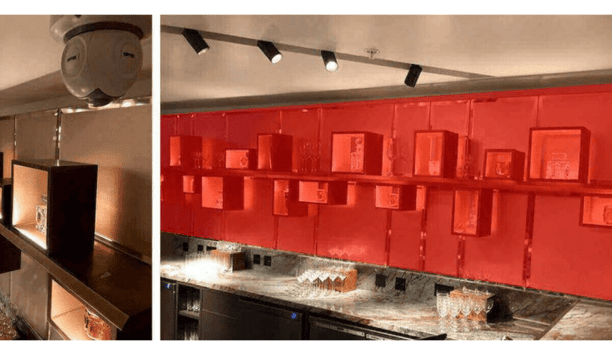
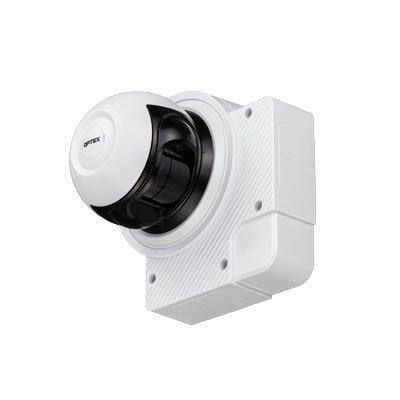
The recent theft of luxury wines from Spanish restaurant, Atrio, highlighted one of the greatest difficulties when it comes to security in the entertainment sector. From museums and art galleries to wineries, hotels, and restaurants, protecting against theft, vandalism and unauthorized handling of goods is a continuous challenge in the tourism industry. Despite the wide variety of issues, there is a key differentiating element, which is that these are places open to the public, where security must coexist with daily business operation and must not deteriorate the visitor experience. Perfect security solution This is a key aspect to consider when designing an effective security strategy, with 2D LiDAR sensors positioned as the perfect security solution. Laser detectors based on LiDAR technology (Laser Imaging, Detection, and Ranging) allow users to protect goods very discreetly on display by detecting hands or objects that come too close to them. Laser detectors based on LiDAR technology allow users to protect goods very discreetly The sensor creates an invisible virtual wall or curtain that protects the cabinets or shelves where the items are on display, precisely excluding other areas, thus avoiding the effect on the user experience. Because of their smart and versatile detection, LiDAR sensors are successfully used in a wide variety of applications. Security in warehouses, bars, and restaurants Bars and restaurants often offer diners a selection of fine wines and spirits. Wineries and cellars have also become a tourist attraction, and an important part of the experience is usually to visit areas where high-value products are stored. In these confined spaces, the precise detection of LiDAR technology can alert if a bottle or item is removed from the shelf. For example, in the case of The Londoner luxury hotel in the UK, its six bars and restaurant areas have REDSCAN LiDARs installed to protect their expensive beverages on display. The laser sensor creates an invisible wall and continually scans the detection area; the size of the detection zone can be configured for objects as small as 2.5 cm, so that if any hand or object were to enter the detection area, the alarm would trigger, alerting staff by activating cameras or sound alerts. The precise detection of LiDAR technology can alert if a bottle or item is removed from the shelf Protection in Art Spaces At the same time, LiDAR allows users to create separate zones within the detection area and link them to arming and disarming alarm systems, or access control credentials to not obstruct day-to-day work. Similarly, in museums, galleries, and art exhibitions, 2D LiDARs are used to create a virtual ‘shield’ that allows customers and visitors to enjoy works of art while protecting them, activating alerts with extreme precision only when someone or something approaches the protected art. Whether intentionally or not, paintings, sculptures, and other pieces of art face a series of threats—it could be a curious hand, a child playing or a real theft attempt. This can occur during opening hours or while the business is closed, but in all cases losses due to stolen or damaged art can be very significant; therefore, adequate protection is required. Complete wall protection LiDARs allow different settings to protect the same space to adapt to security needs Some artistic goods can be protected in a display cabinet, but, in most cases, art is exhibited without any physical protection. So that visitors may connect with the art, it’s important that security should not get in the way nevertheless threats must be identified quickly and accurately and security personnel must be alerted. LiDARs allow different settings to protect the same space to adapt to security needs depending on opening and closing times. For example, only valuables can be protected during opening hours, and complete wall protection can be set up when the exhibition is closed. It’s important that security should not get in the way nevertheless threats must be identified quickly Security at festivals and seasonal events The organization of festivals requires mobilizing large electronic and AV equipment, instruments, costumes, props, and more. The short-term nature of these events can be a significant vulnerability when it comes to protecting all these high-value goods and, to some extent, limits security options. The solution must be quick to implement and not require an existing structure or fixed wiring. The LiDAR sensor can create a virtual wall that alerts if someone enters the warehouse area A LiDAR with a built-in camera, such as the new REDSCAN Pro model, allows the creation of a security system in these environments, offering extremely precise and ultra-fast detection to initiate security events, together with a camera for video verification of alarms and event recording. Mounted on a retractable pole and easy to install and transport, the LiDAR sensor can create a virtual wall that alerts if someone enters the warehouse area or parking areas, where equipment is usually stored. Accurate detection technology In addition, the LiDAR wall can alert if someone or something enters hazardous areas, such as fuel tanks or electrical generators, immediately alerting someone to their approach to these areas and setting off a sound warning or informing the security team. With the use of smart, versatile, and accurate detection technology, security goes from being a reactive process to a proactive, much more agile, and effective security system. LiDARs offer the precision and reliability that high-value goods need, in addition to being aesthetically discreet, both because of the type of protection they offer (a very thin invisible laser curtain) and because the cover can be customized to adapt them to the environment where they are going to be installed.
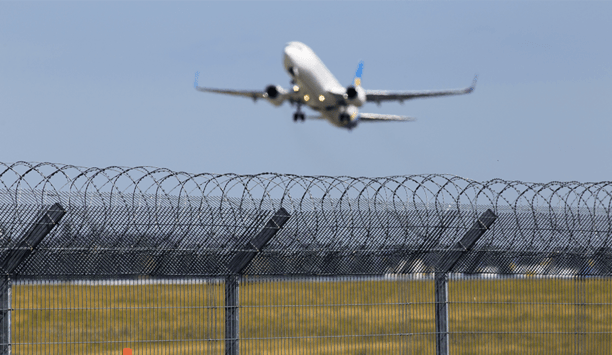
One of the key problems in airport security is the sheer size of the perimeter and a large number of incidents are in fact linked to unauthorized access onto the airfield, either runways or where aircrafts are being loaded or refueled posing an extremely high risk. Most airports will combine multiple sensors and technologies to protect the actual perimeter fence and even beyond the perimeter fence, to warn of potential threats. OPTEX LiDAR sensor integration with RSA module Some airports have found the level of information generated by the perimeter security systems quite challenging to deal with and they wanted to decrease the number of events so operators could focus on what was critical. The Airport development team at Genetec integrated the OPTEX LiDAR sensor into their Restricted Security Area (RSA) Surveillance module, an extension of the Genetec Security Center platform with the purpose to unify data from the sensor and camera to present more meaningful information to the operators. Restricted Security Area Surveillance module The RSA module has been designed specifically with a view to providing wide area protection The RSA module has been designed specifically with a view to providing wide area protection and integrating with wide area surveillance technology, including radar, fiber optic and laser detection devices. The solution allows security staff to determine the level of threat for each area, map them, and utilize OPTEX technologies to identify and locate quickly and precisely the point of intrusion. For instance, with Fiber optic fence sensor, zones can be 100m-200m long and will identify people cutting through a fence, crawling under or climbing over. Newer fiber technologies provide point location. Another way to pin-point exact intruder location is with OPTEX LiDAR technologies or with Radar. ‘Fuse’ data into a single event A particularly intelligent feature of the system is its ability to ‘fuse’ data (known as ‘target fusion’) coming from multiple sources and confirm an event as a single (i.e. the same) activity rather than a multiple threat. For instance, using the X&Y coordinates provided by OPTEX REDSCAN sensors, RSA allows to map exactly the path of the intruders or moving vehicles, fuses the path from one camera to the other and considers it as one event, one target and tracks it precisely on the map. Intelligent Tracking and event categorization This gives a more meaningful picture to the operator and presents events in a unified and intelligent way. This helps support the security team in making the right decisions. The deeper integration of OPTEX’s technologies into Genetec’s RSA platform enables intelligent tracking and event categorization, making it a very precise security system for airports.

OPTEX, a pioneer in sensing technologies, will present its latest perimeter and asset protection solutions at Security Essen 2026, one of Europe’s pioneer security trade fairs. Throughout the exhibition OPTEX will showcase its expertise in intrusion detection technologies, alongside its continued investment in the DACH market and its customer-focused approach. Security Essen will also mark Dirk Schiller’s first event as OPTEX’s new Head of Sales DACH, giving customers and partners across the region the opportunity to meet him and discuss their security requirements. Intrusion detection technologies “Across the DACH region, security requirements are evolving rapidly at high-value sites and critical infrastructure, particularly at data centres, whose role as essential social infrastructure continues to grow,” says Masaya Kida, EMEA Managing Director, OPTEX. “As a result, demand for OPTEX’s LiDAR solutions is increasing significantly. We continue to invest in the DACH market and strengthen our local presence to better understand the challenges faced by our customers and partners. By combining our sensing and detection technologies with local expertise and customer-focused support, we aim to provide the right solutions for increasingly complex security requirements.” Visitors to the stand will be able to experience live demonstrations of OPTEX’s award-winning REDSCAN LiDAR series, including the REDSCAN Lite, which will make its first appearance at a German security exhibition. Designed for indoor high-security applications, the REDSCAN Lite uses 2D LiDAR to create a precise detection plane in areas such as server rooms, restricted access points and other sensitive spaces. The wider REDSCAN range also provides configurable virtual walls, planes and zones for reliable intrusion detection across both indoor and outdoor high security environments. High security environments OPTEX will use the event to present its TXI Series, a high-mount outdoor curtain detector designed to support earlier identification of intruders before they reach a building. The range combines OPTEX’s patent-pending Triple AND Logic with Super Multidimensional Analysis (SMDA) digital processing to help reduce false alarms. The Triple AND Logic uses three independent sensing areas to form three detection zones, with an alarm generated when all three detect simultaneously. The TXI Series can be mounted at heights of up to 4m. For large perimeter and high security protection solutions, OPTEX’s EchoPoint™ Distributed Acoustics Sensors (DAS) will also be on stand. The series uses fibre-optic sensing and intelligent detection algorithms to identify and locate intrusions across fence-mounted, buried and hybrid applications, with a range of up to 100km and location accuracy of approximately +/- 6m. Reducing false alarms Dirk brings more than 18 years of experience in sales and business development, with a background spanning physical and digital security across transportation, logistics, data centres, energy and smart cities. Based at OPTEX’s Düsseldorf office, he will focus on understanding the challenges faced by customers across the DACH region and connecting them with the right solutions, while supporting the continued growth of OPTEX’s security business and strengthening its market presence in the region. “Security Essen is a valuable opportunity to meet customers and partners in person, understand the operational realities behind each project and discuss how OPTEX can support them,” says Dirk. “I’m looking forward to being there with the team, discussing specific security challenges and demonstrating our leading technologies.” OPTEX’s sales, technical and marketing teams will be available throughout the show. Visitors can meet the team at Stand 7C35 in Hall 7.
Insights & Opinions from thought leaders at OPTEX
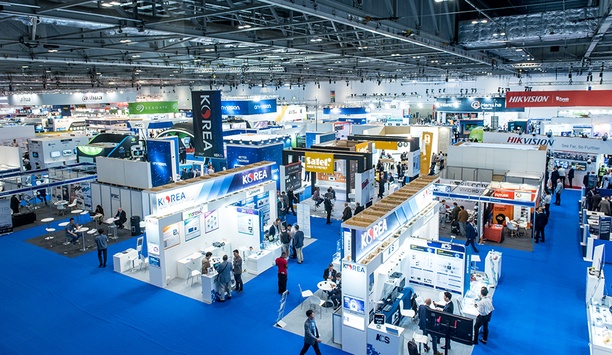
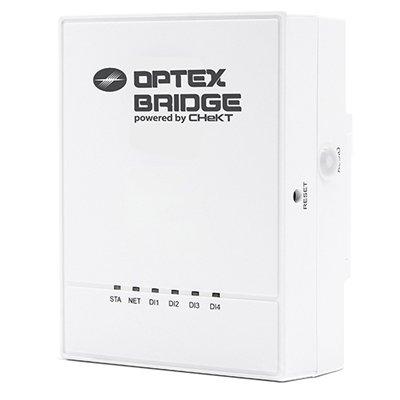
Time for an indepth review of IFSEC 2019 in London. This show had fewer exhibitors than previous shows, and the ‘vibe’ was definitely more low-key. Fewer exhibitors meant larger aisles and plenty of room to breathe, and the slower pace provided time for exhibitors to reflect (often negatively) on the return on investment (ROI) of large trade shows. There was little buzz on the first day of the show, but spirits picked up on the second day (when, not coincidentally, some exhibitors served drinks to attendees at their stands). Enterprise security solutions One eye-catcher was smart wireless security provider Ajax Systems’ stylish black stand Many exhibitors compared IFSEC unfavorably to ISC West in the United States and even to Intersec in Dubai. Others seemed willing to be lured back to Birmingham (previous location for IFSEC) to participate in the upstart competitor, The Security Event, next spring. However, not all the IFSEC 2019 reviews were negative. Vaion made the most of their small stand toward the back of the hall. They experienced brisk traffic right up until the end of the show. Happy with the response, the provider of real-time enterprise security solutions reportedly has already committed to IFSEC 2020. Other exhibitors also made the most of their space at IFSEC; one eye-catcher was smart wireless security provider Ajax Systems’ stylish black stand. Vaion made the most of their small stand toward the back of the hall Latest new products Nedap launched a new product, AEOS 2019.1, that is five time faster and more stable than its predecessor. It uses HTML5 – no more reliance on Adobe. Feedback has been good. The company has also increased its integration of open security standards (OSS). Traka showcased smart lockers, which are modular, scalable, and staff can easily replace broken equipment. Product features can be adapted to specific sectors (i.e., retail, prisons). Traka spends 30% of its revenue on research and development, developing their own engineering. The company has seen massive growth in the UK and Europe. Hanwha Techwin lured visitors into the centre of their stand with drinks and ice cream, surrounded by the latest new products. Hanwha promoted their investment in a manufacturing facility in Vietnam and showcased Wisenet cameras with enhanced 4K images, digital auto tracking, and less motion blur for clearer images. Video verification product A multi-sensor model captures wide areas with a single camera. Hanwha also offered some value-priced cameras that feature easy self-install and are swappable. Optex launched a new product called ‘the Bridge’, a video verification product that bridges CCTV on a digital video recorder (DVR) to intruder alarms. Hanwha showcased Wisenet cameras with enhanced 4K images UK Surveillance Camera Commissioner Tony Porter announced ‘Security By Default’, a set of minimum requirements that will guarantee users that network video security products are as secure as possible in their default settings right out of the box. Hikvision promoted their support for Secure by Default and expressed hopes the initiative would be embraced by other companies and create a new best practice for camera cybersecurity. Hikvision also promoted their retail solution, which includes on-site redaction for GDPR compliance, shelf detection incorporating artificial intelligence, and use of heat mapping to analyze customer foot traffic. Generating revenue Safety and Security Things (SAST), another IFSEC exhibitor, is in the process of creating an ‘app store’ for the security market. Striving to achieve critical mass with participation by a wide range of systems integrators and manufacturers, SAST has a goal of launching to the public in Q1 next year in time for ISC West. Hanwha Techwin is among the players that have already joined the alliance A pilot version will debut this autumn, and they already have 26 apps and six camera manufacturers toward that goal. With a staff of 120, mostly based in Munich, SAST expects to begin generating revenue in 2020 and to grow rapidly. An investment by Bosch is financing start-up operations. Open Security & Safety Alliance (OSSA) is creating standards and a platform to enable the sale of apps in the security market. Large industry players Hanwha Techwin is among the players that have already joined the alliance, and OSSA is seeking to add other large companies, such as Axis, Genetec and Hikvision. Engaging integrators, app developers and software providers as well as camera manufacturers will generate widespread support to ensure the initiative succeeds. Although currently most OSSA members are based in the EU and Asia, it is a global organization open to any company in the world. Many large industry players are now missing from the IFSEC show floor; the most noticeable new abstainer this year was Milestone. And the downturn seems likely to continue: Exhibitors were largely noncommittal about returning next year, although organizers were urging them during the exhibition to sign up for 2020.

Amid all the discussion of security integration and end-to-end solutions on the first day of IFSEC 2016 was an undercurrent of uncertainty. The international trade show opened at ExCel London just days before the historic "Brexit" vote, when Britons will decide whether to remain a part of the European union or to exit the politico-economic fusion of 28 member states. With the Brexit referendum this week, the polls are neck-and-neck, so the vote could go either way, hence the uncertainty. If "leave" wins the vote, what might it mean for business, including the security and video surveillance companies exhibiting at IFSEC? Brexit implications on security market For example, if Great Britain leaves the EU, might it increase costs of goods flowing throughout the larger European market? Would a distributor in Germany face new costs and/or more complex processes when sending equipment to Britain? EU laws would still apply during a two-year negotiation period if the UK votes to leave. Therefore, changes are unlikely to be immediate; however, long-term uncertainty can be bad for any market, whether it's the stock market, the currency market, or the security market. "Once you exit the EU, there may be different rules related to larger contracts," says Ivo Drent, Arecont Vision's Vice President of European Sales. "Suddenly a UK company quoting jobs in the EU will face a different climate." Manufacturers from other countries, including the Asia-Pacific (APAC) region, would eventually need to renegotiate export contracts with the newly independent United Kingdom. Given a skilled labour shortage in the UK integrator market, might a "leave" vote also complicate the ability of companies to recruit candidates from neighbouring countries, and thus aggravate the problem? Dominant security themes at IFSEC Although Brexit was a topic of discussion at several IFSEC stands, there were plenty of other aspects of the security market to consider, too. Manufacturers here are enthusiastic and quick to tout their new products, although many of them were shown previously in the United States last spring at ISC West. However, they're new to the international visitors to IFSEC. Also, the themes of integration, end-to-end systems, and technology partnerships dominated discussions. New products at IFSEC 2016 If "leave" wins the vote, what might it mean for business, including the security and video surveillance companies exhibiting at IFSEC? Arecont Vision was among the companies introducing actual new products here, including the new SurroundVideo Omni Mini IP Dome Camera, a 2-, 6- or 10-megapixel all-in-one camera with two sensors that are remotely user-configurable and provide true day/night video suitable for indoor/outdoor use. The low-profile camera is useful in schools, retail and banking (ATM) applications. Its small size makes it less noticeable and unobtrusive, even in environments that are sensitive to aesthetics. It replicates many of the benefits of Arecont Vision's four-sensor SurroundVideo cameras in a smaller form factor and at lower cost. "It can replace multiple single-sensor cameras or pan-tilt-zooms (PTZs), and give coverage exactly where you want it," says Jeff Whitney, VP Marketing, Arecont Vision. "If you cover a wide area, you never lose situational awareness." An emphasis on solutions rather than single products is another theme you hear repeatedly this year at IFSEC. For example, the sensor company Optex is promoting its REDSCAN mini RLS-2020I, an indoor laser scan detector that provides a 20x20-meter vertical or horizontal detection area, as an adjunct to video analytics. The sensor helps to protect assets and equipment by creating an invisible laser wall that detects any intrusion. Combined with a video analytics system, the hardware can increase reliability and eliminate false alarms. Leveraging the two technologies creates a result that is greater than the sum of the parts. A demonstration at the stand involves a display of drink glasses and spirits (as might be seen at a bar after closing). A "laser wall" protects the display: Anyone who tries to touch a glass triggers an alarm. The alarm trigger is faster and more accurate than a video analytics approach - there is no delay as pixels are processed. The detection zone can be divided into four sections, with each linked to a PTZ preset that directs camera coverage where it is needed. Technology partnerships Technology partnerships are also making news. Milestone opened the show with a press conference announcing an agreement with Dell to introduce a range of "plug and play" solutions for the surveillance market. The solutions can support 8, 16, 26 and 48 cameras and come complete with Milestone Xprotect and Microsoft Embedded licenses. There will be more to see on the second day of the show, and possibly more Brexit discussion, too. The vote is on Thursday, the last day of the show.
Security beyond its traditional boundaries is a big theme at IFSEC 2015 The security landscape is changing. Touring exhibitors on the first day of IFSEC International in London, it seems an increasing number of vendors are offering products that go beyond what may be termed "security," offering solutions for applications such as health and safety and data collection. They are also offering more smart technology with mobile phones and tablets, and are selling smarter by tailoring their offerings to key vertical markets. Health And Safety Applications At CEM Systems, for example, the flagship access terminal Emerald goes beyond security and access control. The readers incorporate a touchscreen that can be used not only to access data at the door, but also to present users with customized messages to individual cardholders which, for example, can include health and safety or other procedural reminders. In addition, the company has a strong market position supplying enterprise-level systems and is used to having to customize their products in order to meet the demands of vertical market customers such as major airports. Another company taking security beyond its traditional boundaries is Traka. The asset control firm supplies key management systems not just to secure and monitor key usage across an organization, but also to reinforce compliance with procedures, such as those connected with employee safety or manufacturing quality. The Traka software provides features such as multi-level authorization, so that an authorized user cannot remove a key or asset without authorization from a supervisor; key pairing, where two keys have to be taken and used together by different users; and reverse key pairing, in which one key has to be returned before a second key can be taken. Salto JustIN Access control specialist Salto claims to have invented and patented data on the card end with Salto Virtual Network. Responding to the needs of different user markets, the system can offer real-time reporting using a hardwired door, or stand-alone wire-free controllers where instant data is not required but is recorded for later download when the card is presented to a hardwired door. An increasing number of vendors are offering products that go beyond what may be termed "security," offering solutions for applications such as health and safety Using one of Salto’s mobile solutions, the JustIN mobile key app allows users to use their smartphones to securely receive their "keys" online and then access doors directly with their phones. Another version of the app allows for extending or changing access rights remotely. Hotels are driving the use of smartphones, and Salto is talking to hotel chains about this application. The company expects universities will be the next vertical to adopt this technology. Optex Safety Solutions Infrared technology company Optex says it’s all about increasing the “safety, security and convenience of society.” Beyond the company’s wide range of access control and perimeter detection solutions, it is seeing a strong increase in the application of products originally used for security but now being used for safety applications. For example, sensors are being used to make railroad crossings safer by automatically detecting if someone is trapped on the crossing. Around 60 crossings in the U.K. have been equipped so far, with another 400 due to be rolled out over the next five years. High security applications are also a target for Optex, so the company is previewing its new anti-tailgating access control solution. Accurance 3D is a "time of flight" tailgating and piggybacking detection technology that provides an extra layer of access control security. Optex is also expanding into technologies such as laser and microwave. Finally, DVTel is shifting from being a horizontal supplier to being “fully focused” on key verticals, the top two of which are smart cities and critical infrastructure. The company’s body-worn cameras not only stream video, but also send GPS data as well as the speed and position of the wearer, thus enhancing the safety of law enforcement personnel.