Nedap Identification Systems - Experts & Thought Leaders
















Latest Nedap Identification Systems news & announcements

The technology pioneer launches new sort gate and ear tag. The SmartSort sort gate and SmartTag Ear are the next evolution in Nedap’s dairy data ecosystem to meet farmers’ needs. As dairies progress, so do their data and technology needs. Similarly, the dairy insights suite from Nedap, a global pioneer in automated dairy herd monitoring and management technology, is also advancing in depth and breadth. Dairy data ecosystem “We’re launching the SmartSort sort gate, a highly requested modern and simplified twist on sort gate technology. We are also adding to our monitoring sensor line-up with the SmartTag Ear, a sleek new ear tag for data collection on dairy animals,” says Maarten Idink, managing director of Nedap Livestock Management. “These additions to our dairy insights suite mean greater labor and herd efficiencies on-farm. They also underscore our commitment to the development of reliable, accurate data to benefit cows and people,” he adds. Efficient health checks The SmartSort sort gate features one recognition point with an unmatched degree of accuracy, few moving parts to reduce cow stress, low maintenance and high-capacity operation. Based on specific goals, users can decide which cows need to be separated or routed and the location to where they need to be sent. At Pagel’s Ponderosa Dairy, Kewaunee, Wisconsin, about 4,000 cows pass through the SmartSort gate per shift. Thanks to this technology, the farm now sorts cows with nearly perfect compliance, which is essential for efficient health checks and breeding protocols. High-capacity operation “Having the sort gate helps us work with the cows we need without disrupting the rest of the herd. It just streamlines the whole system,” says Pagel’s Ponderosa Herd Manager Chris Szydel. “The rest of the herd can go back to their pens, eat, drink, walk around, lie down and be a cow. The system does a great job of identifying cows that need attention on a day-to-day basis.” “If you’re not looking at new technology and new ways of keeping up with the industry, pretty soon you’re behind,” says Dave Styer, co-owner of Alfalawn Farm, Menomonie, Wisconsin. “With the SmartSort system, we’ve been able to reach much higher accuracy than with our previous system. One of the unique things about this system is that it’s a continuous flow sort gate. It doesn’t stop the cows like our previous sort gate, so our throughput is very good. We’re very happy with the SmartSort sort gate and supporting technology.” Data transmission reliability The SmartTag Ear captures insights on activity, reproduction, rumination and eating time. Its lightweight, streamlined design includes data storage for 24 hours and is removable for use on other animals. It is built on long-lasting, proven infrastructure used for other Nedap sensors to ensure data transmission reliability. “To me, the ear tag is just easier to manage than the collars or the pedometers we used to have,” says Sutton Rooks, owner of Milking R Dairy, Okeechobee, Florida. “It helps bring those cows to the forefront that need attention and get them back on track. We’re using everything in our toolbox we possibly can to keep our cows happy and healthy.” Actionable information ecosystem hub Adds Garrett Rooks, the fourth generation of Milking R Dairy, “Our goal moving forward with the Nedap tag system is addressing issues before they become a bigger problem. We want to keep cows in our herd as long as we can. Longevity pays, reproduction pays and everything ties together to be a profitable farm.” These new tools are the latest evolution of Nedap’s data insights suite available to dairy farmers. This interconnected data grid means dairies can track, manage and act on information generated at multiple points around the farm – from cow activity to rumination data to milk production and much more. With the Nedap Now platform at the center of its actionable information ecosystem hub, data flows from hardware into data sensors that flow into the cloud for safekeeping and analysis. Herd management advances The integrated insights suite enables users to accurately and efficiently: Capture data using ear tags or neck tags Sort cows and route them where they need to be Locate individual cows for further actions Monitor parlour performance with the SmartFlow milk meter Use actionable data to empower employees Hone health, reproductive and nutrition protocols “Our technology is trusted to help dairies around the world better manage their herds,” says Idink. “We deeply value that trust and persistently seek ways to assist farmers and improve life on the farm. Our new sort gate and ear tag are our latest innovations to meet these goals.” “As dairies’ information needs grow and change, we’re leading the way with greater insights and herd management advances they can depend on,” he concludes.
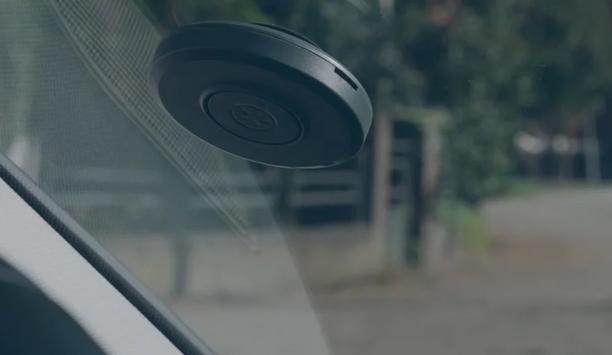
Nedap proudly announces the latest addition to its TRANSIT Tag portfolio with the introduction of the Compact Button. With over 30 years of expertise in vehicle and driver identification solutions, Nedap has consistently set the industry standard. The TRANSIT Tag portfolio, renowned for its secure and reliable vehicle identification solutions, is being renewed to ensure decades of dependable service. The result is the Compact Button, featuring a next-generation chip that enhances performance and reliability, all within a new, slim, and sustainable design. This innovation is specifically designed for use in high-security environments and diverse applications, ranging from airports to industrial sites, ensuring smooth and secure traffic flow. High-security environments Nedap’s TRANSIT product portfolio includes a variety of tags designed for vehicle and driver identification. This range features the Booster tags, which identify both vehicles and drivers, the Heavy Duty Tag, designed for mounting on heavy vehicles, and a selection of windshield-mounted tags, with the well-known round Window Button leading the way. Recognizing the potential for innovation, Nedap has taken the opportunity to elevate this range by redesigning the iconic Window Button, bringing it into a new era of performance and design. The Compact Button is a newly designed tag for windshield mounting, providing convenient and secure vehicle access in high-security environments. This tag is perfectly suited for use in various applications, from airports to industrial sites. It seamlessly integrates with existing TRANSIT installations, offering identification capabilities at distances up to 15 meters when used with the TRANSIT Ultimate reader. Enhancing security operations With a design that is 50% smaller in size and thickness, the Compact Button is less obtrusive and more aesthetically pleasing, making it an ideal choice for environments where discretion and appearance matter. The Compact Button is a cutting-edge long-range vehicle identification tag based on advanced semi-active RFID technology, designed to enhance security operations with several standout features: User Activation Functionality: The Compact Button offers the flexibility of user activation, allowing drivers to choose when the tag is active for identification. This optional feature is especially useful in situations like fee-based access or high-traffic areas, where precise control over identification can enhance security and efficiency. Alternatively, the tag can operate continuously, providing seamless and automatic vehicle identification. Windshield Mounting: Designed for easy windshield mounting, the Compact Button uses a strong suction pad that attaches securely without obstructing the driver’s view. This ensures a straightforward installation process and reliable operation. Enhanced Security with Read-Only Programming: Each Compact Button is programmed with a unique security code and tag ID, which are laser engraved on the back. This Read-Only programming ensures that the tag cannot be altered, providing a robust layer of security. Sustainable Design: The Compact Button features a replaceable battery with an 8-year lifespan, underscoring Nedap’s commitment to sustainability. Produced in The Netherlands, the tag is crafted using eco-friendly practices that emphasize sustainable sourcing, responsible processing, and ethical labor. These efforts help reduce the tag’s environmental impact while ensuring long-term reliability. Long-term reliability Edwin Grobbink, Product Manager at Nedap, highlights the importance of this innovation: “The Compact Button is a significant leap forward for the TRANSIT Tag portfolio. Its compact design, advanced functionality, and sustainable features make it a worthy successor to our Window Button. We are excited to bring this next-generation solution to the market.” Nedap encourages security professionals to explore the full range of features and benefits offered by the Compact Button
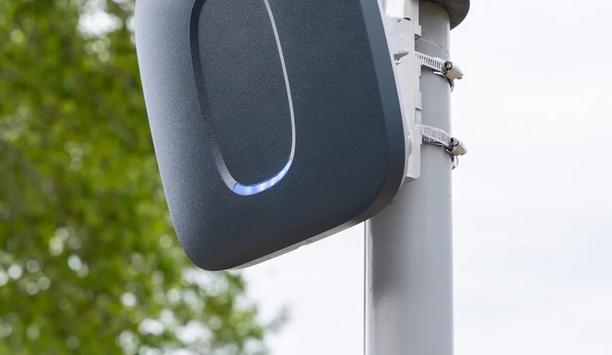
Nedap is proud to introduce uPASS Go: the next generation reader in long-range vehicle access control. As the latest addition to Nedap’s esteemed uPASS product line, uPASS Go establishes a new standard in managing vehicle entry for basic gates, like car parks, gated communities, and staff parking zones. Designed to blend significant commercial appeal with the latest technological advancements, uPASS Go transforms the landscape of vehicle access control to be smarter, more secure, and exceptionally efficient. Reliable vehicle identification Nedap’s uPASS Go is the successor of the uPASS Reach, widely recognized as our most cost-effective solution for vehicle access points. uPASS Go leverages cutting-edge UHF RFID technology to provide reliable vehicle identification from up to 10 meters (33 feet). This product is perfectly suited for managing access in environments such as car parks, gated communities, and staff parking zones. It seamlessly integrates with existing access control systems, supporting key industry-standard interfaces like Wiegand, OSDP, and TCP-IP protocols. Features like a new mounting bracket and service hatch simplify the installation process, enhancing operational convenience. Providing robust security “With uPASS Go, we’re setting a new benchmark in the field of vehicle access control. Its user centric design simplifies the installation process, makes it easy to implement and convenient to use. It meets the stringent demands of modern security professionals and offers a forward-thinking solution to access challenges.” – Edwin Grobbink, Product Manager at Nedap. As part of Nedap’s extensive uPASS product range, the uPASS Go benefits from our longstanding expertise in passive UHF solutions. uPASS Go ensures quick and secure identification of vehicles, which helps maintain smooth traffic flow and creates a welcoming entry experience. The reader is designed to be adaptable, providing robust security across vehicle access points like car parks, gated communities, and staff parking zones. Automatic vehicle identification Drawing on more than 30 years of experience in automatic vehicle identification, Nedap has designed the uPASS Go to be both cost-effective and technologically advanced. This combination makes it an ideal choice for access control points where affordability and high functionality are required. Nedap’s commitment to sustainability and user-friendliness makes the uPASS Go a continuation of their legacy of innovation in access control technology.
Insights & Opinions from thought leaders at Nedap Identification Systems
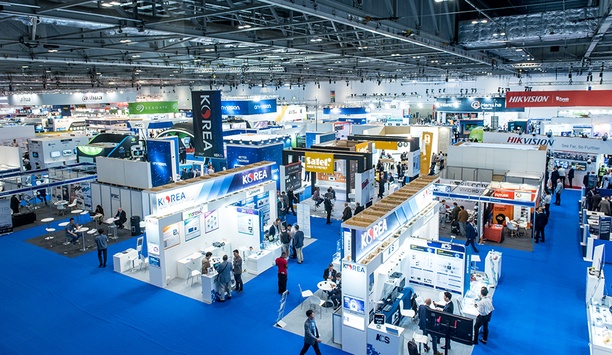
Time for an indepth review of IFSEC 2019 in London. This show had fewer exhibitors than previous shows, and the ‘vibe’ was definitely more low-key. Fewer exhibitors meant larger aisles and plenty of room to breathe, and the slower pace provided time for exhibitors to reflect (often negatively) on the return on investment (ROI) of large trade shows. There was little buzz on the first day of the show, but spirits picked up on the second day (when, not coincidentally, some exhibitors served drinks to attendees at their stands). Enterprise security solutions One eye-catcher was smart wireless security provider Ajax Systems’ stylish black stand Many exhibitors compared IFSEC unfavorably to ISC West in the United States and even to Intersec in Dubai. Others seemed willing to be lured back to Birmingham (previous location for IFSEC) to participate in the upstart competitor, The Security Event, next spring. However, not all the IFSEC 2019 reviews were negative. Vaion made the most of their small stand toward the back of the hall. They experienced brisk traffic right up until the end of the show. Happy with the response, the provider of real-time enterprise security solutions reportedly has already committed to IFSEC 2020. Other exhibitors also made the most of their space at IFSEC; one eye-catcher was smart wireless security provider Ajax Systems’ stylish black stand. Vaion made the most of their small stand toward the back of the hall Latest new products Nedap launched a new product, AEOS 2019.1, that is five time faster and more stable than its predecessor. It uses HTML5 – no more reliance on Adobe. Feedback has been good. The company has also increased its integration of open security standards (OSS). Traka showcased smart lockers, which are modular, scalable, and staff can easily replace broken equipment. Product features can be adapted to specific sectors (i.e., retail, prisons). Traka spends 30% of its revenue on research and development, developing their own engineering. The company has seen massive growth in the UK and Europe. Hanwha Techwin lured visitors into the centre of their stand with drinks and ice cream, surrounded by the latest new products. Hanwha promoted their investment in a manufacturing facility in Vietnam and showcased Wisenet cameras with enhanced 4K images, digital auto tracking, and less motion blur for clearer images. Video verification product A multi-sensor model captures wide areas with a single camera. Hanwha also offered some value-priced cameras that feature easy self-install and are swappable. Optex launched a new product called ‘the Bridge’, a video verification product that bridges CCTV on a digital video recorder (DVR) to intruder alarms. Hanwha showcased Wisenet cameras with enhanced 4K images UK Surveillance Camera Commissioner Tony Porter announced ‘Security By Default’, a set of minimum requirements that will guarantee users that network video security products are as secure as possible in their default settings right out of the box. Hikvision promoted their support for Secure by Default and expressed hopes the initiative would be embraced by other companies and create a new best practice for camera cybersecurity. Hikvision also promoted their retail solution, which includes on-site redaction for GDPR compliance, shelf detection incorporating artificial intelligence, and use of heat mapping to analyze customer foot traffic. Generating revenue Safety and Security Things (SAST), another IFSEC exhibitor, is in the process of creating an ‘app store’ for the security market. Striving to achieve critical mass with participation by a wide range of systems integrators and manufacturers, SAST has a goal of launching to the public in Q1 next year in time for ISC West. Hanwha Techwin is among the players that have already joined the alliance A pilot version will debut this autumn, and they already have 26 apps and six camera manufacturers toward that goal. With a staff of 120, mostly based in Munich, SAST expects to begin generating revenue in 2020 and to grow rapidly. An investment by Bosch is financing start-up operations. Open Security & Safety Alliance (OSSA) is creating standards and a platform to enable the sale of apps in the security market. Large industry players Hanwha Techwin is among the players that have already joined the alliance, and OSSA is seeking to add other large companies, such as Axis, Genetec and Hikvision. Engaging integrators, app developers and software providers as well as camera manufacturers will generate widespread support to ensure the initiative succeeds. Although currently most OSSA members are based in the EU and Asia, it is a global organization open to any company in the world. Many large industry players are now missing from the IFSEC show floor; the most noticeable new abstainer this year was Milestone. And the downturn seems likely to continue: Exhibitors were largely noncommittal about returning next year, although organizers were urging them during the exhibition to sign up for 2020.

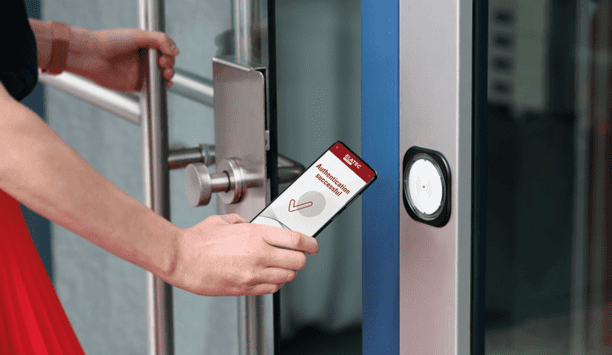
Considering how much the modern smartphone has become a common everyday tool and cultural icon, it’s hard to believe it has only been with us for a relatively short space of time. The first Apple iPhone was launched in 2007 and yet in a little over a decade the smartphone has become as essential as our keys or wallet. From its conception as a multi-faceted communications device, it has morphed into something far more integrated in our daily lives. Services such as Apple Pay, Android Pay and PayPal have seen the smartphone become a credible replacement for cash and cash cards, but equally, it is possible to replace access cards and keys as well.Smartphones can easily receive authentication credentials remotely and access can be confirmed or denied instantly The ability to accurately authenticate an individual and the applications this offers for security purposes, is something that the security industry needs to continue to embrace and further promote to our customers. Considerable Advantages Most security professionals understand the potential benefits of using mobile device authentication, with flexibility being the key advantage. Smartphones can easily receive authentication credentials remotely and access can be confirmed or denied instantly. Equally, smartphones already contain many secure options to ensure they are only used by the authorized user – fingerprint and face recognition, as well as pattern authentication and PIN, being prime examples. Unfortunately, there is still a lack of awareness amongst some security operators, customers and the public of these exciting benefits. Potentially there may also be some reluctance, in certain quarters, to trusting a mobile device with physical security. A lack of trust in seemingly ‘unproven’ technology is not unusual, but the security industry needs to demonstrate reliability along with the considerable security and convenience benefits of using it. Trusted Part Of Security Network Many smart devices already securely bind the mobile device with the right person by using 2-factor authenticationMobile device security needs to earn its trust, in much the same way as any other new ground-breaking application. In fairness to the doubters, it’s not hard to imagine how much of a risk a badly protected mobile device could be to any secure network! There are two key obstacles that smartphones need to clear before they can become a trusted part of the security network though. Firstly, that they are secure enough to be trusted as part of a security network, and secondly that they can reliably identify an authorized user in a real-world environment. Many smart devices already securely bind the mobile device with the right person by using 2-factor authentication. For example, this could combine a PIN code with the fingerprint or face of the authorized individual. In areas with particularly high security, you could also implement a wall-mounted biometric reader (fingerprint, facial recognition or iris scan) to add a further level of protection and ensure there is no wrongful use of the mobile device. Security tokens or access cards are typically rigid in their programming, only allowing access to certain areas Security By Location With its many and varied functions, undoubtedly one of the most useful systems on any smartphone is its GPS location tracking. It’s also a perfect tool to assist with security systems interaction.A benefit of using smart device authentication is the cost savings over operating traditional tokens Consider any secure facility – it will feature different levels of access. This can vary from a humble canteen and break-out areas, right through to secured doors around potentially dangerous or highly sensitive areas - such as plant rooms, or even a nuclear facility! Security tokens or access cards are typically rigid in their programming, only allowing access to certain areas. A smartphone, however, can be granted or denied access depending on the location of the request by the individual – GPS literally adds a level of extra intelligence to security. Personal Items Using QR codes seem to be a simple but reliable identity and access control authentication optionMobile devices tend to be guarded and protected with the same concern as your money or your keys. Many of us literally carry our mobile device everywhere with us, so they are relatively unlikely to be misplaced or lost – certainly in comparison to a key card for example. Also, think about how often you use or hold your smartphone – some estimates suggest 2,600 times each day! With that level of interaction, you’ll be aware very quickly if it’s been misplaced, not least because of the inconvenience and cost to replace it. This level of personal connection makes it perfect for use with security systems. Cost Savings Another obvious benefit of using smart device authentication is the cost savings over operating traditional tokens. No more plastic badges, access cards, lanyards, printers and consumables used to administer security. This is something the security industry really needs to shout about! It will come as no surprise to hear that smartphones are exceptionally common too. Figures suggest that in 2015 there were nearly 41m in use in the UK and this is predicted to rise to 54m by 2022. With the UK population being just over 65m, that is a very high percentage of people already carrying this technology. Using a resource that people already have, and which is highly secure, makes unquestionable financial as well as practical sense. GPS location tracking is a perfect tool to assist with security systems interaction Integrated Technology Agreeing on common and shared open protocols has unfortunately been one of the stumbling blocks for the security industry in adapting to a predominantly smartphone authentication approach. NFC (Near Field Communications) technology in mobile phones and smart devices has failed to be the universal success it promised.Not everyone has an iPhone, but it is such an important segment of the market for customers Mobile technology trends have dictated to the systems that use it. Apple’s earlier (Pre iOS 11) decision to restrict the use of NFC to Apple Pay on its devices has had a profound effect on the implementation of NFC in other applications too. Not everyone has an iPhone, but it is such an important segment of the market that other manufacturers are wary of how customers will be able to use any new technology. We have seen a much bigger focus on using Bluetooth Low Energy technology on mobile devices instead. With providers such as HID Global, STid in France and Nedap in the Netherlands now concentrating on developing Bluetooth Low Energy readers and mobile credential applications, this seems like a highly credible alternative. Along with NFC and Bluetooth Low Energy options, there also seems to be a lot of interest in using QR codes as simple but reliable identity and access control authentication. These can easily be displayed on a screen or printed if necessary, giving great flexibility over the type of technology that is used in the future. Upgrading Existing Security Systems There are strong arguments for many businesses to continue using MIFARE+ systems if they suit operations well We are steadily seeing the signs of smartphone authentication replacing the cards and tokens we have been familiar with. However, many consumers still want options rather than to just be railroaded down one path. A business that has invested in cards or tokens will want to use that technology investment fully. The changes will come when readers are updated – this is when security specifiers and installers need to promote the advantages of dual-technology readers, which offer options to include smartphone authentication into the mix. There is still considerable diversity amongst smart devices, the operating systems they use, and the security technology employed by each. Android, Apple iOS and Blackberry devices all vary with regards to the biometric authentication available, so security administrators may need to be flexible on the types of authentication they accept. Interestingly, card technology has also progressed at an astonishing speed too – with MIFARE+ proving to be a highly cost-effective, practical and secure system that can easily be integrated. There are strong arguments for many businesses to continue using these systems if they suit operations well. NFC (Near Field Communications) technology in mobile phones and smart devices has failed to be the universal success it promised Hybrid Systems A hybrid approach may be the best answer for many security operators. This means those who choose to enjoy the benefits in terms of flexibility and convenience of smartphone authentication can do so, whilst those who are more hesitant can continue to use more traditional methods. A hybrid approach may be the best answer for many security operators Larger organizations may find that the swap over is a slower and more gradual process, whilst smaller start-up businesses may prefer to jump to a smartphone-based approach straight away. If security systems are well integrated but modular in their approach, then it becomes much simpler to evolve as time goes on. Embracing The Benefits Using their app-based systems architecture, smartphones are ideally placed to evolve with security systems in the future. There are many benefits for the security industry and our customers, but we need to remember that this move will involve a culture change for many security operators and users. The security industry needs to be mindful and respectful of any anxiety, but also be positive and promote the considerable benefits mobile authentication offers.