LEGIC Identsystems Ltd - Experts & Thought Leaders





Latest LEGIC Identsystems Ltd news & announcements

dormakaba, ANYbotics AG (ANYbotics), and LEGIC Identsystems AG (LEGIC) have successfully tested a joint pilot at GE Vernova’s Whitegate power plant in Ireland. The partners are presenting the resulting solution at LEGIC connect26 conference in Zurich. Autonomous inspection robots can now move through access-controlled doors in industrial environments just like authorized employees. The collaboration among dormakaba, ANYbotics, and LEGIC lays the foundation for a future solution that will enable industrial customers to integrate autonomous robots into existing access-controlled environments. The pilot demonstrates how robotics, secure digital identity and access management can work together in a live industrial environment. The “ANYmal” robot from ANYbotics uses a secure digital credential to request access to controlled areas. dormakaba’s access management and door automation then apply the same access rules used for authorized personnel, allowing the robot to pass through doors without manual intervention. Potentially hazardous areas “Autonomous robots are becoming part of the workforce in industrial environments. Like people, they need reliable and secure access to the areas where they perform their tasks. Together with our partners, we are showing how access management can enable robots to move securely and autonomously through controlled environments while keeping access firmly under the operator’s control,” says Till Reuter, CEO of dormakaba. Autonomous mobile robots are increasingly being used for inspection and monitoring in industrial facilities. They can perform repetitive tasks, collect data, and identify potential problems while reducing the need for people to enter potentially hazardous areas. Access management system Access-controlled doors, however, can become a barrier for autonomous machines. The joint pilot addresses this challenge by giving the robot a secure digital identity and integrating it into existing access processes. The robot can request access electronically and the access management system determines whether the door should open based on predefined permissions. This allows operators to maintain control over who or what can access specific areas, regardless of whether the authorized user is a person or an autonomous machine. The pilot was conducted at GE Vernova’s Whitegate power plant in County Cork, Ireland, in a live operating environment. The ANYmal robot has been operating reliably for several weeks, repeatedly requesting access, passing through controlled doors, and continuing its inspection routes without manual intervention. Automated door solutions The pilot also demonstrates how the three technologies are integrated: ANYbotics provides the autonomous mobile robot and robotics platform, LEGIC provides the secure digital credential technology, and dormakaba provides the access management and automated door solutions. The partners are now working to make the solution commercially available while exploring further applications, including access to elevators, gates, and turnstiles. dormakaba, ANYbotics, and LEGIC are presenting the pilot at LEGIC connect26 in Zurich on 17 September 2026. The event brings together technology and industry experts to discuss the future of digital identity, secure access, and connected security infrastructure. Connected security infrastructure “The joint pilot illustrates how access solutions are evolving beyond traditional applications for human users. By securely authenticating and authorizing autonomous machines, access management can become an important enabler for the next generation of industrial automation,” says David Fuller, Chief Innovation Officer of dormakaba. "This is about authenticating autonomous systems: issuing a trusted identity, in effect a badge for the robot. With this first-of-its-kind project, we are taking a major step into physical AI, extending LEGIC's secure access credential technologies from people and objects to machines," says Mehdi Elhaoussine, General Manager of LEGIC. Authenticating autonomous systems "Our customers do not buy robots; they buy a solution to their operational challenges: less unplanned downtime and fewer people in hazardous areas. The impact is measured in how many critical assets our robots inspect, how often, and how reliably.” “Every access-controlled door was a hard limit on that coverage. With dormakaba and LEGIC, ANYmal now carries a trusted credential managed in the plant's own access system and moves through those doors like any authorized colleague, under the same rules and the same audit trail. The pilot has proven this in live operation, and we will now make it available as an add-on across the entire ANYmal fleet," says Péter Fankhauser, Co-Founder and CEO of ANYbotics.
SwiftConnect, the pioneering provider of connected access enablement, and Swiss-based LEGIC Identsystems, a global pioneer in secure authentication, access management, and IoT platform solutions, announced a partnership to accelerate deployments of easy, hassle-free access using NFC wallets in mobile devices for major corporations across Europe and beyond. As an official LEGIC Partner, SwiftConnect is the first to enable corporate access via NFC wallets for LEGIC customers and its vast partner network – developers of readers, credentials, application software, and services. LEGIC’s pioneering service “We are excited to extend SwiftConnect’s proven expertise in NFC wallet integrations with LEGIC’s pioneering service for deploying secure mobile credentials into smartphones and other mobile devices. This solution is very attractive to our broad ecosystem of access control hardware partners and their end customers,” said John Harvey, Head of Business Unit Access Management, LEGIC Identsystems. “With our partnership, LEGIC and SwiftConnect are driving corporate access deployments in Europe via NFC wallets in mobile devices for large end customers. Our collaboration positions LEGIC extremely well to open opportunities in other vertical markets and geographies." Advantage of the complementary capabilities The joint customer uses LEGIC’s reader and secure credential provisioning and key management service A global financial institution headquartered in Europe has already begun to take advantage of the complementary capabilities that LEGIC and SwiftConnect offer large, multinational organizations. The joint customer uses LEGIC’s reader and secure credential provisioning and key management service. They turned to SwiftConnect to integrate employee badges in Apple Wallet with their existing physical access and IT infrastructure so employees can use an iPhone and Apple Watch for hassle-free experiences in their offices around the world. SwiftConnect’s range of supported technologies “Our strategic collaboration with LEGIC is fueling our momentum by enabling SwiftConnect to power trusted mobile credentials in NFC wallets across LEGIC’s broad customer base and partner ecosystem for connected access to places, spaces and things,” said Josh Jagdfeld, VP of Partnerships at SwiftConnect. “The partnership expands SwiftConnect’s range of supported technologies and makes it possible for more customers in major industries to take advantage of our ability to create self-service and on-demand access experiences via mobile credentials.” Innovative mobile-based products LEGIC’s cloud-based Software as a Service (SaaS), known as LEGIC Connect, provides its core mobile credentialing service to over 14 million end-users in over 200 countries and territories. Its customers include large companies, hotel chains, multi-family housing, campuses, governments, and hundreds of system integrators who leverage mobile credentials to create useful and innovative mobile-based products and services. The SwiftConnect and LEGIC integration provide users with choice and flexibility to create frictionless experiences that transform how people access buildings and resources using a mobile ID via NFC wallet in their mobile device.
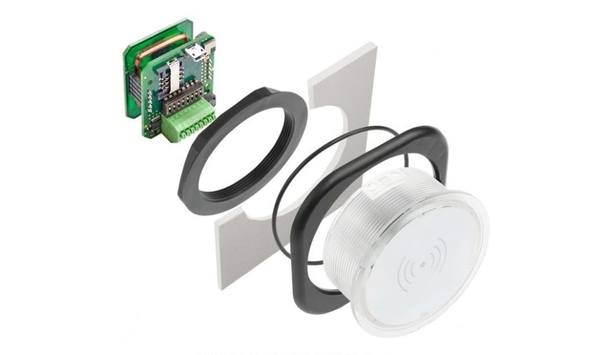
From buildings to vehicle fleets and enterprise networks to perimeter gates, having access control to let the right people in—while keeping everyone else out—is a security necessity. ELATEC, a global specialist in radio frequency identification (RFID) readers enabling user authentication for these and other access control applications, will introduce its latest new product the TWN4 Palon Compact Panel Reader at the ISC West Conference and Exhibition, to be held March 17-20, 2020 in Las Vegas, Nevada. Physical access control applications The Palon is a powerful, multi-function reader optimized for physical access control applications. Unlike traditional RFID readers, Palon’s unique capabilities include: Flexible architecture and a robust, open API to support custom applications and unique functionality Supports encryption for security applications Quick and easy updating to support emerging market requirements, and done so either remotely or via a contactless configuration card Reads and writes all major transponder technologies globally—60+, including HID Global, LEGIC and NXP, and NFC and BLE mobile device technologies for use with smartphones. Highly customizable panel mount Palon’s compact OEM PCB module is designed for integration into third-party products and devices. And its attractive, highly customizable panel mount is ideal for use in PAC panels, elevators, parking systems, EV chargers, kiosks and more. To see Palon and ELATEC’s suite of offerings, visit ELATEC booth #23006. Visitors can also see Palon in the new product showcase at ISC West.
Insights & Opinions from thought leaders at LEGIC Identsystems Ltd

Working with proximity readers now will let even more end-users use biometrics on high security openings Zwipe 2014/2015 Review & Forecast:All of the news reports in 2014 about the mishandling and hacking of card information has made both consumers and institutions more leery of using a card only to verify the cardholder. Looking ahead to 2015, there is an increasing demand for both a more affordable, and more secure way to integrate biometrics into the payment process without having to replace already-installed readers and equipment. Introduced this year at ISC West, Zwipe’s smart card with integrated biometric reader uses legacy smart card readers, thus meeting both objectives. Meanwhile, those using proximity card-based front ends have been worried about the security of their own systems. With a slew of proximity readers already installed, the proposition of replacing the readers would be difficult to sell. Add a PIN? That means adding keypads to all the readers plus, as everyone knows, PINs have security issues of their own. In October, among other enhancement to the biometric card, we announced that presently installed proximity card readers, as well as smart card readers, can now be used by organizations that want to add biometric authorization to their verification process without having to implement biometric readers. As with the original biometric card, the on-card fingerprint scanner with 3D capacitive technology resides on the new contactless Zwipe Access biometric card. Zwipe Access is compatible with all popular ISO 14443 proximity and smart card readers as it is DESFIRE EV1, MIFARE Classic and Legic Advant compatible. Now, without having to change out their existing card readers, the Zwipe Access biometric card provides an easy, affordable way for organizations to provide a biometric upgrade to access control systems using legacy proximity card or smart card readers. Working with proximity readers now will let even more end-users use biometrics on high security openings, such as a hospital pharmacy, IT server room or special research lab, without the cost and time associated with switching out their proximity readers for biometric readers. See the full coverage of 2014/2015 Review and Forecast articles here

The Key To Unlocking K12 School Safety Grants
Download
Honeywell GARD USB Threat Report 2024
Download
Physical Access Control
Download
The 2024 State Of Physical Access Trend Report
Download
The Security Challenges Of Data Centers
Download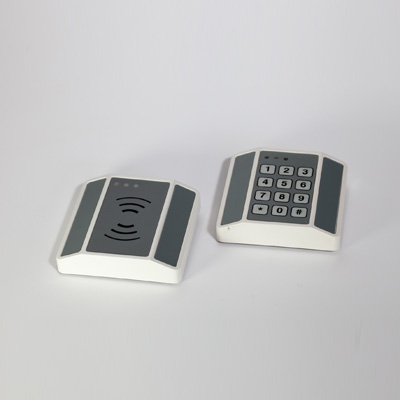
LEGIC Multi Card Reader MCR From SMART Technologies ID GmbH

LEGIC Advant 4000: The Reader Generation With MIFARE Interoperability
CTC: A Chip That Speaks Many Languages




