Iris ID Systems, Inc - Experts & Thought Leaders





Latest Iris ID Systems, Inc news & announcements

Iris ID, the pioneer in iris recognition technology, is showcasing its latest biometric identity solutions at booth 710 during Identity Week America, September 2-3. The company will demonstrate how its simultaneous iris and face fusion authentication delivers faster, more secure identity verification for government, enterprise, healthcare, transportation, financial services, and other high security applications. Trusted biometric identity “Modern security environments can no longer afford to compromise on speed, user experience or accuracy,” said Mohammed Murad, Chief Revenue Officer of Iris ID. “By combining our core iris recognition with face fusion and anti-spoofing PAD, we are enabling enterprise and government organizations to stay ahead of sophisticated identity threats. At Identity Week, we’re demonstrating how a single, trusted biometric identity can deliver frictionless access across every physical and digital touchpoint.” Iris ID will demonstrate solutions across access control, centralized identity management and workforce authentication. Multi-factor authentication Featured solutions at the booth: IrisAccess® iA1000 Biometric Access Control Ecosystem: A next-generation multi-modal biometric platform, it combines simultaneous, dual iris and face fusion authentication with PIN and credential-based multi-factor authentication (MFA). Designed for high-security environments, it delivers highly accurate identification with AI-powered presentation attack detection (PAD) to prevent spoofing and ensure accuracy. IrisAccess Management System (iAMS): This enterprise identity management platform works with the iA1000 and centralises users, devices, credentials and authentication policies across single-site and global deployments. Designed for scalability and interoperability, iAMS integrates with physical access control, workforce management and enterprise identity systems to simplify administration while strengthening security. IrisTime™ iT100 Workforce Management Solution: A next-generation iris and face fusion time clock, it’s designed to eliminate buddy punching, reduce time theft and improve payroll accuracy. It operates in iris-only, face-only, and/or iris-face-only fusion modes, capturing large volumes with speed and precision. Advanced Enrollment & Authentication Solutions: Iris ID will also showcase their complete biometric hardware portfolio, including the iCAM D2000 biometric terminal, the iBAR 600E biometric module for seamless kiosk integration, and the iCAM TD200, a compact iris and face capture device for enrollment and authentication applications. Iris ID will also offer a first look at an advanced new biometric solution positioned between the iCAM TD200 and iBAR 600E, bringing greater flexibility to system integrators and OEM partners looking to embed iris and face biometric capabilities into next generation identity solutions. Visit Iris ID at Booth 710 for live demonstrations.

Iris ID, the pioneer in iris recognition technology, is showcasing its next-generation iris and face fusion solutions at Identity Week America, September 10-11. At Booth 417, attendees can see how Iris ID’s touchless identity solutions are engineered for today’s most demanding environments, from enterprise security to national identification programs. Additionally, NextgenID, an Iris ID partner and trusted provider of identity security and technology, will display their Identity Station Kiosk featuring the iBAR 600E. Multi-modal biometric collection “Our partnership with NextgenID marks an important milestone in advancing the mainstream adoption of biometrics for trust, identity, and security,” said Mohammed Murad, Chief Revenue Officer, Iris ID. “As governments and enterprises demand faster, more secure, and more convenient ways to verify identity, collaborations that unite best-in-class technologies are critical to ensuring ethical inclusion and safeguarding personal identifiable information (PII).” NextgenID’s kiosks—already deployed nationwide with federal agencies and enterprises—NextgenID Kioskdeliver supervised remote identity proofing (SRIP) at the highest Kantara-certified assurance level, support multi-modal biometric collection including fingerprint, face, and iris, and enable high-assurance credential issuance for PIV, CAC, FIDO, and more. Combined with their PresenceID Network and alignment to FedRAMP, NIST 800-63-4, and FIPS 201-3 standards, these capabilities perfectly complement Iris ID’s multi-modal fusion solutions, creating a trusted ecosystem that is transforming secure access, workforce management, and citizen identity systems across industries. High-throughput environments Highlighted in the Iris ID booth are the latest advances in multi-modal biometric technology, where iris and face recognition are combined in fully contactless solutions. These innovations are designed to deliver fast, frictionless throughput while ensuring accuracy and reliability, even in high-throughput environments. Iris ID will also showcase its broader suite of biometric solutions spanning enterprise access, healthcare, workforce management, public safety, and government ID programs. Built for scalability and interoperability, these systems empower organizations to modernise security and identity management while preserving efficiency and user experience. Live demonstrations will run throughout Identity Week America at the Iris ID Booth 417.

Iris ID, announces its successful completion of its SOC 2 examination as of October 24, 2025. The SOC 2 audit was conducted by A-LIGN, the provider in cybersecurity compliance trusted by more than 4,000 global organizations to help mitigate cybersecurity risks. Mitigating cybersecurity risks Established by the American Institute of Certified Public Accountants (AICPA), the SOC 2 examination is designed for organizations of any size, regardless of industry and scope, to ensure the personal assets of their potential and existing customers are protected. SOC 2 reports are recognized globally and affirm that a company’s infrastructure, software, people, data, policies, procedures and operations have been formally reviewed. “Congratulations to Iris ID Systems for completing their SOC 2 audit, a widely recognized signal of trust and security,” said Steve Simmons, COO of A-LIGN. “It’s great to work with organizations like Iris ID Systems, who understand the value of expertise in driving an efficient audit and the importance of a high-quality final report.” This certification demonstrates Iris ID System’s continued commitment to compliance and ensures customers with the confidence that required safeguards are in place to protect their data.
Insights & Opinions from thought leaders at Iris ID Systems, Inc
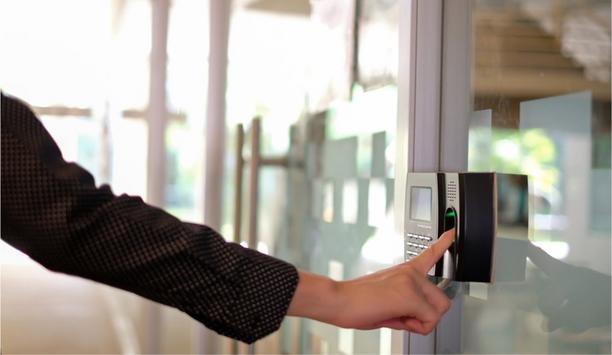
A shift toward touchless devices during the coronavirus pandemic has been a boon to the biometrics sector. Another factor in the recent increase in use of biometrics is lower prices, which are a symptom of a maturing market and of new technology capabilities. Increasingly, integration of biometrics with access control and other security systems is expanding use cases and sales numbers. For additional insights, we asked this week’s Expert Panel Roundtable: What are the new trends and opportunities with biometrics (facial, fingerprint, iris and/or voice)?

The concept of how security systems can contribute to the broader business goals of a company is not new. It seems we have been talking about benefits of security systems beyond “just” security for more than a decade. Given the expanding role of technologies in the market, including video and access control, at what point is the term “security” too restrictive to accurately describe what our industry does? We asked the Expert Panel Roundtable for their responses to this premise: Is the description “security technology” too narrow given the broader application possibilities of today’s systems? Why?
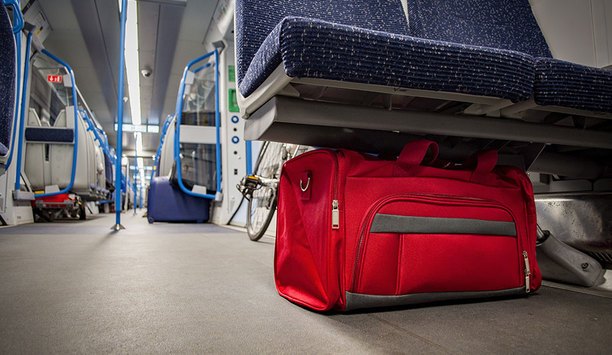
Terrorism is in the headlines all over the world. After any such incident, many of us in the physical security market find ourselves asking: What could we have done to prevent it? Assessing risk and preventing catastrophes before the fact are part of our market’s DNA; and yet, too often the random nature of terrorist attacks and their targeting of public places leave us unsure of anything anyone could have done. How can we translate the benefits of our industry’s products into real-world solutions that can prevent terrorist attacks? We presented the question to this week’s Expert Panel Roundtable, and received a variety of interesting responses. Specifically, we asked: How is the recent rise in terrorism impacting the physical security market (e.g., higher demand, different mix of products, etc.)? How should the physical security market respond? What solutions are needed?









