Interface Systems LLC - Experts & Thought Leaders














White papers from Interface Systems LLC
Security Investments Retailers Should Consider For Their 2021 Budget
DownloadLatest Interface Systems LLC news & announcements

Interface Systems, a provider of AI-powered security and expert remote video monitoring for restaurants, retailers, and commercial businesses, today announced that a veterinary hospital network has consolidated security services with Interface across more than 1,000 U.S. locations, addressing recurring false alarm fines, inconsistent alarm monitoring support, and poor utilization of its video management system (VMS). For the veterinary network, false alarms had become a costly and recurring problem, triggering fines, straining local law enforcement, and pulling staff away from patient care. Approximately 300 standalone hospitals were racking up police fines ranging from $500 to $1,000 per false dispatch, with some locations accumulating several thousand dollars in penalties in a single month. Intrusion alarm monitoring "False alarm penalties are one of the most persistent and underestimated costs for multi-site operators, especially in healthcare and veterinary settings where staff can't afford to be pulled away for false dispatches," said Steve Womer, SVP of Product at Interface Systems. "By combining video verification with remote monitoring expertise, we were able to give this network a way to cut those costs immediately, while also making their existing video investment far more useful day-to-day." The network consolidated day-to-day support for its existing VMS and intrusion alarm monitoring with Interface, creating a single point of support across its national footprint. That broader support model also gave staff more consistent guidance on how to use the VMS for investigations and incident review, supported by structured onboarding and training. Remote migration process At the 300 standalone hospitals most affected by false alarm penalties, Interface deployed its Video-Verified Alarm service through a standardized remote migration process. The service enables monitoring specialists to assess alarm events remotely via video before requesting police response. Since deployment, 97% of alarm events have been verified as false and resolved without dispatch, while only 3% required law enforcement response, significantly reducing unnecessary dispatches and associated penalties. Interface transformed the veterinary network’s existing VMS into a core asset by introducing structured employee training and streamlined support. Risk management teams now rely on the standardized platform to investigate potential fraud, review workers' compensation claims, and secure evidence for legal matters. Proactive regulatory compliance By leveraging advanced attribute-based search and mobile access, authorized users can instantly isolate key security footage from desktops or phones. Finding video evidence quickly allows the internal safety team to spend less time on gathering evidence and more on proactive regulatory compliance. The centralised approach also changed how the veterinary network handles maintenance and service issues. Instead of relying as heavily on on-site visits, many problems are now identified and addressed remotely, with 63% of service requests resolved without dispatching a technician. Mean-time-to-repair compliance stands at 94% against an 85% target, helping the network maintain more consistent system performance across its locations. The network is expanding its use of Interface services at higher-risk locations, piloting additional capabilities including Interface's Virtual Perimeter Guard, which combines AI-enabled cameras with remote intervention to identify and address potential security threats proactively.

Interface Systems, a provider of AI-powered security and expert remote video monitoring for restaurants, retailers, and commercial businesses, today published “The Real Cost of Alarm Failure,” a new report from its 2026 Loss Prevention Research Series. The data-driven study models the cumulative operational expense of false alarms across multi-site portfolios, utilising municipal ordinances and fee schedules across 25 U.S. cities, police dispatch policies in 23 cities, federal labor data, and real-world vendor repair costs. The report provides critical operational data to help loss prevention, risk management, and operations leaders identify where safety budgets are being quietly eroded. The study distinguishes between visible costs, such as municipal fines, and the broader operational disruptions that occur long before any city fine is issued. Remote video monitoring Key data and findings from the report: Fines Are Just the Tip of the Iceberg: For a standard 10-store retailer averaging 3 false alarms per location, direct municipal fines total just $1,220 annually. However, adding unverified guard dispatches, manager keyholder logistics, and lost labor hours brings the baseline annual cash drain to $7,230. The Police Non-Response Turning Point: In 21 of the 23 major cities analyzed (including Los Angeles, San Francisco, and Houston), local police departments enforce policies that suspend or entirely revoke emergency dispatch privileges for properties exceeding a set number of false alarms. The Worst-Case Exposure: For a 10-store operator, the risk climbs to a staggering $37,230 in annual liability if each location experiences a single break-in after losing local police response privileges. The Insurance Void: The study reviews clear commercial case precedents where insurance carriers successfully denied six-figure corporate burglary claims on appeal because the operator allowed their monitored alarm system or permits to lapse. The First-Alarm Drain: While city penalties typically waive the first or second false alarm event, the operational cost hits on day one. A single false alarm triggers between $150 and $500 in blended fees, whether from dispatching a private security unit or requiring a manager to respond after hours to an empty facility. Remote intervention specialists “Multi-location operators frequently look at false alarms as a minor compliance issue because the municipal invoice is relatively small,” said Sean Foley, Chief Revenue Officer at Interface Systems. “What this data reveals is that the real damage happens behind the scenes. When a property crosses a city's infraction threshold, it triggers an operational domino effect: managers are pulled away from customers, administrative teams spend hours fighting permit suspensions, and ultimately, police units stop showing up. Our goal with this report is to show organizations how to close those exposure windows before they result in a serious, uninsurable loss.” The report emphasises that cities only penalise businesses after emergency units physically respond to a false alert. Interface Systems solves this by deploying remote intervention specialists at its U.S.-based Interactive Security Operations Center (iSOC) to review live video feeds the exact moment a sensor trips. By visually verifying site safety before dispatch occurs, Interface clears 95% of commercial alarm events as false, keeping compliance fines off corporate ledgers and ensuring properties stay off restrictive municipal non-response lists.
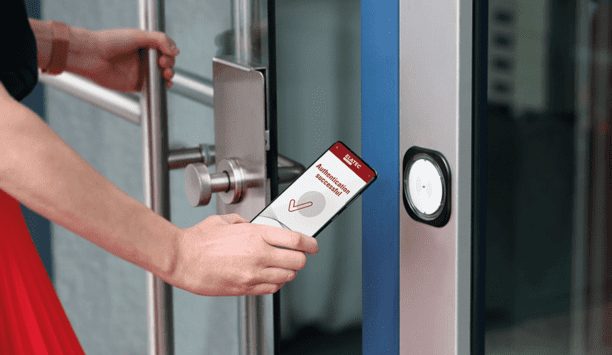
Interface Systems, a provider of AI-powered security and expert remote video monitoring for restaurants, retailers, and commercial businesses, today announced the addition of Brivo to its end-to-end managed access control portfolio that includes solution design, system integration, professional installation, ongoing maintenance, and technical support. As organizations continue to adopt cloud-based security technologies, many are seeking access control solutions that simplify administration across multiple locations and improve operational efficiency. Modernising security infrastructure Brivo's cloud-native platform enables centralized management of users, physical and mobile credentials, schedules, and door activity from a single interface, offering real-time visibility. Combined with Interface's U.S.-based Interactive Security Operations Centers (iSOCs), customers benefit from a single trusted partner to secure and manage facilities across multiple locations. "Our customers want security solutions that can scale alongside their business and are easy to manage," said Sean Foley, Chief Revenue Officer at Interface Systems. "Adding Brivo to our managed access control portfolio gives organizations another proven option for modernising their security infrastructure while continuing to benefit from Interface's expertise in system design, deployment, integration, and ongoing support." Improving operational efficiency “We're pleased to welcome Interface to our growing partner ecosystem,” said John Szczygiel, COO at Brivo. “Their nationwide reach and deep expertise serving restaurants, retail, and commercial businesses make them an ideal partner. Together, we'll enable organizations to strengthen security, improve operational efficiency, and deliver exceptional experiences across some of the most dynamic industries in the market.” Restaurant, retail, and commercial business leaders interested in evaluating their access control strategy can schedule a complimentary security assessment to find the right managed access control fit for their operations here.
Insights & Opinions from thought leaders at Interface Systems LLC

Historically, physical security systems have protected retail companies’ assets, people, and profits. Security prevents theft (shrinkage), while maintaining order and ensuring a safe environment for customers and staff. Today’s retail business is changing by leaps and bounds, driven in large part by technology advances. Newer physical security systems are finding new ways to deter crime and provide operational data, in the process preserving brand reputation and ensuring the business remains viable and welcoming. We asked our Expert Panel Roundtable: What's new in retail applications for physical security?
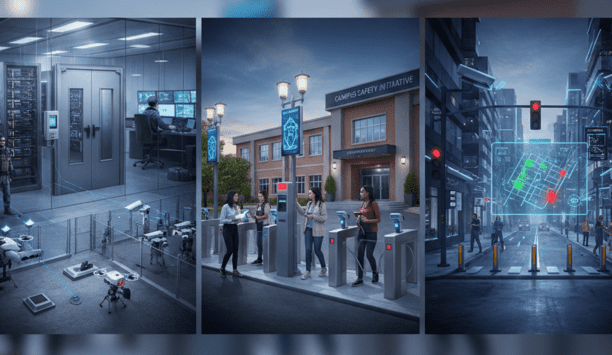
To serve various vertical markets and industries effectively, security professionals must recognize that each sector has unique assets, risks, compliance requirements, and operational needs. Instead of offering a one-size-fits-all solution, security system providers must tailor their products, services, and integration strategies to address the distinct requirements of vertical markets. We asked our Expert Panel Roundtable: Which vertical markets have the greatest growth potential for physical security systems?

Ethics can impact a company's reputation, profitability, and overall sustainability. Ethics extend beyond the law to encompass doing the "right thing" even when it is not legally mandated. As technologies such as artificial intelligence and data sharing continue to impact the physical security industry, a focus on ethics today is timelier than ever. A commitment to moral principles is critical to build a successful, sustainable, and respected industry. We asked our Expert Panel Roundtable: What is the role of ethics when deploying emerging technologies in physical security?