Delta Scientific - Experts & Thought Leaders




Latest Delta Scientific Corporation news & announcements
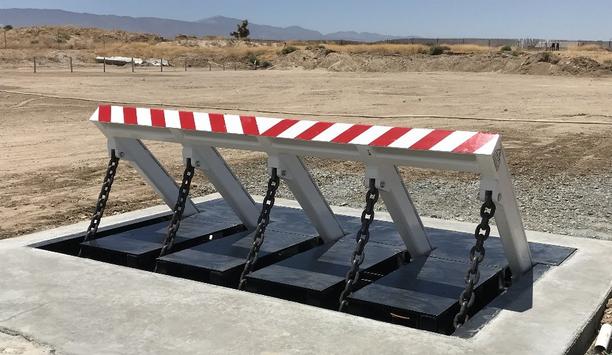
The DSC550 was tested to the new ASTM F2656-20 standard which measures the penetration level from the foremost edge of the barrier versus the back-side of the barrier like the previous standard. This can provide a difference of (1.52 m.) and makes the negative penetration level even more impressive. Design and features The DSC550 Open Frame barrier features a shallow foundation of only 24 inches (61 cm). The open-frame design additionally provides a unique counter-balance design with no springs that need extra maintenance. The DSC550 alleviates the concerns of interference with buried pipes, power lines, and fiber optic communication lines in urban applications. The shallow foundation also reduces installation complexity, time, materials, and corresponding costs. The DSC550 is perfect for high water table locations and areas with corrosive soils. Installation The barrier was fully operational after the force of the M50 impact. The fact that no-assist devices are used to operate this electro-mechanical barrier is something totally new to the industry. In addition, the fact that little rebar is needed in the very small foundation is a win for integrators trying to earn a solid margin while installing the DSC550 and a win for the end-user with little disruption during installation. Emergency fast operation The new DSC550 provides an emergency fast operation of 1.5 seconds for electro-mechanical and 0.75 seconds for hydraulic operations. This allows a guard to quickly react to a perceived threat with the peace of mind knowing the barrier will deploy in a rapid manner under the most demanding scenarios. The DSC550 also provides intuitive touchscreen controls with data-logging and custom programming.

When most people think of bollards, they imagine the simple posts placed in urban environments to block vehicles from certain areas. But bollards are more than just visual barriers; they are sophisticated, scientifically designed structures designed to absorb and distribute intense forces. Learn how bollards work to keep people and property safe. A bollard is designed to stop, deflect, or redirect force, ensuring that any impact with a vehicle is safely absorbed and distributed. The forces bollards must withstand are quite intense. They are designed to handle thousands or even tens of thousands of pounds of pressure. Bollards are commonly used at: City streets Airports Private properties Government buildings Public spaces Bollards are a reliable solution in high-traffic areas where vehicle access needs to be controlled, while still allowing pedestrians to pass freely. What are bollards usually made of? Bollards are made from various materials, each designed to handle different levels of impact and provide specific benefits. Steel: Steel bollards are widely used due to their high strength and capacity to absorb substantial impacts. Concrete: Concrete bollards are known for their mass and durability. They are effective in high-traffic areas but are less flexible than steel, which means they may crack under certain circumstances. Plastic/Composite Materials: These bollards are lighter and flexible, often used in areas where high impact resistance is not critical, such as parking lots or pedestrian zones. Each material has its pros and cons. The type of bollard chosen depends on how much protection is needed and the desired look for the area. What are the main components of a bollard? While a bollard might appear to be a simple post, its structure is carefully engineered to absorb impact and resist stress. Here are the key components of a bollard: Foundation/Base: The foundation of a bollard is the most crucial aspect of its design. It is typically embedded deep into the ground, ensuring that the bollard can withstand significant impacts without being dislodged. Body: The shaft is the primary visible structure of the bollard and is the point of contact for most crashes. It must be designed to handle and distribute the impact force, preventing it from transferring to the surrounding area. Head/Cap: The top part of the bollard, often referred to as the head or cap, serves to protect the bollard from the elements, improve its aesthetics, and ensure it is easily visible to pedestrians and drivers. These components work together to help the bollard withstand strong forces, ensuring it stays durable and effective in protecting important areas. Will a bollard stop a car? Bollards are designed to stop or slow down vehicles in high-impact situations. How well a bollard works depends on its material, design, and installation. Bollards made of strong steel or reinforced concrete can absorb and spread the force of a moving vehicle and stop it from entering protected areas. Bollard statistics show how well these materials actually perform in real-life tests, proving they can handle strong impacts from cars and provide reliable protection. How are bollards tested to ensure safety? Bollards are extensively tested to make sure they work as intended in real-life situations. These tests help engineers see how well bollards can handle different impacts and ensure they are strong enough to protect people and property. Crash Tests - Bollards undergo rigorous crash tests to evaluate their ability to withstand high-impact collisions. Vehicles of varying weights and speeds are driven directly into the bollard to simulate real-world scenarios, allowing engineers to assess how much kinetic energy the bollard can absorb without failure. Impact Resistance Assessments - Engineers perform impact resistance assessments to simulate a range of impact conditions, including direct hits and angled impacts, which help engineers understand how the bollard will behave under various stress angles. This process ensures the bollard’s structural integrity and effectiveness, even when subjected to non-perpendicular forces. How bollards work to protect the property Bollards are a valuable tool for enhancing the security of properties and public spaces. Whether users are protecting pedestrians, infrastructure, or private property, bollards are an important part of modern security measures. Understanding how bollards work is key to selecting the right solution for users needs. At Delta Scientific, they offer a wide range of high-security bollard solutions designed to withstand extreme impact forces while maintaining functionality. Their bollards are rigorously tested for durability and safety, ensuring the highest quality for the security needs. Explore the high-security bollards to find the right fit for user needs. Their expert team is here to help users choose the right bollard system for the specific requirements.

People can gain unauthorized entry to secure locations using several methods. Tailgating attacks are one example. They depend on general complacency or the kindness of people and exploit system weaknesses to access restricted areas. Learn what a tailgating attack is, what one looks like in real life, and how to keep yourself from becoming a victim. What is a tailgating attack? A piggyback attack occurs when one person or vehicle accesses an area immediately after another. They rely on the authorized person opening a gate, holding a door, or bypassing security measures. In some cases, a person pretends to be someone they are not, such as a delivery driver, to get into a building. Tailgating attacks can easily circumvent many modern security protocols. For example, campus security systems often rely on biometrics to access dorm rooms, but an attacker who poses as a DoorDash driver will seem relatively harmless to the students who let him in. Types of piggyback attacks Many tailgating attacks are physical security breaches where an individual enters a building, parking area, or other restricted location. However, this is not the only type. Take a minute to learn the different types of piggyback attacks and what they could look like. Physical attacks occur when someone gains unauthorized access to a secure area. These attacks often go unnoticed because they happen in plain sight and rely on the benevolence of other people. Cyber attacks can also happen. These allow a person to access restricted computer systems or sensitive data. They can happen when an authorized user leaves a session open and steps away from a workstation, by exploiting system weaknesses, installing malware, or through coercion. What is an example of a tailgating attack? Take a look at some examples of security breaches using this method to understand how they look in real life. An attacker waits near the entrance to a secure building. When an employee scans his badge to enter a building, he then holds the door for the person behind him. The attacker enters the building and accesses sensitive information. Someone poses as a courier. They approach and state they are making a delivery to a specific department. Security lets them through the main gate, providing access to the entire facility. An employee clicks a link in an unidentified email, allowing an attacker to install malware on their computer. The attacker steals tokens and uses them to act as the employee for the remainder of the session. These scenarios all assume an unknowing victim. However, in some situations, an employee may intentionally walk away from an open laptop or leave a door unlatched to allow access. How to prevent a tailgating attack Knowing the meaning of a tailgating attack is just the first step in preventing them. Users must take steps to educate employees, increase security protocols, and install devices that reduce the risk of this type of security breach. Employee training is a key component to preventing piggyback attacks, especially when it comes to cyber attacks. General guidelines for employees include: Designating a specific place for food or general deliveries that is outside of secure areas Marking suspicious emails as spam and reporting them to IT Never allowing another person through a door with you Remaining aware of surroundings when entering and exiting secure areas Using multifactor authentication and timed work sessions Remember, these attacks take advantage of kindness and complacency. When one trains employees to be alert to threats, they can stop a large portion of them. Implementing best security practices for data centers and other vulnerable locations can help prevent many of these situations. For example, monitored security cameras detect unauthorized users at terminals. Limiting physical access Segmenting access so that no one person has access to the entire system or all physical areas of the plant is incredibly helpful. It limits the reach of potential attackers and may prompt a repeat attempt that users can intercept. Using physical security measures, such as guard booths, can help users limit physical access to a location and stop someone from leaving if a breach is detected. Understanding what a tailgating attack is is the first step in preventing one. Delta Scientific is a pioneer in access control solutions. Their team can help users choose and implement a complete system to reduce the risk of security breaches. They work with companies around the world to improve physical security measures.
Insights & Opinions from thought leaders at Delta Scientific

The Global Security Exchange (GSX 2022) in Atlanta in September 2022 is the latest example of the energetic post-COVID resurgence of security trade shows. On the vibrant show flow, discussions centered on topics such as the security industry’s need for more employees and the lingering impact of a months-long supply chain crisis. Against a backdrop of continuing industry challenges, exhibitors and attendees were diverted by a wealth of new opportunities as the industry rebounded. Several major players had big product announcements at GSX 2022 in Atlanta. Manufacturers unveil the latest technology The big news at Genetec was “5.11.” That’s the newest version of Security Center, which is “all in,” i.e., providing everything Genetec offers in a single “unified” platform. The unified approach streamlines the process for systems integrators, makes quotes easier, and adds value for customers. Standard, Pro, and Enterprise versions provide video, access, and LPR “right out of the box.” Genetec is also launching a new web and mobile client for the “next generation operator.” Paid intern program Kyle Hurt says the security industry’s biggest challenge is attracting personnel Kyle Hurt, Genetec’s Senior Sales Director, North America, says the security industry’s biggest challenge is attracting personnel (even more challenging that the supply chain.) Genetec’s response is a robust paid intern program, welcoming 120 interns into various departments for a full semester. The program helps to feed Genetec’s need for new talent. “You can’t coach passion,” said Hurt. WiseNet Edge Hanwha Techwin introduced a “serverless camera” at GSX 2022, named the WiseNet Edge. It is a video camera with a built-in solid-state hard drive for storage. The camera can store its own video and take in other camera feeds. In effect, it operates like an NVR but is less expensive and with an internal solid-state drive. Video can be viewed through a cloud browser, and Hanwha’s WAVE software, loaded on the camera, enables the management of several cameras at a site. High-res video is stored inside the camera, and any information can be shared with the cloud according to the needs of the application. i-PRO Mini i-PRO launches its own Video Insight video management system and MonitorCast access control i-PRO has fully transitioned away from Panasonic and is charting its own ambitious future path. Seeking to be “bold, trusted, and flexible,” the company is releasing a raft of new products, filling in previous gaps in the line, and bringing forward new innovations, including a full complement of AI. In addition to hardware, they have their own Video Insight video management system and MonitorCast access control, which was part of the Video Insight acquisition in 2015. An i-PRO Mini is a tiny camera, smaller than a smartphone. All cameras are NDAA compliant. People are coming together “The show has been phenomenal,” said Josh Letourneau, Chief Commercial Officer, Prosegur USA. “It’s very nice to see that people are coming back. After the pandemic, we are finally in a position of coming together. Lots of organizations are coming to see us.” Intelligence-led risk management Prosegur is a global company looking to expand aggressively in the United States, creating multiple “metropolitan service areas,” where the company’s fully integrated offerings are available. What makes the company unique is its “intelligence-led risk management,” says Josh Letourneau, adding “It’s more than AI, it’s about human intelligence, too." Prosegur sees evolution and growth opportunities in the U.S. market. “We are one of the largest companies no one has heard of,” adds Letourneau. “The show seems as back to normal as possible,” said Keith Bobrosky, President of Delta Scientific, who attended the show although his company did not exhibit, adding “There seems to be a generally positive spirit about the show this year.” Physical security protocols Bobrosky sees data centers as the next big market for his company’s vehicle barriers Bobrosky’s company has worked aggressively to avoid the impact of supply chain issues, ordering plenty of extra inventory to avoid the possibility of a part running out of stock. “We got ahead of it and are past the worst of it,” he said. Bobrosky sees data centers as the next big market for his company’s vehicle barriers. “The government will mandate physical security protocols for cybersecurity locations because they house data that affects national security,” he says. Robots and indoor drones ADT Commercial highlighted robots and indoor drones for security apps at their booth. The newest versions of the humanlike robots offer extra padding, more fluid movement, and 360-degree viewing for a better virtual reality (VR) experience, including better peripheral vision. Robots can operate for four hours without a charge and “know” when to return to the charger (to “top off” every hour). Fully autonomous indoor drones can also replace guards, flying near the ceiling and generally after business hours. The use of either robots or drones can lower costs when compared to hiring human guards. Varied uses for canines in security Glen Kucera, Chief Executive Officer, MSA Security, highlighted the capabilities of canines for explosives and firearms detection. “People don’t realize the flexibility of what they can do,” he said. Kucera says canines provide a sophisticated solution to address the escalating active shooter and criminal threat. MSA Security was acquired last year by Allied Universal, adding to the company’s varied offerings for threat detection and management. Rather than individual products, Allied Universal’s emphasis at the show was on bringing solutions together. Their message: Risk is multi-dimensional and different from one client to the next. Access control Access control needs to develop more modern interfaces to compete with new technology companies AMAG’s news at the show included a new president, David Sullivan, who highlighted AMAG’s role as one of the “last independent access control companies.” He said, “The beauty of AMAG is its installed base and loyal integrator channel.” Sullivan sees changing trends in how office space is managed in the wake of the pandemic. More workplace management applications will emerge, with one of the elements being access control. Access control also needs to develop more modern interfaces to compete with new technology companies entering the market. An encouraging sign is that AMAG had its best year ever in 2021. Orion Entrance Control Orion Entrance Control showed off one of its modern new turnstiles at the RealNetworks/SAFR booth at GSX 2022. The turnstile incorporates an access control module from Elatec to update and expand card reader functionality. Using the module streamlines Orion’s processes and avoids having to update a customer’s readers individually. The turnstile at GSX also incorporated a facial recognition system from SAFR, which could be used instead of, or in addition to, the access control reader. Balancing the cloud and on-premise systems Salient Systems is looking to balance the use of on-premise and cloud systems and emphasize data instead of video. Rather than a single market, Salient sees security as a variety of smaller markets, each focused on different needs. Salient’s customers are typically larger and have multi-site deployments with thousands of cameras. On-premise systems appeal here because they offer an element of control. Open-platform APIs Internal teams at customer sites are seeking out and finding new ways to leverage the data from video systems “People have a keen interest in control and ownership of their data,” says Sanjay Challa, Chief Product Officer, Salient Systems. Internal teams at customer sites are seeking out and finding new ways to leverage the data from video systems, and some of the uses fall outside the traditional “security” market. Open-platform application programming interfaces (APIs) enable more integration with various systems, and broader applications enable customers to leverage budgets from other stakeholders in an organization. Add-on services “They’re unwilling to shift the entire solution to the cloud, but they want to leverage cloud technologies,” says Challa. For Salient, a cloud system provides remote access to monitor and service video installation remotely. “We enable the integrator to reach into your system to provide a higher level of service,” says Sanjay Challa. He concludes, “Our add-on services bring the best of the cloud to on-premise systems, and integrators don’t have to roll a truck to solve a problem with the system. We are focused on helping integrators succeed.”

Supply chain issues have plagued the economic recovery during and after the COVID-19 pandemic, and the problems show every indication of persisting for months or even years to come. Supply chain challenges have impacted the security marketplace in many ways, reflecting the breadth and variety of products needed to secure people, facilities, and assets. Wondering about the specifics of that impact, we asked this week’s Expert Panel Roundtable: How does disruption of the global supply chain of components impact players across the security industry?

Here’s a news flash: 2022 will be a pivotal year for the security industry. As we enter the new year, continuing change is a safe prediction for any fast-moving, technology-driven marketplace. Recent history confirms the ability of the security industry to shift and adapt to changing conditions and to provide an ever-expanding menu of technology solutions to make the world a safer place. Given that the new year will bring change, what will that change encompass? More to the point, what should it encompass? We asked this week’s Expert Panel Roundtable: What is the biggest change you would like to see within the security industry in 2022?